Quick Navigation:
| | | |
Logarithms
8.1 Introduction
- Purpose: Logarithms are primarily used to make long and complicated mathematical calculations much easier to solve.
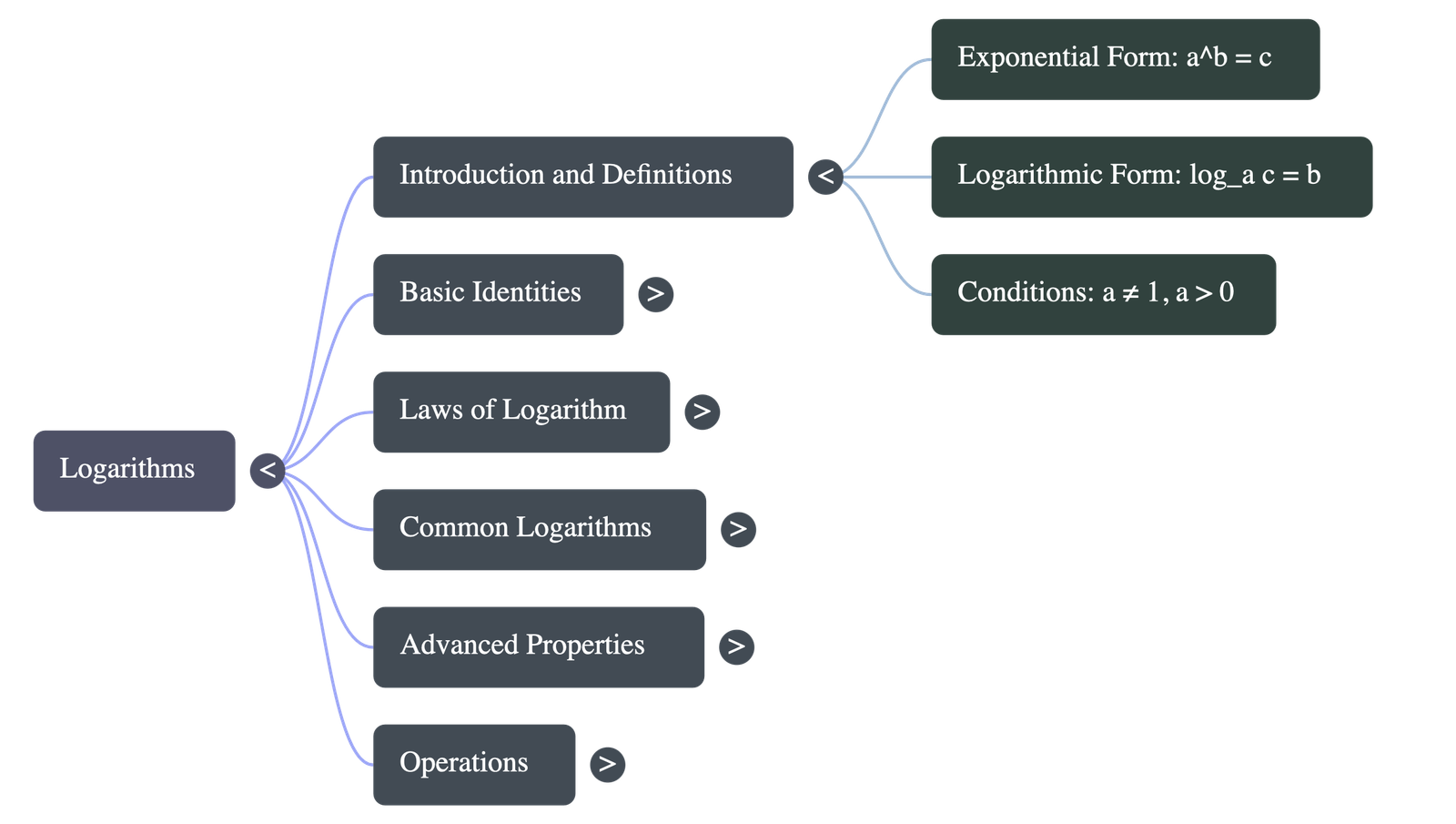
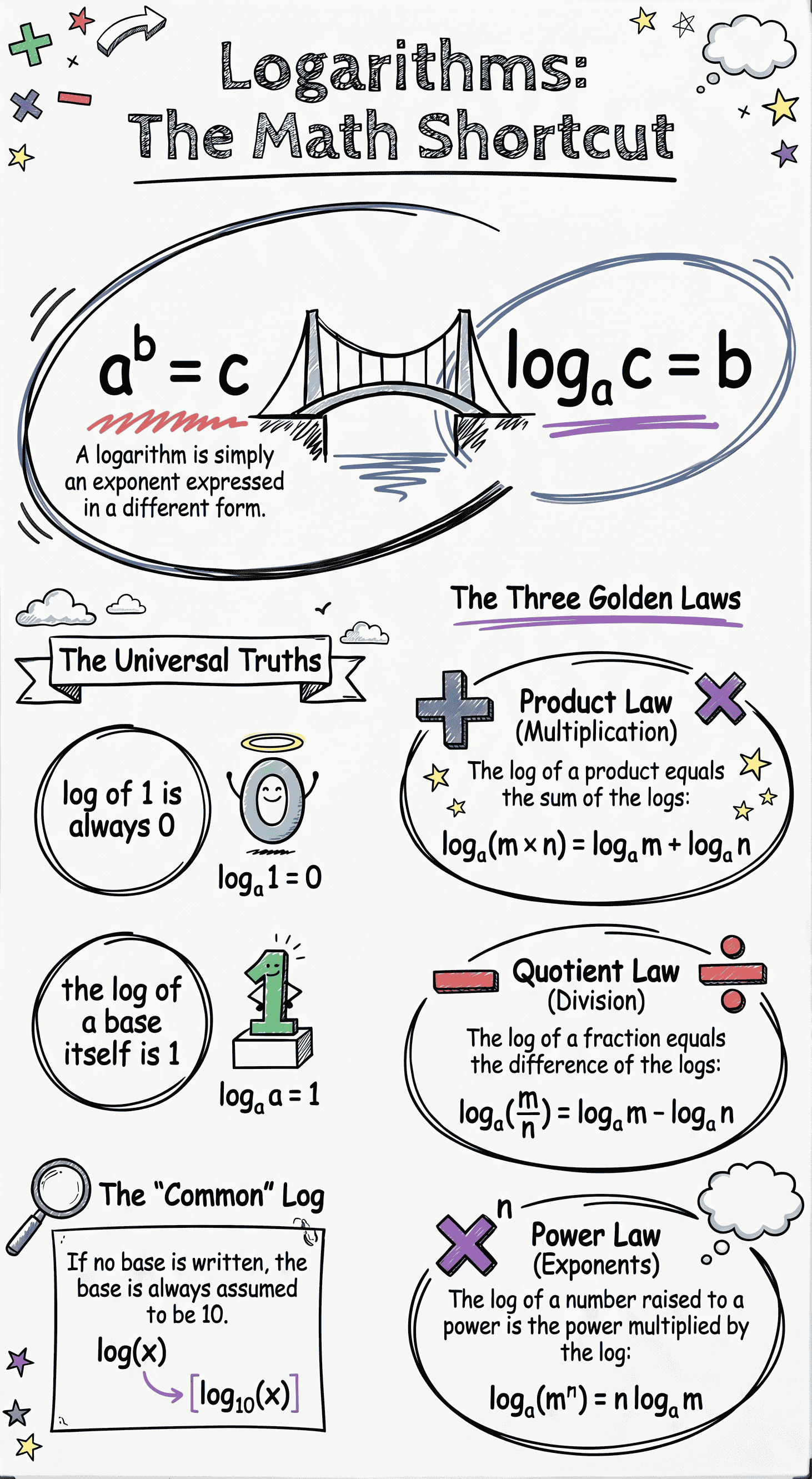
- The Core Concept: A logarithm is simply another way to write exponents. For example, the exponential relation 34 = 81 can be rewritten in logarithmic form as log3 81 = 4 (read as "logarithm of 81 to the base 3 is 4").
- Formal Definition: If a, b, and c are three real numbers such that a ≠ 1 and ab = c, then b is called the logarithm of c to the base a.
- Formula Rule: ab = c ⇔ loga c = b
8.2 Interchanging (Logarithmic form vis-à-vis exponential form)
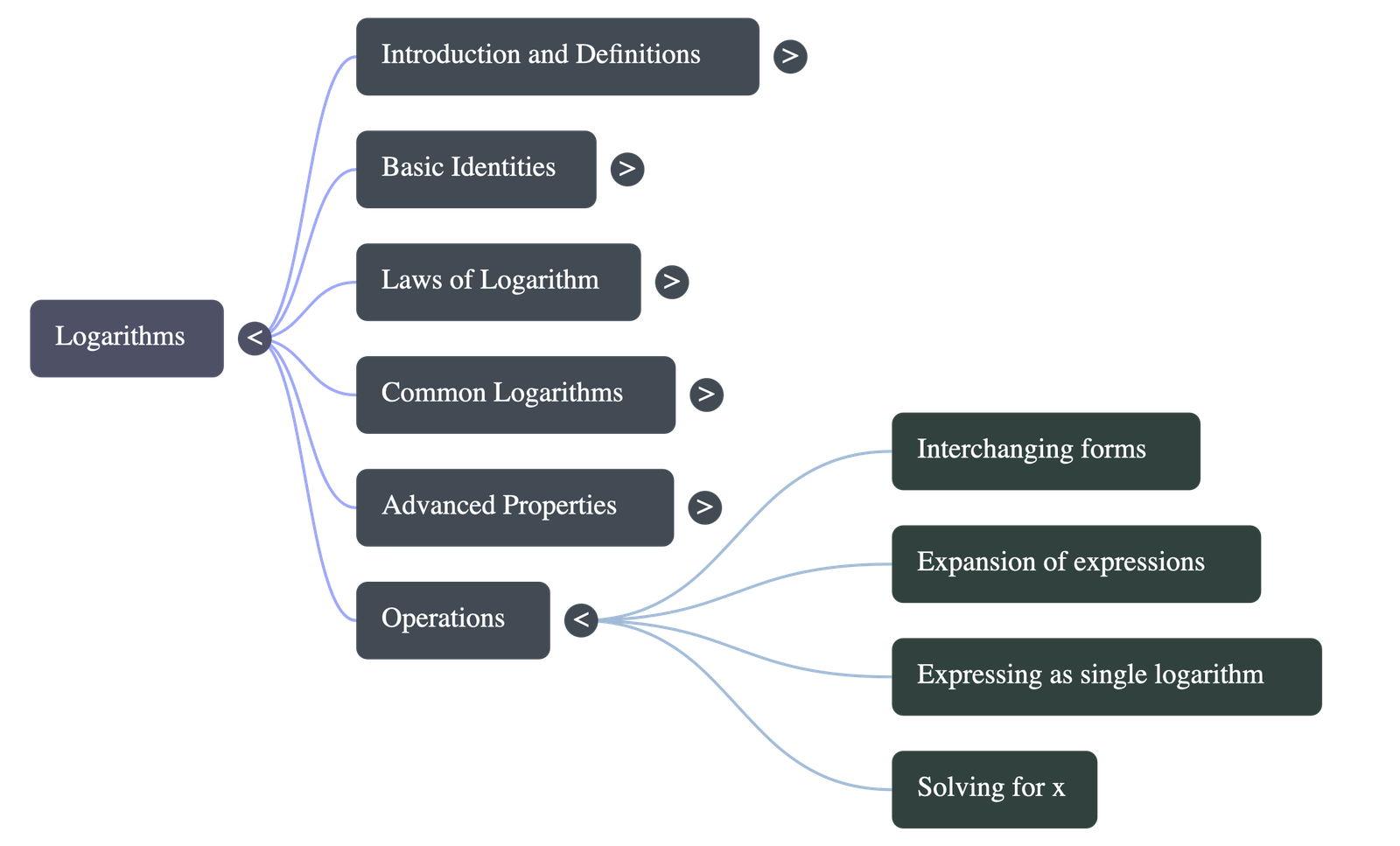
- Interchanging Forms: You can smoothly convert equations back and forth between exponential form (e.g., 2-3 = 0.125) and logarithmic form (e.g., log2 0.125 = -3).
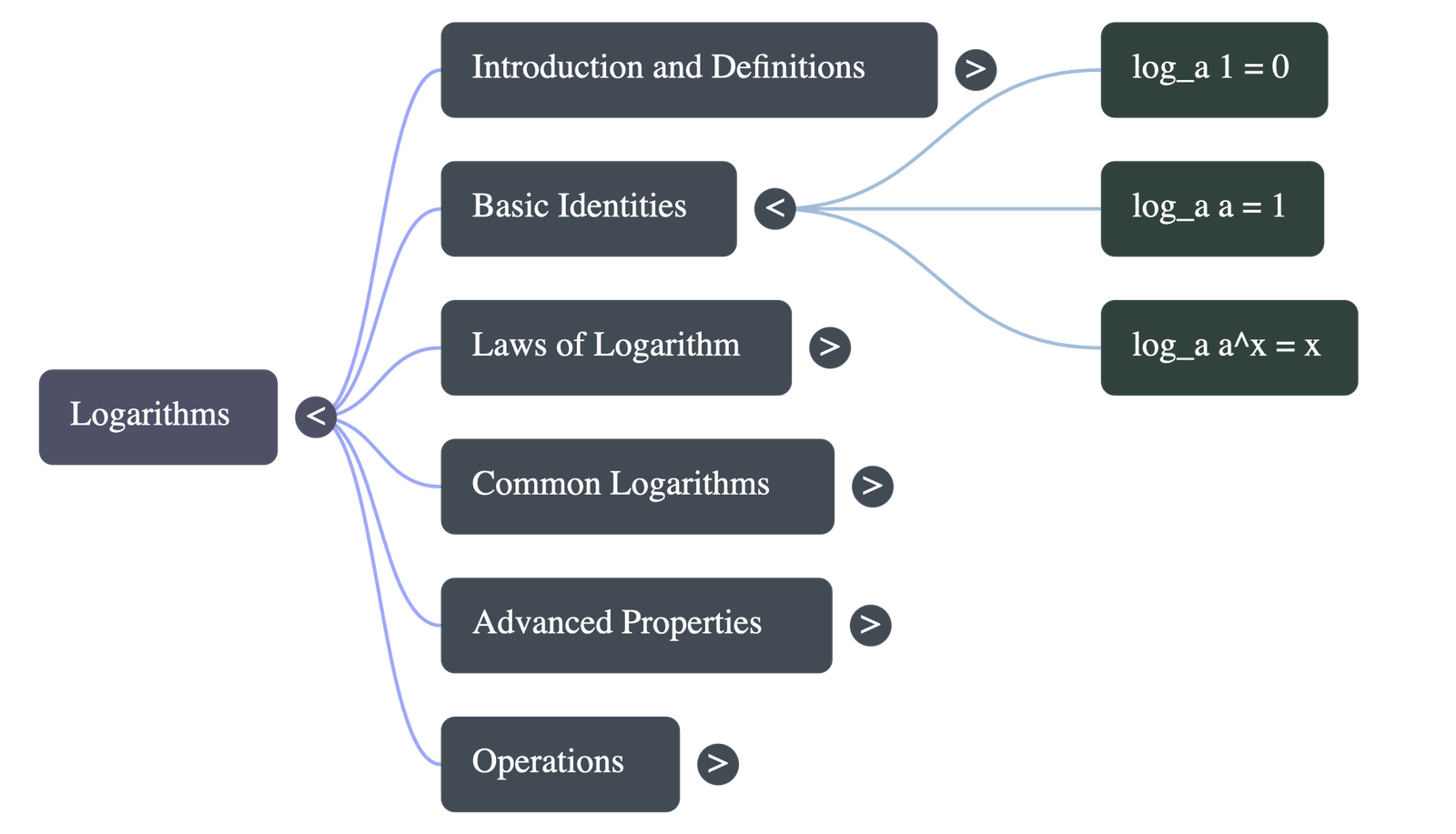
- Log of 1: The logarithm of 1 to any valid base is always zero.
Rule: loga 1 = 0 - Log of the Base: The logarithm of any number to the same number as its base is always one.
Rule: loga a = 1
8.3 Laws of Logarithm With Use
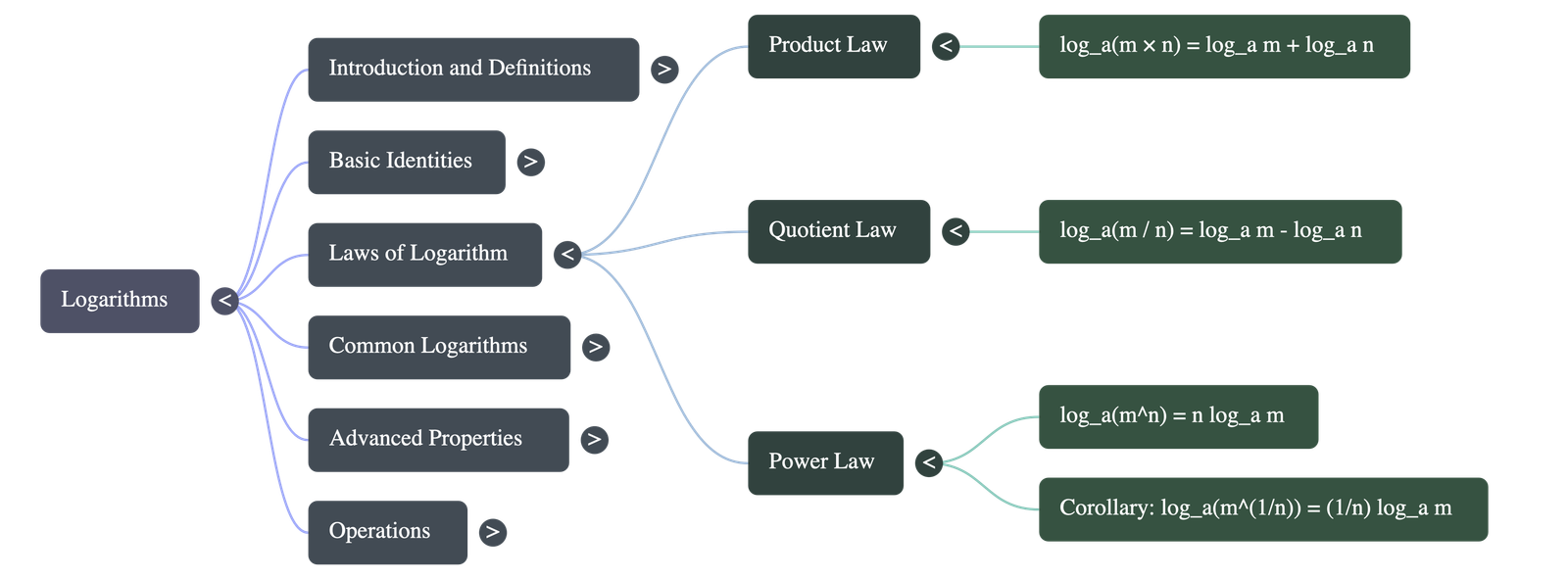
There are three fundamental laws that govern logarithmic operations:
- First Law (Product Law): The logarithm of a product is equal to the sum of the logarithms of its factors (at the same base).
loga (m × n) = loga m + loga n
Note: loga (m + n) is NOT equal to loga m + loga n. - Second Law (Quotient Law): The logarithm of a fraction is equal to the difference between the logarithm of the numerator and the logarithm of the denominator.
loga (m / n) = loga m - loga n - Third Law (Power Law): The logarithm of a number raised to a power is equal to the logarithm of the number multiplied by that power.
loga (m)n = n × loga m
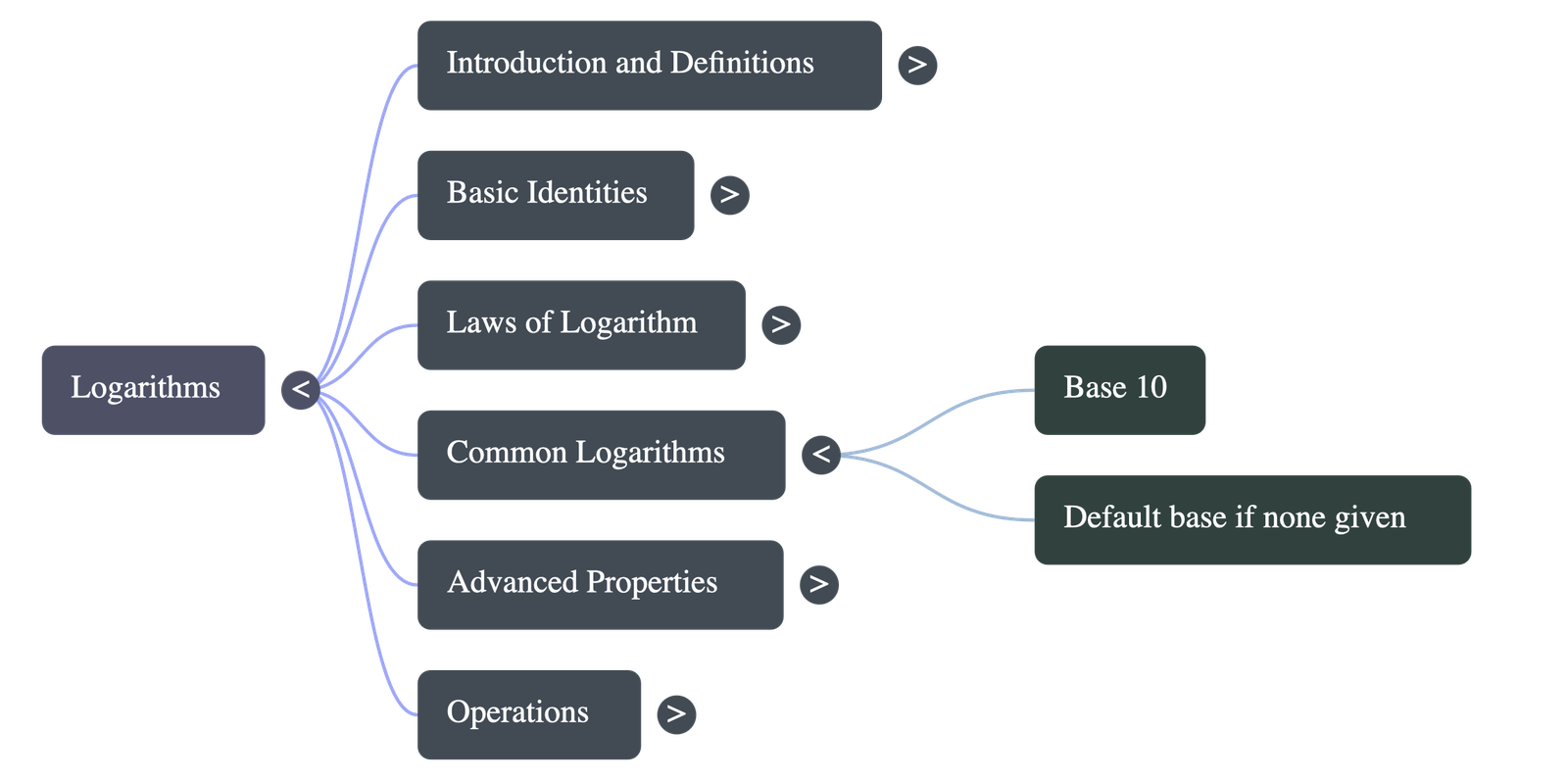
Corollary: loga (n√m) = (1/n) loga m - Common Logarithms: Logarithms to the base 10 are known as common logarithms. If no base is explicitly given in a problem, the base is always assumed to be 10 (e.g., log 100 means log10 100).
8.4 Expansion of Expressions With the Help of Laws of Logarithm
- Expanding: Complex algebraic fractions and products can be easily expanded using the three laws. For example, applying log to an expression containing multiplication and division allows you to break it down into simple addition and subtraction of log terms.
- Condensing (Conversely): The reverse is also true. Multiple logarithmic terms being added or subtracted can be combined into a single logarithm by working the laws backwards.
8.5 More About Logarithms (Advanced Rules)
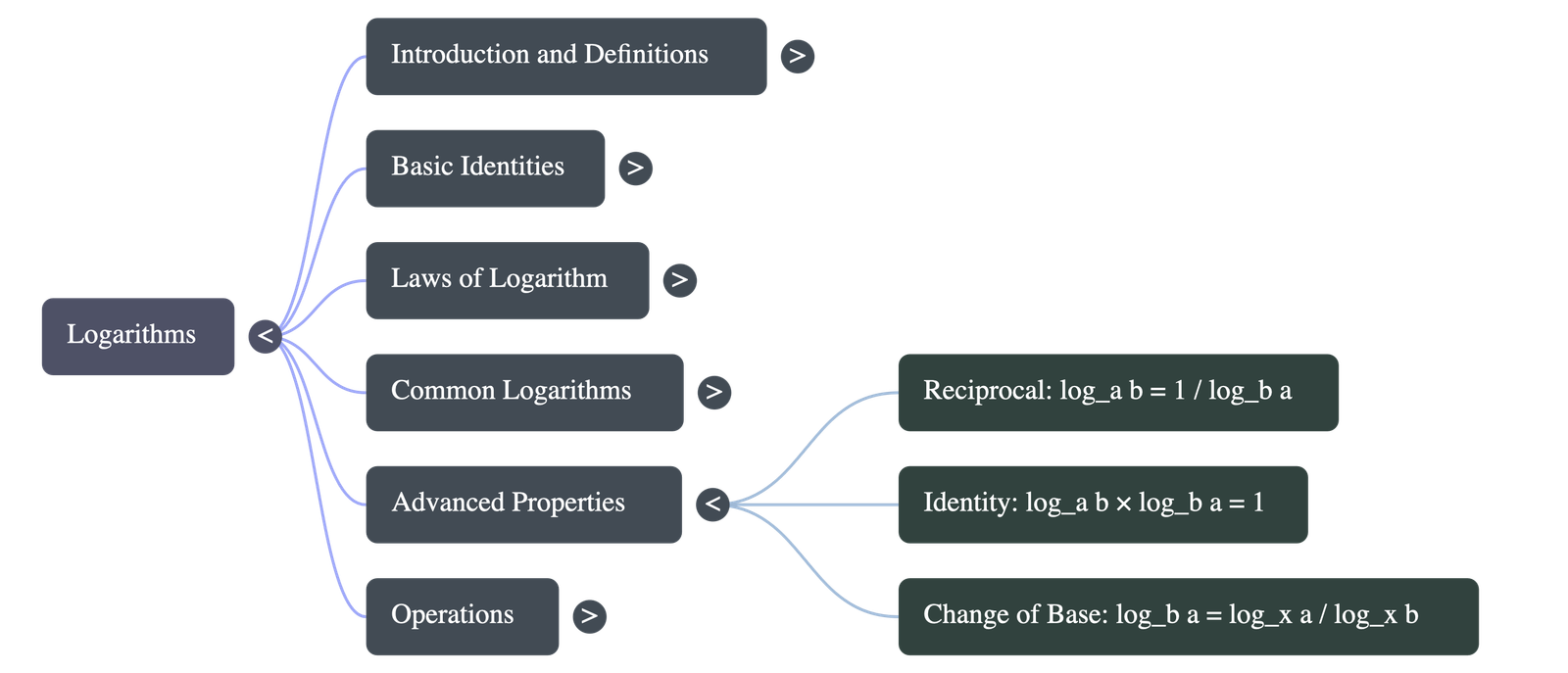
- Reciprocal Relation: Interchanging the base and the value creates a reciprocal relationship.
logb a = 1 / (loga b)⇒loga b × logb a = 1 - Base Identity Rules: Expanding on the rule that log of the base is 1, we get:
loga ax = x - Exponential-Logarithmic Identity: A base raised to a logarithm of the same base cancels out:
aloga m = m - Change of Base Formula: You can change the base of any logarithm to a new, convenient base (like base 10) by dividing the log of the value by the log of the old base.
logb a = (logx a) / (logx b)
Real-World Application (Case-Study Feature)
Logarithms are used to measure mobile signal strength! Signal strength is measured in decibel-milliwatts (dBm), and the formula used by engineers is S = 10 log P, where 'S' is the signal strength and 'P' is the signal power. This shrinks massive power numbers into easy-to-read double-digit numbers.
Do checkout all questions & answers of this chapter.
Quick Navigation:
| | | |
1 / 1
Quick Navigation:
| | | |