Quick Navigation:
| | | |
Mean and Median [For Ungrouped Data Only]
Overview: This chapter introduces the foundational concepts of statistics for ungrouped data, specifically focusing on finding the central or "average" values of a dataset using two key measures: the Mean and the Median.
18.1 Mean of Ungrouped Data
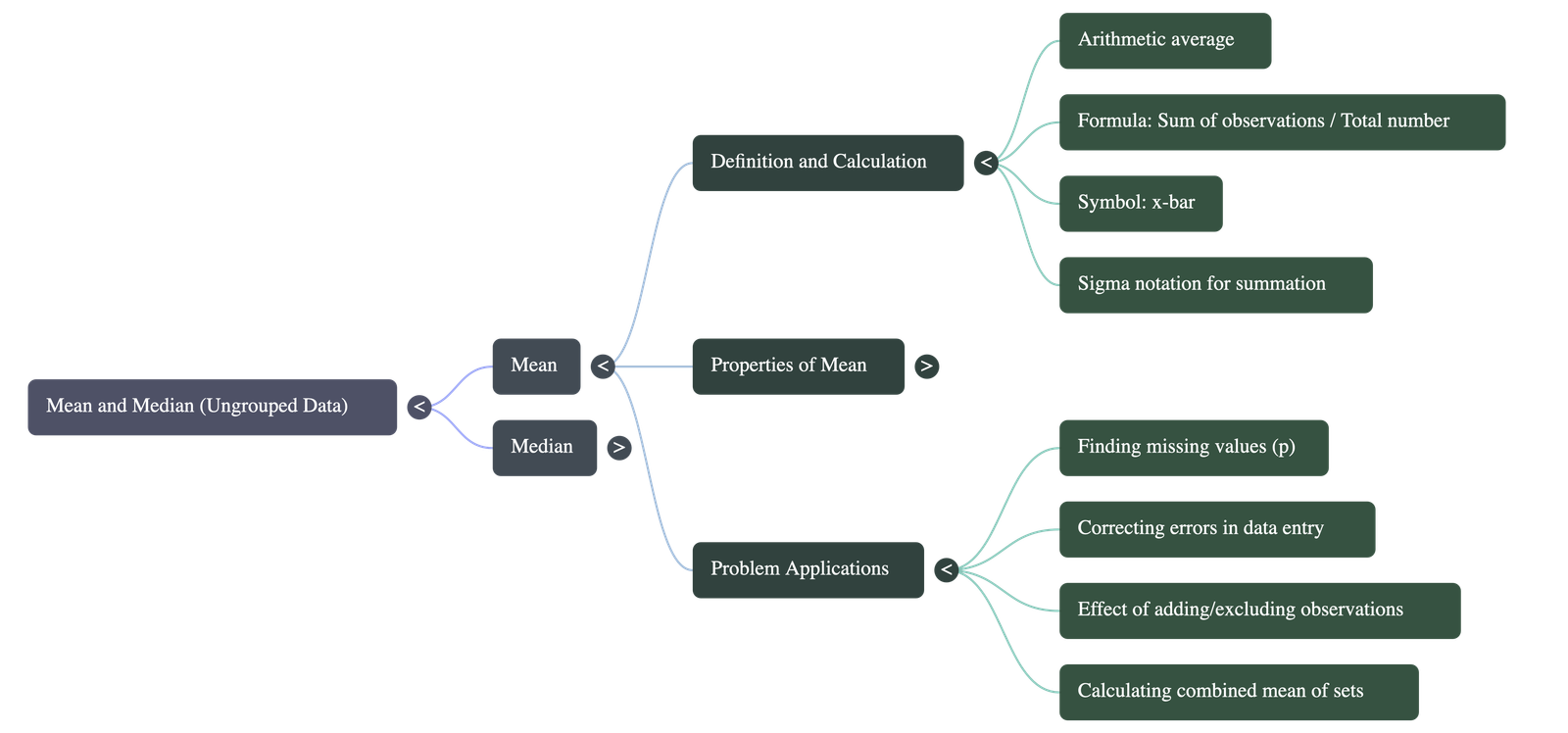
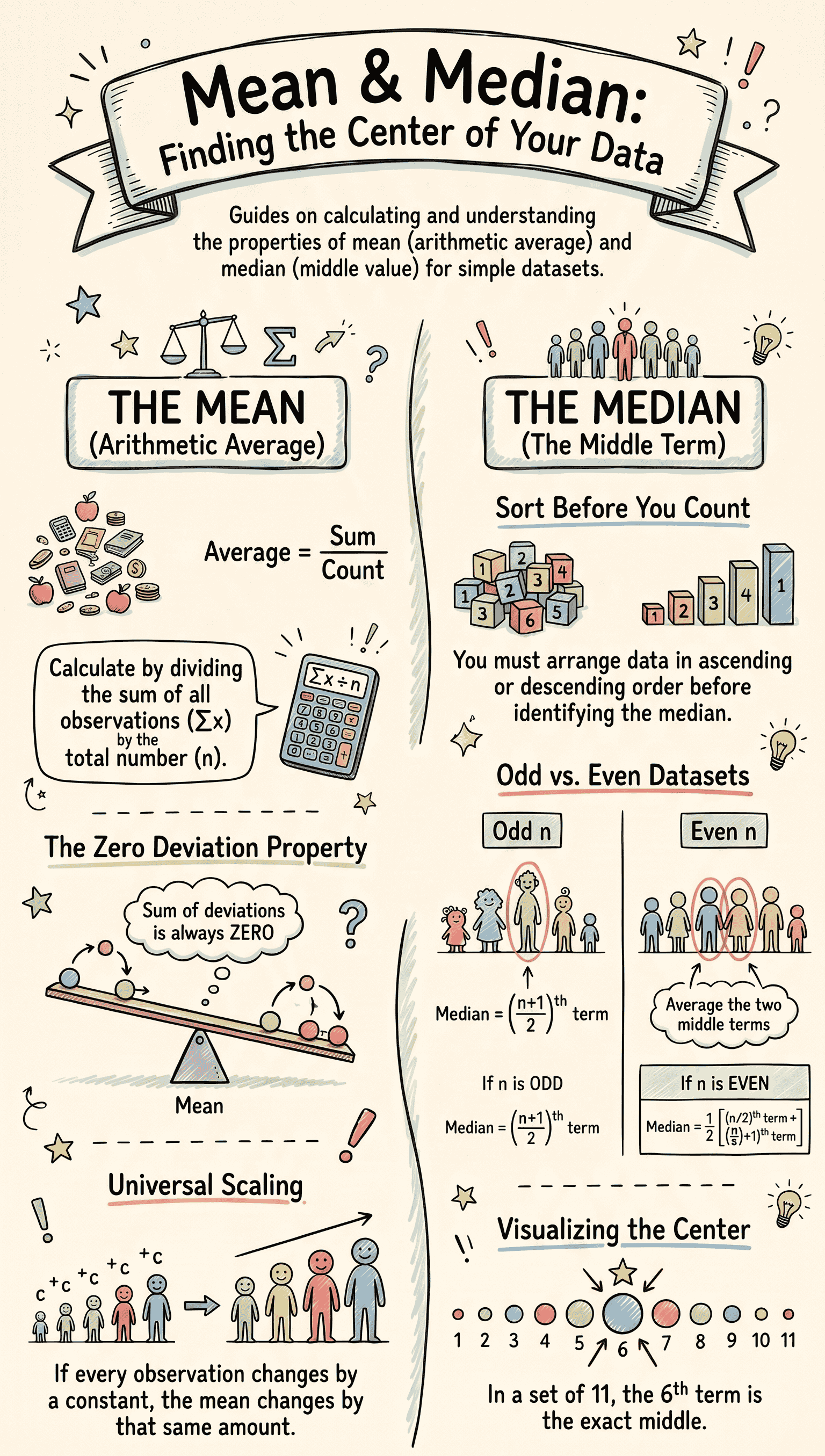
- Definition: The mean (also called the arithmetic mean or average) of a set of observations is calculated by dividing the sum of all observations by the total number of observations.
- General Formula: If there are n observations (x₁, x₂, x₃, ....., xₙ), their mean (denoted by x̄) is given by:
Mean (x̄) = (Sum of all observations) / (Total number of observations)
- Key Terms: The terms "mean", "arithmetic mean", and "average" all mean the exact same thing in this context.
18.2 Properties of Mean
The mean has several mathematical properties that make calculations easier when data is modified uniformly:
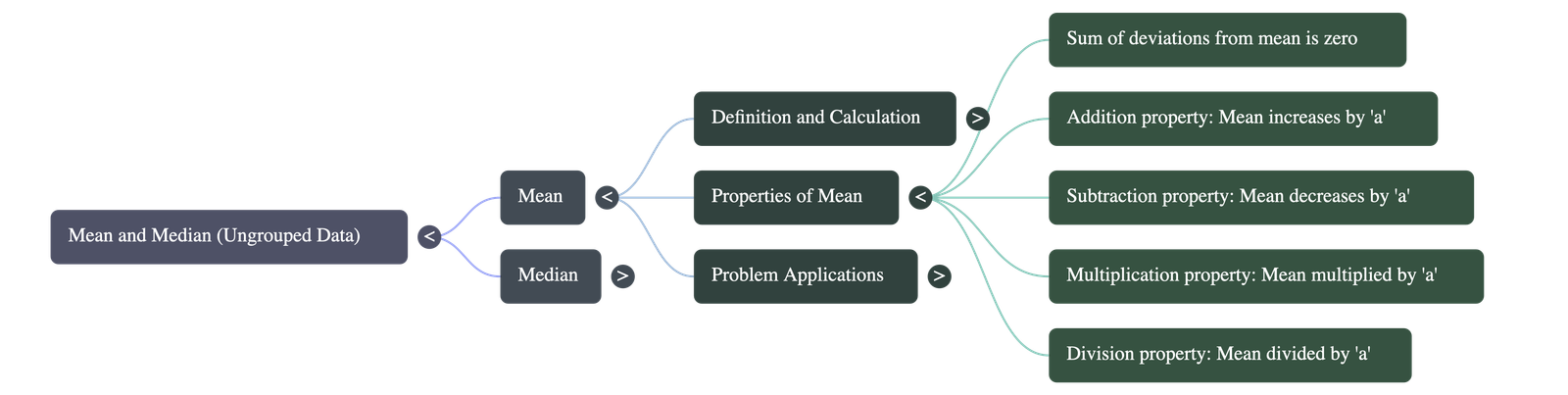
- Property 1 (Sum of Deviations): The sum of the deviations of all observations from their actual mean is always zero. If you subtract the mean from each individual observation and add up all those results, you will get 0.
- Property 2 (Addition): If every single observation in a dataset is increased by a specific quantity 'a', the new mean of the dataset will also be increased by 'a'.
- Property 3 (Subtraction): If every observation is decreased by a specific quantity 'a', the new mean is also decreased by 'a'.
- Property 4 (Multiplication): If every observation is multiplied by a specific quantity 'a', the new mean is also multiplied by 'a'.
- Property 5 (Division): If every observation is divided by a specific non-zero quantity 'a', the new mean is also divided by 'a'.
Special Applications of Mean (Based on Examples)
- Correcting Errors: If a value was wrongly recorded (e.g., copied as 125 instead of 165), you can find the correct mean without adding everything up again. You multiply the incorrect mean by the total count to find the incorrect sum, subtract the wrong value, add the correct value, and then divide by the total count again.
- Including/Excluding Data: You can find the value of a newly added or removed observation by comparing the "total sum of the dataset" before and after the change.
- Combined Mean: You can find the mean of a combined group (e.g., mean of 25 numbers given the mean of 15 numbers and the mean of the remaining 10 numbers) by finding the sum of both groups separately and adding them together before dividing by the total count.
18.3 Median
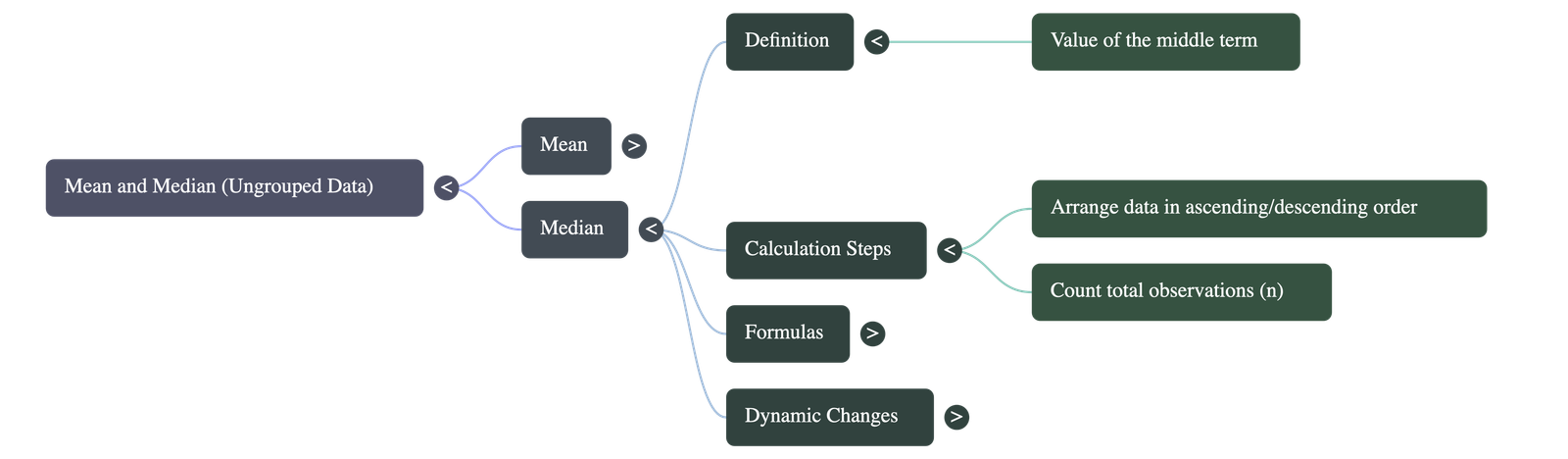
- Definition: For any given set of data, the median is the value of its exact middle term.
- Step-by-Step Process to Find the Median:
- Step 1: Arrange the given ungrouped data in either ascending (smallest to largest) or descending (largest to smallest) order of magnitude.
- Step 2: Count the total number of observations. Let this number be 'n'.
- Step 3: Apply the correct formula based on whether 'n' is odd or even.
Formulas for the Median
-
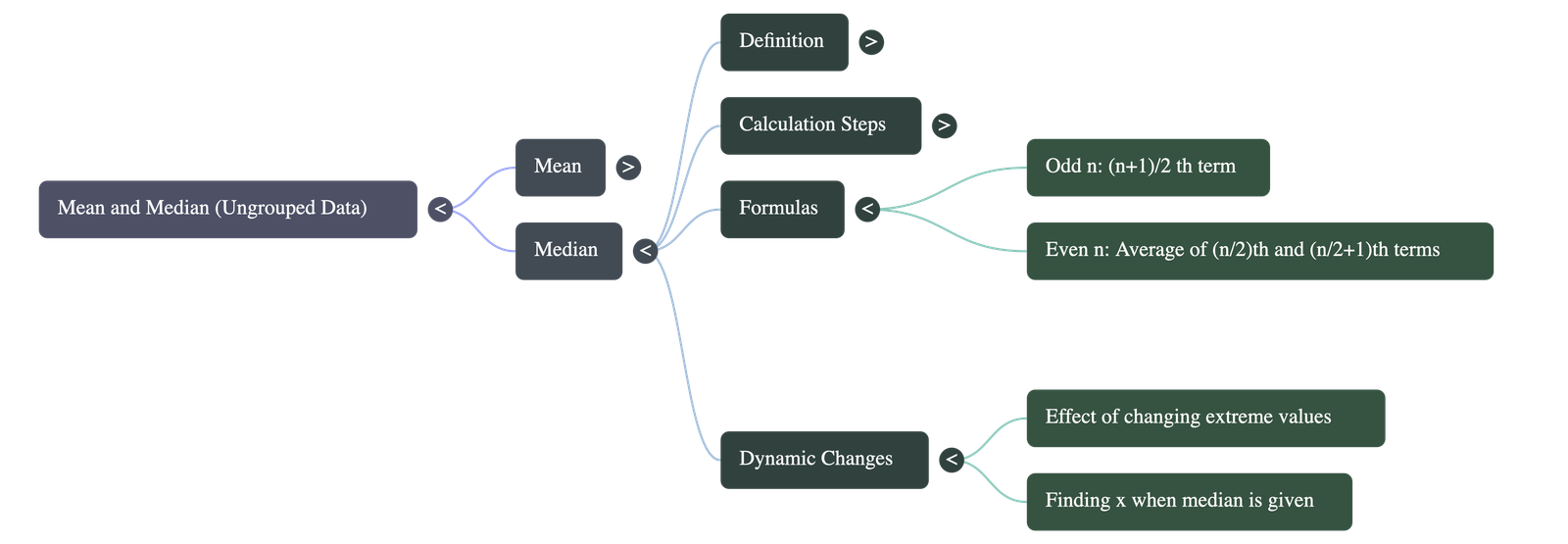
Case 1: If 'n' is an odd number
The median is simply the value of the exact middle term.Median = Value of the ((n + 1) / 2)th term -
Case 2: If 'n' is an even number
There is no single middle term. The median is the average (mean) of the two middle terms.Median = ½ × [ Value of the (n / 2)th term + Value of the ((n / 2) + 1)th term ]
Case-Study Based Applications
- Visualizing Data: The chapter concludes by showing how these statistical measures can be applied to real-world data presented in visual formats, such as bar graphs (e.g., comparing populations in different municipalities) and frequency polygons (e.g., tracking average monthly precipitation over a year). Students must extract the individual data points from these graphs to calculate the mean or median.
End of Chapter Summary
Do checkout all questions & answers of this chapter.
Quick Navigation:
| | | |
1 / 1
Quick Navigation:
| | | |