Construction of Polygons
[Using Ruler and Compass Only]
14.1 Construction of Quadrilaterals
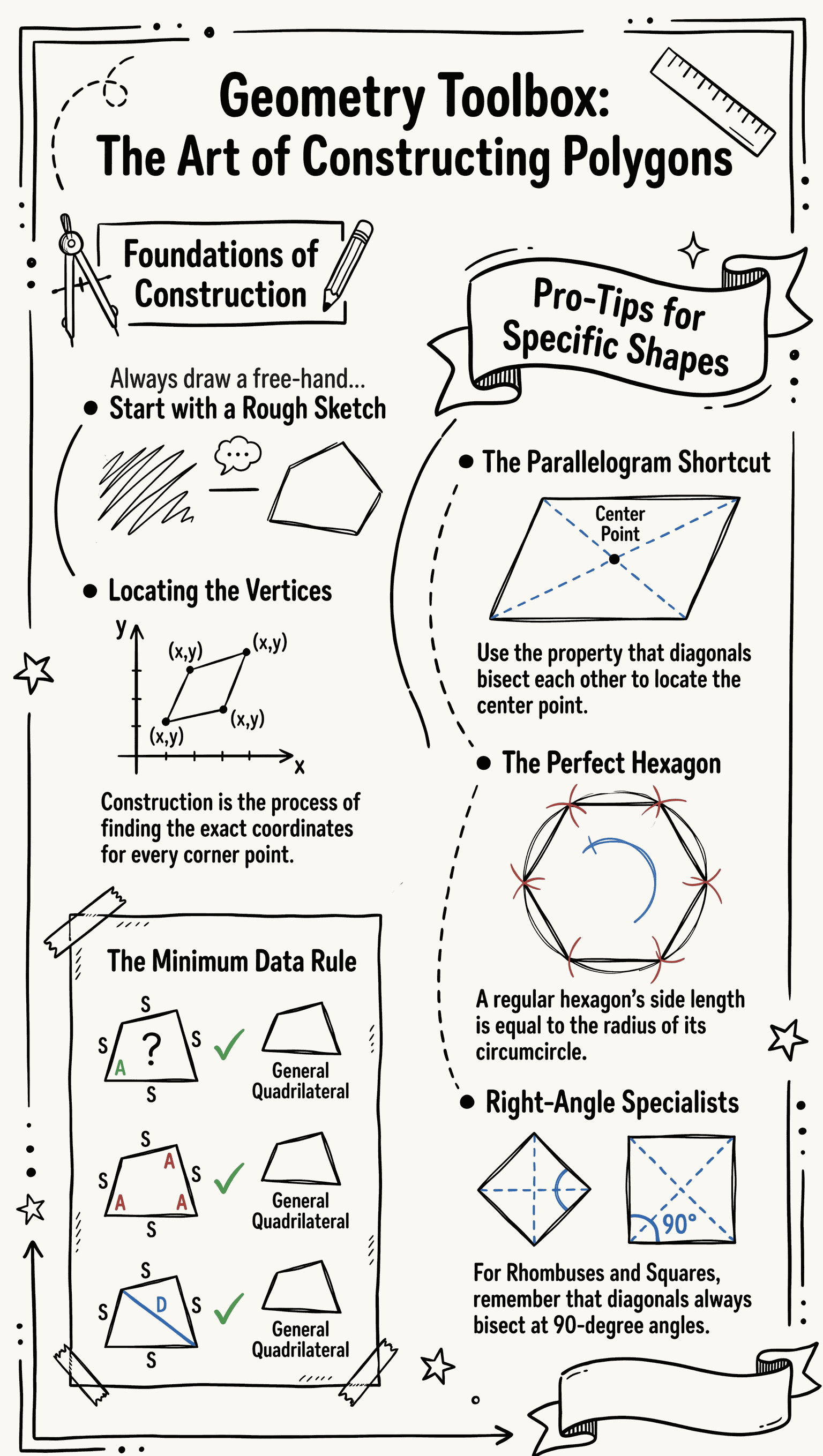
Constructing a quadrilateral means accurately locating its four unique vertices. As a golden rule, a student should always draw a rough, free-hand sketch before starting the actual construction with geometric tools.
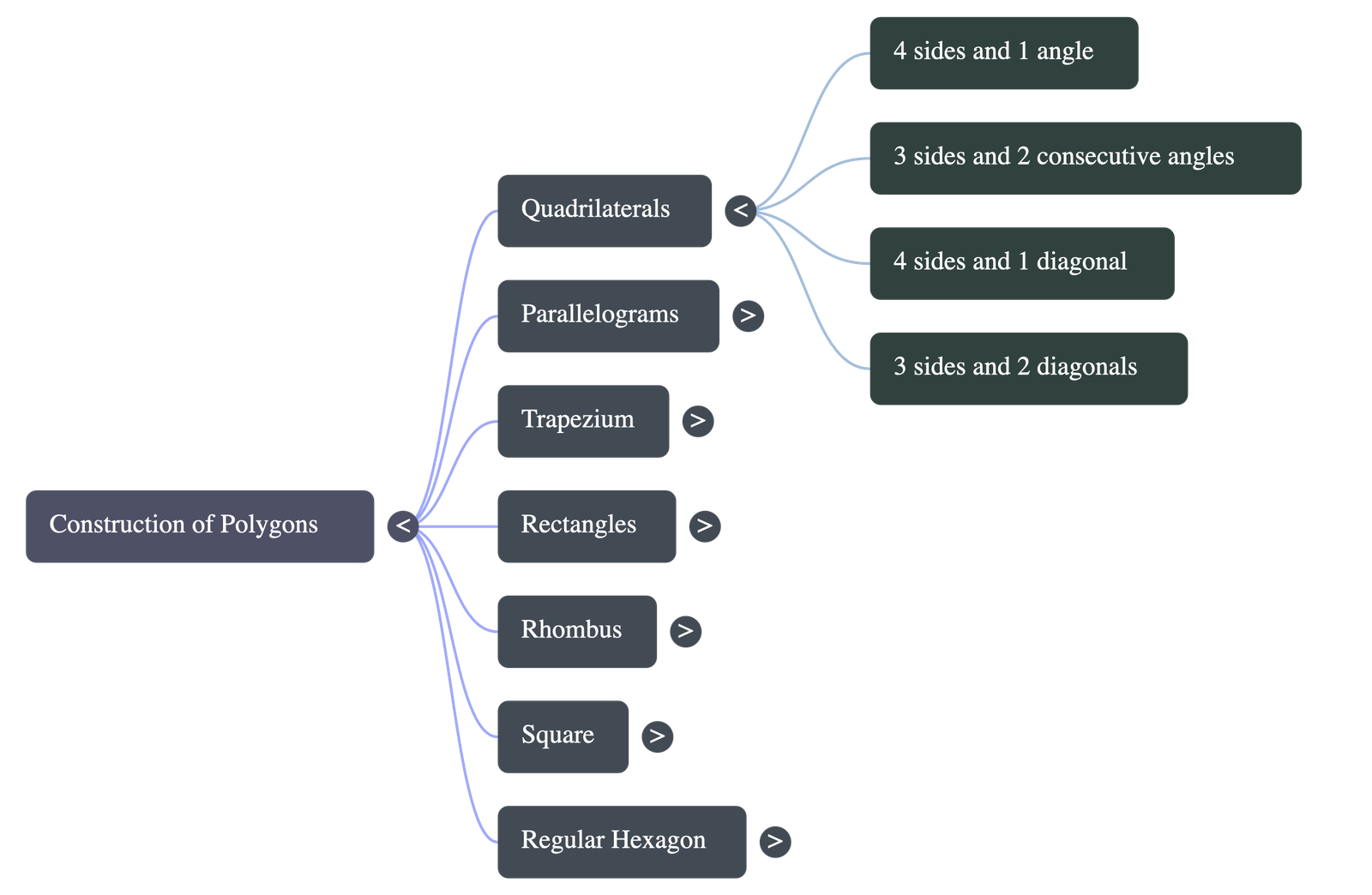
A quadrilateral can be successfully constructed under the following given conditions:
- When lengths of all four sides and one angle are given.
- When lengths of three sides and two consecutive angles are given.
- When lengths of all four sides and one diagonal are given.
- When lengths of three sides and two diagonals are given.
14.2 Construction of Parallelograms
To construct parallelograms, we frequently use the property that opposite sides are equal and diagonals bisect each other.
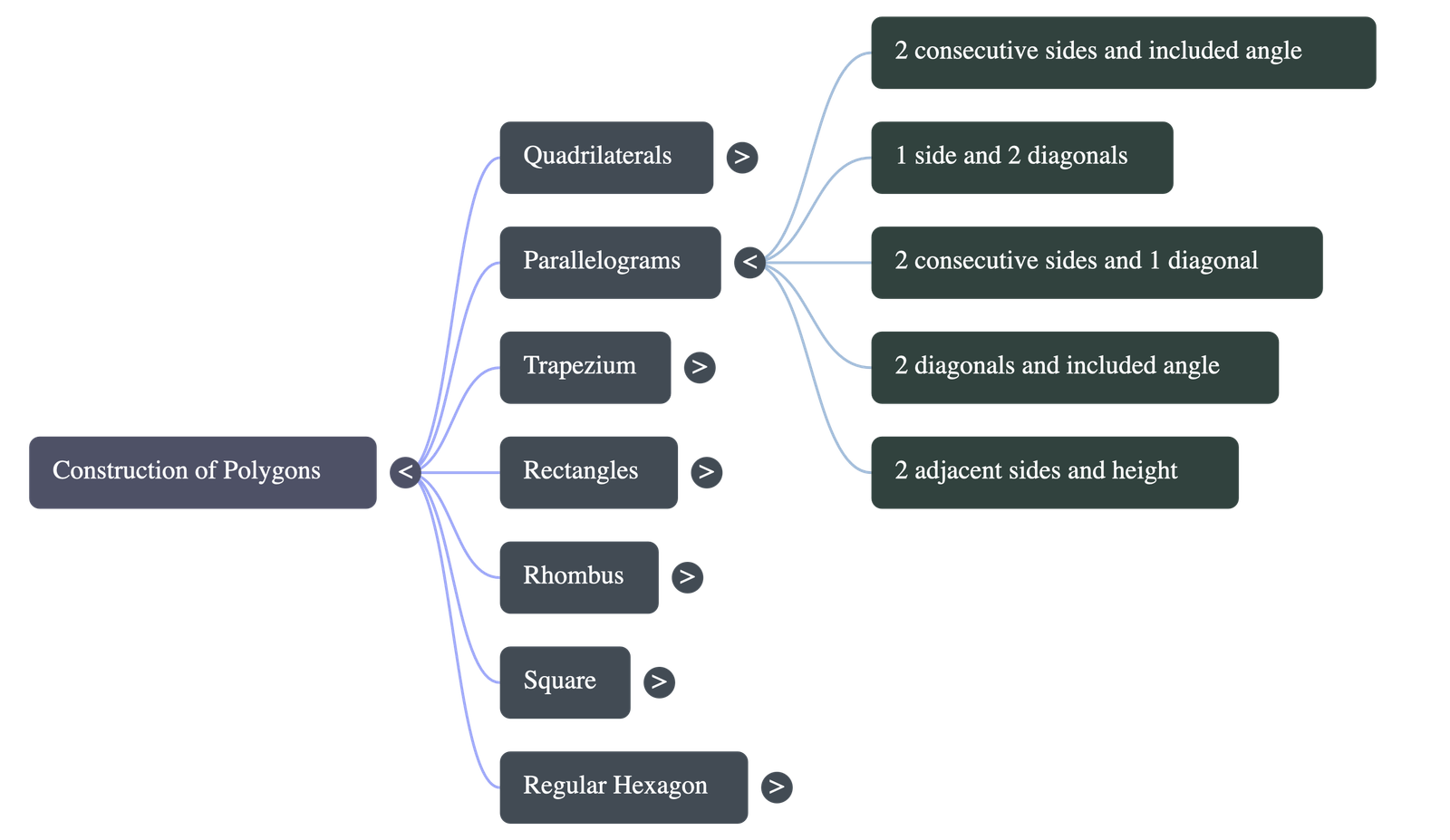
A parallelogram can be constructed when the following measurements are provided:
- Two consecutive sides and the included angle between them.
- One side and both diagonals (using the property that diagonals bisect each other to form a baseline triangle first).
- Two consecutive sides and one diagonal.
- Both diagonals and the included angle between the diagonals.
- Two adjacent sides and the corresponding height.
14.3 Construction of Trapezium
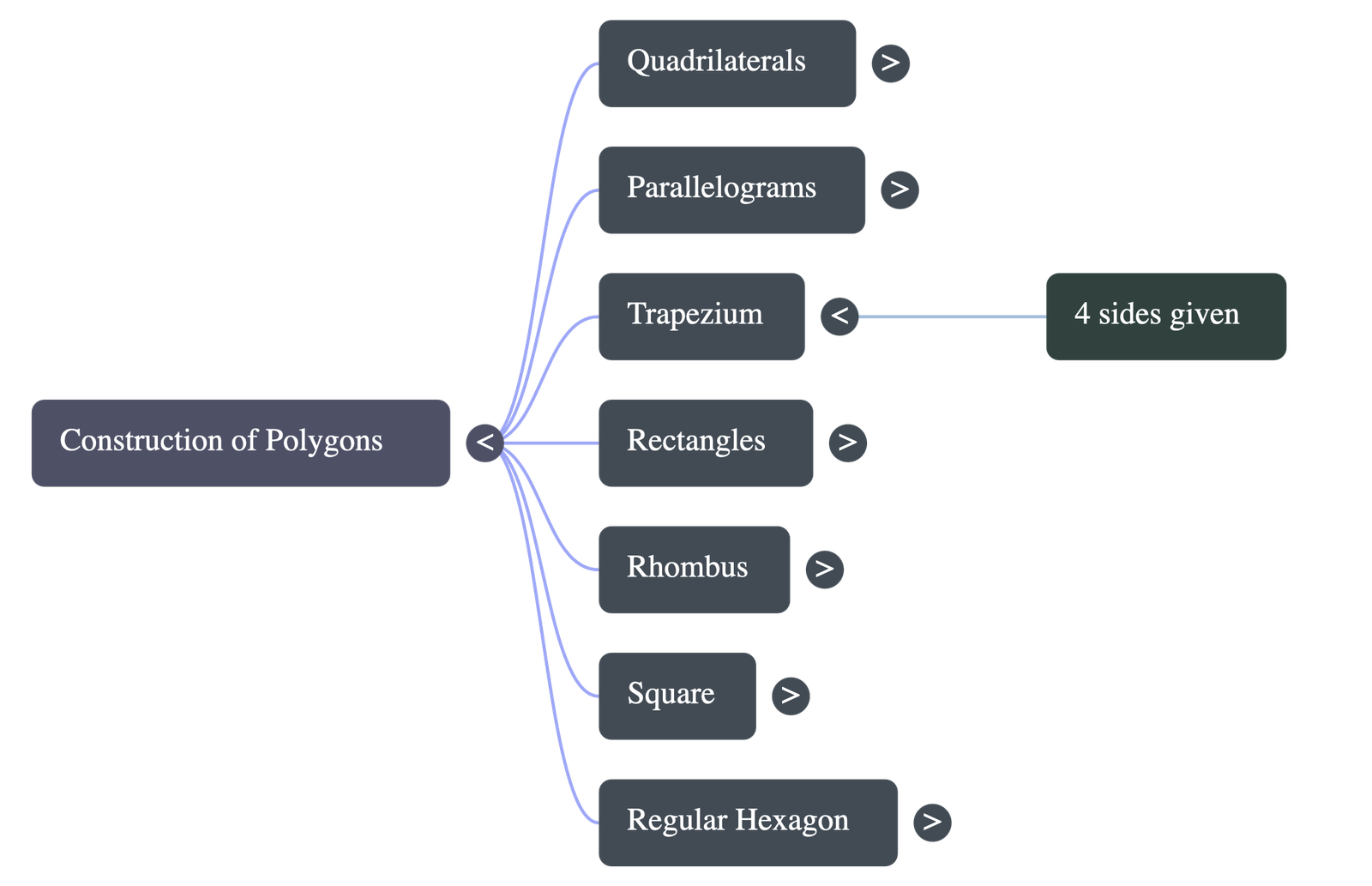
- A trapezium can be constructed when the lengths of all four sides are given.
- The construction strategy typically involves drawing parallel lines and constructing a smaller triangle inside the trapezium using the differences in lengths of the parallel sides to establish the proper angles and height.
14.4 Construction of Rectangles
The construction relies on the core properties of a rectangle: each interior angle is exactly 90 degrees, and opposite sides are equal.
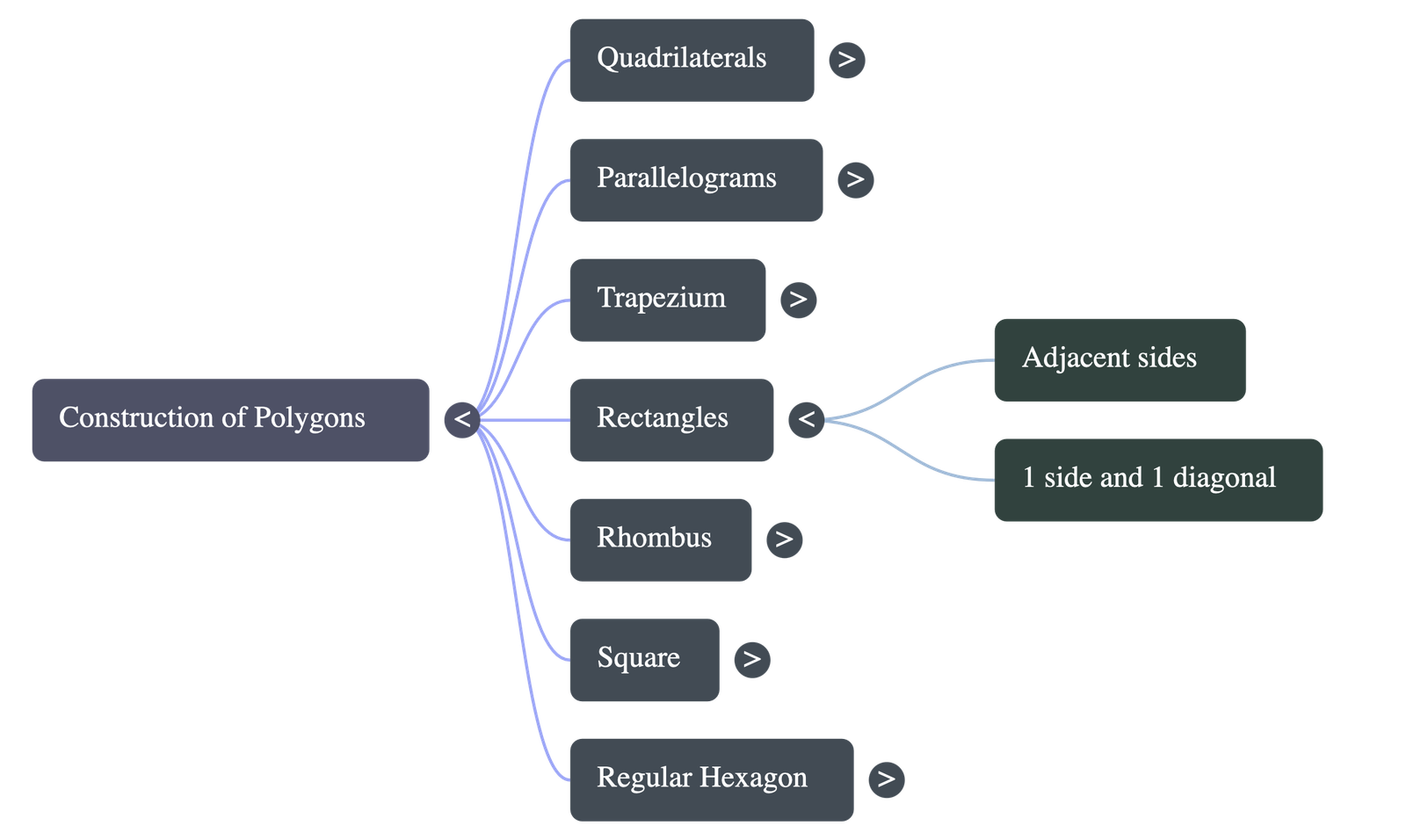
A rectangle can be constructed given:
- Two adjacent sides: You construct right-angled triangles step-by-step using the 90-degree property.
- One side and one diagonal: This involves drawing a right-angled triangle first, and then completing the rectangle using the fact that opposite sides are equal.
14.5 Construction of Rhombus
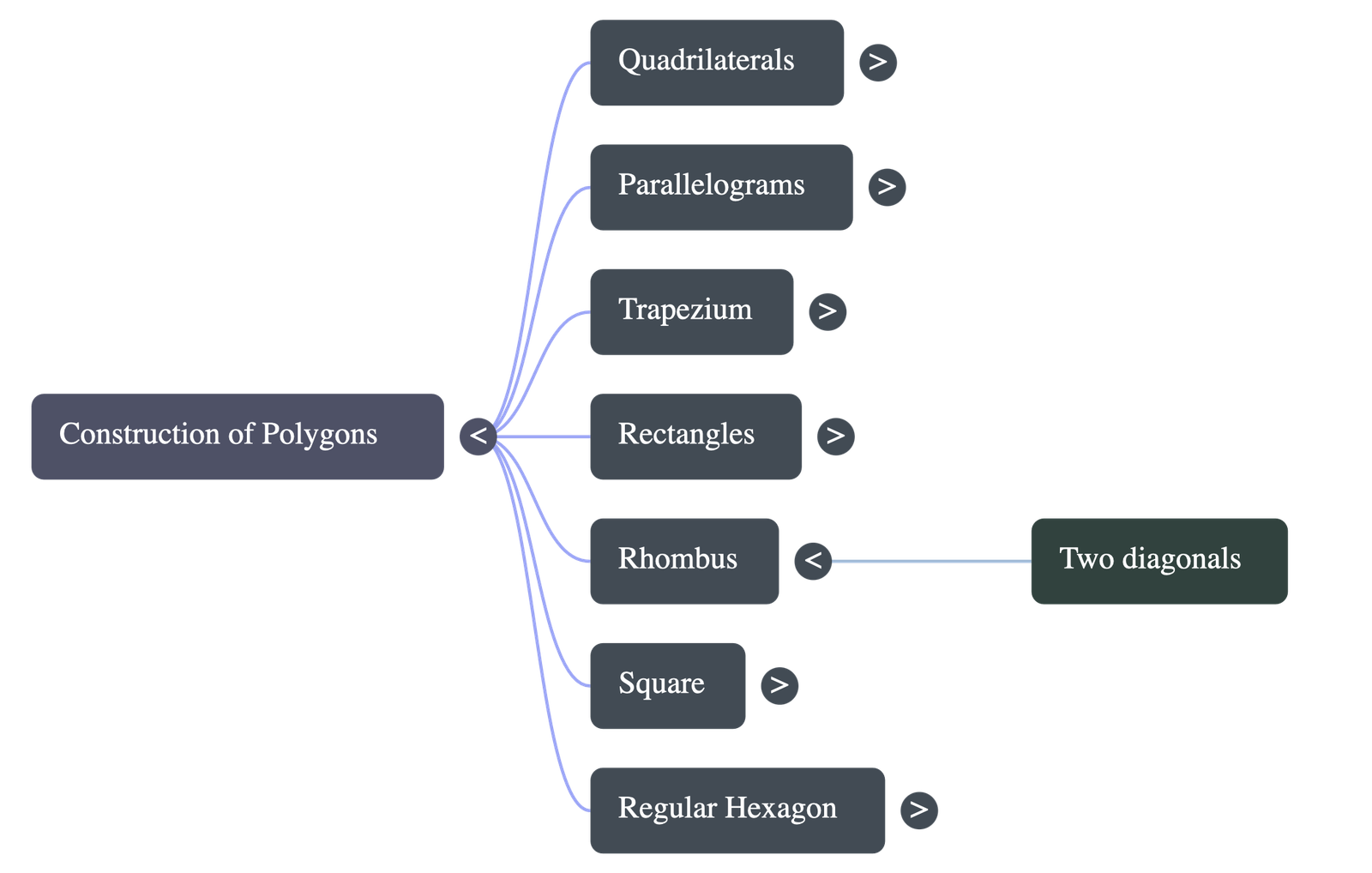
- The fundamental property used here is that the diagonals of a rhombus bisect each other at right angles (90 degrees).
- A rhombus can be perfectly constructed if the lengths of both its diagonals are given. The process involves drawing one diagonal and then constructing its perpendicular bisector to mark the other diagonal's length.
14.6 Construction of Square
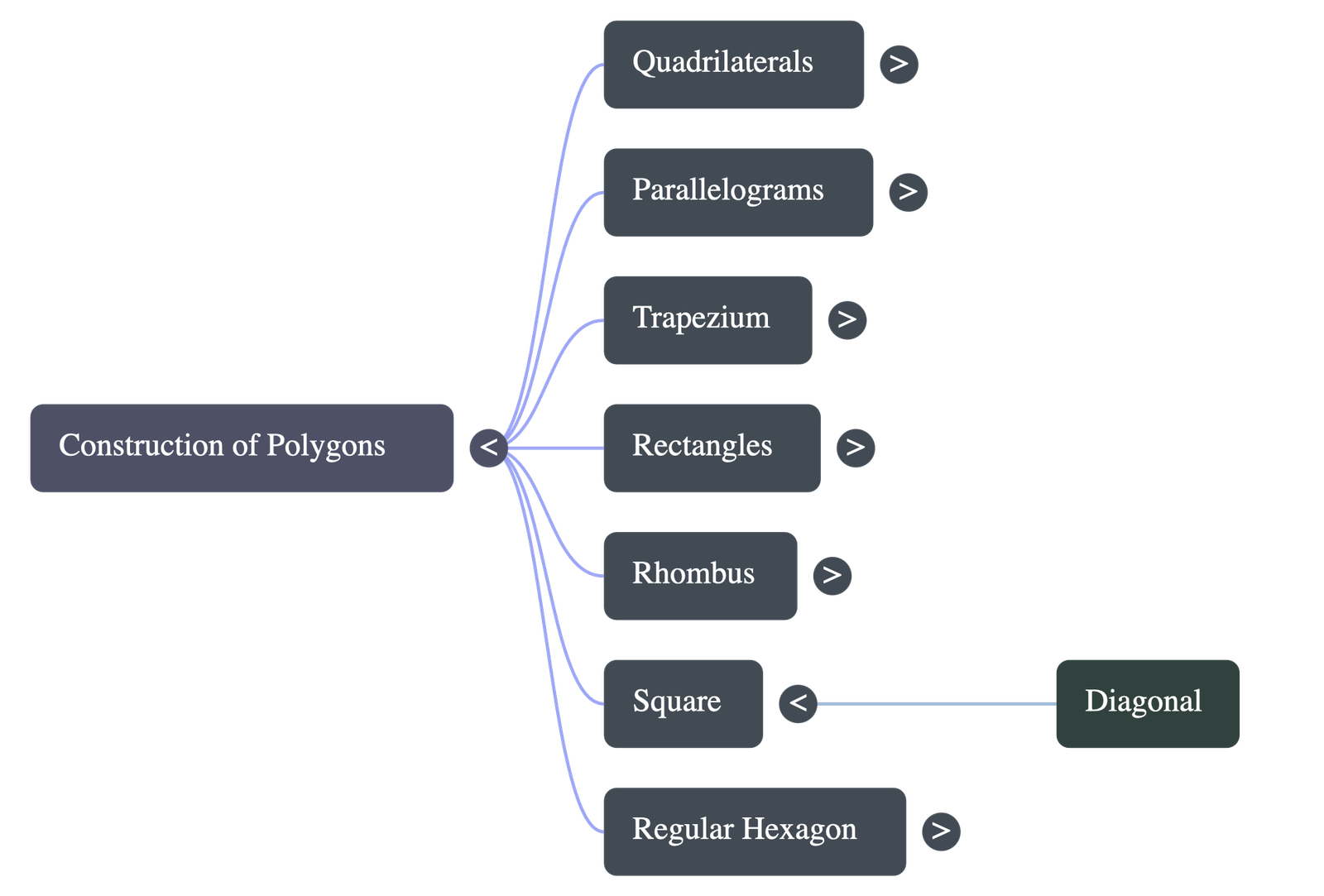
- A square shares properties with a rhombus, but its diagonals are also equal in length.
- Because the diagonals are equal and perpendicularly bisect each other, a complete square can be constructed even if only one single diagonal measurement is given.
14.7 Construction of a Regular Hexagon
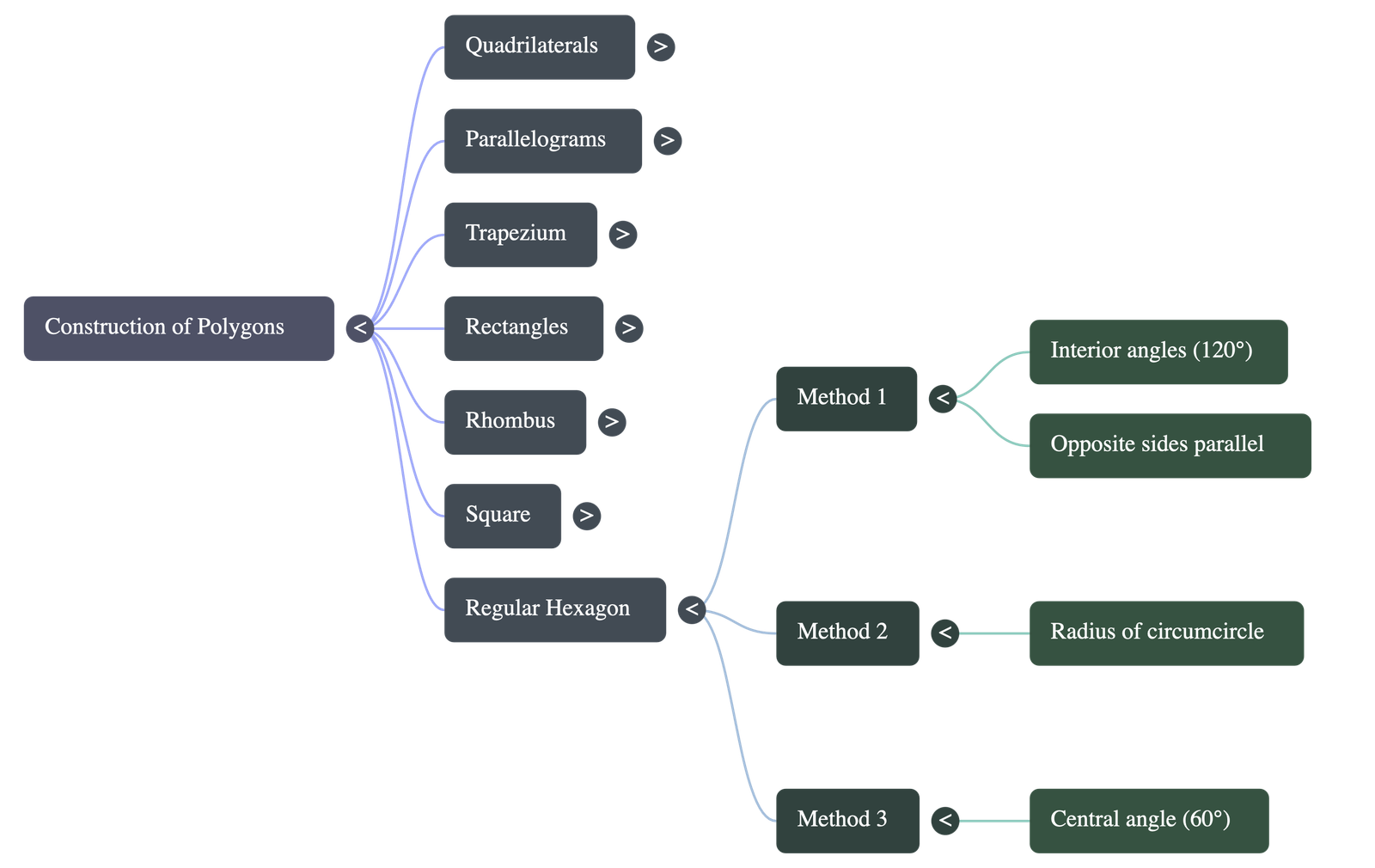
There are three distinct mathematical methods to construct a regular hexagon:
- Method I (Using Interior Angles): Based on the geometric fact that each interior angle of a regular hexagon is 120 degrees, and its opposite sides are perfectly parallel.
- Method II (Using Circumcircle Radius): Based on the property that the length of the side of a regular hexagon is exactly equal to the radius of its circumcircle. A circle is drawn, and its circumference is cut into six equal parts using the radius as the compass width.
- Method III (Using Central Angles): Based on the fact that each side of a regular hexagon subtends an angle of exactly 60 degrees at the center of its circumcircle. This method effectively constructs six adjoining equilateral triangles around a central point.
Do checkout all questions & answers of this chapter.