Quick Navigation:
| | | |
Solution of Right Triangles
This chapter introduces Simple 2-D Problems Involving One Right-angled Triangle. It is designed to help students apply basic trigonometry to find missing geometric values.
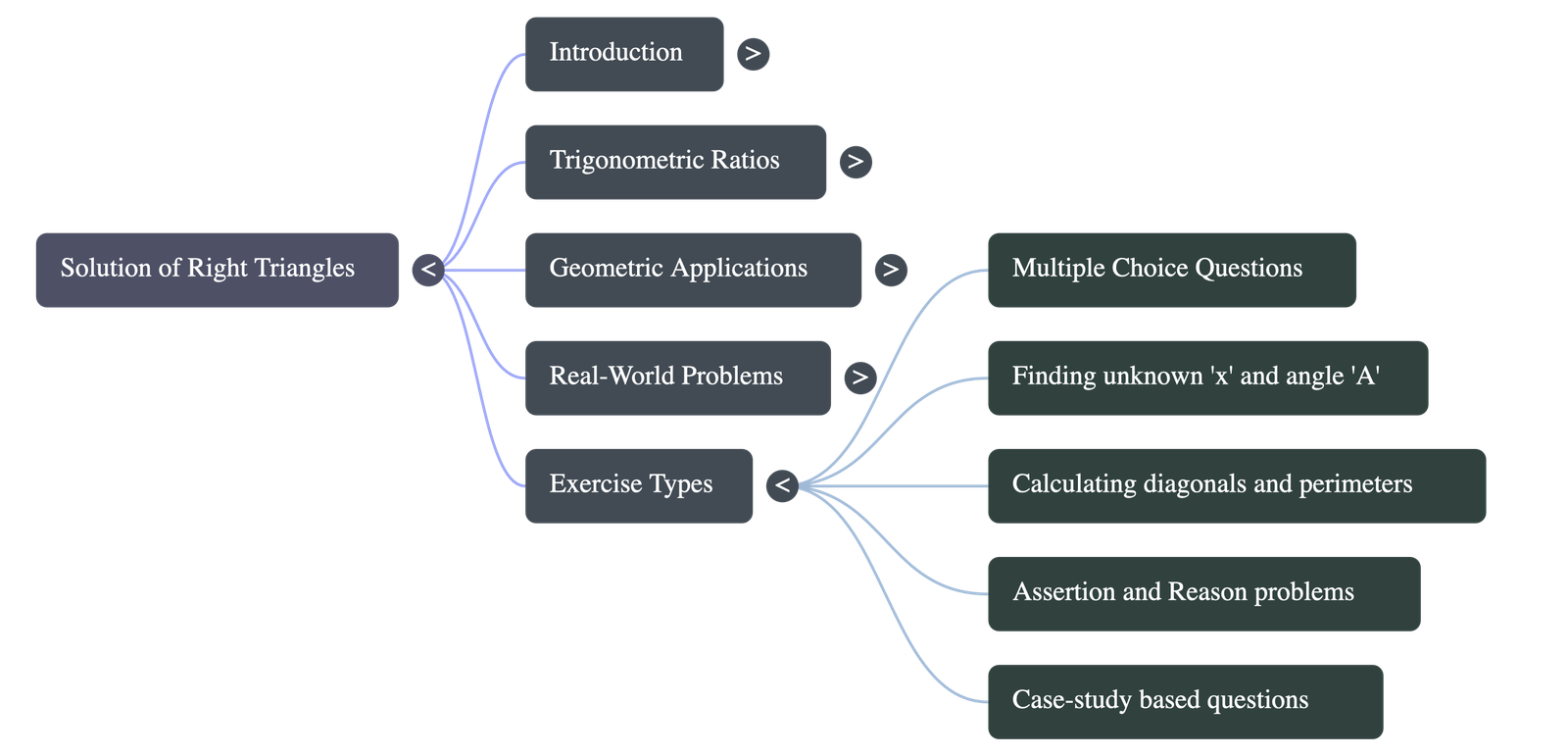
1. Introduction: What it Means to "Solve" a Right Triangle
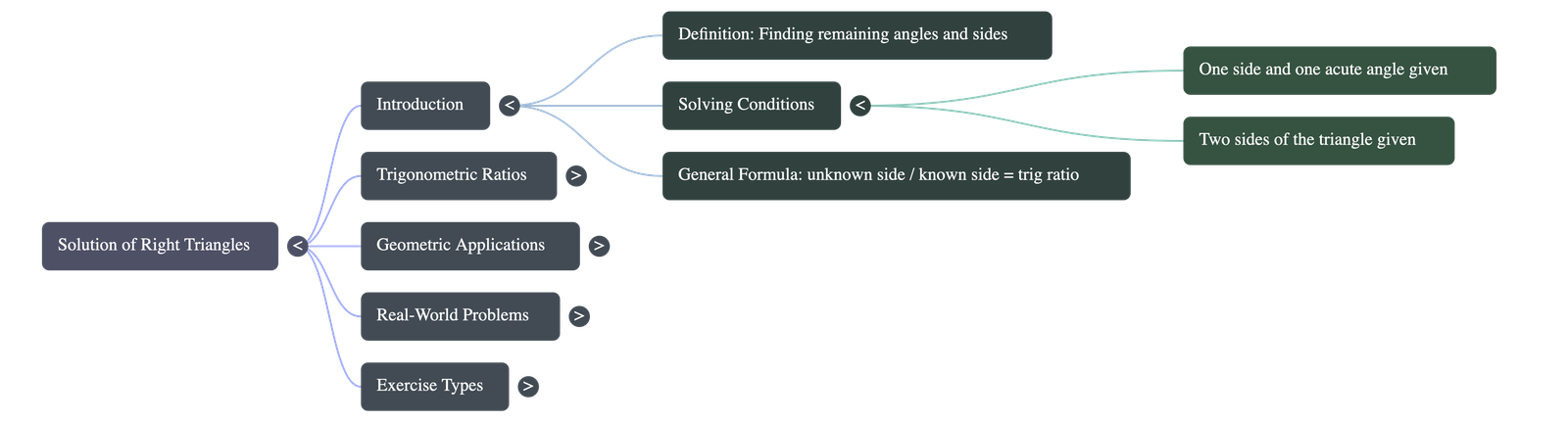
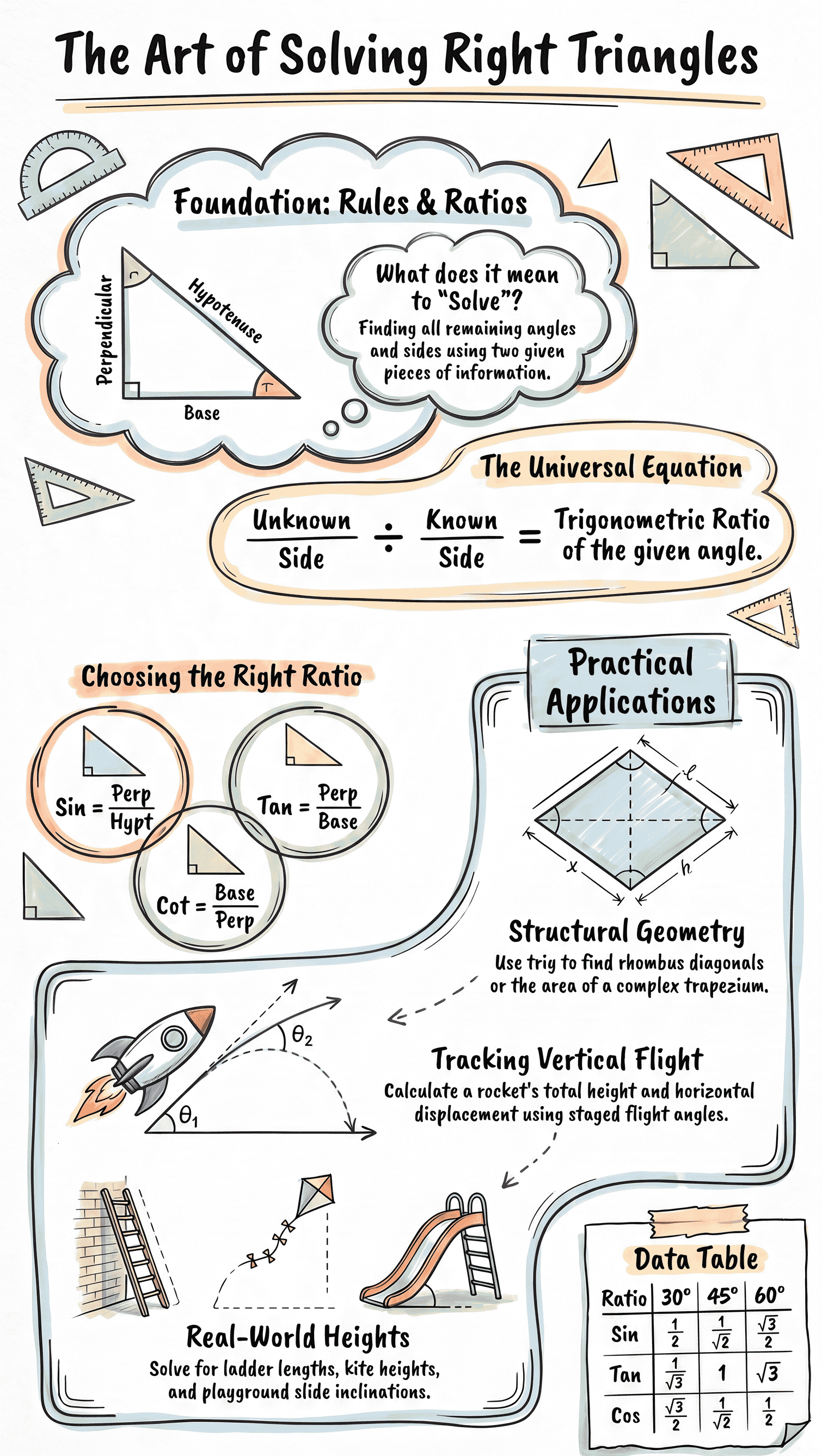
- Definition: Solving a right-angled triangle means finding the exact values of all its remaining unknown angles and unknown sides.
- Conditions for Solving: A right triangle can be easily solved if you are given either:
- One side and one acute angle.
- Any two sides of the triangle.
2. The Core Principle and Master Formula
- When one side and one acute angle are given, you can find any missing side using a simple ratio principle.
- Formula: (Unknown Side) ÷ (Known Side) = Corresponding Trigonometrical Ratio of the Given Angle.
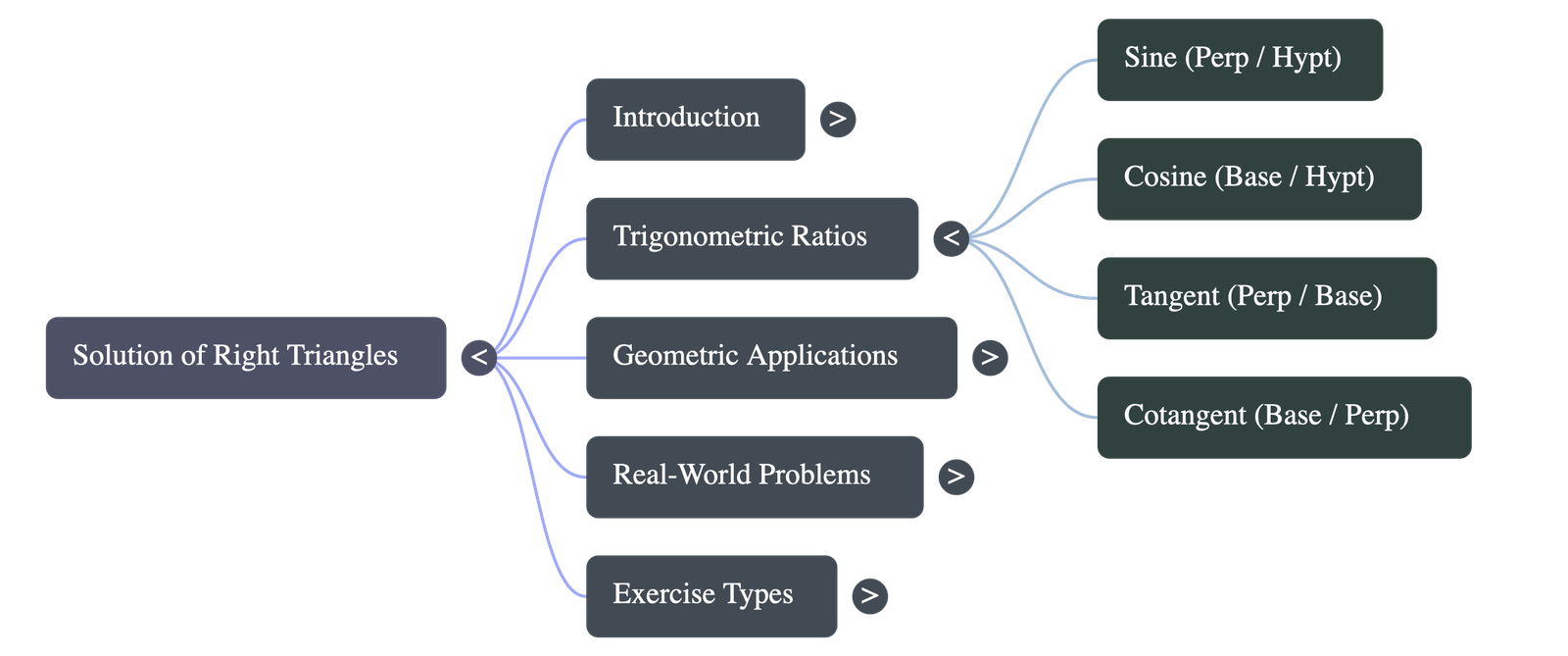
- Students must use standard trigonometric values (like sin 30°, cos 45°, tan 60°, etc.) to substitute into this formula and calculate exact lengths.
3. Application in Complex 2-D Figures
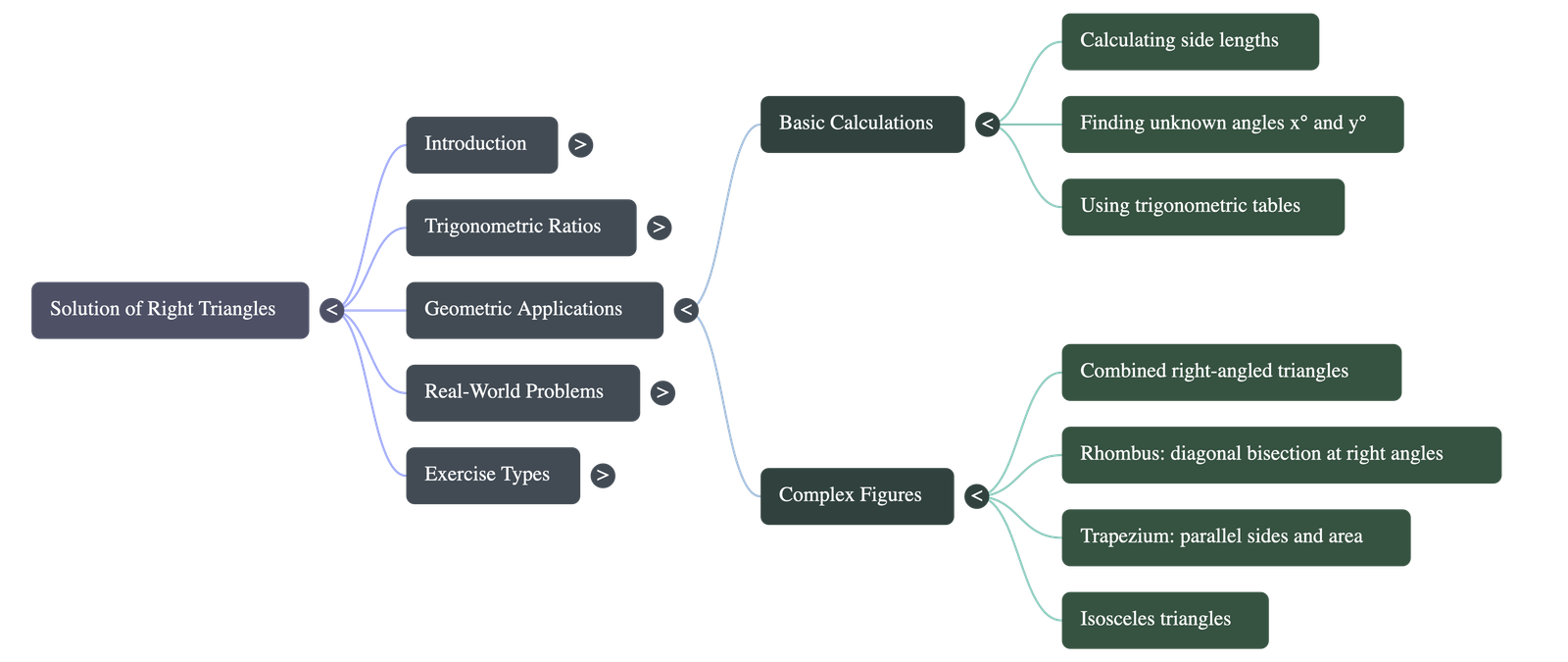
- Connected Triangles: Often, figures contain multiple triangles joined together. You can use the calculated side of one right triangle as the "known side" for the adjacent triangle to find further missing values.
- Solving a Rhombus: By applying the geometric property that the diagonals of a rhombus bisect each other at right angles (90°) and bisect the vertex angle, students can form right triangles inside the rhombus to easily calculate the lengths of unknown diagonals or sides.
- Solving a Trapezium: For shapes like trapeziums, dropping a perpendicular line from one vertex to the base creates a rectangle and a right triangle. Trigonometry can then be applied to find the height, unknown parallel sides, and ultimately the area of the trapezium.
4. Real-World Practical Problems (Word Problems)
- The chapter strongly connects trigonometry to practical, real-life scenarios.
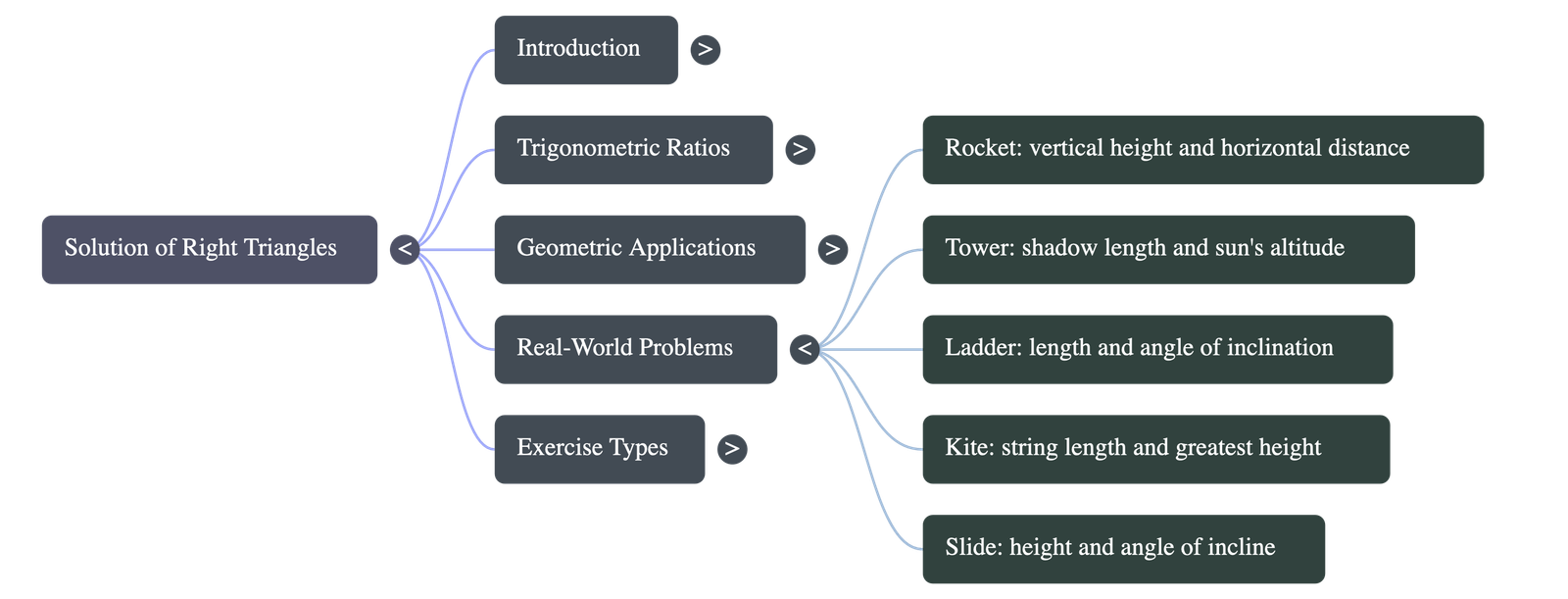
- Rockets and Elevations: Calculating the vertical height and horizontal distance of a rocket launched upwards at specific angles.
- Shadows and Sun's Altitude: Using the length of a tower's shadow to find the angle of the sun's elevation.
- Ladders against Walls: Determining the length of a ladder when it is placed against a vertical tower at a specific angle and reaches a certain height.
- Kites: Finding the maximum vertical height of a flying kite when attached to a string of a known length at a specific angle to the ground.
5. Exercise 22 and "Test Yourself" Assessment
- Multiple Choice Questions: Quick-fire questions evaluating the student's ability to identify the correct angles, side lengths, or trigonometric identities from given figures.
- Figure-Based Calculations: Exercises that provide various geometric shapes (isosceles triangles, parallel lines cut by transversals) where students must calculate exact lengths of labeled sides (like 'x') or angles.
- Assertion and Reason Questions: Advanced questions that give a statement (Assertion) and a logical justification (Reason), asking the student to verify if the math and logic hold true (e.g., proving diagonal lengths in a rhombus).
6. Case-Study Based Question
- The chapter ends with a practical case study about a school authority constructing a playground slide for children under 12 years of age.
- Students are given the height of the slide and its angle of inclination to the ground.
- Tasks include determining the physical length of the slide and proving foundational trigonometric identities (like checking the value of sin² 30° + cos² 60°) based on the data.
End of Chapter Summary — Happy Studying!
Do checkout all questions & answers of this chapter.
Quick Navigation:
| | | |
1 / 1
Quick Navigation:
| | | |