Quick Navigation:
| | | | |
Quick Navigation:
| | | | |
1. Fundamental Definitions
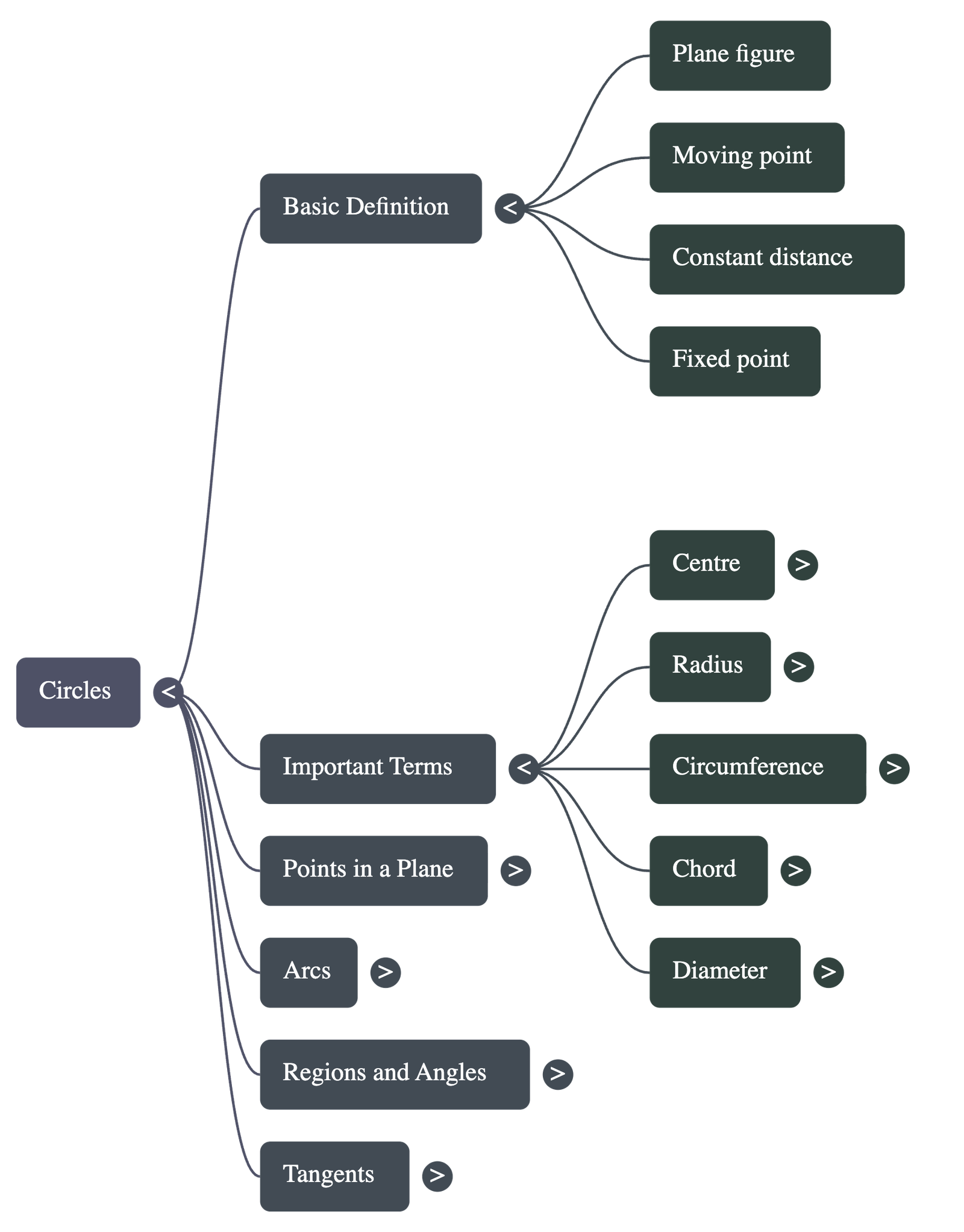
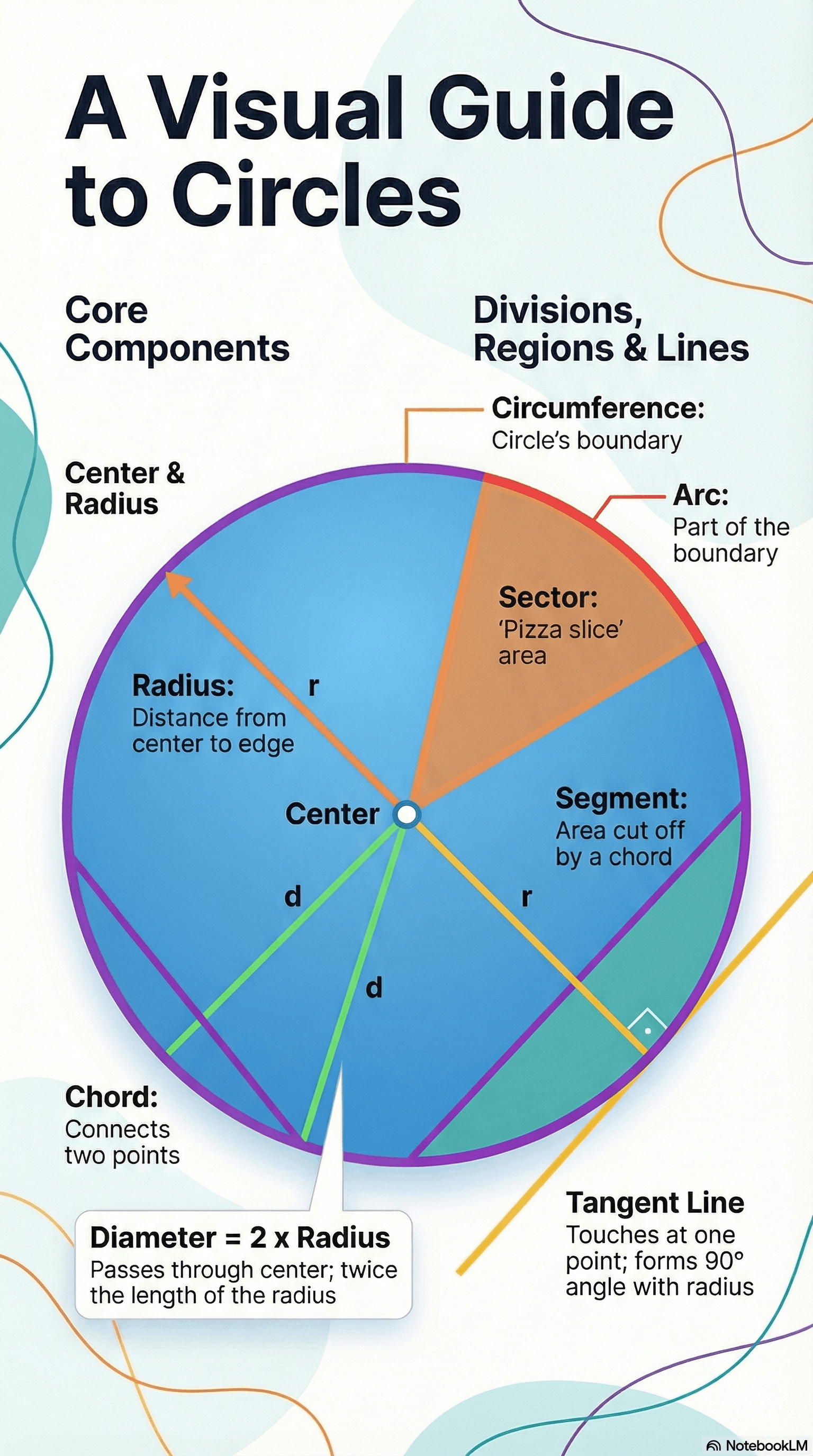
- Circle: A plane figure formed by a point moving such that it remains at a constant distance from a fixed point.
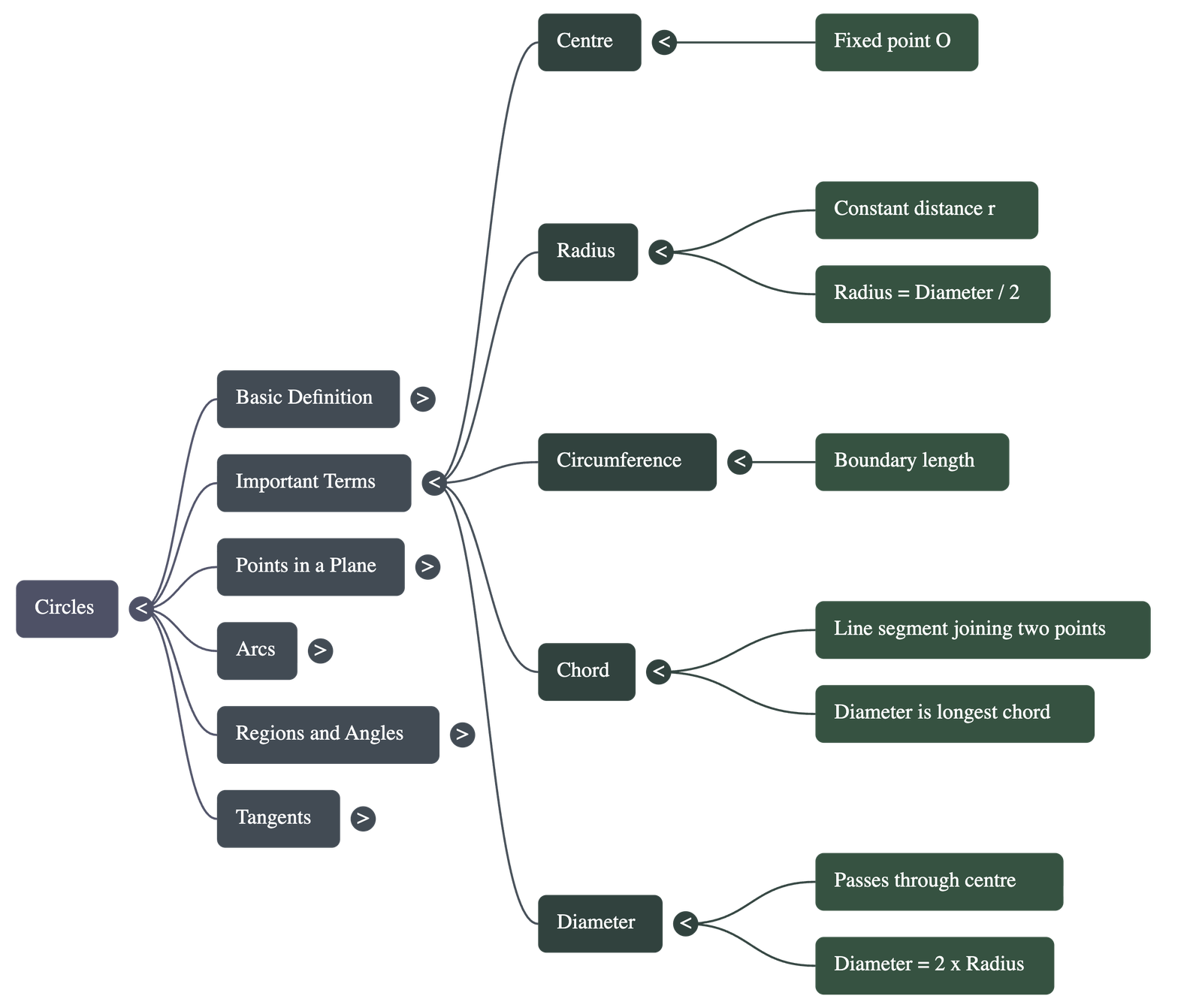
- Centre: The fixed point inside the circle from which all points on the boundary are equidistant.
- Radius: The constant distance from the centre to any point on the boundary. The radius is half the length of the diameter.
- Circumference: The total length of the boundary of the circle.
- Chord: A line segment joining any two points on the circumference.
- Diameter: A chord that passes through the centre of the circle. It is the longest chord, and its length is 2 × Radius.
2. Position of Points
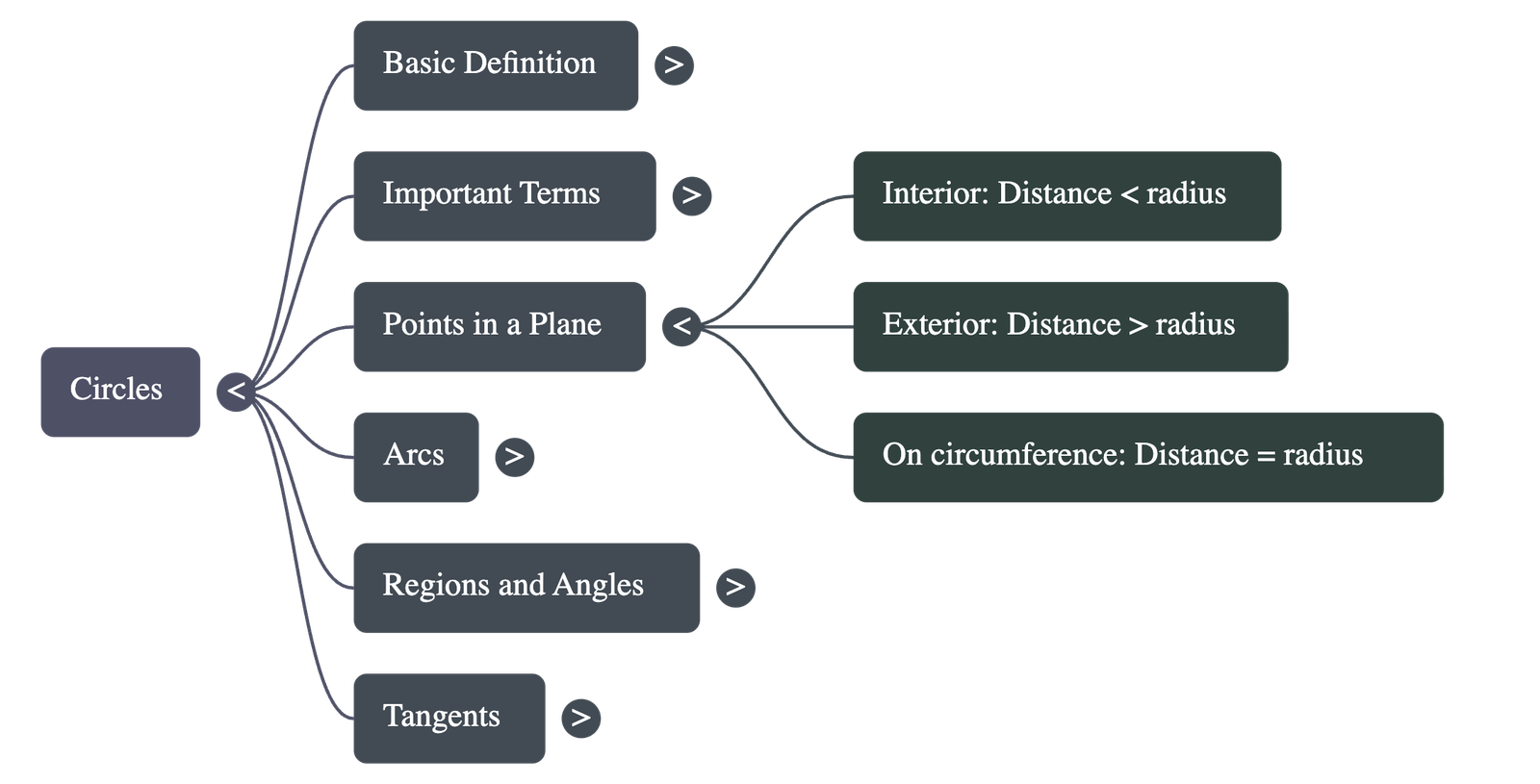
- Interior: The region inside the circle. A point is in the interior if its distance from the centre is less than the radius.
- Exterior: The region outside the circle. A point is in the exterior if its distance from the centre is greater than the radius.
- On the Circle: A point lies on the circumference if its distance from the centre is exactly equal to the radius.
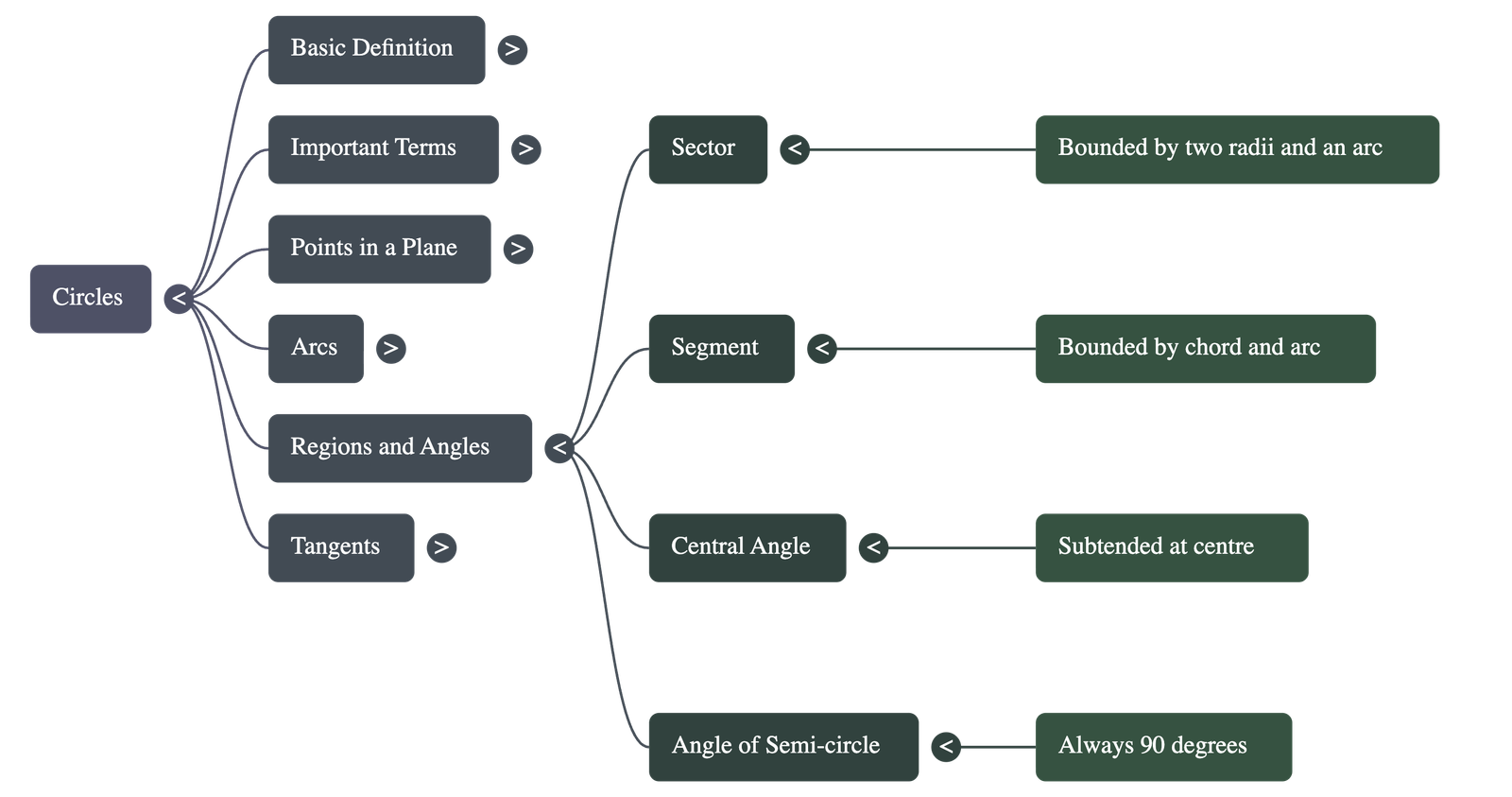
3. Arcs, Segments, and Sectors
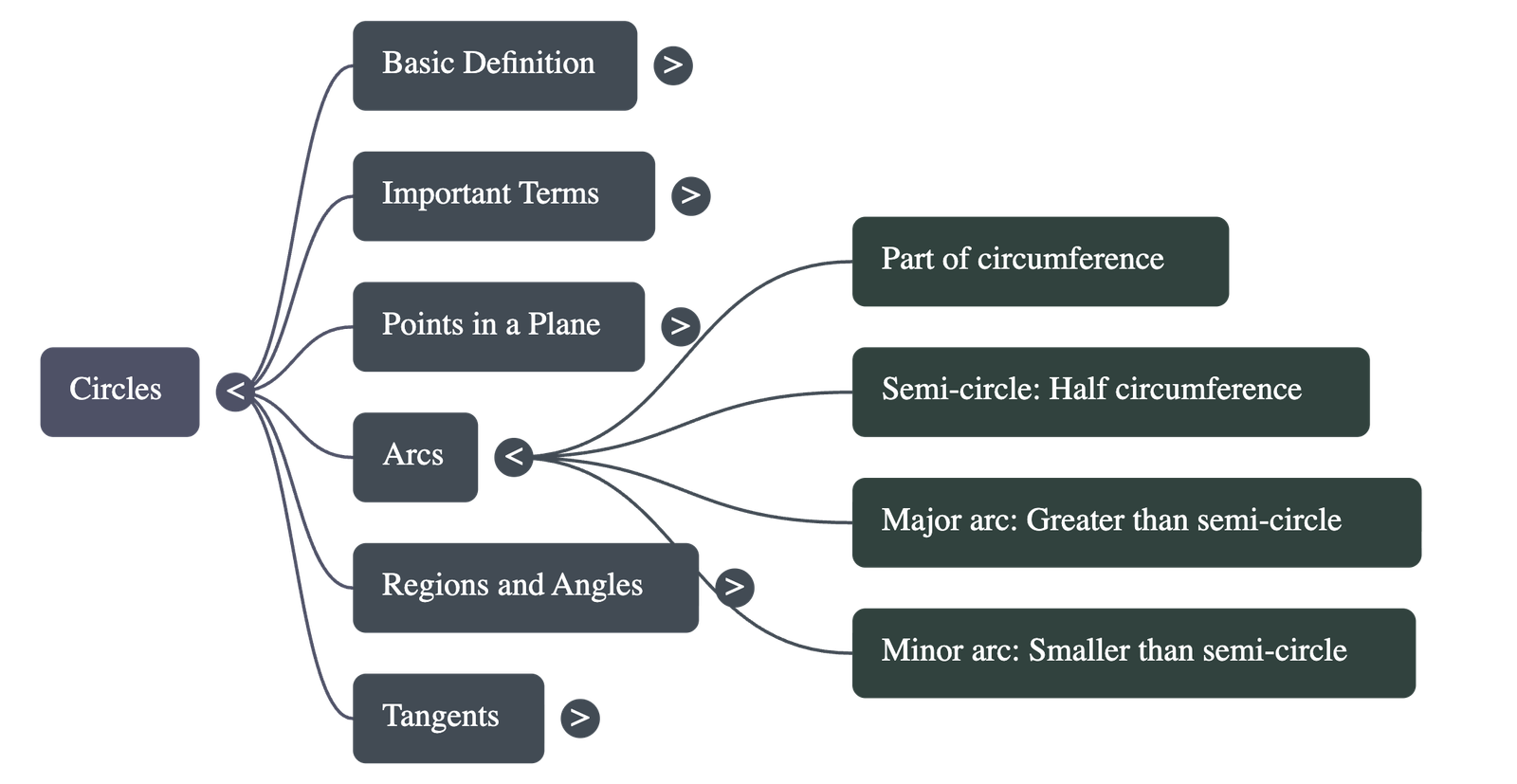
- Arc: Any part of the circumference of a circle.
- Semi-circle: Half of a circle, formed when a diameter divides the circumference into two equal arcs.
- Major and Minor Arcs: When a circumference is divided into unequal parts, the larger part is the major arc and the smaller is the minor arc.
- Segment: The region bounded by a chord and an arc. A Minor Segment is bounded by a chord and a minor arc, while a Major Segment is bounded by a chord and a major arc.
- Sector: The part of a circle bounded by two radii and an arc. Like segments, these are classified as Major or Minor based on the arc involved.
4. Angles and Tangents
- Central Angle: The angle subtended by an arc or a chord at the centre of the circle.
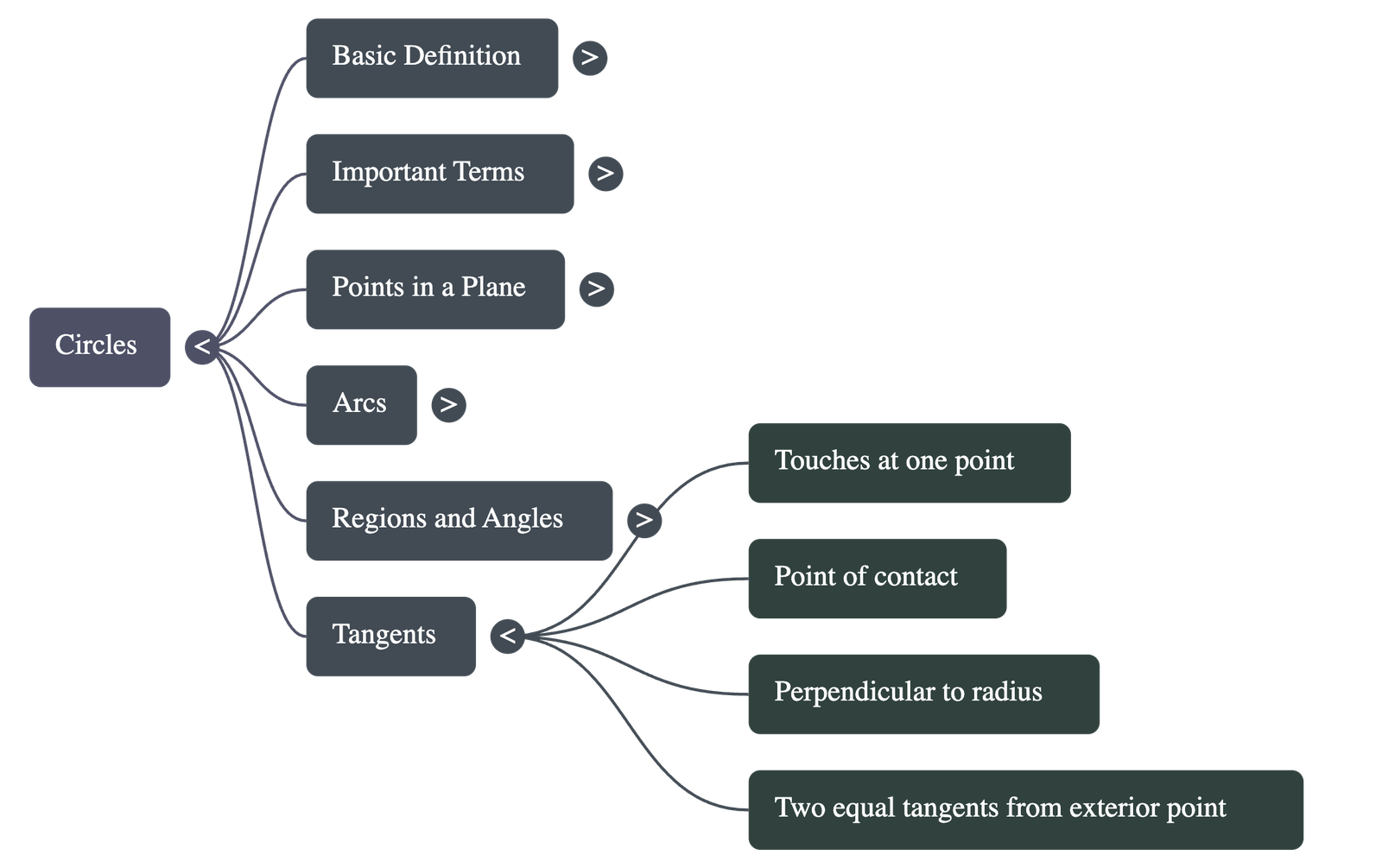
- Tangent: A straight line that touches the circle at exactly one point, known as the point of contact.
- Tangent Properties:
- The angle between a tangent and the radius at the point of contact is always 90°.
- From an external point, exactly two tangents can be drawn to a circle, and they are equal in length.
- Only one tangent can be drawn through a single point on the circumference.
- Angle of a Semi-circle: Any angle subtended by the diameter at a point on the circumference is always 90°.
Do checkout all questions & answers of this chapter.
Quick Navigation:
| | | | |
1 / 1
Quick Navigation:
| | | | |