Quick Navigation:
| | | | |
Quick Navigation:
| | | | |
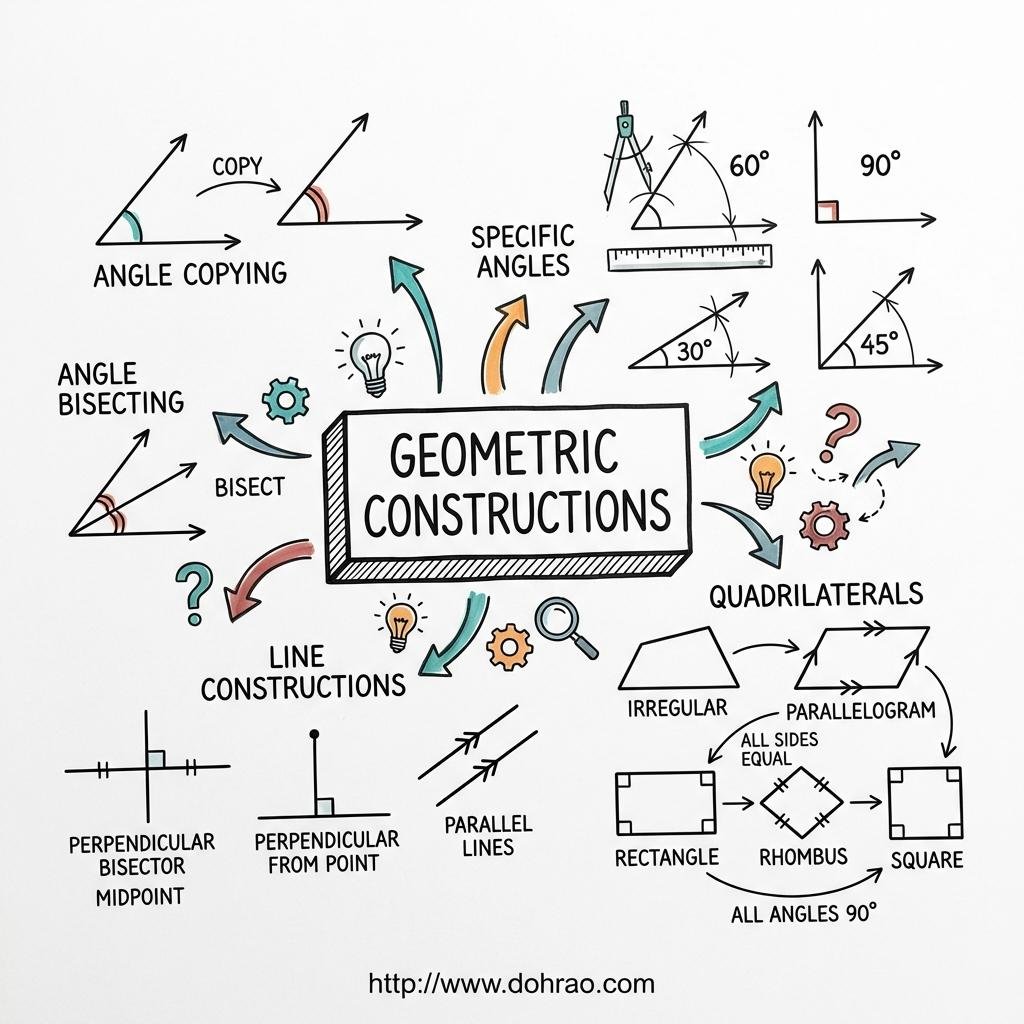
1. Angle Constructions
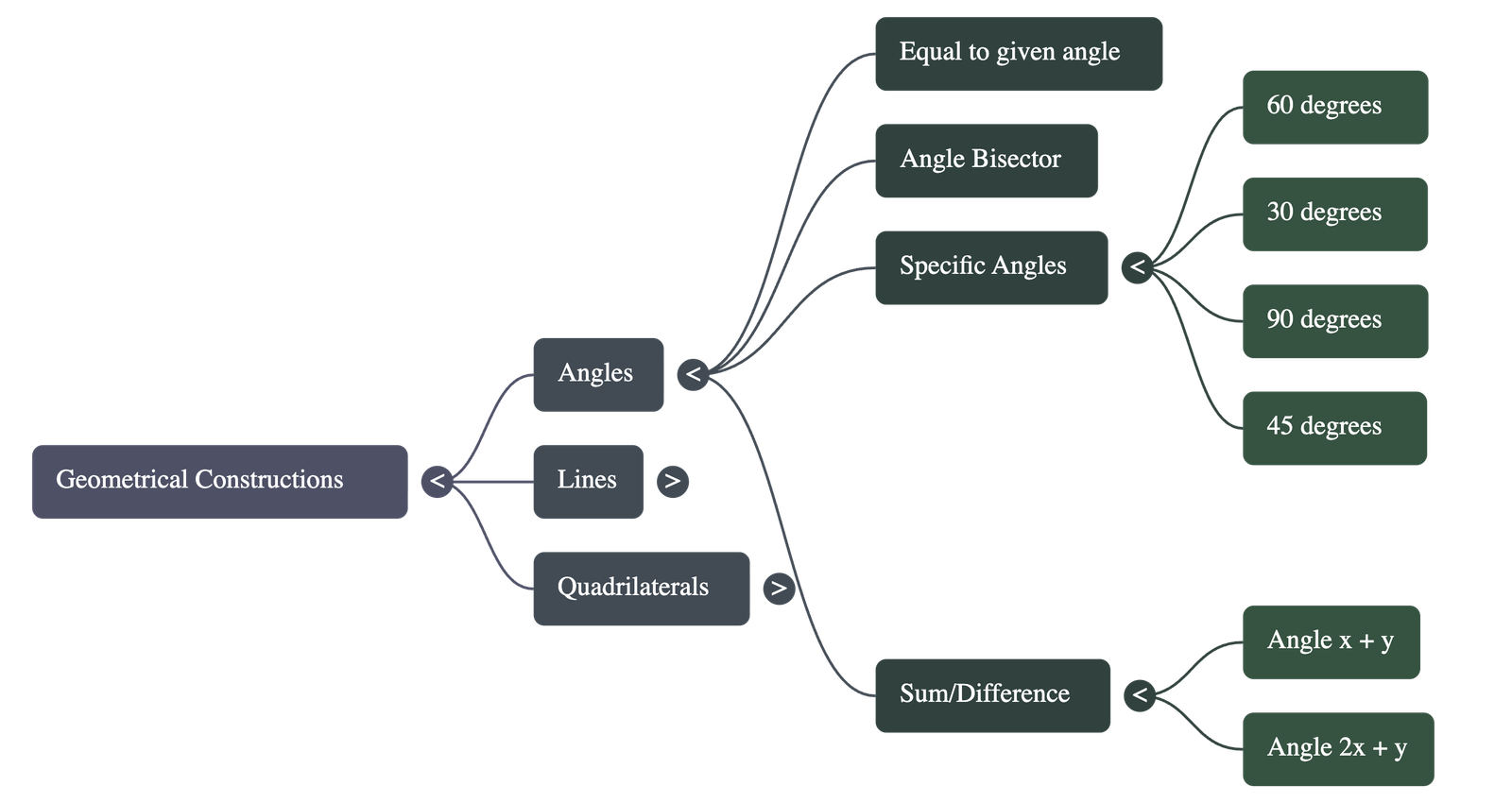
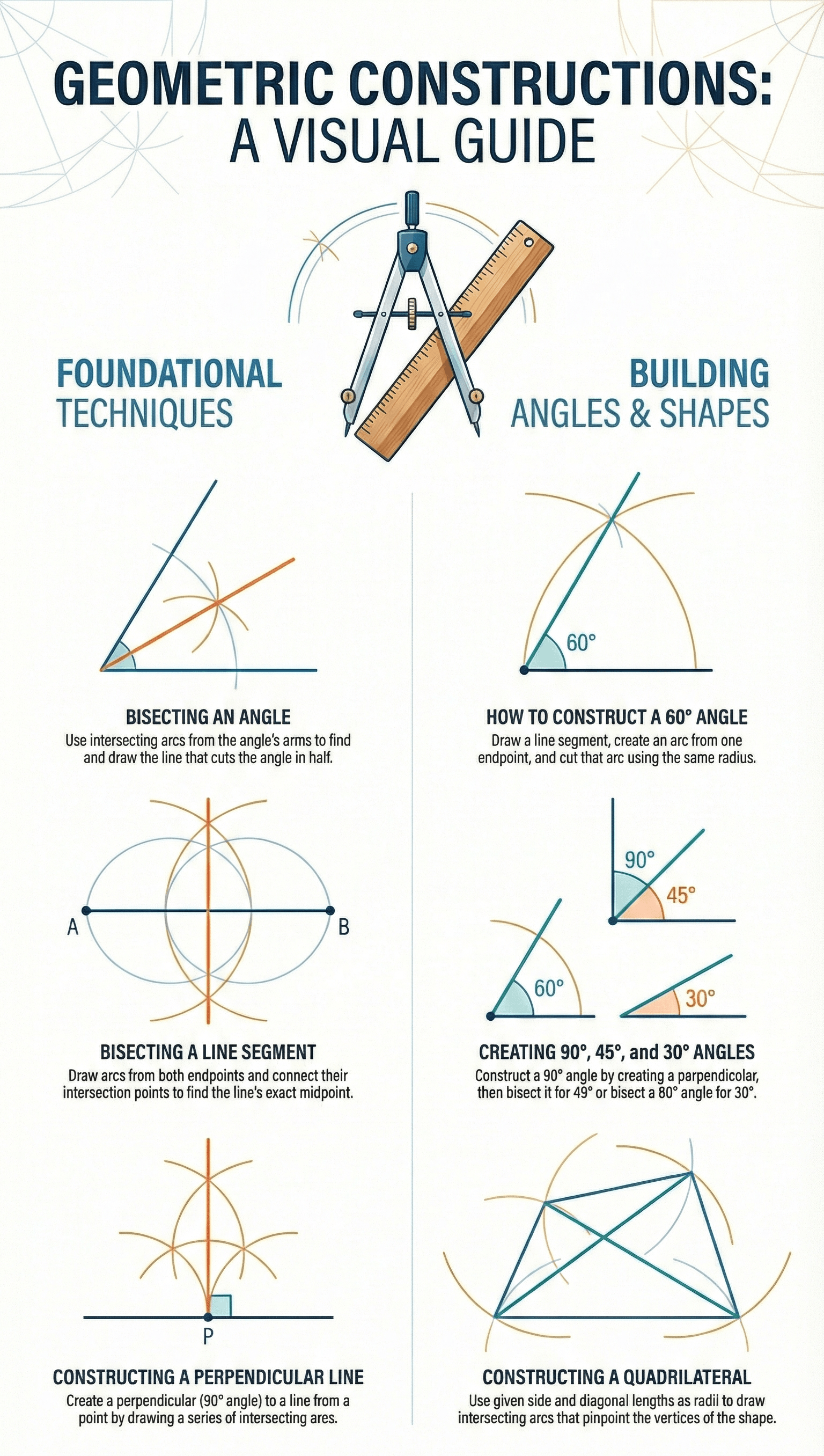
- Copying an Angle: Steps to construct an angle equal to a given angle by transferring arc measurements.
- Angle Bisector: Drawing a line that divides a given angle into two equal parts using arcs of equal radii.
- Standard Angles:
- 60°: Built by drawing an arc and cutting it with the same radius.
- 30°: Created by bisecting a 60° angle.
- 90°: Constructed using arcs to find a point equidistant from two points on a line, creating a perpendicular.
- 45°: Created by bisecting a 90° angle.
- Angle Addition: Constructing complex angles by adding or doubling given angles (e.g., x + y or 2x + y).
2. Line and Perpendicular Constructions
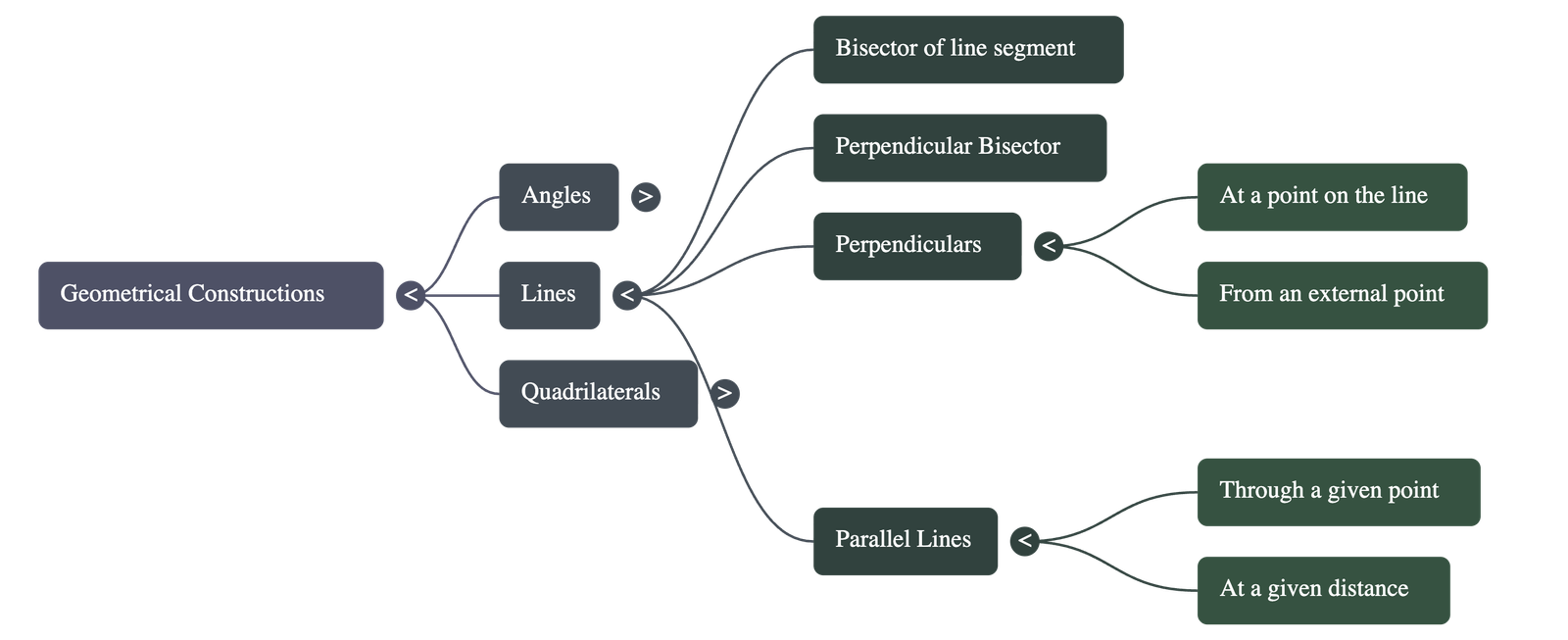
- Bisector of a Line Segment: Dividing a line into two equal parts. This can be done by creating equal angles at both ends or by using the perpendicular bisector method.
- Perpendicular Bisector: A line that cuts a segment at its midpoint at a 90° angle, constructed by drawing arcs from both ends of the segment with a radius greater than half its length.
- Perpendicular to a Line:
- From a point on the line.
- From an external point.
- Parallel Lines: Three distinct methods are provided:
- By drawing alternate angles.
- By drawing corresponding angles.
- At a specific distance from the original line.
3. Construction of Quadrilaterals
The sources detail specific requirements for constructing various four-sided figures:
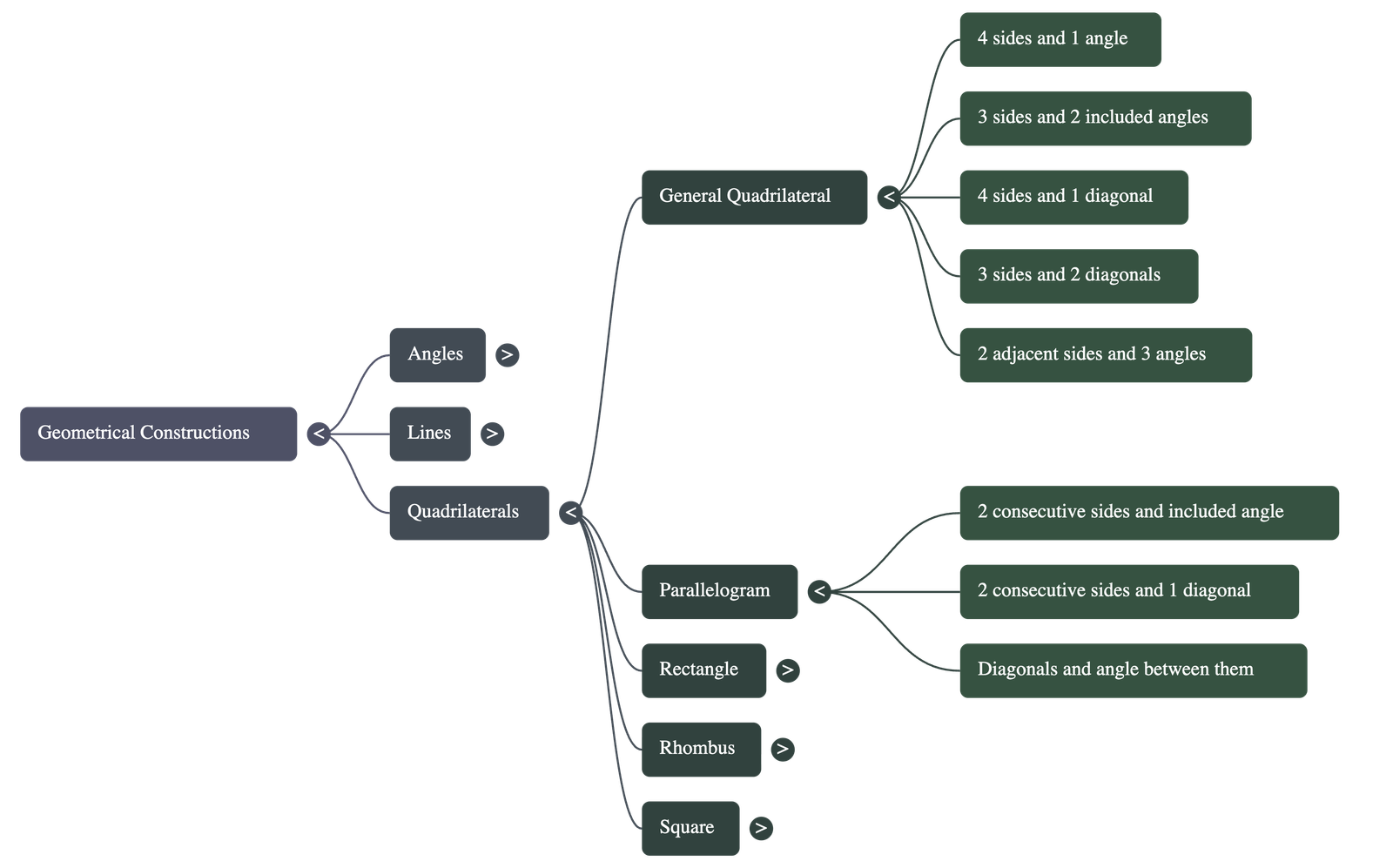
General Quadrilaterals
- Using four sides and one angle.
- Using three consecutive sides and two included angles.
- Using four sides and one diagonal.
- Using three sides and two diagonals.
- Using two adjacent sides and three angles.
Special Quadrilaterals
- Parallelogram: Constructed using the property that opposite sides are equal. Methods include using two sides and an included angle, two sides and a diagonal, or both diagonals and the angle between them.
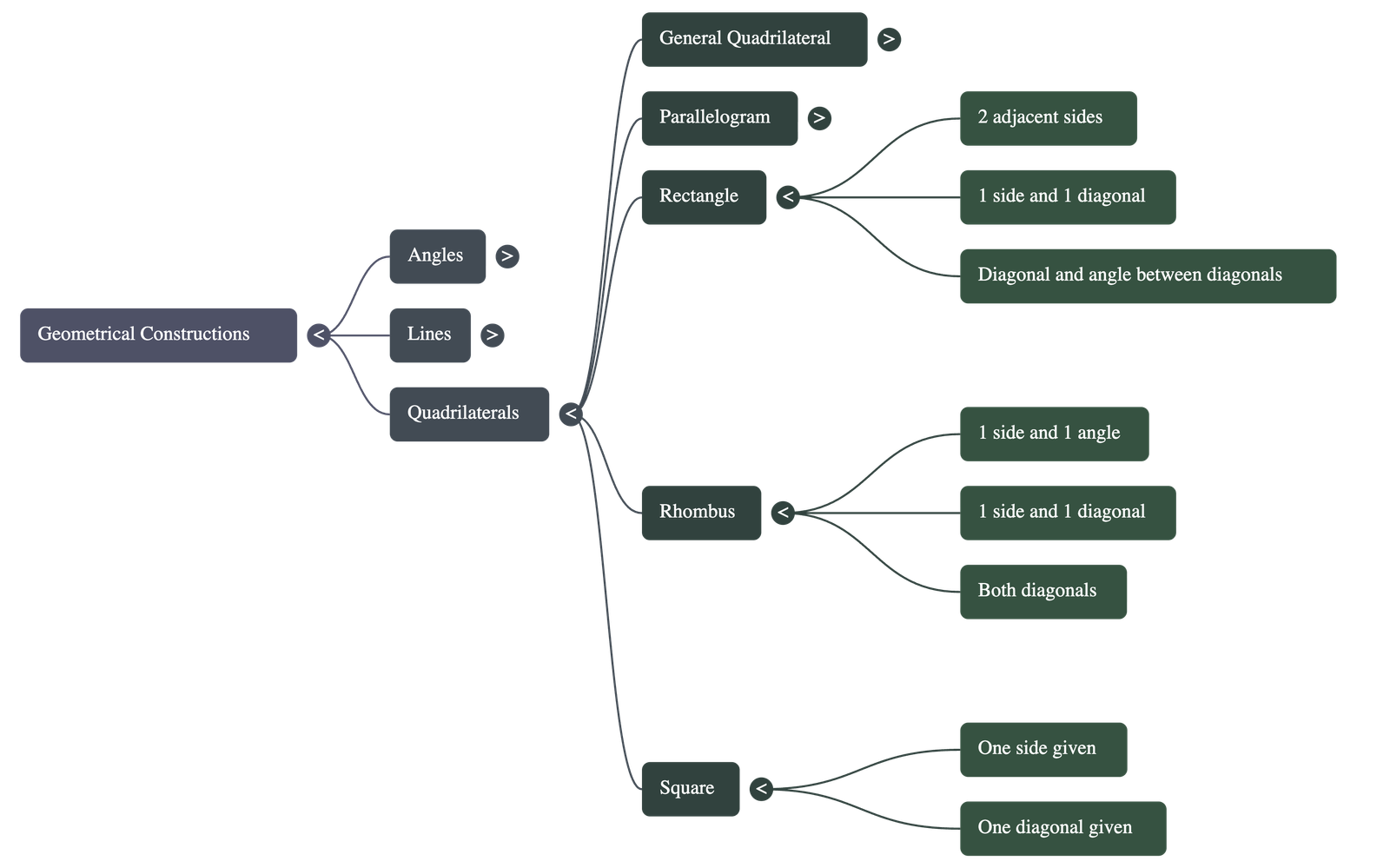
- Rectangle: Constructed using properties such as all angles being 90° and equal diagonals. Methods include using two adjacent sides, one side and a diagonal, or diagonals and their intersection angle.
- Rhombus: Built on the property that all sides are equal and diagonals bisect at 90°. Methods include using one side and an angle, one side and a diagonal, or both diagonals.
- Square: The most regular construction where all sides are equal and all angles are 90°. It can be constructed given just one side or one diagonal.
Do checkout all questions & answers of this chapter.
Quick Navigation:
| | | | |
1 / 1
Quick Navigation:
| | | | |