Quick Navigation:
| | | | |
Chapter 19 Summary: Representing 3-D in 2-D
1. Introduction to Polyhedrons
- Core Concept: This chapter focuses on visualizing 3D objects as 2D representations and cross-sections.
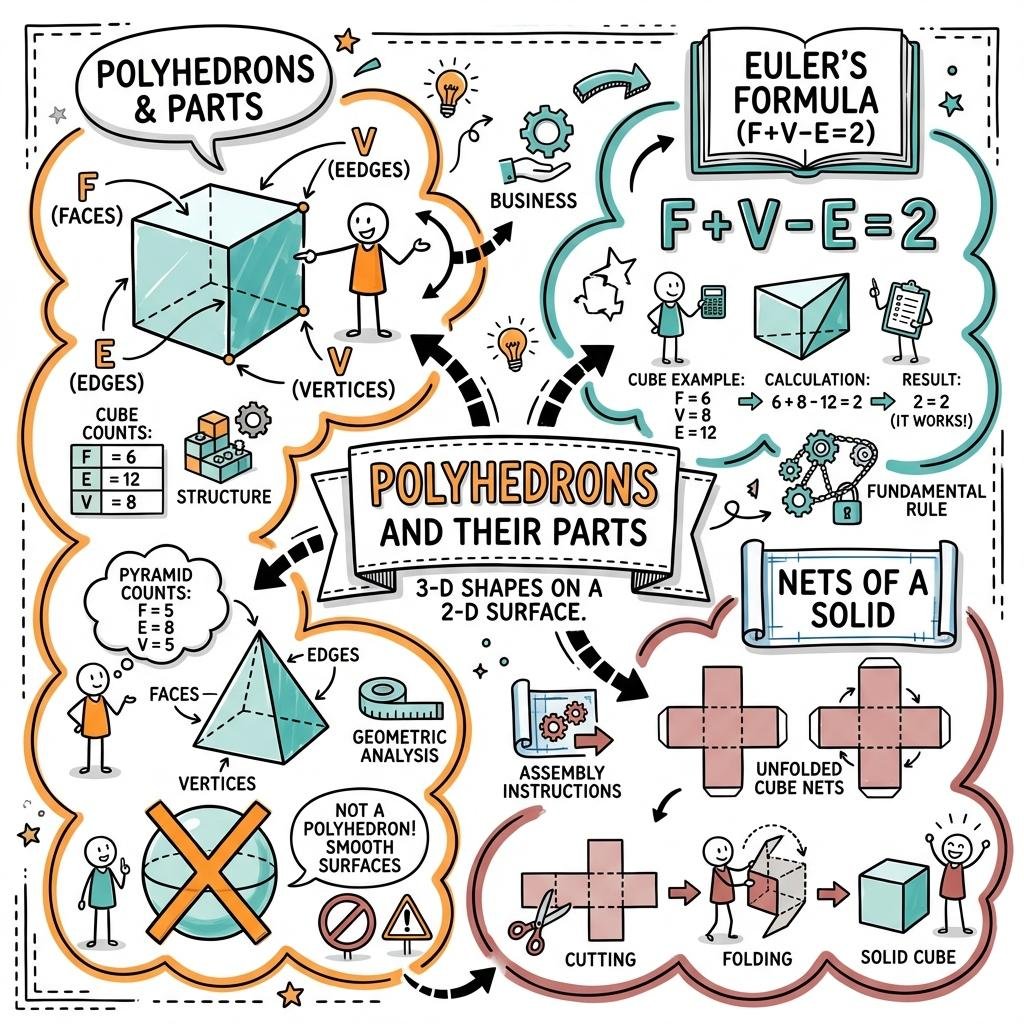
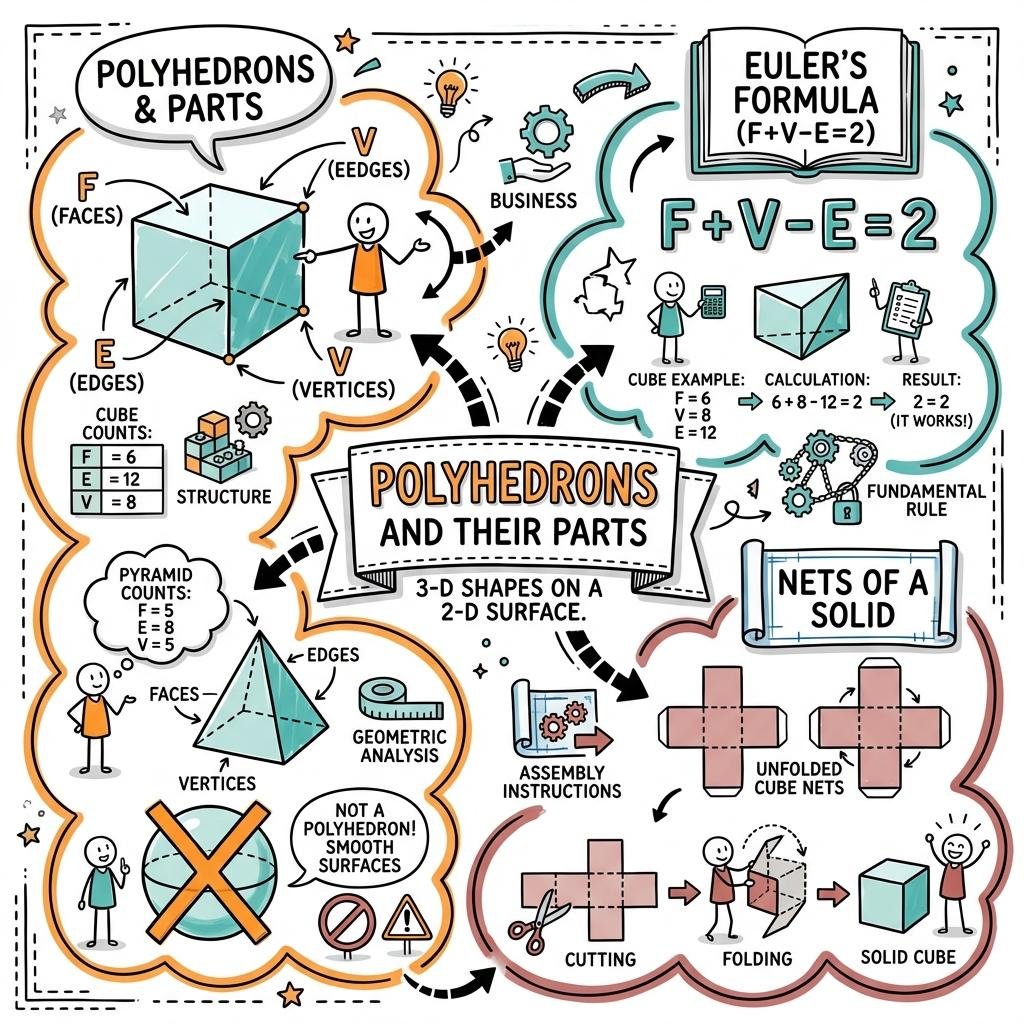
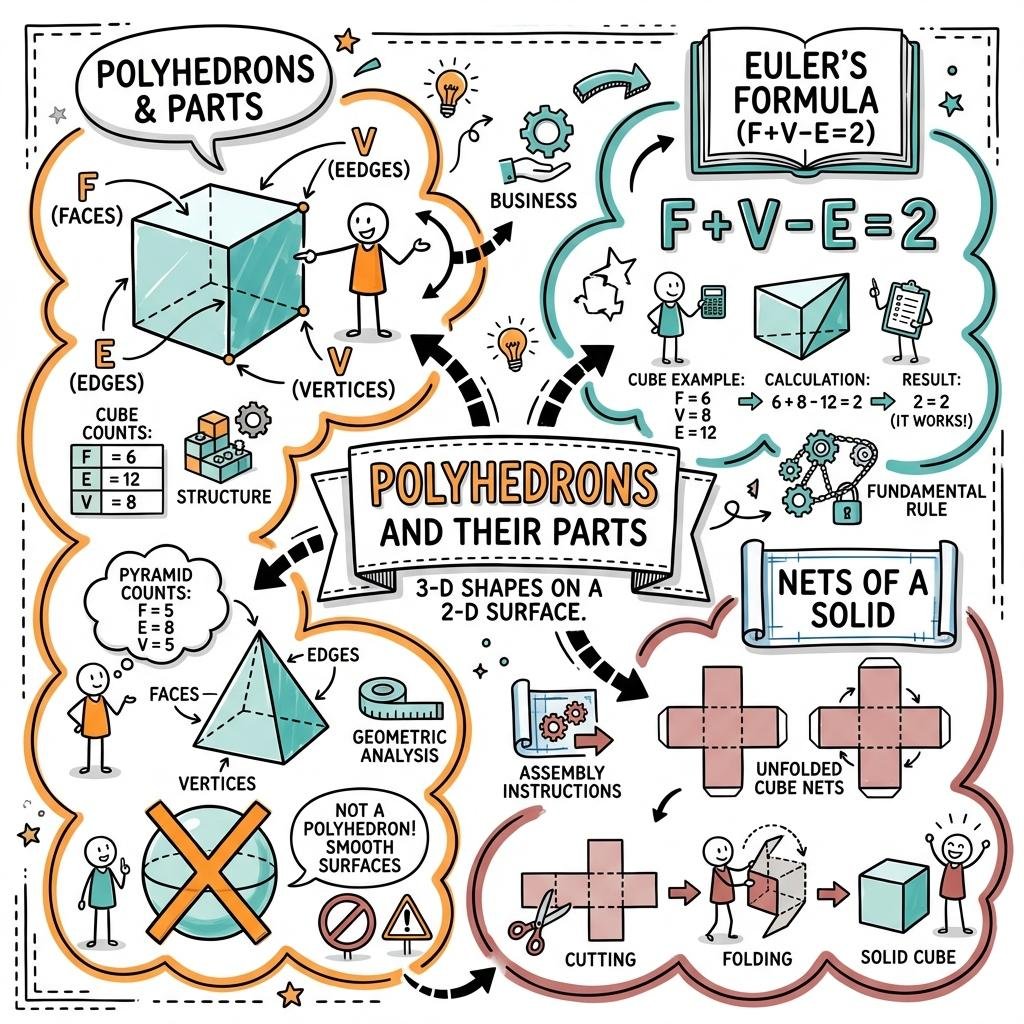
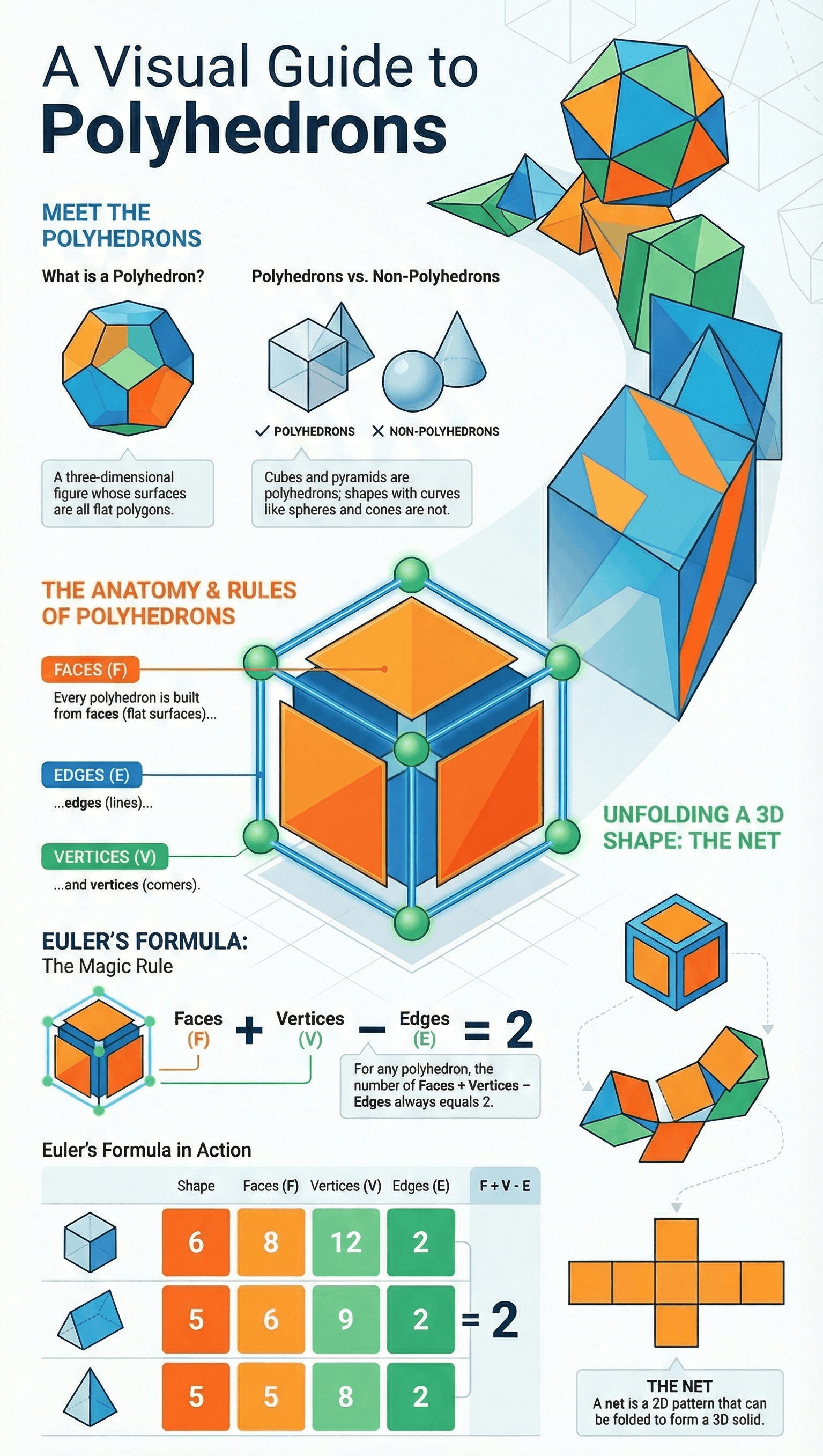
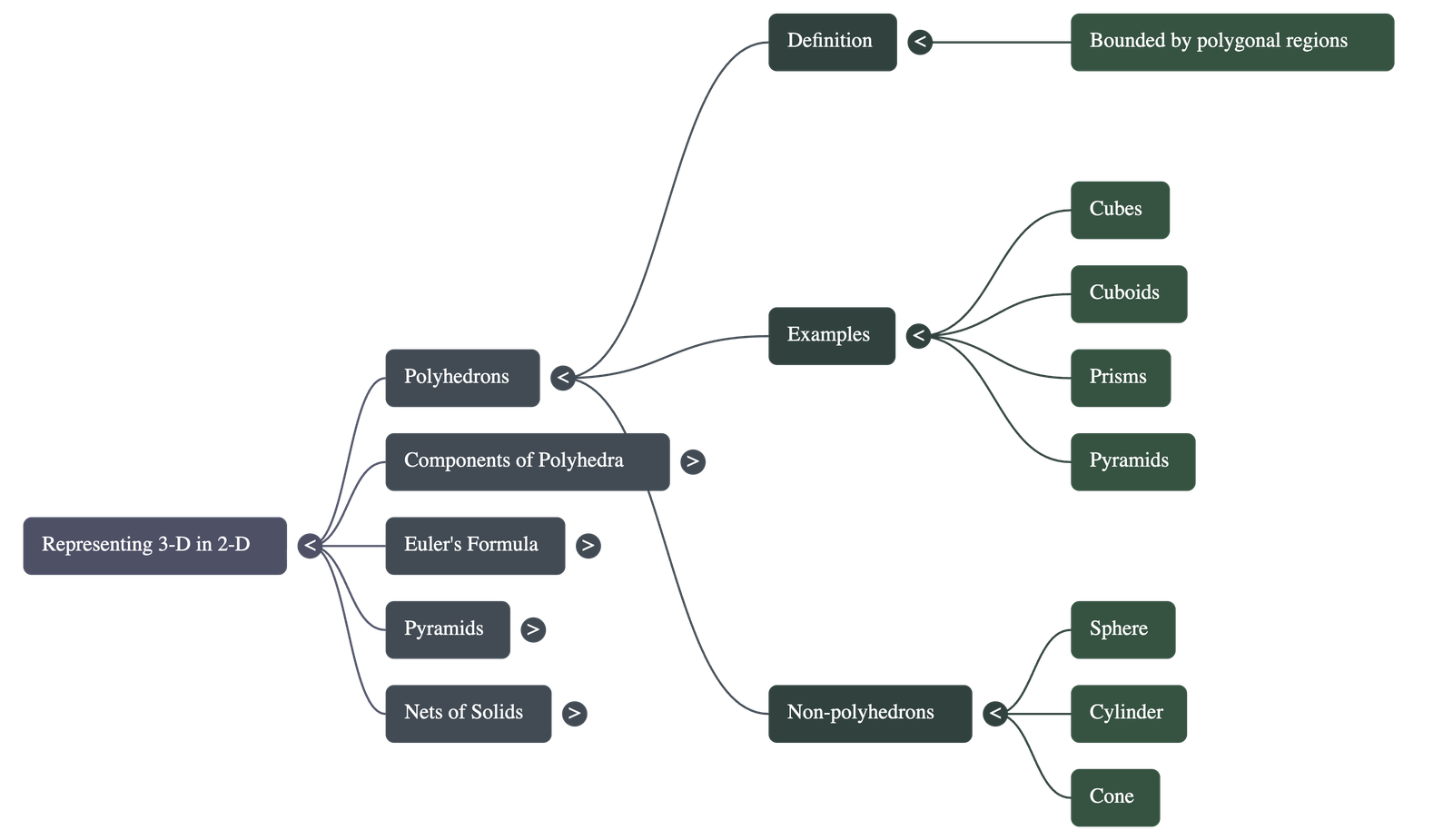
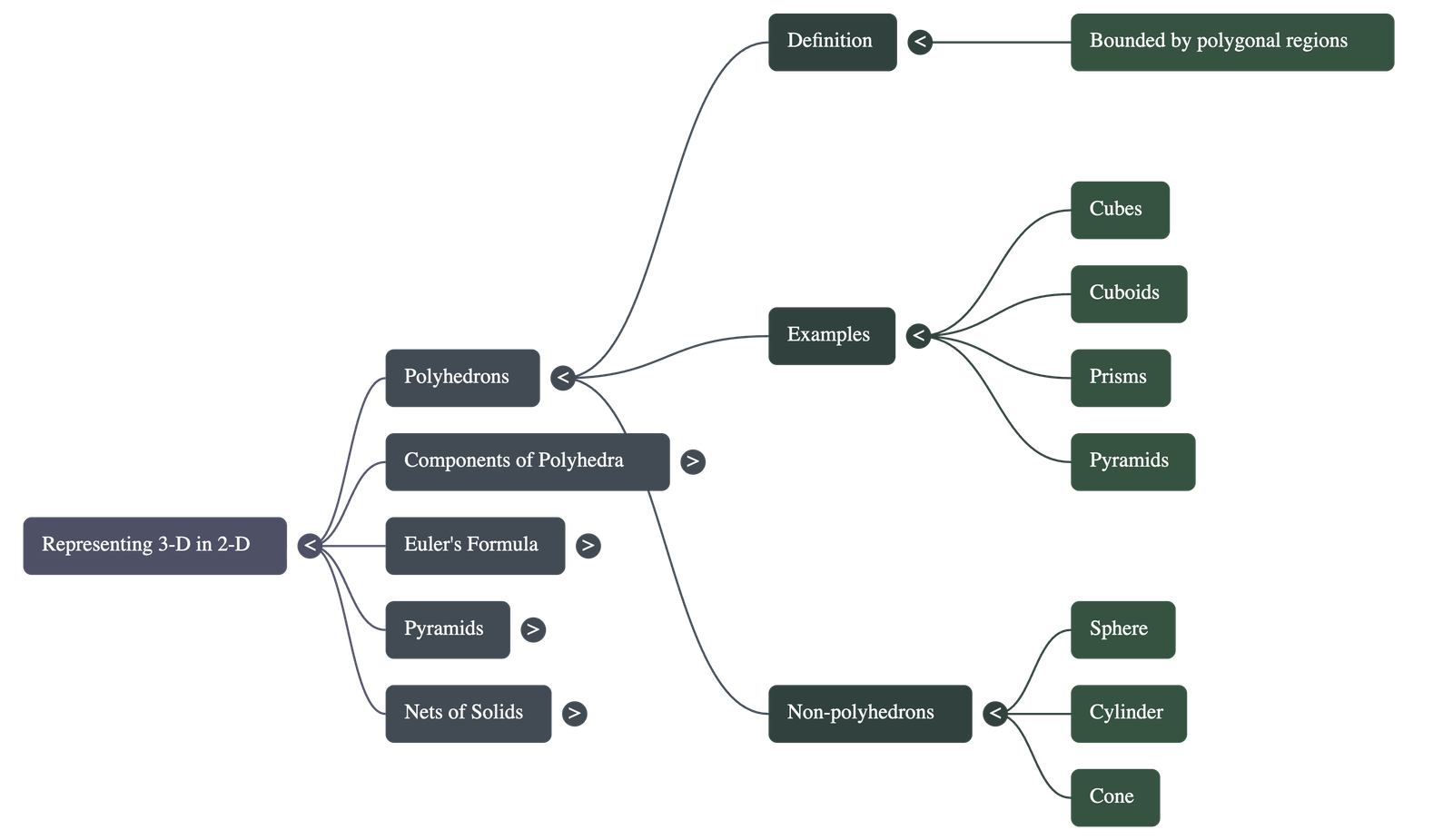
- Definition: A polyhedron is a three-dimensional figure bounded by polygonal regions (faces).
- Classifications:
- Polyhedrons: Cubes, cuboids, prisms, and pyramids (all have flat polygonal faces).
- Non-Polyhedrons: Spheres, cylinders, and cones (these include curved surfaces).
2. Key Components of Polyhedra
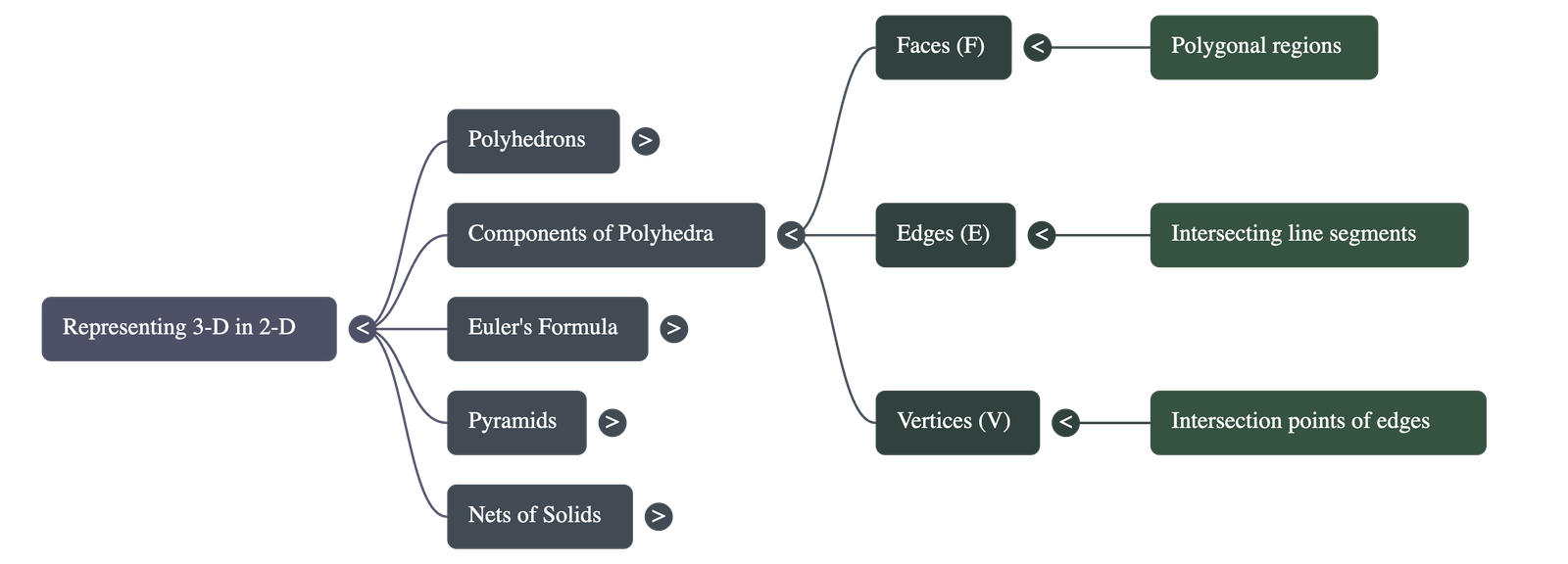
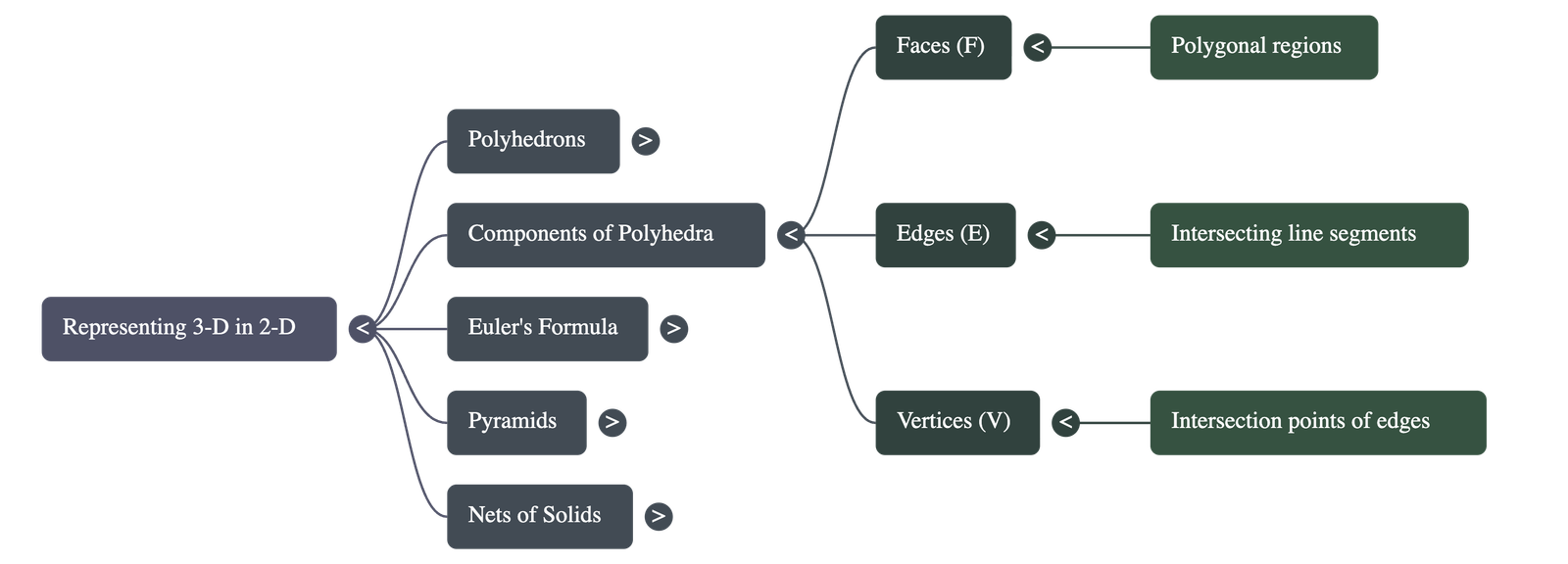
Every polyhedron is defined by three primary elements:
- Faces (F): The flat polygonal regions that form the surface of the solid.
- Edges (E): The line segments where two faces intersect.
- Vertices (V): The points where edges meet (corners).
3. Euler’s Formula
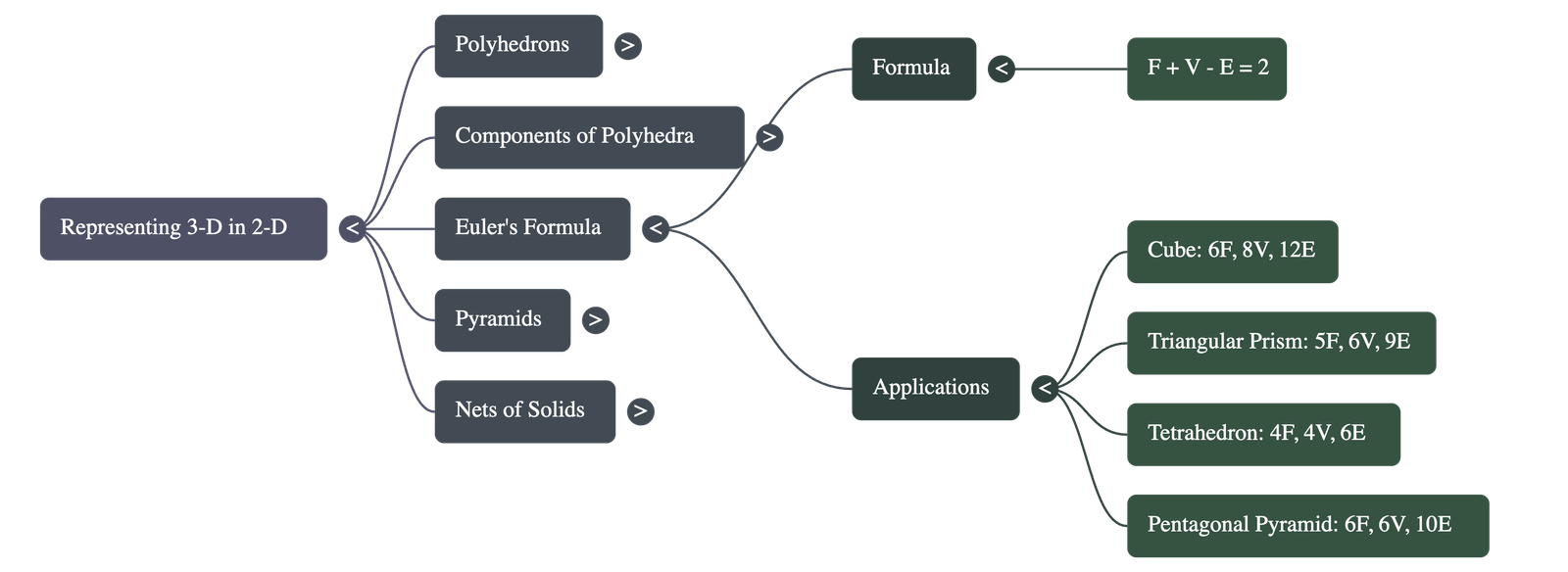
A fundamental mathematical relationship exists for all polyhedra, known as Euler's Formula:
F + V − E = 2
This formula allows for the calculation of an unknown number of faces, vertices, or edges if the other two are known.
4. Types of Prisms and Pyramids
- Prisms: Solids with congruent and parallel polygonal bases (ends) and side faces that are parallelograms. Examples include triangular, pentagonal, and hexagonal prisms.
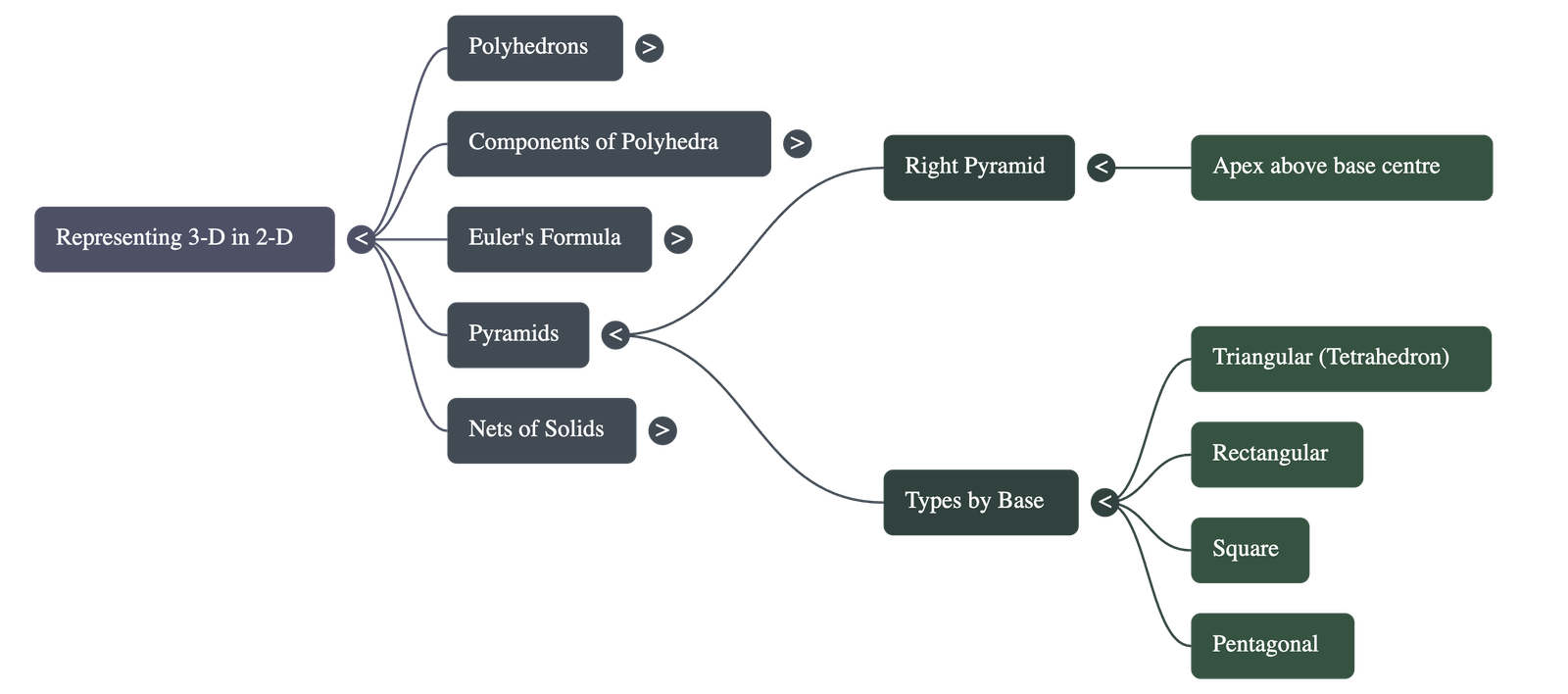
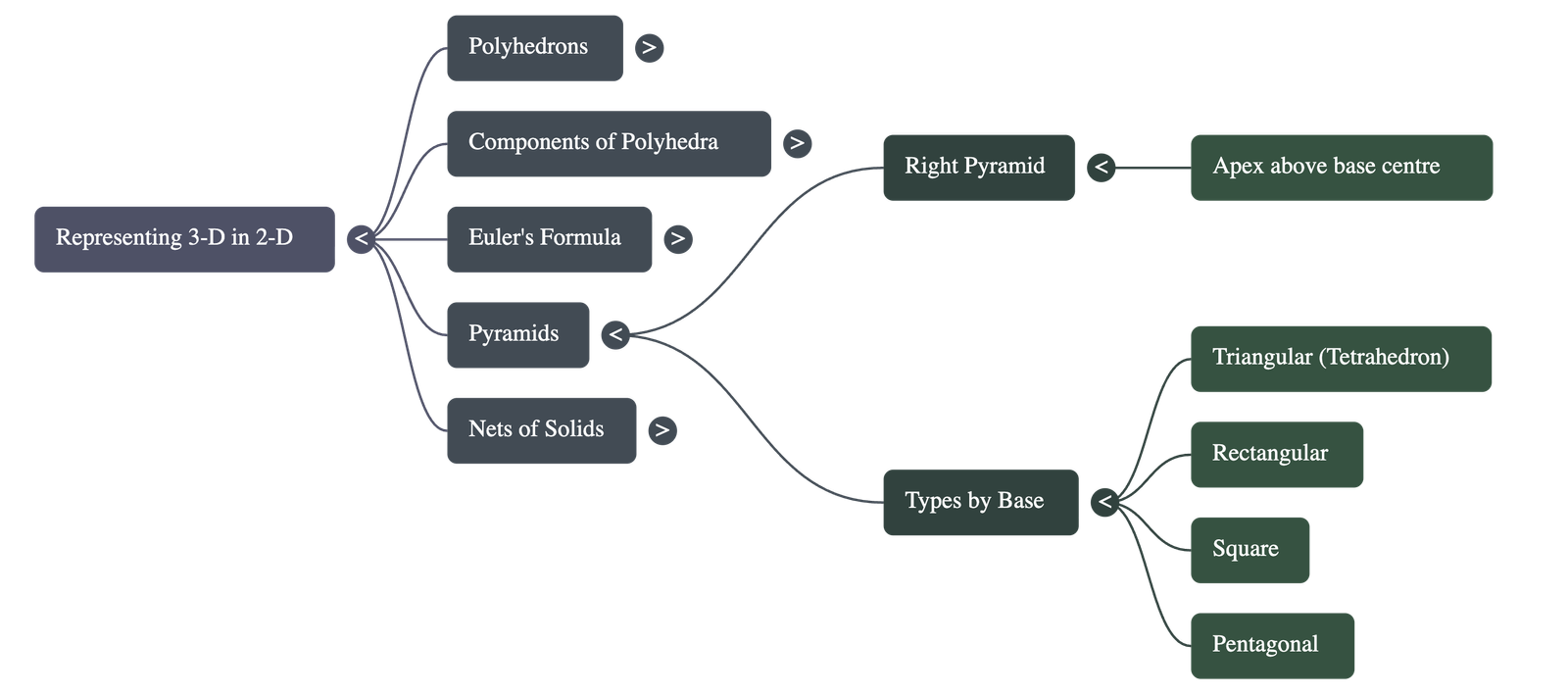
- Pyramids: Solids with a polygonal base and triangular lateral faces that meet at a single point called the apex.
- A right pyramid has its apex directly above the centre of the base.
- A tetrahedron is a triangular pyramid with four faces.
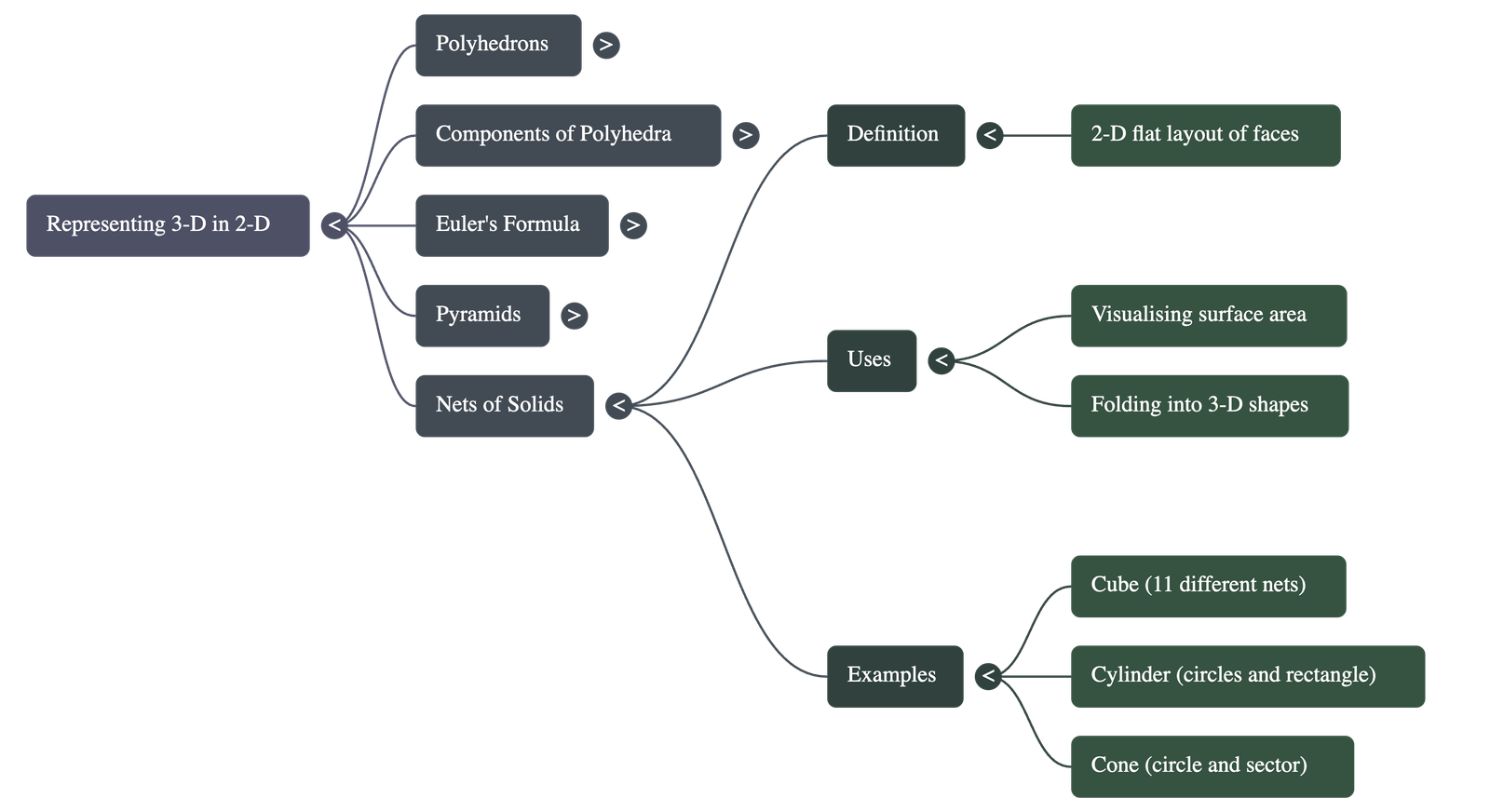
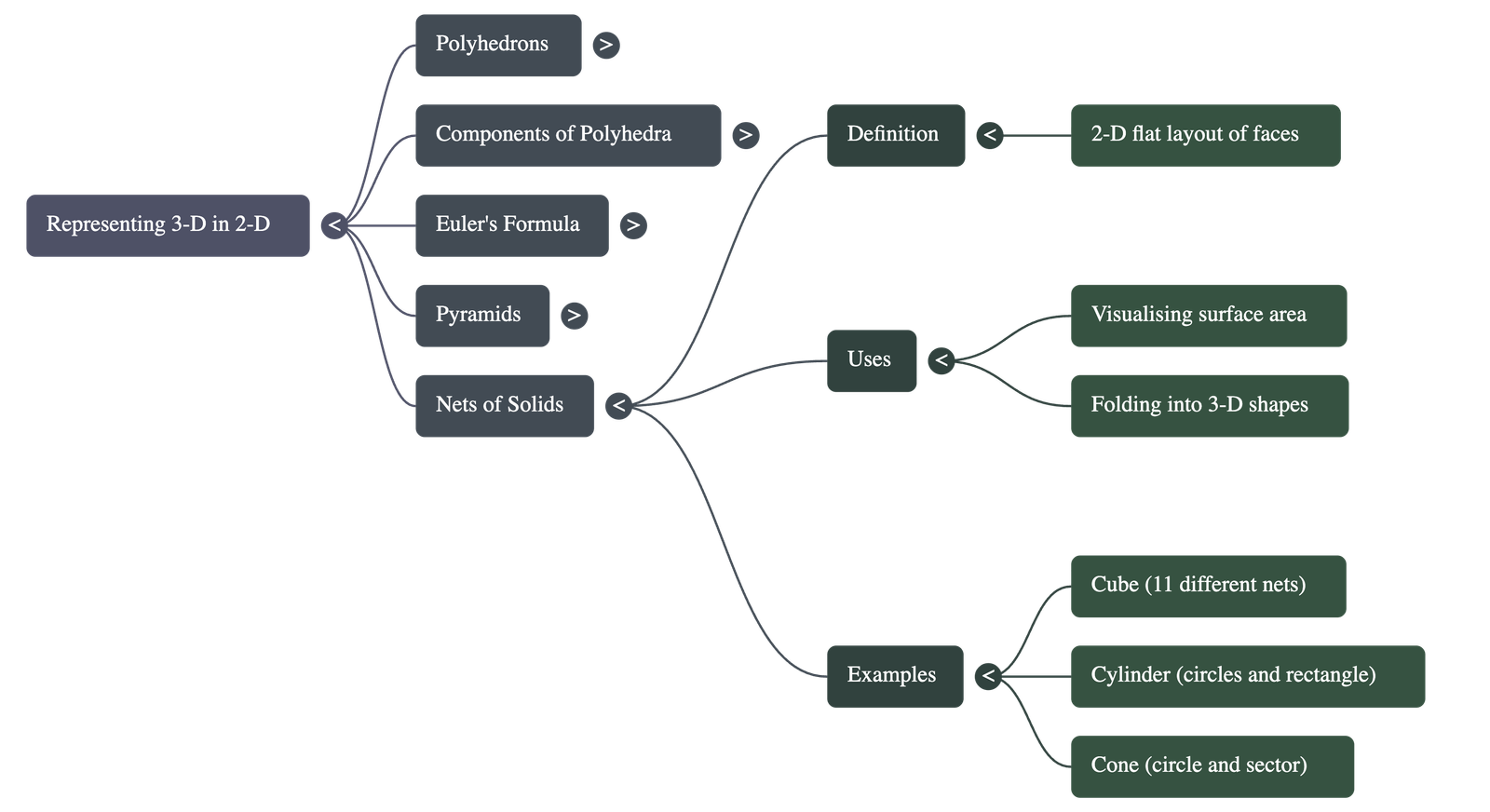
5. Nets of Solids
- Definition: A net is a 2D pattern made by laying out the surface of a 3D figure flat. When folded, it forms the 3D solid.
- Cube Nets: A cube is unique in that it can be represented by 11 different nets.
- Utility: Nets are highly useful for visualizing the structure of a solid and for calculating its total surface area.
- Examples: The chapter illustrates nets for various shapes including cylinders, cones, and diverse pyramids.
Key Takeaway: Visualising 3D shapes through their faces, edges, and vertices—and understanding how they unfold into 2D nets—is essential for mastering spatial geometry.
Do checkout all questions & answers of this chapter.
Quick Navigation:
| | | | |
1 / 1
Quick Navigation:
| | | | |

Quick Navigation:
| | | | |