Quick Navigation:
| | | | |
Quick Navigation:
| | | | |
Chapter Summary: Exponents (Powers)
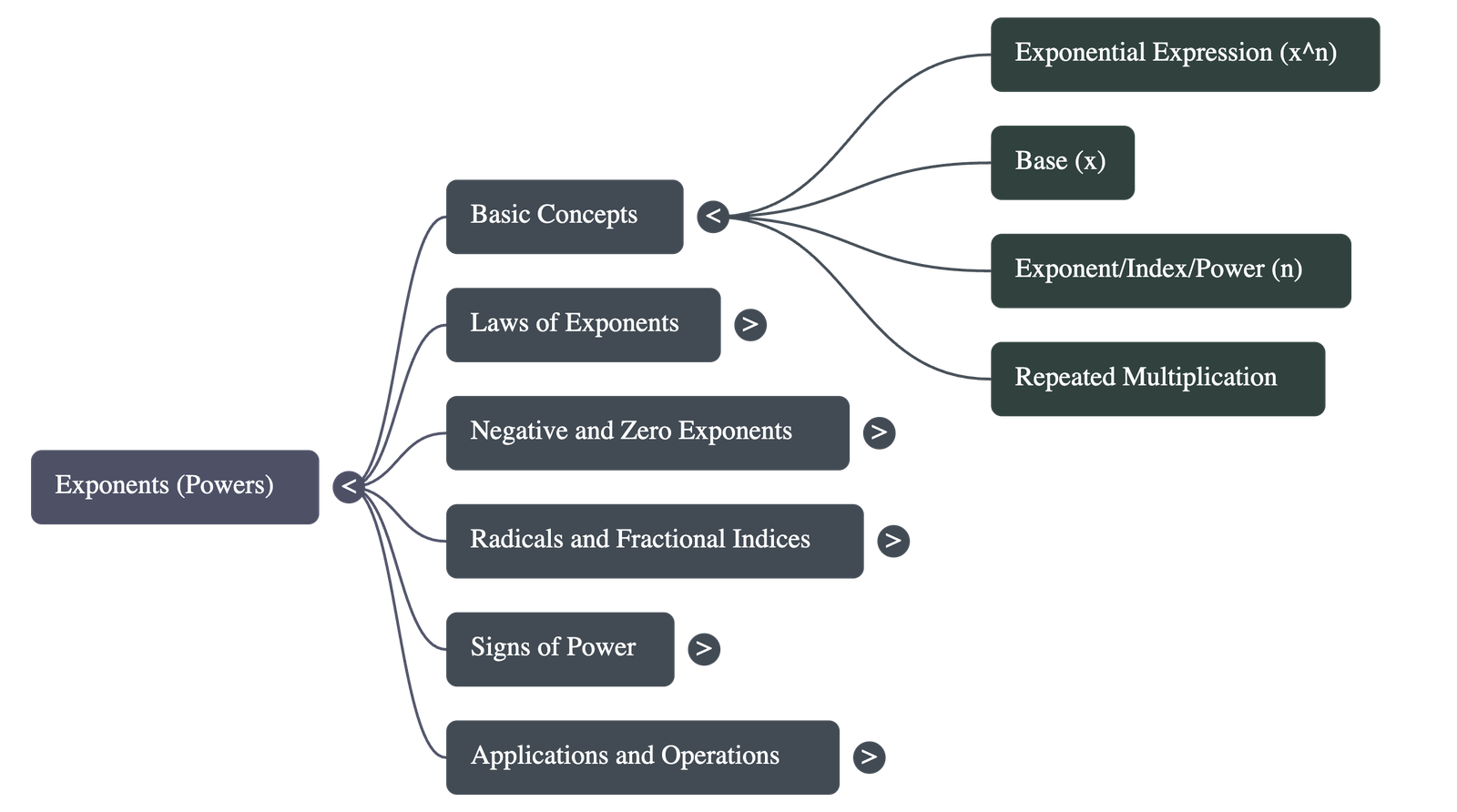
1. Fundamental Concepts
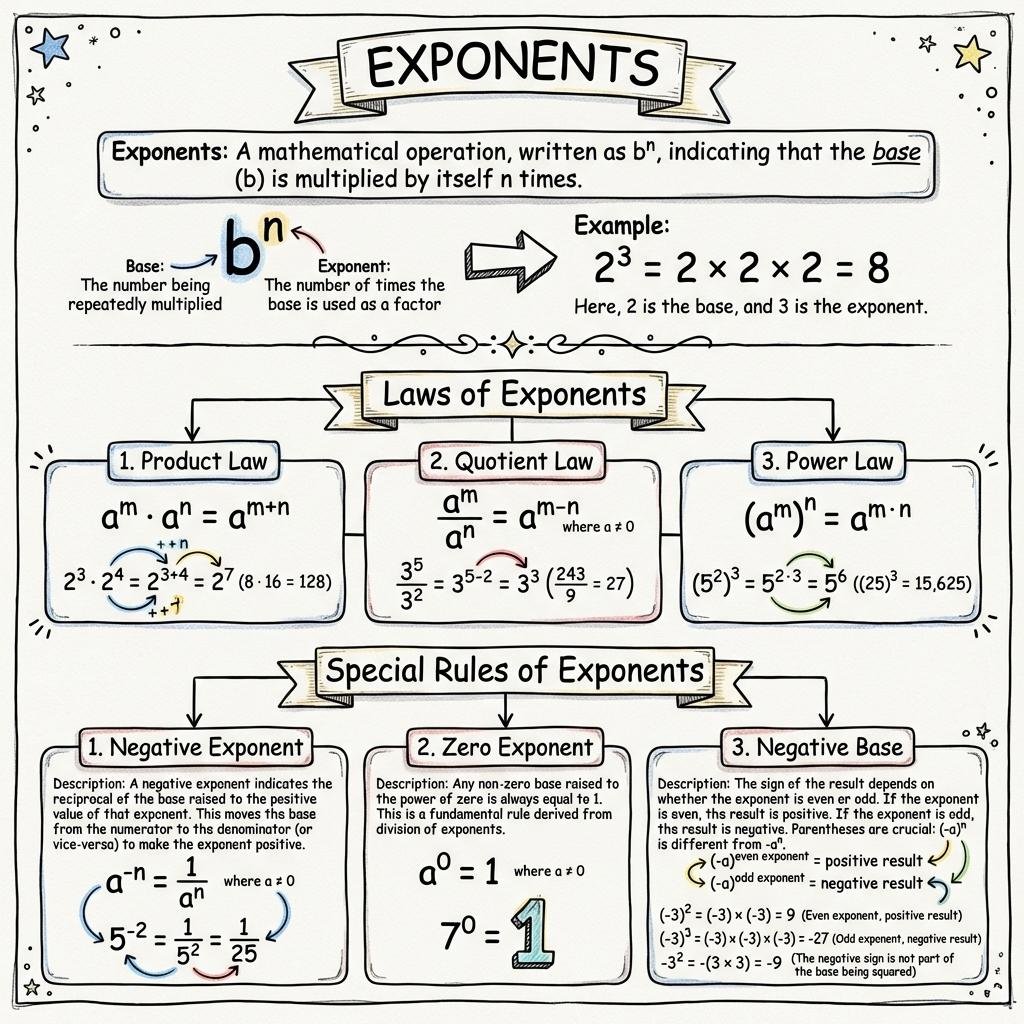
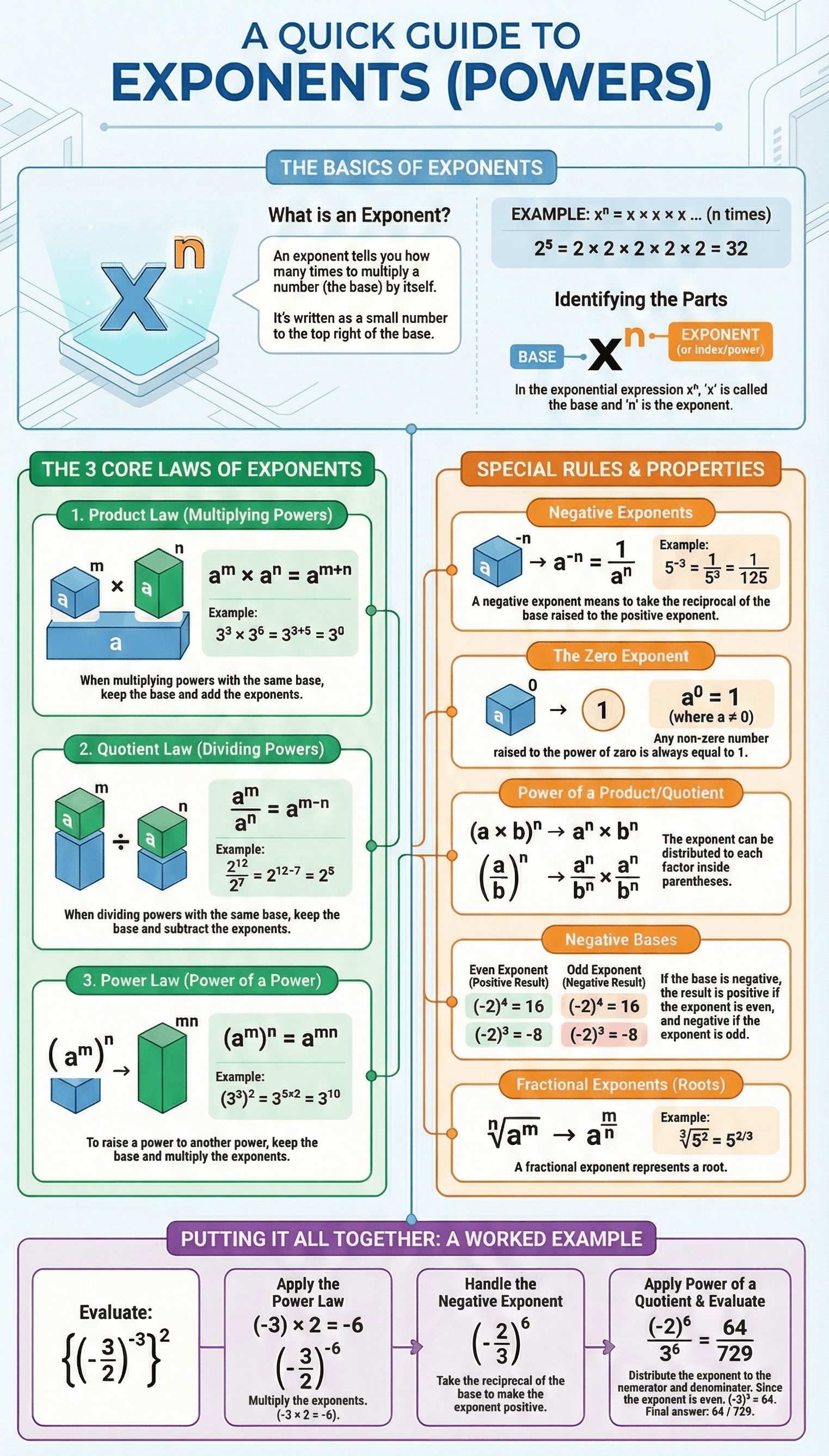
- Exponential Notation: If x is a real number and n is an integer, xn represents x multiplied by itself n times.
- Components: In the expression xn, x is the base and n is the exponent (also known as the index or power).
- Reading Notation: The term is read as "x raised to the power n."
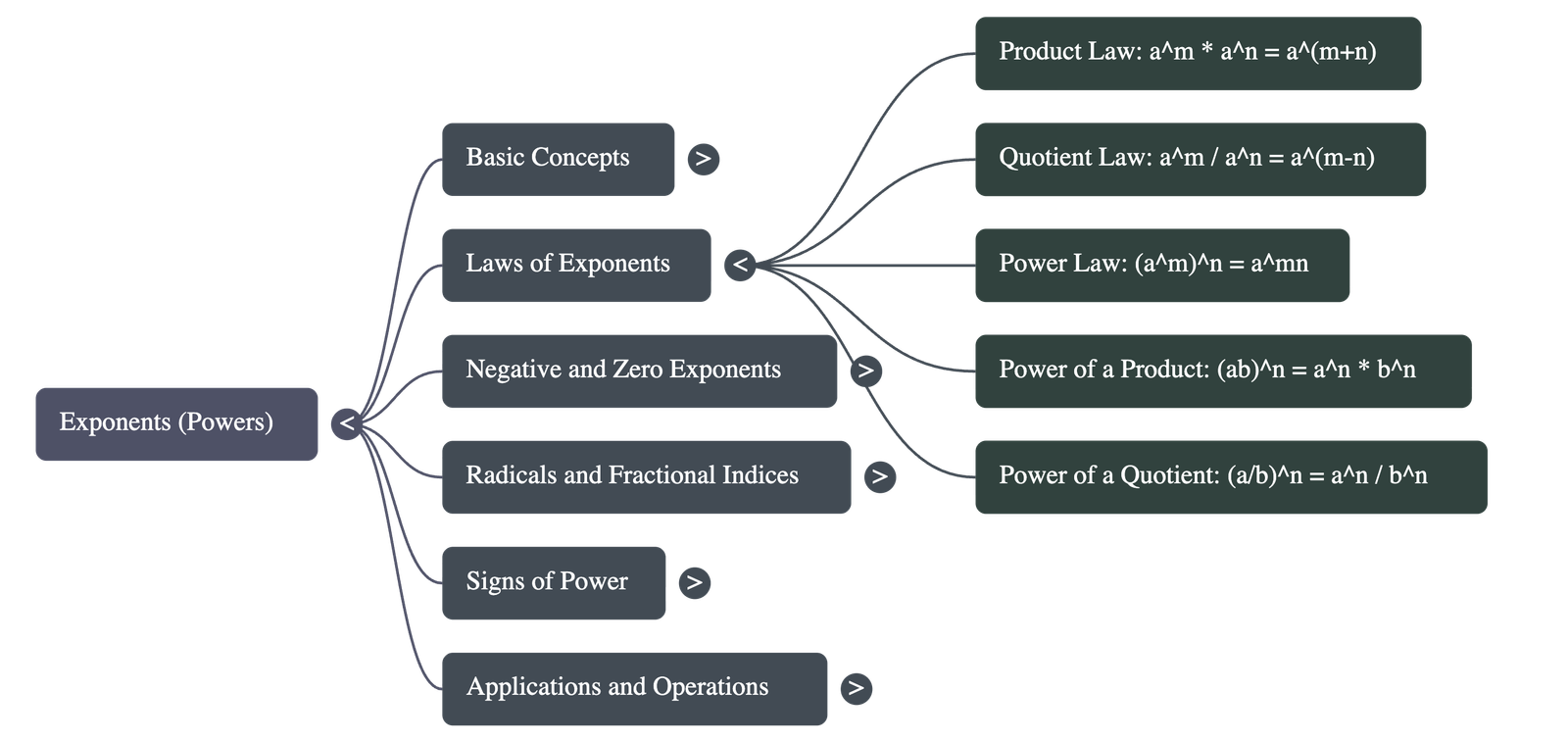
2. Laws of Exponents
- Product Law: When multiplying powers with the same base, add the exponents: am × an = am+n.
- Quotient Law: When dividing powers with the same base, subtract the exponents: am ÷ an = am-n.
- Power Law: To raise a power to another power, multiply the exponents: (am)n = amn.
- Power of a Product: The exponent applies to every factor inside the parentheses: (ab)n = anbn.
- Power of a Quotient: The exponent applies to both numerator and denominator: (a/b)n = an / bn.
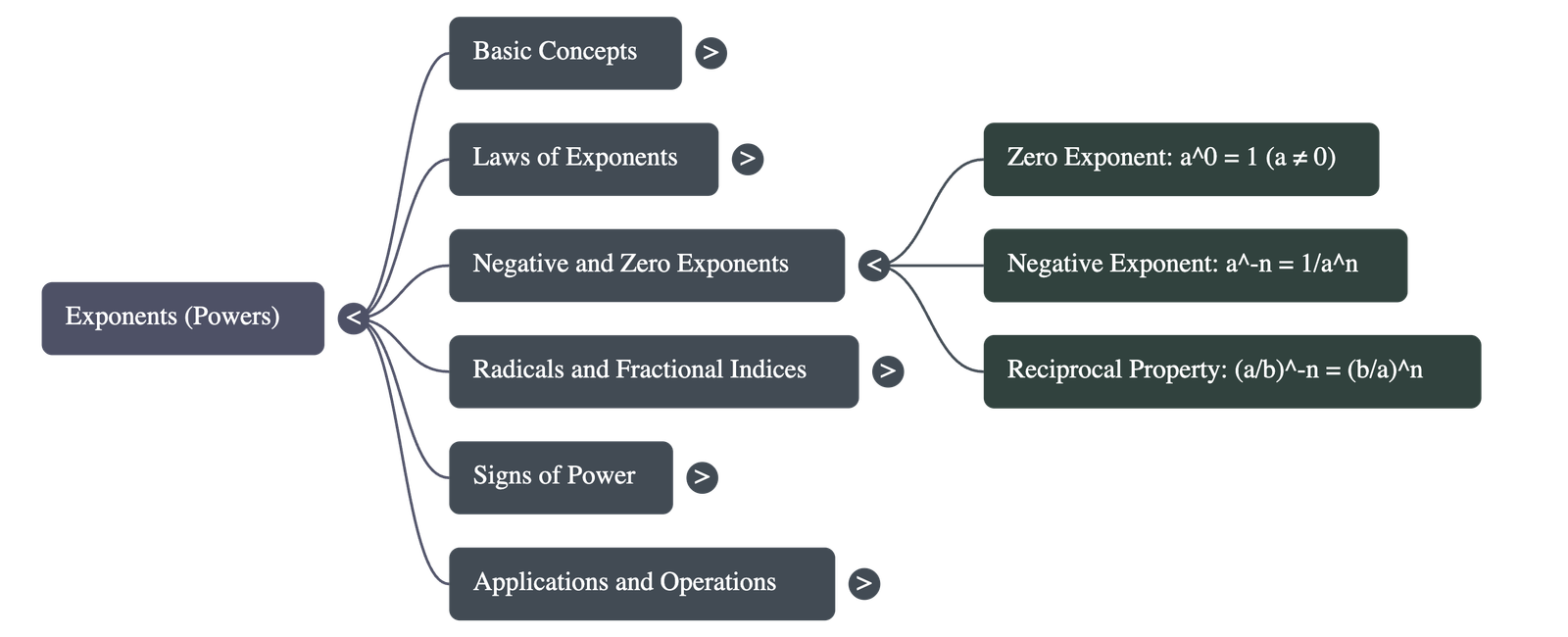
3. Negative and Zero Exponents
- Zero Exponent: Any non-zero number raised to the power of zero is always equal to 1 (a0 = 1).
- Negative Exponent: A negative exponent indicates the reciprocal of the base: a-n = 1/an.
- Reciprocal Relationship: a-n and an are reciprocals of each other.
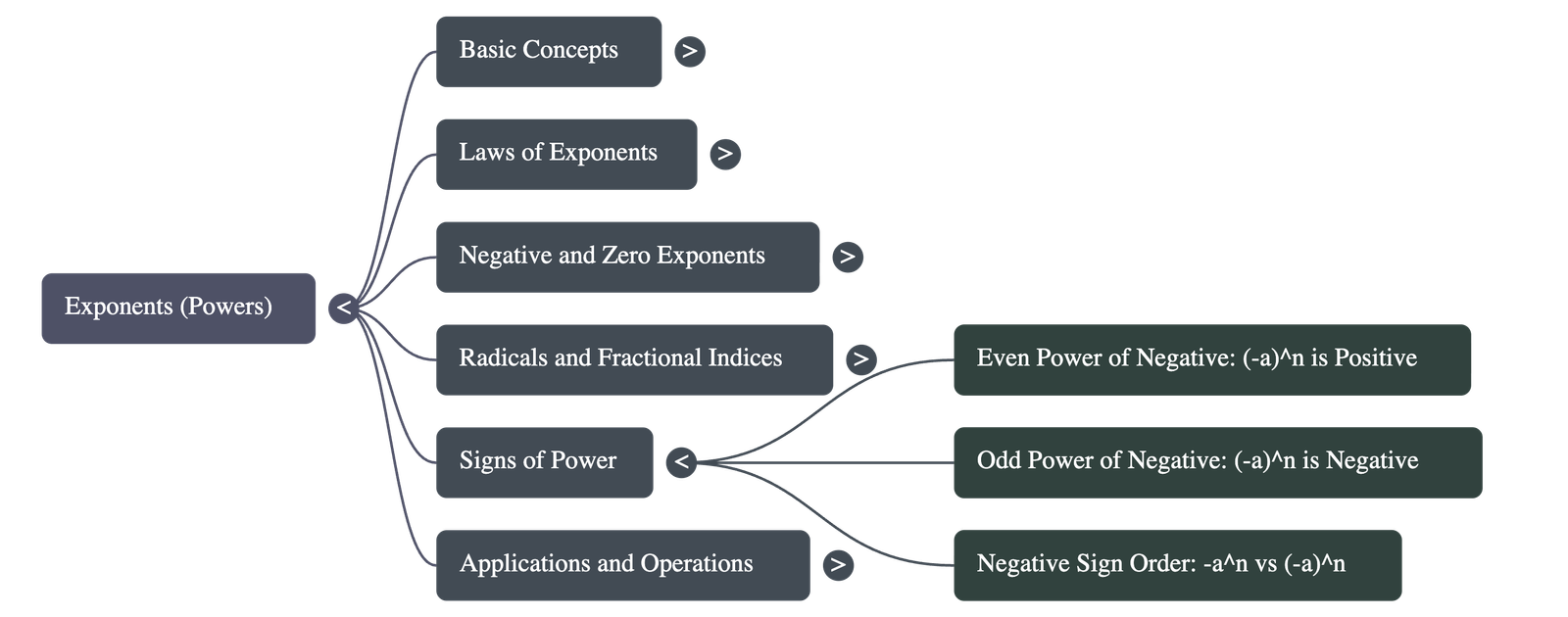
- Notation Caution: Note the difference in signs: (-a)0 is 1, while -a0 is -1.
Do checkout all questions & answers of this chapter.
Quick Navigation:
| | | | |
1 / 1
Quick Navigation:
| | | | |