Quick Navigation:
| | | |
Weathering
Introduction to Weathering
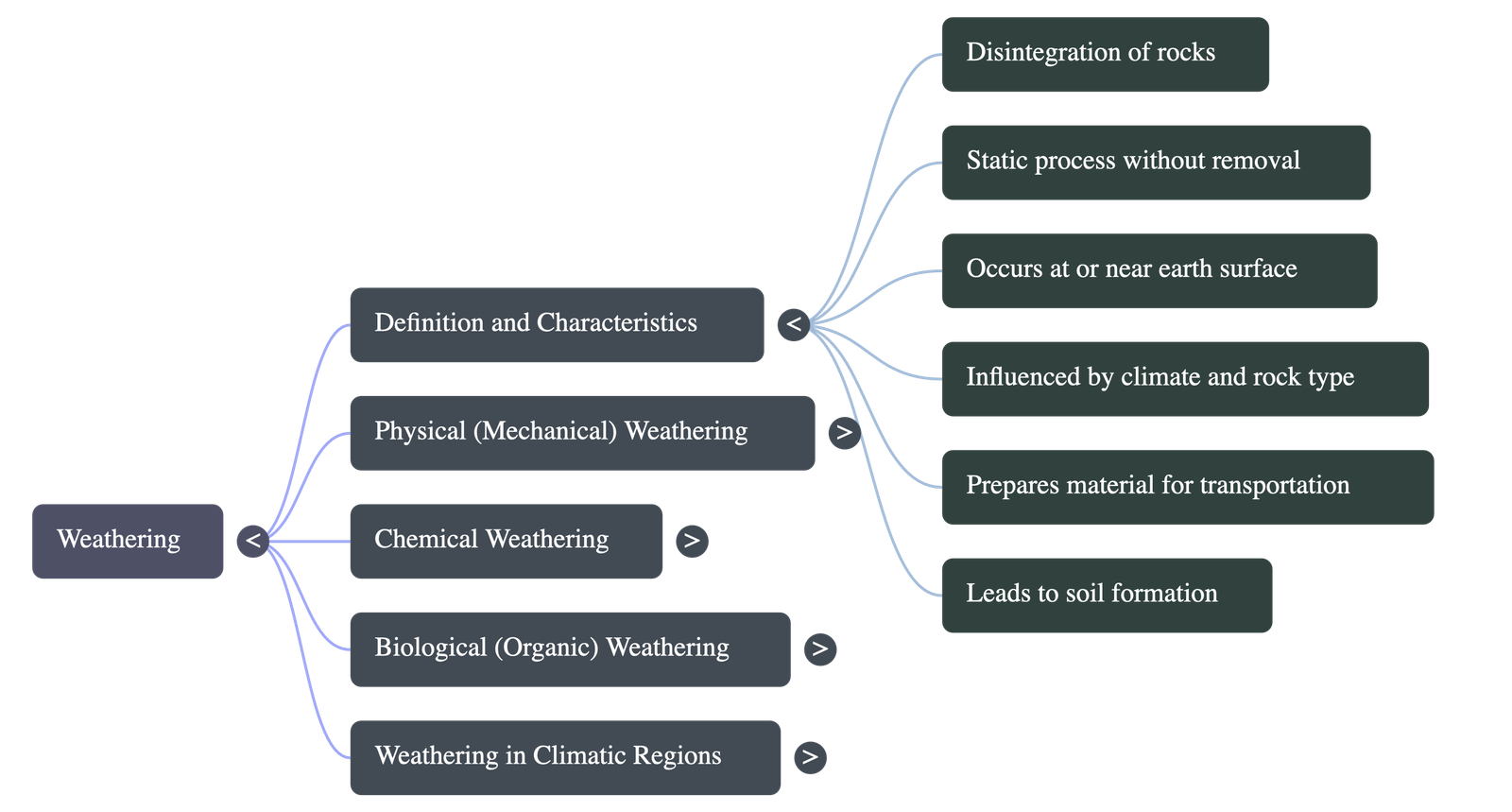
- Exogenic Forces: External forces operating on the earth's surface include weathering, mass wasting, erosion, transportation, and deposition, with climate acting as the primary driving agent.
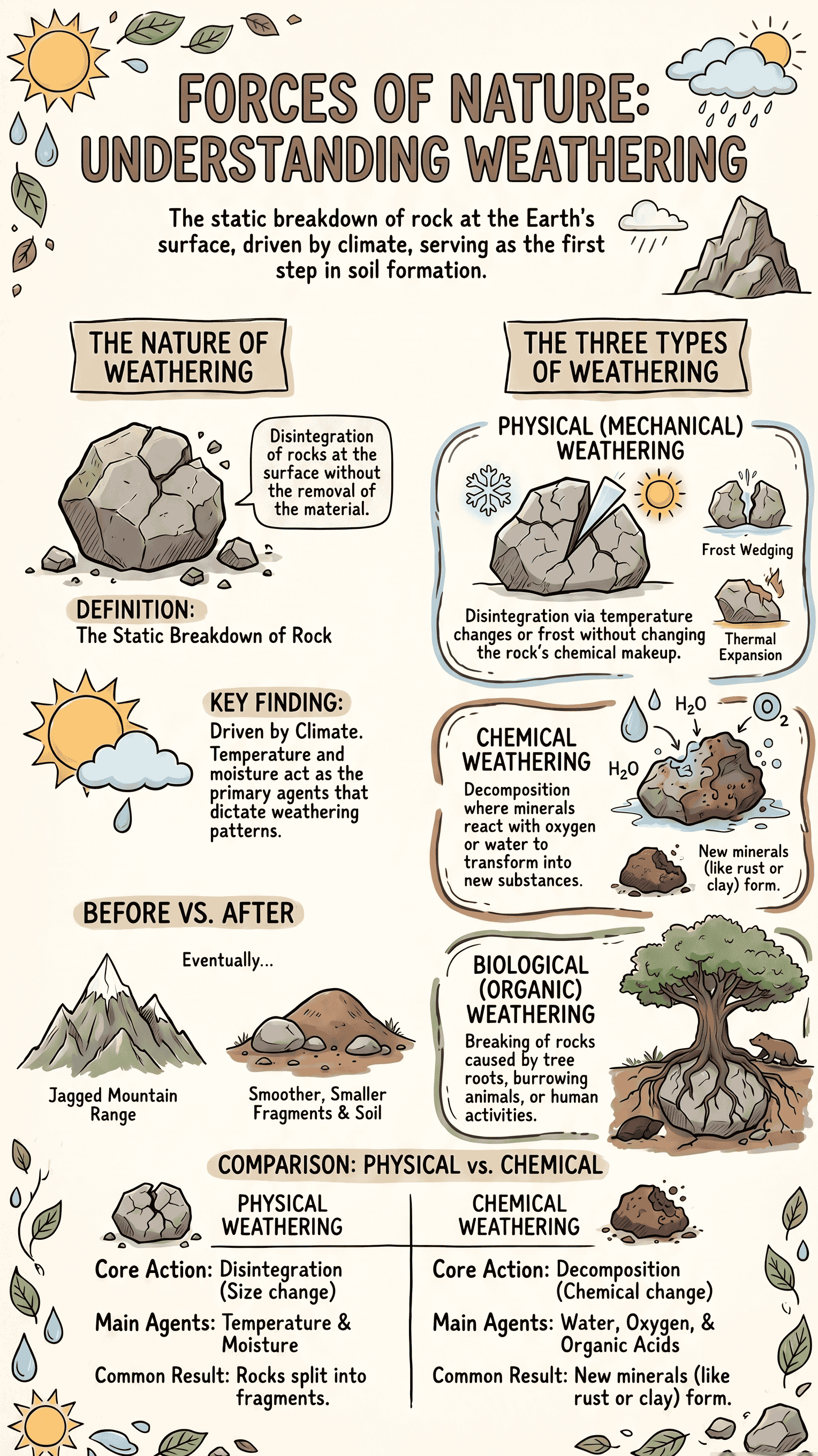
- Definition: Weathering is the basic process of breaking down rocks without removing them. It is a static process involving the disintegration or decomposition of rocks in place (in situ) due to exposure to weather conditions.
- Chief Characteristics:
- It involves the disintegration and decay of solid rocks.
- It depends heavily on climate and rock characteristics (composition, hardness, texture, and permeability).
- It alters the earth's surface and is essential for soil formation.
- It utilizes multiple processes to transform massive hard rocks into finer materials, preparing them for transportation by agents of gradation.
Types of Weathering
1. Physical (Mechanical) Weathering
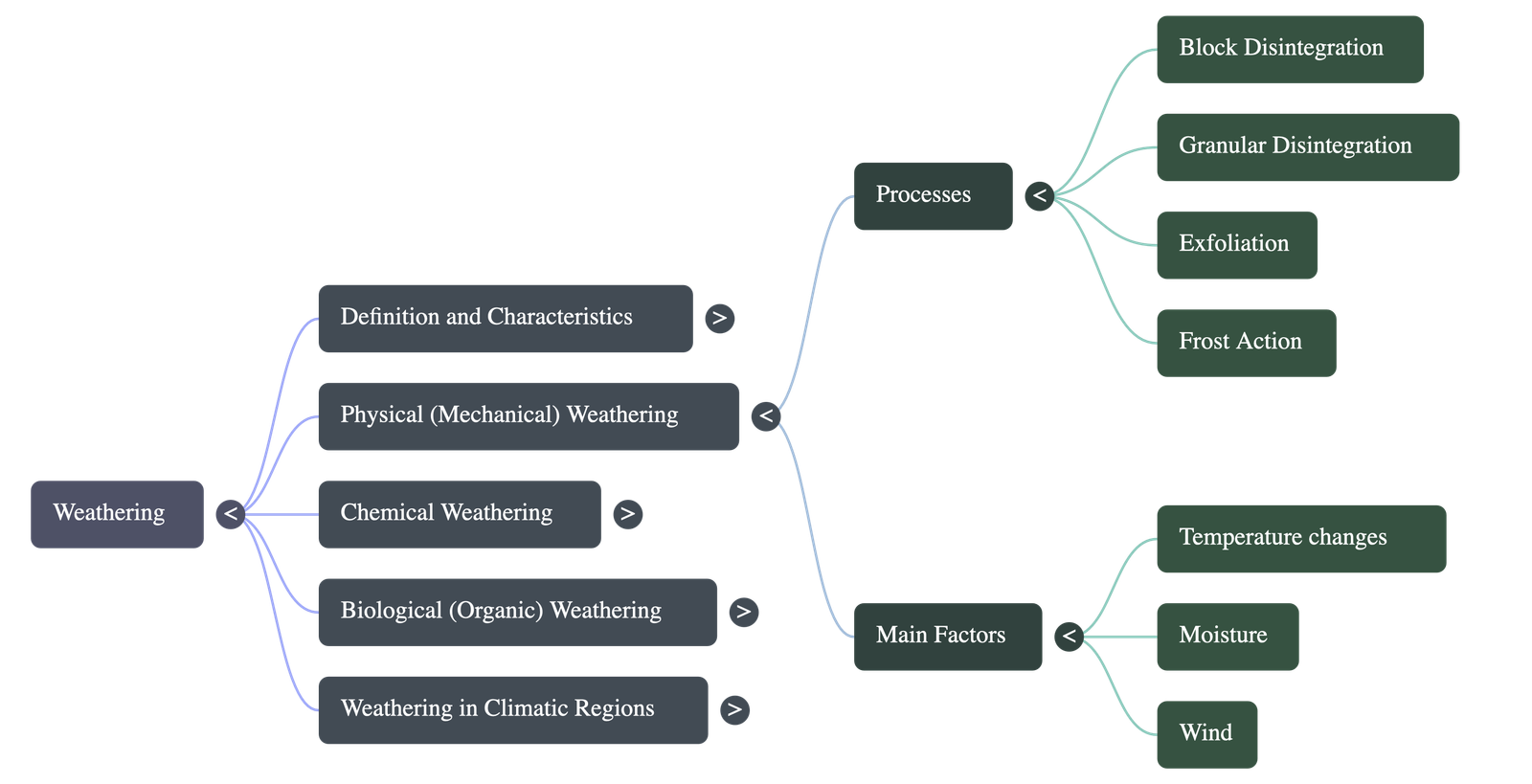
The breakdown of rocks into smaller fragments without any alteration to their chemical constituents. Key factors include temperature changes, moisture, frost action, and wind.
- Block Disintegration: Sudden rises and falls in temperature cause rocks to expand and contract, leading to tension and eventual splitting into massive blocks.
- Granular Disintegration: Different minerals within rocks react differently to temperature changes, causing the rock to crumble into smaller pieces. Common in cold regions and high altitudes.
- Frost Action: Water seeps into rock crevices, freezes at night (expanding in volume), and melts during the day. This repeated cycle ruptures the rocks.
- Exfoliation: Because rocks are poor conductors of heat, sudden temperature changes cause only the outer layers to expand and contract, leading them to peel off like onion layers.
2. Chemical Weathering
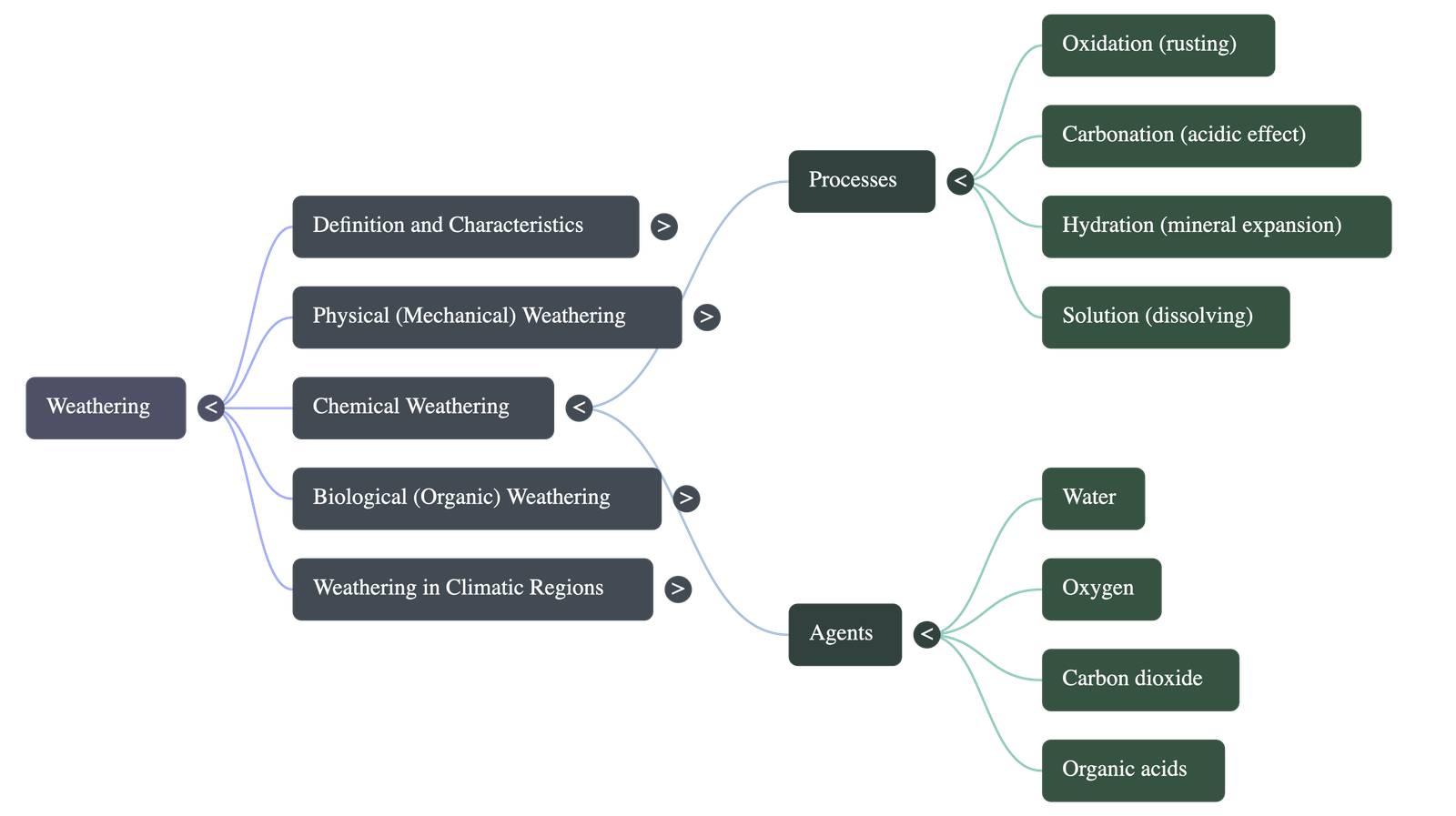
The decay or decomposition of rocks due to chemical reactions that transform original minerals into new chemical combinations. Primary agents include water, oxygen, carbon, and organic acids.
- Oxidation: Atmospheric oxygen reacts with minerals, particularly iron compounds, causing them to rust and crumble while changing color to red, yellow, or brown.
- Carbonation: Rainwater absorbs carbon dioxide to form a weak carbonic acid, which easily dissolves calcareous rocks like marble, gypsum, and limestone.
- Hydration: Minerals absorb rainwater, expand, and become heavy, causing physical/chemical stress that leads to disintegration (e.g., feldspar converting into kaolin).
- Solution: Minerals like rock-salt dissolve directly into water. The severity depends on the rock's mineral composition and pore spaces.
3. Biological (Organic) Weathering
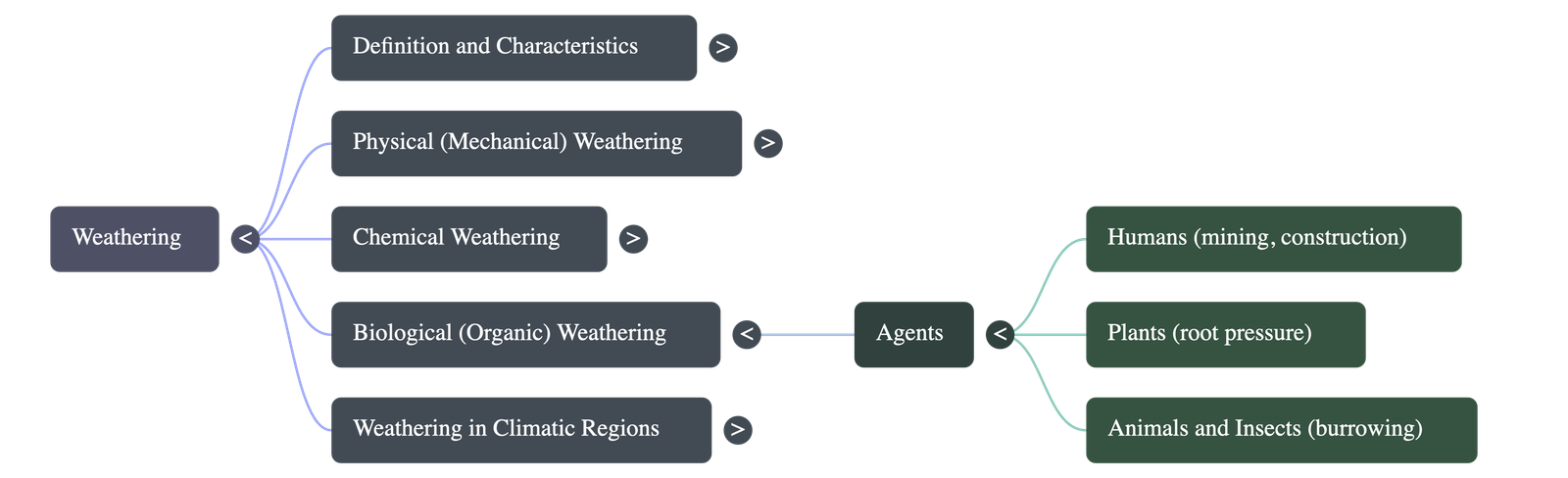
Weathering driven by living organisms, encompassing both physical disintegration and chemical decomposition.
- Humans: Activities such as mining, excavation, road construction, and agriculture physically break rocks and expose them to further weathering.
- Plants: Tree roots force their way into rock crevices and exert immense pressure, breaking the rocks. Conversely, vegetation can also bind soil and protect underlying rocks from exposure.
- Animals & Insects: Burrowing creatures (worms, moles, rabbits) loosen surface materials. When they die, their decaying bodies release organic acids that chemically break down rocks.
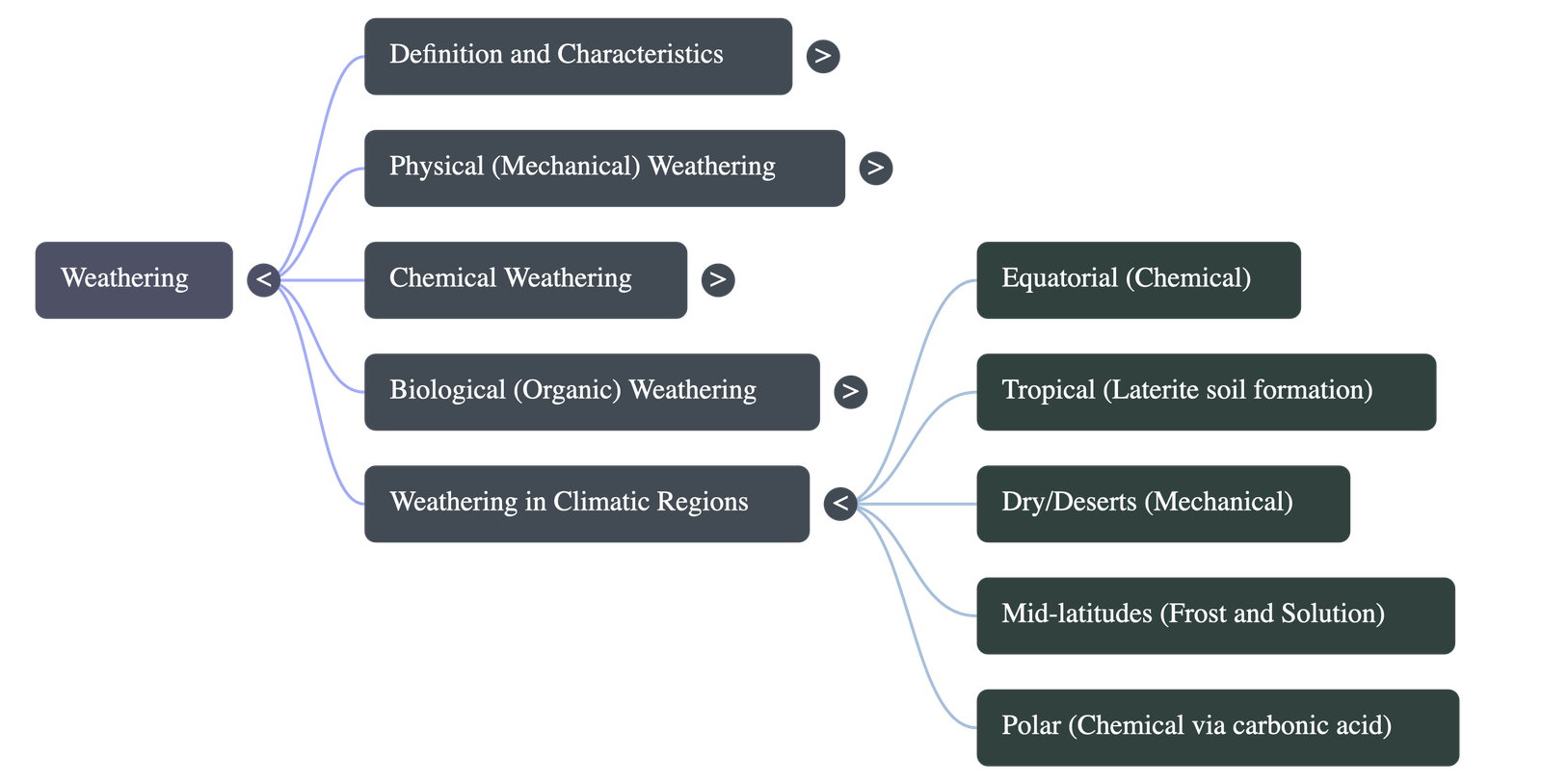
Weathering in Different Climatic Regions
Climate is the single most crucial factor determining the dominant type of weathering in an area.
- Equatorial Climates: Consistently high temperatures and humidity make chemical weathering intensely active in these zones.
- Tropical Climates: Characterized by distinct wet and dry seasons. The high evaporation rate during dry periods and heavy precipitation during wet periods promote the formation of laterite soils (oxides of iron and aluminum).
- Dry Climates (Deserts): Mechanical weathering is dominant due to the extreme diurnal (daily) range of temperatures, making processes like block disintegration very rapid.
- Mid-Latitudes / Temperate Climates: Frost action acts as the most powerful weathering agent. Chemical weathering (solution) also occurs on a massive scale, particularly in limestone-rich areas.
- Polar Climates: While physical weathering (frost action) is highly prevalent, recent studies reveal that cold polar meltwater absorbs more carbon dioxide. This increased carbonic acid content accelerates chemical weathering even at freezing temperatures.
Do checkout all questions & answers of this chapter.
Quick Navigation:
| | | |
1 / 1
Quick Navigation:
| | | |