Quick Navigation:
| | | |
Effects of Pollution
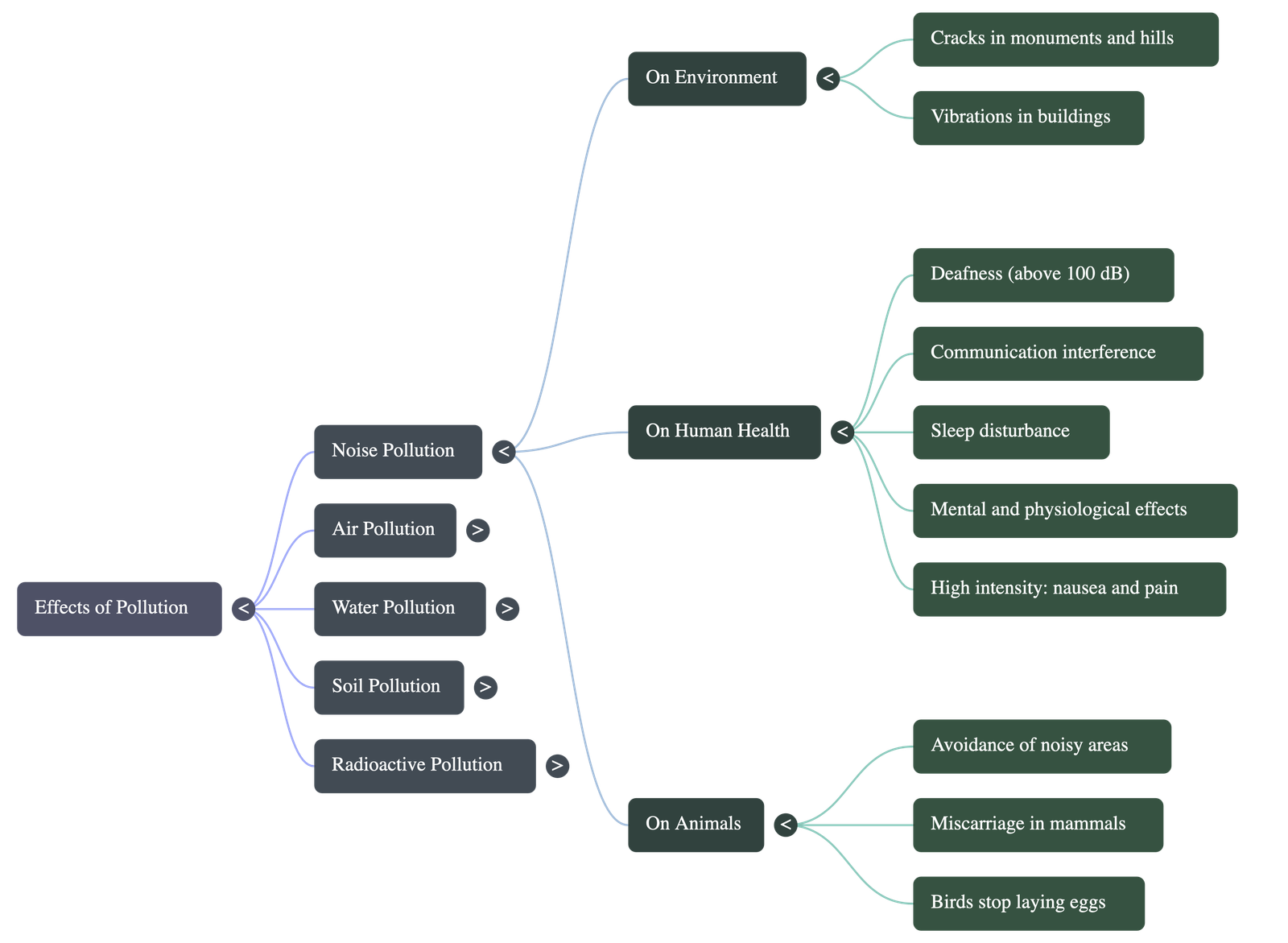
1. Effects of Noise Pollution
- On Environment: High-intensity noise causes cracks in national and archaeological monuments, damages hills, breaks glass panes, and creates intense vibrations in buildings.
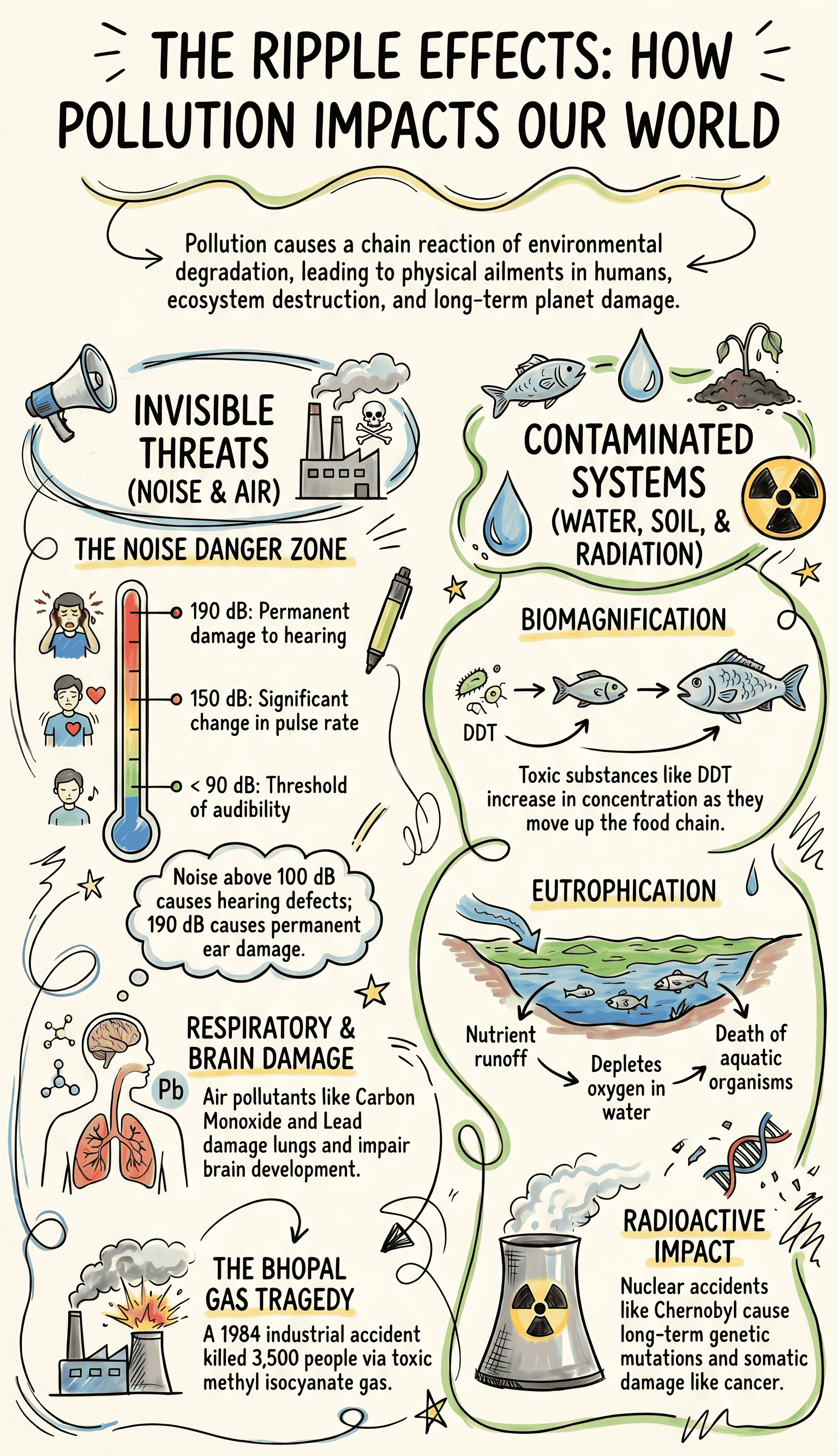
- On Human Health: Continuous exposure to levels above 100 dB causes deafness or permanent hearing damage. It disrupts communication, sleep patterns, and pulse rates. Prolonged exposure can lead to mental illness, cardiovascular diseases, stomach ulcers, neurosis, and respiratory disorders.
- On Animals: High noise levels negatively impact biological performance. It causes migratory birds to avoid certain areas or stop laying eggs, and can trigger miscarriages in mammals and fishes.
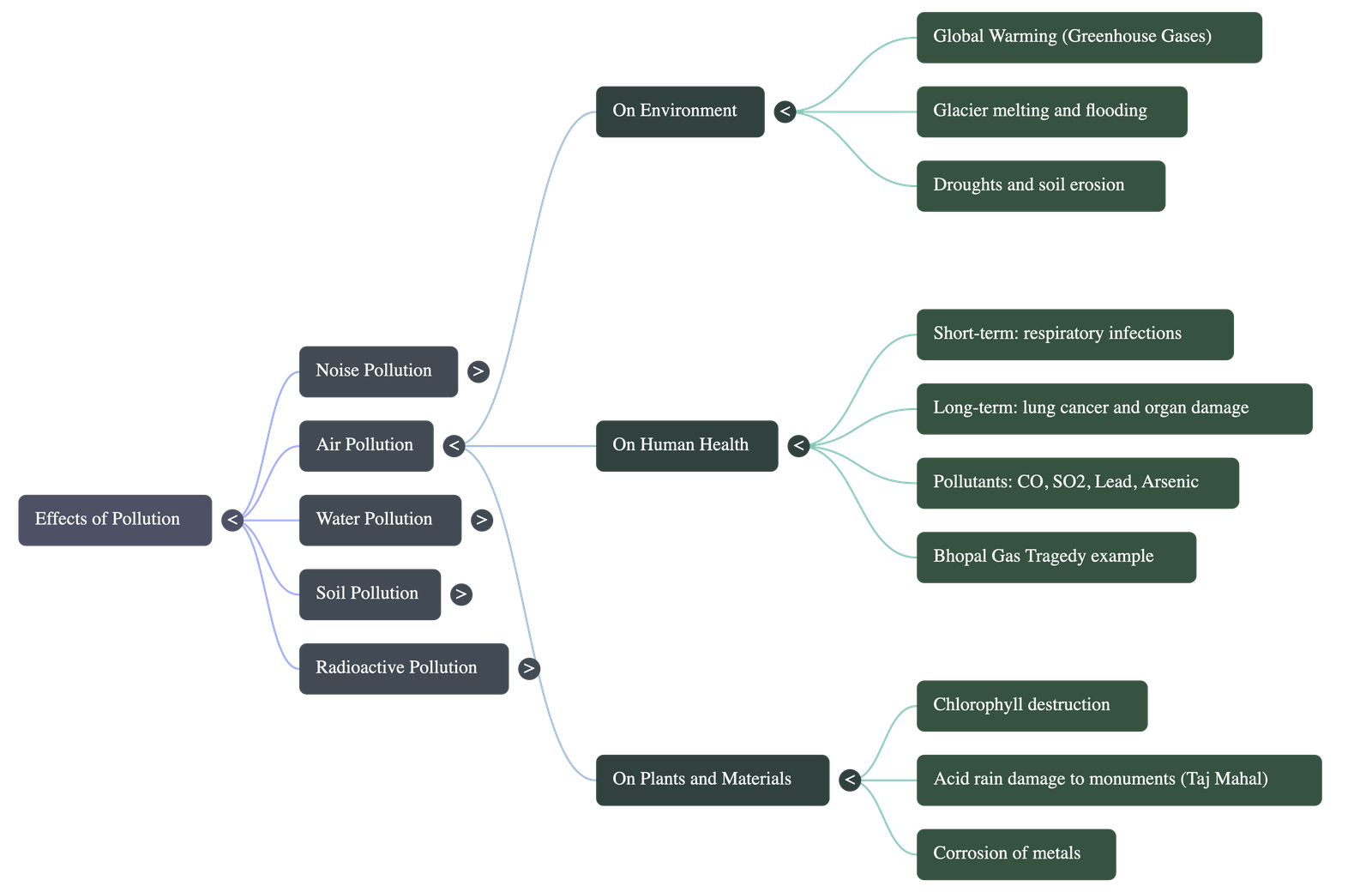
2. Effects of Air Pollution
- On Environment: An increase in greenhouse gases (Carbon Dioxide, Methane, etc.) causes Global Warming. This leads to melting snowlines and glaciers, abnormal temperature rises, evaporation resulting in droughts, and frequent flooding with salt intrusion in coastal deltas.
- On Human Health:
- Short-term: Eye/nose/throat irritation, bronchitis, pneumonia, headaches, nausea, dizziness, and slurring of speech.
- Long-term: Chronic respiratory diseases, lung cancer, cardiovascular diseases, and severe damage to nerves, brain, liver, and kidneys. Specific pollutants like carbon monoxide reduce blood oxygen, while lead causes brain damage.
- On Plants: Destroys chlorophyll and disrupts photosynthesis. Pollutants like sulphur dioxide bleach leaves, nitrogen dioxide causes premature leaf fall (reducing crop yield), and ozone damages leaves.
- On Animals: Animals feeding on grass coated with particulate matter suffer from arsenic and lead poisoning, leading to bronchitis and loss of appetite.
- On Materials: Soot and fumes damage painted surfaces and fabrics. Acid rain (containing sulphuric acid) discolours and corrodes marble monuments like the Taj Mahal, while ozone and acid gases deteriorate paper and textiles.
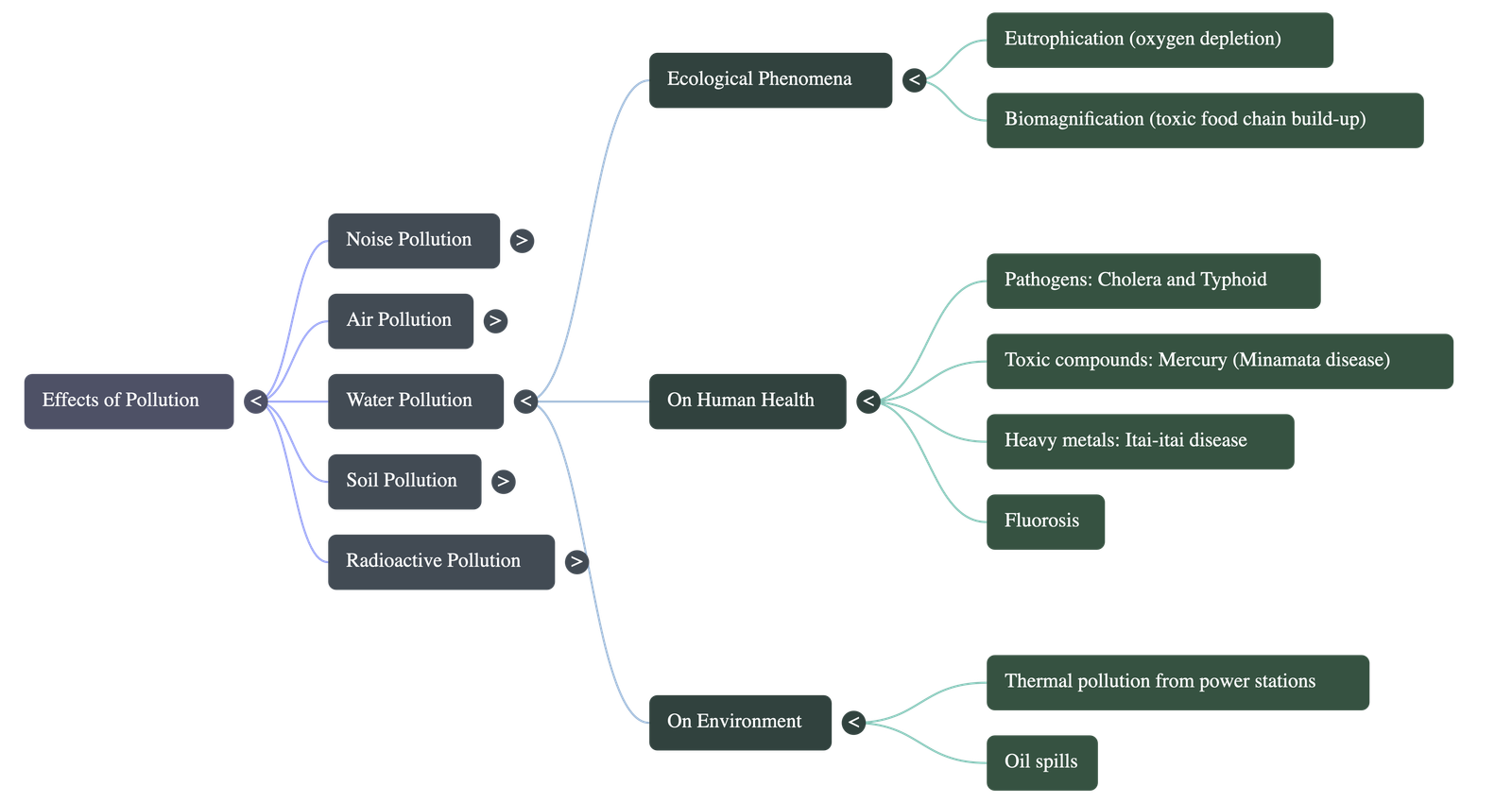
3. Effects of Water Pollution
- On Environment & Marine Life:
- Eutrophication: The accumulation of nutrients from agricultural run-off promotes algae growth, which blocks sunlight and depletes oxygen, killing aquatic organisms.
- Biomagnification: Toxic substances increase in concentration as they move up the food chain, often resulting in lethal doses for top predators (e.g., DDT poisoning in birds).
- Other Impacts: Hot wastewater reduces oxygen levels, and crude oil spills contaminate seawater, suffocating marine life.
- On Human Health:
- Pathogens: Contaminated water spreads diseases like cholera, typhoid, diarrhoea, and jaundice.
- Toxic Compounds: Heavy metals cause severe health crises. Examples include Minamata disease (numbness/vision loss from mercury), Itai-itai disease (from cadmium), liver/kidney damage and cancer (from arsenic), and fluorosis (discoloration of teeth and respiratory issues from fluoride).
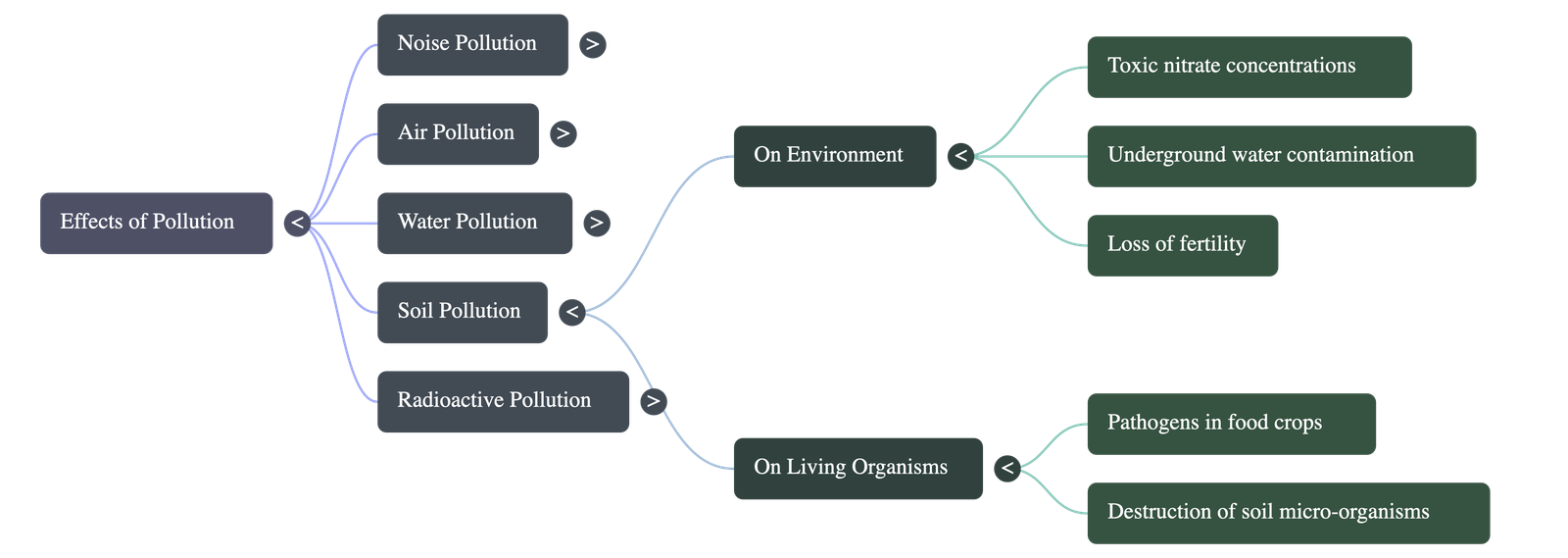
4. Effects of Soil Pollution
- On Environment: Nitrogenous fertilizers create toxic nitrate/nitrite levels in leaves. Industrial waste pollutes underground water, and agricultural run-off causes nearby water bodies to undergo eutrophication. It ultimately results in a drastic loss of soil fertility and productivity.
- On Human Health: Consuming affected fruits and vegetables transmits pathogenic bacteria and intestinal worms. Radioactive isotopes from fallout can also enter the human food chain through grazing animals, causing abnormalities.
- On Other Organisms: Sewage particles clog soil pores, destroying the vital micro-organisms needed for soil enrichment. Pesticides absorbed by crops eventually travel up the food chain to animals and humans.
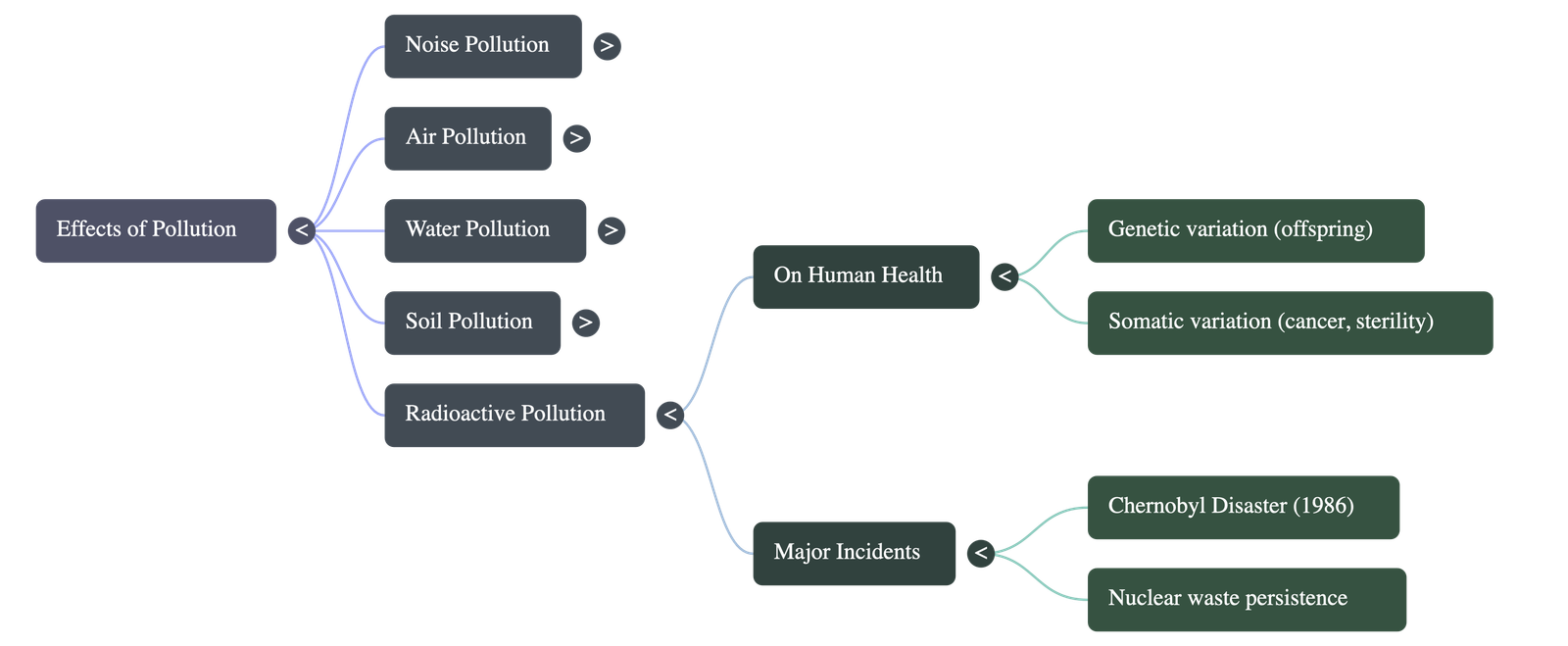
5. Effects of Radioactive Pollution
- On Environment: High-level products of nuclear waste persist in the environment for hundreds of years. Nuclear reactor accidents pose a catastrophic, long-term threat to the surrounding ecosystem.
- On Human Health:
- Genetic Variation: Harmful mutations in body cells that are transmitted to future generations.
- Somatic Variation: Short-term exposure causes organ damage, leading to breast cancer, thyroid cancer, lung cancer, brain cancer, sterility, and defective eyesight.
- On Animals: Radioactive substances penetrate the soil, entering the food chain and concentrating in body tissues. Mass animal casualties and adverse ongoing health defects were famously observed following the 1986 Chernobyl disaster.
Do checkout all questions & answers of this chapter.
Quick Navigation:
| | | |
1 / 1
Quick Navigation:
| | | |