Quick Navigation:
| | | |
Volcanoes
Introduction
- Endogenic Forces: Forces relating to or arising from the interior of the earth. These cause sudden movements that bring about instant changes on the earth's surface.
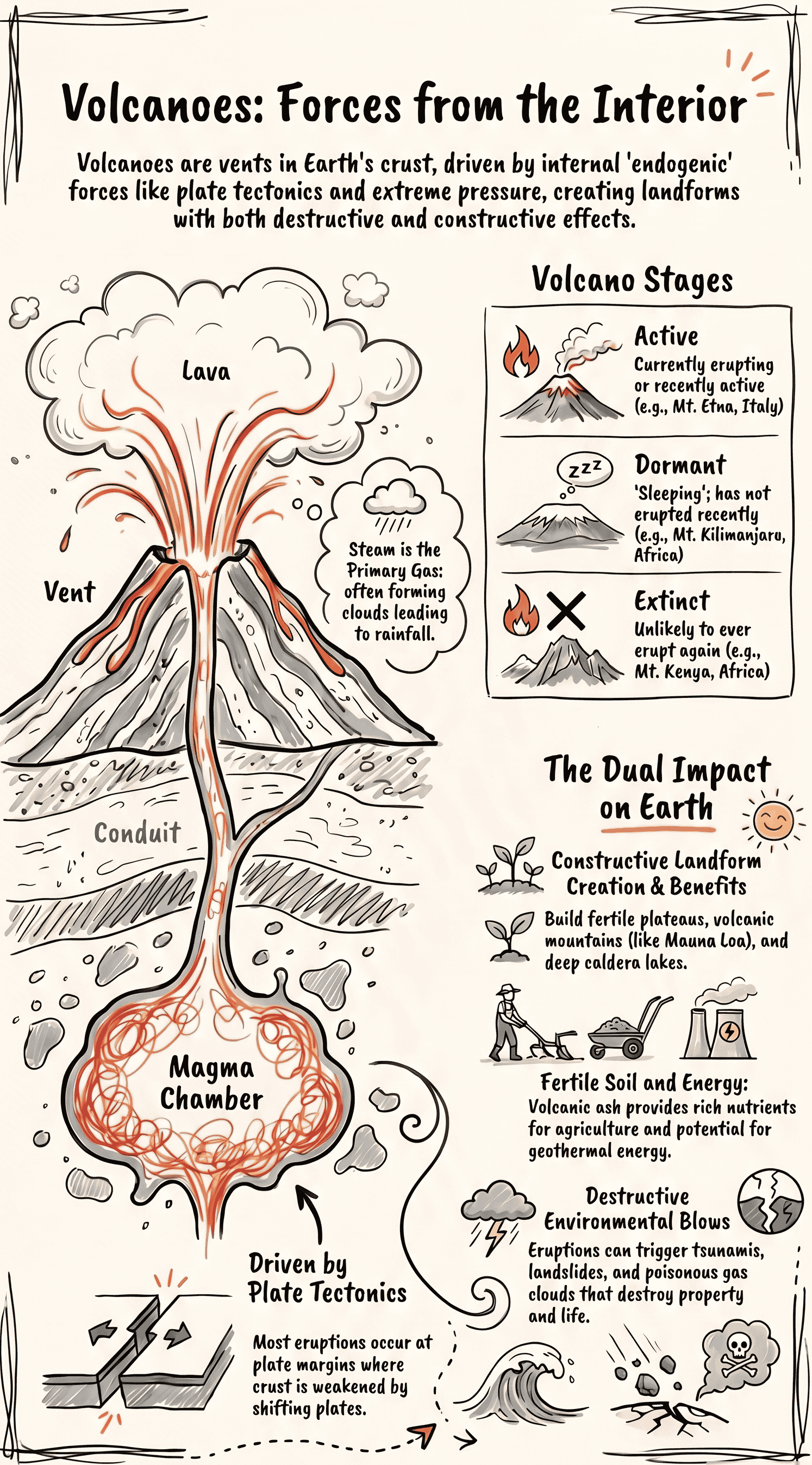
- Definition of a Volcano: A vent (opening) in the earth's crust from which fiery hot magma erupts from the earth's interior.
Causes of Volcanic Eruptions
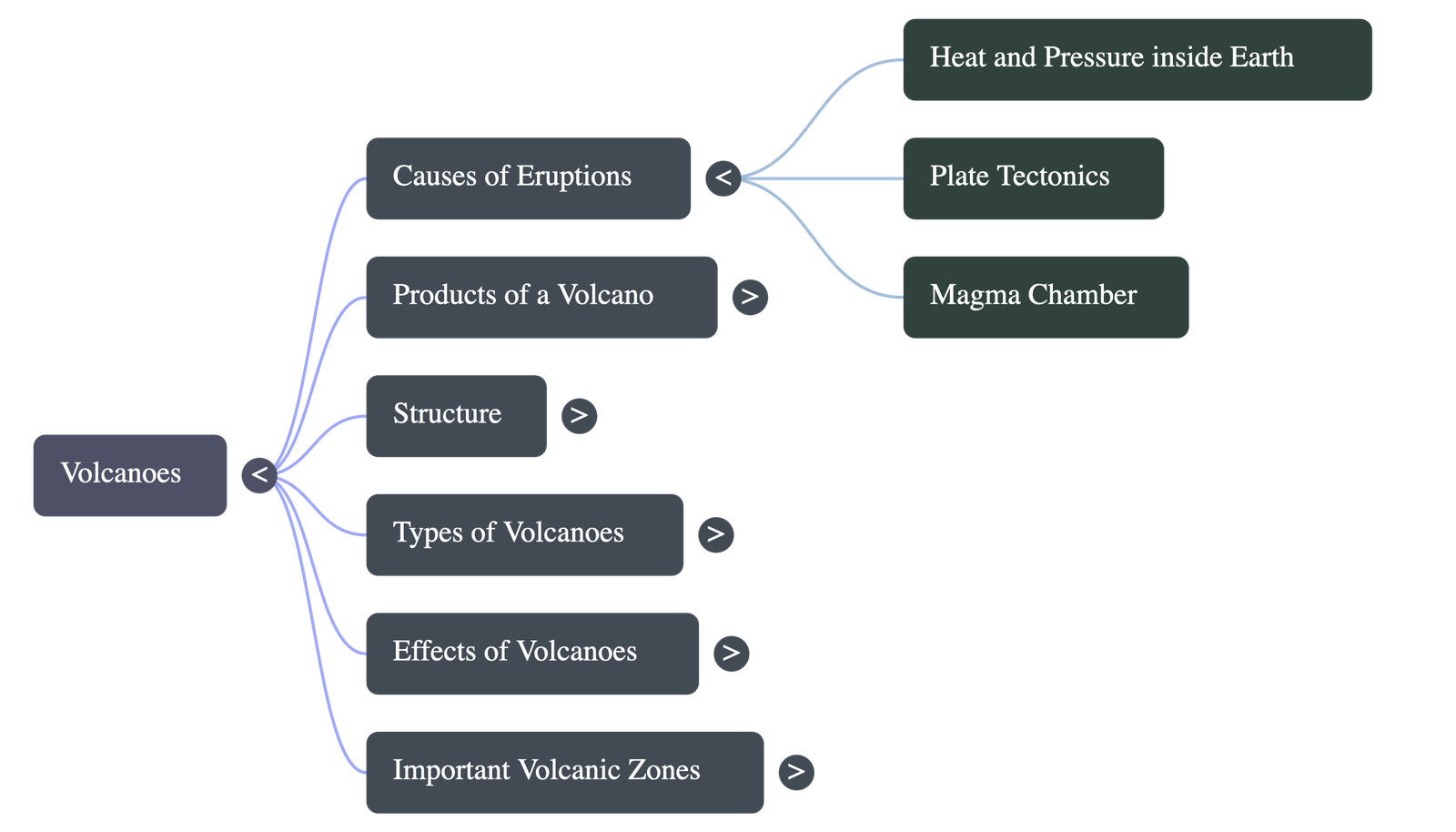
- Heat and Pressure: Temperatures and pressures increase towards the earth's center. This intense heat melts rocks and builds up pressure, forcing magma to find an escape route through fissures and cracks.
- Plate Tectonics: Eruptions generally occur near plate margins. When tectonic plates slide past or collide with each other, it creates faults along lines of weakness, allowing magma to gush out.
- Magma Chamber: Molten material melts weak rocks to create huge underground reservoirs. The continuous addition of fresh magma, combined with gas and steam pressure, pushes the material vertically upwards until it breaches the surface.
Products of a Volcano
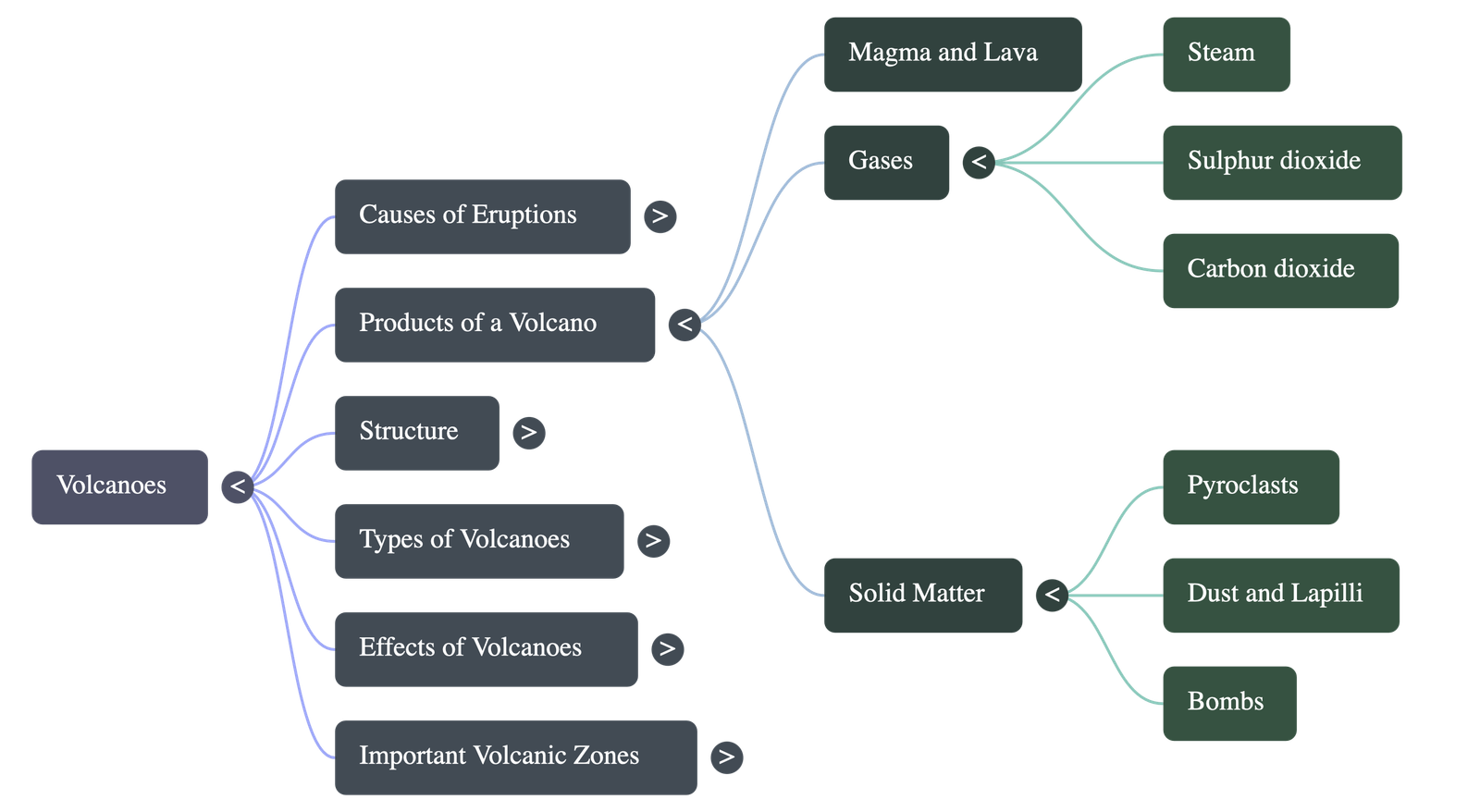
- Magma and Lava: Magma is the molten rock while it is inside the earth. Once it reaches the surface, it is known as lava.
- Gases: Steam is the most abundant gas, forming huge clouds that cause rainfall. Other ejected gases include hydrogen sulphide, sulphur dioxide, carbon dioxide, and hydrogen.
- Solid Matter (Pyroclasts): Ejected rock fragments vary in size, ranging from fine dust to small stone-sized particles called lapilli, and large violent masses known as bombs.
Structure of a Volcano
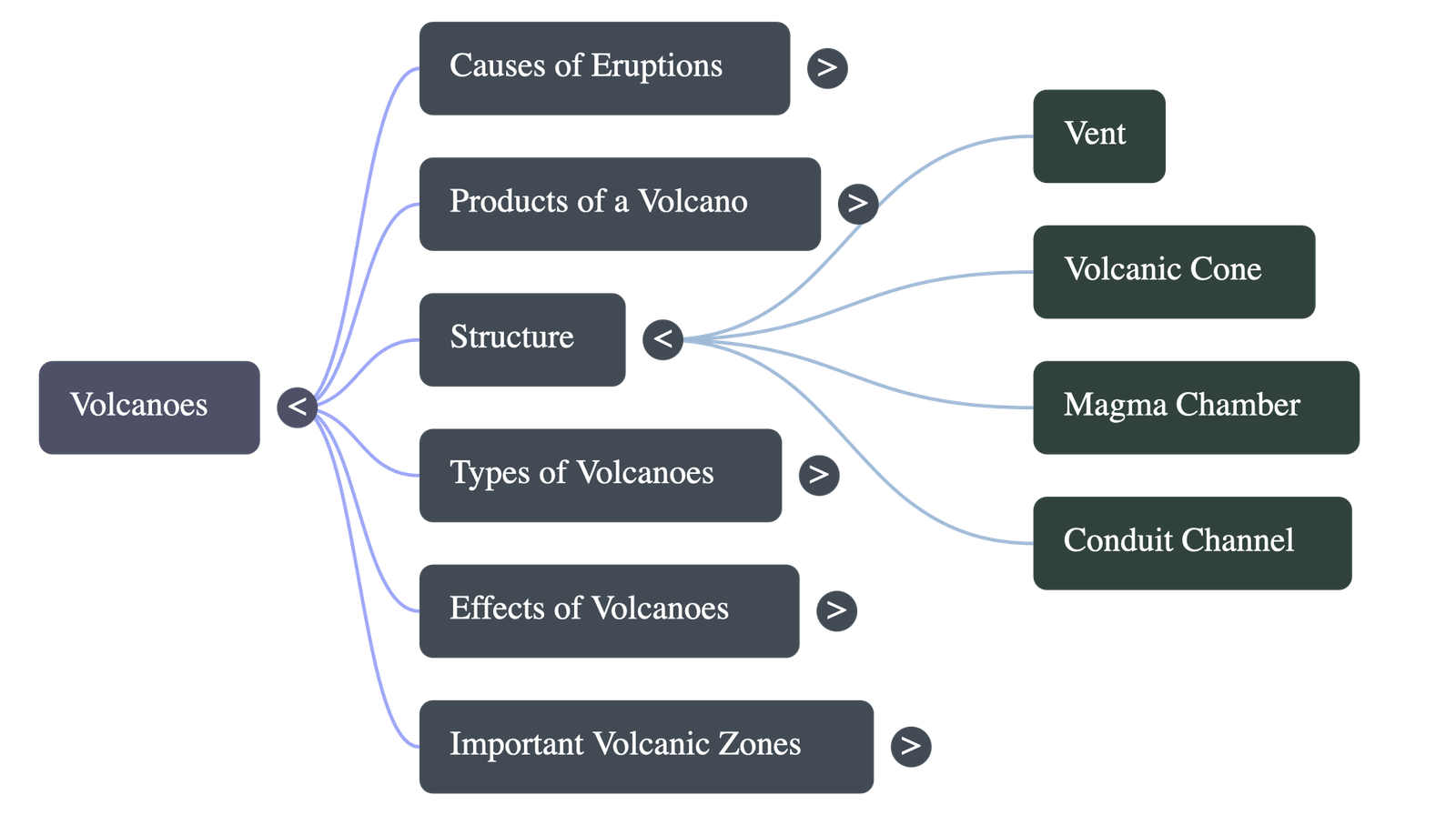
- Vent: A circular pipe-like opening in the crust through which lava flows out.
- Volcanic Cone: The typical cone-like landform created by the gradual cooling and solidifying of erupted fluid material around the vent.
Types of Volcanoes
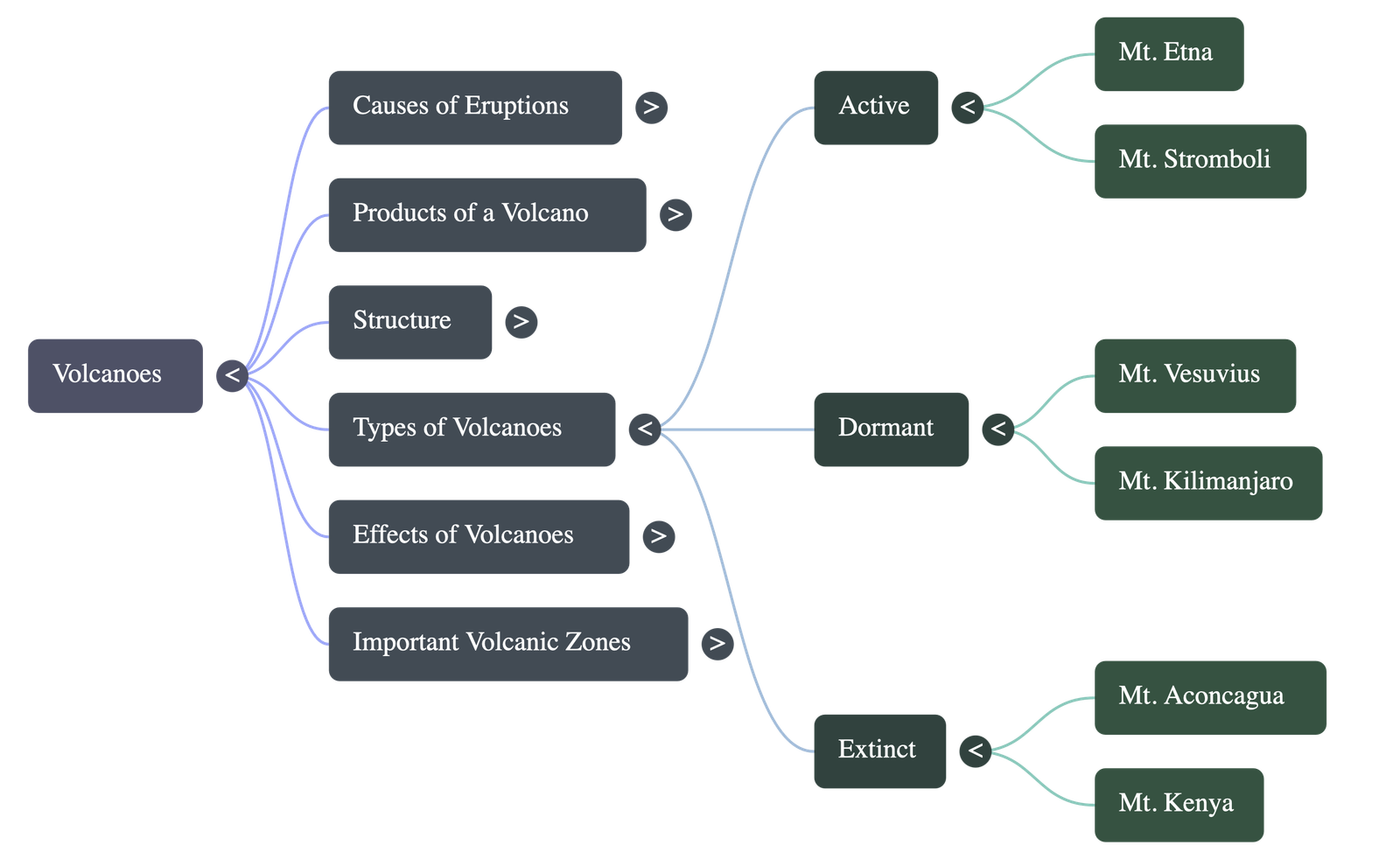
- Active Volcanoes: Presently active and have erupted in the recent past (e.g., Mt. Stromboli and Mt. Etna in Italy, Pinatubo, and Mauna Loa in Hawaii). Roughly 500 exist today.
- Dormant Volcanoes: Considered 'sleeping.' They have not erupted in recent historical periods but could become active at any time (e.g., Mt. Kilimanjaro, Mt. Vesuvius).
- Extinct Volcanoes: Have not erupted in the present geological period and are highly unlikely to become active again (e.g., Mt. Aconcagua, Mt. Kenya).
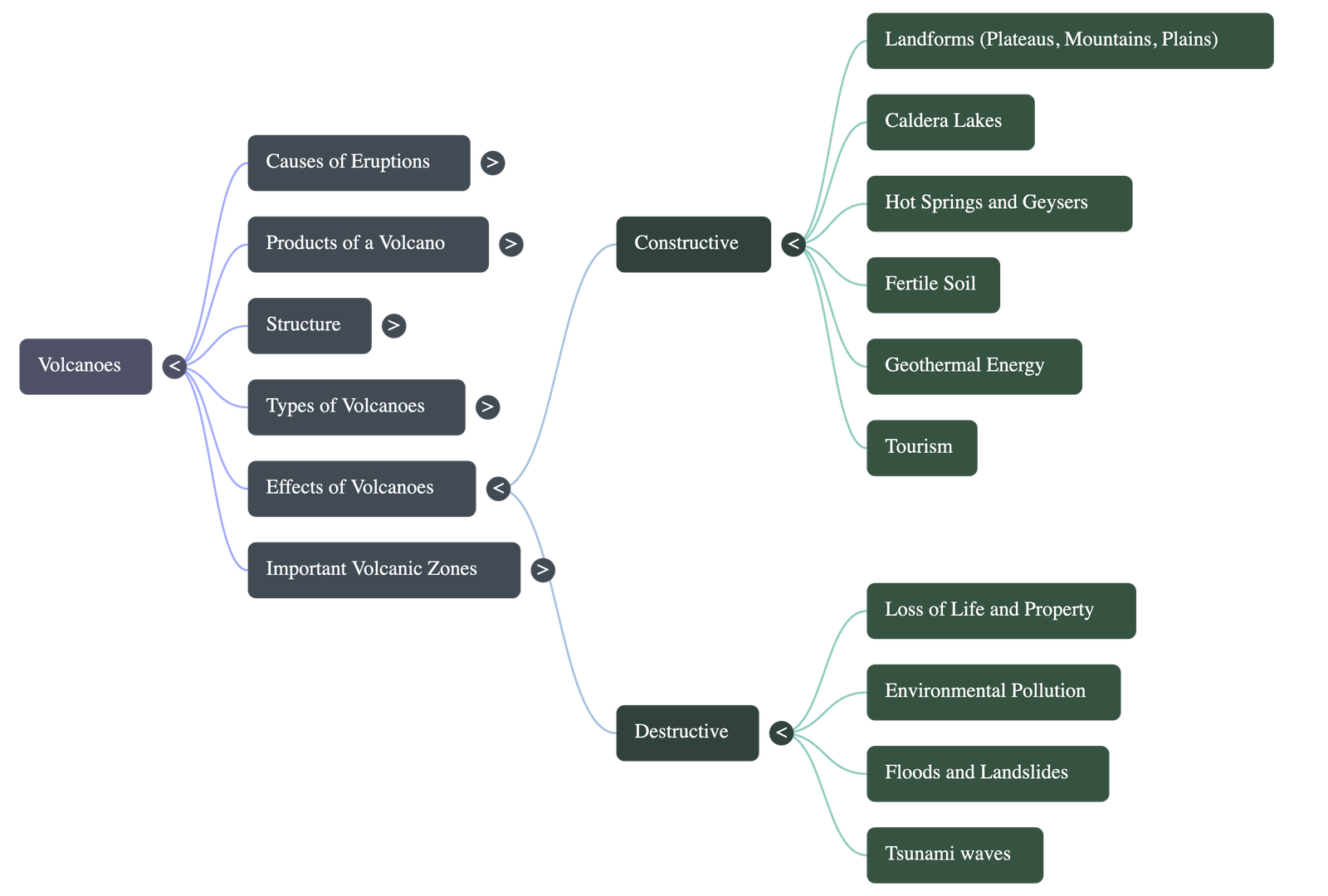
Effects of Volcanoes
Constructive Effects
- Landform Creation: Formation of volcanic plateaus (e.g., Plateau of Peninsular India), volcanic mountains (e.g., Mt. Fuji), and extensive volcanic plains.
- Caldera Lakes: Formed when a volcano's summit is blown up or collapses, leaving a large depression that fills with water (e.g., Crater Lake in the USA).
- Hot Springs: Underground water heated by magma gushes to the surface, bringing dissolved minerals often used for medicinal purposes (e.g., Manikaran in Himachal Pradesh).
- Geysers: Fountains of hot water and steam that escape forcefully (e.g., Old Faithful Geyser in Yellowstone National Park).
- Fertile Soil: Weathered lava and volcanic ash break down to provide nutrient-rich, highly fertile soil for agriculture.
- Geothermal Energy: Regions with high volcanic heat have great potential for generating power.
- Tourism: Dramatic scenery created by volcanic eruptions brings in significant tourist income.
Destructive Effects
- Loss of Life and Property: Eruptions and flowing hot lava completely destroy human, animal, and plant life in their path.
- Agricultural Damage: Thick layers of volcanic ash and dust cover fields, making them unsuitable for cultivation.
- Floods and Landslides: Huge eruption clouds trigger heavy rainfall, causing massive floods and destructive landslides.
- Pollution: Emission of poisonous gases severely pollutes the environment and causes respiratory and health problems.
- Tsunamis: Explosive volcanic eruptions in ocean islands can displace water, triggering highly destructive tsunami waves.
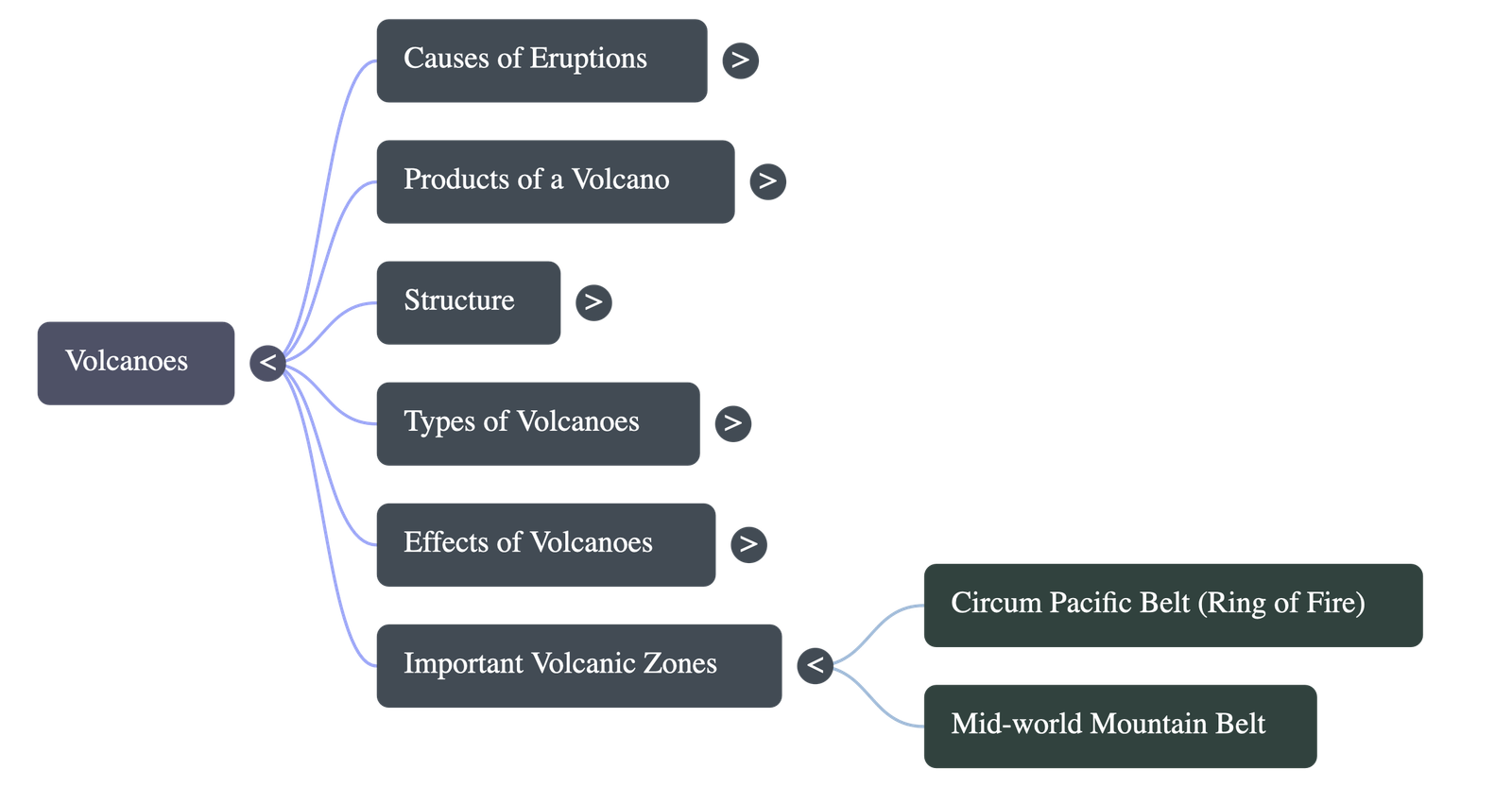
Important Volcanic Zones of the World
- Circum Pacific Belt (Pacific Ring of Fire): Contains over 80% of the world's active volcanoes, located near young fold mountains and earthquake belts. Includes regions like the Andes, Philippines, Indonesia, and Japan.
- Mid-world Mountain Belt: Features prominent volcanoes such as Mt. Vesuvius, Mt. Etna, Mt. Stromboli, Mt. Kenya, and the Canary Islands. The only active volcano in India (Andaman and Nicobar Islands) is also located in this belt.
Do checkout all questions & answers of this chapter.
Quick Navigation:
| | | |
1 / 1
Quick Navigation:
| | | |