Quick Navigation:
| | | |
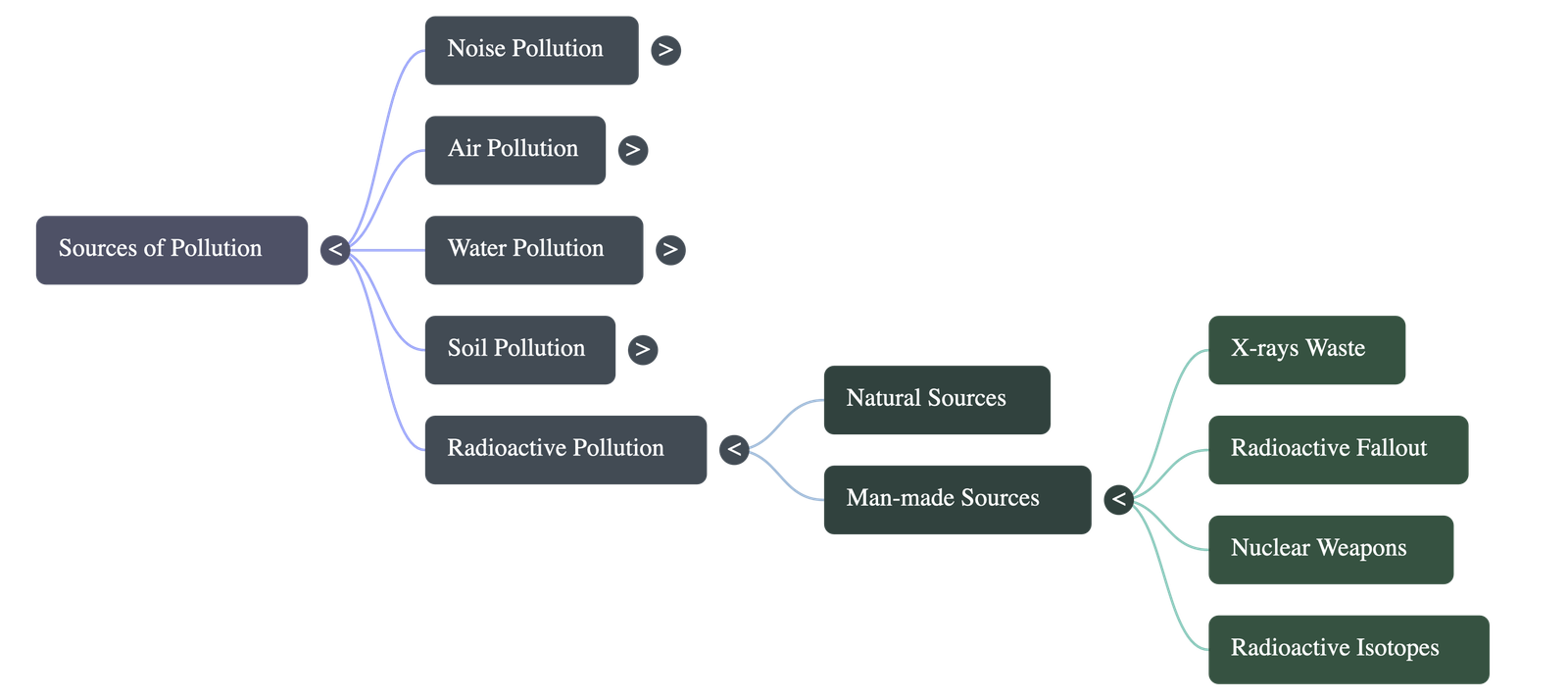
Sources of Pollution
Introduction
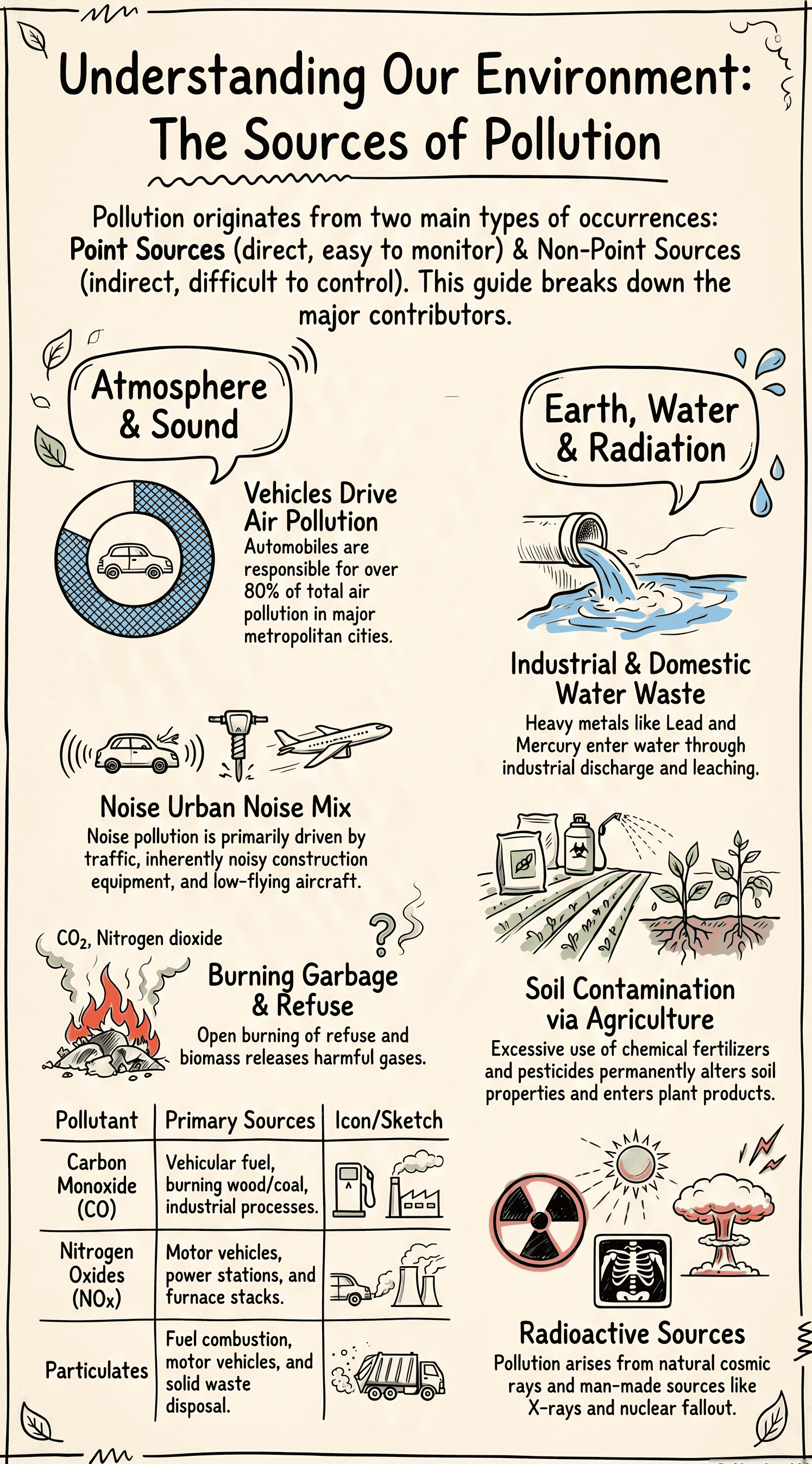
- Pollution manifests in various forms: noise, air, water, soil, and radioactive.
- Point Sources: Direct sources of pollutants that are easy to identify, monitor, and control.
- Non-Point Sources: Indirect sources of pollutants that are difficult to control.
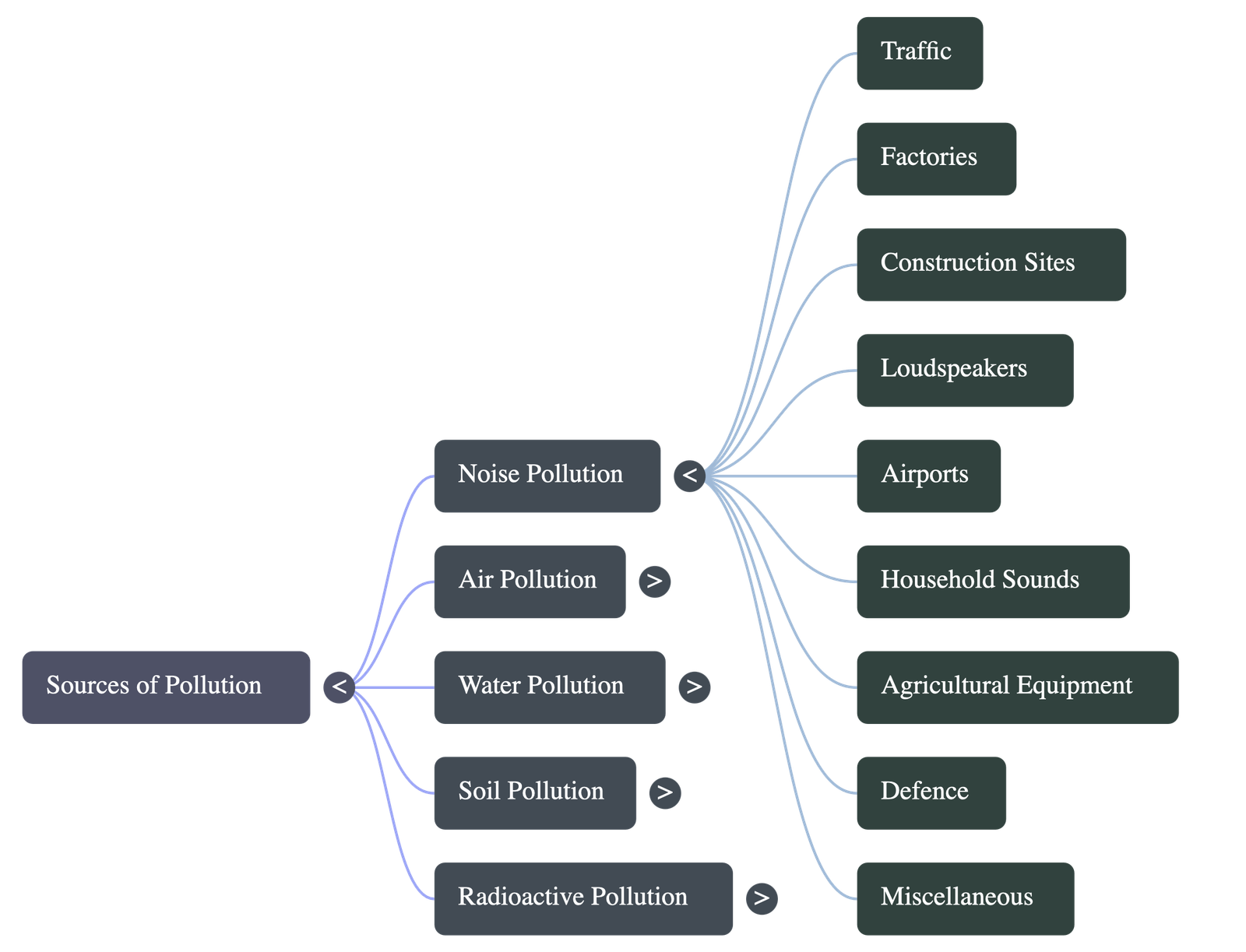
Noise Pollution
Unwanted sound that produces unpleasant effects, discomfort, and interferes with normal activities like sleeping and conversation.
Major Sources:
- Traffic: The increasing number of vehicles and frequent hooting of horns in congested areas.
- Factories: Textile mills, printing presses, and engineering establishments, especially in residential zones of older industrial cities.
- Construction Sites: Often worse than factories due to inherently noisy equipment and demolition activities.
- Loudspeakers: Widely used for religious functions, elections, and commercial advertising.
- Airports: Heavy long-range jets cause intense noise during take-off (due to violent mixing of jet gases) and sustained noise during landing (from air compressors and turbines).
- Household: Entertainment equipment, domestic gadgets (mixers, vacuums, coolers), and banging doors.
- Agricultural Equipment: Tractors, harvesters, and powered tillers.
- Defence & Miscellaneous: Artillery, military jets, sonic booms, blasting, and automobile repair shops.
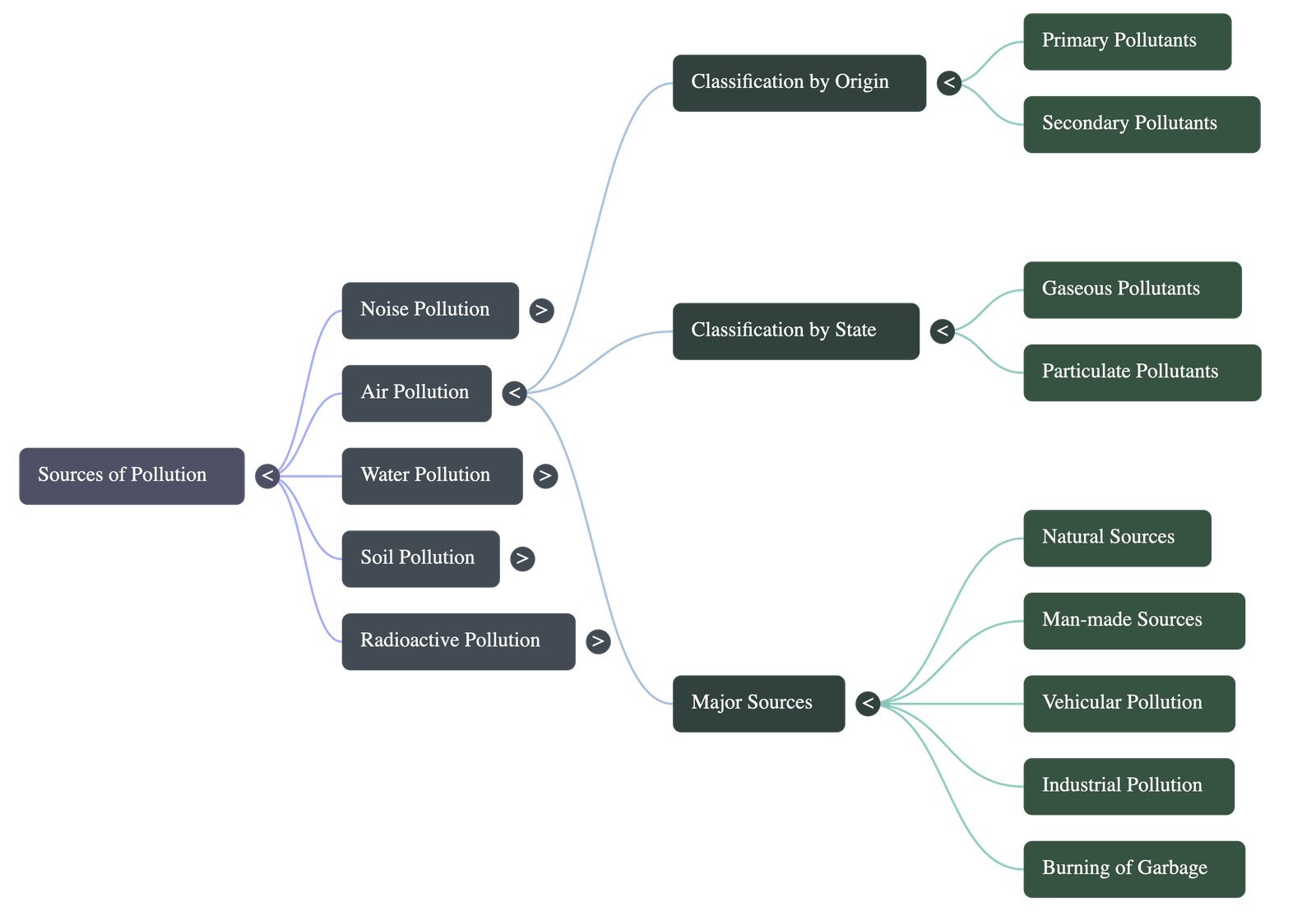
Air Pollution
Contamination of air by pollutants like dust, smoke, and harmful gases causing adverse health and environmental effects.
Classification of Pollutants:
- By Origin: Primary (emitted directly, e.g., ash, smoke, sulphur oxides) vs. Secondary (formed by chemical interactions in the atmosphere, e.g., ozone, sulphur trioxide).
- By State of Matter: Gaseous pollutants vs. Particulate pollutants (suspended droplets/solids).
- By Source: Natural (volcanic eruptions, forest fires) vs. Man-made (industries, vehicles).
Major Sources:
- Vehicular Pollution: Responsible for over 80% of total air pollution. Emits carbon monoxide, unburnt hydrocarbons, and nitrogen oxides. Sunlight causes these to react, forming harmful photochemical oxidants like ozone.
- Industrial Pollution: Chemical plants, refineries, and cotton mills emit dust, smoke, and sulphur dioxide (which causes acid rain). Contributes heavily to winter smog, causing severe respiratory issues and traffic hazards.
- Burning of Garbage: Emits carbon dioxide, sulphur dioxide, and nitrogen oxides. Open burning, municipal incinerators, and biomass burning (like forest fires) are major contributors.
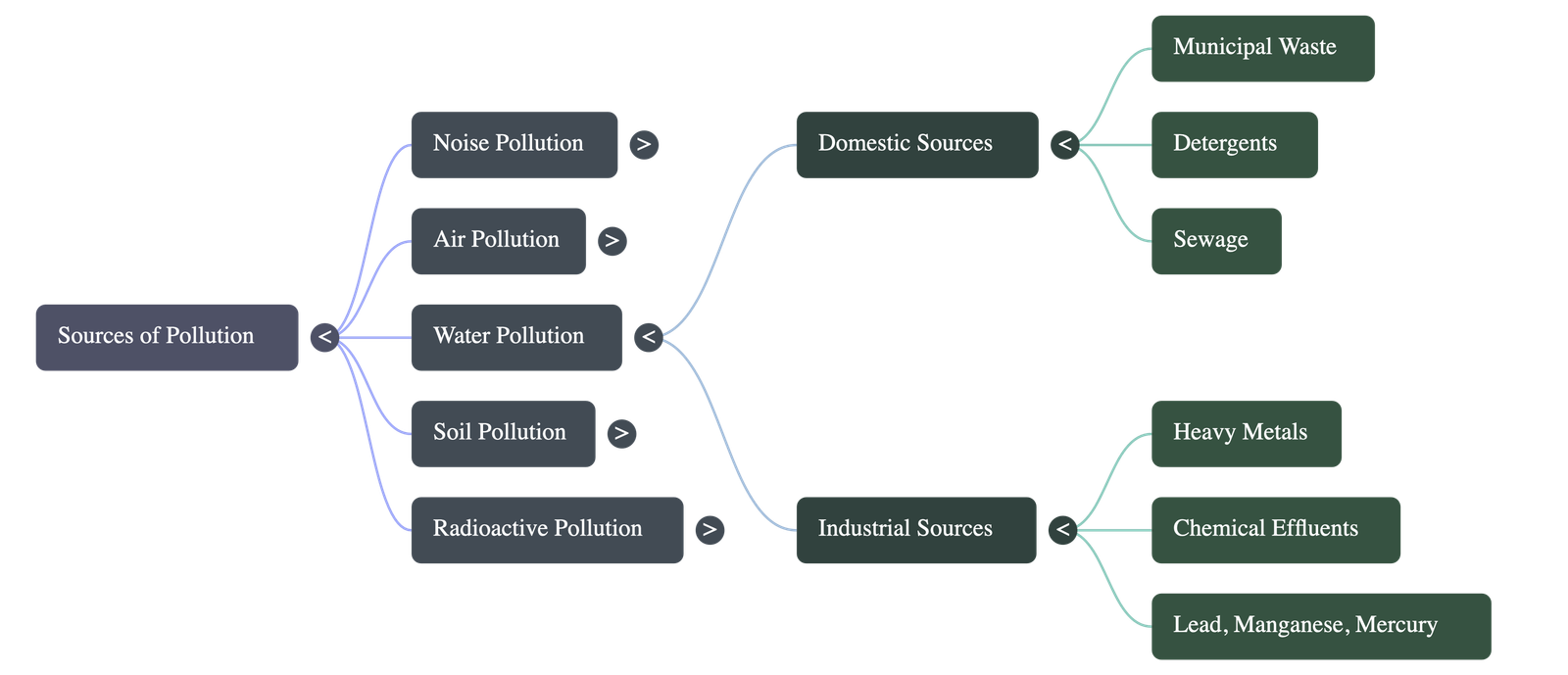
Water Pollution
Major Sources:
- Domestic Waste: Wastewater containing plastics, detergents, and human/animal faecal matter. Detergents and fertilisers contain phosphates that promote rapid algae growth (Eutrophication), which interferes with aquatic life, navigation, and fishing.
- Industrial Waste: Discharge from chemical, paper, and food processing industries introduces synthetic organics and heavy metals into water bodies:
- Lead: From plumbing, paints, and batteries; accumulates in biological systems.
- Manganese: Enters water through steel manufacturing waste.
- Mercury: Transforms into highly toxic methyl mercury in aquatic environments, accumulating up to 5000 times in fish and passing to humans.
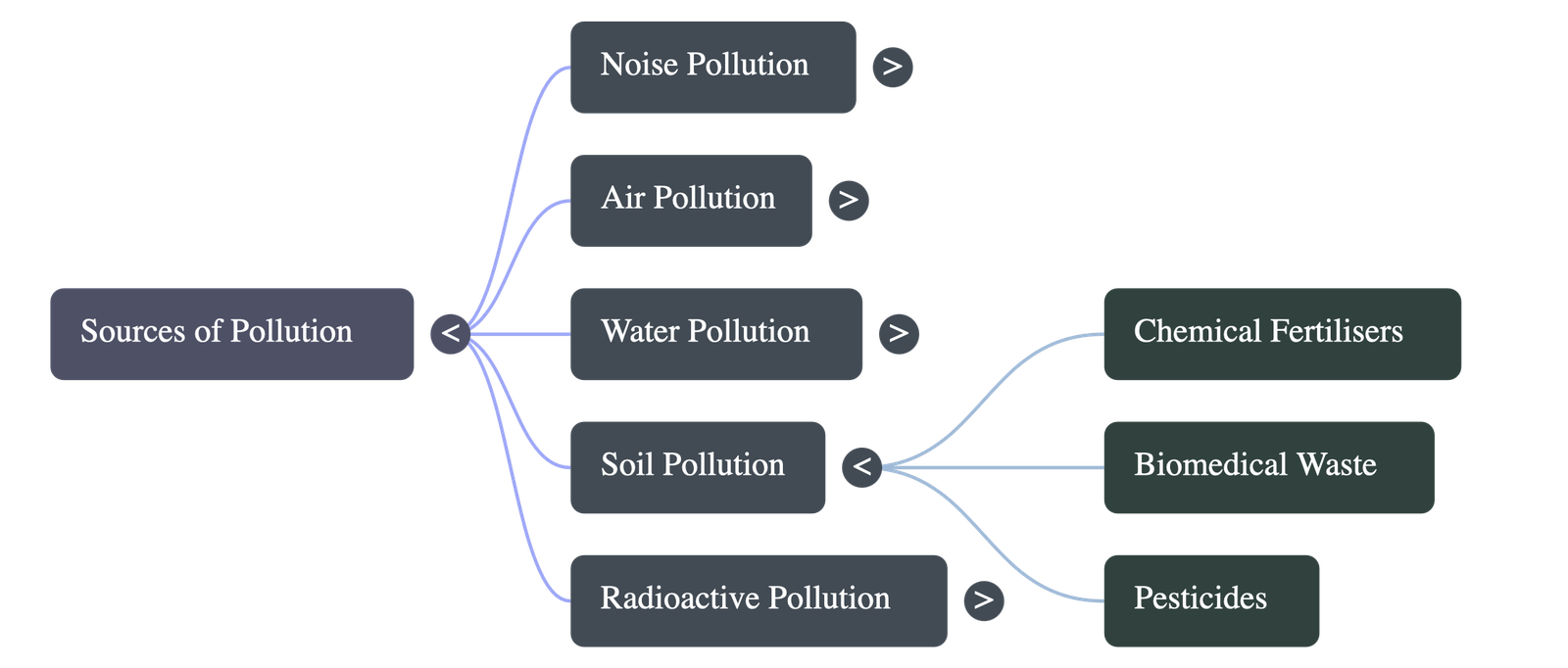
Soil Pollution
Major Sources:
- Chemical Fertilisers: Excessive use of nitrogen, phosphorous, and potassium contaminates the soil with impurities and synthetic pollutants.
- Biomedical Waste: Improper dumping of hospital waste introduces pathogens, organics, and chemicals into the soil. Excreta contributes to intestinal parasite problems.
- Pesticides: Pesticides and weedicides alter the chemical properties of the soil permanently and introduce toxic residues into plant products.
Radioactive Pollution
Major Sources:
- Natural Sources: Cosmic rays from outer space (though mostly a hazard in space rather than on Earth).
- X-rays Waste: Medical radiation used for cancer patients and skeletal checks can pass through genetic cells and cause mutations.
- Nuclear Plant Fallout: Escaped radiation, waste, and inert gases from atomic reactors. Radioactive particles can be carried by wind and brought down by rain, contaminating soil and the food chain.
- Nuclear Weapons: Testing utilizes radioactive substances like Uranium 235 and Plutonium 239, spreading radiation to surrounding materials.
- Radioactive Isotopes: Used in research laboratories; if discharged into sewers, they severely pollute local water systems.
Do checkout all questions & answers of this chapter.
Quick Navigation:
| | | |
1 / 1
Quick Navigation:
| | | |