Quick Navigation:
| | | |
Earthquakes
Definition
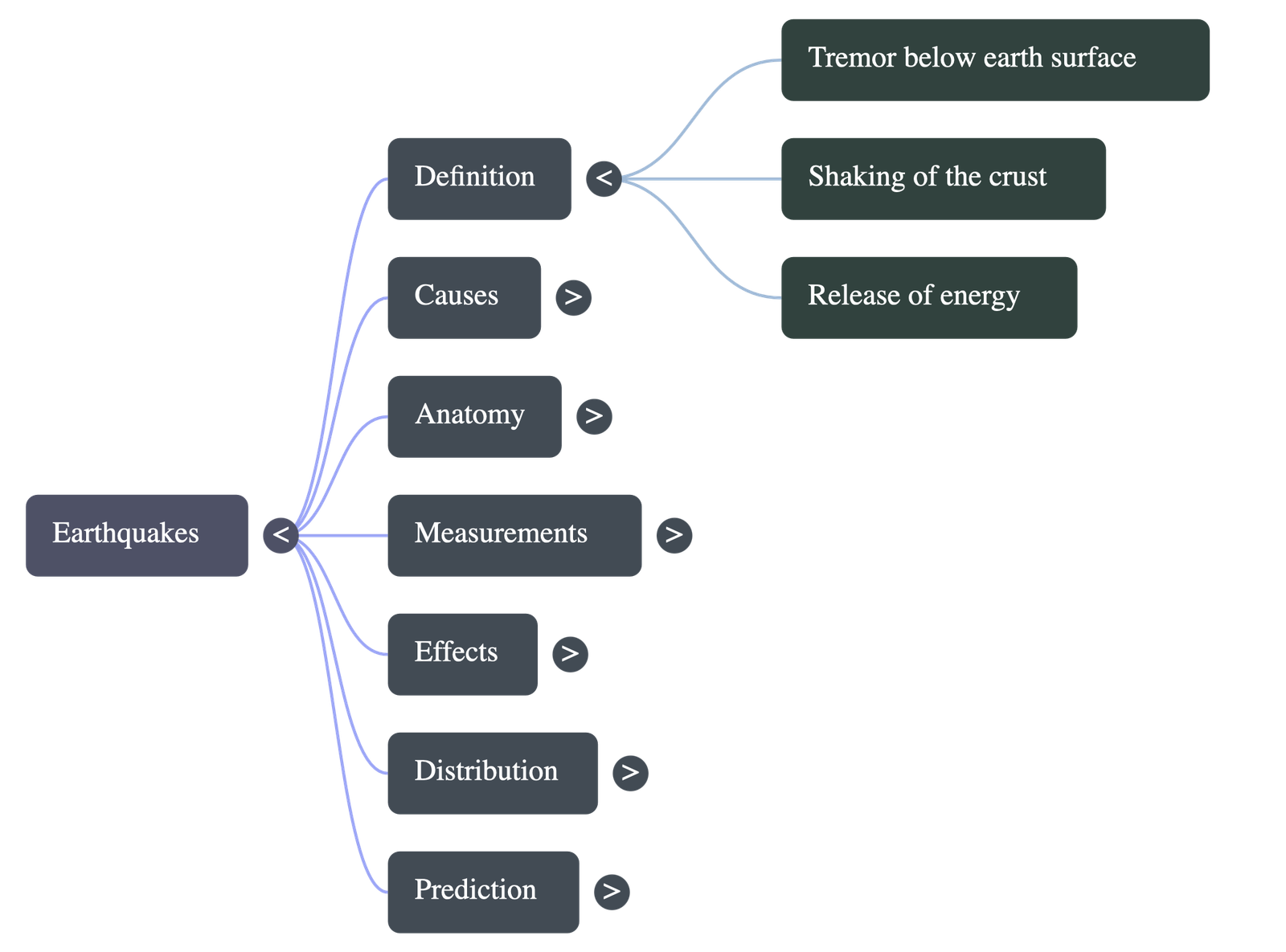
- An earthquake is a sudden tremor or violent shock below the surface of the earth that causes the crust to shake.
- It is primarily caused by stresses that break the earth's crust, resulting in a sudden release of tremendous energy.
Causes of Earthquakes
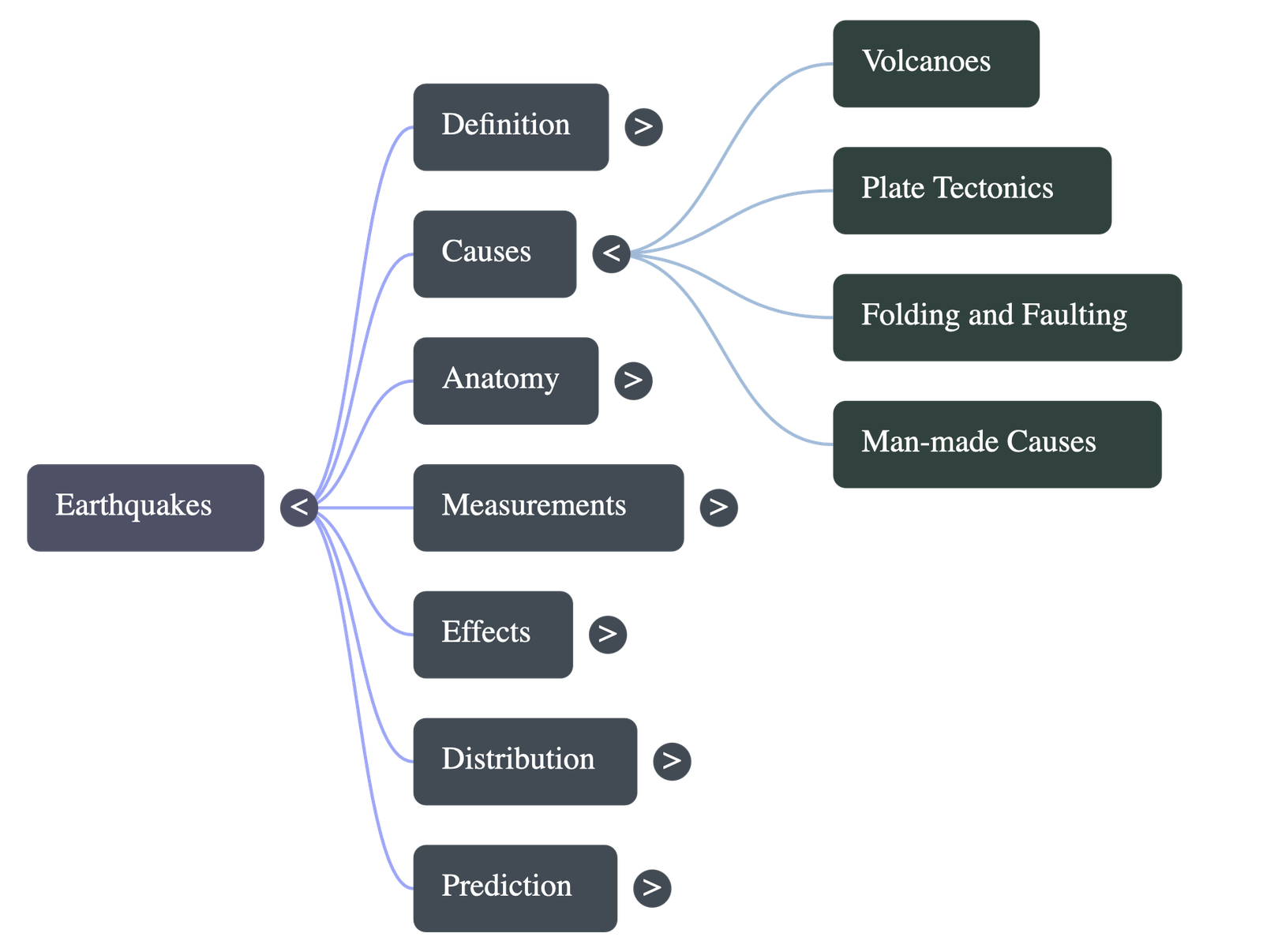
- Volcanoes: Hot gases pushed upward during volcanic eruptions cause the earth's crust to shake. Volcanic activity and earthquakes are deeply interrelated.
- Plate Tectonics: The earth's crust consists of movable plates. When these plates slip past or collide with each other, their edges produce faults and trigger the most frequent and powerful earthquakes.
- Folding and Faulting: Internal compressional and tensional forces cause rocks in the crust to fold, fault, and displace, leading to significant tremors.
- Man-made Causes: Human activities such as constructing huge dams, detonating nuclear explosions, deep mining, and dumping chemical wastes underground can induce seismic events.
Anatomy of an Earthquake
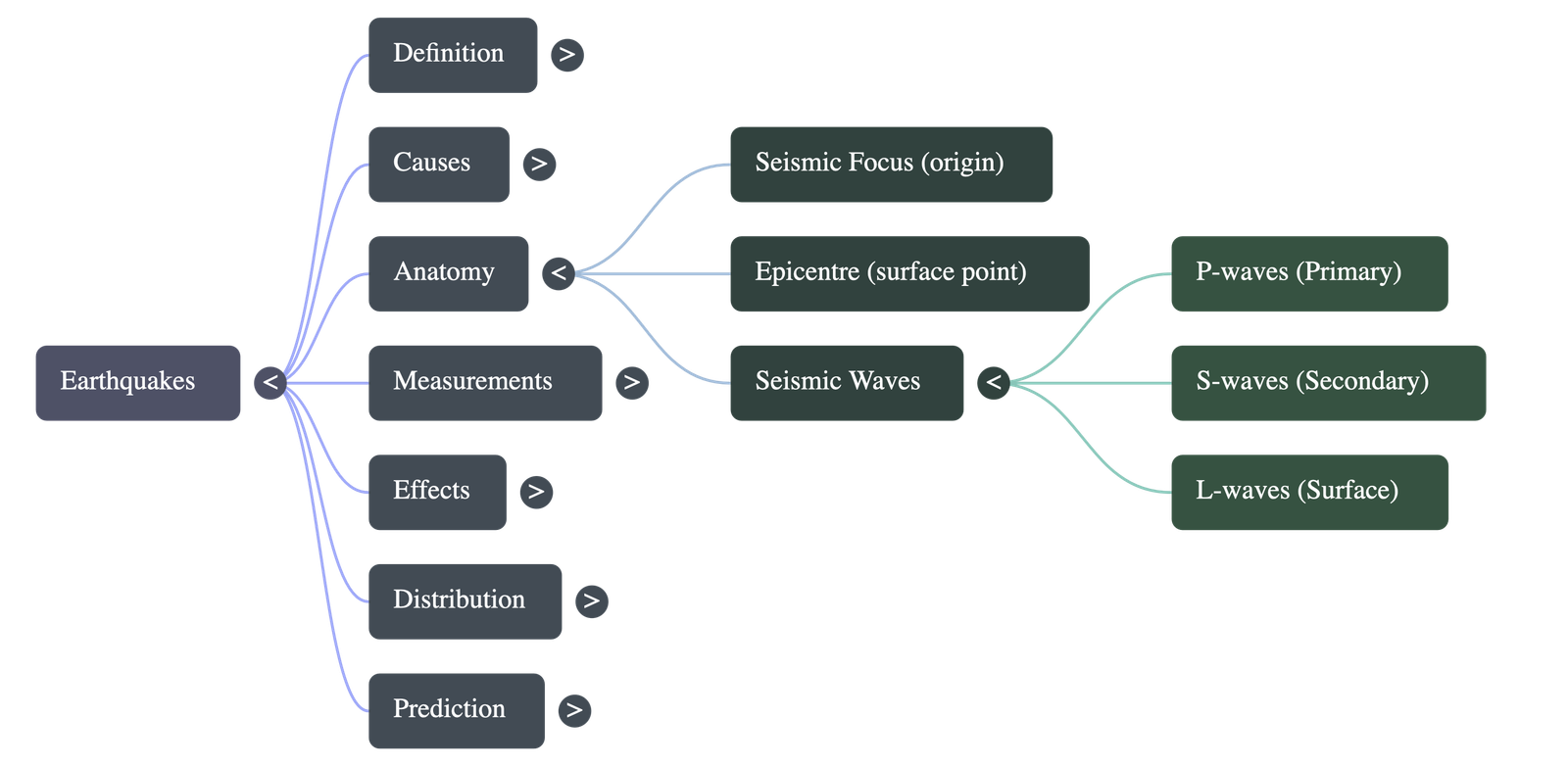
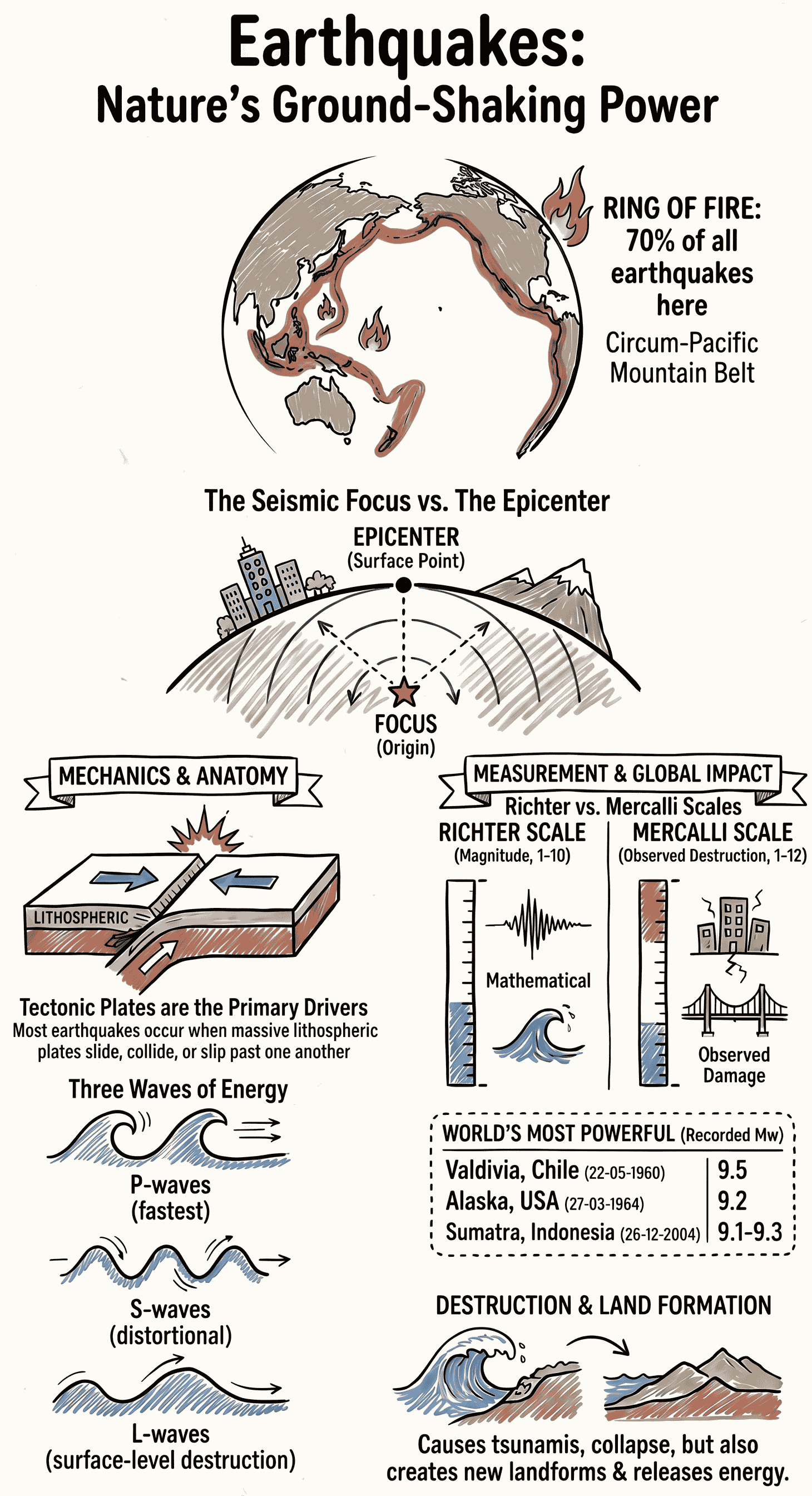
- Seismic Focus: The exact point of origin of the seismic waves inside the earth.
- Epicentre: The point on the earth's surface directly above the seismic focus.
- P-Waves (Primary): The first compressional waves to be recorded. They vibrate in the direction of the wave movement and pass through solids, liquids, and gases.
- S-Waves (Secondary): Distortional waves that arrive after P-waves. Particles vibrate at right angles to the wave direction. They travel only through solids.
- L-Waves (Surface): Waves that travel along the earth's surface. They are the slowest, arrive last, but are responsible for making people feel the ground motion.
Measurement
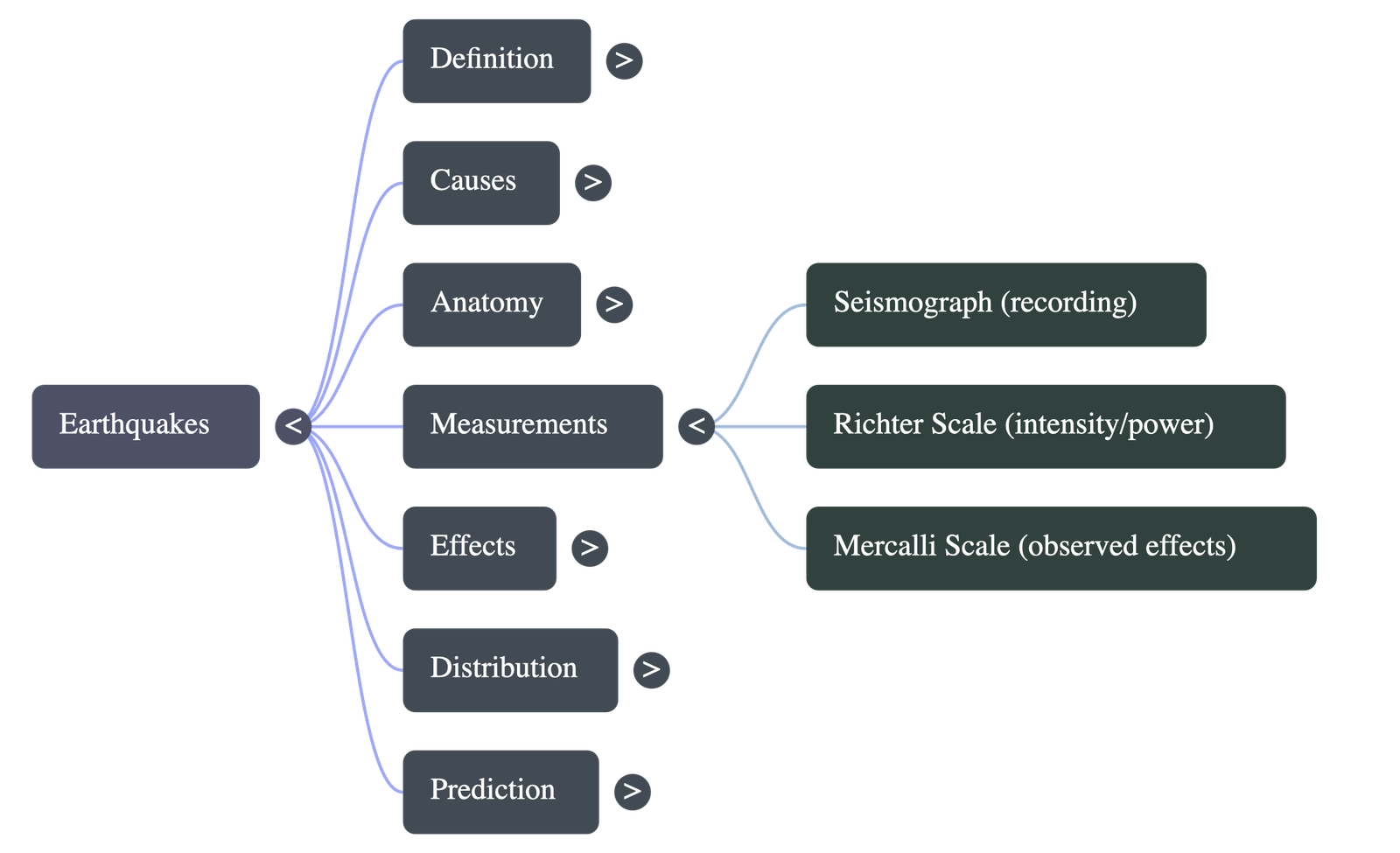
- Seismograph: An instrument used to record the direction, movement, and passage of earthquake waves, calculating the distance between the recording station and the epicentre.
- Richter Scale: Measures the absolute intensity and power (energy released) on a scale from one to nine. Each upward point represents a ten-fold increase in shock wave amplitude.
- Mercalli Scale: Grades an earthquake based on visually observed damage and effects on a twelve-point scale.
Effects of Earthquakes
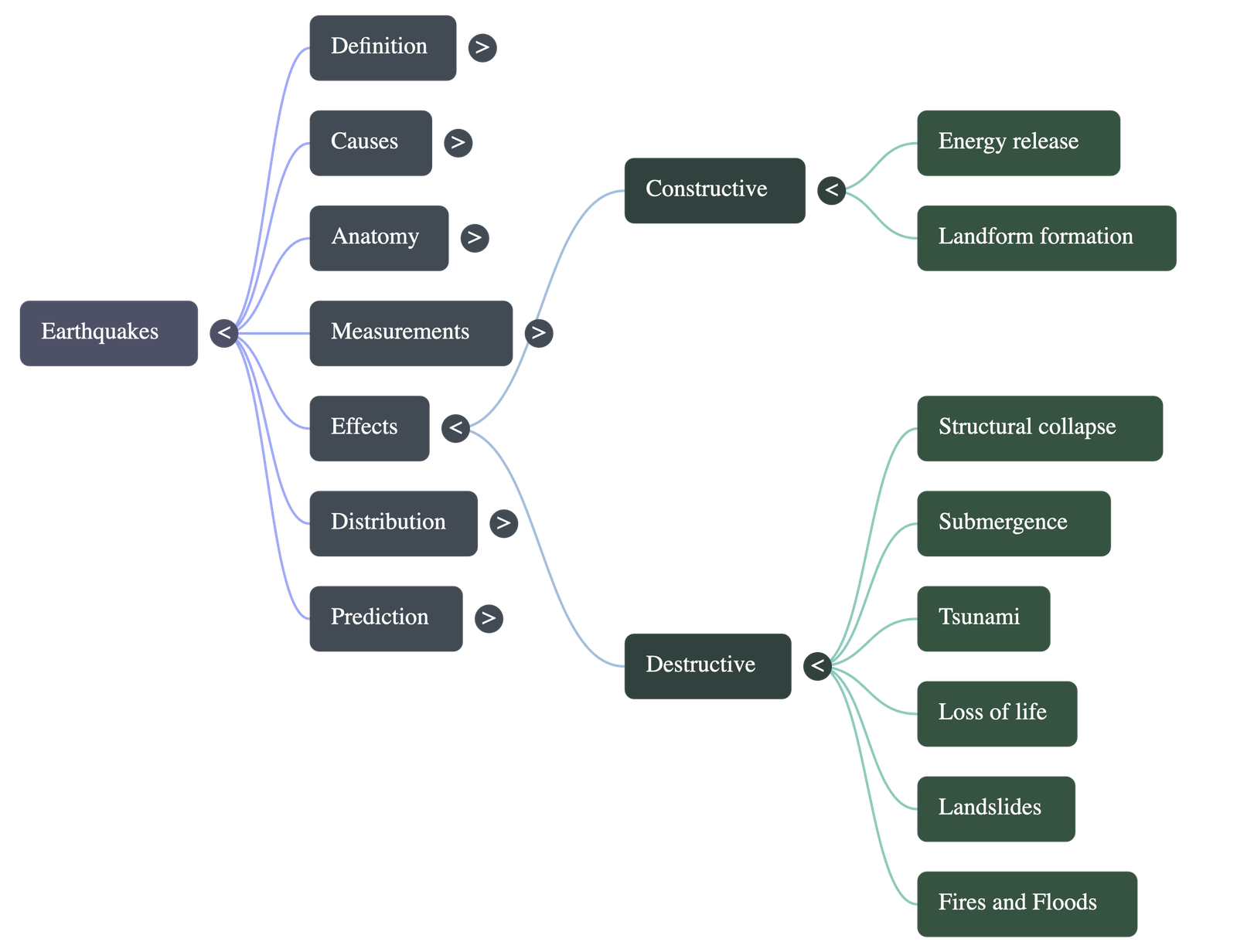
Constructive Effects
- Energy Release: Helps release pent-up energy, keeping the earth in good shape.
- Landforms: Vertical and lateral displacement can raise or lower crust parts, form new lakes, and uplift seashores.
Destructive Effects
- Collapse of Structures: Buildings, bridges, and settlements are destroyed, causing massive property loss.
- Submergence: Subsidence forces can cause coastal areas to permanently sink under the sea.
- Course of Rivers: Earthquakes can change river courses, rendering land unsuitable for agriculture.
- Danger to Human Life: Severe earthquakes kill vast numbers of people and animals via structural collapse.
- Landslides & Fires: Shock waves destabilize loose rocks causing landslides. Broken gas pipes and electrical wires trigger massive fires.
- Tsunamis & Flash Floods: Undersea earthquakes displace huge masses of water creating destructive harbour waves. Damaged dams release water, causing flash floods.
Global Distribution
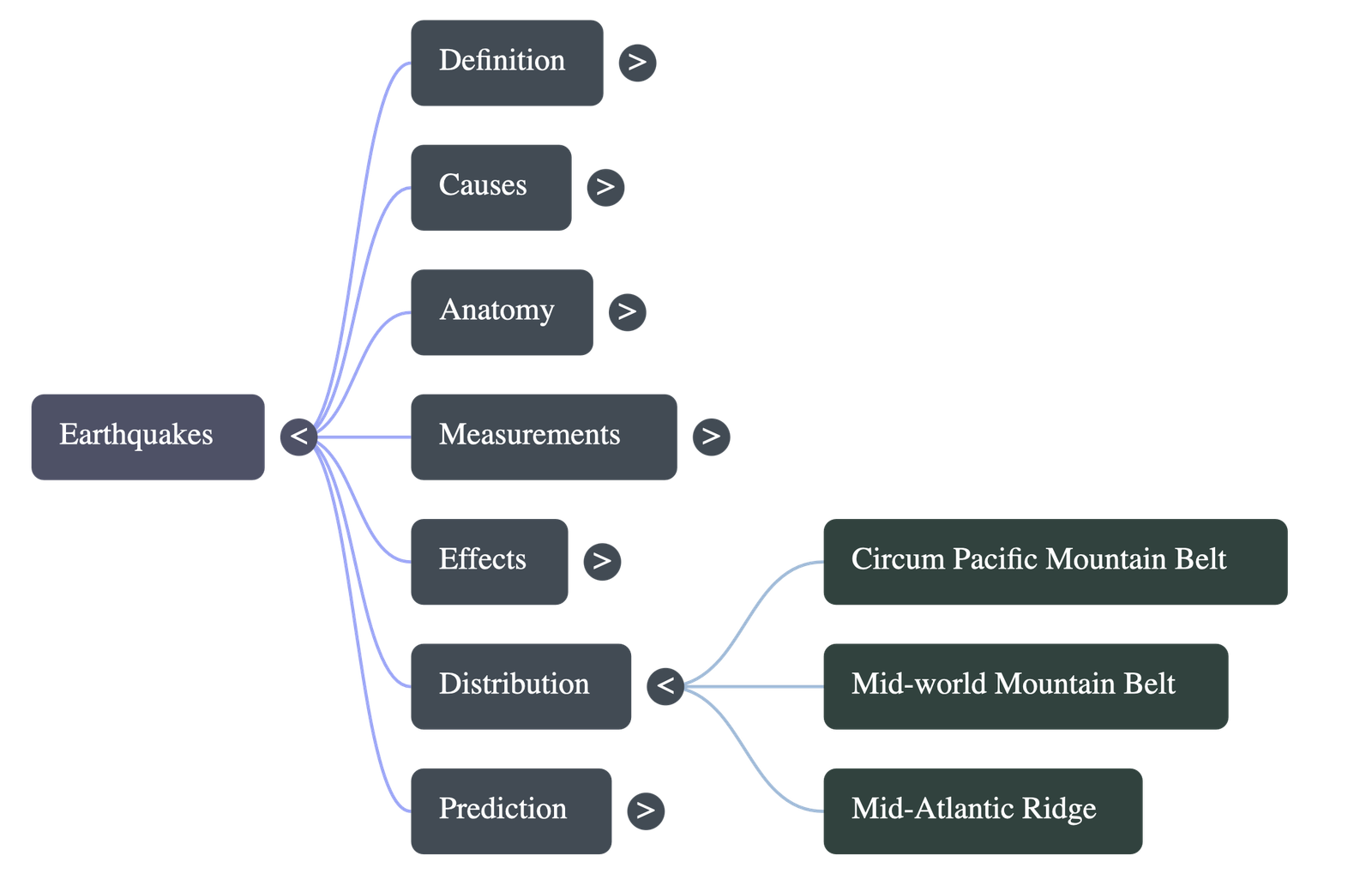
- Circum Pacific Mountain Belt: Also known as the Pacific Ring of Fire, this highly unstable zone experiences seventy percent of all global earthquakes.
- Mid-world Mountain Belt: Stretches from Eastern Europe through the Alpine-Himalayan ranges, accounting for twenty percent of earthquakes.
- Mid-Atlantic Ridge: Accounts for the remaining ten percent, driven by tectonic plates moving in opposite directions.
Predicting Earthquakes
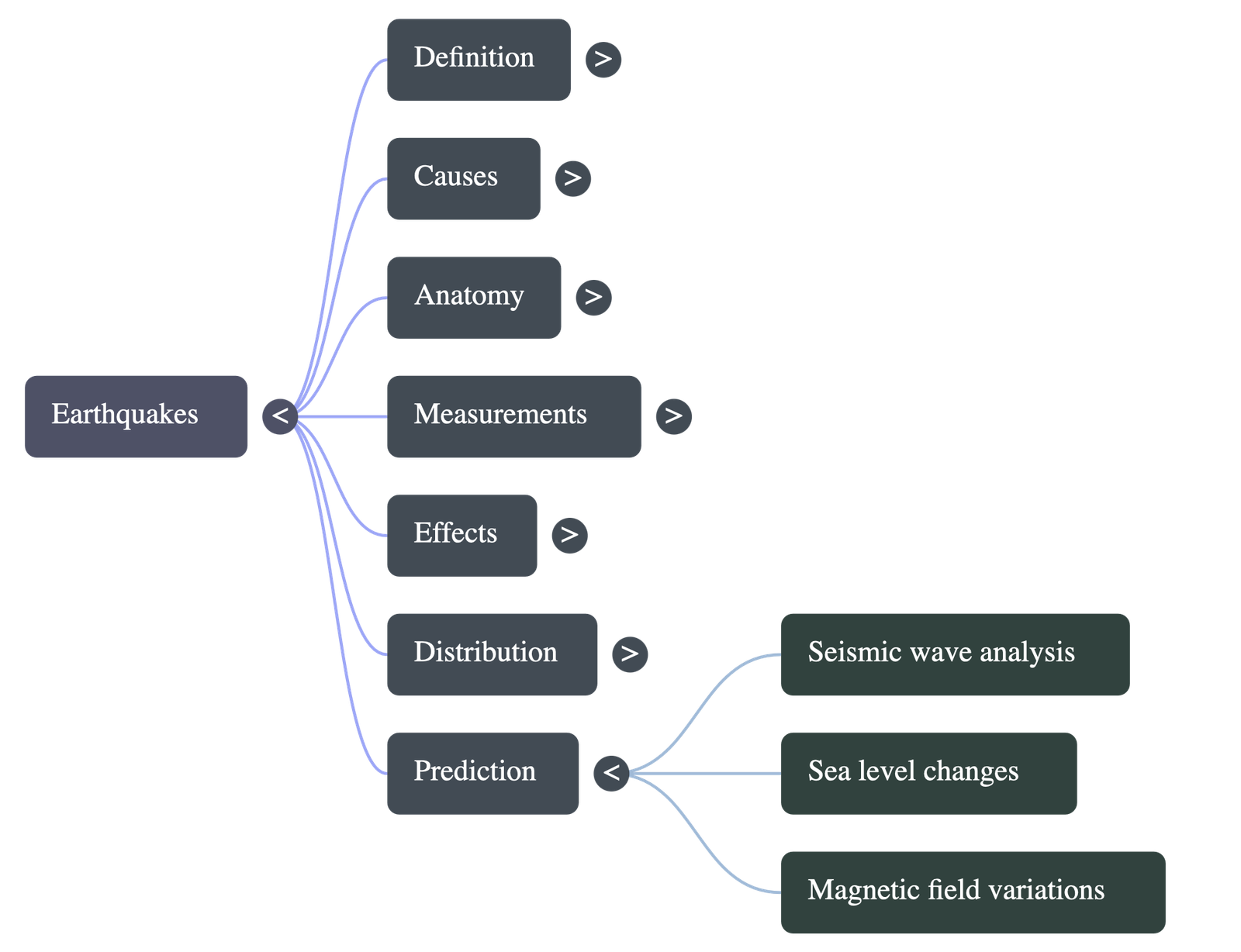
- Early predictions relied on discovering and monitoring P and S waves.
- Modern scientific approaches utilize the theory of Plate Tectonics.
- Other methods involve measuring changes in sea levels and tracking variations in the Earth's magnetic field.
- Despite these advancements, no prediction method is completely foolproof yet.
Do checkout all questions & answers of this chapter.
Quick Navigation:
| | | |
1 / 1
Quick Navigation:
| | | |