Quick Navigation:
| | | |
Pollution
Overview & Definitions
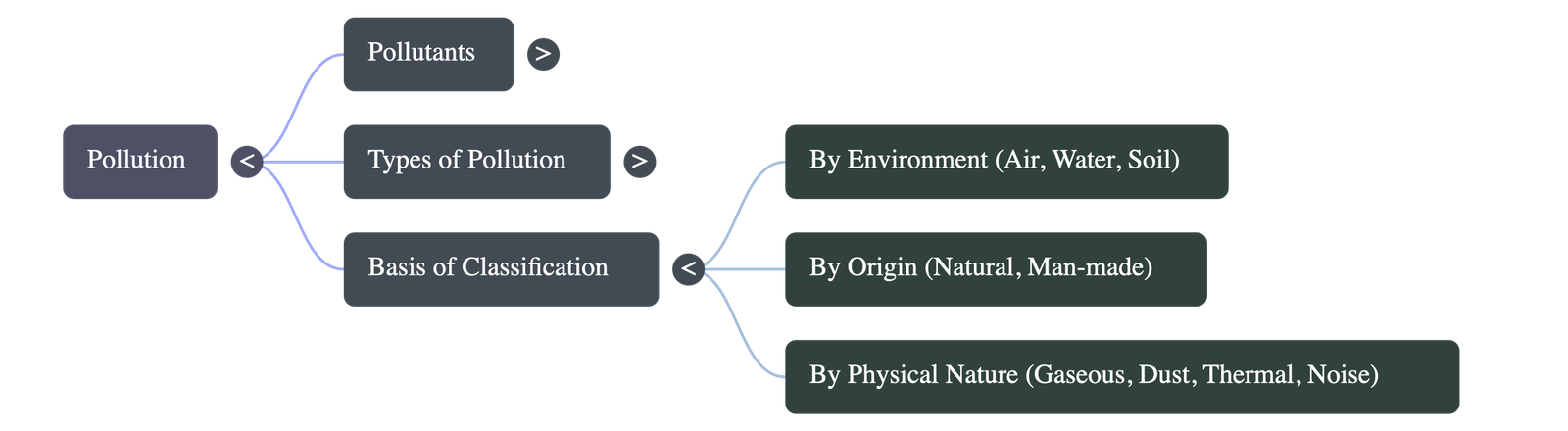
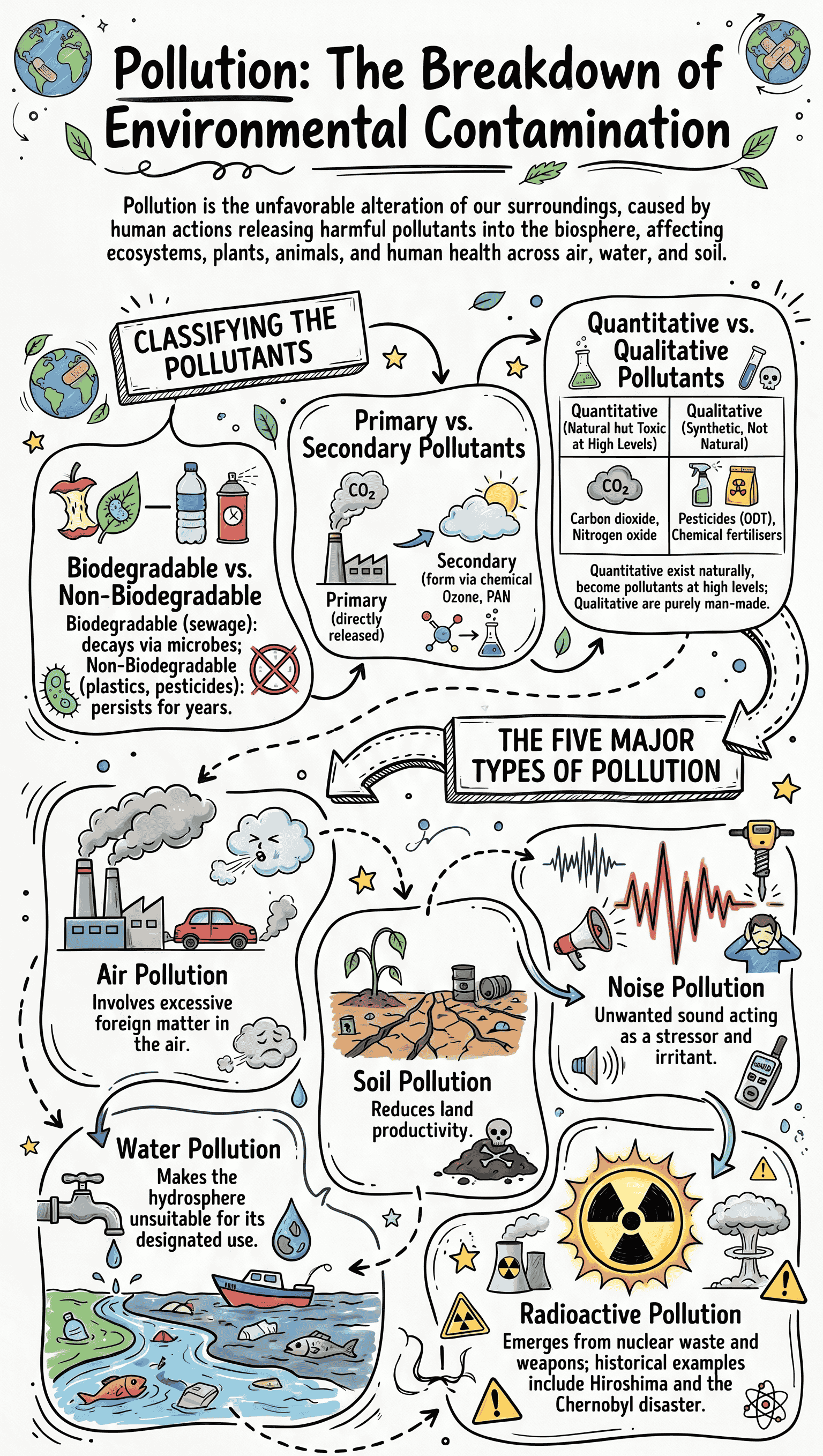
- Pollution: Any unfavorable alteration of the environment's natural quality brought about by chemical, physical, or biological factors, largely as a byproduct of human actions.
- Pollutants: Substances present in harmful concentrations that are released into the biosphere, disrupting normal ecosystem functioning and adversely affecting humans, plants, and animals.
Types of Pollutants
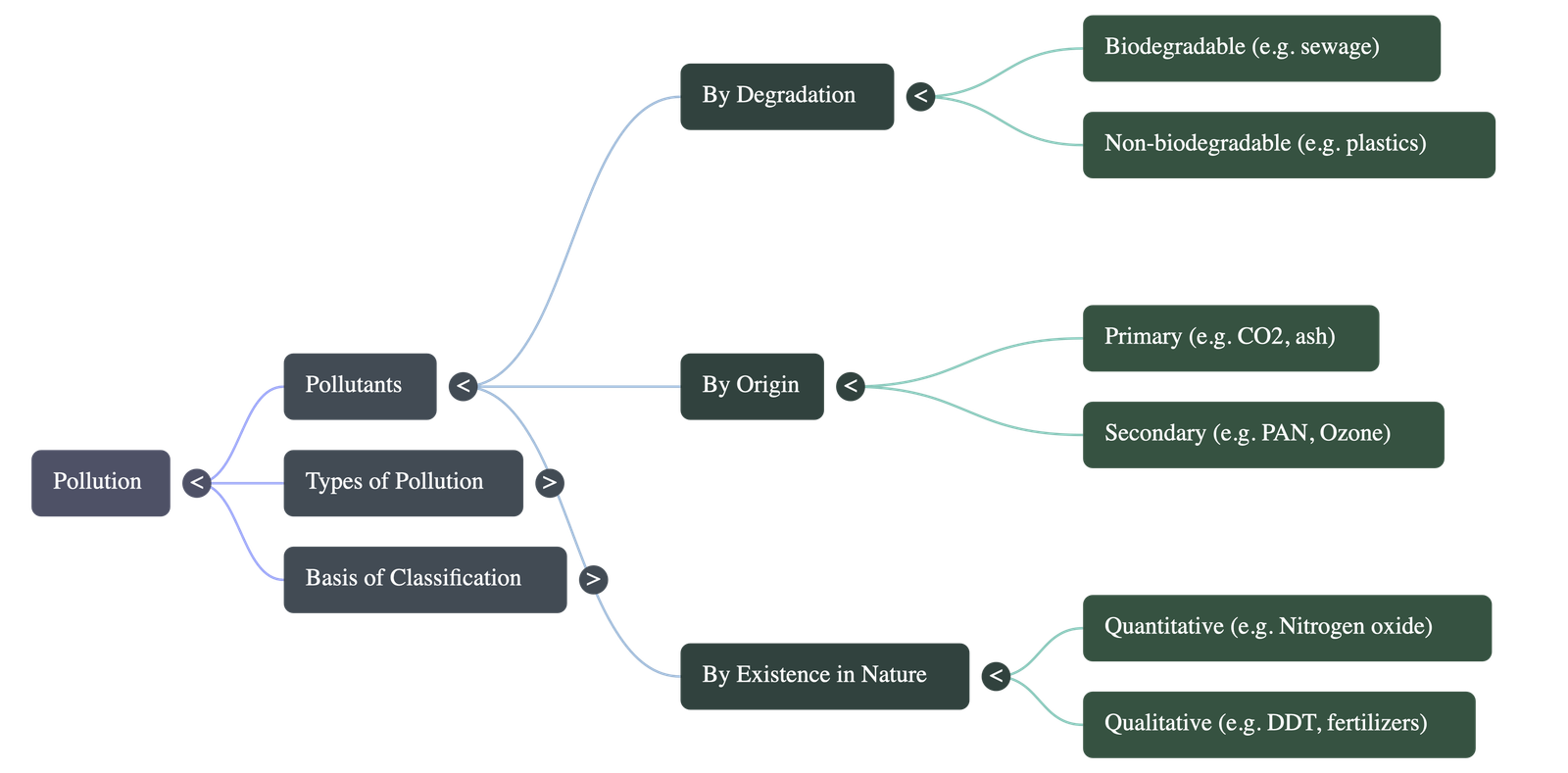
- Based on Degradation:
- Biodegradable: Can be broken down by biological or microbial action (e.g., sewage, domestic garbage).
- Non-biodegradable: Cannot be degraded by microbes or degrade at a very slow rate (e.g., plastics, glass, pesticides).
- Based on Origin:
- Primary: Directly introduced into the environment from their sources (e.g., ash, smoke, dust, Carbon dioxide, Sulphur dioxide).
- Secondary: Formed via chemical reactions of primary pollutants in the environment and are far more toxic (e.g., Peroxyacetyl Nitrate (PAN) and Ozone, formed from Nitrogen oxides and hydrocarbons in sunlight).
- Based on Existence:
- Quantitative: Exist in nature but become pollutants when their concentration exceeds a critical level (e.g., Carbon dioxide, Nitrogen oxide).
- Qualitative: Do not naturally exist in the environment and are introduced solely by human activities (e.g., pesticides like DDT, chemical fertilizers).
Major Types of Pollution
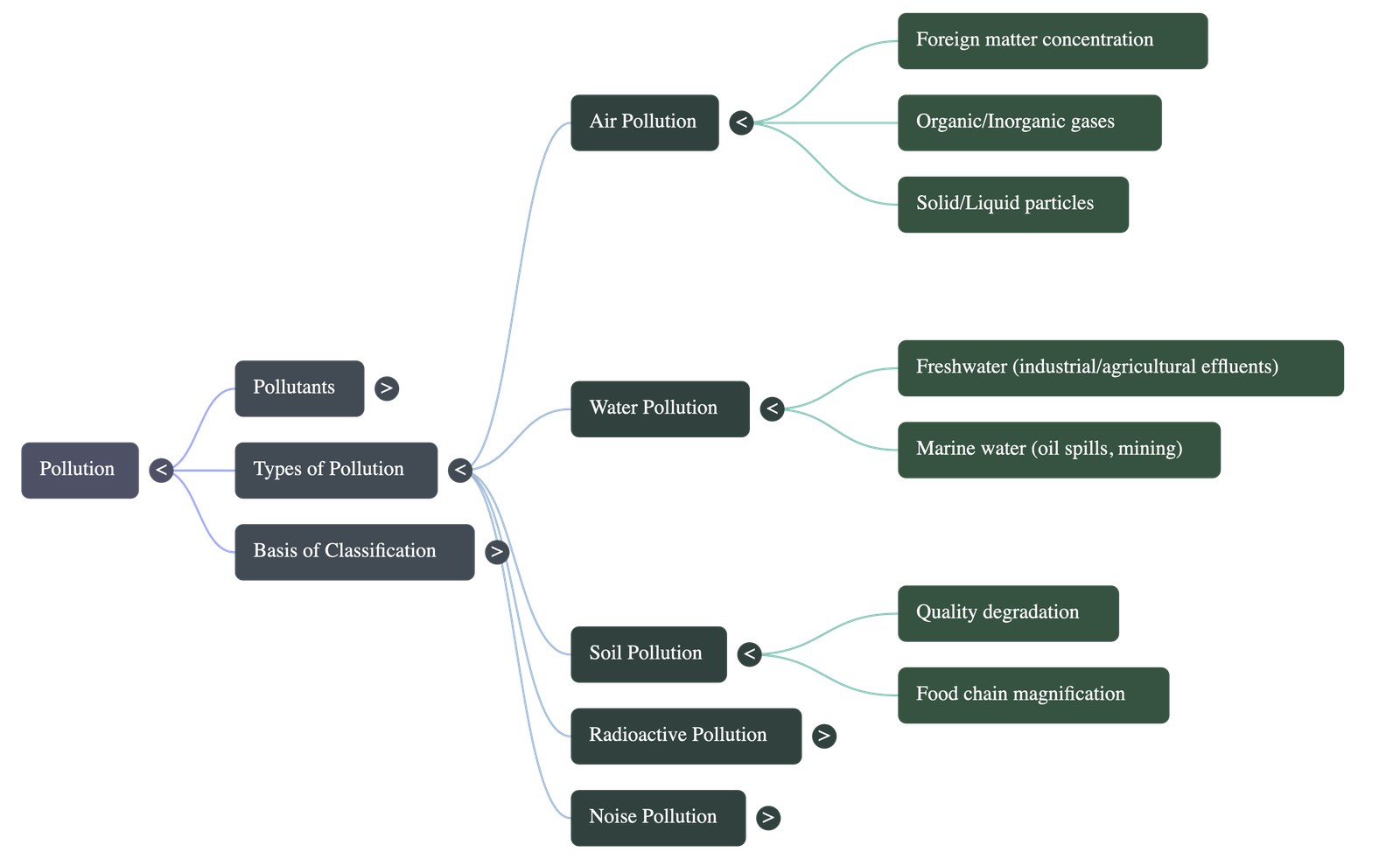
1. Air Pollution
- Defined as the excessive concentration of foreign matter (solid, liquid, or gas) in the air that harms living and non-living things.
- Disturbs the natural composition of the air through gases like sulphur dioxide, carbon monoxide, hydrogen sulphide, and pollens.
2. Water Pollution
- Alteration in the physical, chemical, or biological characteristics of water, making it unsuitable for its designated natural use.
- Reduces oxygen levels, causes unpalatable effects, spreads epidemic diseases, and introduces toxins into the food chain causing cancer or birth defects.
- Freshwater: Polluted by domestic, industrial, and agricultural effluents.
- Marine Water: 80% comes from land-based sources (oil spills, plastics, industrial/agricultural waste). Mining for copper and gold is also a major contaminant, leading to the creation of oceanic 'dead zones'.
3. Soil Pollution
- Change in the physical, chemical, and biological conditions of the soil through human intervention, degrading its quality and productivity.
- Pollutants remain in the soil for relatively long periods, enter the food chain at the plant level, and become magnified as they move up the chain.
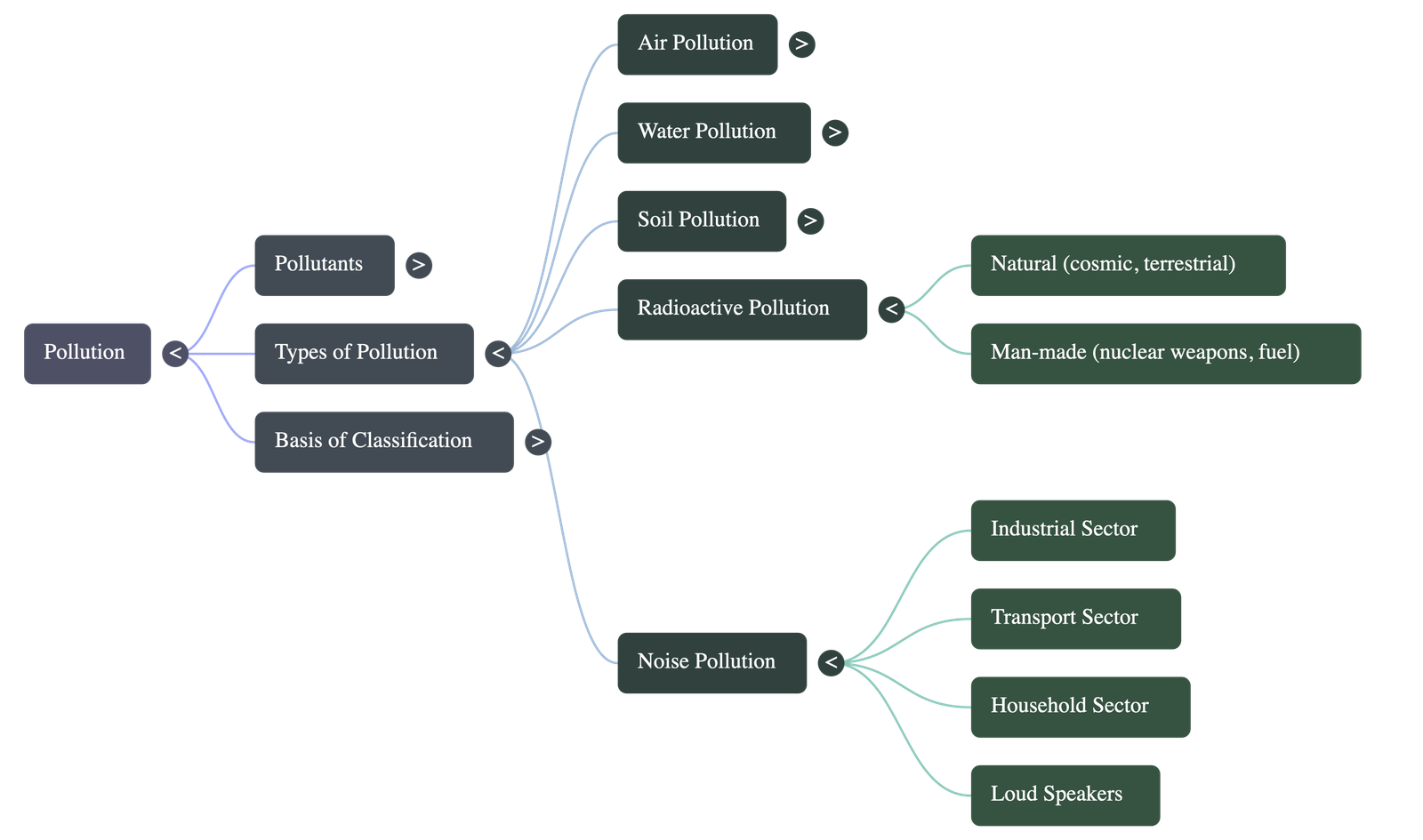
4. Radioactive Pollution
- An increase in natural background radiation emerging from human activities or naturally occurring radioactive materials.
- Natural Sources: Cosmic radiations from outer space and terrestrial radiation from isotopes in the earth's crust.
- Man-made Sources: Nuclear weapons (e.g., atom bombs dropped on Hiroshima and Nagasaki) and nuclear fuel in atomic reactors.
- Hazards: High-level radioactive waste remains in the environment for hundreds of years. Leakages from reactors (e.g., Chernobyl in 1986) can cause massive environmental damage and loss of life.
5. Noise Pollution
- Unwanted sound that acts as an irritant and a source of stress. It is a physical form of pollution directly felt by the receiver.
- While not fatal, repeated exposure reduces sleeping hours, diminishes human productivity and efficiency, affects peace of mind, and invades privacy.
- Major Sources: Industrial sector, transport sector, household activities, defence sector, loudspeakers, and other miscellaneous sources stemming from modern industrialized urban life.
Do checkout all questions & answers of this chapter.
Quick Navigation:
| | | |
1 / 1
Quick Navigation:
| | | |