Quick Navigation:
| | | |
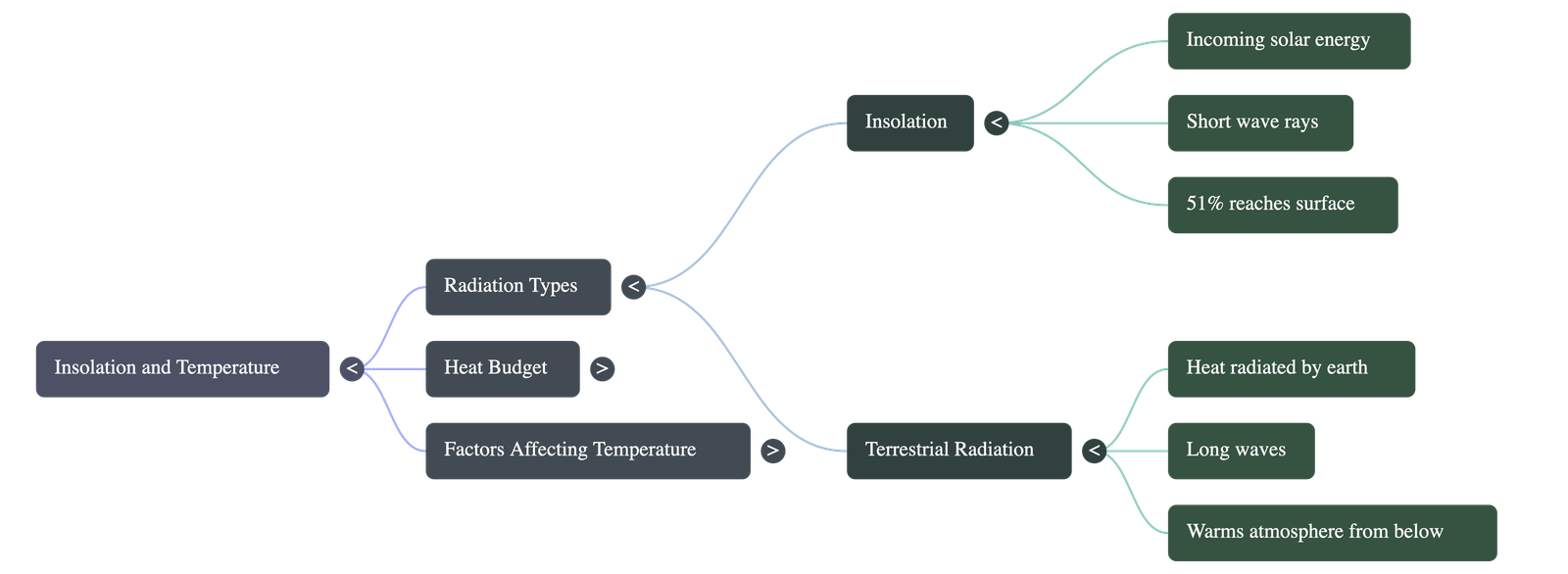
Insolation
Basic Concepts of Solar Energy
- Solar Radiation: The continuous flow of heat and light energy from the sun in all directions. It consists of white light, infrared radiation, and ultraviolet radiation.
- Insolation: The specific amount of incoming solar energy received by the Earth. It travels in the form of short wave rays.
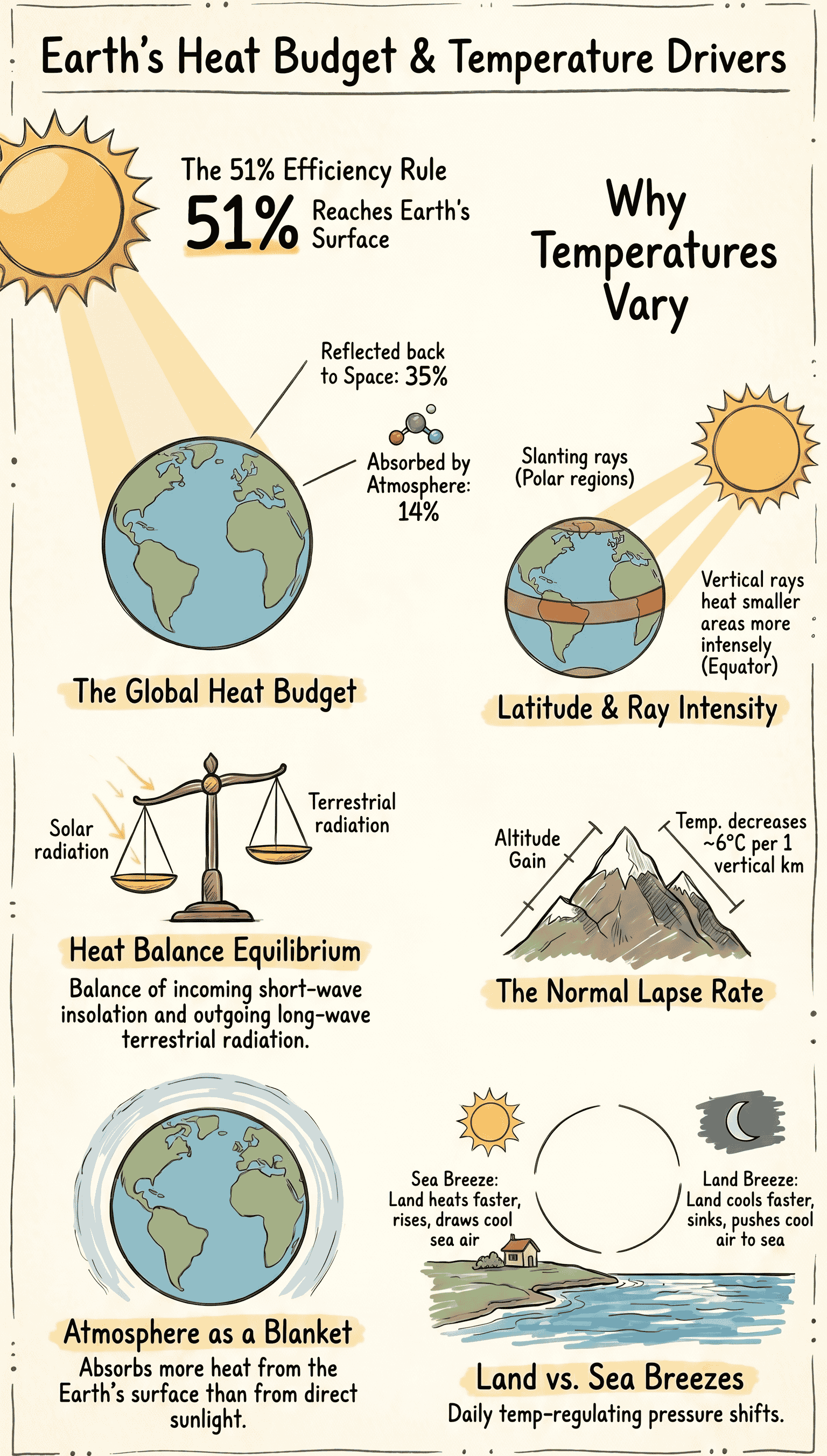
- Distribution of Solar Energy: Of the total incoming solar energy, only 51% reaches the Earth's surface. About 35% is reflected directly back into space, and 14% is absorbed by atmospheric layers (including the ozone layer).
- Terrestrial Radiation: The process where the Earth's surface, after absorbing solar energy, radiates heat back into the atmosphere in the form of long waves. The atmosphere is predominantly heated by this terrestrial radiation rather than direct incoming solar radiation.
Earth's Heat Budget and Balance
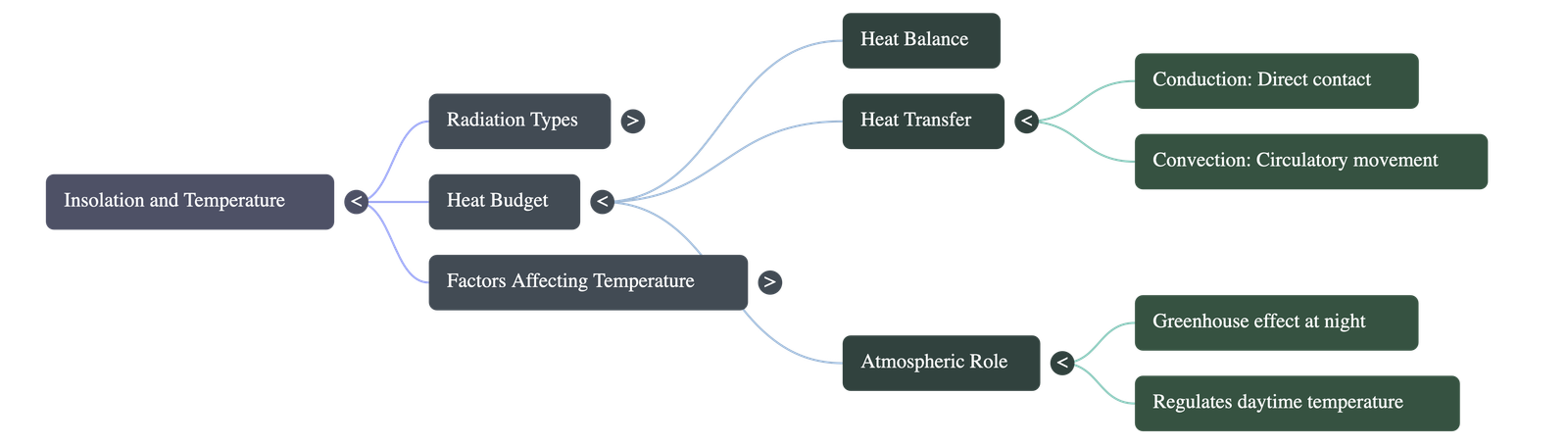
- Heat Balance: A state of equilibrium where the incoming insolation from the sun matches the outgoing terrestrial radiation from the Earth. This balance ensures the Earth's average global temperature remains stable.
- Conduction: The transfer of heat through direct contact. The Earth's warm surface heats the layers of air immediately above it through this process.
- Convection: The transfer of heat via the circulatory movement of fluids (like air and water). Convection currents are responsible for weather phenomena such as sea breezes.
- Atmospheric Regulation: The atmosphere acts as a protective blanket. It absorbs 14% of incoming insolation (regulating daytime heat) and absorbs 34 units of outgoing terrestrial radiation (trapping heat like a greenhouse at night to prevent freezing temperatures).
Factors Affecting the Distribution of Temperature
1. Latitude
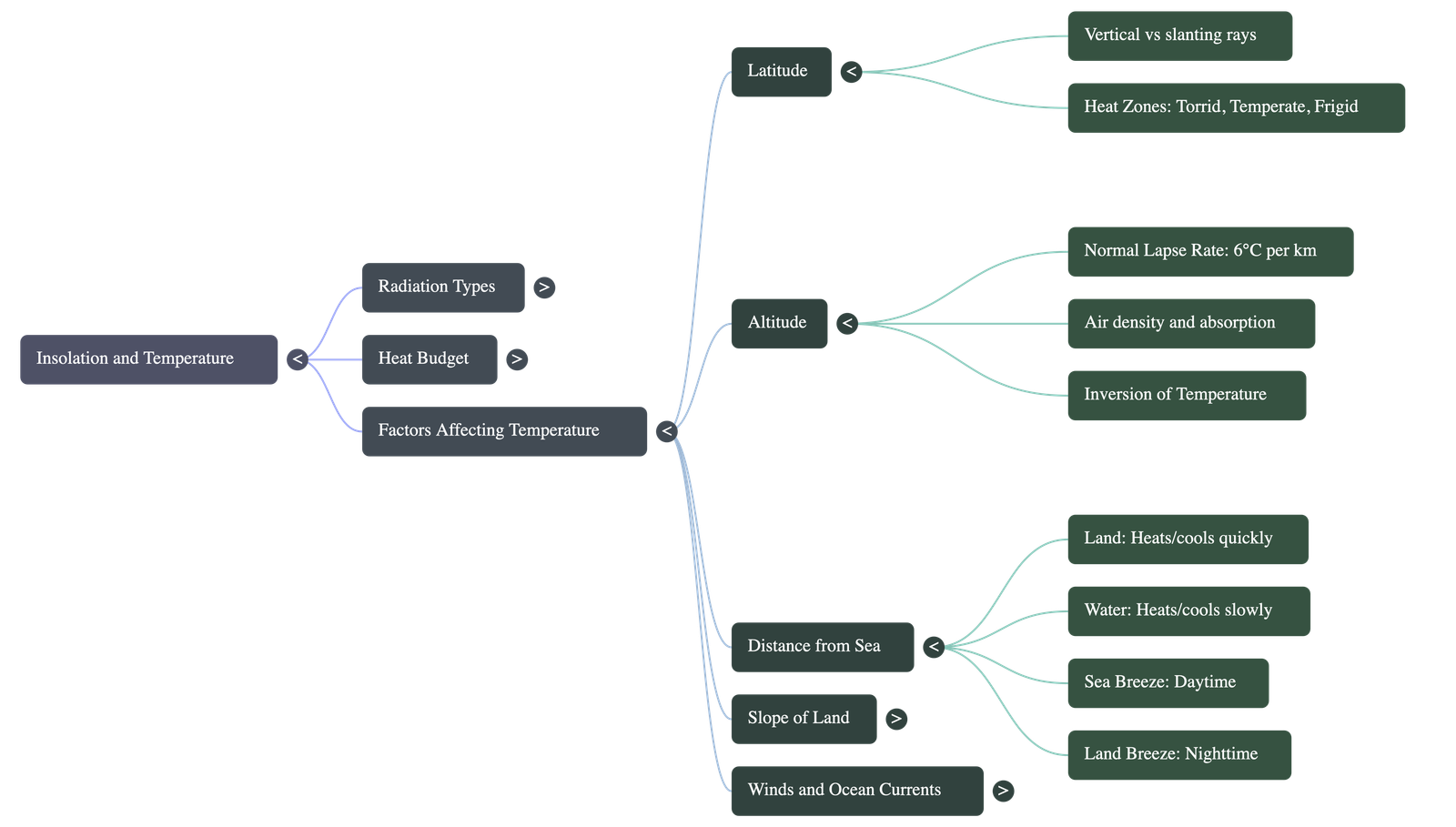
- Temperature generally decreases as you move from the Equator towards the Poles due to the Earth's spherical shape.
- Near the Equator, the sun's rays fall vertically. Vertical rays travel a shorter distance through the atmosphere and heat a smaller, concentrated area, resulting in higher temperatures.
- At higher latitudes, the rays become slanting. Slanting rays travel through more atmosphere (losing heat) and spread over a larger surface area, greatly reducing their heating power.
- This unequal heating divides the Earth into five distinct temperature zones: the Torrid Zone, two Temperate Zones, and two Frigid Zones.
2. Altitude
- Temperature decreases as altitude (height above sea level) increases.
- Normal Lapse Rate: The rate at which temperature drops with altitude, which is roughly 6°C per kilometer, or 1°C for every 166 meters of ascent.
- This occurs because the atmosphere is heated from the ground up by terrestrial radiation. Lower layers of the atmosphere are denser and contain more greenhouse gases (like carbon dioxide and water vapor), giving them a much higher heat-absorption capacity than the thinner upper layers.
3. Distance from the Sea
- Land heats up and cools down much faster than water because water is mobile and distributes heat to a greater depth.
- Sea Breeze: During the day, the land becomes hotter than the sea, creating low pressure over the land. Cool air from the sea blows inland, moderating coastal daytime temperatures.
- Land Breeze: At night, the land cools faster than the sea. The relatively warmer sea creates low pressure, drawing cool air from the land out to sea.
- This constant interchange maintains a moderate, equable climate in coastal areas compared to the extreme temperatures found in continental interiors.
4. Slope of the Land
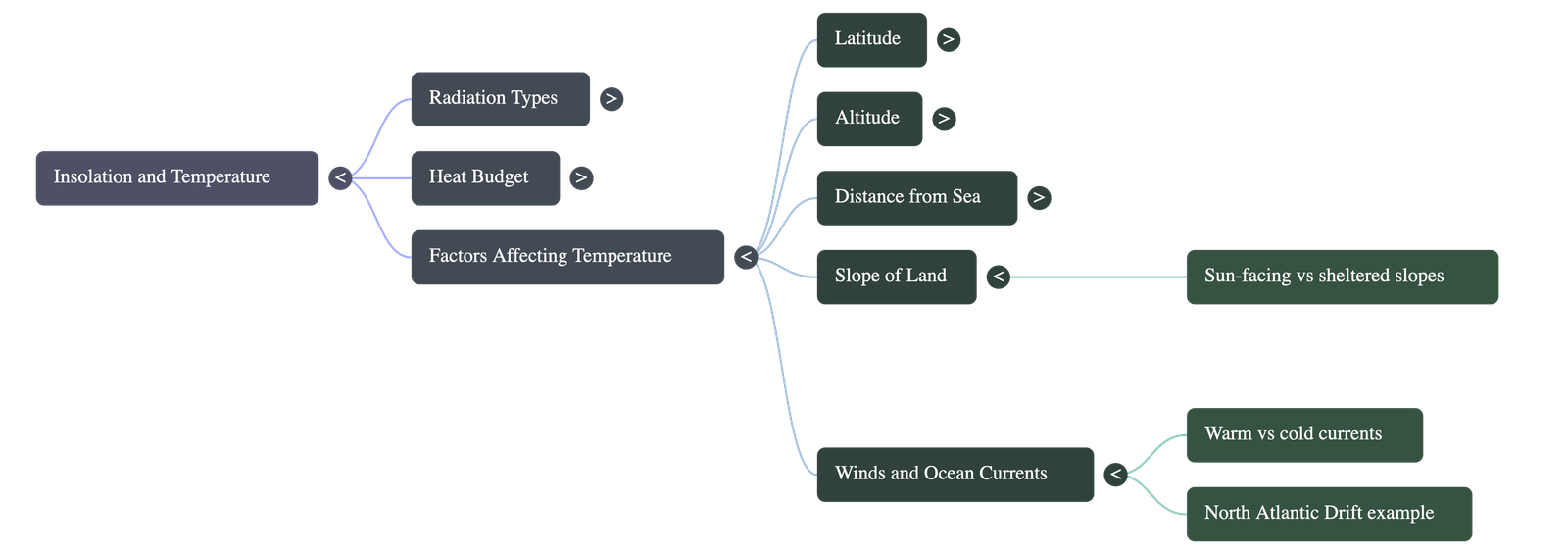
- The direction a slope faces impacts its temperature. For example, in the Alps, south-facing slopes receive direct sunlight and are warmer than north-facing, sheltered slopes.
- Inversion of Temperature: On calm, cold, and clear winter nights, heat escapes rapidly from mountain slopes. The cooled, dense air becomes heavy and sinks down the mountain sides to the valley floor. As a result, the valley bottom becomes colder than the higher slopes above it, reversing the normal vertical distribution of temperature.
5. Winds and Ocean Currents
- Ocean currents transport massive amounts of warm or cold water across latitudes, significantly affecting coastal climates.
- Warm currents raise temperatures. For instance, the Warm North Atlantic Drift raises winter temperatures in North-West Europe, keeping ports like Bergen (Norway) ice-free during the winter.
- Cold currents lower temperatures. Ports on the north-east coast of Canada at the exact same latitude remain frozen for several months due to the freezing influence of the cold Labrador Current.
Do checkout all questions & answers of this chapter.
Quick Navigation:
| | | |
1 / 1
Quick Navigation:
| | | |