Quick Navigation:
| | | |
Composition and Structure of the Atmosphere
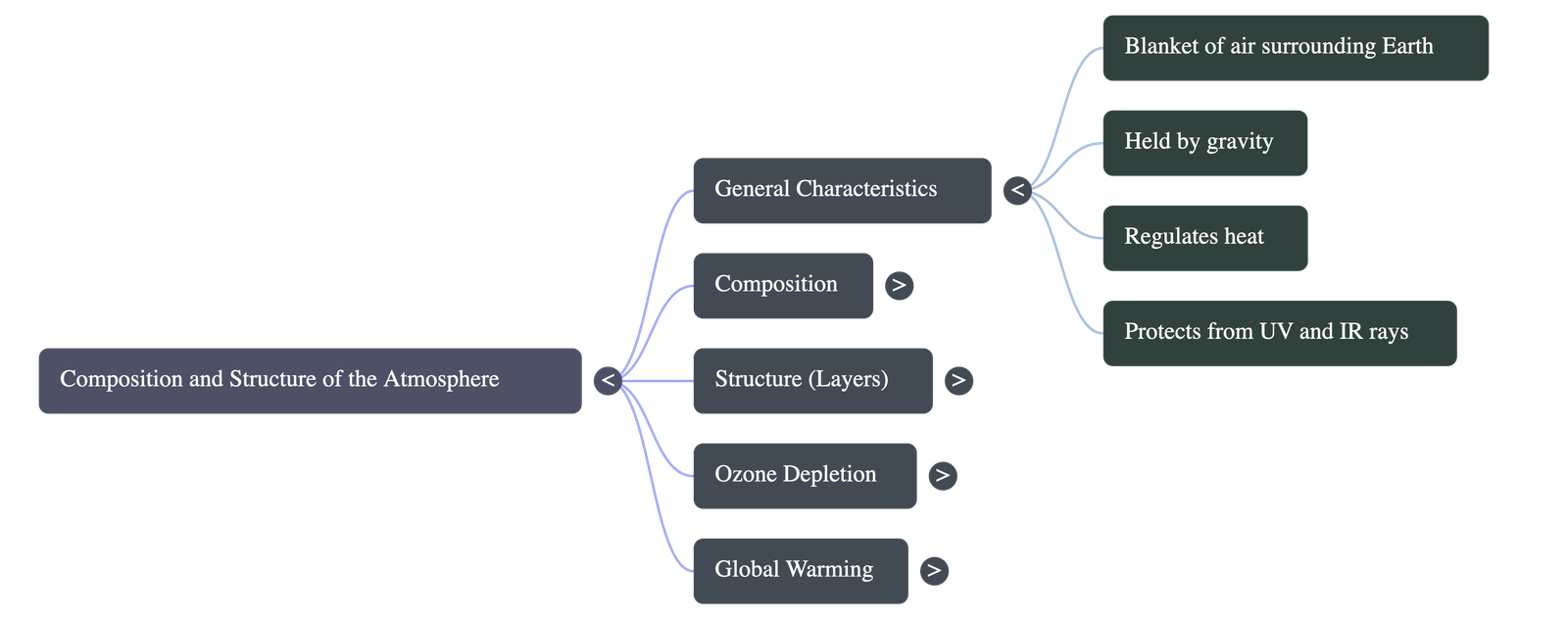
Introduction: The Blanket of Air
- The Earth is divided into three physical domains: the Lithosphere (solid), the Hydrosphere (liquid), and the Atmosphere (gaseous), which together make up the Biosphere.
- The atmosphere is a blanket of air that exists in several layers around the Earth, held close by the planet's gravity.
- It becomes thinner at higher altitudes, causing lower air pressure, which makes breathing difficult as one goes up.
- It acts as a protective shield, defending the Earth from the sun's harmful ultraviolet (UV) and infrared rays while retaining necessary warmth.
Composition of the Atmosphere
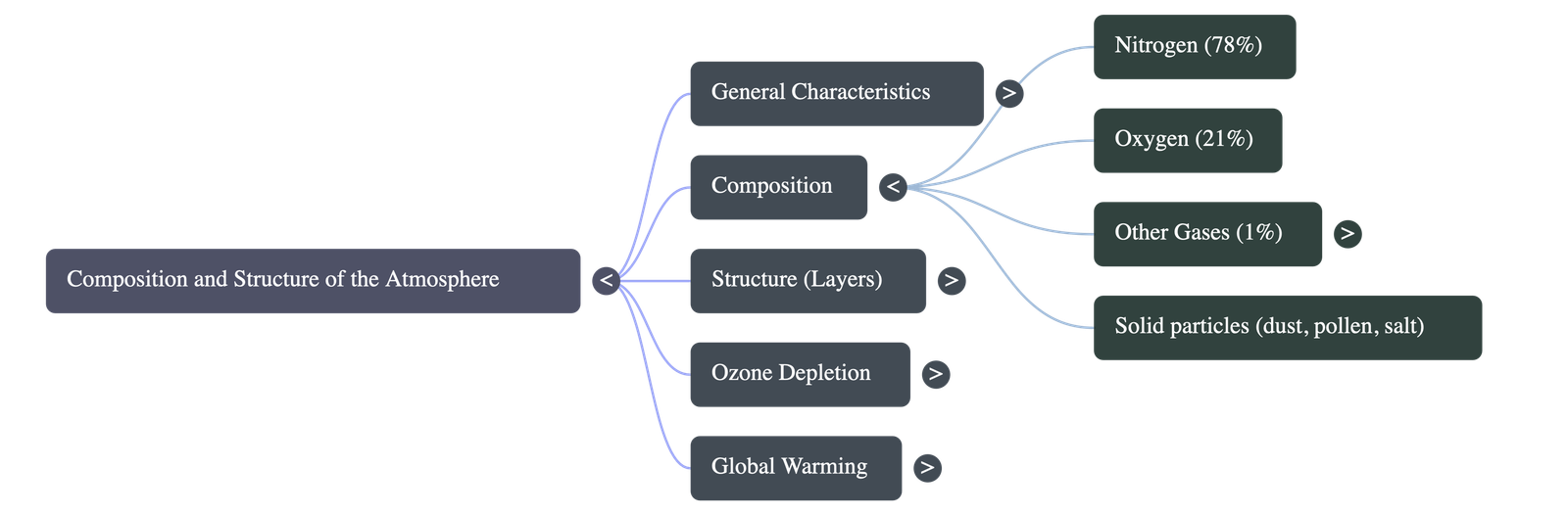
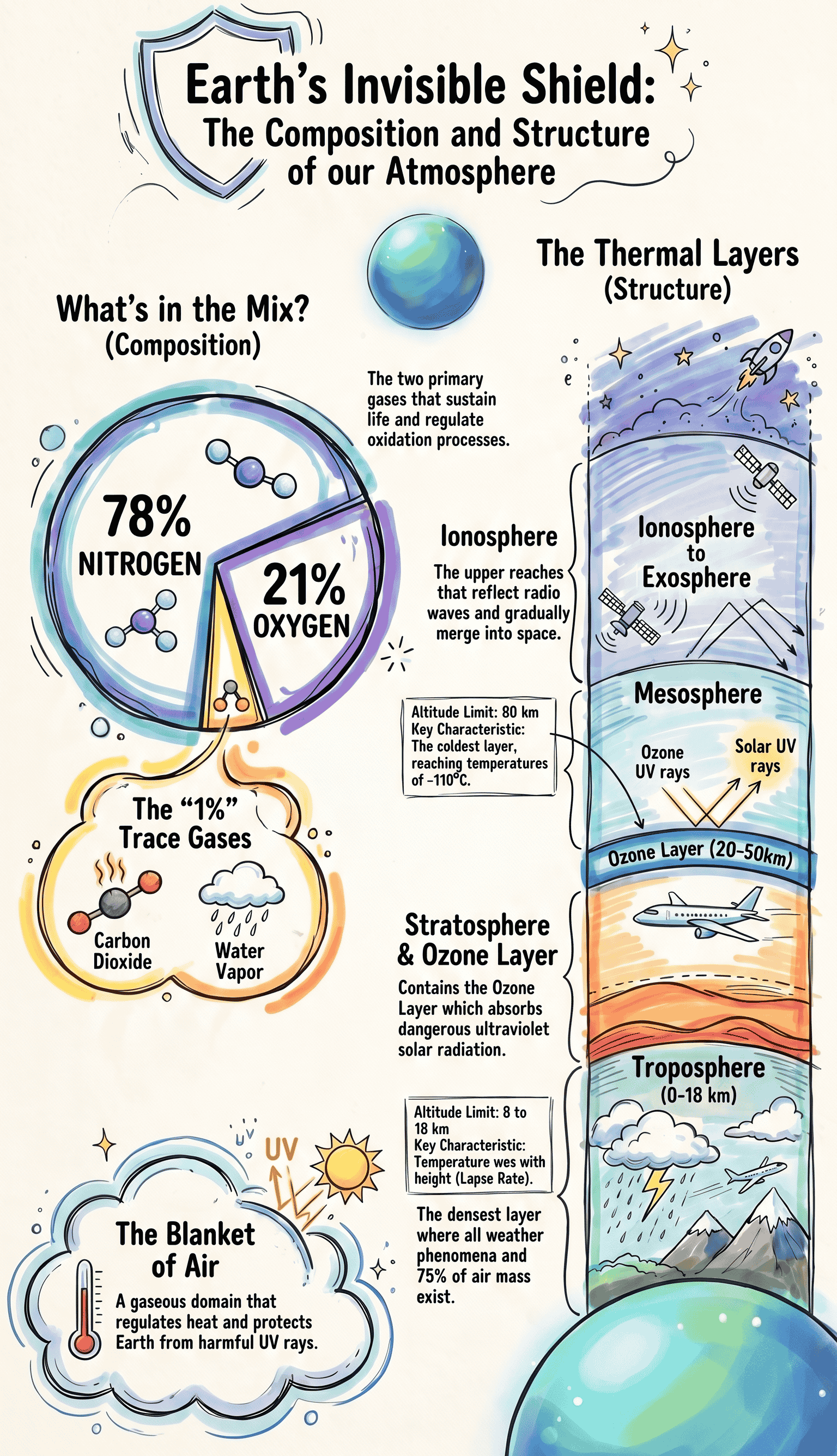
- Nitrogen (78%): A colourless, tasteless, and odourless inert gas. It dilutes oxygen, slows down oxidation, and is essential for living things (though it must be absorbed indirectly from the soil by plants).
- Oxygen (21%): A life-sustaining gas that is absolutely crucial for breathing and burning.
- Other Gases (1%): Includes carbon dioxide, water vapour, helium, hydrogen, and argon.
- Carbon dioxide is essential for plant survival and helps absorb heat to keep the Earth warm.
- Water vapour is responsible for all forms of precipitation and the freshwater cycle.
- Solid Particles: The lower atmosphere contains pollen, dust, volcanic ash, and salt particles. These act as nuclei for water vapour to form raindrops and scatter sunlight to create sunrise and sunset colours.
Functions of the Atmosphere
- Air has weight and exerts continuous pressure on land and water.
- It facilitates the continuous exchange of gases between the air, land, and water.
- It is a highly dynamic entity, kept in motion by the sun's energy, moving large air masses up, down, and across the globe.
Structure of the Atmosphere
The atmosphere is structured into concentric thermal layers based on temperature and air pressure characteristics:
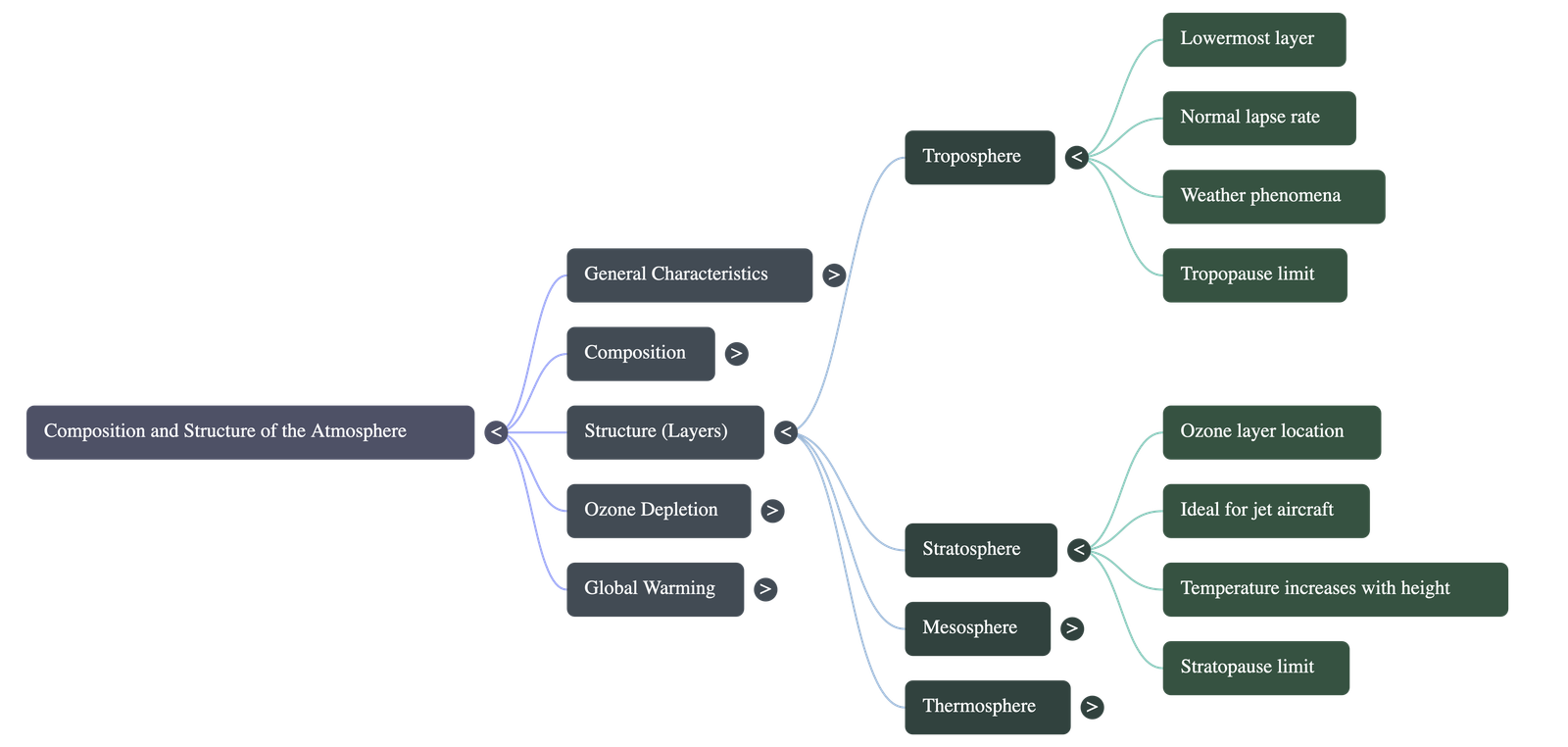
- 1. Troposphere:
- The lowest and densest layer, containing 75% of the atmosphere.
- Height ranges from 8 km at the poles to 18 km at the equator.
- Temperature decreases with altitude (known as the normal lapse rate: a 1°C drop for every 166m gained).
- It is heated from below and is responsible for turbulence and all weather phenomena. Its upper boundary is the tropopause.
- 2. Stratosphere:
- Extends above the tropopause to a height of 50 km.
- The air is thin, cold, and dry, with constant temperatures in the lower layer, making it ideal for jet aircraft flights.
- Contains the Ozone Layer (between 20 to 50 km), which absorbs harmful UV radiation from the sun. The upper boundary is the stratopause.
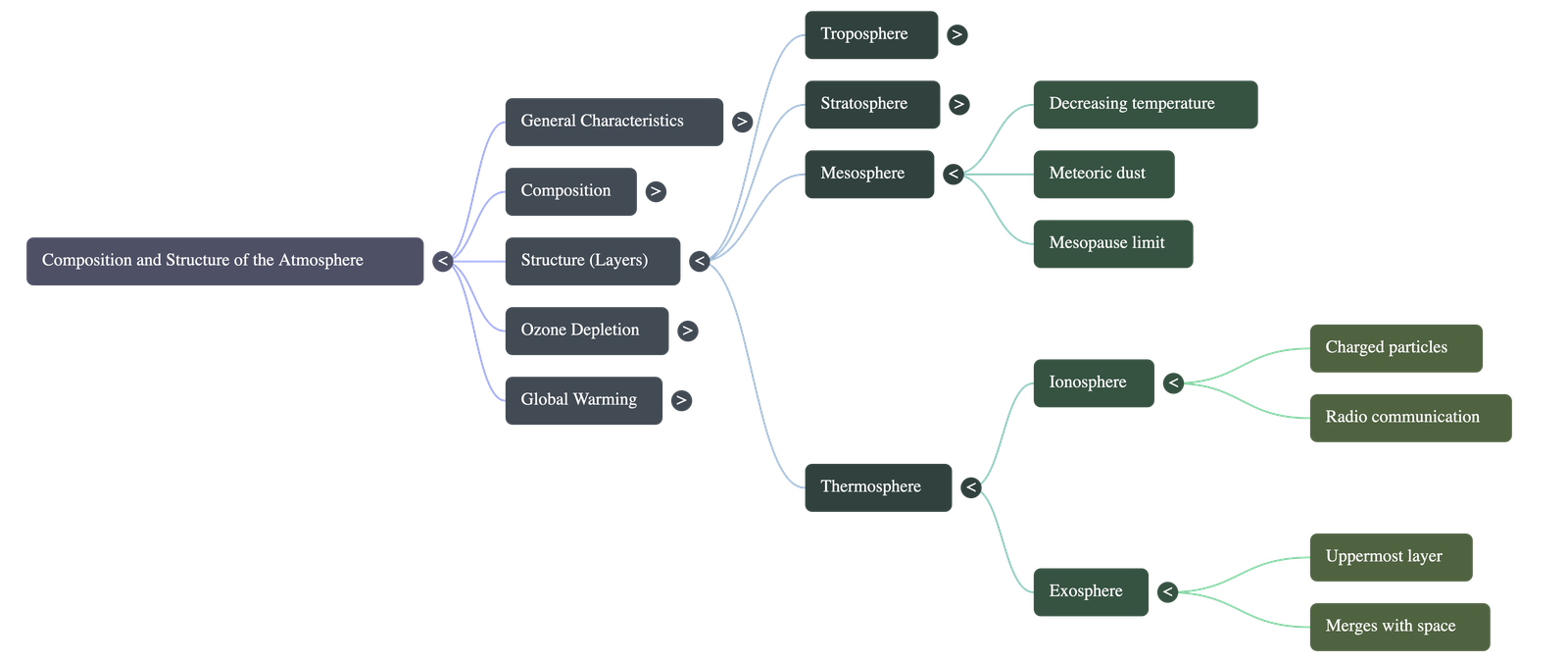
- 3. Mesosphere:
- Extends up to 80 km from ground level.
- Temperature decreases significantly, reaching a minimum of -110°C at the mesopause.
- Features wispy clouds created by reflected sunlight from meteoric dust particles.
- 4. Thermosphere: Extends from the mesopause and is divided into two layers:
- Ionosphere: Extends up to 400 km. Contains electrically charged ions that reflect radio waves back to Earth (enabling wireless communication) and create light displays like the Aurora Borealis and Aurora Australis.
- Exosphere: The uppermost layer (400 to 1500 km) that gradually merges with interplanetary space. Density is extremely low, containing light gases like hydrogen and helium, and temperatures increase with height.
Ozone and its Depletion
- Ozone is a highly reactive and toxic form of oxygen that is generated in the stratosphere by high-energy solar radiation.
- It protects the Earth from harmful UV rays, but its concentration is being depleted, creating "Ozone Holes" (most notably noticed in September 2000 near Antarctica).
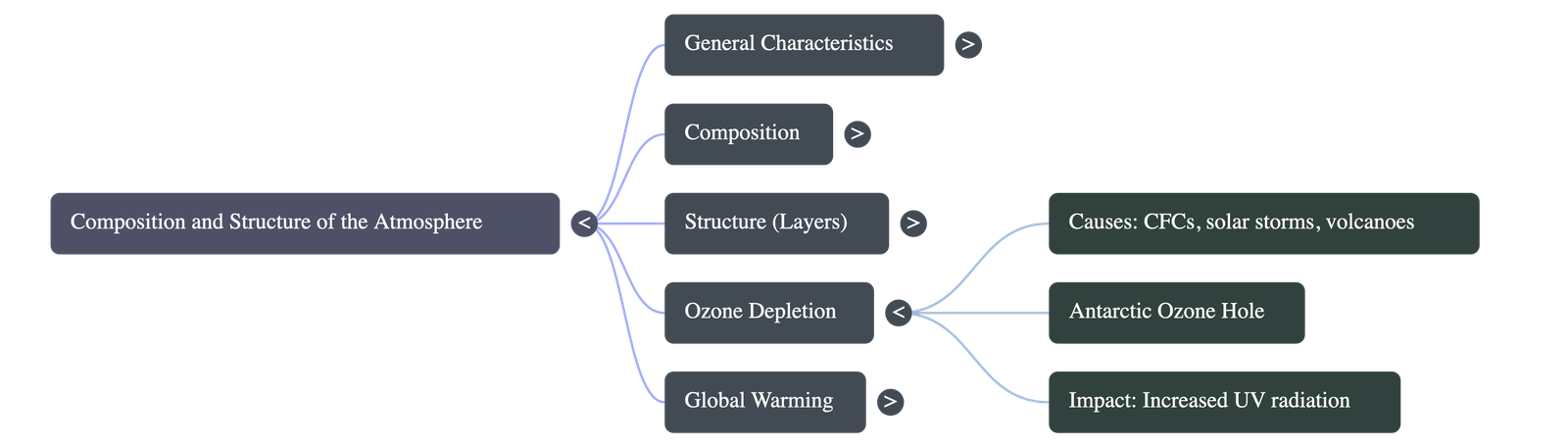
- Causes of Depletion: Chlorofluorocarbons (CFCs) from refrigerators, air conditioners, and aircraft release active chlorine and bromine. Volcanic eruptions (releasing sulphur dioxide) and solar storms also contribute to ozone destruction.
Global Warming & Its Impacts
Global warming is the rising of the global mean temperature primarily due to human activities enhancing greenhouse gas concentrations.
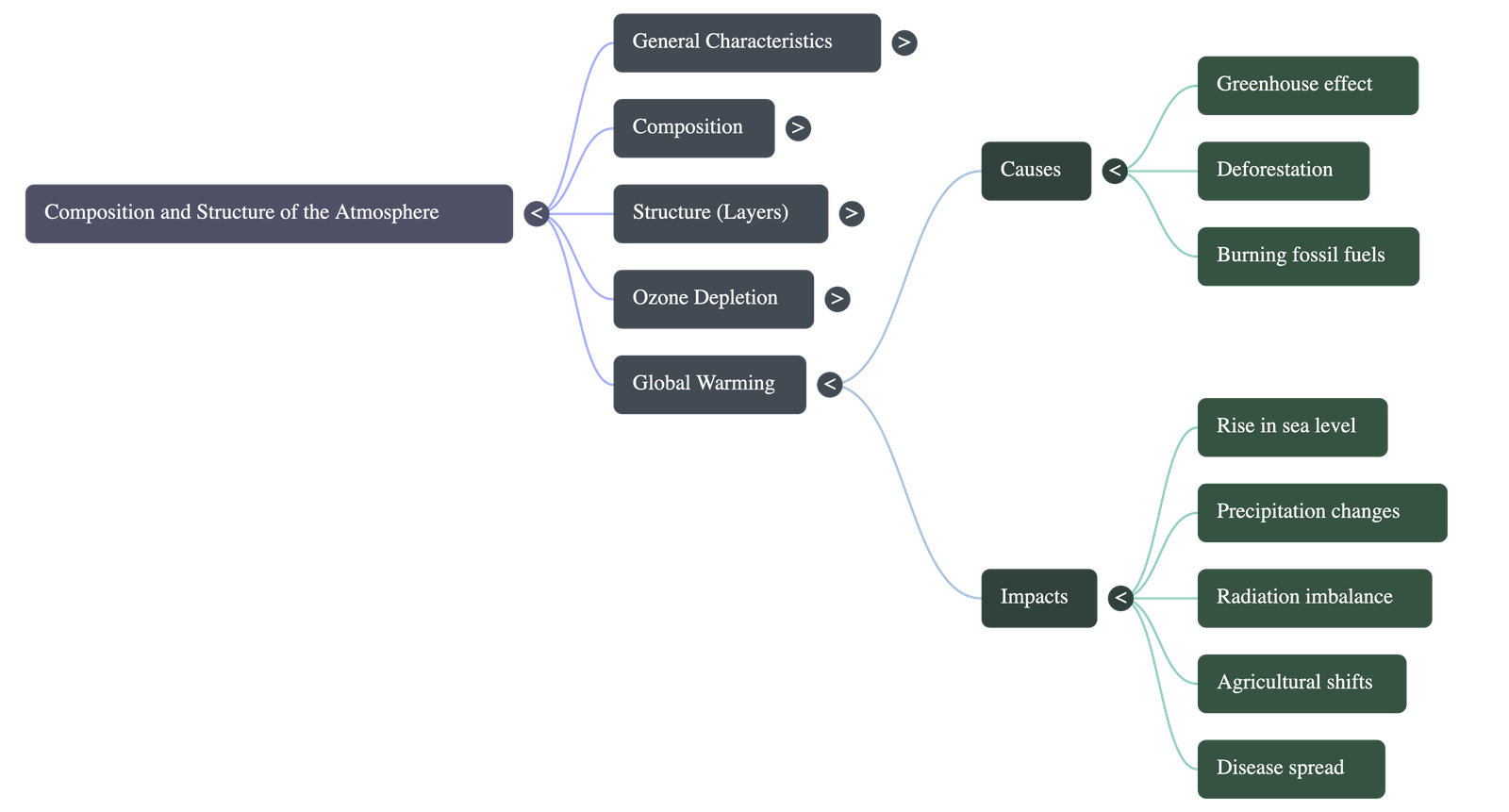
Causes
- Destruction of the Ozone Layer: Allows more harmful rays and heat to penetrate.
- The Greenhouse Effect: An excess accumulation of gases (CO2, methane, CFCs, ozone, water vapour) acts like greenhouse glass, allowing solar radiation in but blocking heat from escaping back into space.
- Deforestation: Clearing forests removes trees that would otherwise absorb excess CO2, and allows topsoil to blow into the atmosphere as dust, which disrupts terrestrial radiation reflection.
Impacts
- Rise in Sea Level: Melting ice reserves and oceans expanding due to heat threaten coastal human habitations.
- Precipitation Change: Warming tropospheres and cooling stratospheres alter air-mass movements, causing widespread flooding in some regions and drought in others.
- Radiation Imbalance: Forces plant and animal species to shift towards higher elevations or latitudes. Many may face large-scale death if they cannot adapt or migrate fast enough.
- Agriculture & Water: Significant shifts in cereal production in the Tropics will cause food shortages. Global freshwater conditions are likely to worsen.
- Diseases: Changes in climate factors like temperature and precipitation may cause diseases such as malaria to reappear in new forms or locations.
Do checkout all questions & answers of this chapter.
Quick Navigation:
| | | |
1 / 1
Quick Navigation:
| | | |