Quick Navigation:
| | | | |
Conjunctions
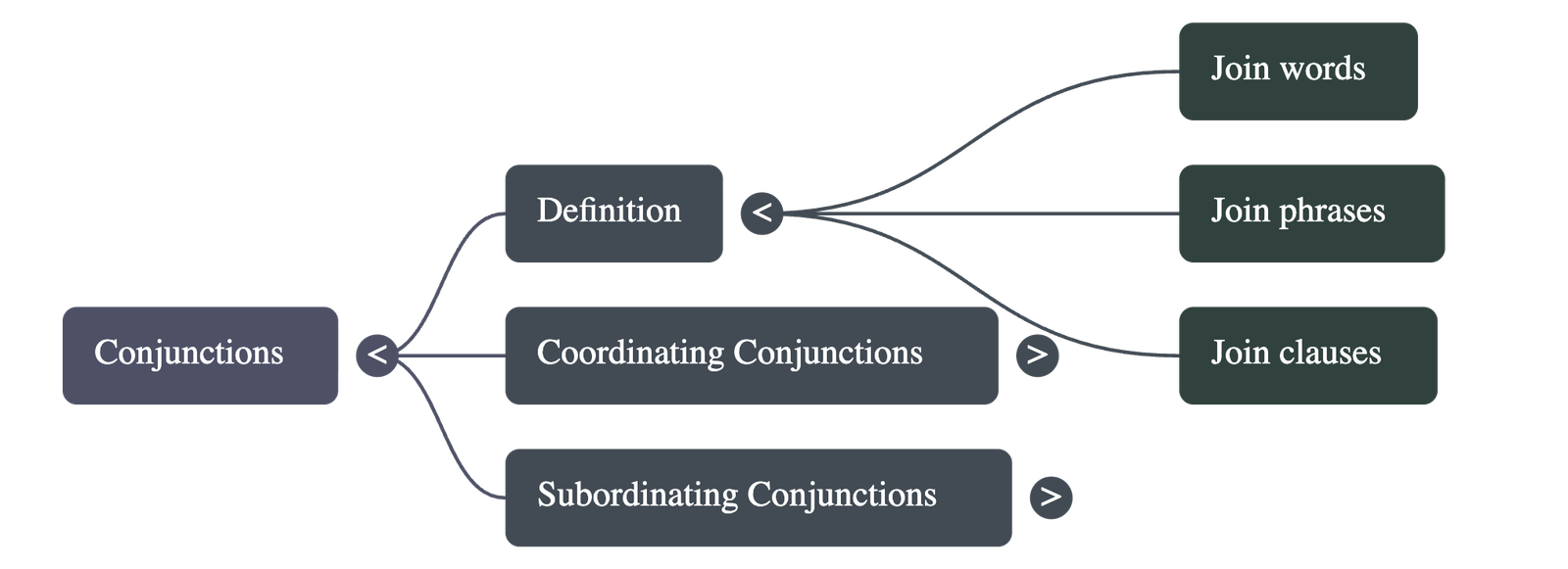
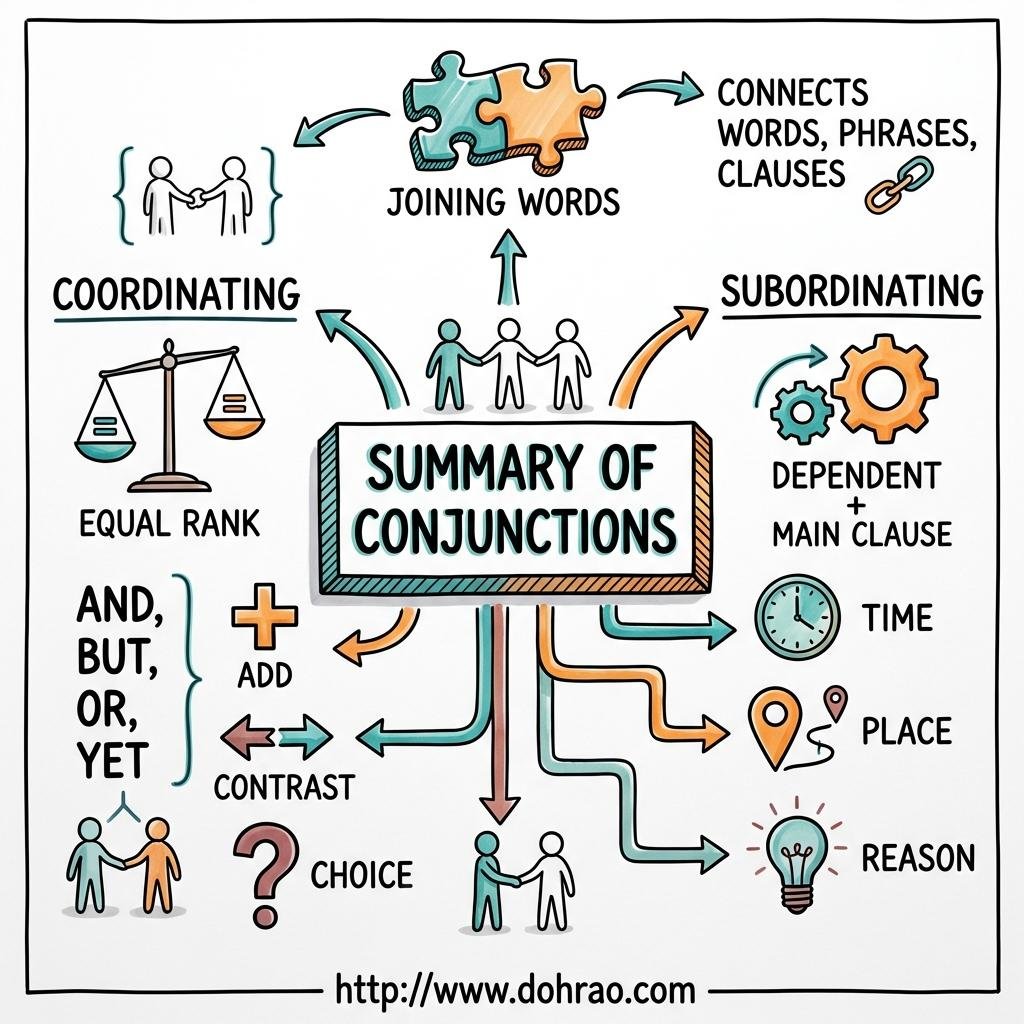
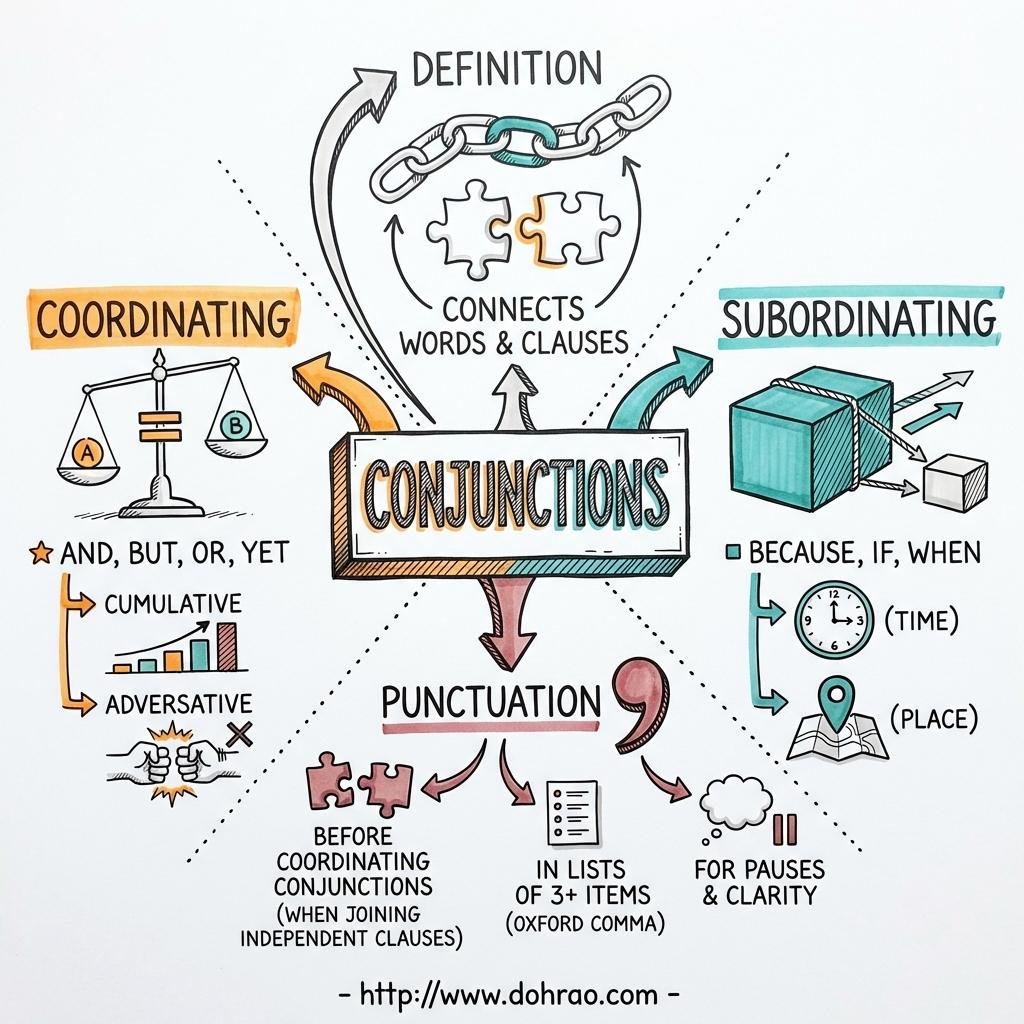
Conjunctions are essential parts of speech used to connect words, phrases, and clauses within a sentence. Based on their specific functions, they are classified into two primary categories: Coordinating Conjunctions and Subordinating Conjunctions.
1. Coordinating Conjunctions
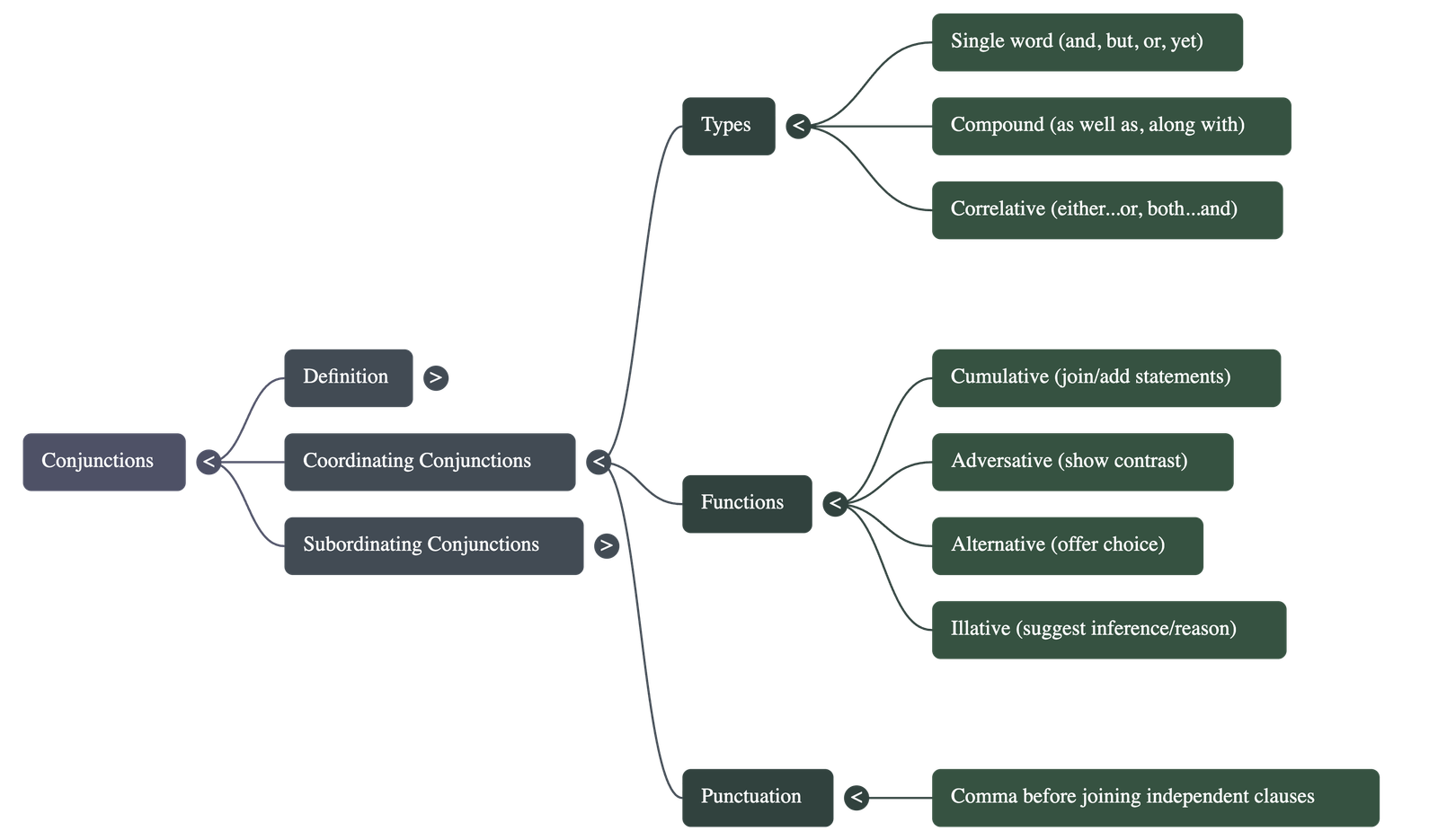
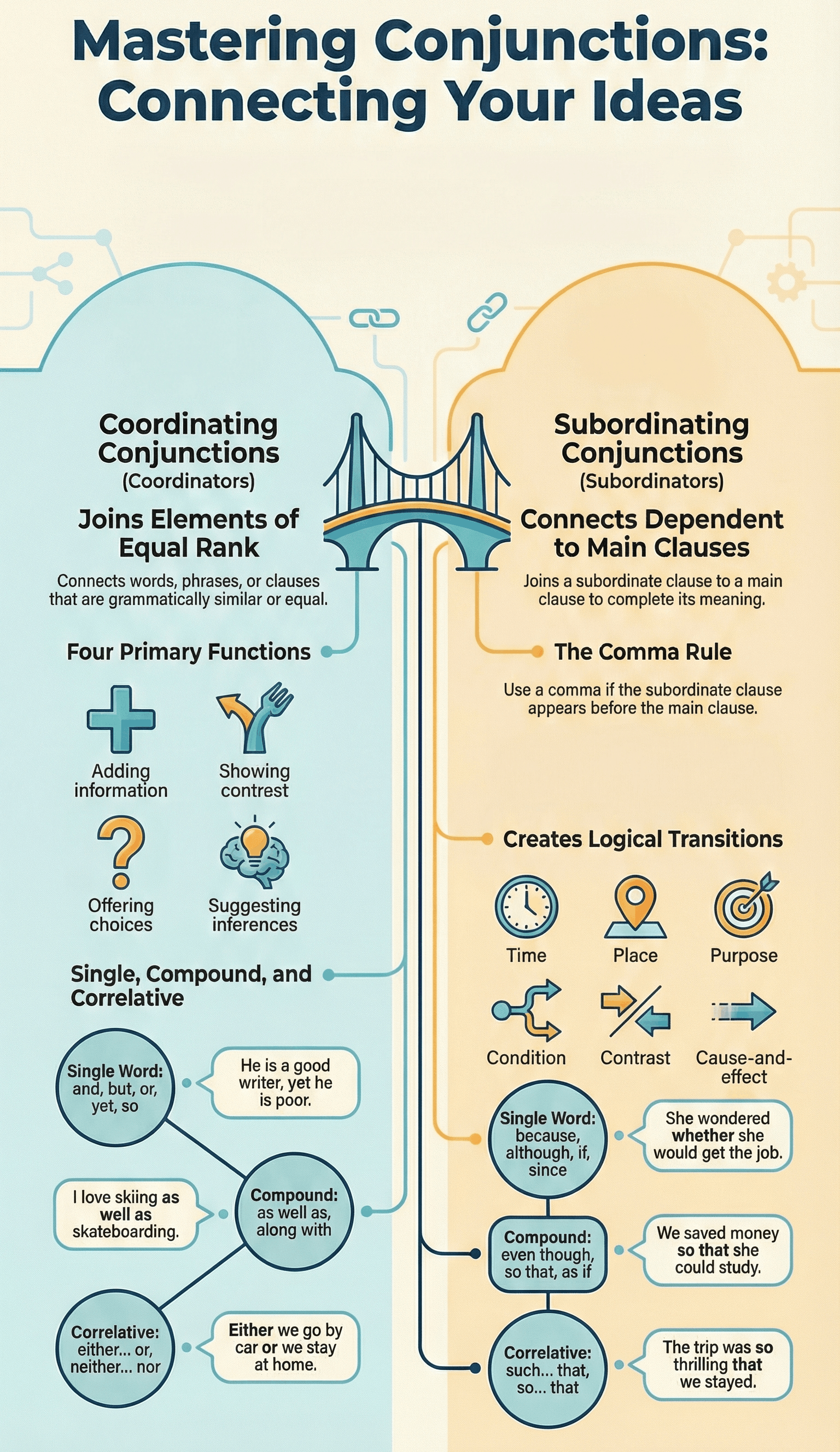
These are used to join grammatical elements of equal rank or importance. They are further divided by their form and function:
Forms of Coordinators
- Single Word: Standard coordinators like and, but, or, yet, nor, and so.
- Compound: Phrases that act as single units, such as as well as, along with, and together with.
- Correlative: Pairs of words that work together, including either...or, neither...nor, both...and, and not only...but also.
Functions of Coordinators
- Cumulative: Used to simply join or add one statement to another (e.g., and, as well as).
- Adversative: Used to show contrast or opposition between two statements (e.g., but, yet, while).
- Alternative: Used to offer a choice between two possibilities (e.g., or, otherwise, either...or).
- Illative: Used to suggest an inference, a reason, or a result (e.g., for, so).
2. Subordinating Conjunctions
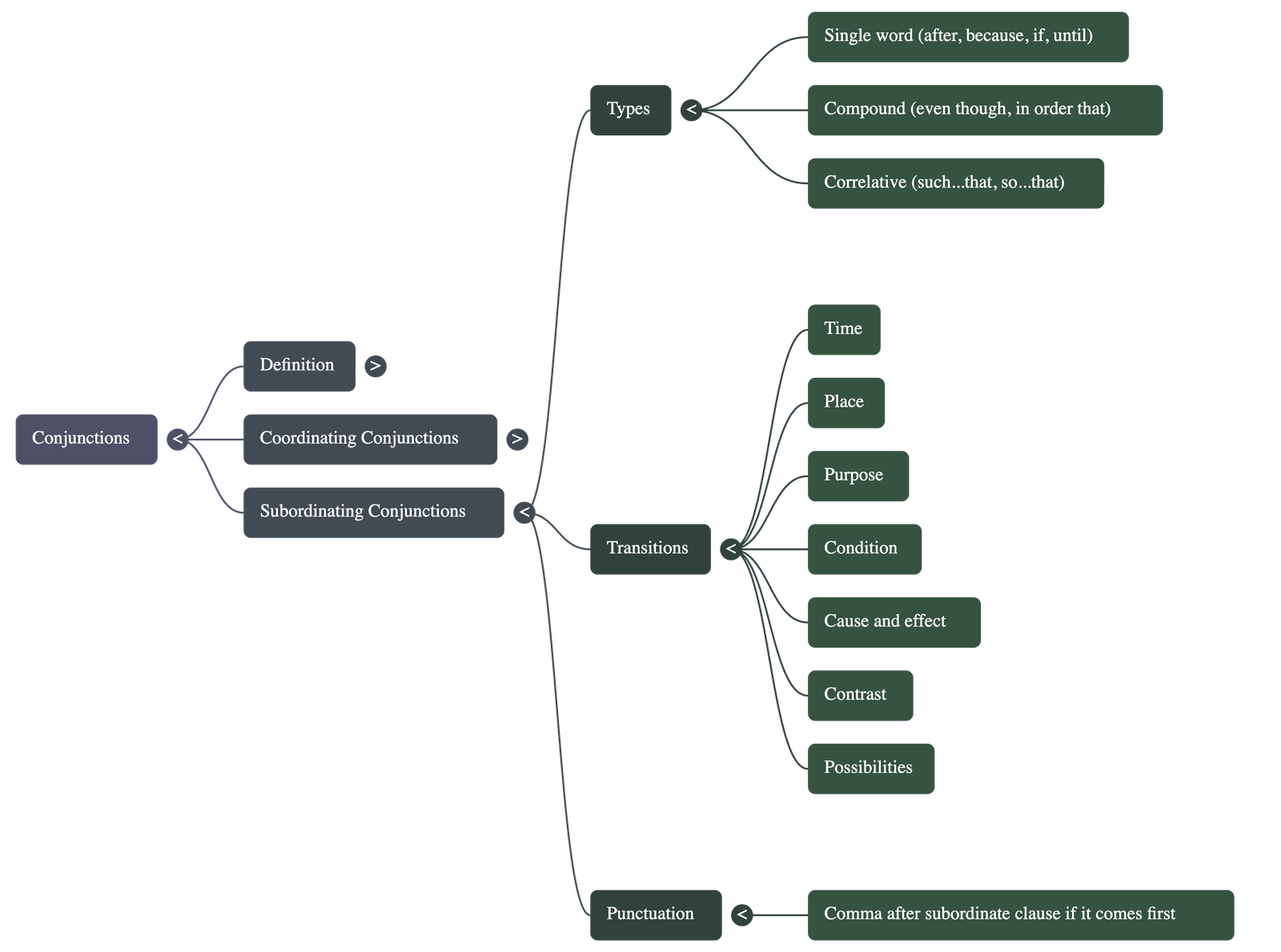
A subordinating conjunction (or subordinator) joins a subordinate (dependent) clause to a main (independent) clause. The subordinate clause depends on the main clause to complete its meaning.
Forms of Subordinators
- Single Word: Common subordinators like because, although, if, since, until, and where.
- Compound: Multi-word connectors like even though, in order that, as soon as, and provided that.
- Correlative: Pairs such as such...that and so...that.
Transitions and Meanings
Subordinating conjunctions provide transitions that indicate specific relationships between ideas:
- Time: after, before, until, as soon as
- Place: where, wherever
- Purpose: so that, lest
- Condition: if, unless, provided that
- Cause-and-Effect: because, as, since
- Contrast: although, though, even though
- Possibility: whether
3. Key Punctuation Rules
- With Coordinating Conjunctions: When joining two independent clauses, a comma should be placed before the coordinator.
- With Subordinating Conjunctions: If the subordinate clause comes before the main clause, a comma must separate the two. If the subordinate clause comes after the main clause, a comma is generally not required.
Do checkout all questions & answers of this chapter.
Quick Navigation:
| | | | |
1 / 1
Quick Navigation:
| | | | |