Quick Navigation:
| | | | |
Quick Navigation:
| | | | |
Point-wise summary of the chapter on Primary Auxiliaries:
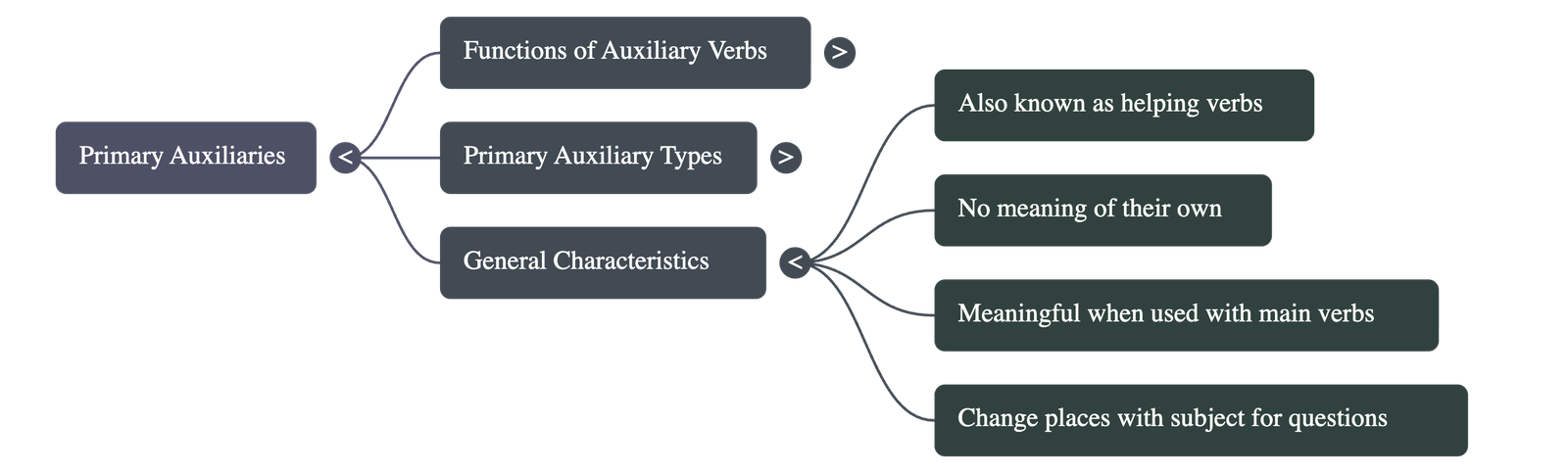
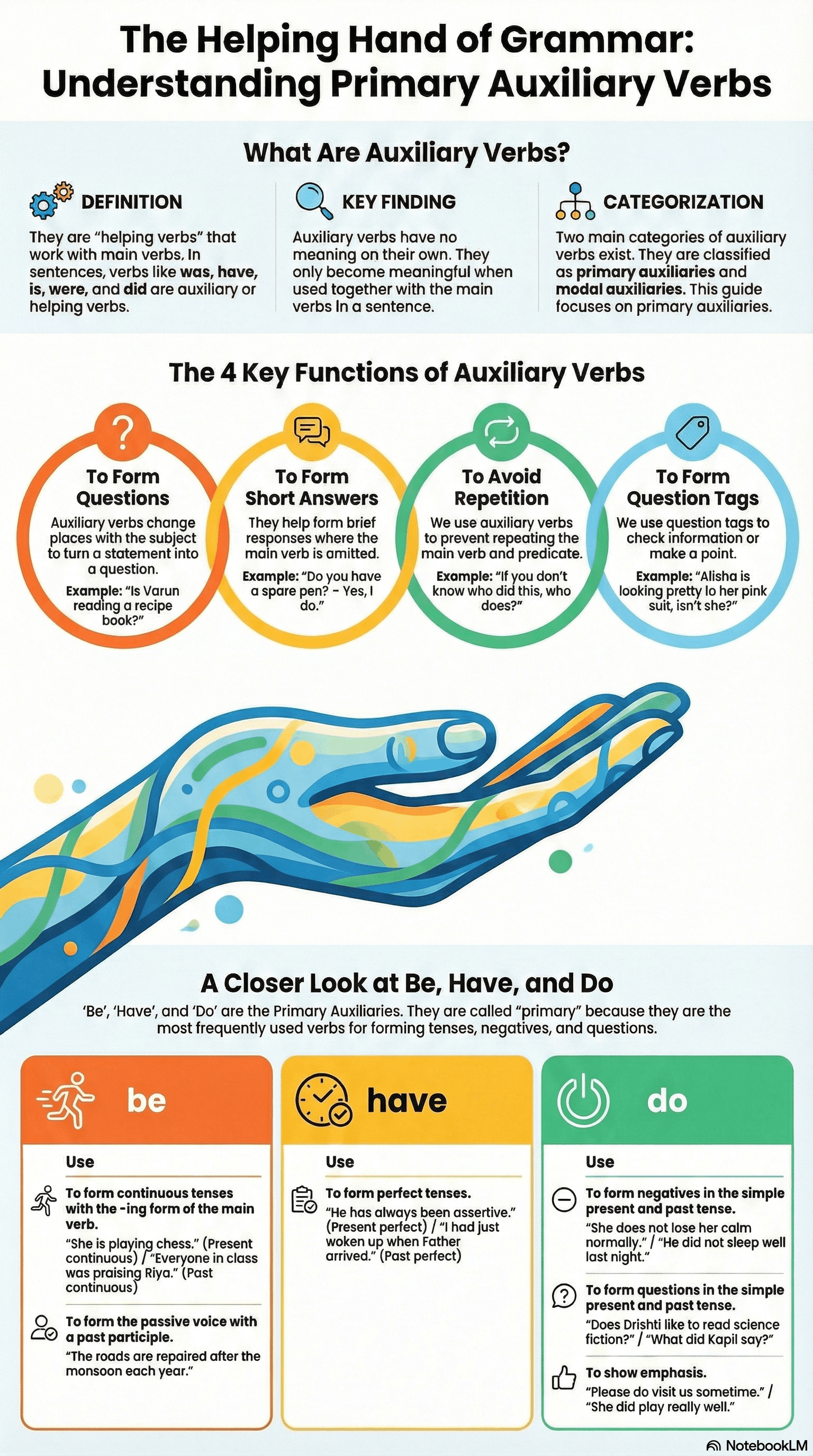
- Definition and Nature: Auxiliary verbs, or helping verbs, are words used alongside main verbs to perform specific grammatical functions. They do not have a meaning of their own and only become meaningful when used in combination with a main verb.
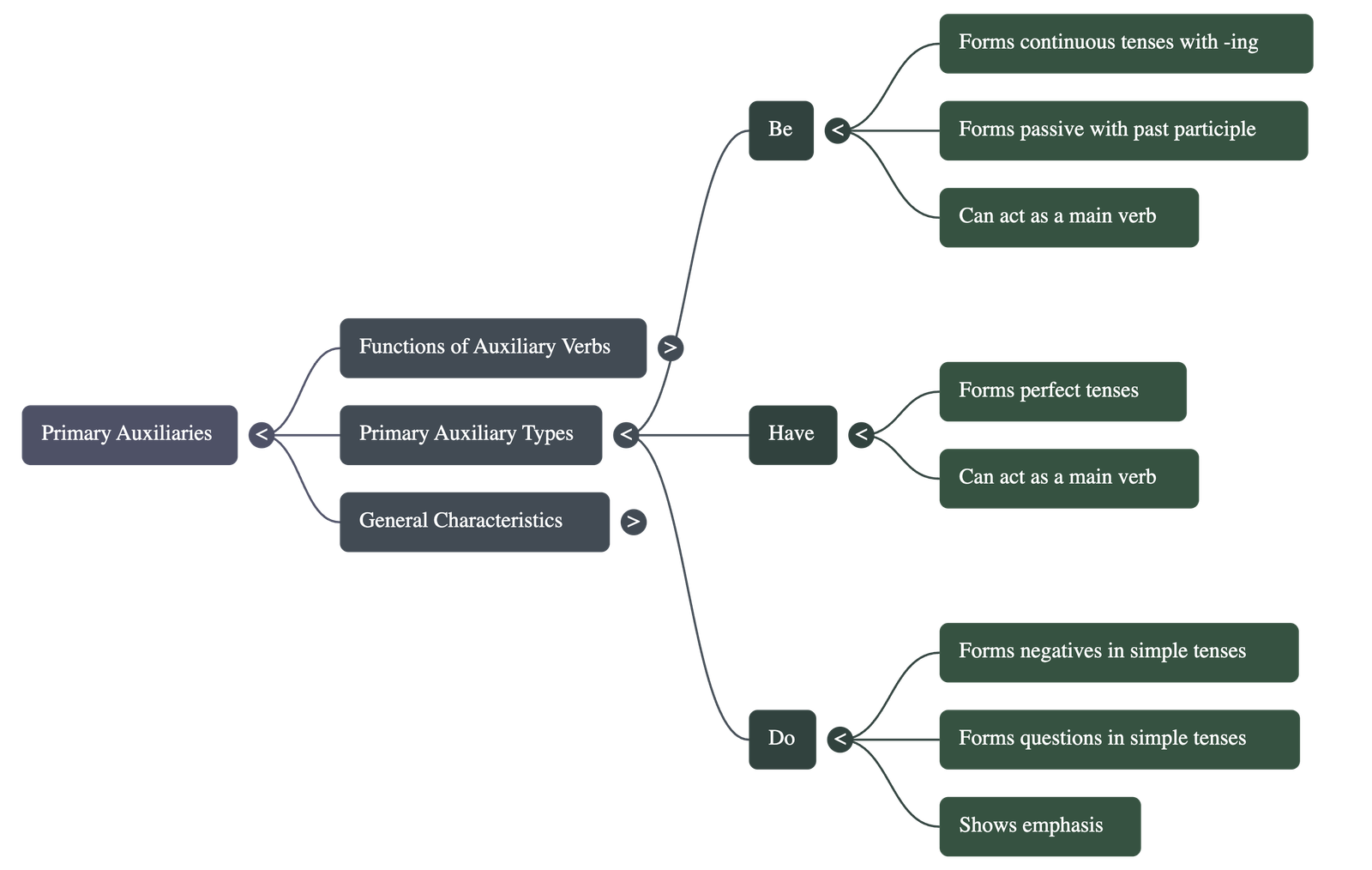
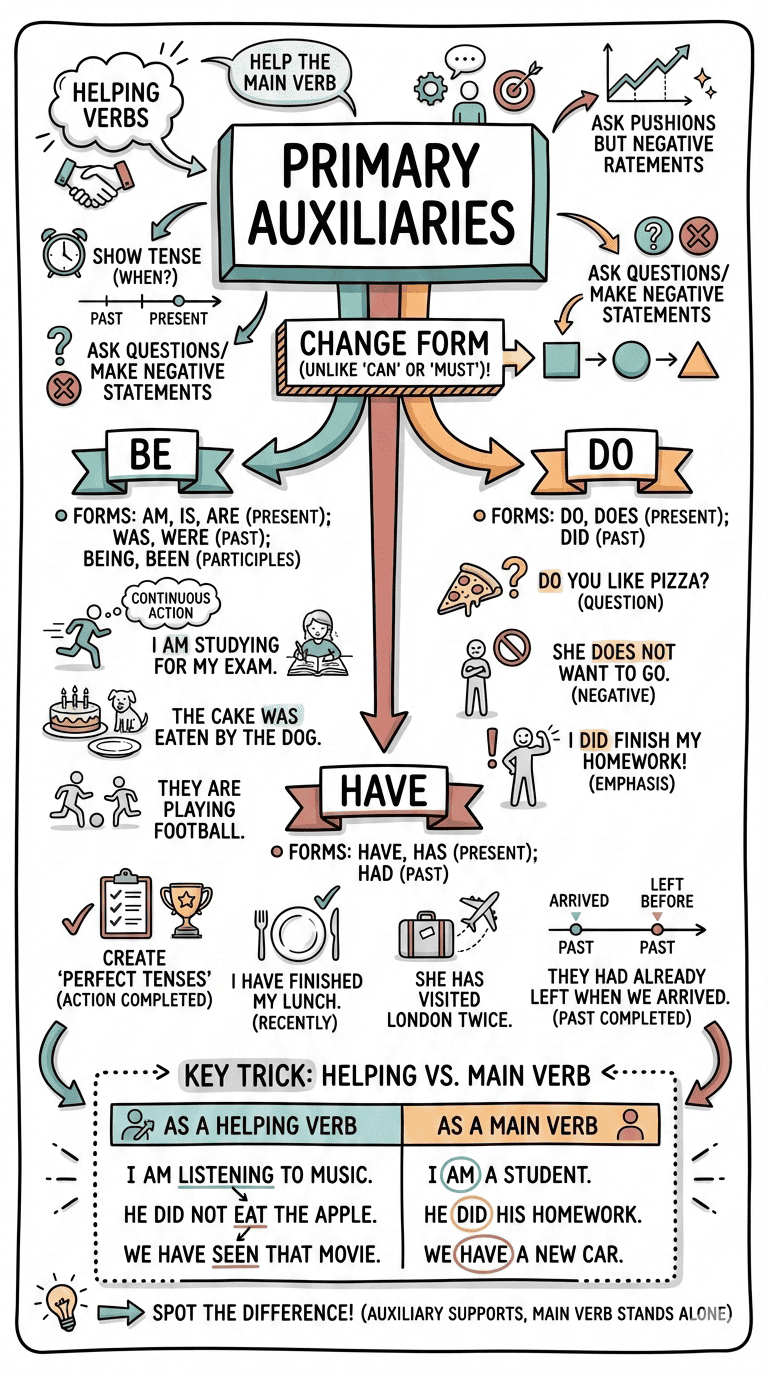
- Categories of Auxiliaries: Auxiliary verbs are divided into two broad categories: primary auxiliary verbs (be, have, and do) and modals (or modal auxiliary verbs).
- Core Functions of Primary Auxiliaries:
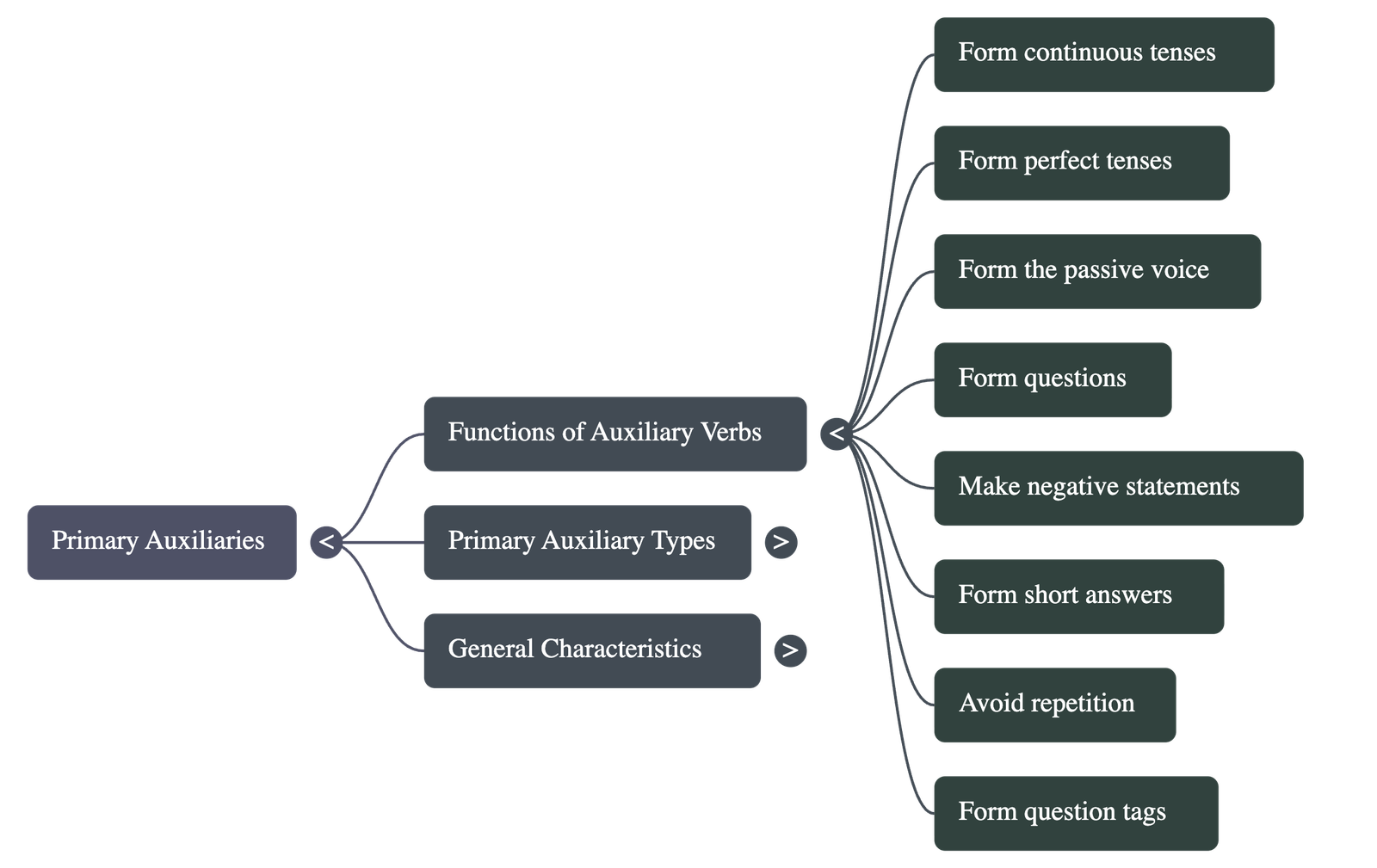
- Tense Formation: They are used to create the continuous tenses (using be + -ing forms) and perfect tenses (using have).
- Passive Voice: The verb be followed by a past participle is used to form the passive voice.
- Questions and Negatives: Auxiliary verbs are used to form questions by changing places with the subject. The auxiliary do is specifically used to form negatives and questions in the simple present and simple past tenses.
- Additional Functions:
- Short Answers: They allow for short responses where the main verb is omitted because its meaning is already implied.
- Avoiding Repetition: They are used to avoid repeating the same main verb in a sentence.
- Question Tags: They are used to form question tags at the end of statements to check information or create a dramatic effect.
- Emphasis: The auxiliary do can be used specifically to show emphasis in a sentence (e.g., "I do understand your problem").
- Dual Roles: Primary auxiliaries are unique because they can also act as main verbs in certain contexts, such as in the sentence "I have my French class in the evening".
Analogy Auxiliary verbs are like the scaffolding on a construction site. While the main verb is the actual building (the action), the scaffolding provides the necessary framework to hold the structure in different positions—allowing it to reach different heights (tenses) or face different directions (passive/active voice)—even though the scaffolding itself isn't the final destination.
Do checkout all questions & answers of this chapter.
Quick Navigation:
| | | | |
1 / 1
Quick Navigation:
| | | | |