Quick Navigation:
| | | | |
Conditionals
Introduction to Conditionals
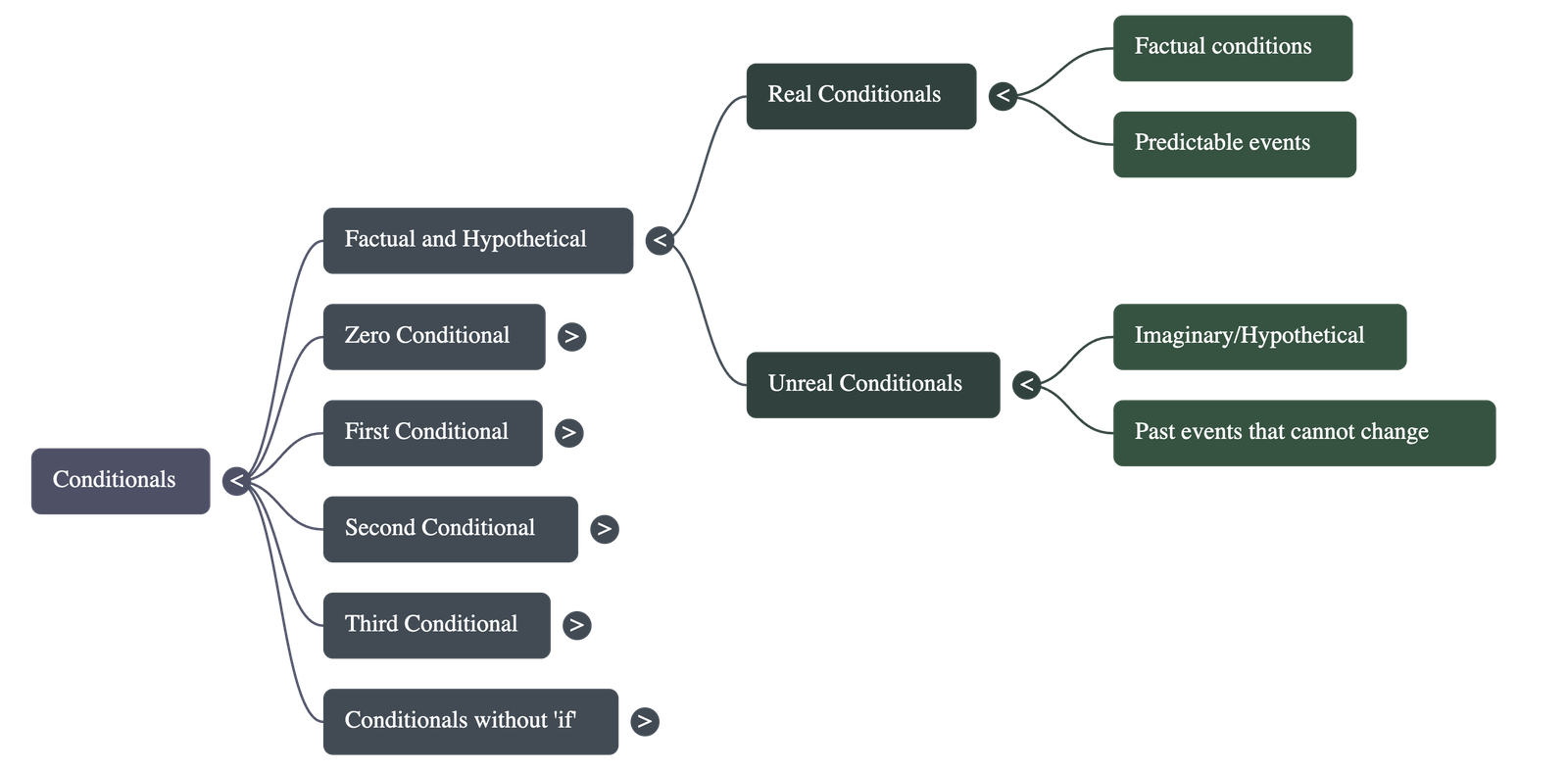
- Definition: Conditional sentences describe results that depend on a specific condition being met. They consist of two parts: the if-clause (stating the condition) and the main clause (stating the consequence).
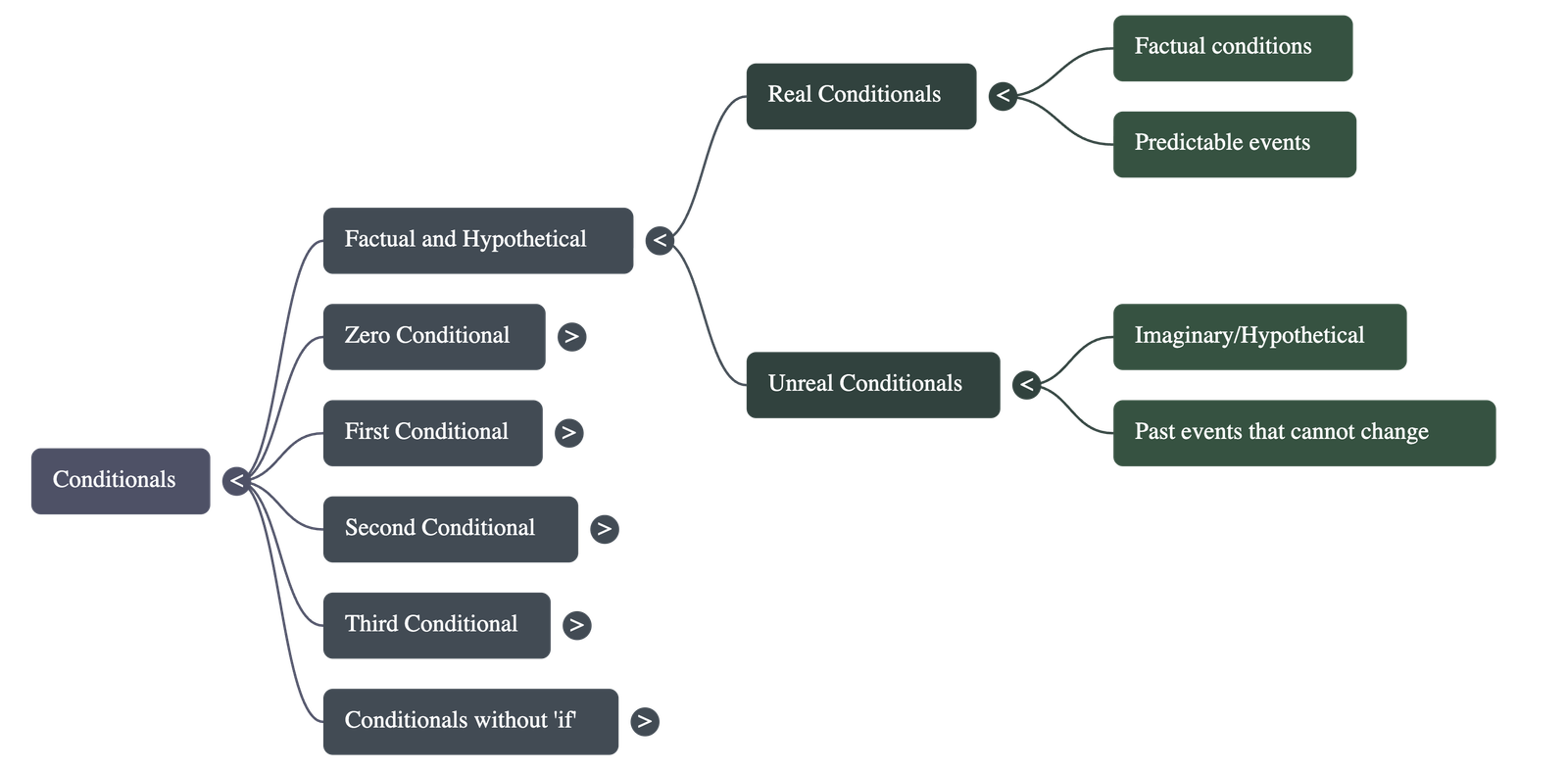
- Factual (Real) Conditionals: These refer to conditions that are real and capable of being fulfilled.
- Unreal (Hypothetical) Conditionals: These refer to imaginary or impossible conditions that cannot be fulfilled.
The Four Types of Conditionals
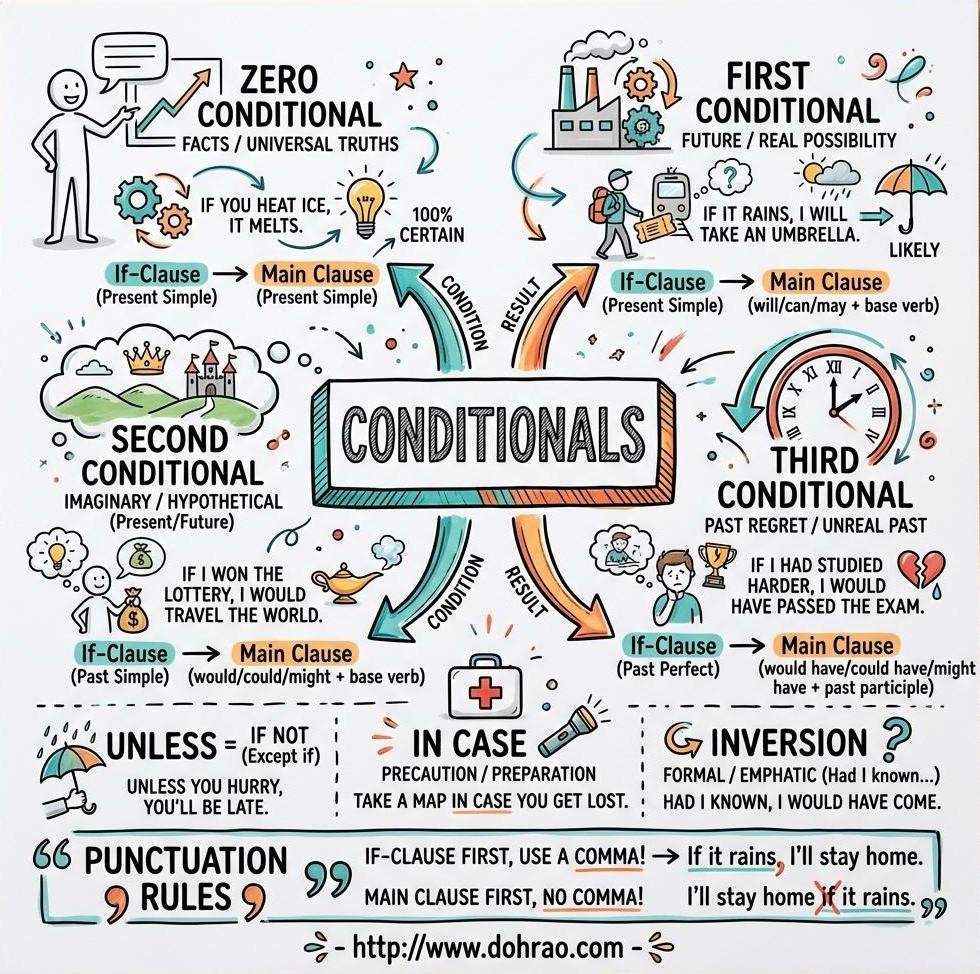
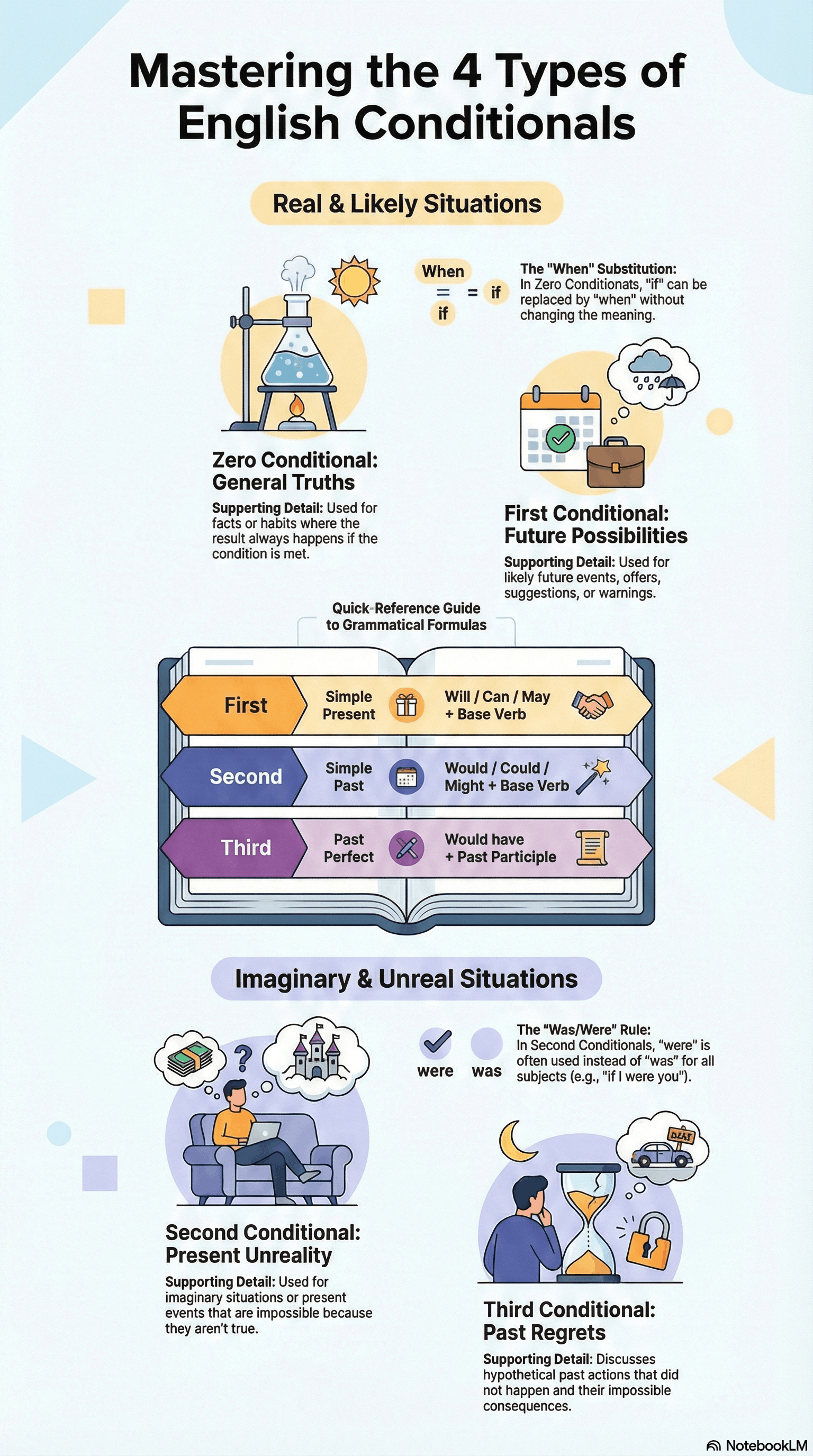
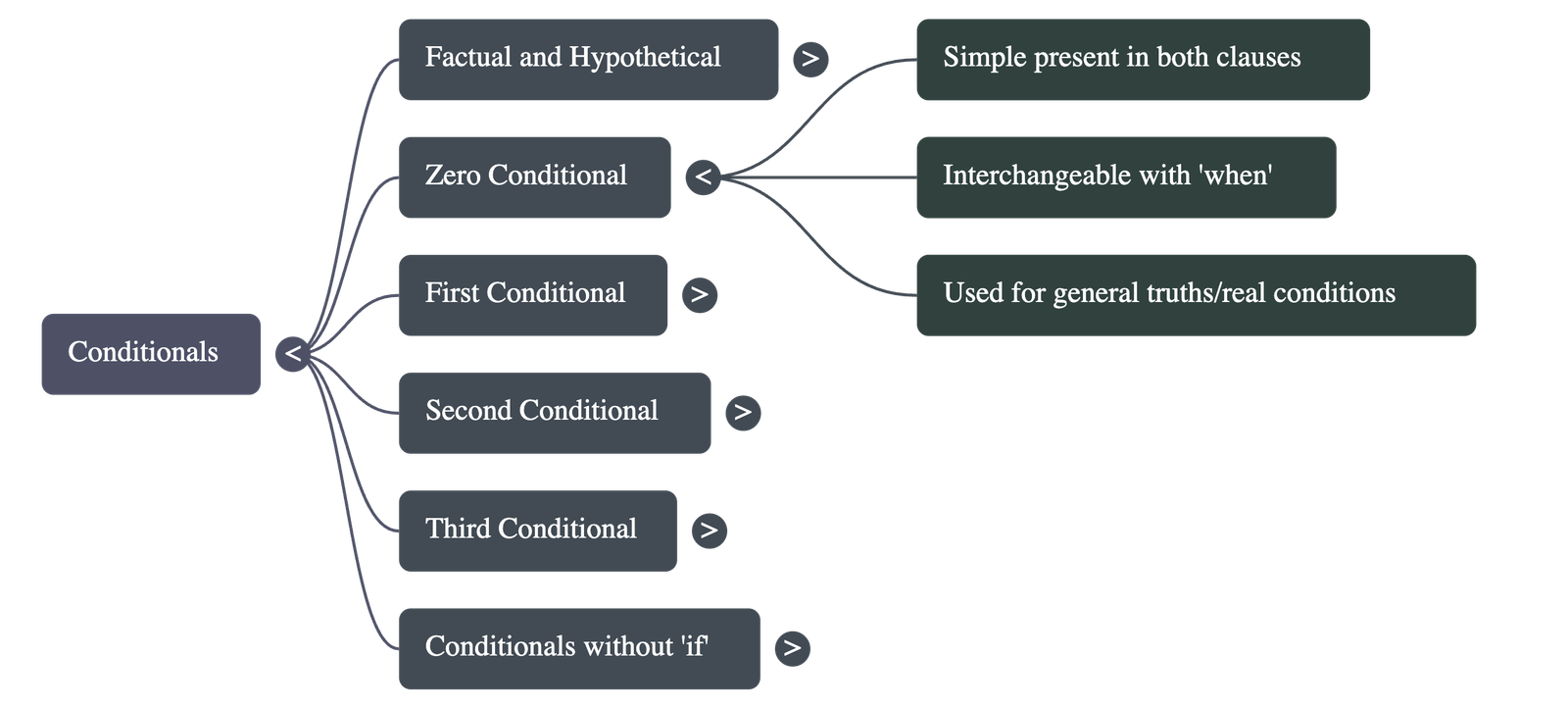
- Zero Conditional: Used for general truths and facts where the condition always leads to the same result.
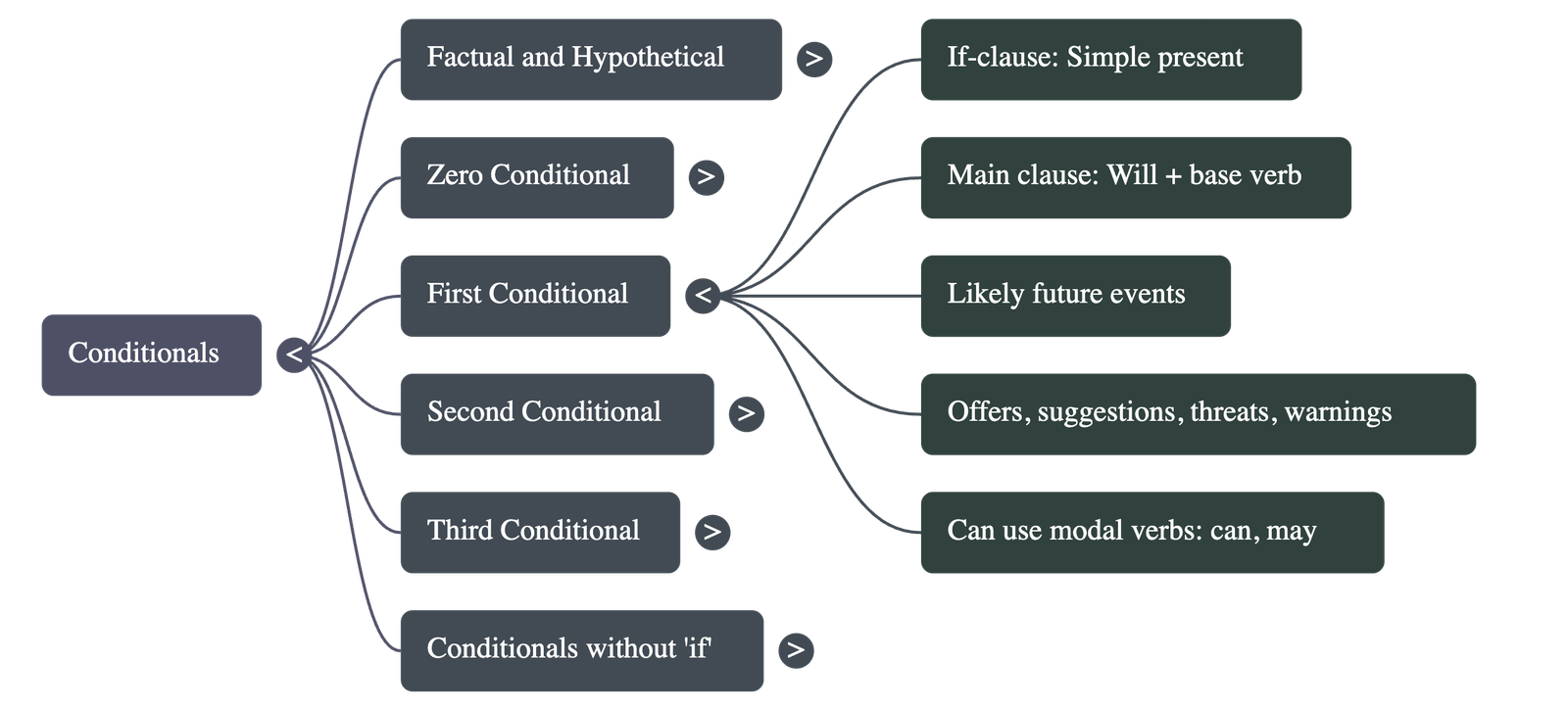
Structure: If + Simple Present | Simple Present Example: If you exercise in the morning, you feel energetic. - First Conditional: Used for likely future events, offers, suggestions, or warnings.
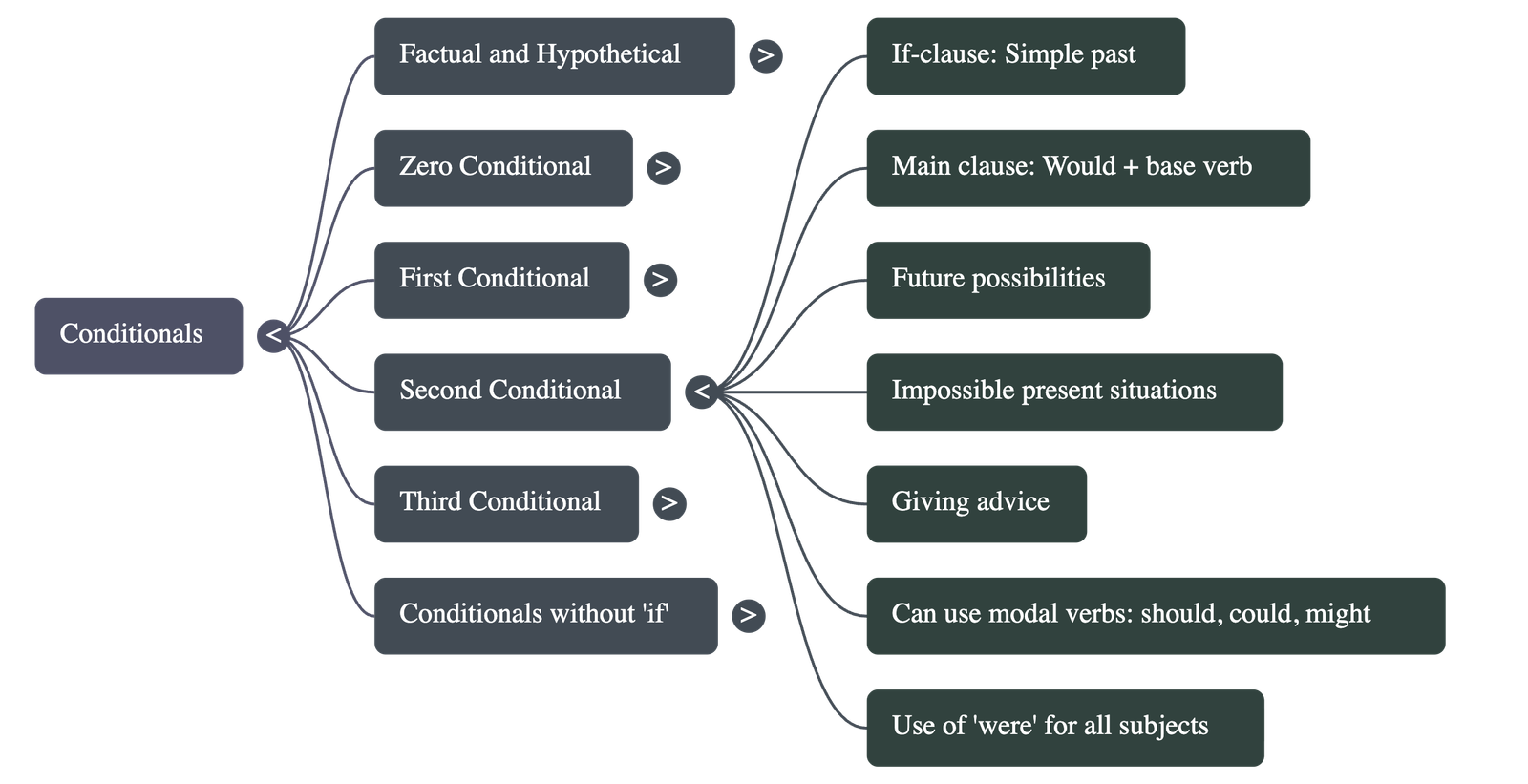
Structure: If + Simple Present | Will + Base Verb Example: If the weather improves, the match will start. (Modals like 'can' or 'may' can also be used). - Second Conditional: Used for future possibilities that are unlikely, present situations that are impossible (unreal), or to give advice.
Structure: If + Simple Past | Would + Base Verb Example: If I were you, I would accept the offer. (Modals like 'could' or 'might' can also be used). - Third Conditional: Used to talk about a hypothetical past—situations that did not happen and their imagined consequences.
Structure: If + Past Perfect | Would have + Past Participle Example: If I had been warned, I would have been more cautious.
Conditionals Without "If"
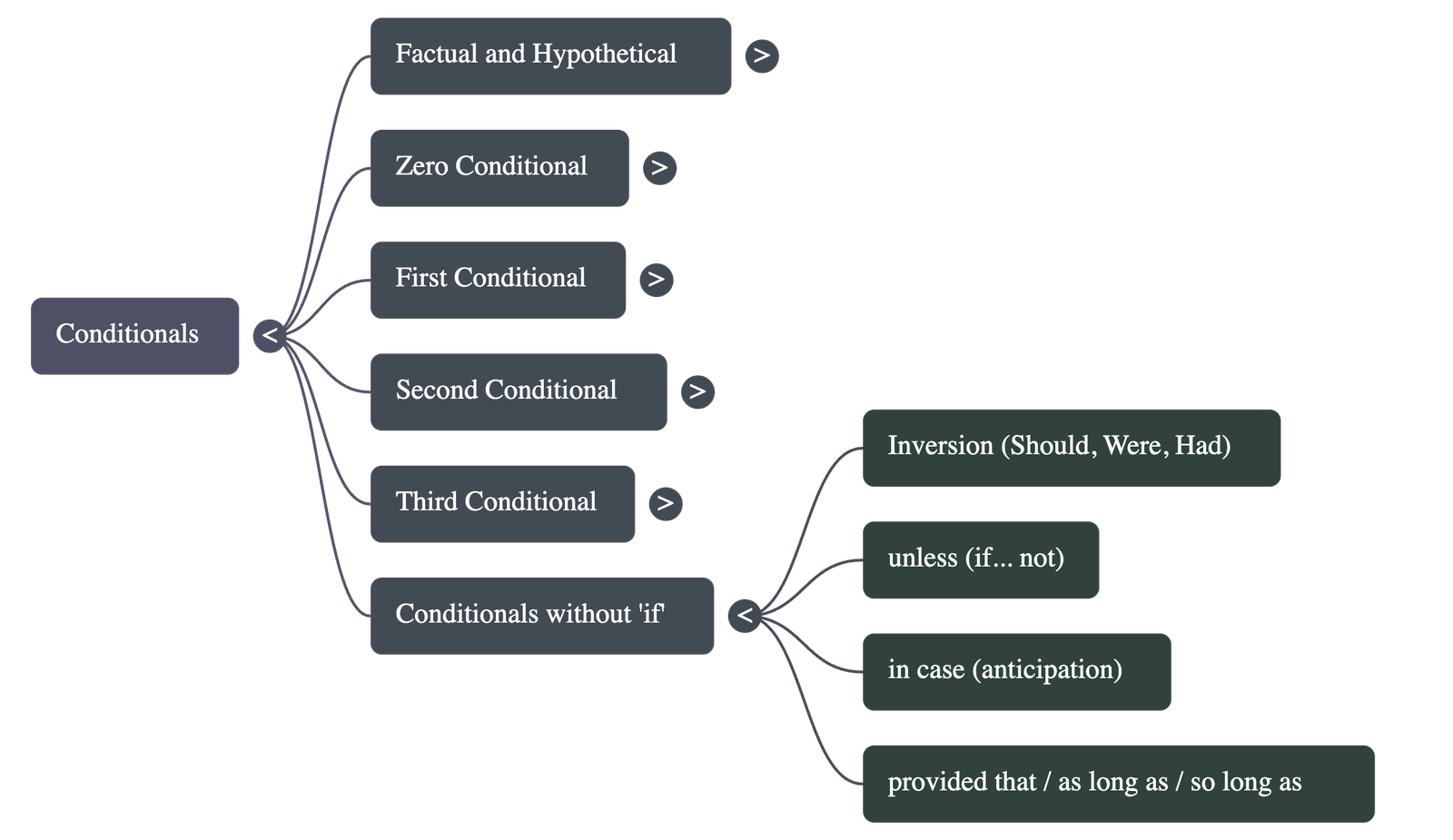
- Inversion: Conditionals can be formed by moving the modal or helping verb before the subject, removing the word "if" entirely. Example: "Should Anita call..." or "Had they taken the train..."
- Unless: Means the same as "if... not." Example: He will not agree unless you ask him yourself.
- In Case: Used to describe actions taken in anticipation of a future possibility. Example: We booked the hall in case it rains.
- Provided that / As long as: These expressions mean "only if" and emphasize a specific requirement for the result to occur. Example: I can lend you my car provided that you get it serviced.
Do checkout all questions & answers of this chapter.
Quick Navigation:
| | | | |
1 / 1
Quick Navigation:
| | | | |




Quick Navigation:
| | | | |