Quick Navigation:
| | | | |
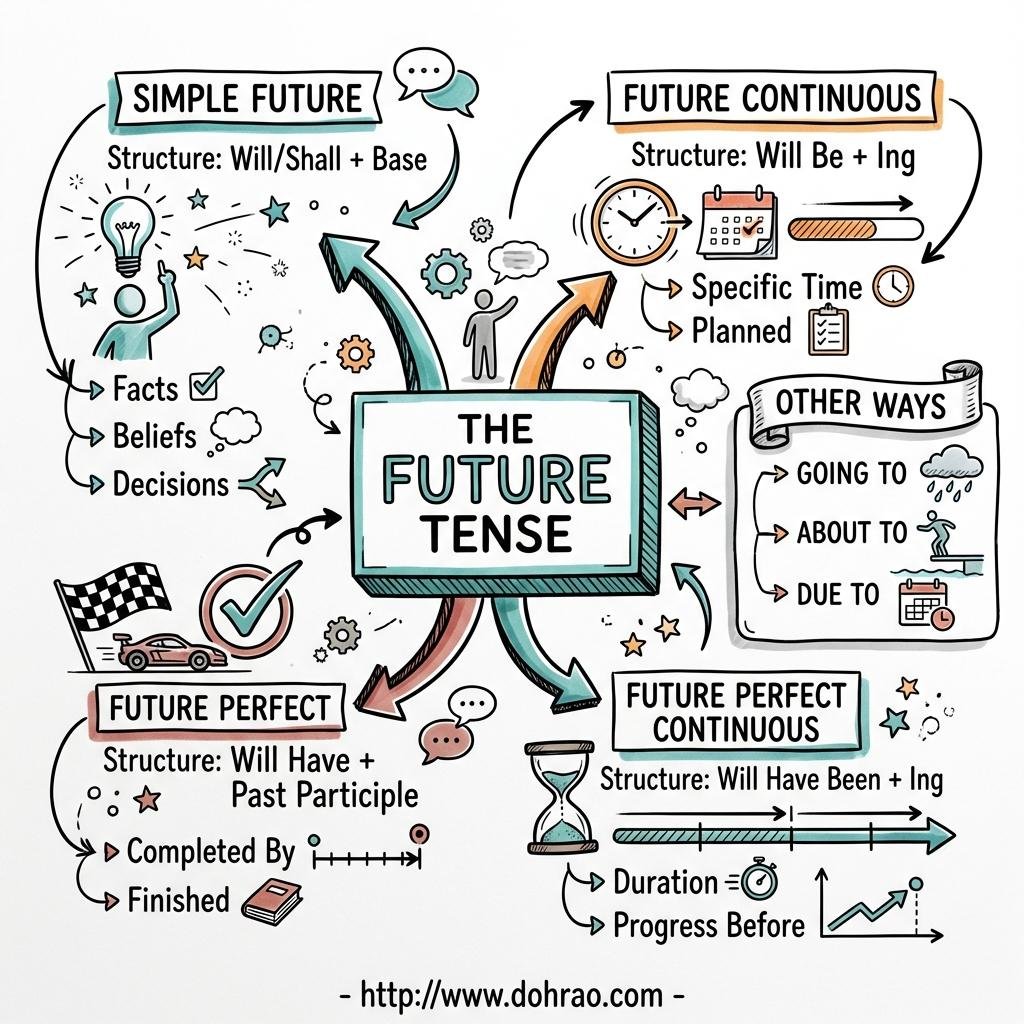
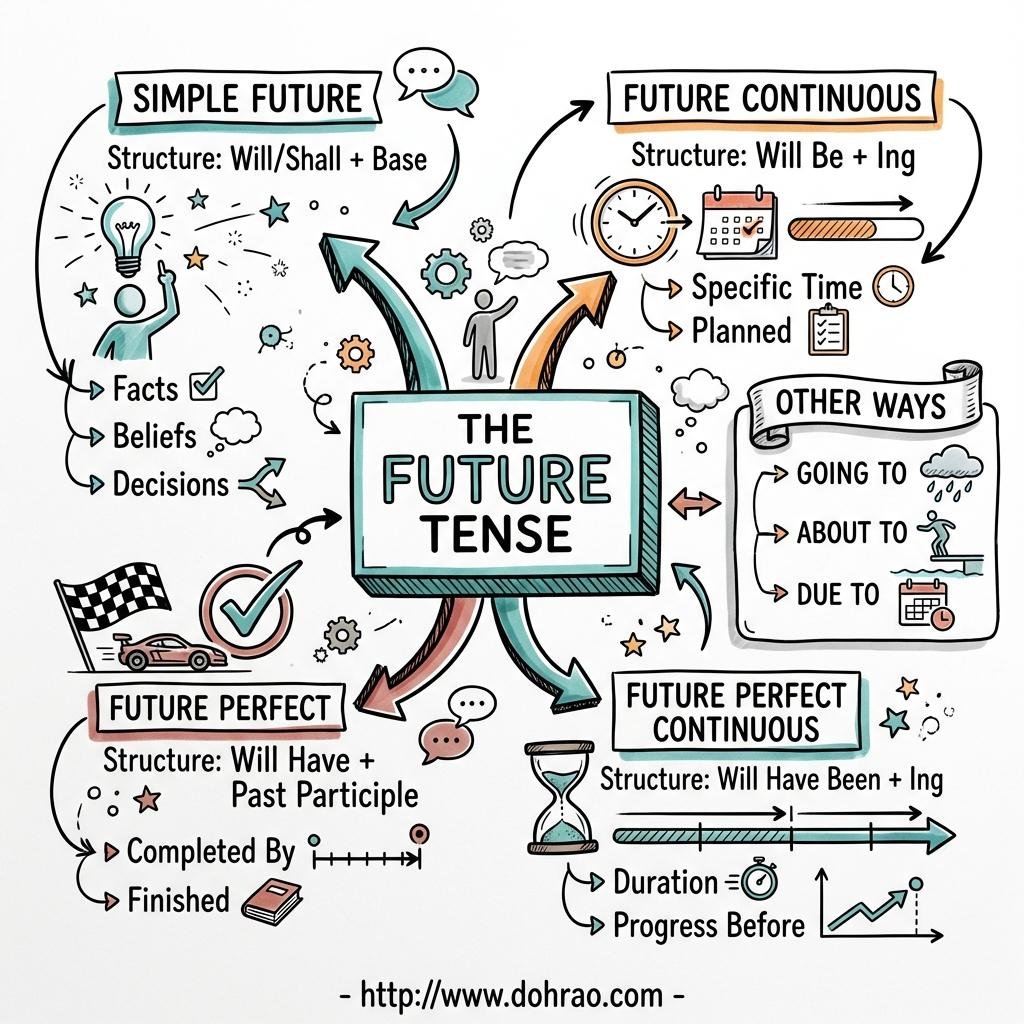
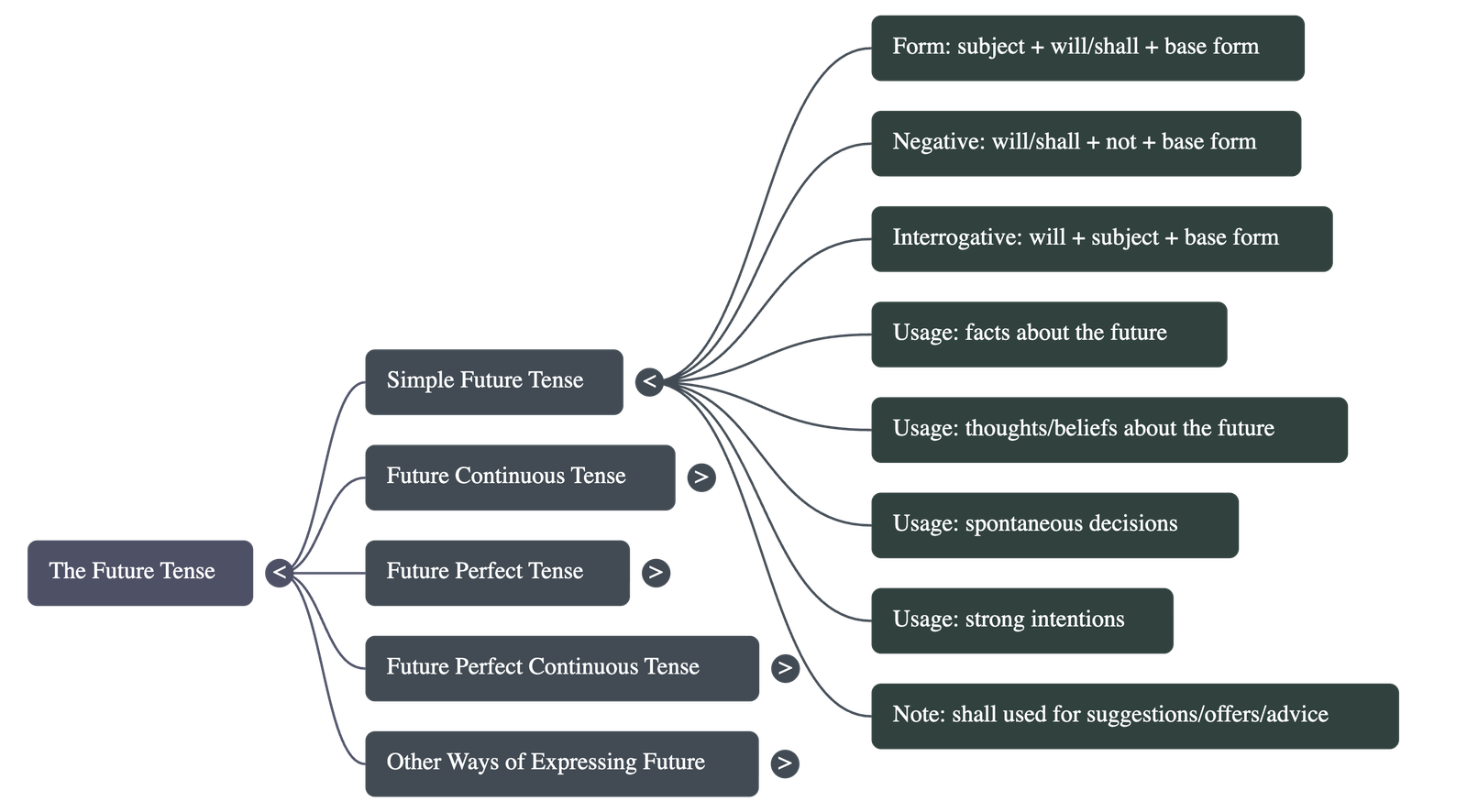
1. Simple Future Tense
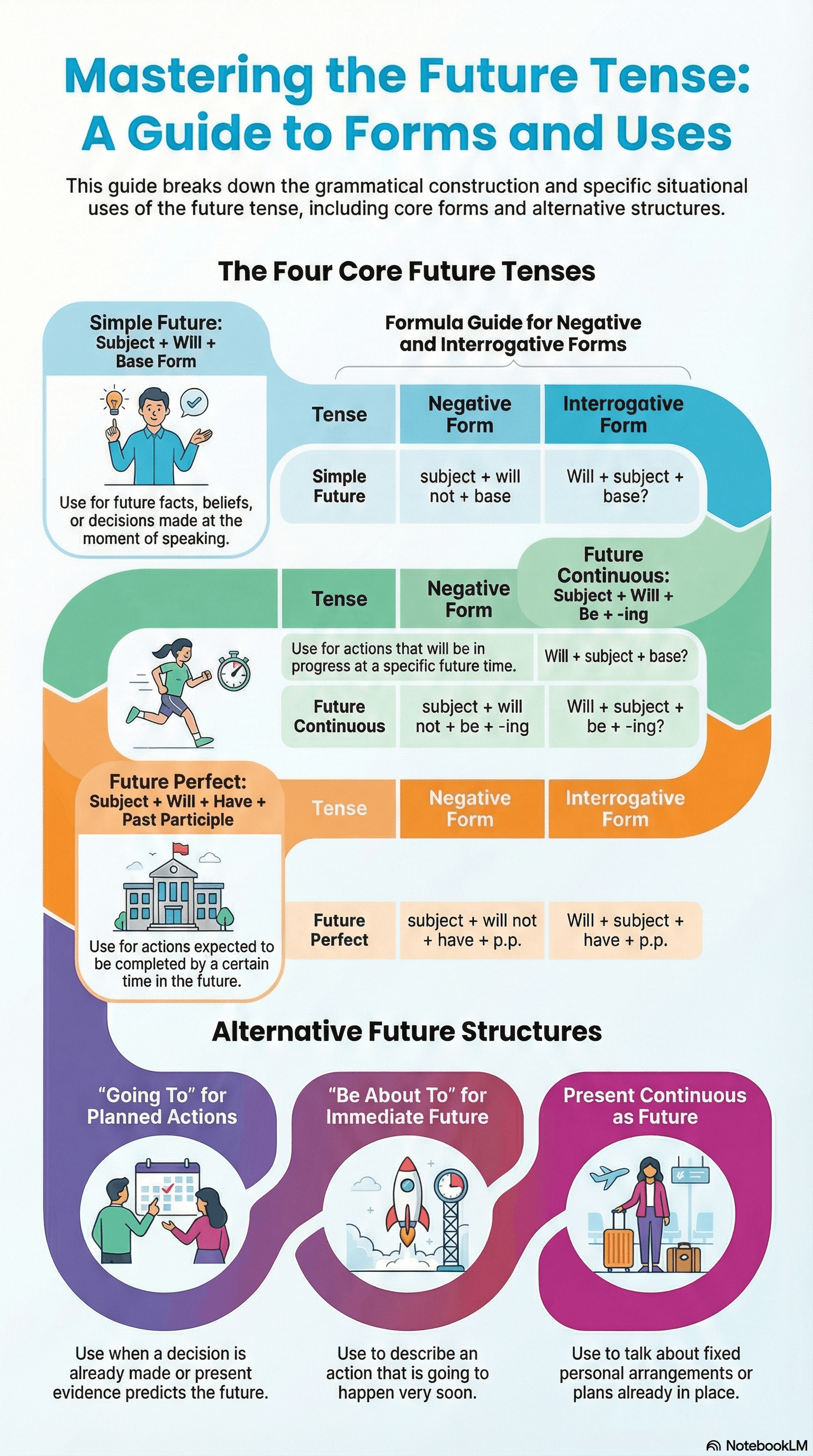
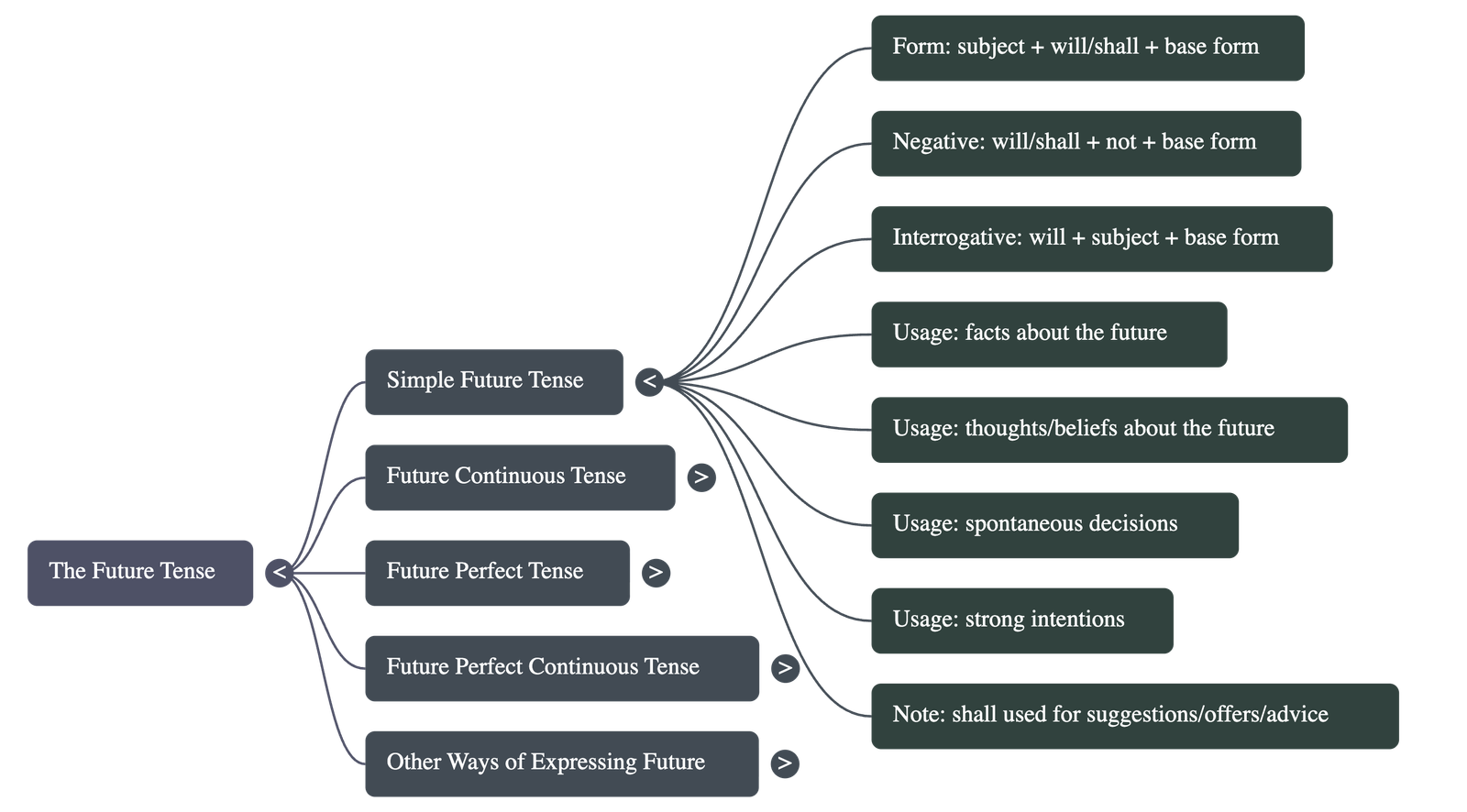
- Form: Subject + will/shall + base form of the verb
- Negative Form: Subject + will/shall + not + base form.
- Interrogative Form: Will/shall + subject + base form.
- Key Usage:
- To express facts about the future (e.g., age or calendar events).
- To discuss beliefs or predictions, often using words like think, believe, expect, or probably.
- To indicate spontaneous decisions made at the exact moment of speaking.
- To show strong intention, frequently using the contractions I'll or we'll.
- Note on "Shall": Usually reserved for first-person questions when making suggestions, offers, or seeking advice.
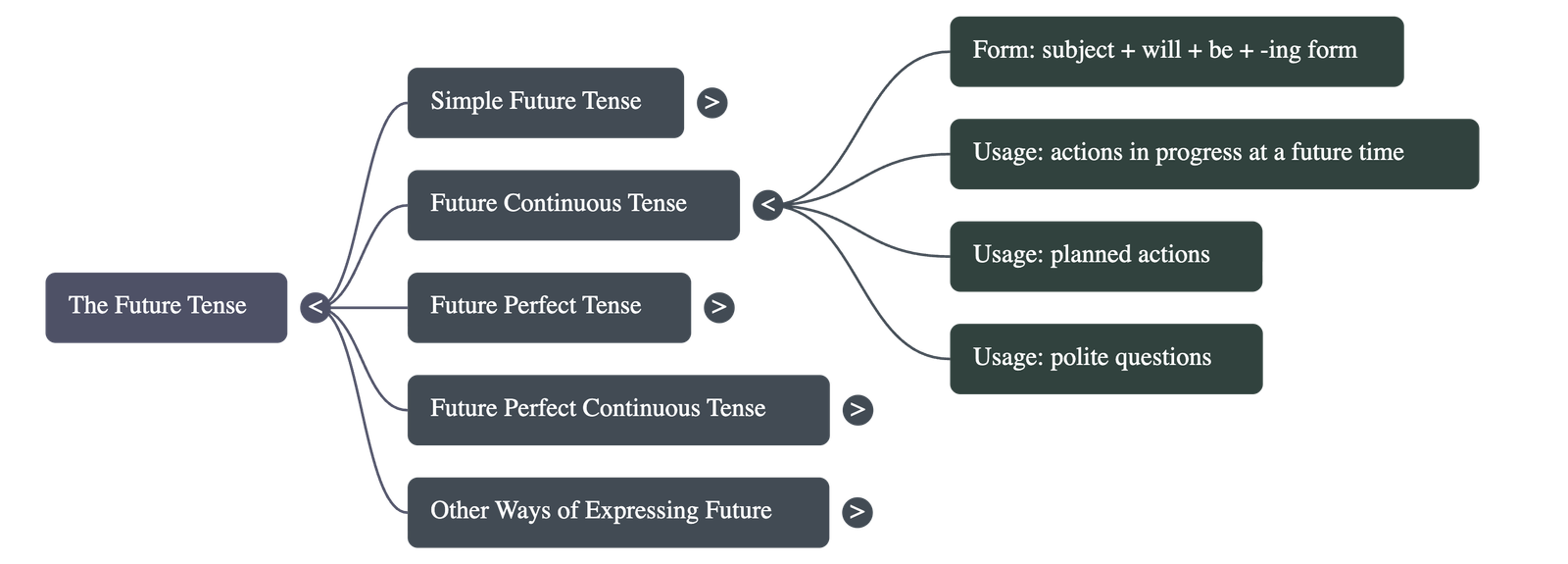
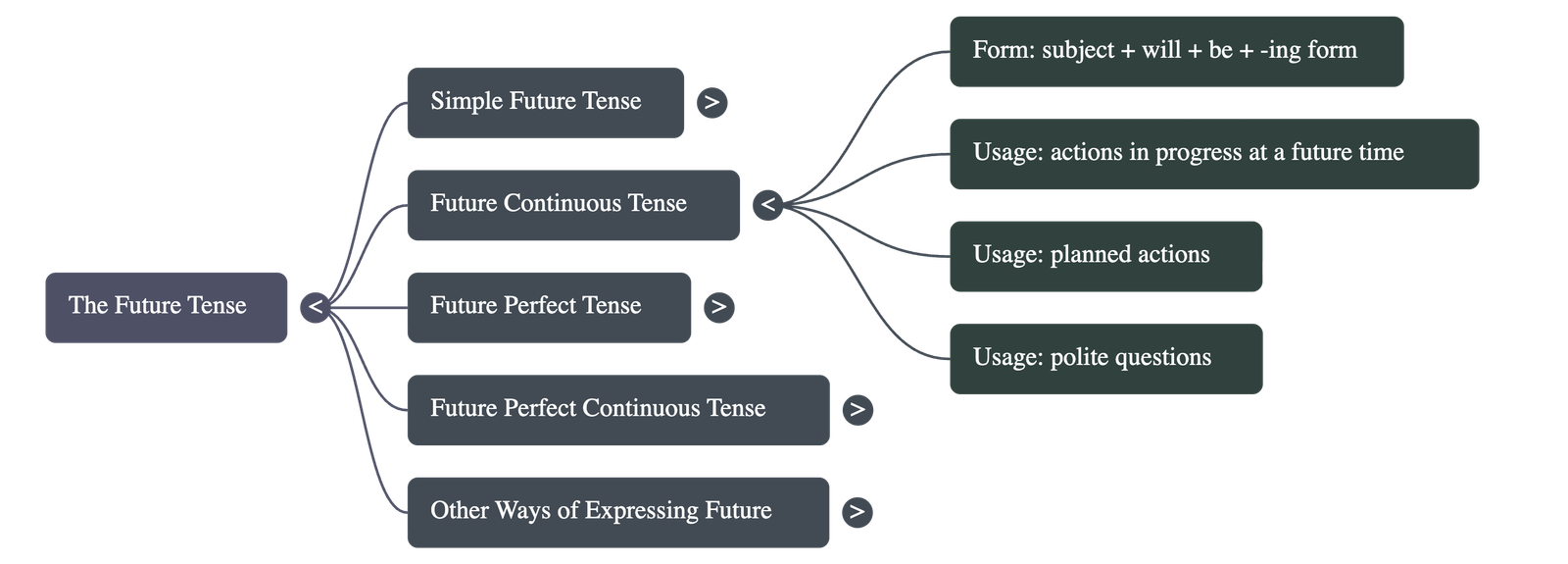
2. Future Continuous Tense
- Form: Subject + will + be + -ing form of the verb
- Key Usage:
- To describe actions that will be in progress at a specific point in the future.
- To talk about planned actions or events expected to happen.
- To ask polite questions about someone's future arrangements.
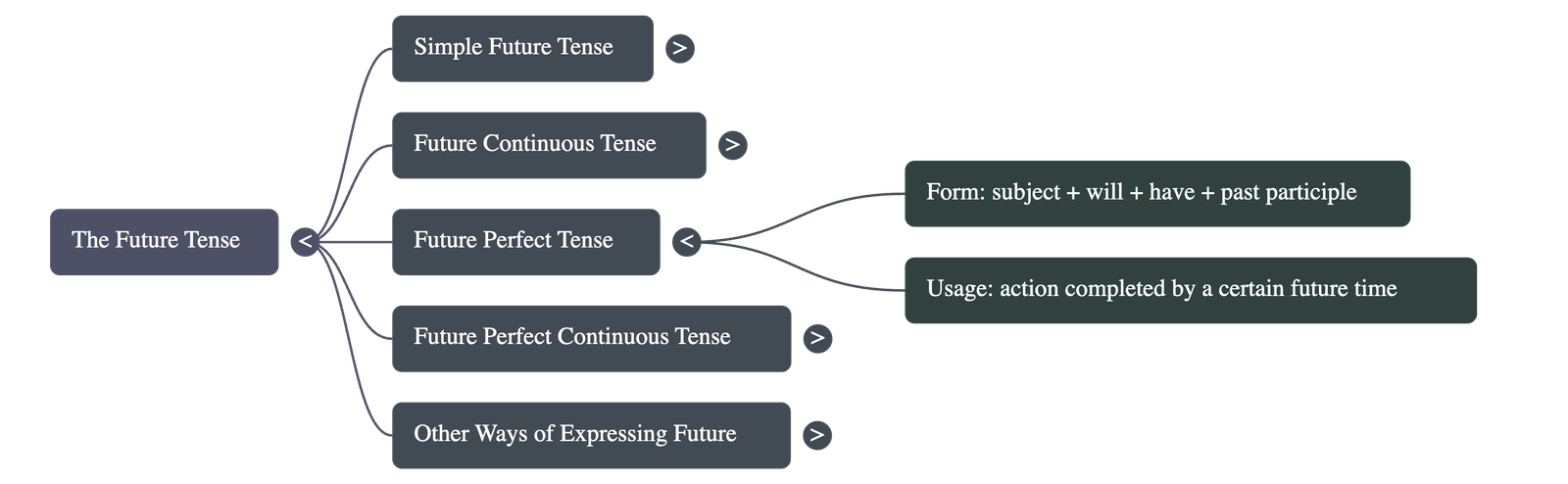
3. Future Perfect Tense
- Form: Subject + will + have + past participle
- Key Usage:
- Used to express an action that is expected to be completed by a specific time in the future (e.g., "by tomorrow" or "by the time you arrive").
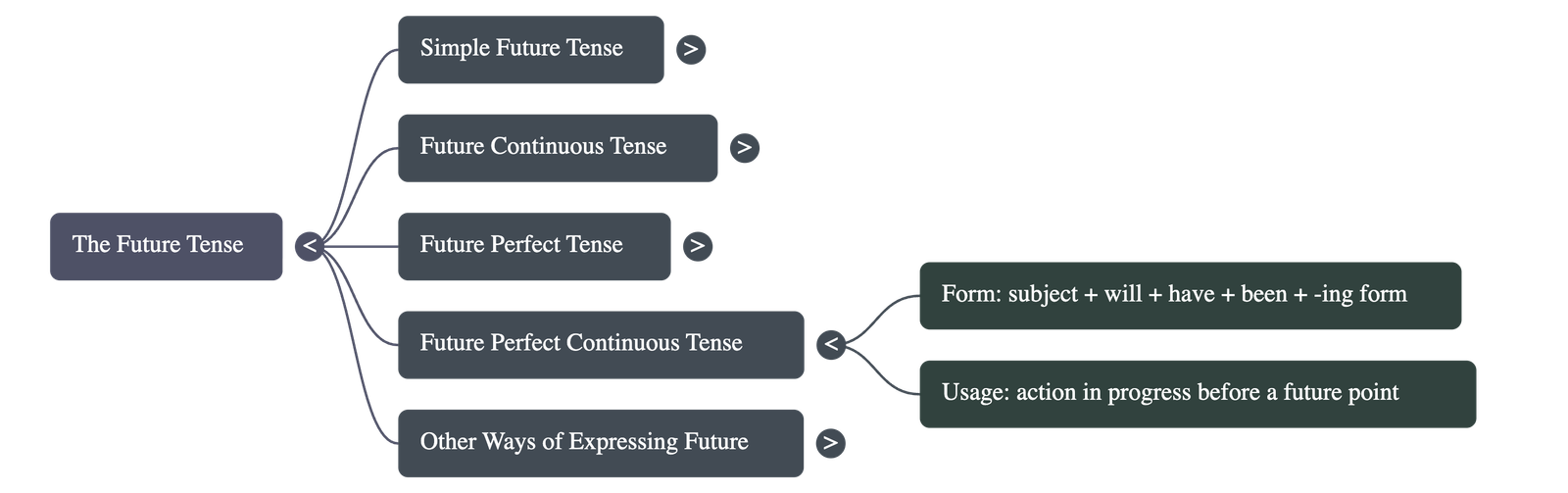
4. Future Perfect Continuous Tense
- Form: Subject + will + have + been + -ing form of the verb
- Key Usage:
- Used to talk about an action that will be ongoing up until a certain point in the future, typically emphasizing the duration of the action.
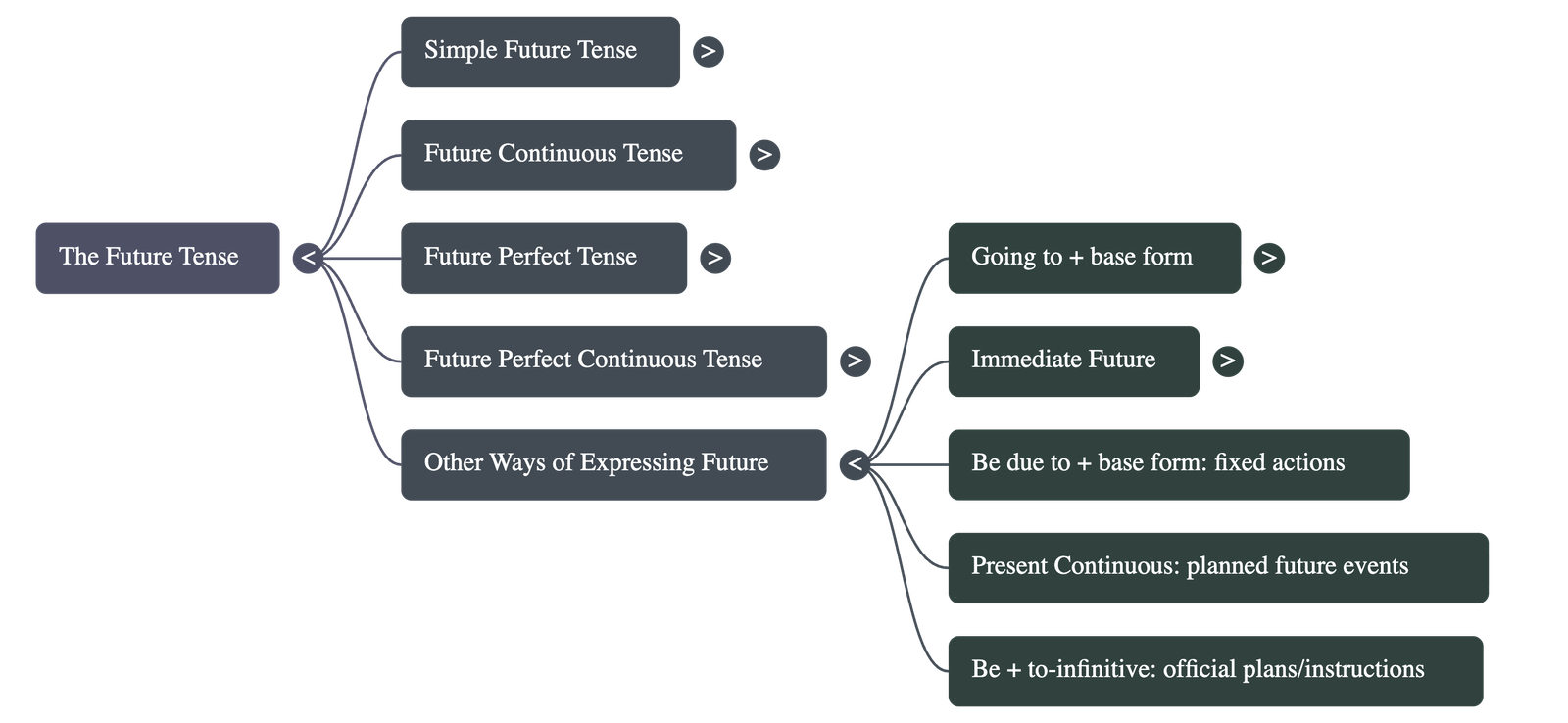
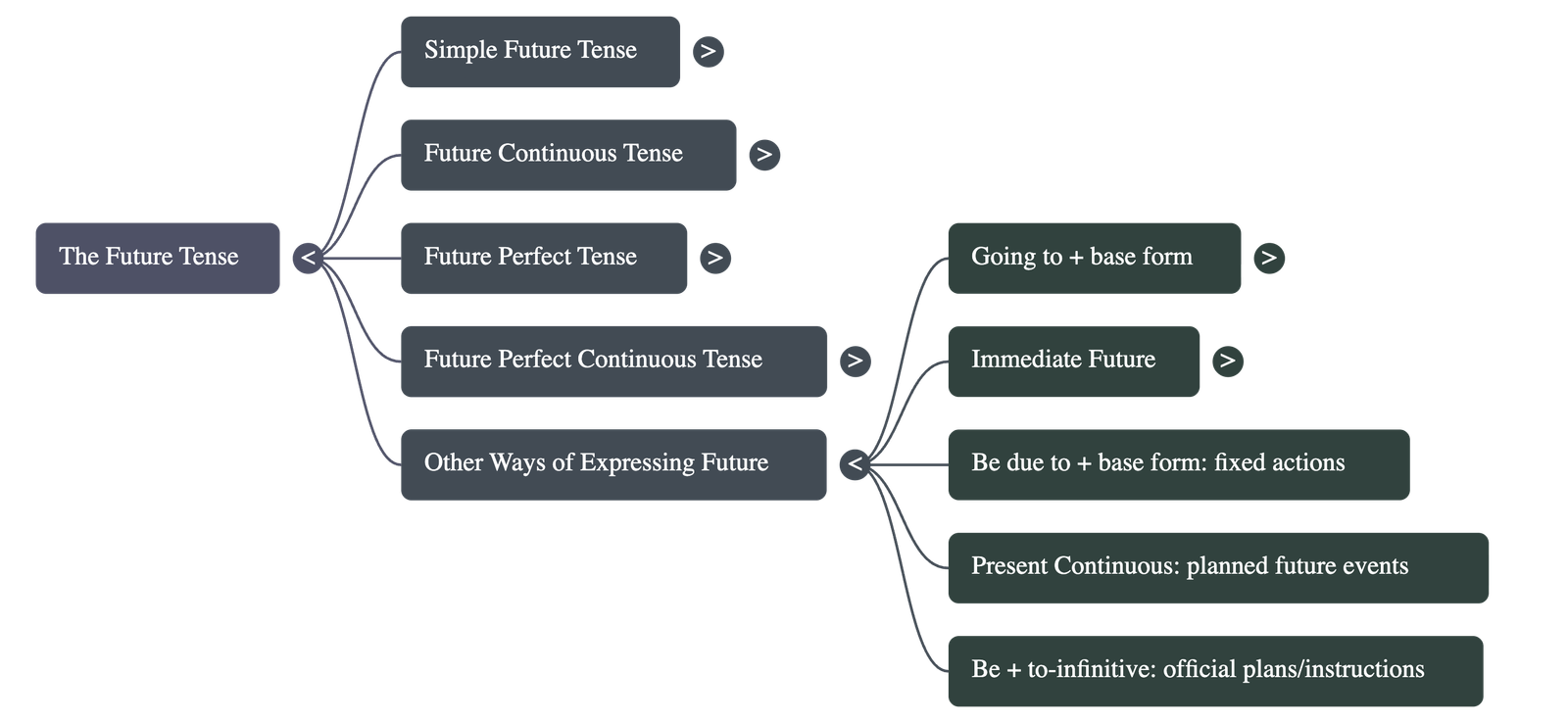
5. Alternative Ways to Express the Future
- Going to + base form: Used when a decision or plan has already been made, or when current evidence indicates something is about to happen (e.g., dark clouds indicating rain).
- Be about to / Be on the point of: Used to describe the immediate future.
- Be due to + base form: Used to describe fixed future actions or schedules.
- Present Continuous Tense: Used for definite future arrangements that have been planned (e.g., "Zeenat is getting engaged next month").
- Be + to-infinitive: Used for official arrangements, news reports, or formal instructions/orders.
Do checkout all questions & answers of this chapter.
Quick Navigation:
| | | | |
1 / 1
Quick Navigation:
| | | | |


Quick Navigation:
| | | | |