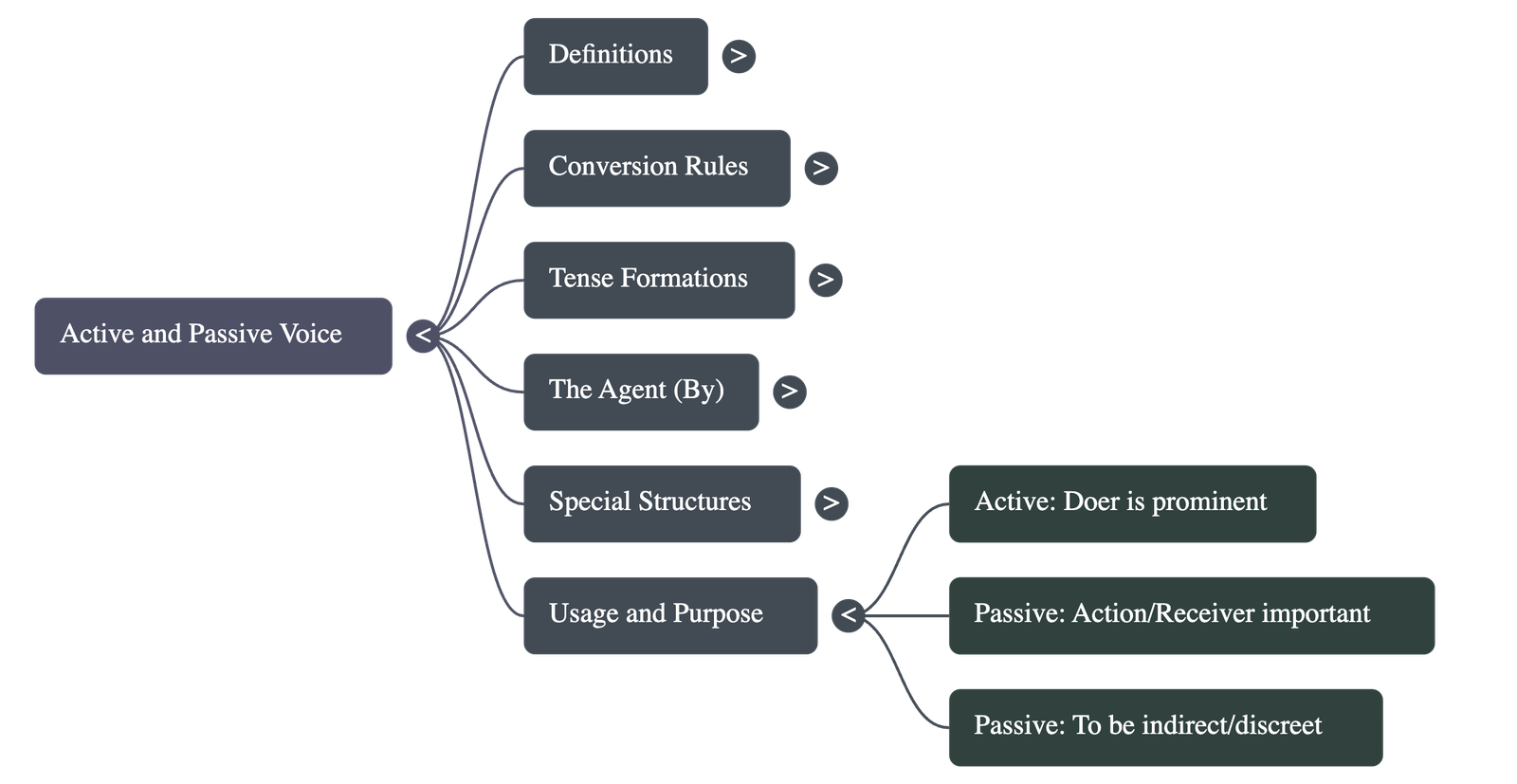
Quick Navigation:
| | | |
Active and Passive Voice
Core Concepts
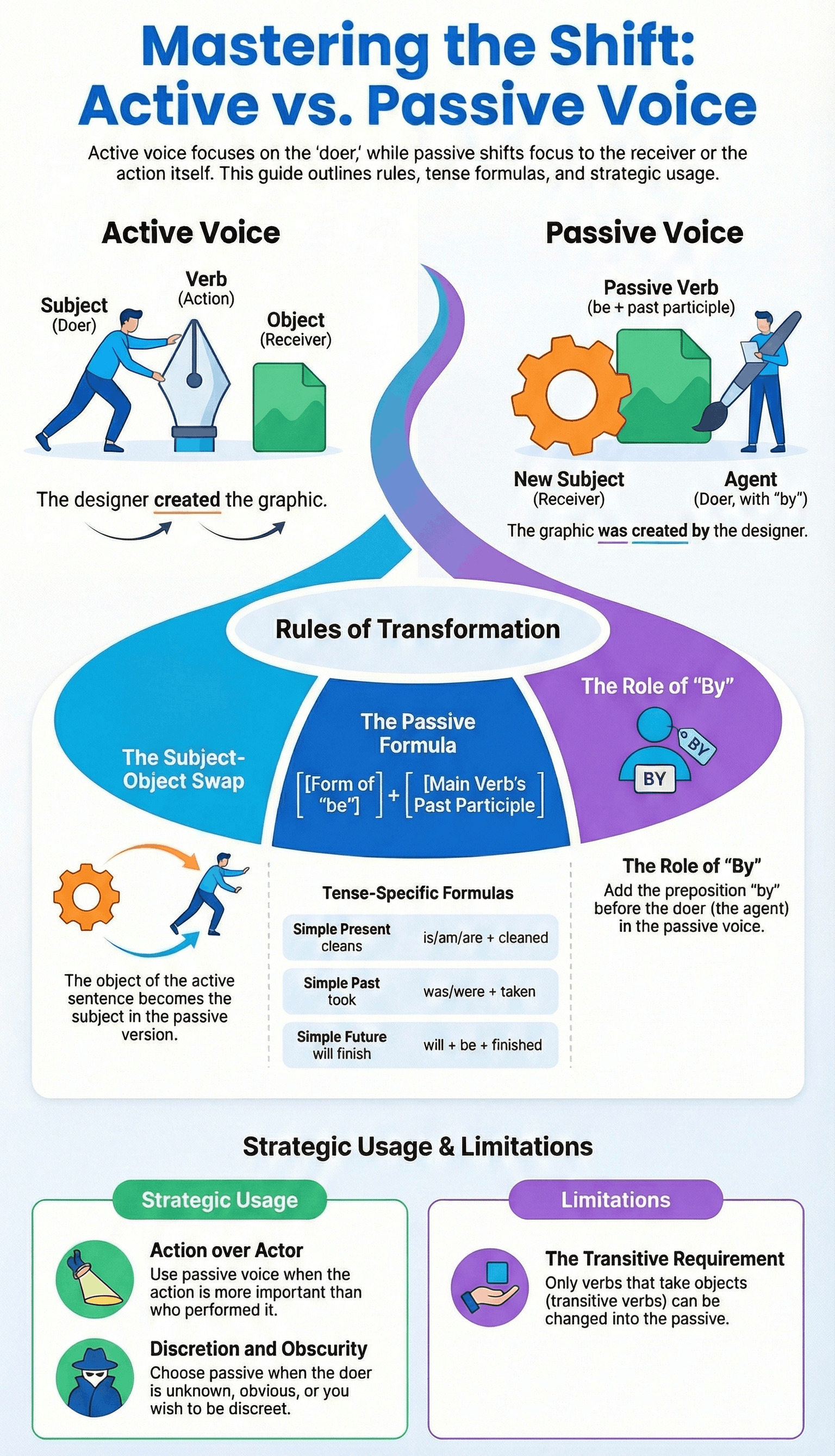
- Active Voice: The subject of the sentence is the "doer" who performs the action denoted by the verb.
- Passive Voice: The subject is the receiver of the action; the focus shifts from who did it to what was done.
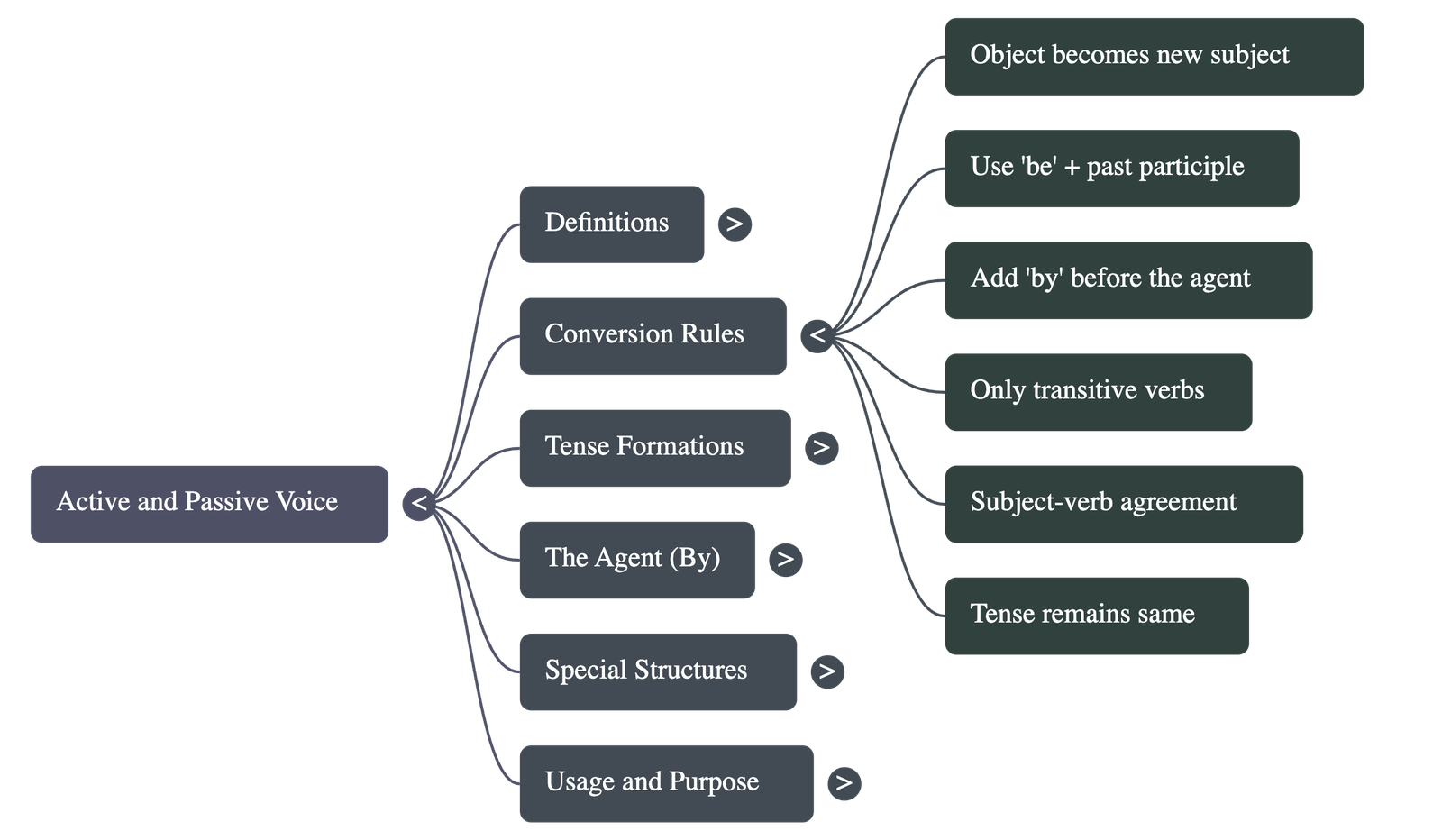
- The Fundamental Rule: To convert to passive, the object of the active sentence becomes the subject of the passive sentence.
Rules for Conversion
- Verb Structure: Passive verbs are always formed using a specific form of the verb "be" + the past participle of the main verb.
- The Agent: When the doer is mentioned in a passive sentence, they are called the "agent" and are introduced using the preposition "by".
- Transitive Requirement: Only transitive verbs (verbs that take an object) can be turned into passive voice. Intransitive verbs like "smile" or "sleep" cannot be passive.
- Grammatical Consistency: The verb must always agree with the new subject in number and person, while the original tense of the sentence must remain the same.
Tense and Modal Restrictions
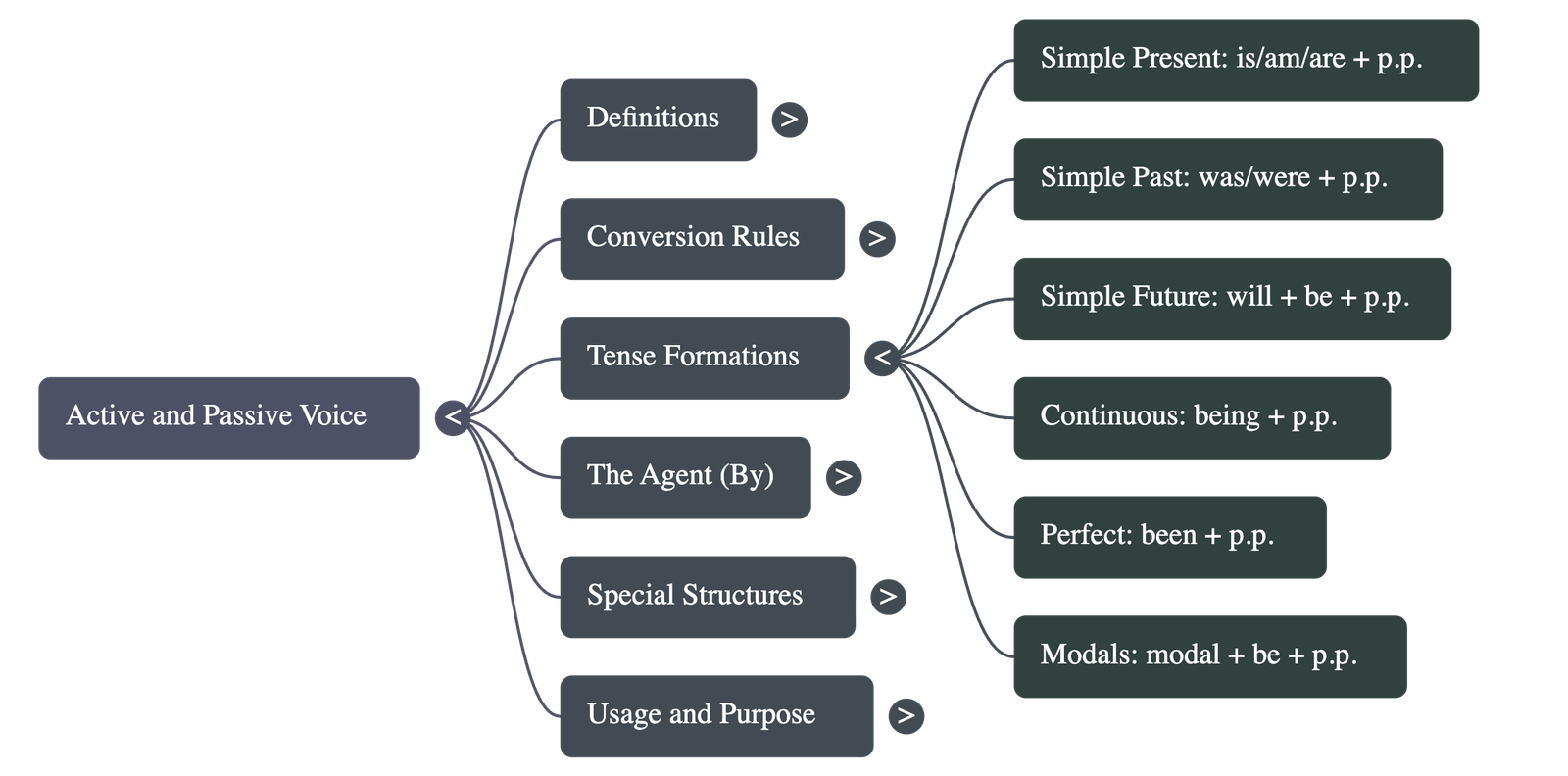
- Tense Exclusions: There are no passive forms for the future continuous tense or any of the perfect continuous tenses (present, past, or future).
- Modal Verbs: Passive forms for modals (can, may, might, etc.) use the formula: modal + be + past participle.
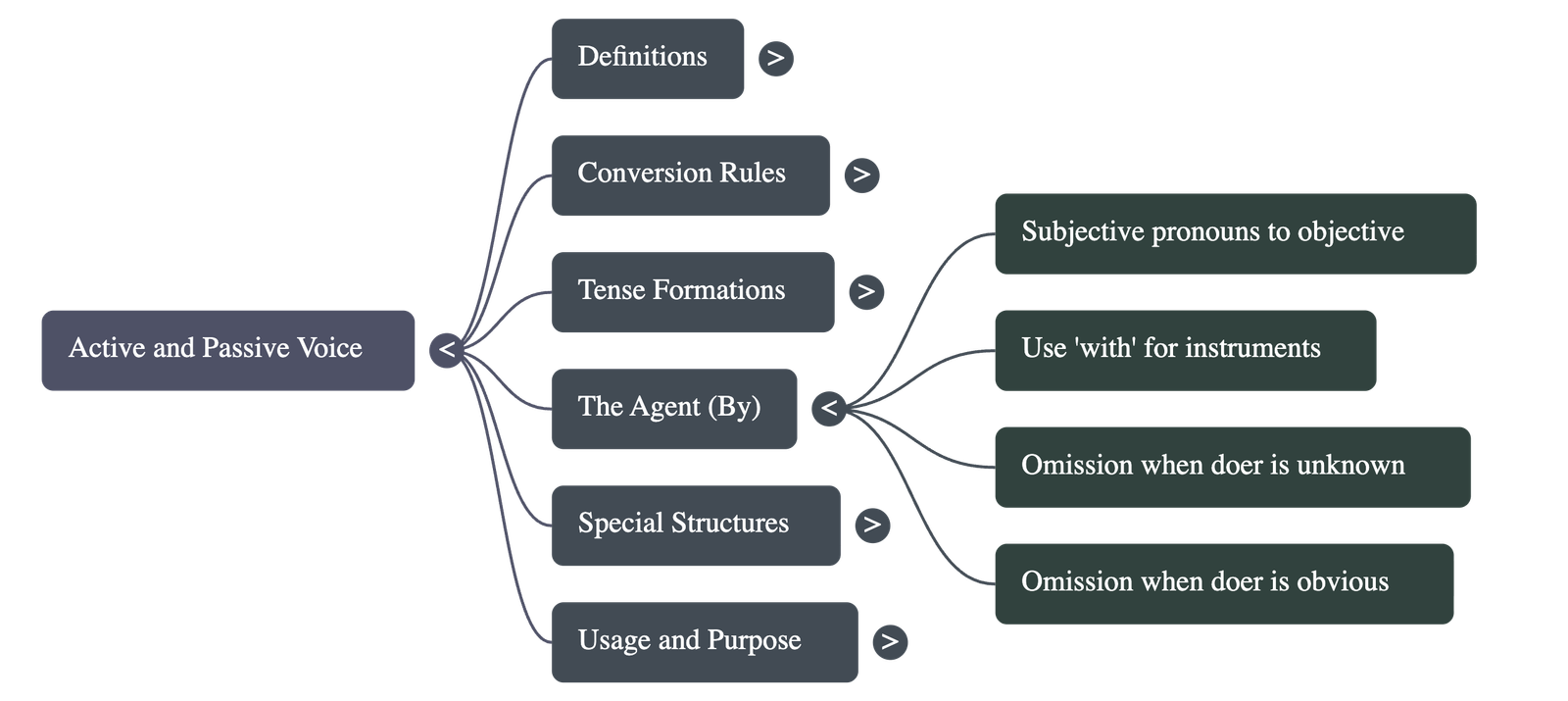
- Instruments: While "by" is used for the person doing the action, the preposition "with" is used to describe the instrument or tool used.
Strategic Use of Passive Voice
- When to Use: Use the passive voice when the action is more important than the doer, when you want to be less direct, or to avoid naming names.
- Omission of the Doer: The agent can be left out if the doer is unknown, obvious from context, or simply not important to the message.
- Pronoun Changes: Subject pronouns change to their objective forms when they become agents (e.g., "I" becomes "by me", "she" becomes "by her").
Special Sentence Structures
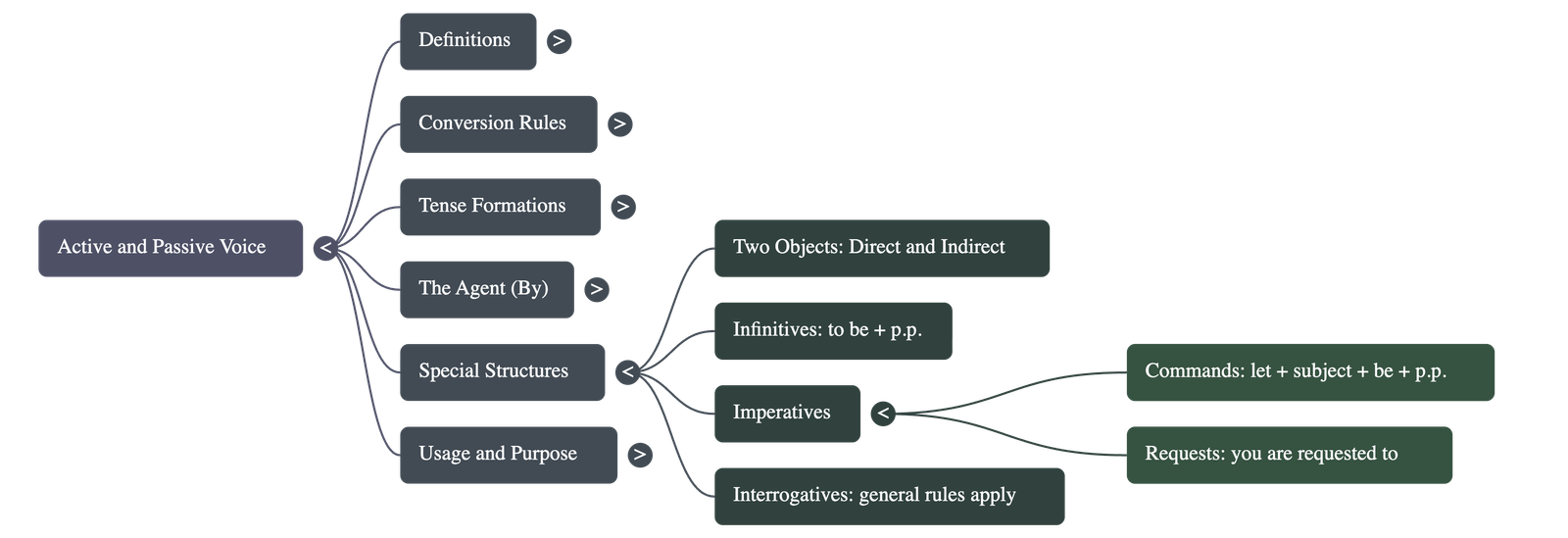
- Two Objects: If a verb has both a direct and indirect object, the sentence can be written in two different passive ways depending on which object is made the subject.
- Infinitives: Statements with a "to-infinitive" are converted using "to be + past participle".
- Imperative Sentences:
- For commands, use the structure: Let + subject + be + past participle.
- For requests or suggestions, use: You are requested/advised + to + verb.
- Interrogative Sentences: Questions follow the same basic transformation rules, maintaining the question format while swapping the roles of subject and object.
Quick Tip: Always identify the object first. If there is no object, the sentence likely cannot be put into the passive voice!
Do checkout all questions & answers of this chapter.
Quick Navigation:
| | | |
1 / 1
Quick Navigation:
| | | |