Q&A & Flashcards Available

Access questions, answers and flashcards for this chapter

View Q&A
Quick Navigation:
| | | | |
Infographic
Quick Navigation:
| | | | |

Chapter Summary: The Past Tense

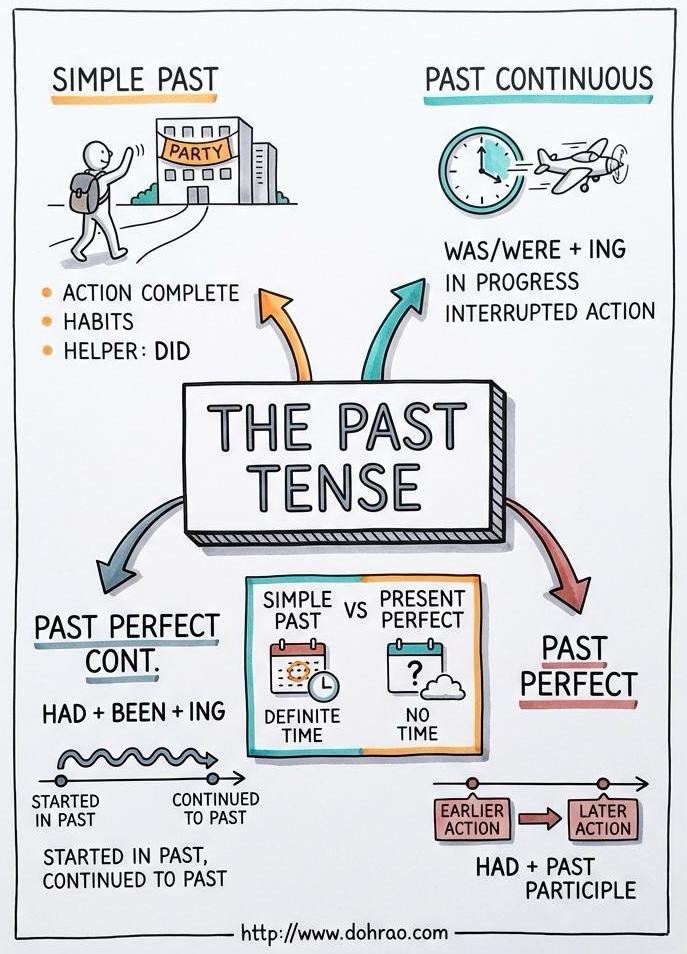
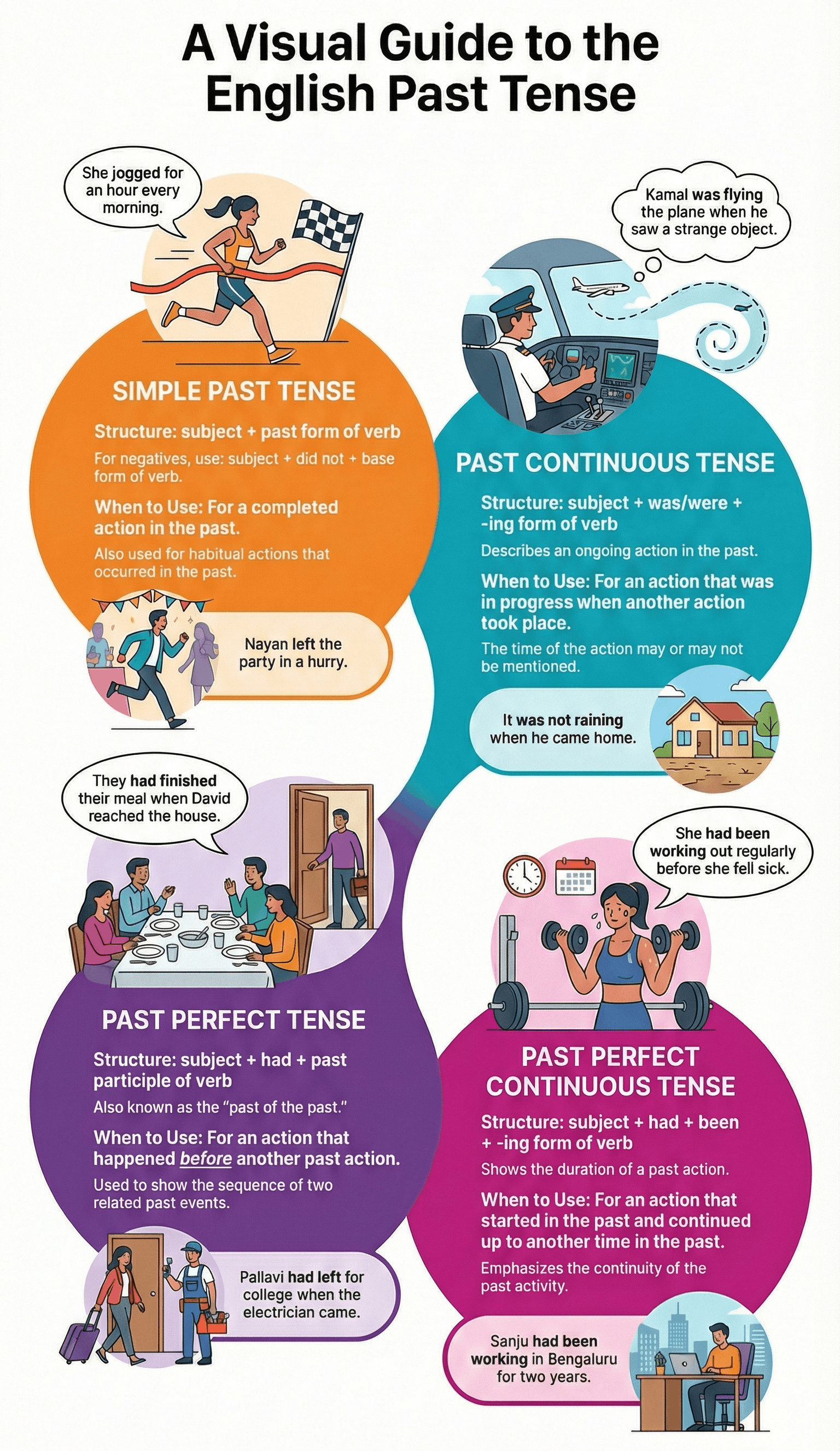
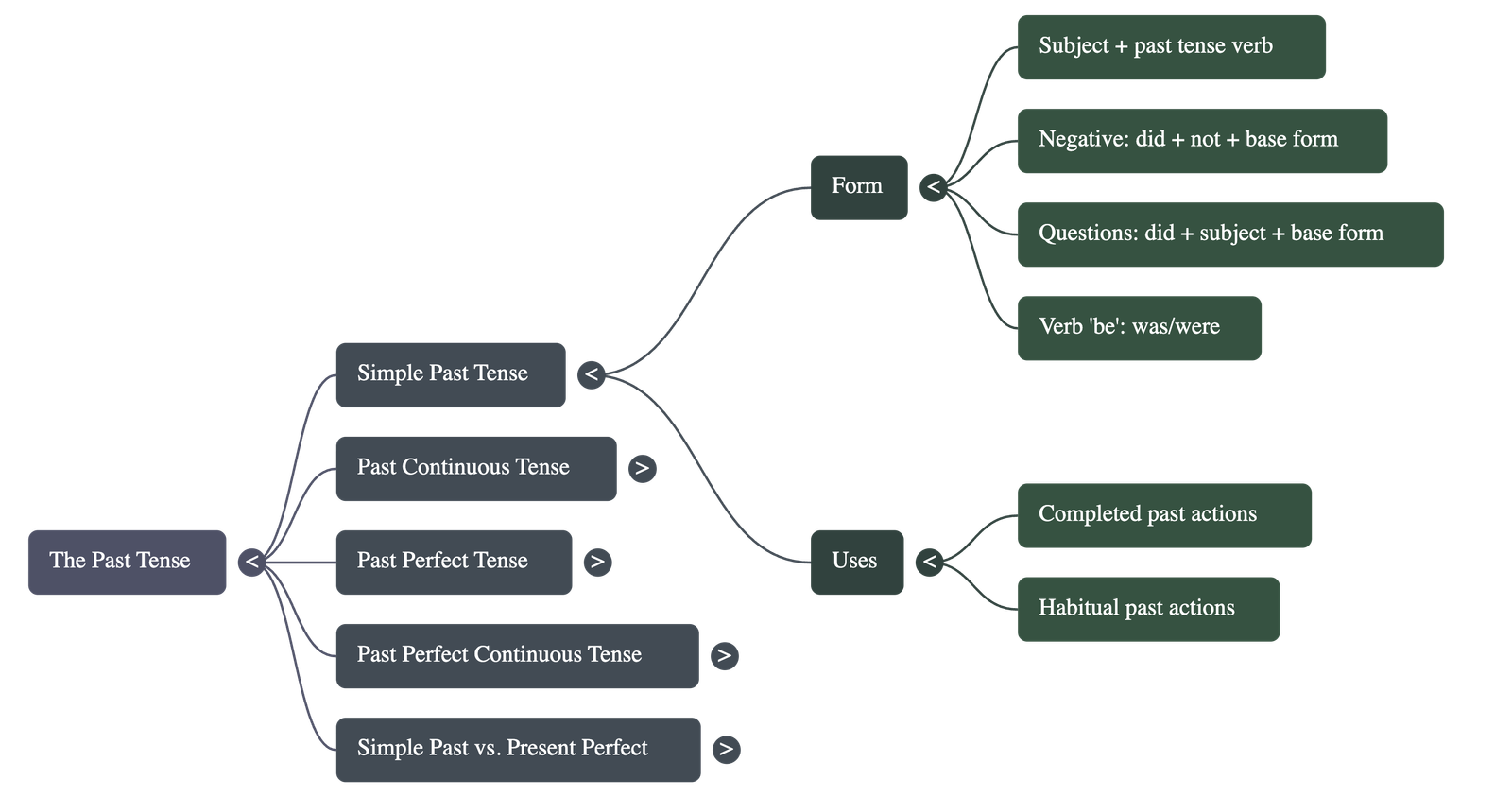
1. Simple Past Tense

The simple past is used to describe completed actions or habitual behaviours in the past.

  • Forms:
    • Positive: Subject + past tense form of verb (e.g., Nayan left the party).
    • Negative: Subject + did + not + base form of verb (e.g., They did not go).
    • Questions: Did + subject + base form of verb? (e.g., Did you meet Sudhir?).
  • Key Uses:
    • Actions finished at a specific time in the past.
    • Habitual past actions (e.g., She jogged every morning).
2. Past Continuous Tense

This tense highlights the duration or progress of an action at a specific point in the past.

  • Forms:
    • Positive: Subject + was/were + -ing form (e.g., Kamal was flying the plane).
    • Negative: Subject + was/were + not + -ing form (e.g., It was not raining).
    • Questions: Was/were + subject + -ing form? (e.g., Was Geeta talking?).
  • Key Uses:
    • To show an action was ongoing at a certain point.
    • To describe an action in progress when another event interrupted it (using simple past for the interruption).
    • Persistent or annoying past habits (often used with the adverb 'always').

3. Past Perfect Tense

The past perfect is used to clarify the sequence of two related events in the past.

  • Forms:
    • Positive: Subject + had + past participle (e.g., They had finished their meal).
    • Negative: Subject + had + not + past participle.
    • Questions: Had + subject + past participle?.
  • Key Usage:
    • When two actions happened in the past, the Past Perfect is used for the earlier action, and the Simple Past is used for the later action.

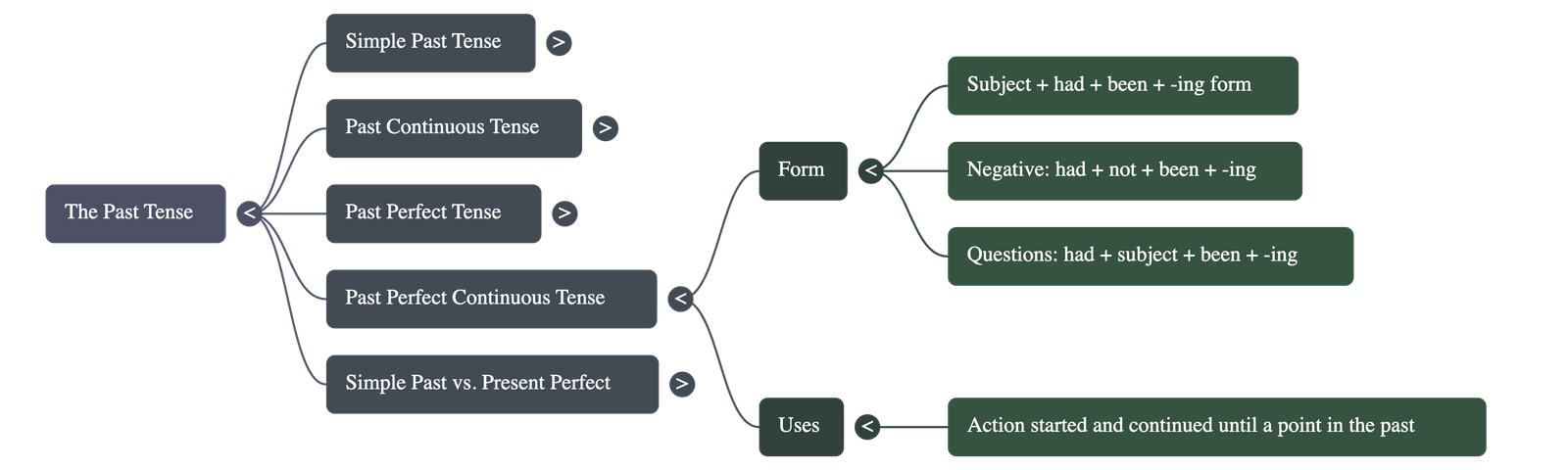
4. Past Perfect Continuous Tense

This tense describes an action that began in the past and continued up until another point in the past.

  • Forms:
    • Positive: Subject + had + been + -ing form (e.g., She had been working).
    • Negative: Subject + had + not + been + -ing form.
    • Questions: Had + subject + been + -ing form?.
  • Key Usage:
    • Focuses on the ongoing nature of an action that happened before a specific past timeframe.

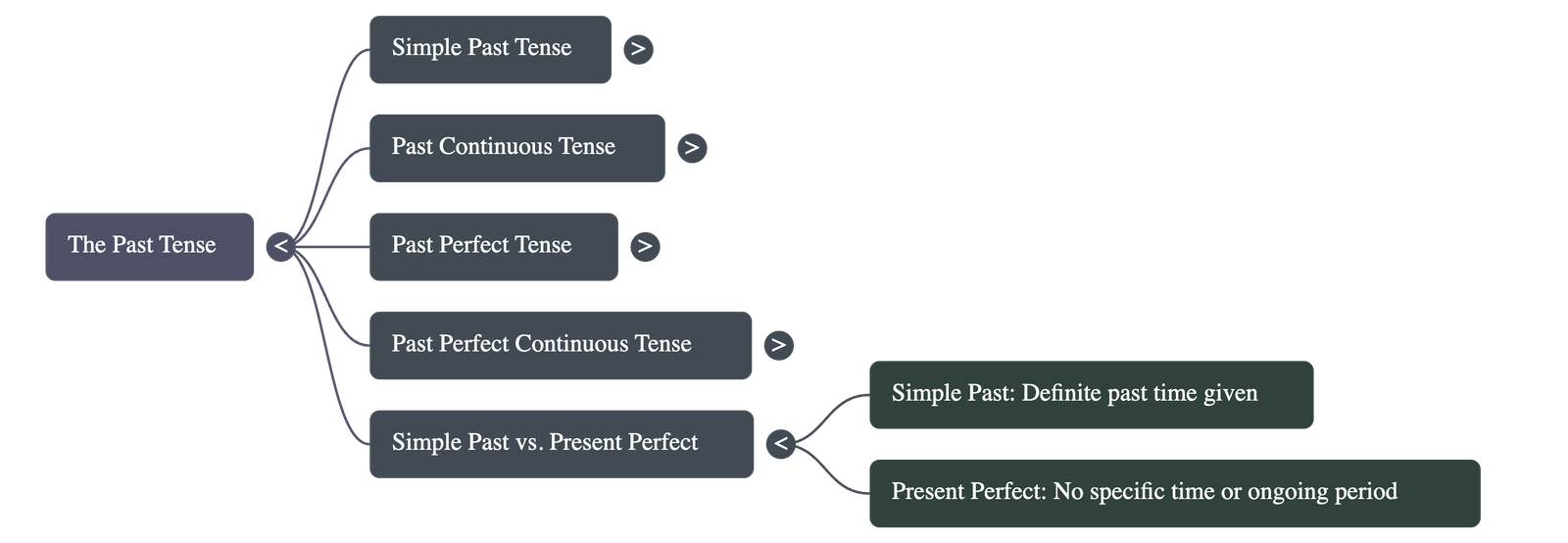
5. Distinguishing Tenses

Choosing between Simple Past and Present Perfect often depends on time references:

  • Use Simple Past when a definite past time is mentioned (e.g., "last week" or "last year").
  • Use Present Perfect when no specific time is mentioned or when the period of time being discussed is still ongoing (e.g., "this year").
Quick Navigation:
| | | | |
1 / 1
Quick Navigation:
| | | | |
Quick Navigation:
| | | | |
Quick Navigation:
| | | | |