

Quick Navigation:
| | | | |
Quick Navigation:
| | | | |
Introduction to Infinitives
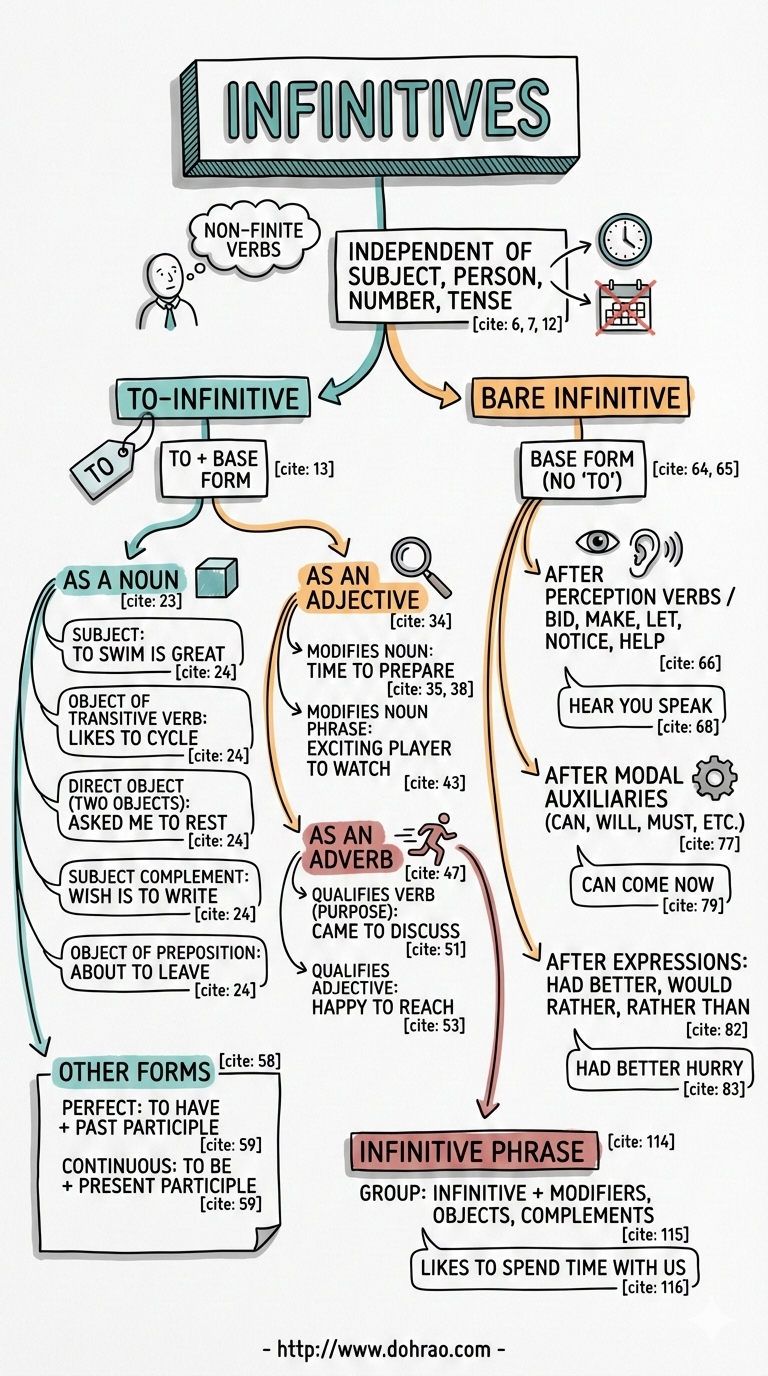
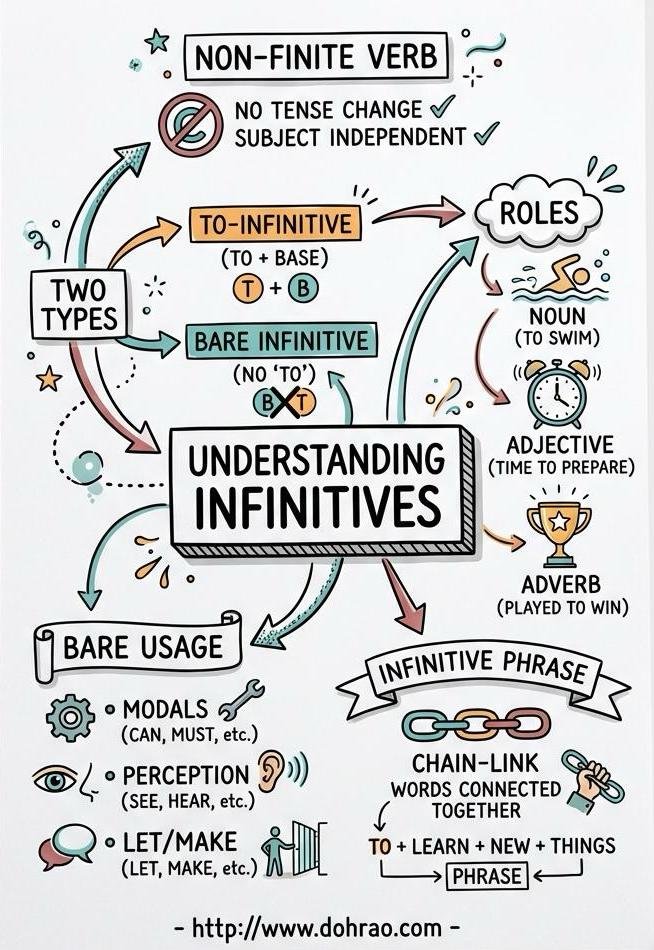
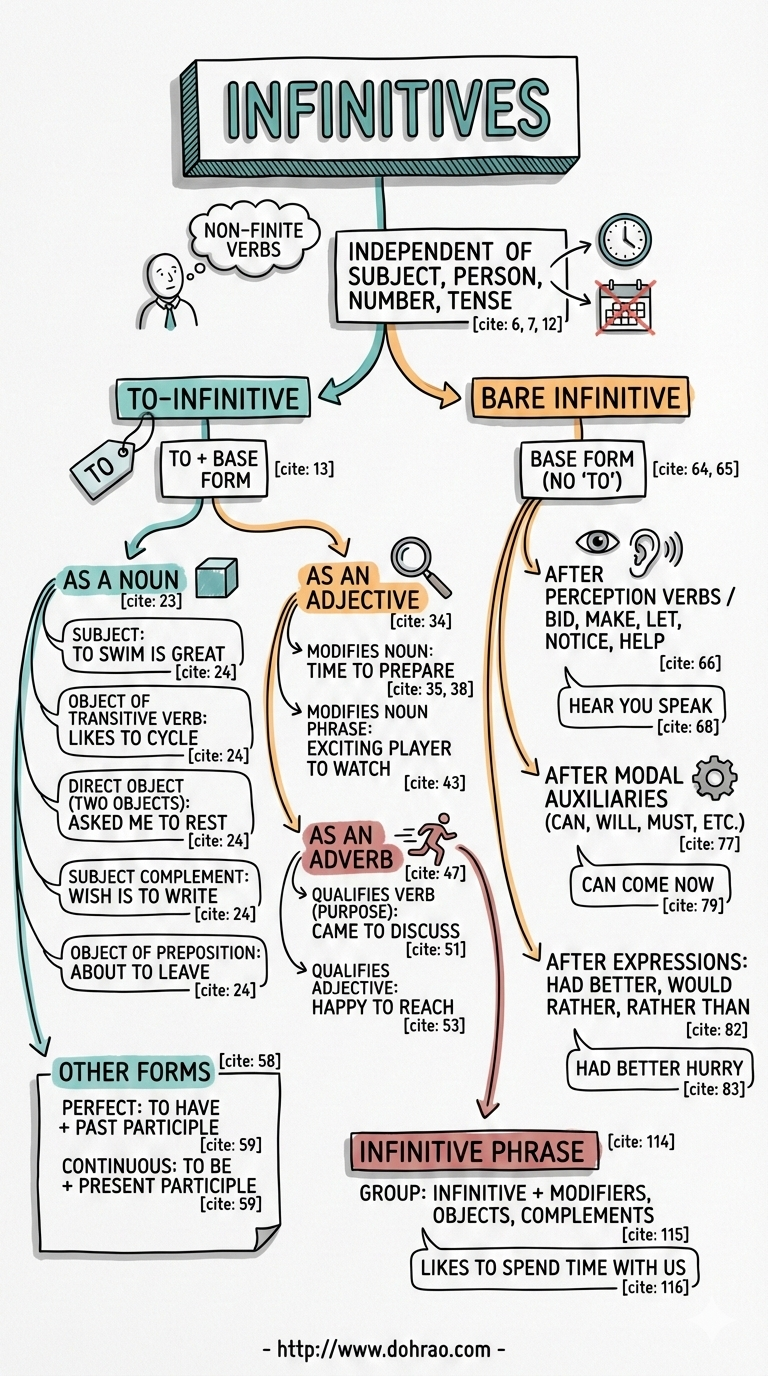
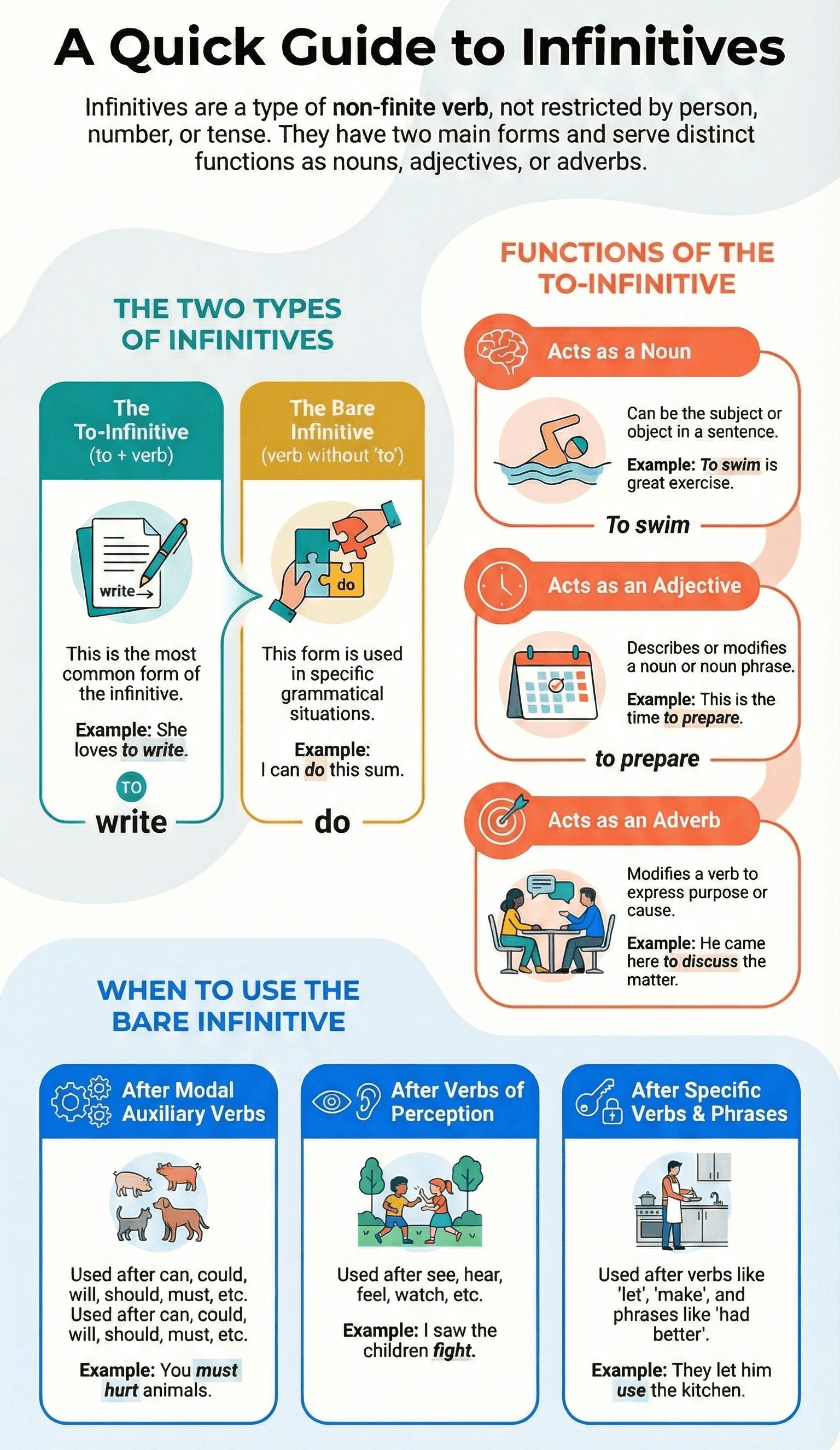
- Non-Finite Nature: Infinitives are non-finite verbs, meaning they are independent of the subject and do not change based on person, number, or tense.
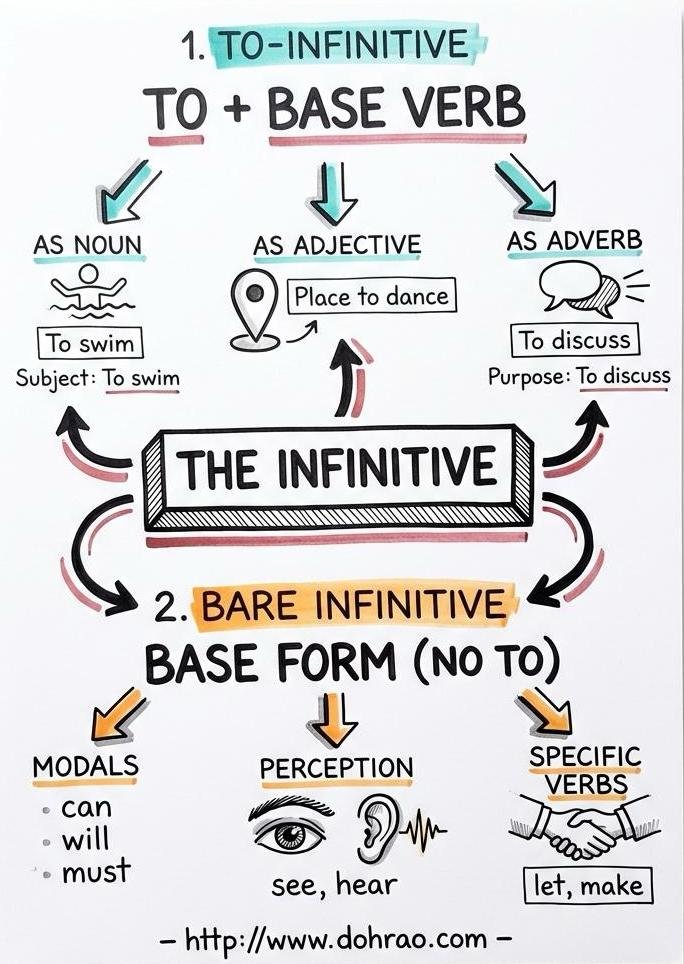
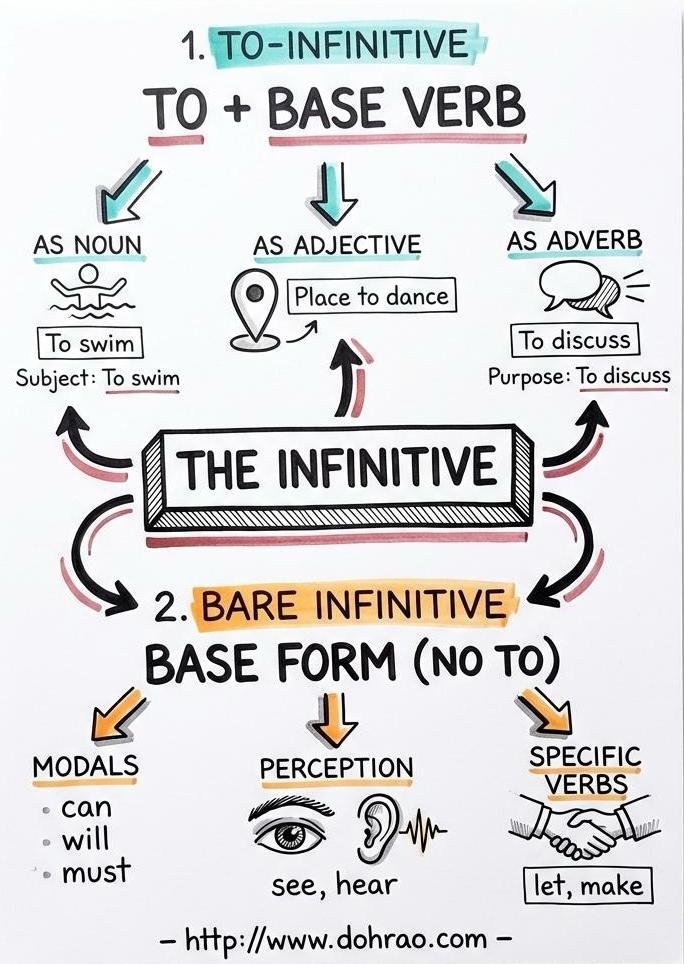
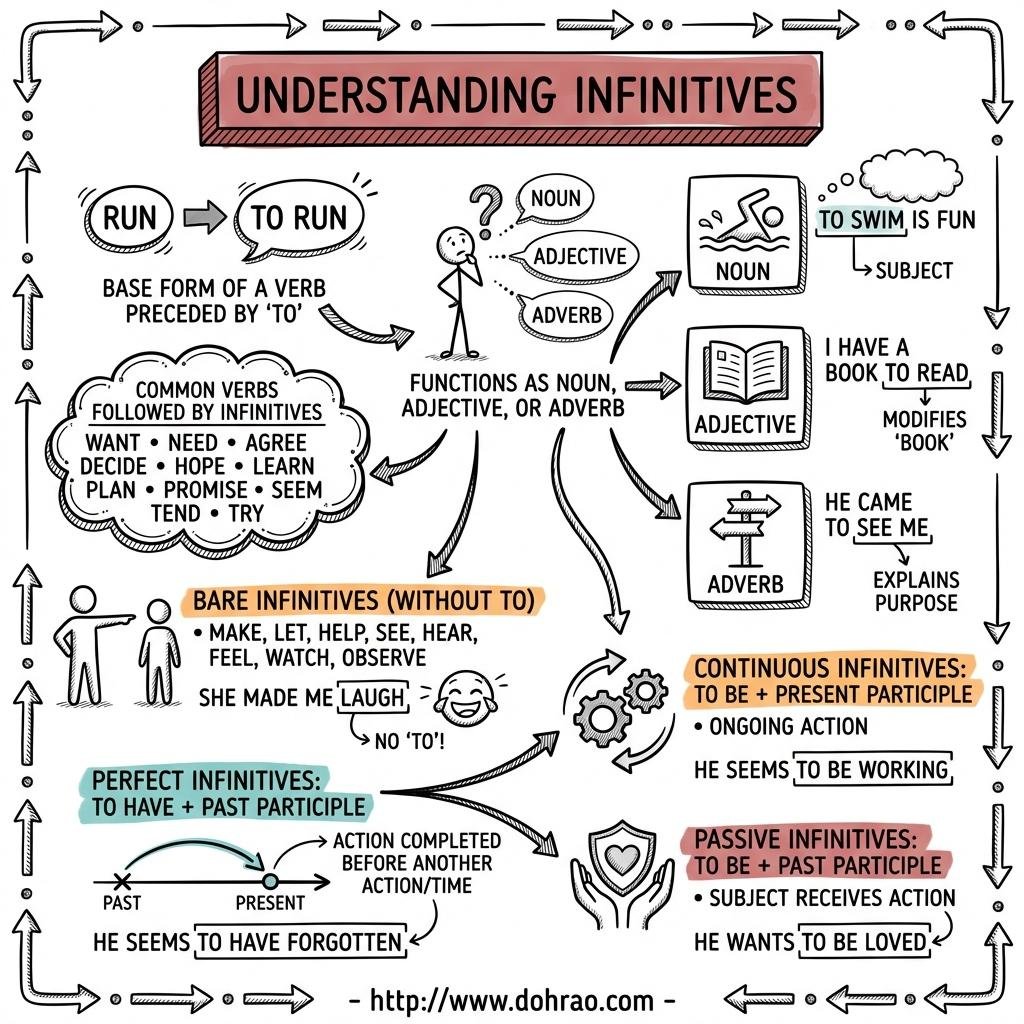
- Two Primary Types: The chapter categorises infinitives into the to-infinitive (to + base verb) and the bare infinitive (base verb without 'to').
Functions of the To-Infinitive
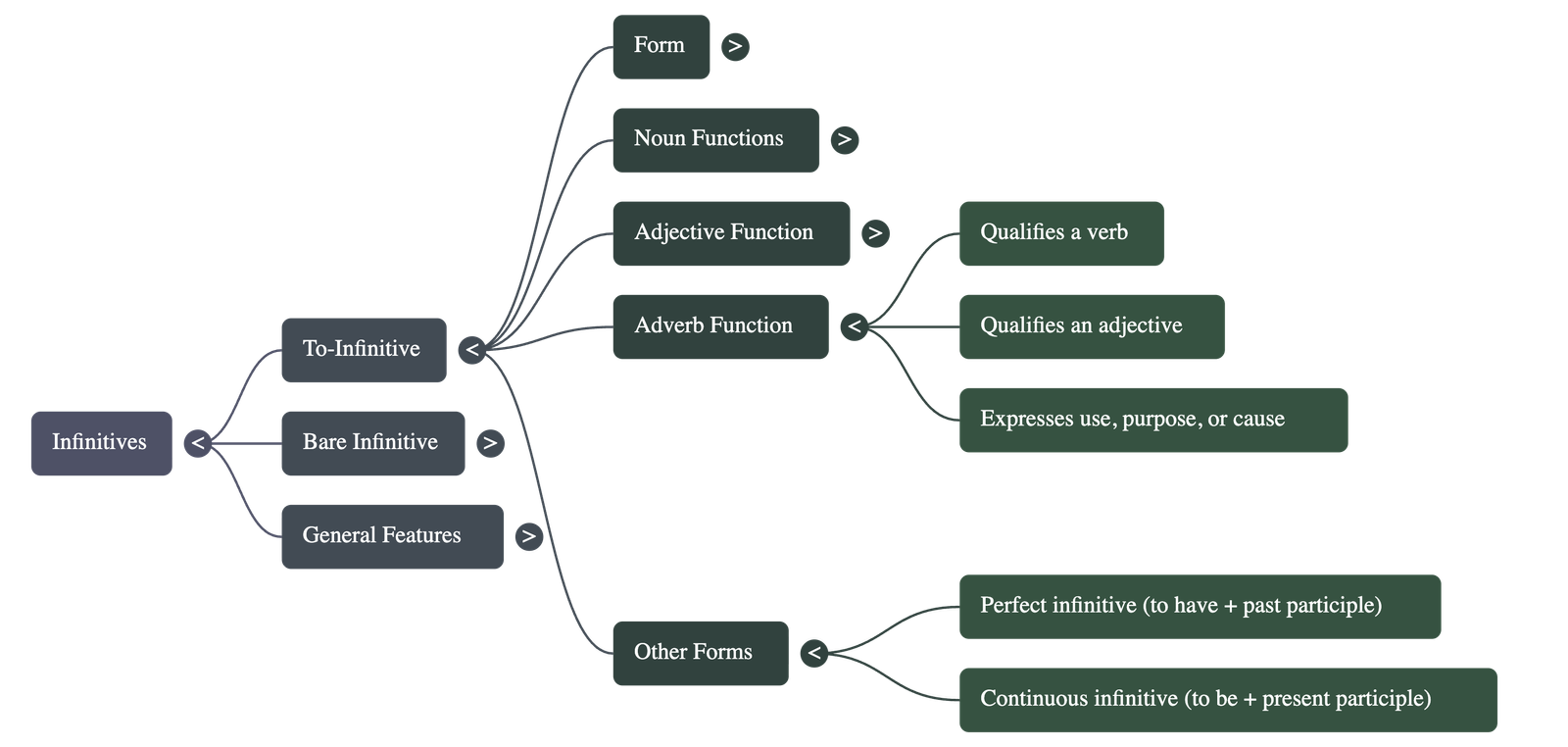
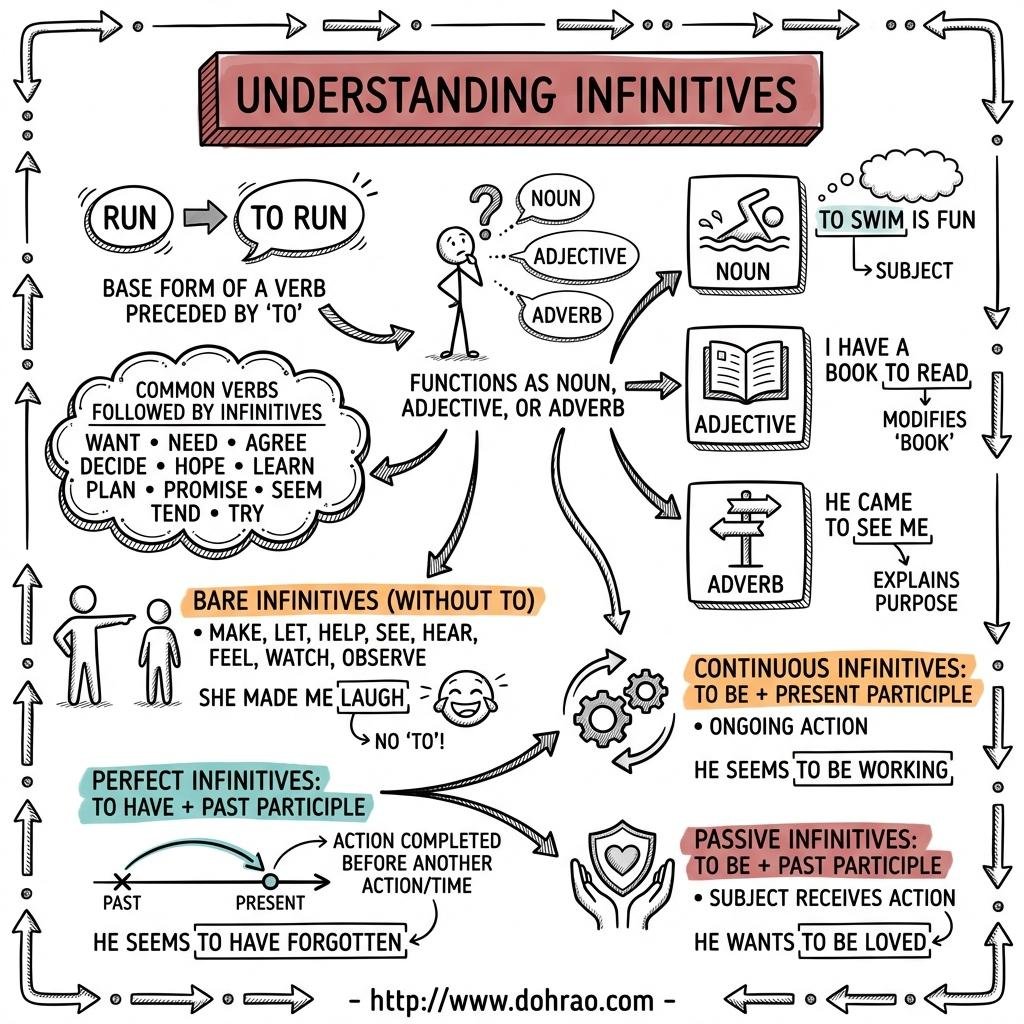
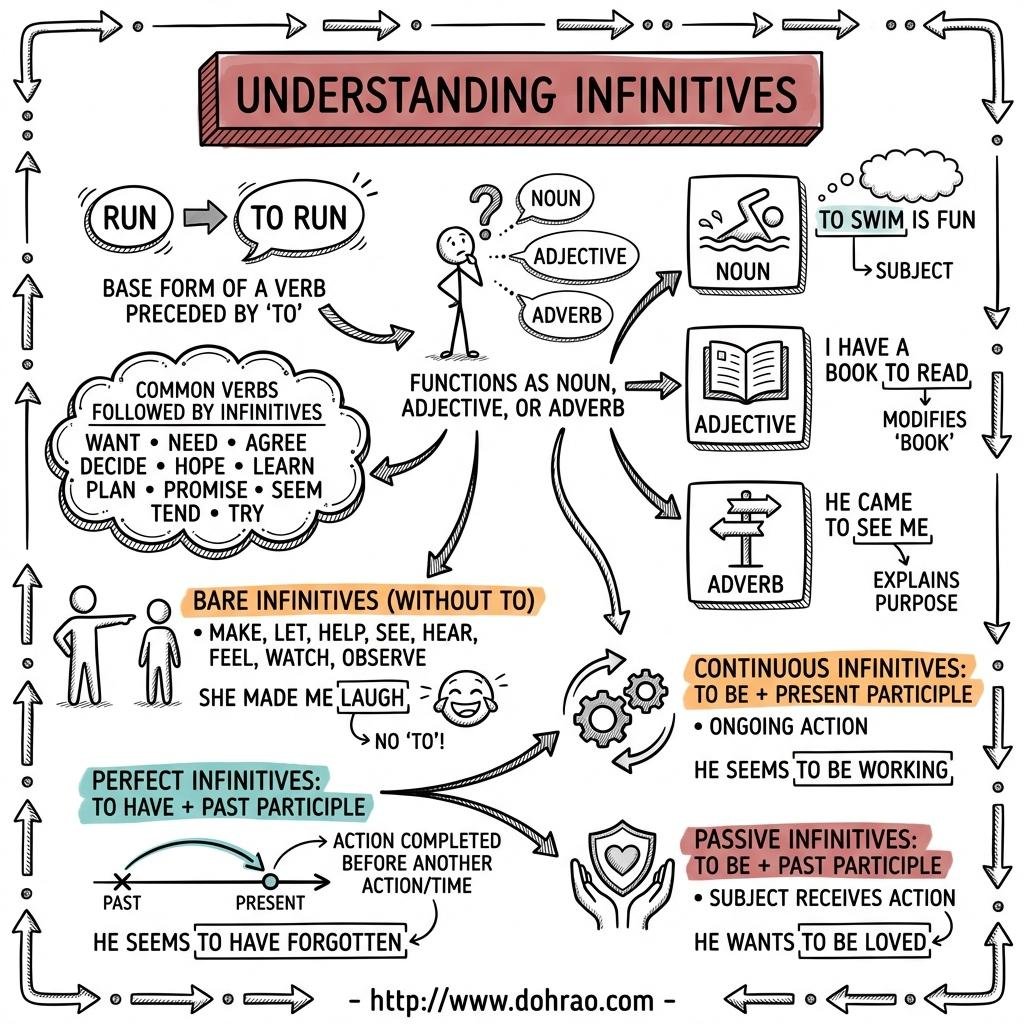
- Noun Functions: It can act as the subject of a sentence, the object of a transitive verb, the direct object of a verb with two objects, a subject complement, or the object of a preposition.
- Adjectival Function: It is used to qualify a noun or noun phrase, providing more specific information (e.g., the time to prepare).
- Adverbial Function: It can qualify a verb to express purpose, use, or cause, or qualify an adjective to describe a state of being (e.g., happy to reach home).
Advanced Forms of To-Infinitives
- Perfect Infinitive: Formed using to have + past participle (e.g., to have taken), often used to refer to past events.
- Continuous Infinitive: Formed using to be + present participle (e.g., to be swimming), indicating an ongoing action.
The Bare Infinitive
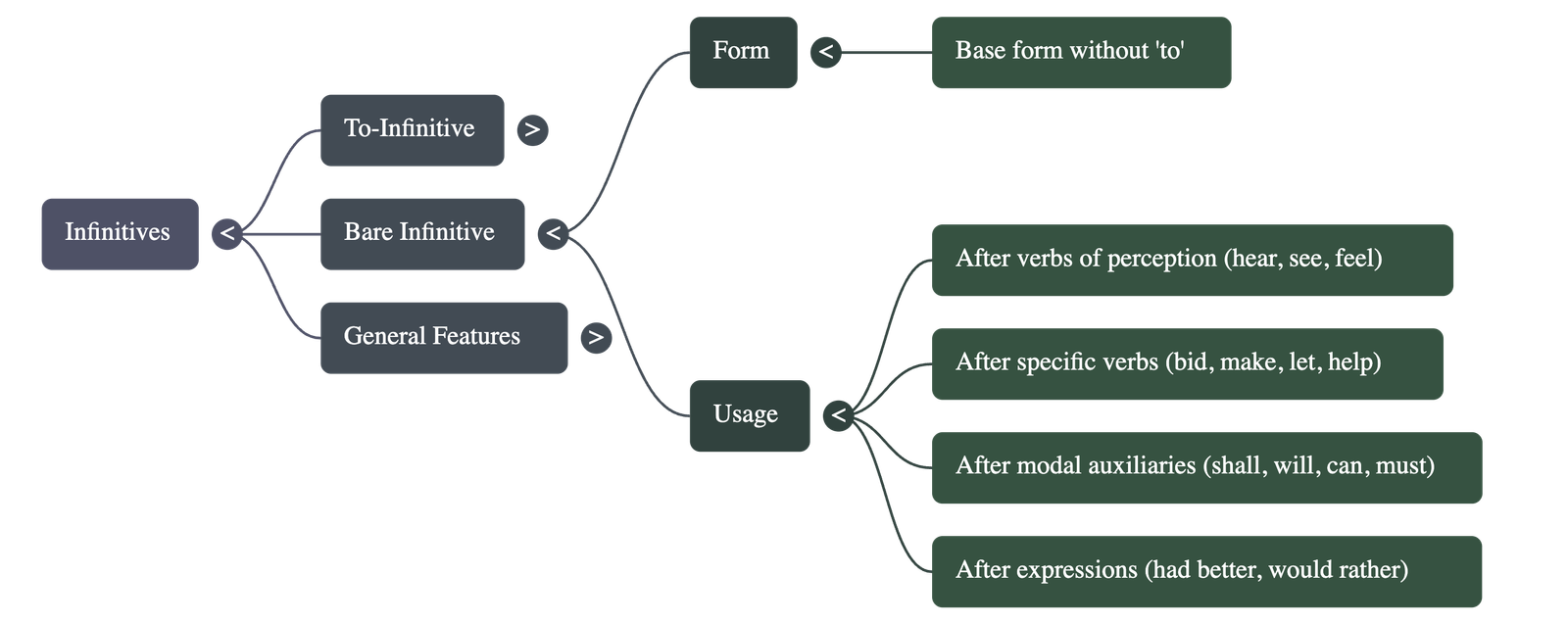
- Verbs of Perception: Used after verbs like hear, see, feel, and watch. While present participles can also follow these verbs, they cannot be used with the verb 'let'.
- Specific Verbs: It follows verbs such as bid, make, let, notice, and help.
- Modal Auxiliaries: This is the most common use, following words like shall, will, can, may, should, would, could, might, and must.
- Special Expressions: It is required after phrases like 'had better', 'would rather', and 'rather than'.
Infinitive Phrases
- Composition: An infinitive phrase consists of an infinitive plus its modifiers, objects, or complements.
- Versatility: These phrases function as a single unit acting as a noun, adjective, or adverb within a sentence.
Do checkout all questions & answers of this chapter.
Quick Navigation:
| | | | |
1 / 1
Quick Navigation:
| | | | |