Quick Navigation:
| | | |
The Flower
A specialized shoot in which the leaves are modified into floral structures, acting as the primary reproductive organ of flowering plants.
1. Basic Structure of a Flower
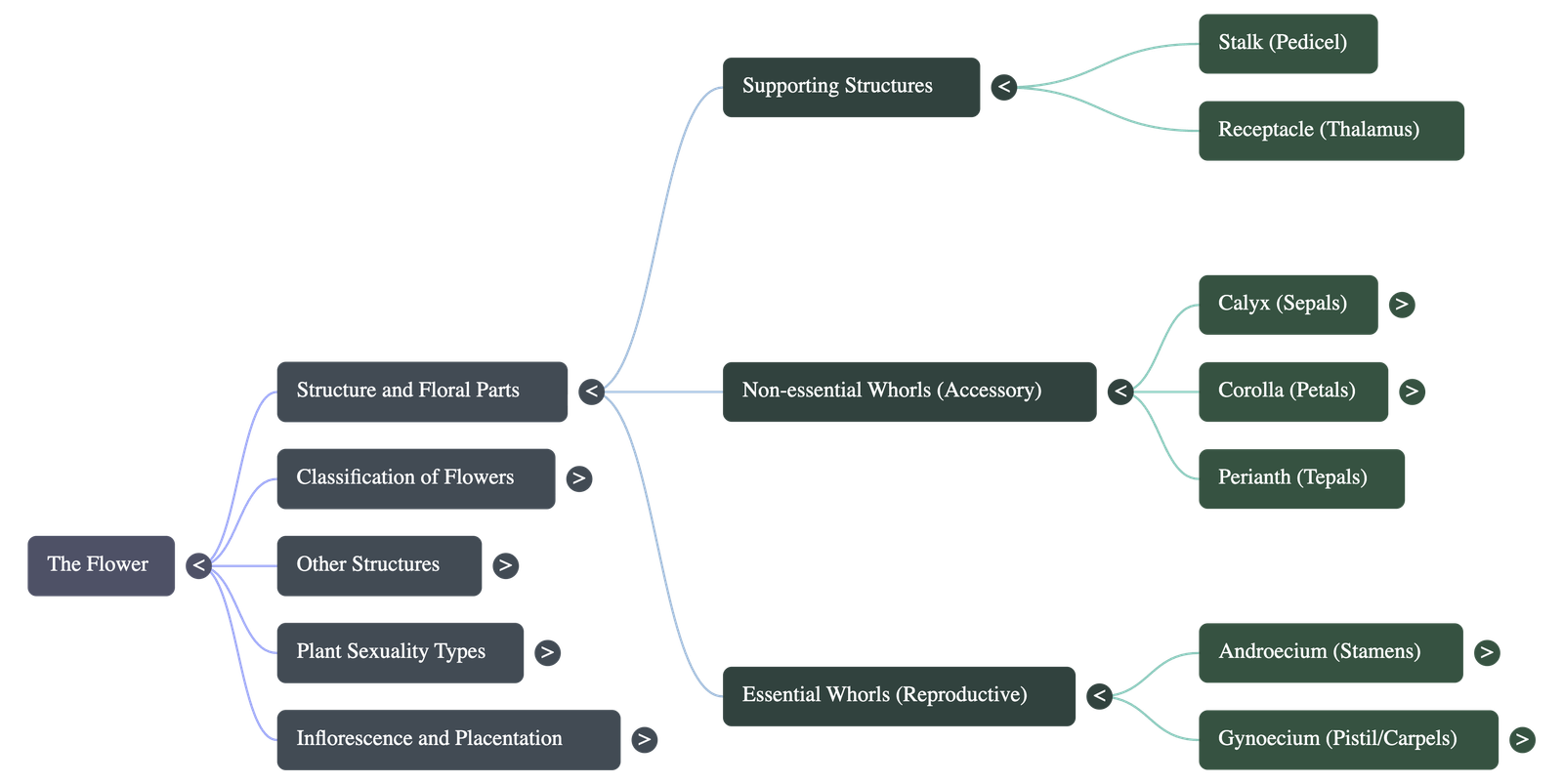
- ✔ Stalk (Pedicel): Supports the flower. Flowers without a stalk are called sessile.
- ✔ Thalamus (Receptacle): The enlarged, cup-shaped tip of the stalk where floral parts are borne.
-
✔
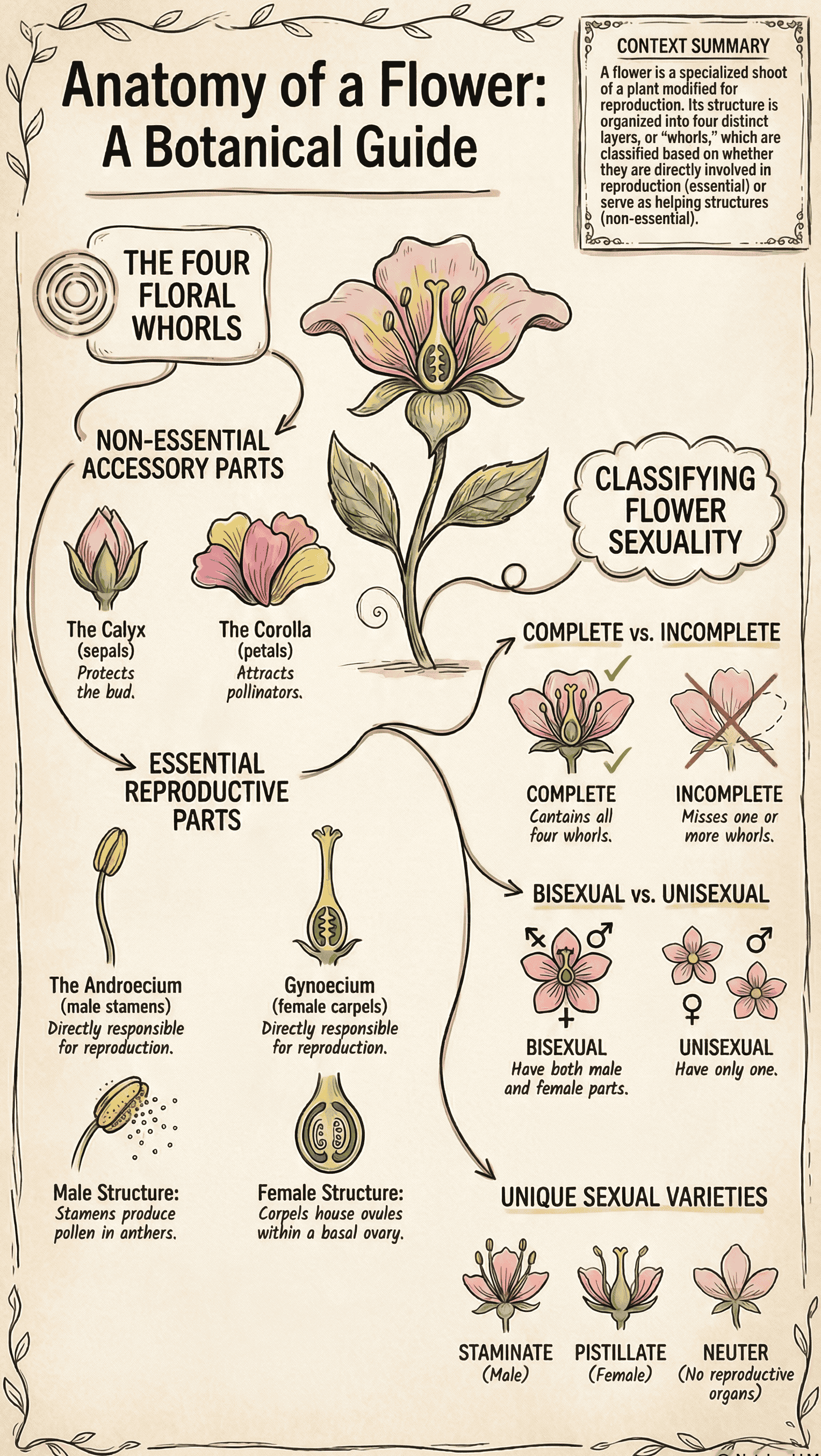
Four Floral Whorls:
- First Whorl (Calyx): Green sepals.
- Second Whorl (Corolla): Large, brightly-coloured petals.
- Third Whorl (Androecium): Male parts consisting of thread-like stamens (filament and anther).
- Fourth Whorl (Gynoecium/Pistil): Female parts located centrally, consisting of carpels (ovary, style, and stigma).
2. Classification of Floral Parts & Flowers
-
✔
Essential vs. Non-essential Parts:
- Essential (Reproductive): Directly concerned with reproduction (Stamens and Carpels).
- Non-essential (Accessory): Protect reproductive parts or attract pollinators (Sepals and Petals).
-
✔
Complete vs. Incomplete Flowers:
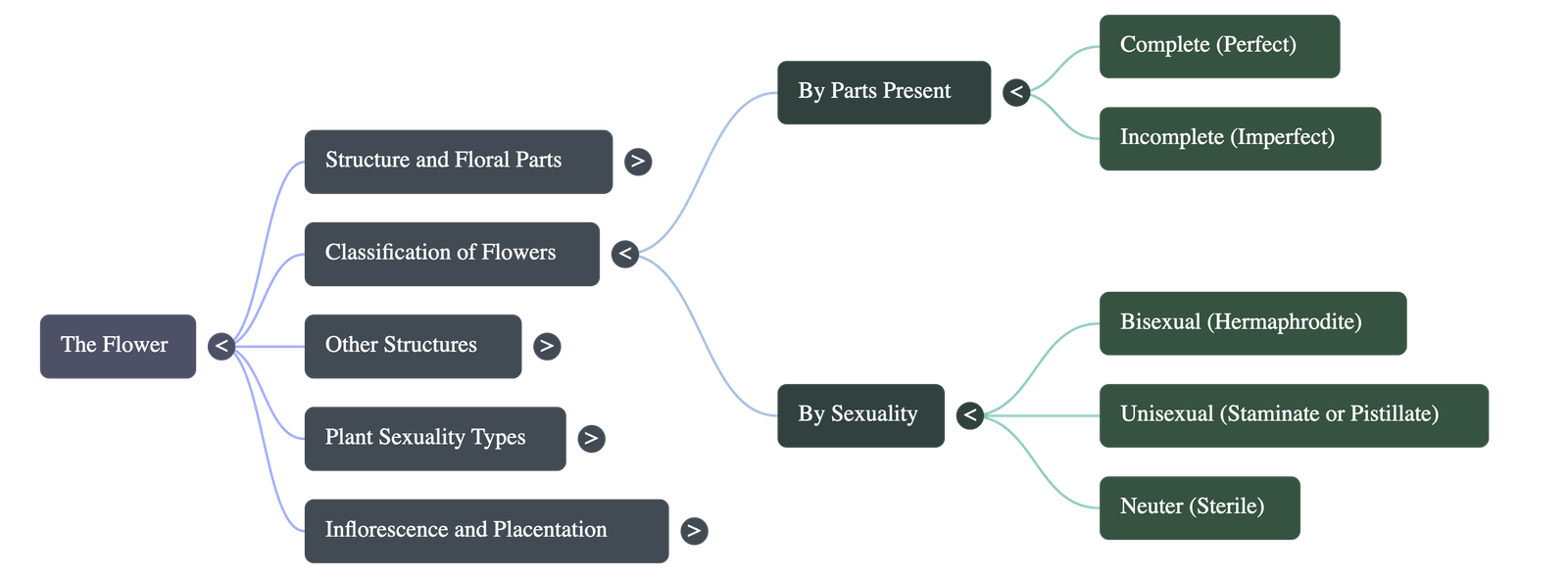
- Complete (Perfect): Contains all four floral whorls.
- Incomplete (Imperfect): One or more whorls are missing.
3. Specialized Structures
-
✔
Perianth: Formed when sepals and petals look similar and cannot be differentiated. Individual parts are called tepals.
- Sepaloid Perianth: Green tepals.
- Petaloid Perianth: Non-green, coloured tepals.
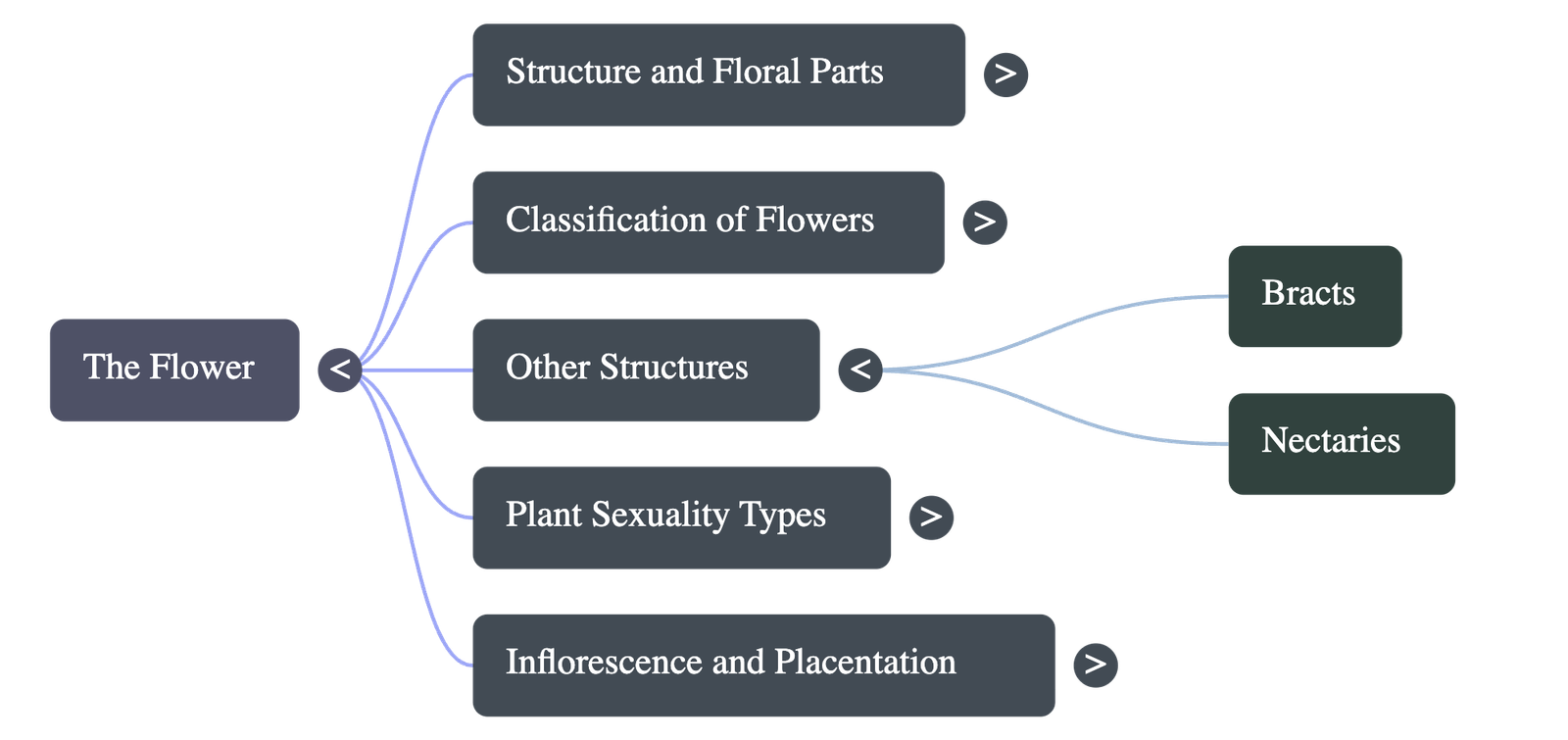
- ✔ Bracts: Leaf-like structures in the axil of which a flower arises. They can be green or large and colourful (e.g., Bougainvillea, where they are easily mistaken for petals).
- ✔ Nectaries: Groups of nectar-secreting cells usually at the base of the pistil or petals. They produce sweet liquid to attract insects for cross-pollination (prominent in Nasturtium).
4. Sexuality in Flowers & Plants
-
✔
Flower Sexuality:
- Bisexual (Hermaphrodite): Contains both stamens and carpels (e.g., hibiscus, rose).
- Unisexual: Contains only stamens (Male/Staminate flower) OR only carpels (Female/Pistillate flower).
- Neuter: Both male and female organs are lacking (e.g., Ray florets of sunflower).
-
✔
Plant Sexuality:
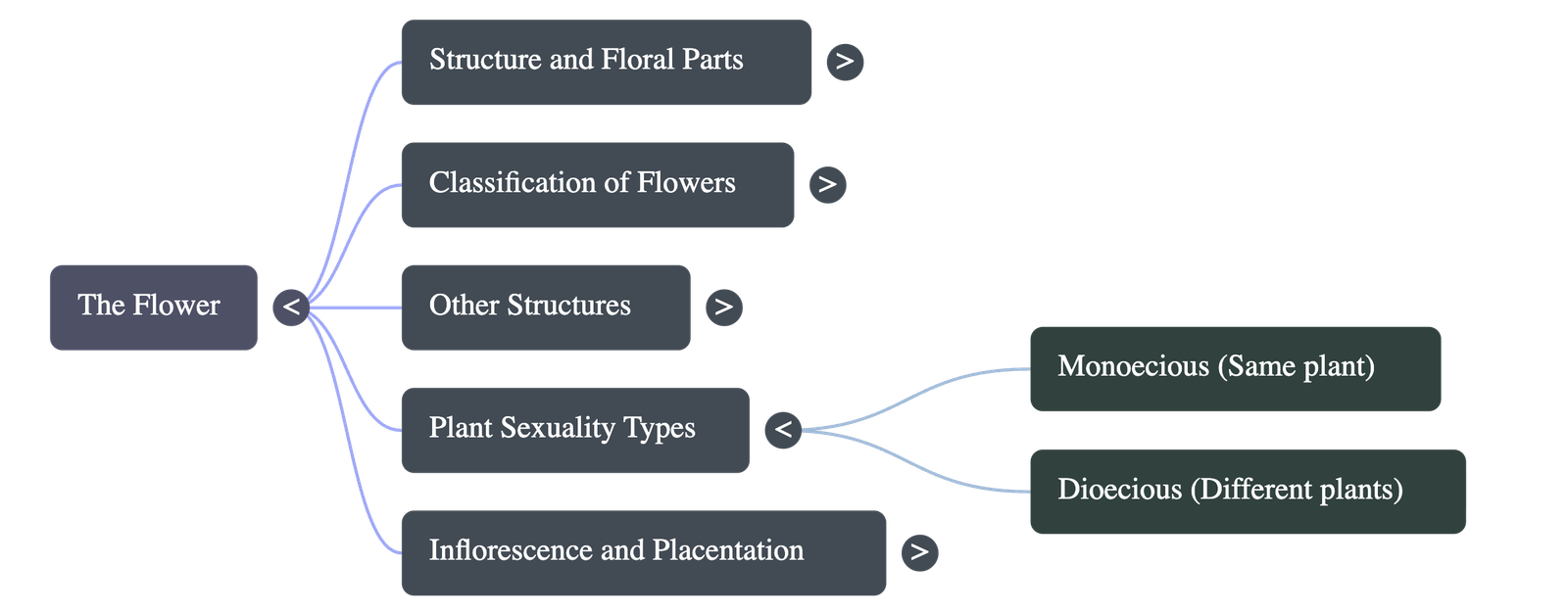
- Monoecious: Male and female flowers grow on the same plant (e.g., maize, cucumber, pumpkin).
- Dioecious: Male and female flowers grow on different plants (e.g., palm, papaya).
5. Detailed Description of Floral Parts
(a) Calyx (Sepals)
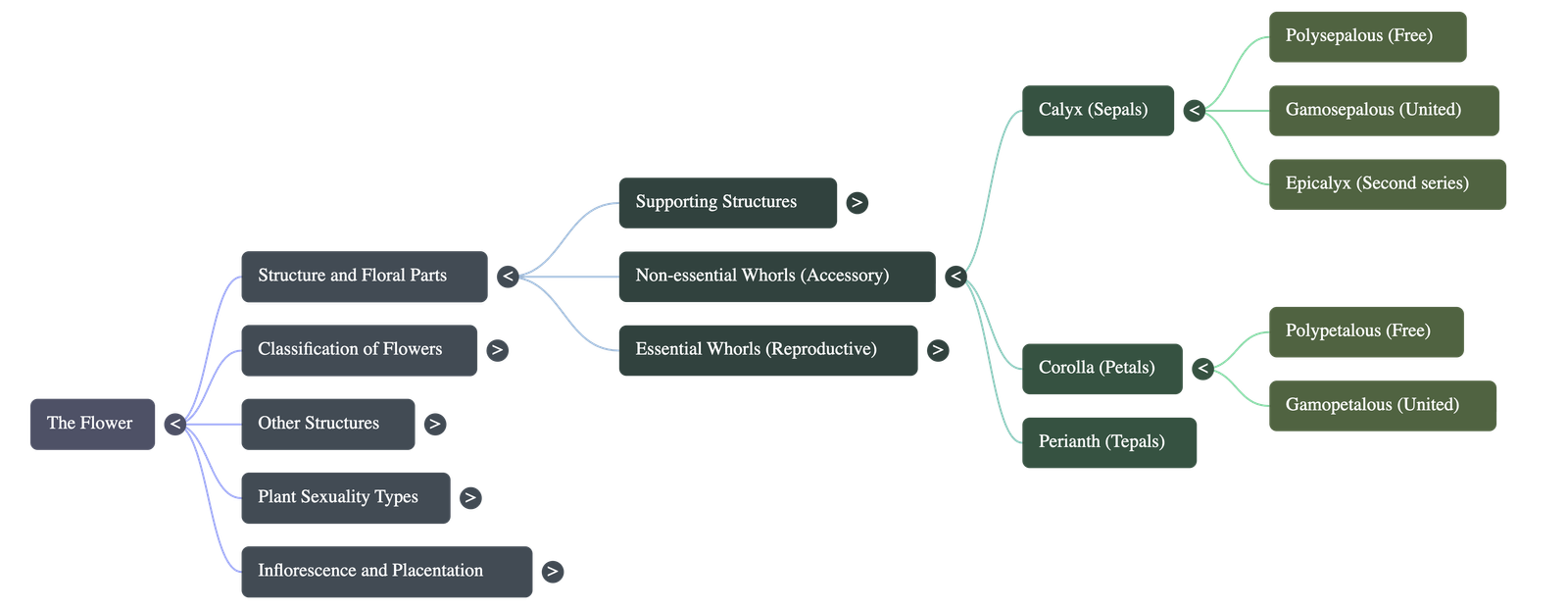
- Usually five in number; protect the young bud and perform photosynthesis when green.
- Polysepalous: Sepals are free.
- Gamosepalous: Sepals are fused.
- Epicalyx: A second series of sepals (found in Hibiscus).
(b) Corolla (Petals)
- Colourful and fragrant; attract insects for pollination and protect inner stamens and pistils.
- Polypetalous: Petals are free.
- Gamopetalous: Petals are united, often forming a tube.
(c) Androecium (Stamens)
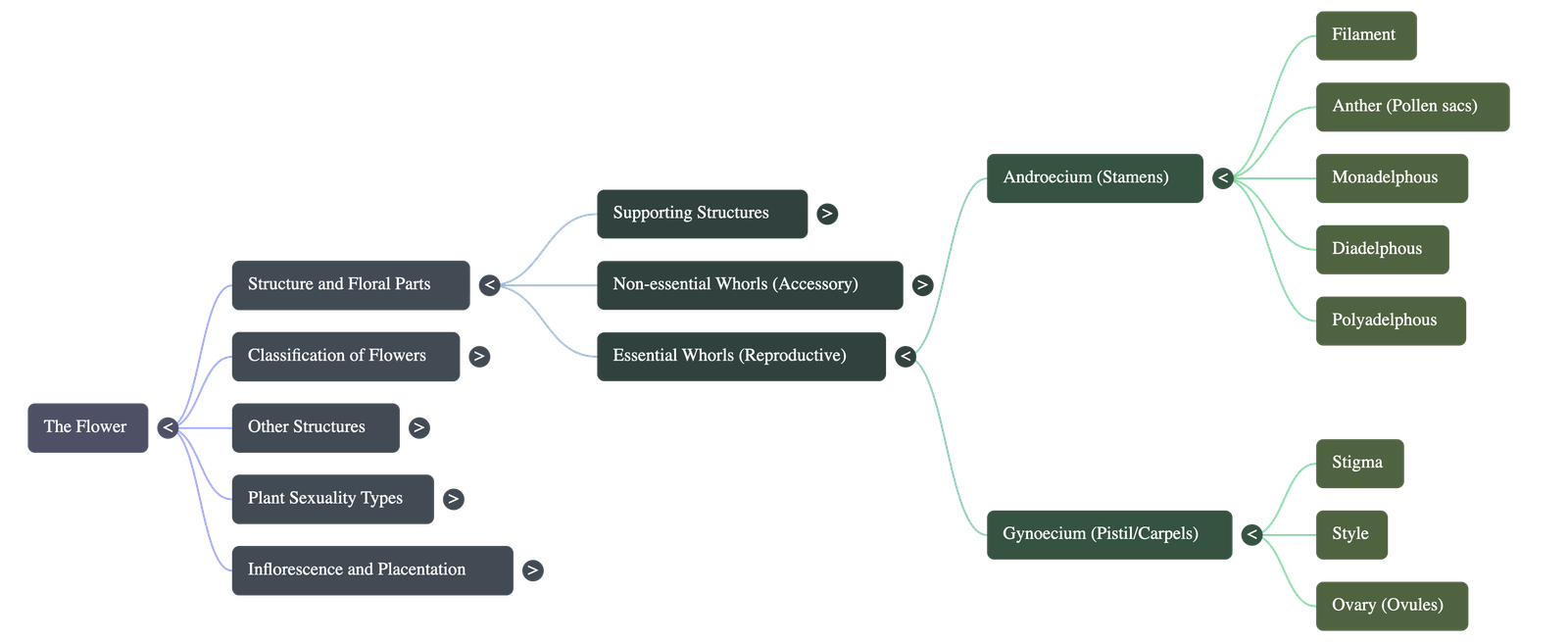
- Consists of a long filament and a bilobed anther.
- Anther lobes contain pollen sacs filled with powdery pollen grains (male gametes).
- Polyandrous: Stamens are completely free.
- Cohesion (joining) of stamens:
- Monadelphous: Filaments united in one group/tube, anthers free (e.g., China rose, cotton).
- Diadelphous: Filaments united in two bundles (e.g., Pea - nine fused, one free).
- Polyadelphous: Filaments united in several groups (e.g., Bombax).
(d) Gynoecium / Pistil (Carpels)
- Stigma: Terminal knob-like part covered with hair or glandular papillae; serves as the landing place for pollen.
- Style: Tubular slender stalk connecting stigma to ovary.
- Ovary: Swollen base containing locules (chambers) with rounded bodies called ovules.
6. Inflorescence & Placentation
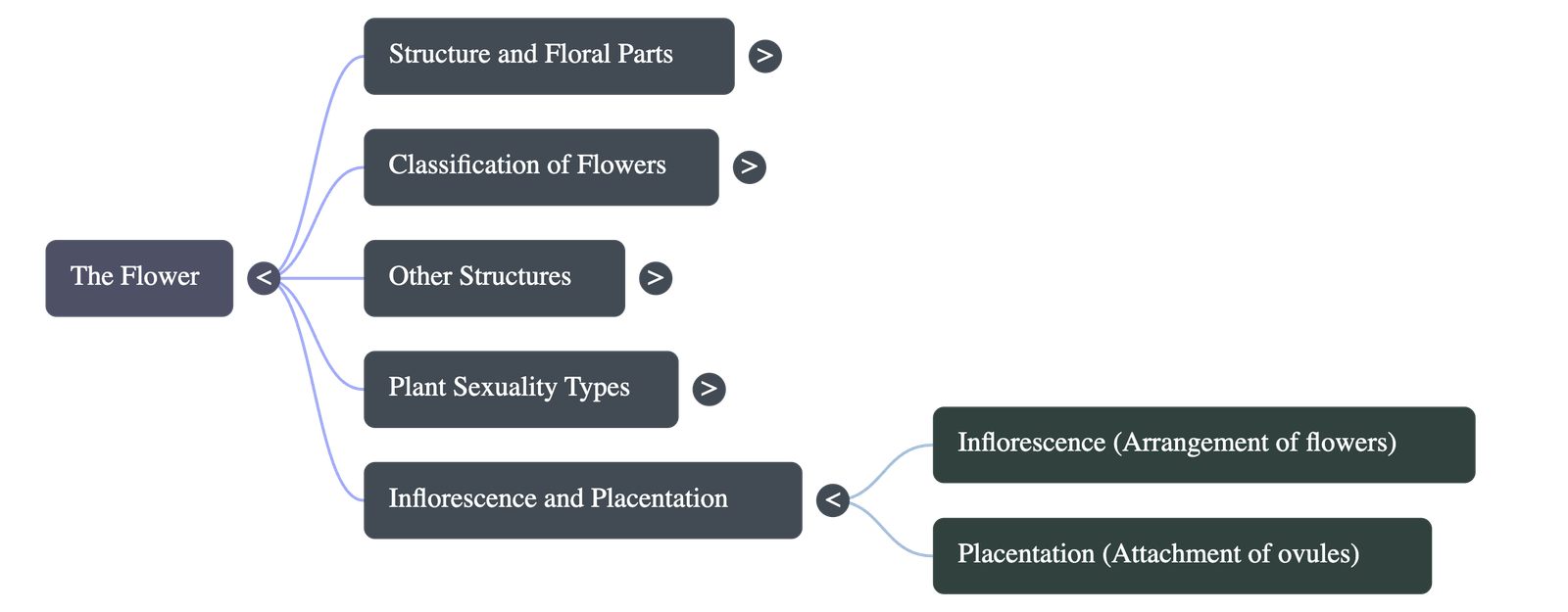
- ✔ Inflorescence: The mode of arrangement of flowers on the axis of a plant.
- ✔ Placenta: The tissue that attaches the ovule to the wall of the ovary.
- ✔ Placentation: The manner in which the ovules are arranged/attached to the wall of the ovary.
- ✔ Development: After maturation, the ovules turn into seeds, and the ovary turns into the fruit.
Do checkout all questions & answers of this chapter.
Quick Navigation:
| | | |
1 / 1
Quick Navigation:
| | | |