Quick Navigation:
| | | |
Respiration in Plants
1. Introduction to Respiration
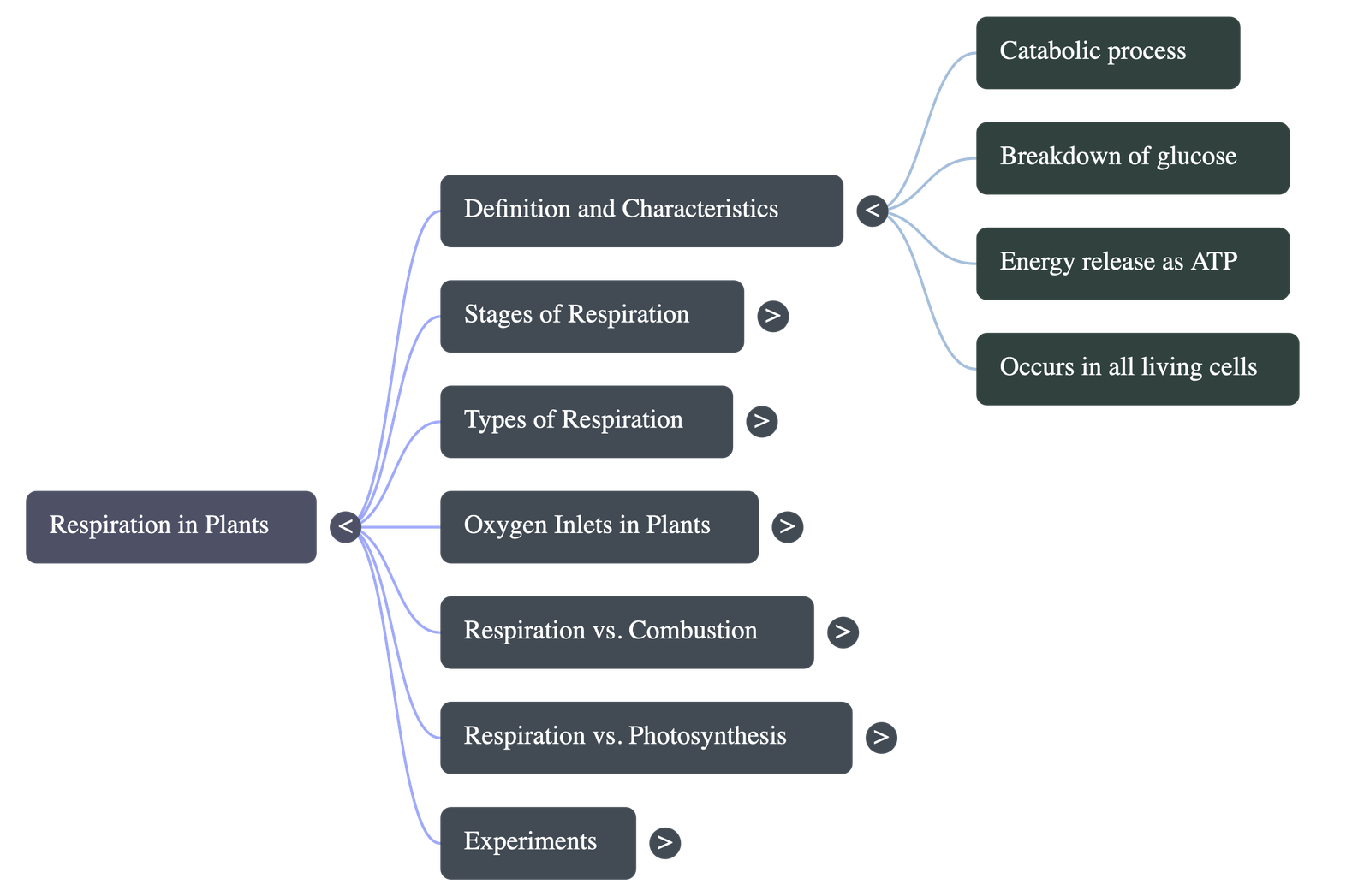
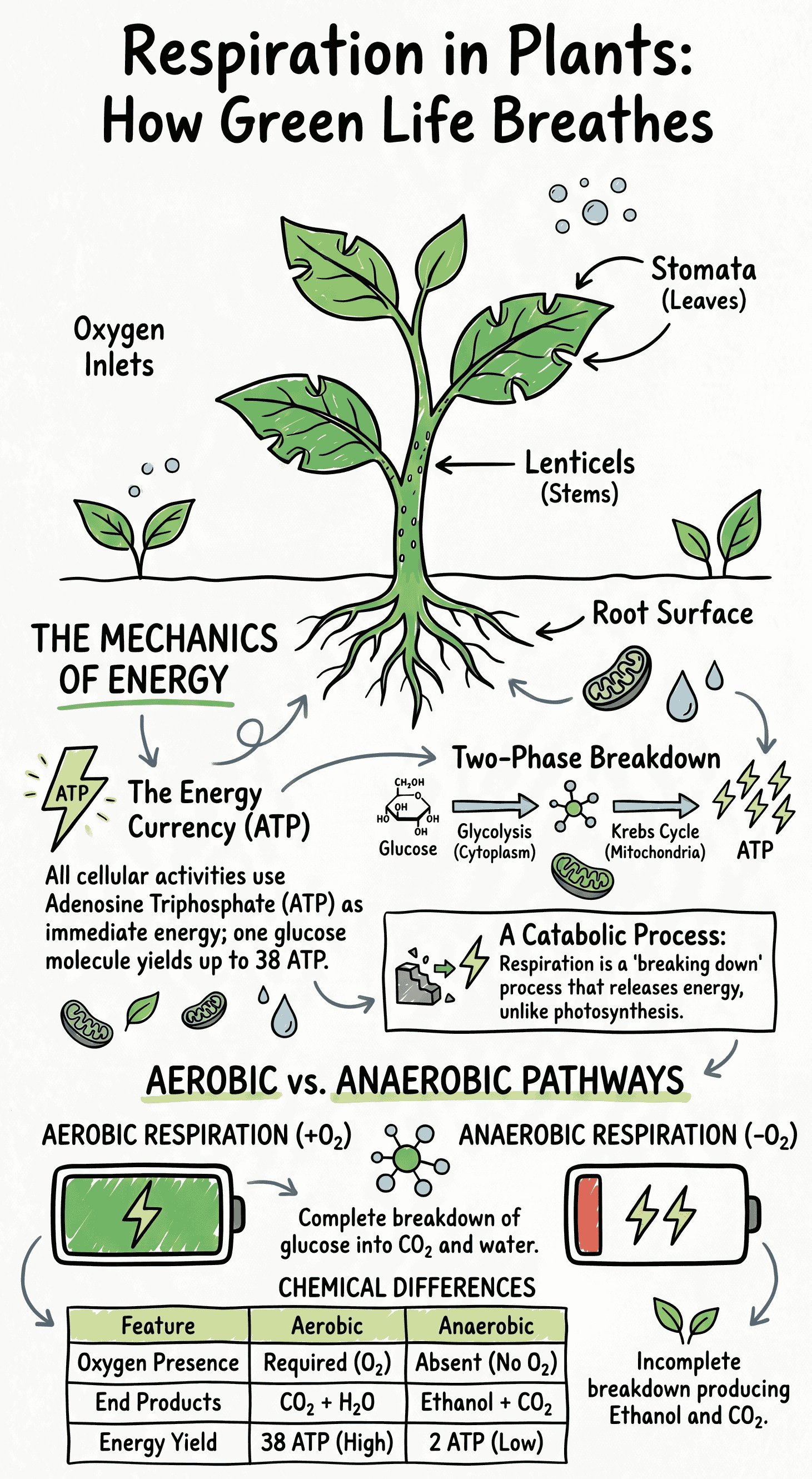
- • Definition: Respiration is a catabolic (destructive or breakdown) process in which living cells oxidize organic substances, primarily glucose, to release energy, producing carbon dioxide and water vapour as byproducts.
- • Energy Currency: The energy liberated is largely converted into chemical energy in the form of ATP (Adenosine Triphosphate), known as the energy currency of the cell.
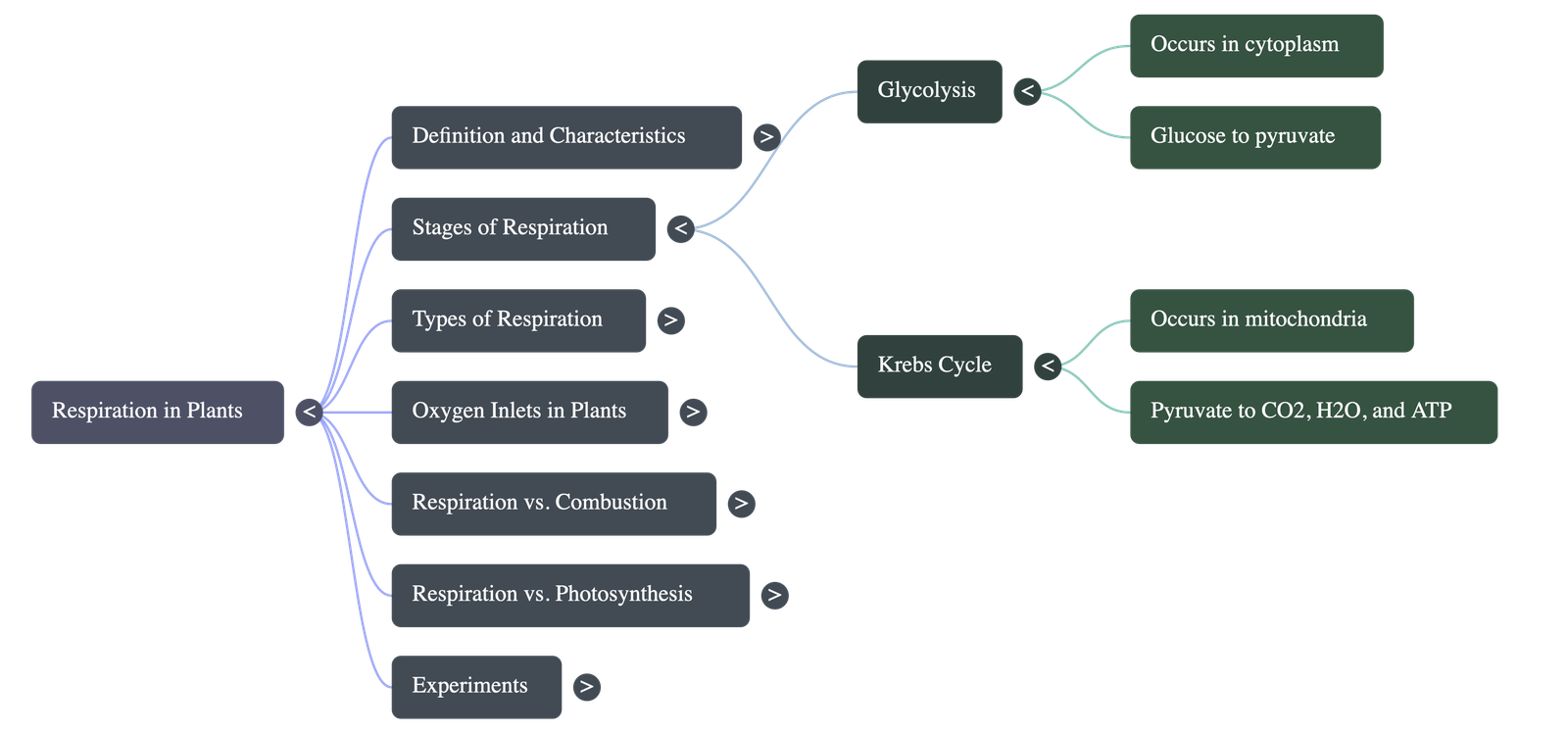
- • Two Main Phases: The breakdown of glucose occurs in a series of chemical steps:
- Glycolysis: The breakdown of glucose into pyruvate, occurring in the cytoplasm.
- Krebs Cycle: The conversion of pyruvate into carbon dioxide, water, and ATP, occurring in the mitochondria.
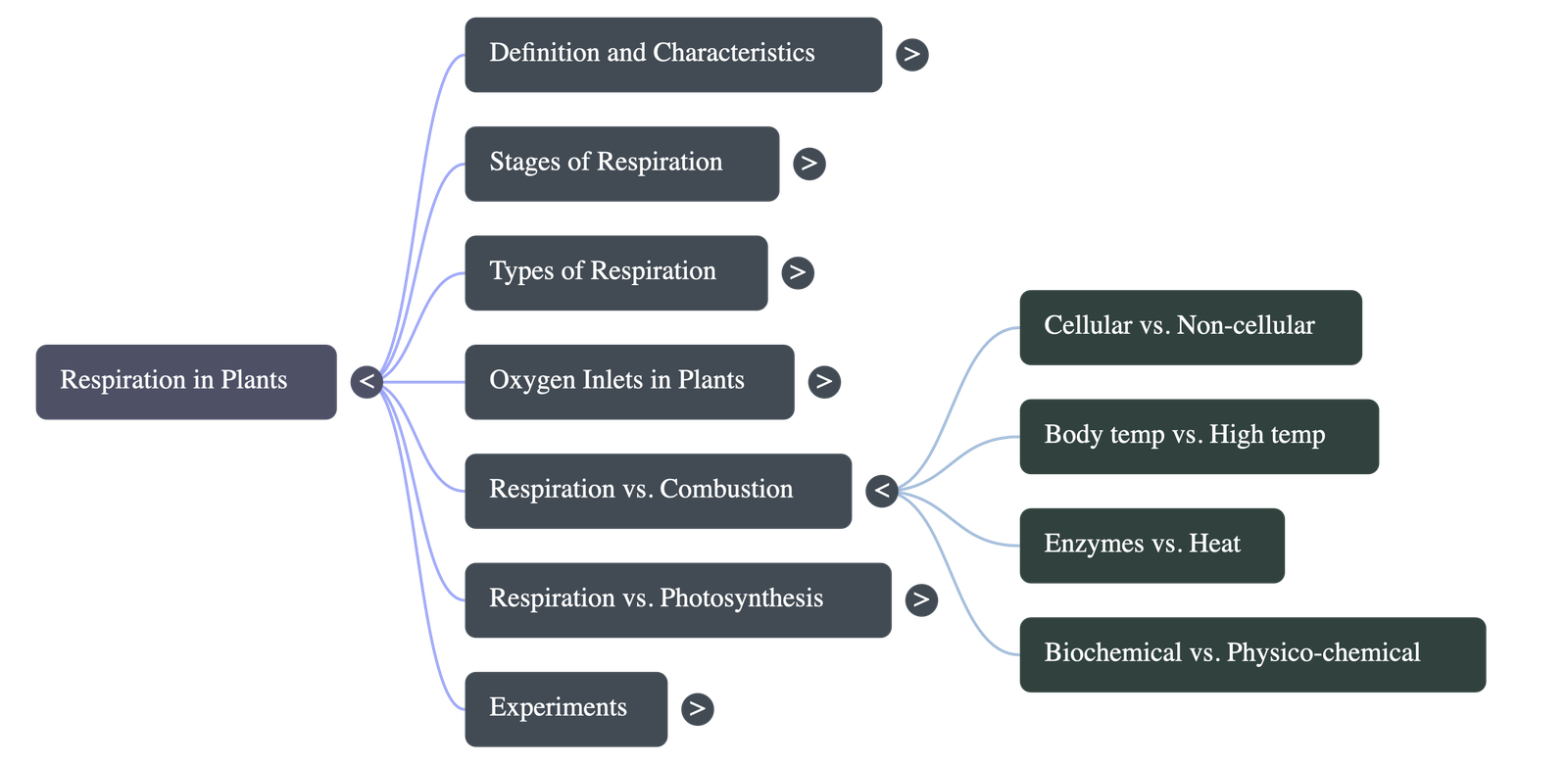
2. Respiration vs. Burning (Combustion)
- • Cellular Process: Respiration is a cellular, biochemical process occurring at body temperature in a series of steps. Burning is a non-cellular, physico-chemical process occurring at high ignition temperatures in a single step.
- • Enzymes: Respiration is strictly carried out by specific enzymes, whereas burning relies on heat.
- • Energy Liberation: In respiration, energy is released as ATP and some heat without light. In burning, energy is liberated as massive heat and light.
3. The Entire Plant Respires
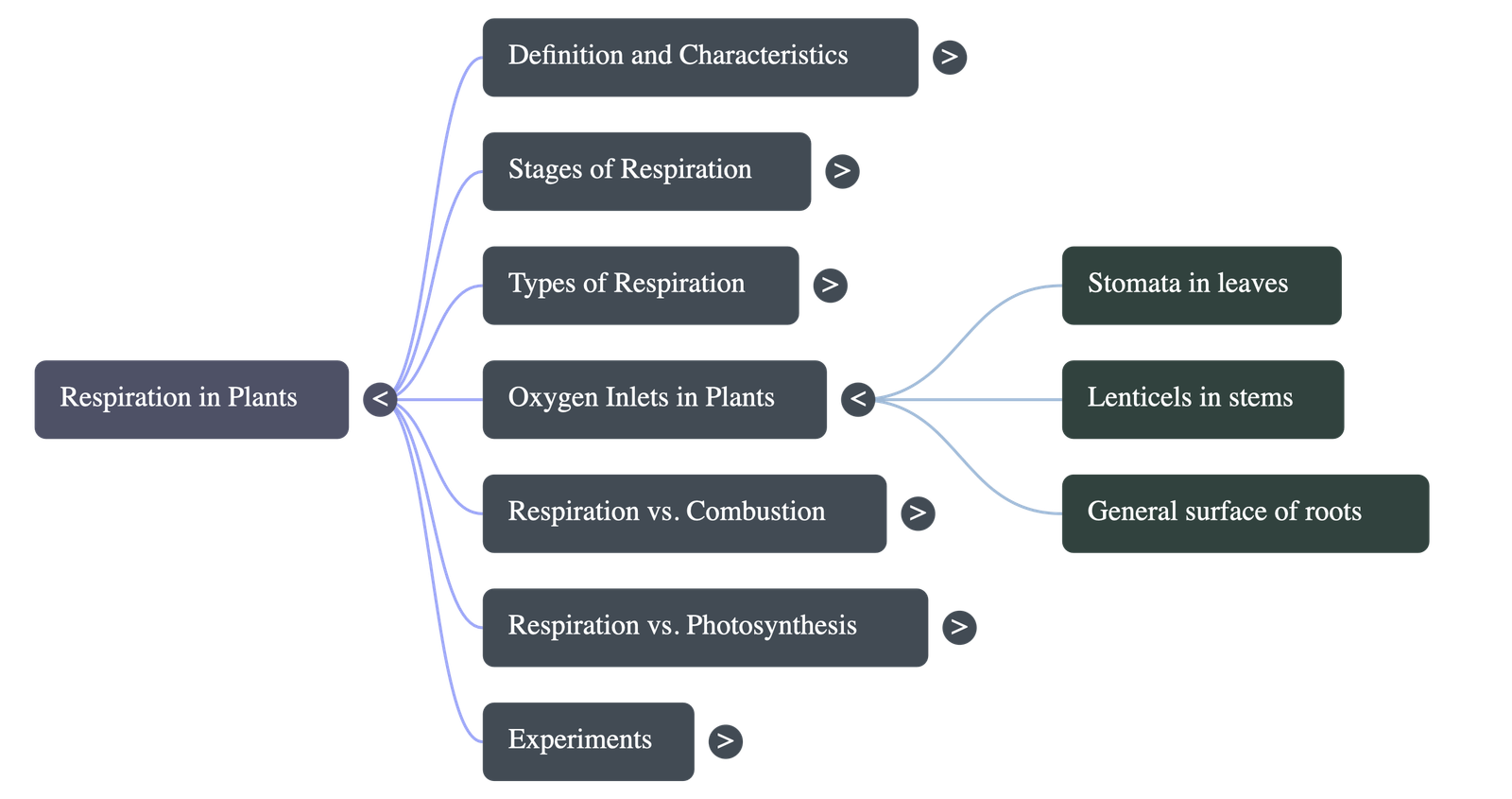
- • Every part of a plant respires independently. Oxygen from the atmosphere enters the plant through three main inlets:
- Stomata in leaves.
- Lenticels in stems.
- General surface of the roots.
- • Soil Aeration: Ploughing or tilling soil creates tiny air spaces that provide vital oxygen for root respiration. Compact, water-logged soils suffocate roots by eliminating these air spaces.
4. Two Kinds of Respiration
A. Aerobic Respiration
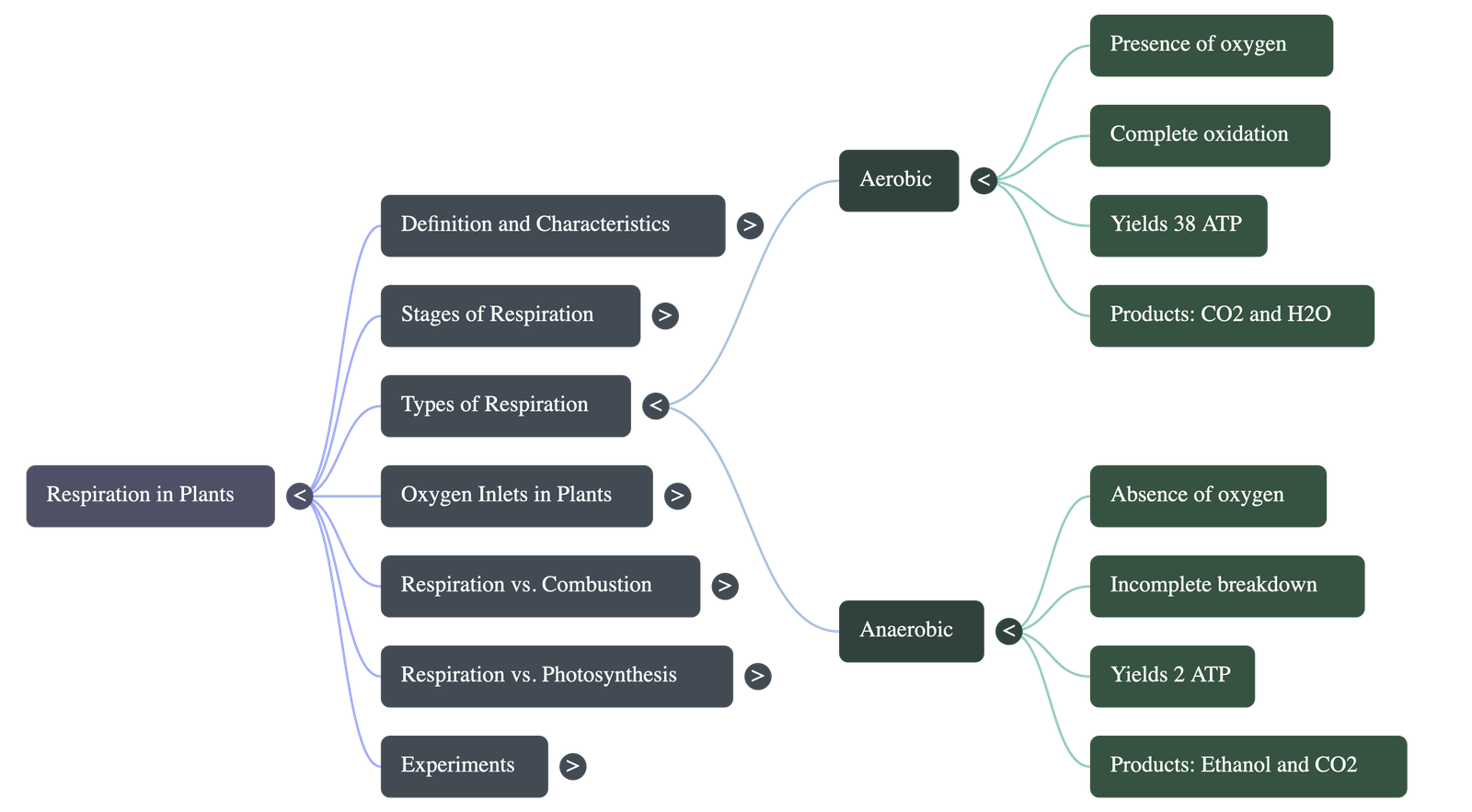
- Process: Requires free oxygen to completely oxidize glucose.
- End Products: Carbon dioxide, water, and large quantities of energy.
- Energy Yield: One molecule of glucose yields 38 molecules of ATP.
- Equation: Glucose + Oxygen → Carbon dioxide + Water + 38 ATP
B. Anaerobic Respiration
- Process: Occurs without oxygen, leading to the incomplete breakdown of glucose.
- End Products: Ethanol (ethyl alcohol), carbon dioxide, and a small quantity of energy.
- Energy Yield: One molecule of glucose yields only 2 molecules of ATP.
- Occurrence: Occurs temporarily in parts like germinating seeds and fruits, and normally in certain microscopic organisms like specific bacteria and fungi.
- Equation: Glucose → Ethanol + Carbon dioxide + 2 ATP
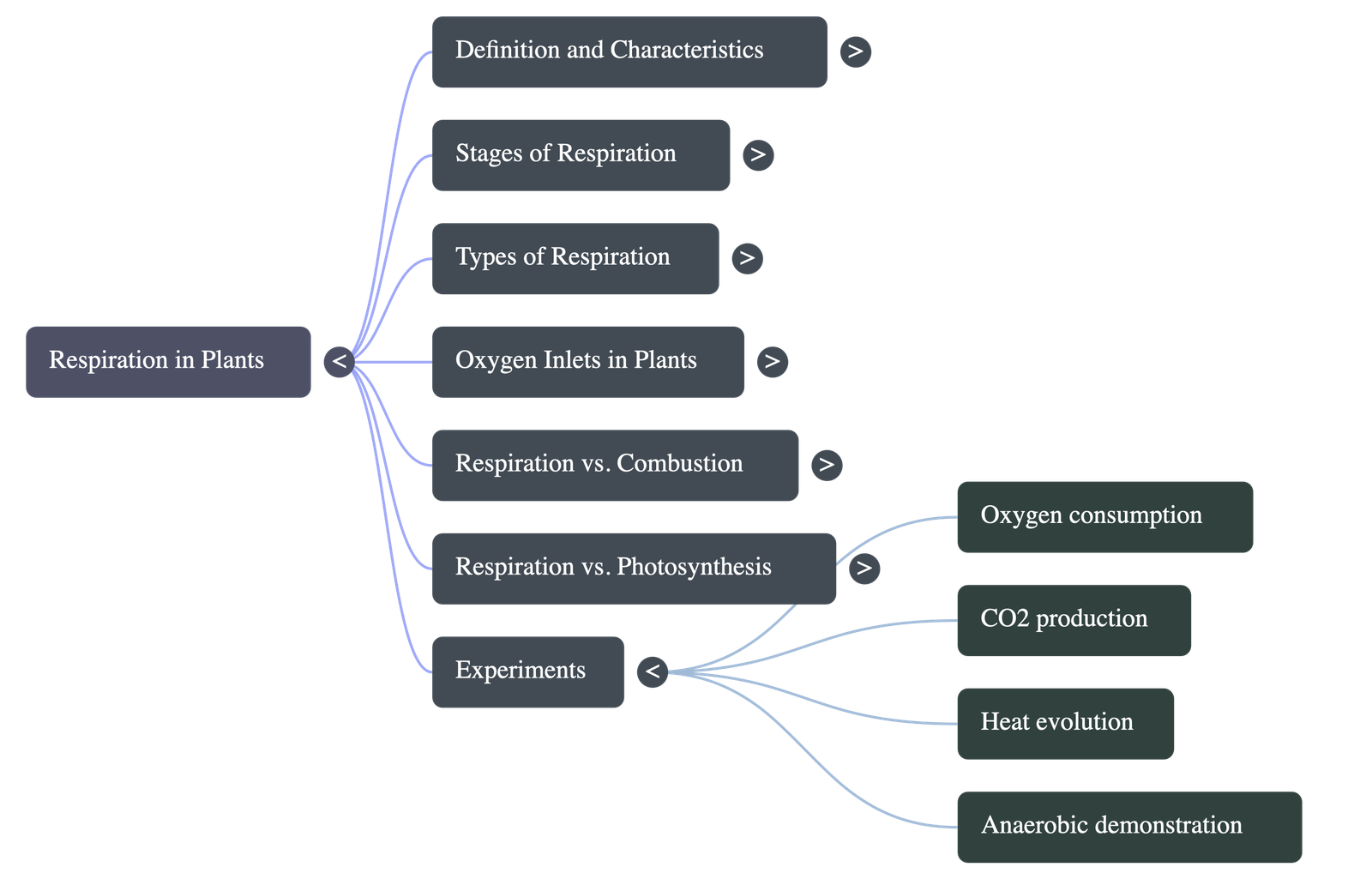
5. Experiments on Plant Respiration
Note: Valid experiments require a control setup where the specific condition being studied is missing (often utilizing boiled, dead seeds treated with antiseptic to prevent bacterial respiration).
- • Oxygen is Used Up: Using flasks with germinating seeds versus dead seeds. Soda lime is used to absorb emitted CO2, causing water in an attached tube to rise to indicate oxygen consumption.
- • Carbon Dioxide is Produced: The gas from flasks containing germinating seeds is directed into limewater, turning it milky (confirming the presence of CO2).
- • CO2 Produced by Green Plants: A bell jar containing a plant is kept in the dark to prevent photosynthesis from reusing the CO2 produced by respiration. The air passed out of the jar turns limewater milky.
- • Heat is Evolved: Thermometers inserted into flasks of live seeds show a temperature rise compared to dead seeds, proving respiration releases heat.
- • Anaerobic Respiration: Seeds submerged entirely in mercury (to block air) still produce a gas that pushes the mercury down; introducing potassium hydroxide makes the gas absorb and the mercury rise again, proving the gas is CO2.
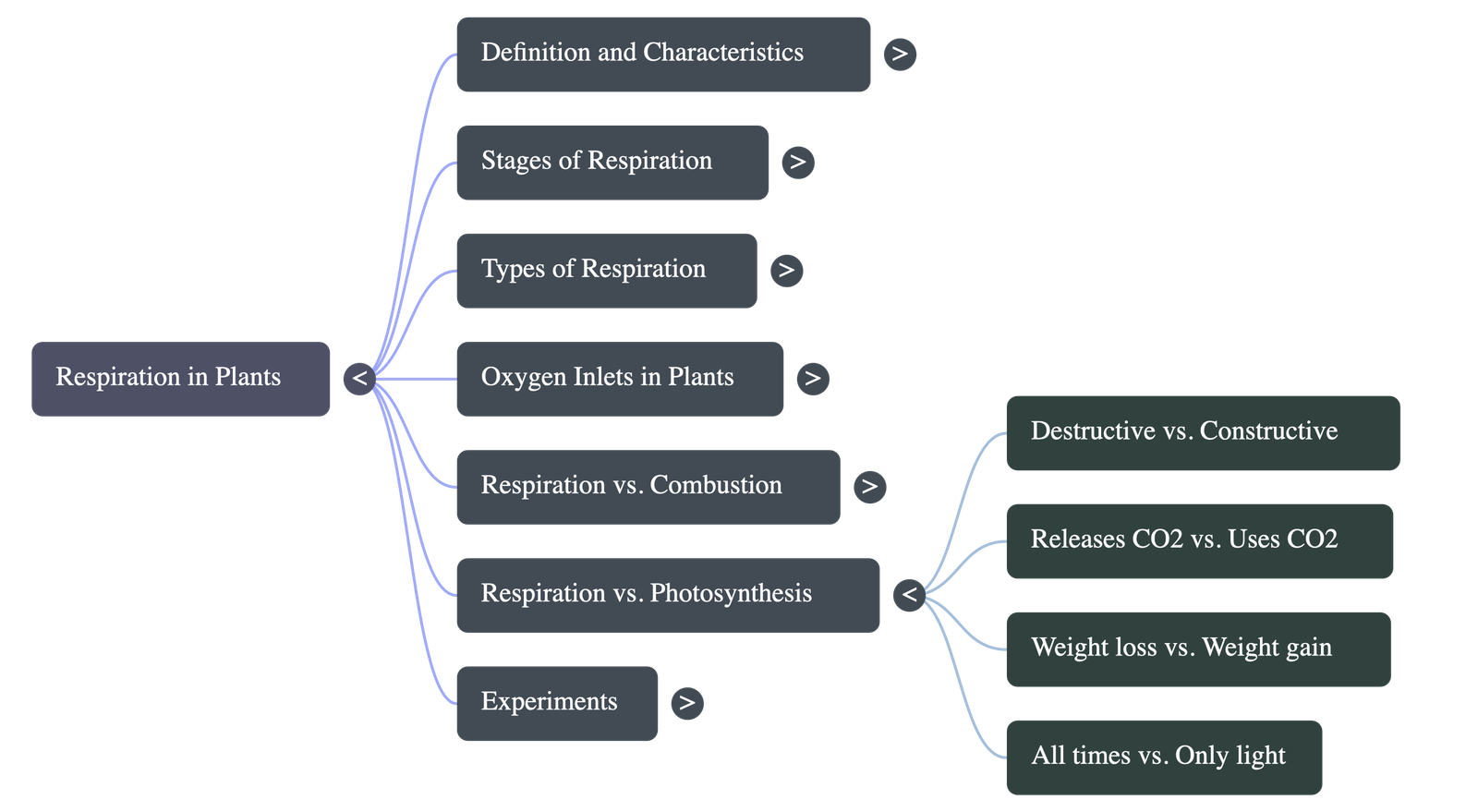
6. Respiration Contrasted with Photosynthesis
- • The processes are distinctly opposite: products of one serve as raw materials for the other.
- • Occurrence: Photosynthesis requires chlorophyll and light; Respiration occurs in all living cells at all times.
- • Substances Used/Produced: Photosynthesis uses CO2 and water, producing oxygen and glucose. Respiration uses oxygen and glucose, producing CO2 and water.
- • Metabolism: Photosynthesis is an anabolic process resulting in weight gain and energy storage. Respiration is a catabolic process resulting in weight loss and energy release.
7. Plant vs. Animal Respiration
- • Gaseous Transport: Plants lack a transport system for gases; diffusion happens cell to cell. Animals have blood to transport respiratory gases.
- • Anaerobic Byproducts: In plants, anaerobic respiration produces ethanol (ethyl alcohol). In animals, it produces lactic acid.
- • Heat Production: Plant respiration produces significantly less heat compared to animal respiration.
Do checkout all questions & answers of this chapter.
Quick Navigation:
| | | |
1 / 1
Quick Navigation:
| | | |