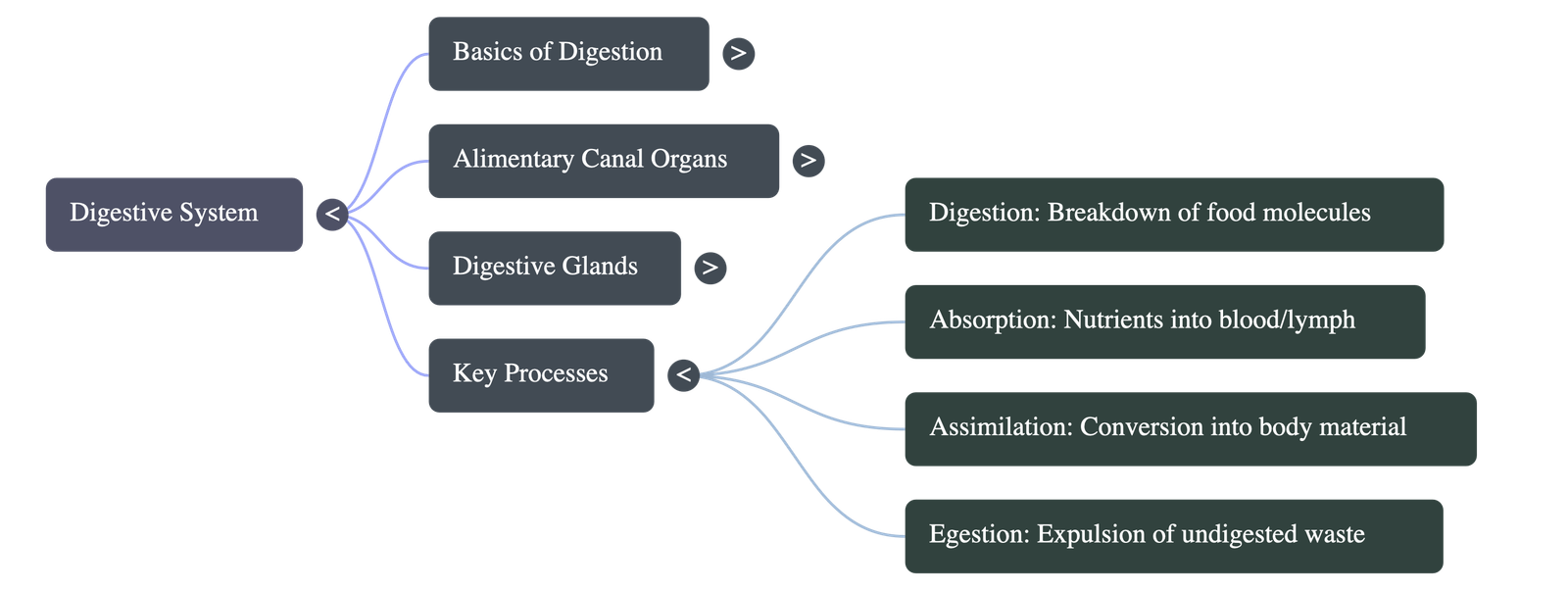
Quick Navigation:
| | | |
Digestive System
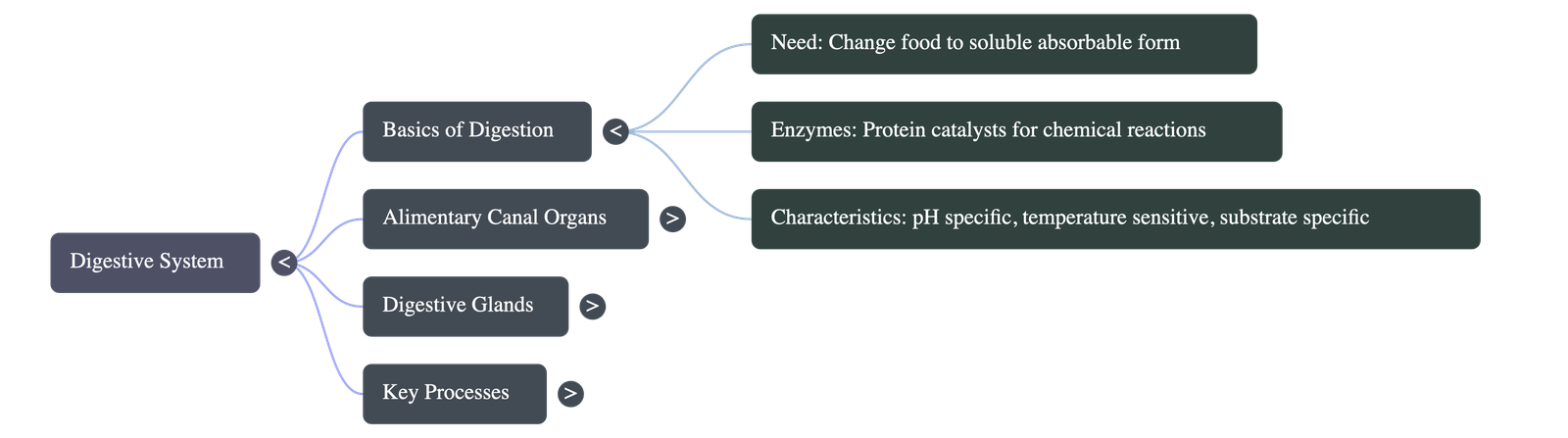
1. Need for a Digestive System
- Food cannot be utilized in its natural state; it must be broken down into a soluble, absorbable form.
- Digestion breaks complex molecules into smaller units so they can pass through the cell membranes of the gut wall.
2. Role and Characteristics of Enzymes
- Enzymes are proteins that act as catalysts to speed up chemical reactions without being consumed.
- They are specific, meaning each enzyme acts only on one kind of substance (substrate).
- They are destroyed by heating.
- Enzymes work best within a narrow temperature range (optimum temperature is usually between 35°C and 40°C).
- They function optimally at a particular pH (degree of acidity or alkalinity).
3. The Alimentary Canal & Mouth
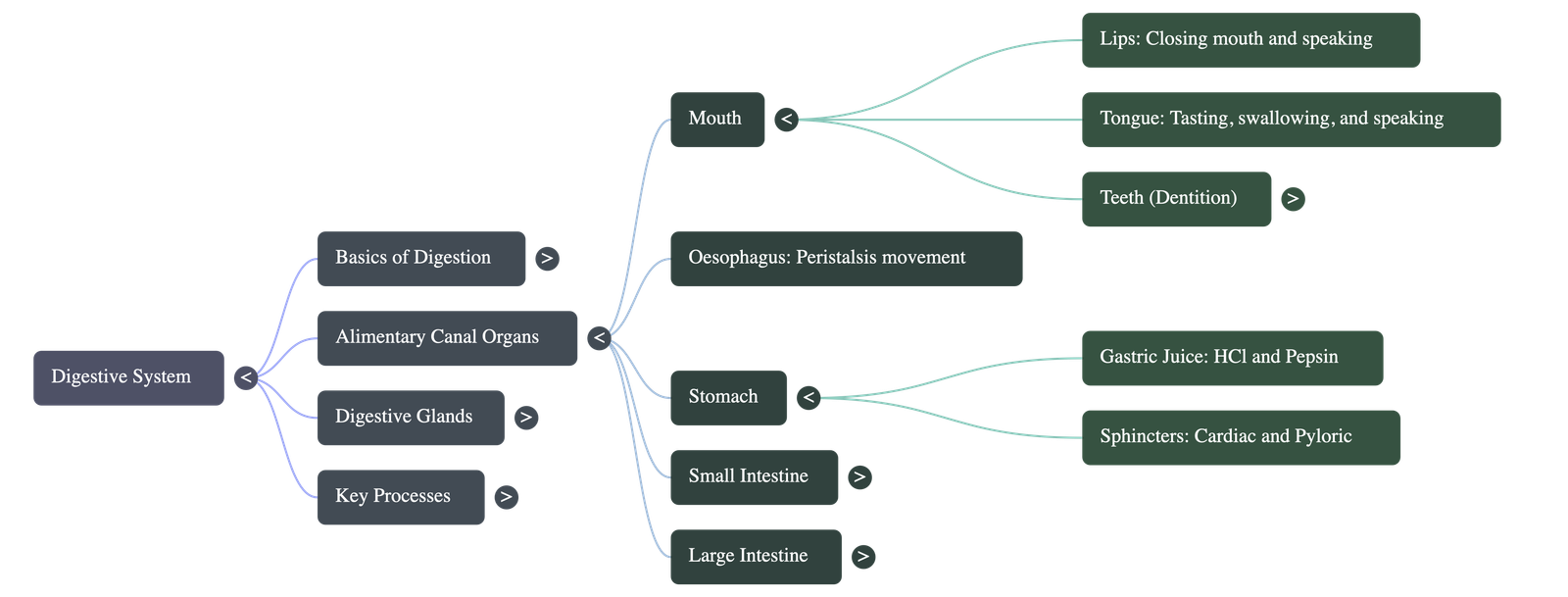
- The digestive system consists of an alimentary canal (a 9-metre muscular tube from mouth to anus) and associated digestive glands.
- The Mouth: Formed by lips, containing the tongue and teeth. The tongue helps in manipulating food, swallowing, tasting, and speaking.
4. Dentition and Tooth Structure
- Types of Teeth: Mammalian teeth are heterodont (different in shape). Humans have four types:
- Incisors: For biting and cutting.
- Canines: Pointed teeth for holding and tearing.
- Premolars (bicuspids) & Molars: For grinding and crushing food.
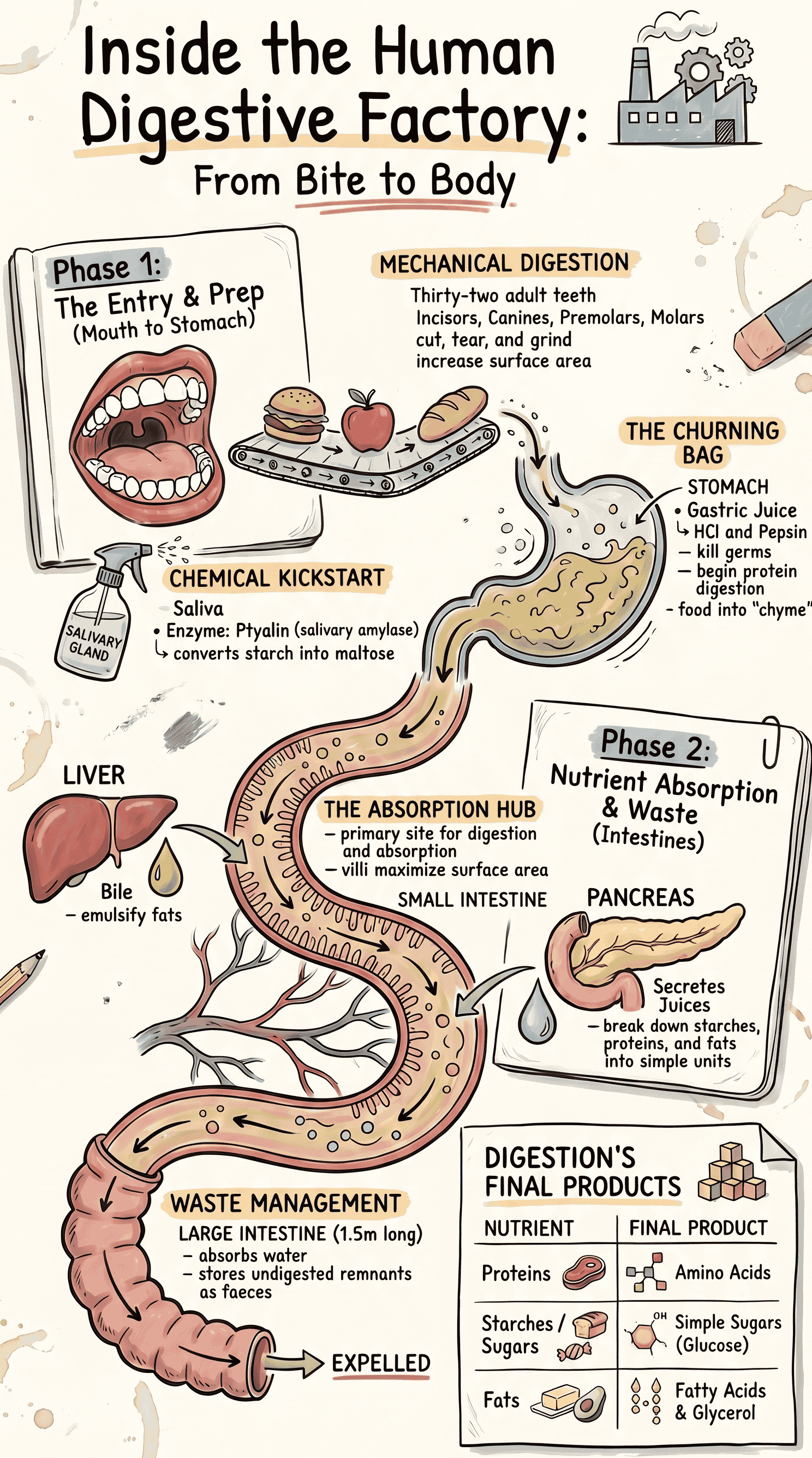
- Adults normally have 32 teeth. The dental formula for a human adult is 2, 1, 2, 3 for one-half of each jaw.
- Humans develop two sets of teeth: temporary (deciduous/milk teeth, totaling 20) and permanent.
- Tooth Structure: Consists of a crown, neck, and root. Key materials include:
- Enamel: The hardest substance in the body, covering the crown.
- Dentine: Forms the bulk of the tooth, harder than bone.
- Cementum: Fixes the root in position.
- Pulp: Soft connective tissue containing blood capillaries and nerve fibres.
5. Salivary Glands & Swallowing
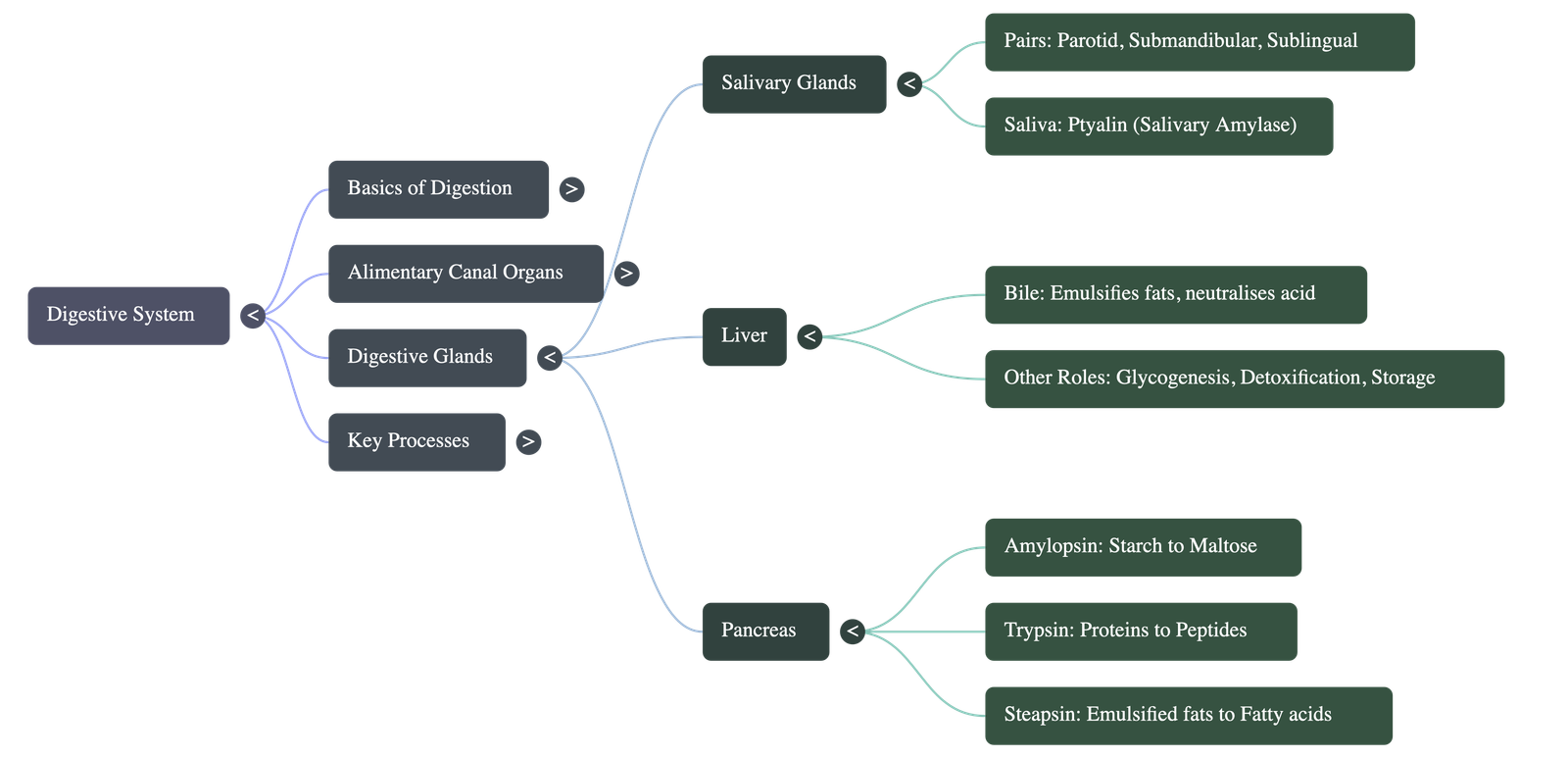
- Three pairs of salivary glands: Parotid, Submandibular, and Sublingual.
- Saliva contains water, salts, mucus, and an enzyme called salivary amylase (ptyalin), which converts starch into maltose.
- Saliva moistens food, aids swallowing, cleans the mouth, and forms food into a bolus.
- During swallowing, a flap called the epiglottis closes the windpipe to prevent food from entering the respiratory tract.
6. Oesophagus and Stomach
- Oesophagus: A tube that simply conducts food via peristalsis (wave-like muscular constrictions). It does not produce digestive enzymes.
- Stomach: An elastic bag holding 2 to 3 litres. Sphincters (cardiac and pyloric) act as valves to control food entry and exit.
- Secretes Gastric Juice, which contains water, salts, Hydrochloric acid (HCl), and pepsin.
- HCl kills germs and activates inactive pepsinogen into active pepsin. Pepsin digests proteins into peptides.
- Food stays in the stomach for about 3 hours, turning into a pulp-like form called chyme.
7. Small Intestine & Associated Glands
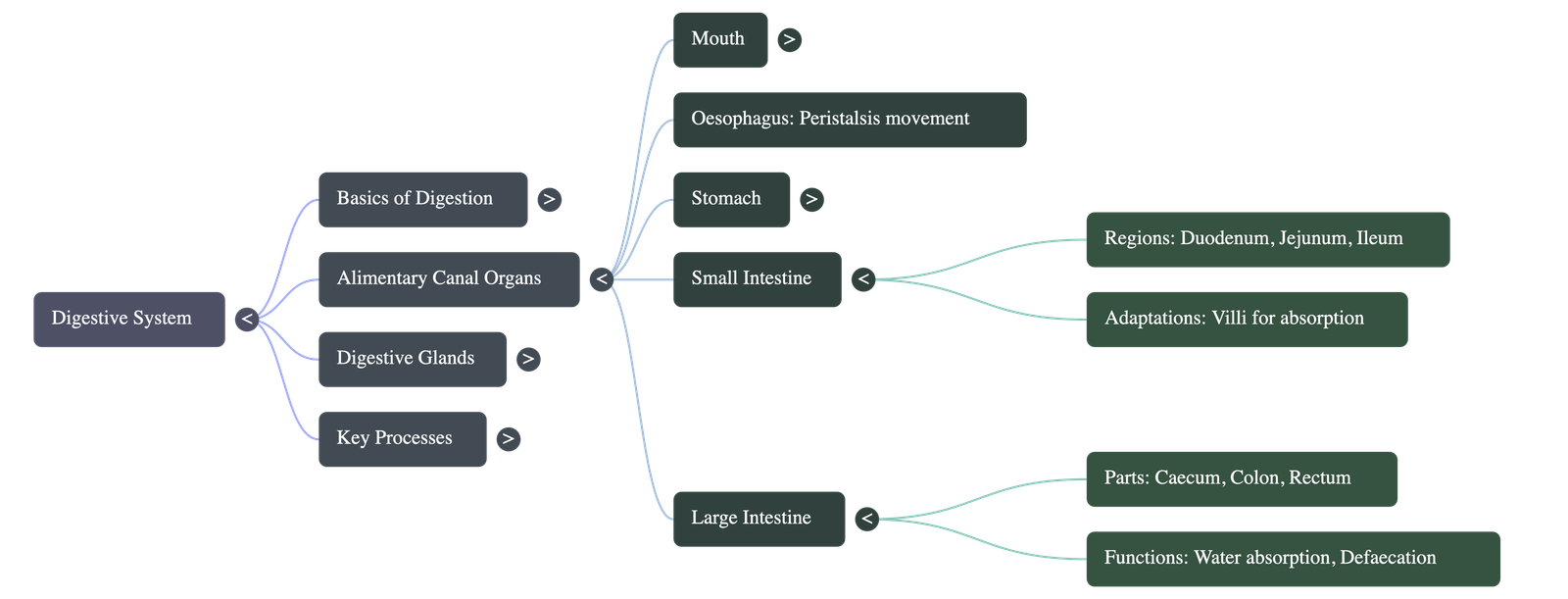
- A 7-metre long tube consisting of three regions: Duodenum, Jejunum, and Ileum.
- Serves for both digestion and absorption. Its surface area is hugely increased by finger-like projections called villi.
- Bile: Produced by the liver and temporarily stored in the gall bladder. It contains no enzymes but makes acidic chyme alkaline and emulsifies fats (breaks them into tiny droplets).
- Pancreatic Juice: Secreted by the pancreas. Contains Amylopsin (digests starch to maltose), Trypsin (digests proteins to peptides), and Steapsin (splits emulsified fats into fatty acids and glycerol).
- Intestinal Juice: Secreted by the ileum walls. Contains Erepsin (peptides to amino acids), Maltase (maltose to glucose), Lactase, Sucrase, and Lipase.
8. Absorption, Assimilation & Large Intestine
- Amino acids and simple sugars are absorbed into blood capillaries and transported to the liver via the hepatic portal vein.
- Fatty acids and glycerol are absorbed into lacteals (lymph vessels) within the villi.
- Assimilation: Conversion of absorbed food into body material. Excess glucose is stored as glycogen (glycogenesis). Excess amino acids are broken down into urea (deamination) in the liver.
- Large Intestine: Composed of the Caecum (which has the vestigial vermiform appendix), Colon, and Rectum.
- It secretes no enzymes; its primary role is to absorb water, turning undigested material into faeces for expulsion (defaecation).
9. Functions of the Liver
- The liver is the body's largest gland (~1.5 kg).
- Regulates blood sugar (stores excess as glycogen) and amino acid levels (via deamination).
- Synthesizes red blood cells in embryos and destroys dead red blood cells in adults.
- Detoxifies harmful substances, including drugs and alcohol.
- Stores iron, copper, and several vitamins (A & D).
- Produces fibrinogen and prothrombin (for blood clotting) and heparin (an anticoagulant).
- Produces heat and regulates blood volume.
10. Practical Food Tests
- Glucose: Adding Fehling's solution and heating produces a deep brick red precipitate.
- Starch: Adding iodine solution turns the sample blue-black.
- Protein: Heating with concentrated nitric acid turns it yellow; adding ammonium hydroxide turns it orange.
- Fats & Oils: Rubbing the food on paper leaves a translucent spot.
Do checkout all questions & answers of this chapter.
Quick Navigation:
| | | |
1 / 1
Quick Navigation:
| | | |