Quick Navigation:
| | | |
Kingdom Animalia
A detailed summary of animal classification, hierarchies, and major phyla.
1. Principles of Classification & Hierarchy
- Need for Classification: The living world contains vast diversity, ranging from microscopic bacteria to massive whales. Organisms are grouped based on increasing similarities and arranged from less complex to more complex structures.
- Species Concept: A species is the lowest classification category. It consists of similar organisms that can normally breed among themselves to produce fertile offspring.
- Cross-breeding: Crosses between closely related but distinct species usually produce sterile offspring. Examples include the Mule (donkey and horse), Zenkey (zebra and donkey), Tigon (tiger and lioness), and Geep (goat and sheep).
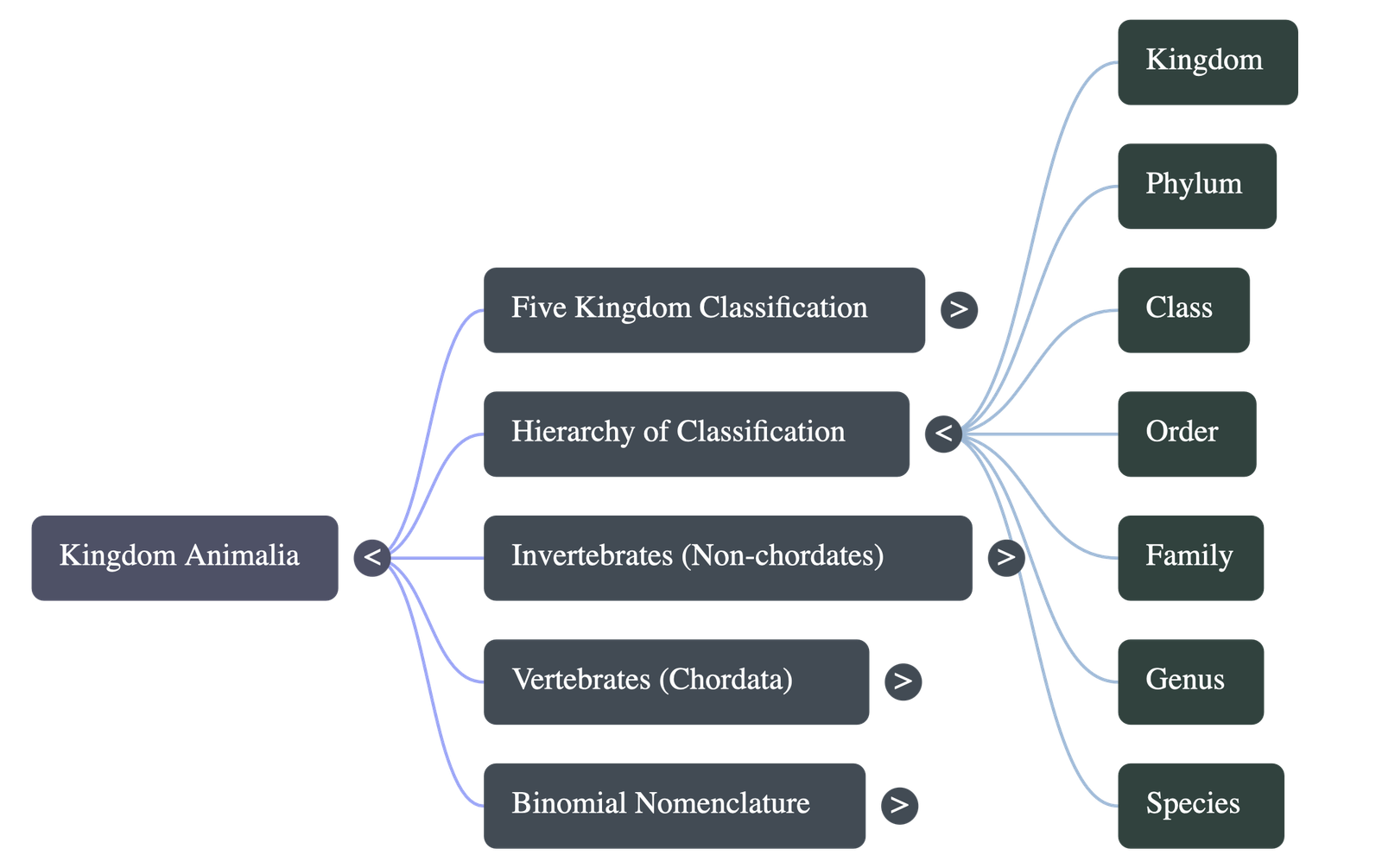
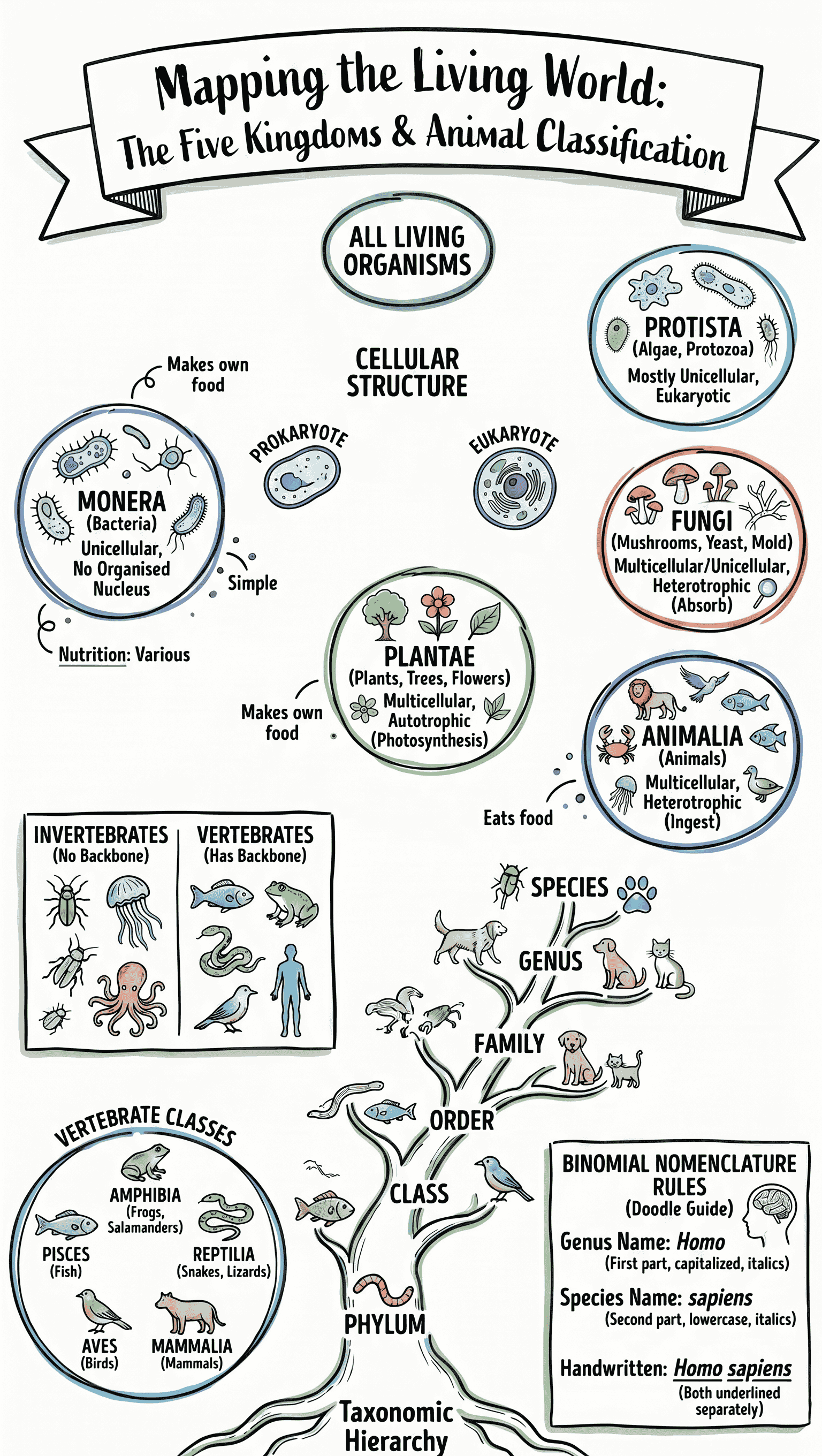
- Hierarchy of Categories: Organisms are classified in successive levels: Species → Genus → Family → Order → Class → Phylum → Kingdom (the highest and largest division).
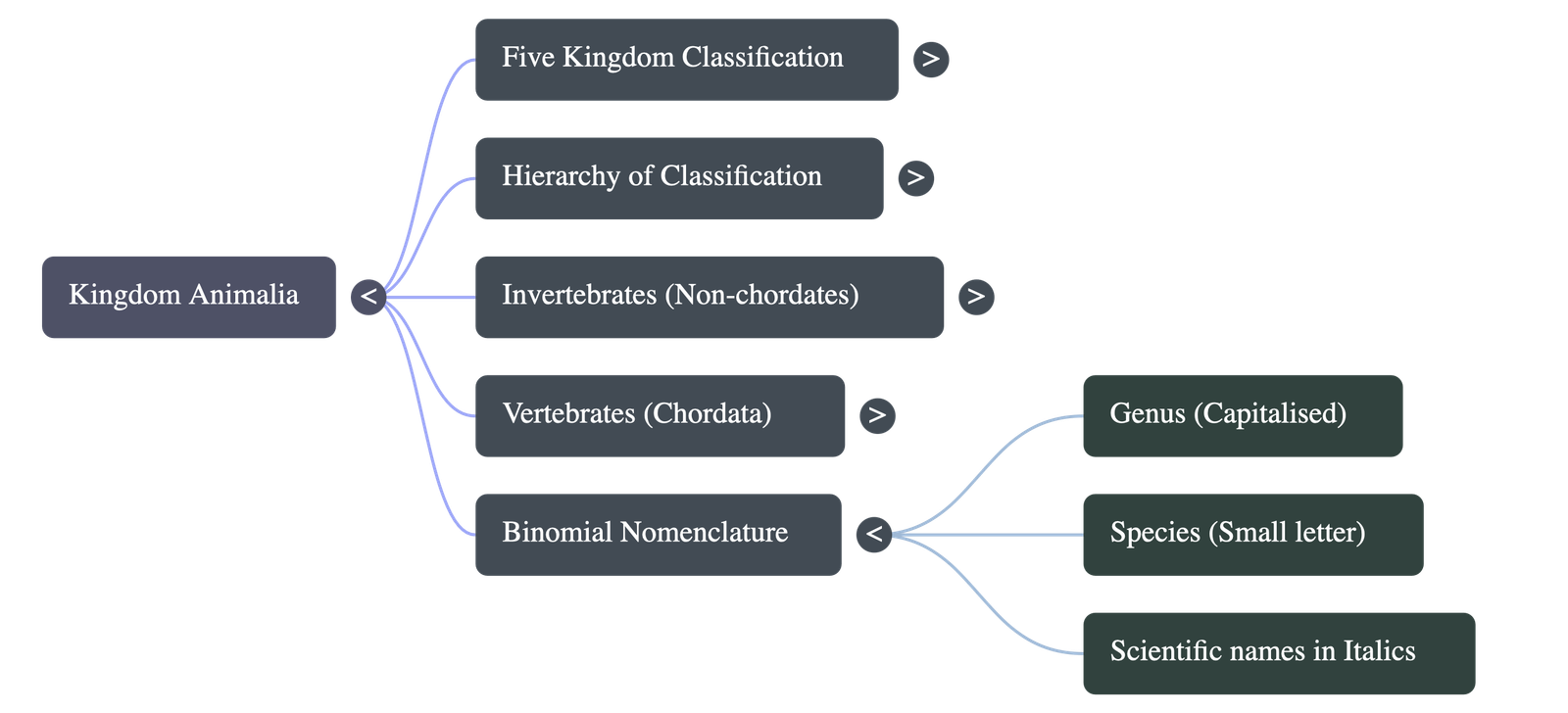
- Naming Organisms: Common names can be confusing and highly variable by region. Scientific naming (Binomial Nomenclature, introduced by Linnaeus) assigns a universal two-part name comprising the Genus and the Species.
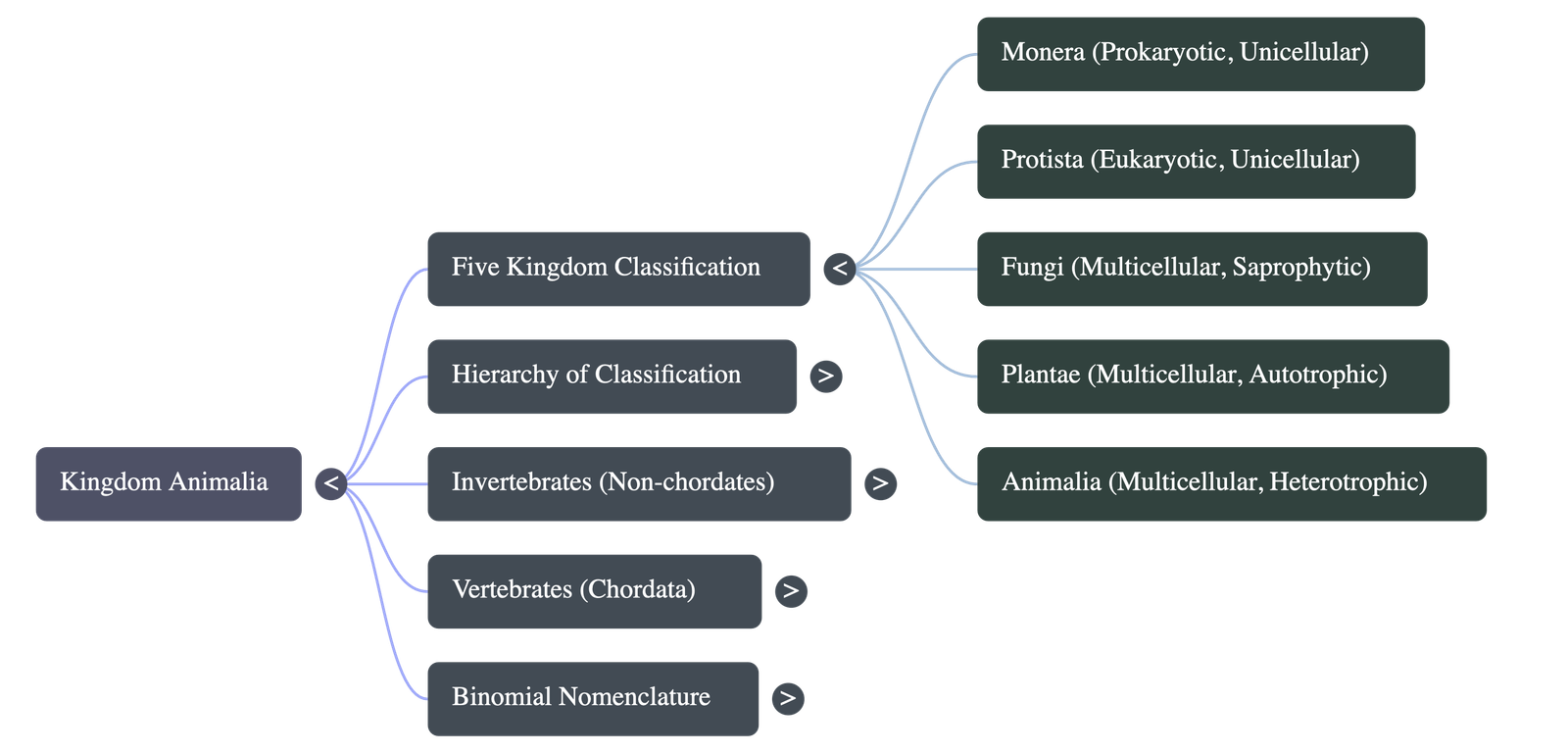
2. The Five Kingdom Classification
- Drawbacks of Old System: The traditional two-kingdom scheme (Plantae and Animalia) failed to properly classify bacteria (prokaryotic), fungi (lacking chlorophyll), and unique single-celled organisms like Euglena (which has plant and animal traits).
- Kingdom Monera: Unicellular and prokaryotic organisms with no organized nucleus (e.g., bacteria).
- Kingdom Protista: Unicellular and eukaryotic organisms with a well-defined nucleus (e.g., Amoeba, Paramecium, Euglena).
- Kingdom Fungi: Mostly multicellular, eukaryotic, and saprophytic. They lack chlorophyll and consist of thread-like hyphae (e.g., Bread mould, Mushroom, Yeast).
- Kingdom Plantae: Multicellular, eukaryotic, and autotrophic (photosynthetic) organisms.
- Kingdom Animalia: Multicellular, eukaryotic, and heterotrophic organisms that typically lack a cell wall and chlorophyll.
3. Body Symmetry & Directions
- Symmetry Types:
- Asymmetry: Cannot be divided into two similar halves (e.g., Amoeba).
- Radial Symmetry: Any line through the center divides the body into similar halves (e.g., Starfish).
- Bilateral Symmetry: Body can be divided into similar left and right halves along only one plane (e.g., Humans, Housefly).
- Body Directions: Anterior (front), Posterior (hind), Dorsal (upper side/back), Ventral (lower side/underside), and Lateral (sides).
4. Vertebrates vs. Invertebrates
- Vertebrates: Possess an internal skeleton, a backbone (notochord/vertebral column), a tail (usually), a ventral heart, a hollow dorsal nerve cord, and red blood containing haemoglobin.
- Invertebrates: Lack an internal skeleton and backbone, have no tail, possess a dorsal heart (if present), a solid ventral nerve cord, and haemoglobin (if present) is dissolved in the blood plasma rather than in red cells.
5. Invertebrate Phyla
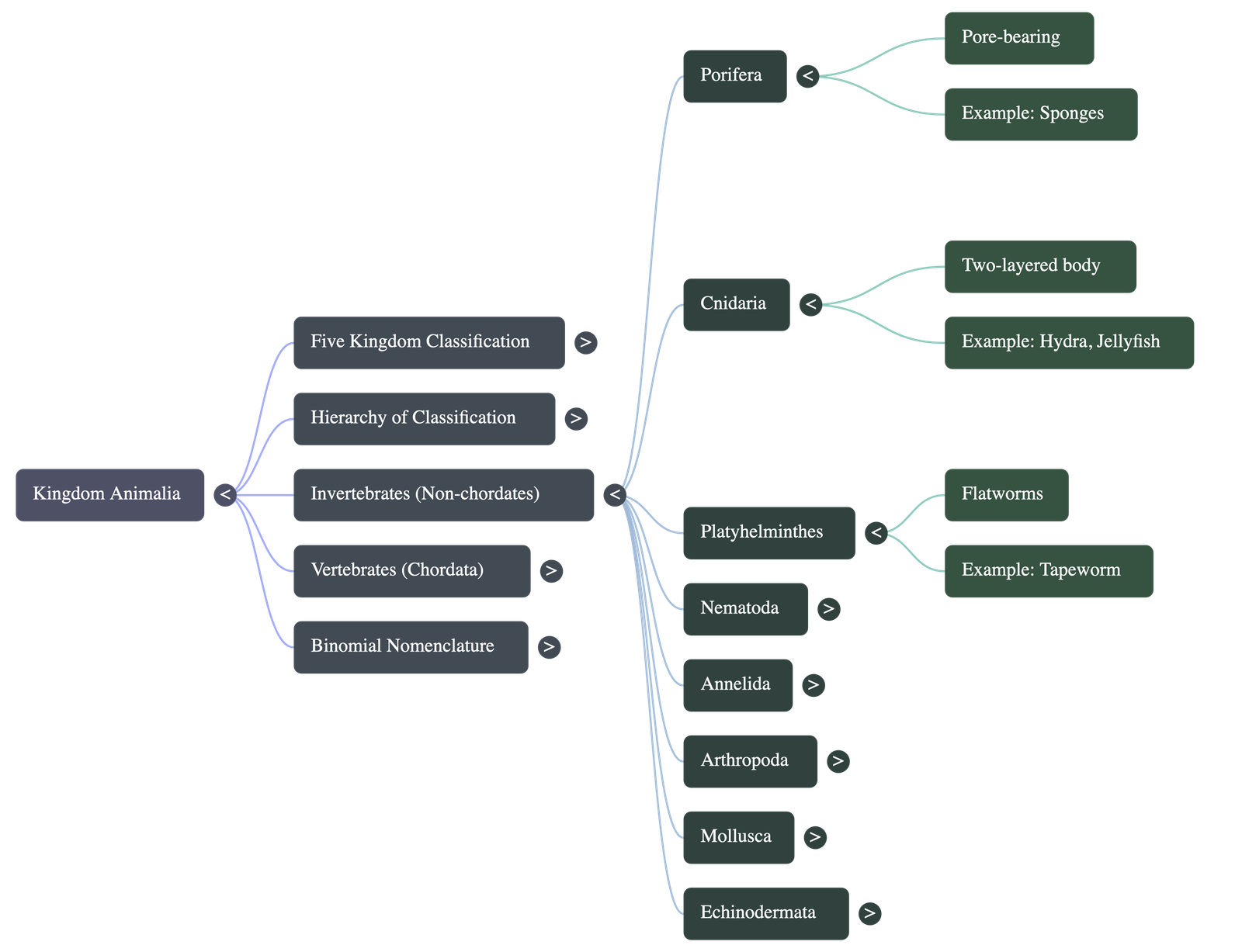
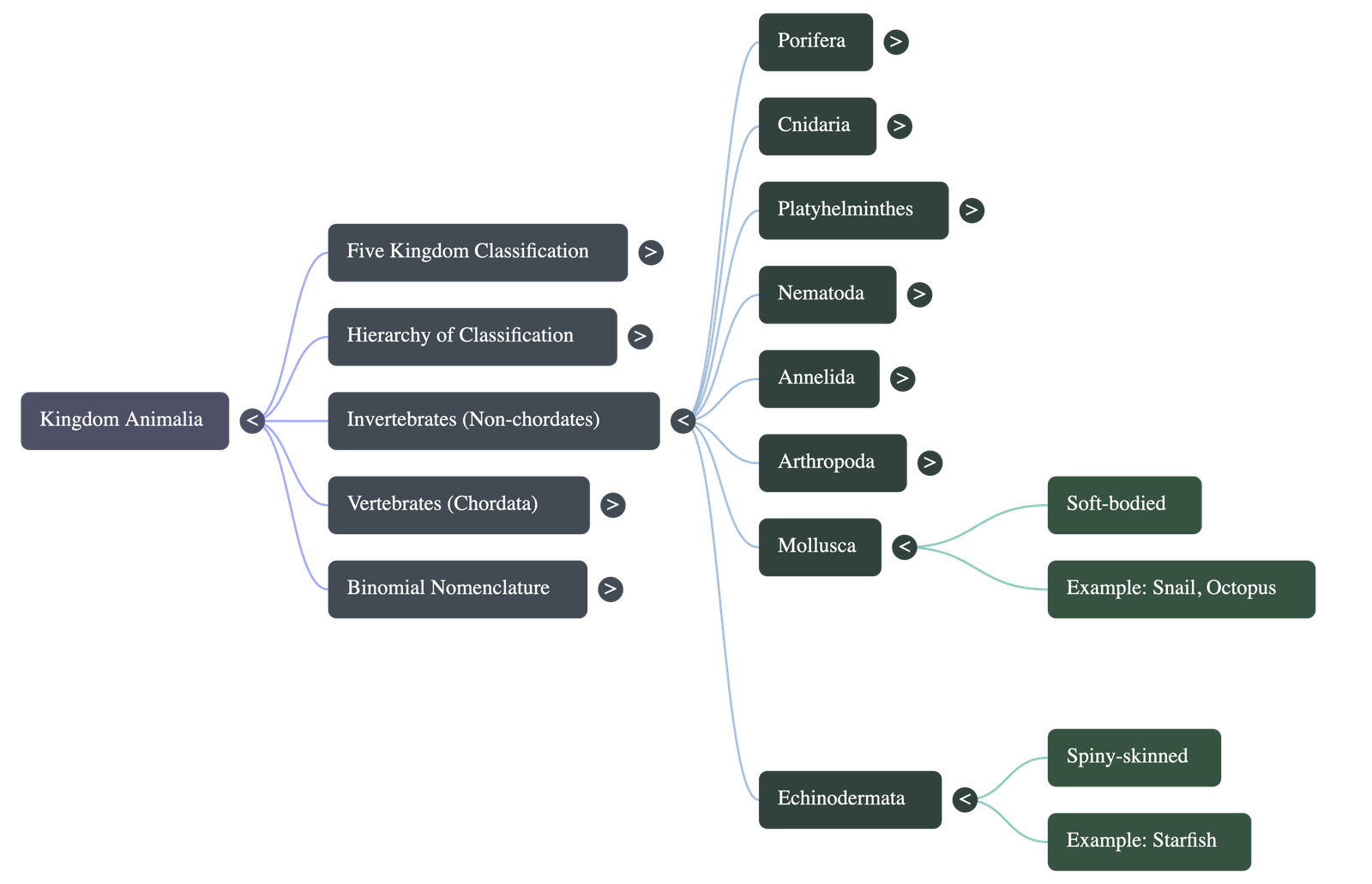
- Porifera (Pore-bearing animals): Simplest multicellular animals. Hollow tube body with many tiny pores for water entry and a single large exit opening (e.g., Sponges).
- Cnidaria / Coelenterata: Sac-like animals with a two-layered body wall enclosing a single cavity (coelenteron). They have tentacles to catch food and a single opening functioning as both mouth and anus (e.g., Hydra, Jellyfish, Corals).
- Platyhelminthes (Flatworms): Small, flat, unsegmented worms without a true body cavity (coelom). They have a single opening. Many are parasitic (e.g., Tapeworm, Liverfluke), while some are free-living (e.g., Planaria).
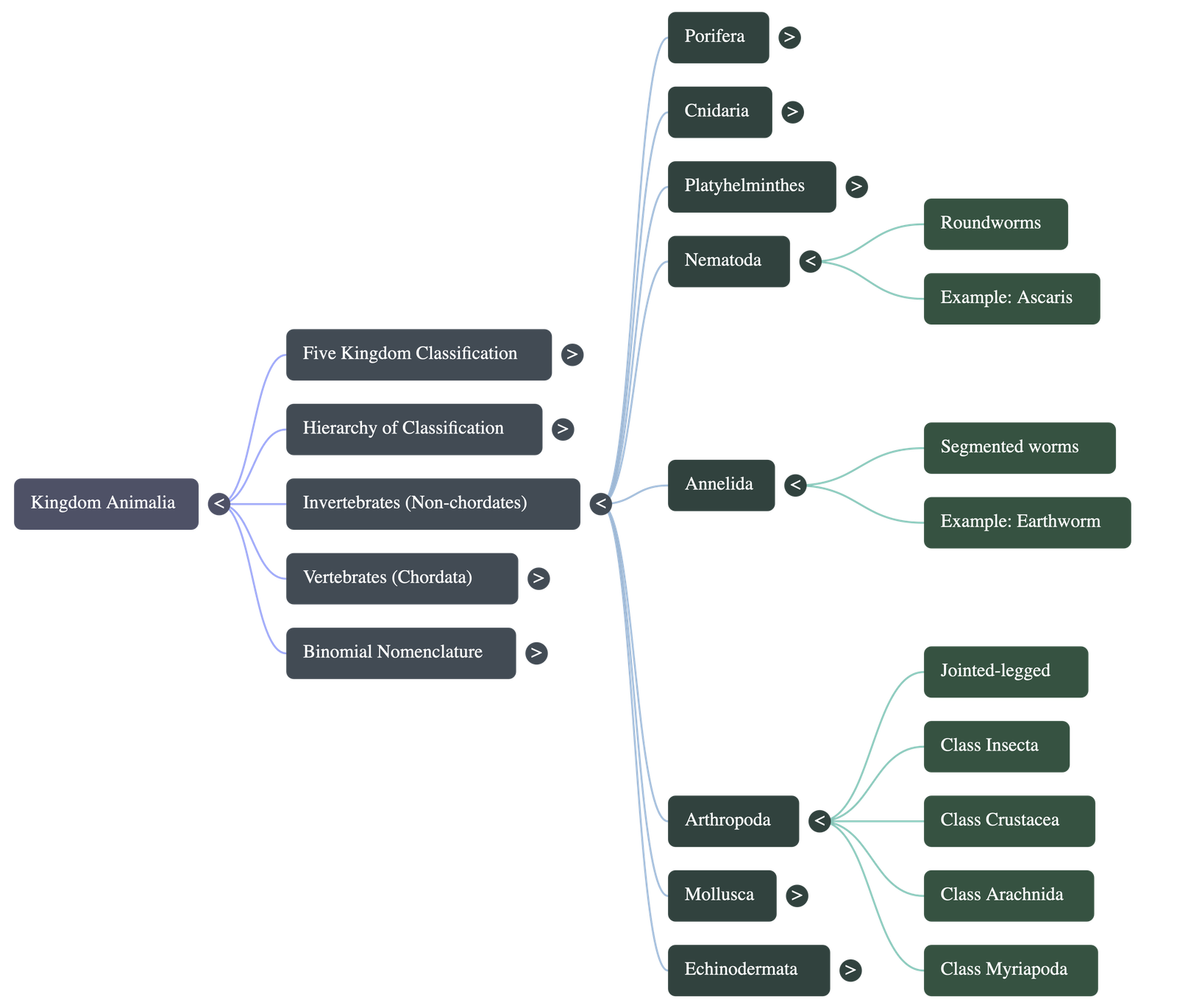
- Nematoda (Roundworms): Long, cylindrical, unsegmented worms with a false body cavity. They possess an alimentary canal with two distinct openings: mouth and anus. Mostly parasitic (e.g., Ascaris, Hookworm).
- Annelida (Segmented worms): Cylindrical bodies divided into ring-like segments. They have a true body cavity (coelom) and a distinct mouth and anus (e.g., Earthworms, Leeches). Earthworms are highly beneficial in agriculture as they aerate the soil and their castings enrich it with nitrogen.
- Arthropoda (Jointed-legged animals): The largest phylum. Characterized by jointed limbs, segmented bodies, and a hard exoskeleton made of chitin which is periodically shed (moulting). Divided into distinct classes: Crustacea (e.g., crabs), Myriapoda (e.g., centipedes), Insecta (e.g., butterflies, houseflies), and Arachnida (e.g., spiders, scorpions).
- Mollusca: Animals with soft, unsegmented bodies often protected by a hard calcareous shell. They move using a muscular foot (e.g., Snail, Octopus, Oyster).
- Echinodermata (Spiny-skinned animals): Unsegmented marine animals with a spiny surface, exoskeleton, radial symmetry, and tube-feet for movement (e.g., Starfish, Sea urchin).
6. Phylum Chordata (Vertebrates)
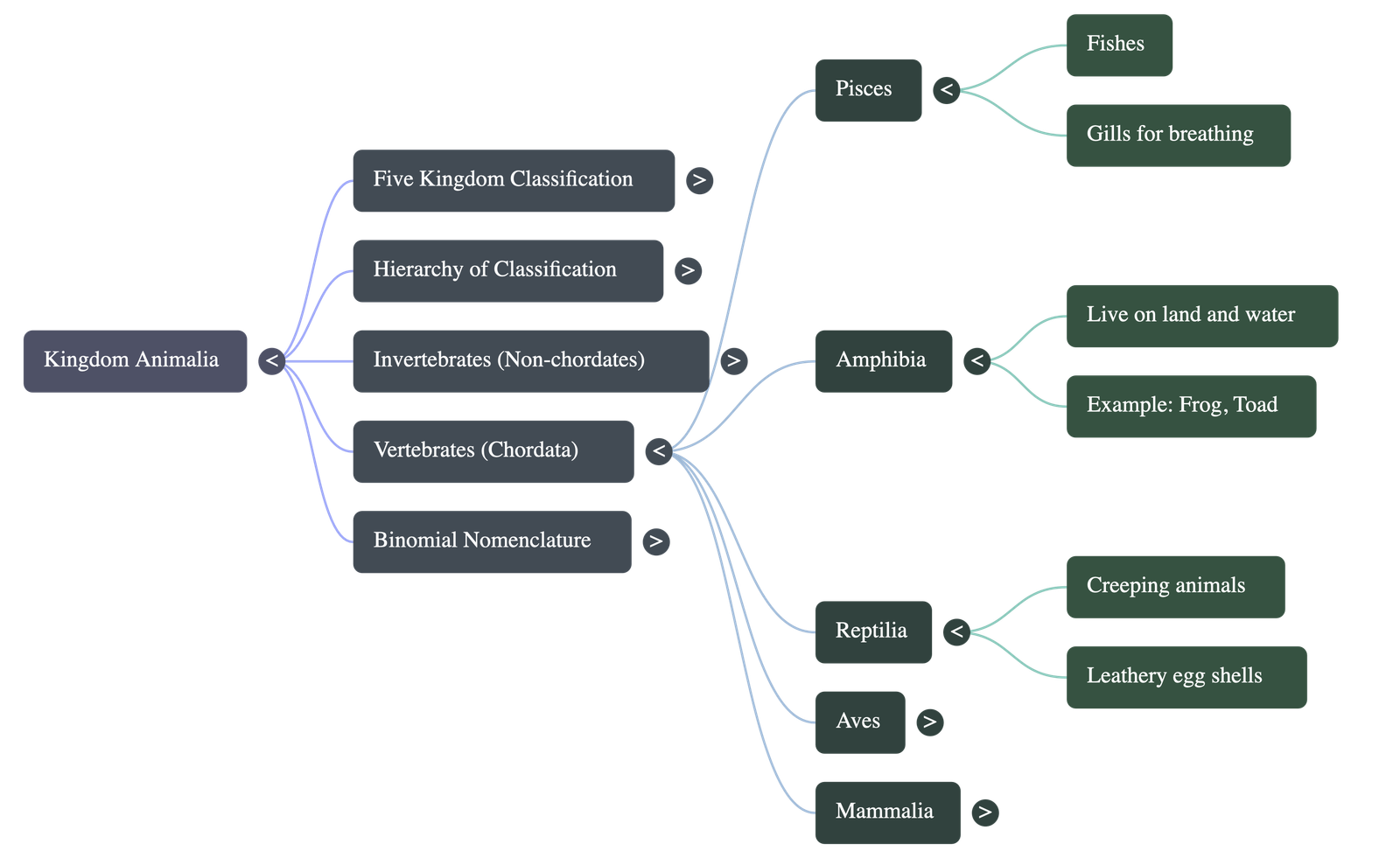
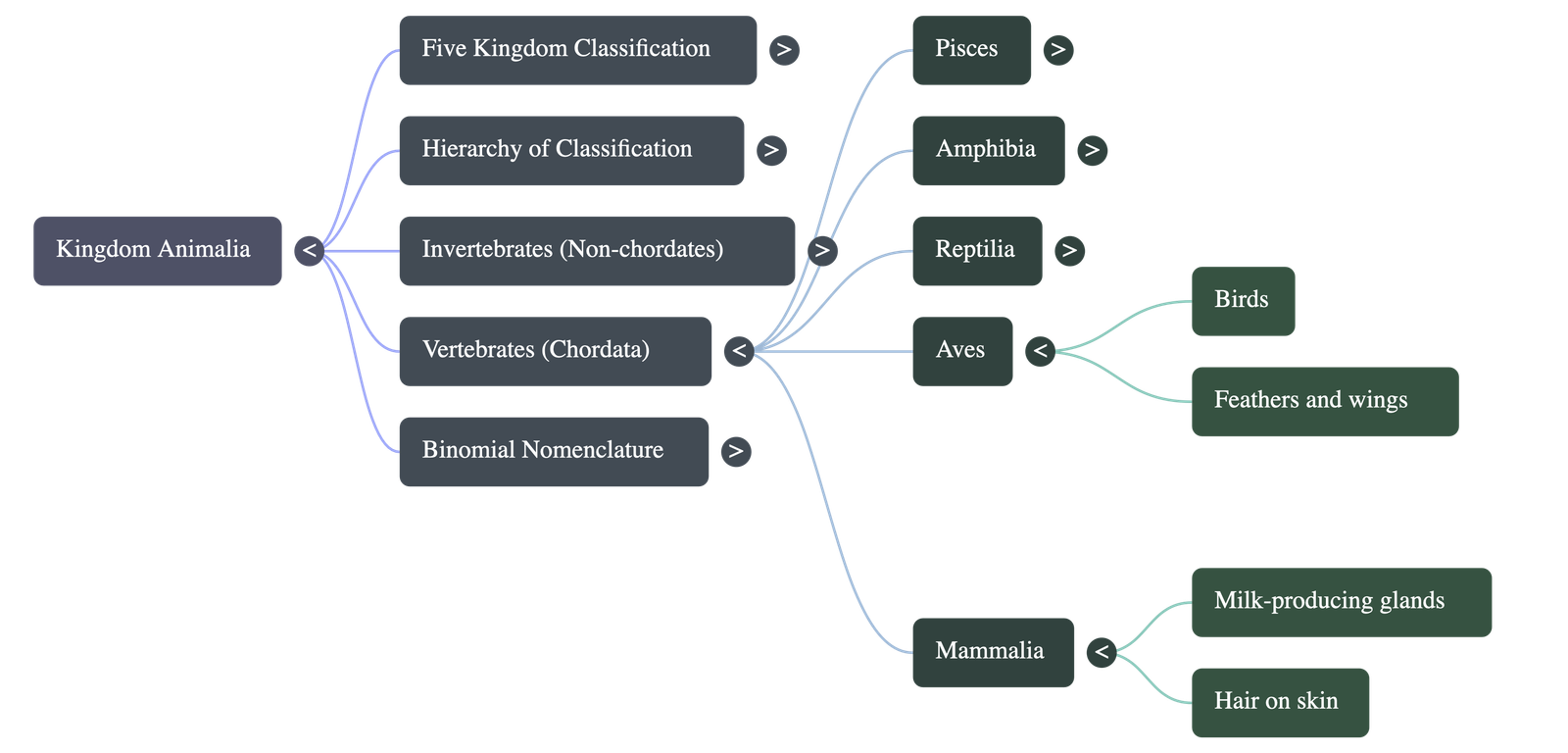
All chordates possess a notochord at some stage in their lives. In vertebrates, this is replaced by a backbone. Vertebrates are further divided into five distinct classes:
- Pisces (Fishes): Fully aquatic. Breathe through gills, possess fins instead of limbs, and have a two-chambered heart. They are cold-blooded and mostly covered in scales. Includes both cartilaginous fish (e.g., sharks) and bony fish (e.g., trout, rohu).
- Amphibia: Spend life in water and on land. Have smooth, non-scaly, moist skin. Larvae breathe via gills; adults breathe using lungs. They have a three-chambered heart, are cold-blooded, and lay eggs in water (e.g., Frogs, Toads, Salamanders).
- Reptilia: Adapted for land living. Possess dry, horny scales and breathe via lungs. They lay leathery eggs and are cold-blooded. Most have a three-chambered heart (ventricle is partially divided) (e.g., Lizards, Snakes, Crocodiles).
- Aves (Birds): Aerial animals completely covered with feathers. Forelimbs are modified into wings, and they breathe through lungs. They are warm-blooded, possess a four-chambered heart, and lay eggs with calcareous shells (e.g., Pigeon, Ostrich, Penguin).
- Mammalia (Hairy quadrupeds): The most highly developed animals. They have hair on their skin, external ears (pinnae), and are warm-blooded with a four-chambered heart. A key characteristic is a muscular diaphragm separating the thorax and abdomen. They give birth to live young (viviparous) and nourish them via mammary glands. (Exceptions: egg-laying mammals like the Duckbilled platypus and Spiny ant-eater).
Do checkout all questions & answers of this chapter.
Quick Navigation:
| | | |
1 / 1
Quick Navigation:
| | | |