Quick Navigation:
| | | |
Skeleton - Movement and Locomotion
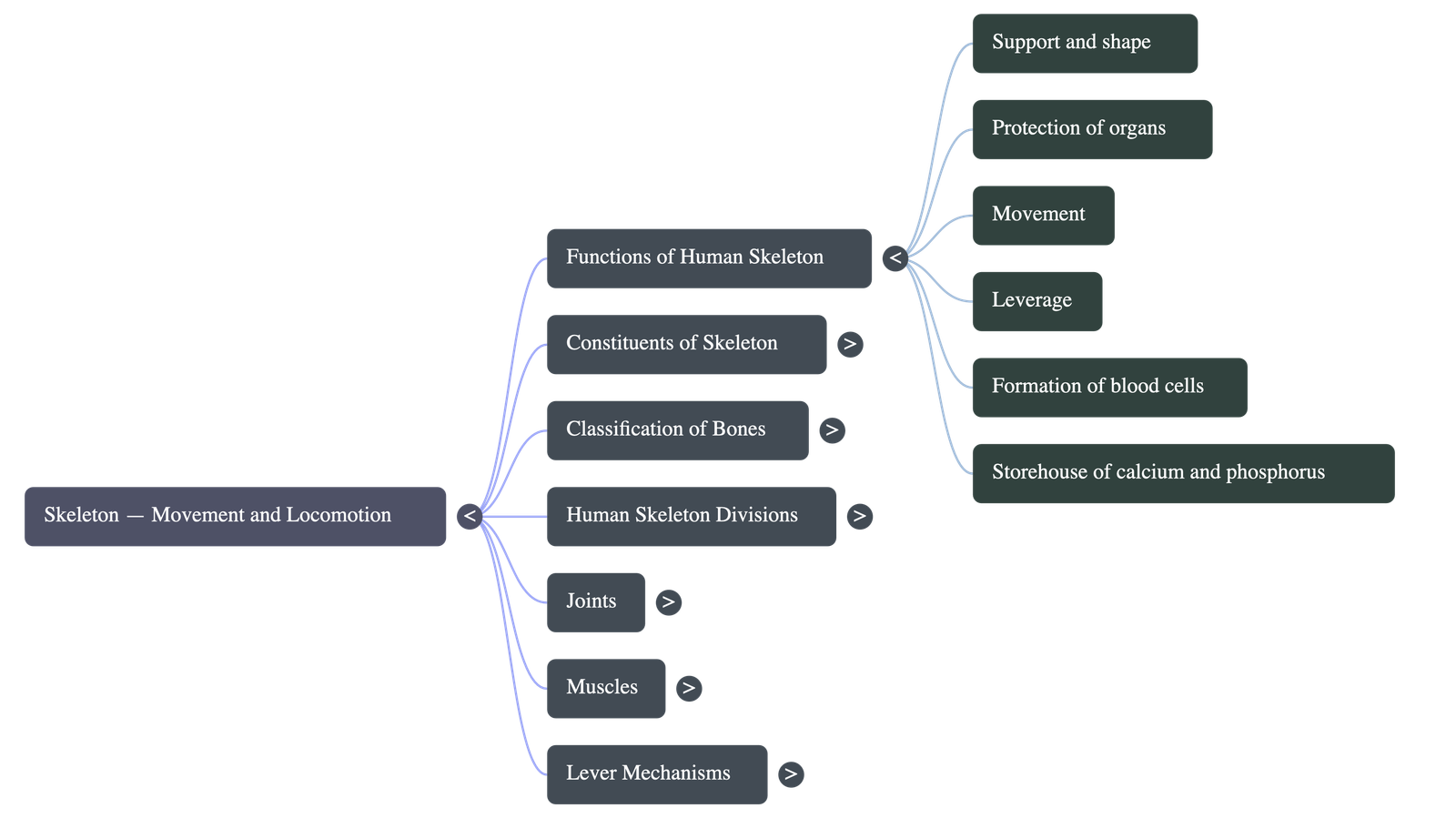
1. Functions of the Human Skeleton
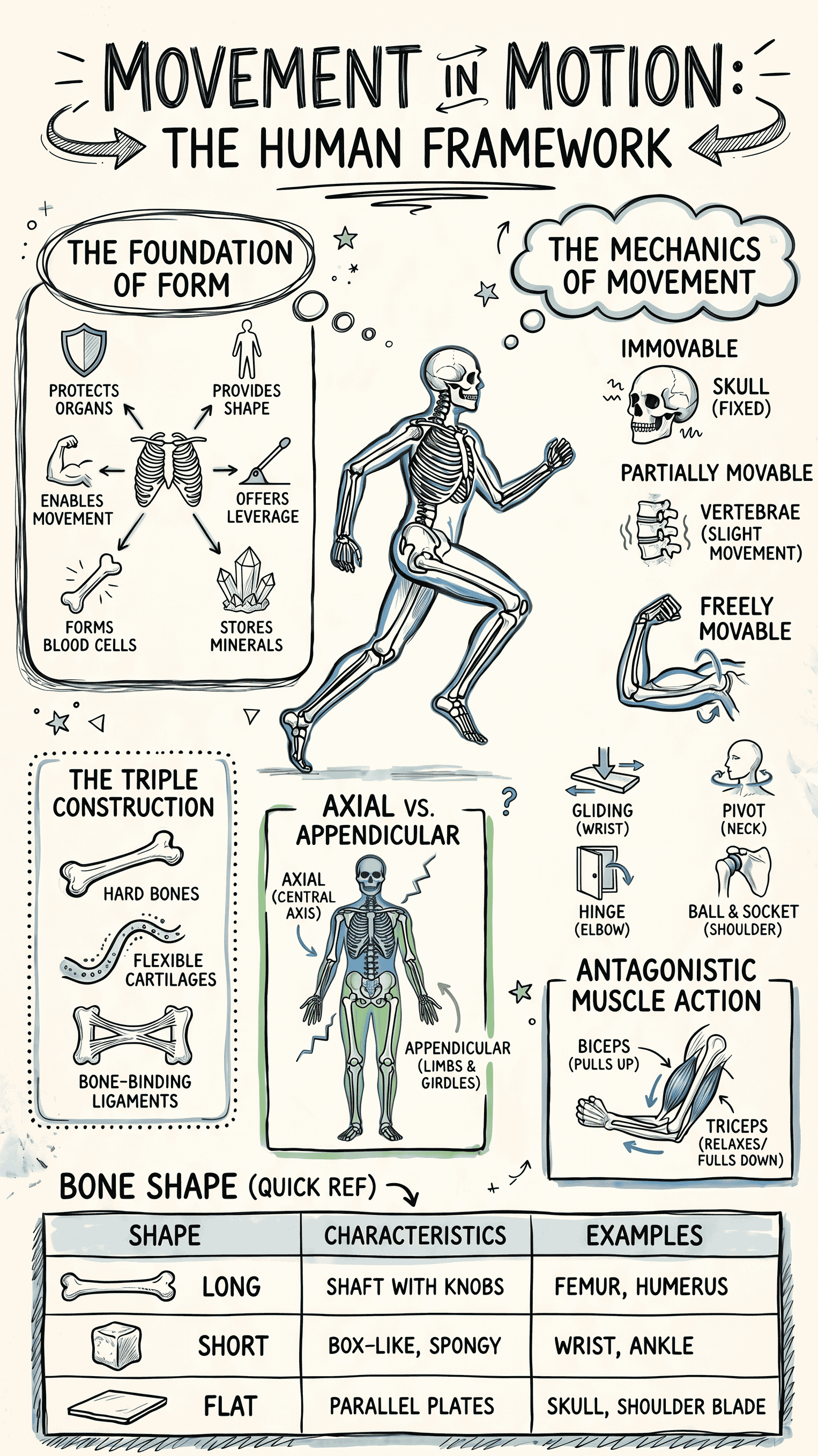
- Support and Shape: Provides a robust framework that supports all soft body parts and gives the body a definite shape.
- Protection: Encases and shields delicate internal organs (e.g., the skull protects the brain, ribs protect the heart and lungs).
- Movement: Bones are articulated in a way that allows them to be moved by muscles attached to them, facilitating locomotion.
- Leverage: Bones and joints act as levers, multiplying the speed and distance of muscle-driven movements.
- Formation of Blood Cells: Central hollow spaces in long bones contain marrow tissue responsible for producing red and white blood cells.
- Mineral Storehouse: Acts as a major reservoir for essential minerals, specifically calcium and phosphorus.
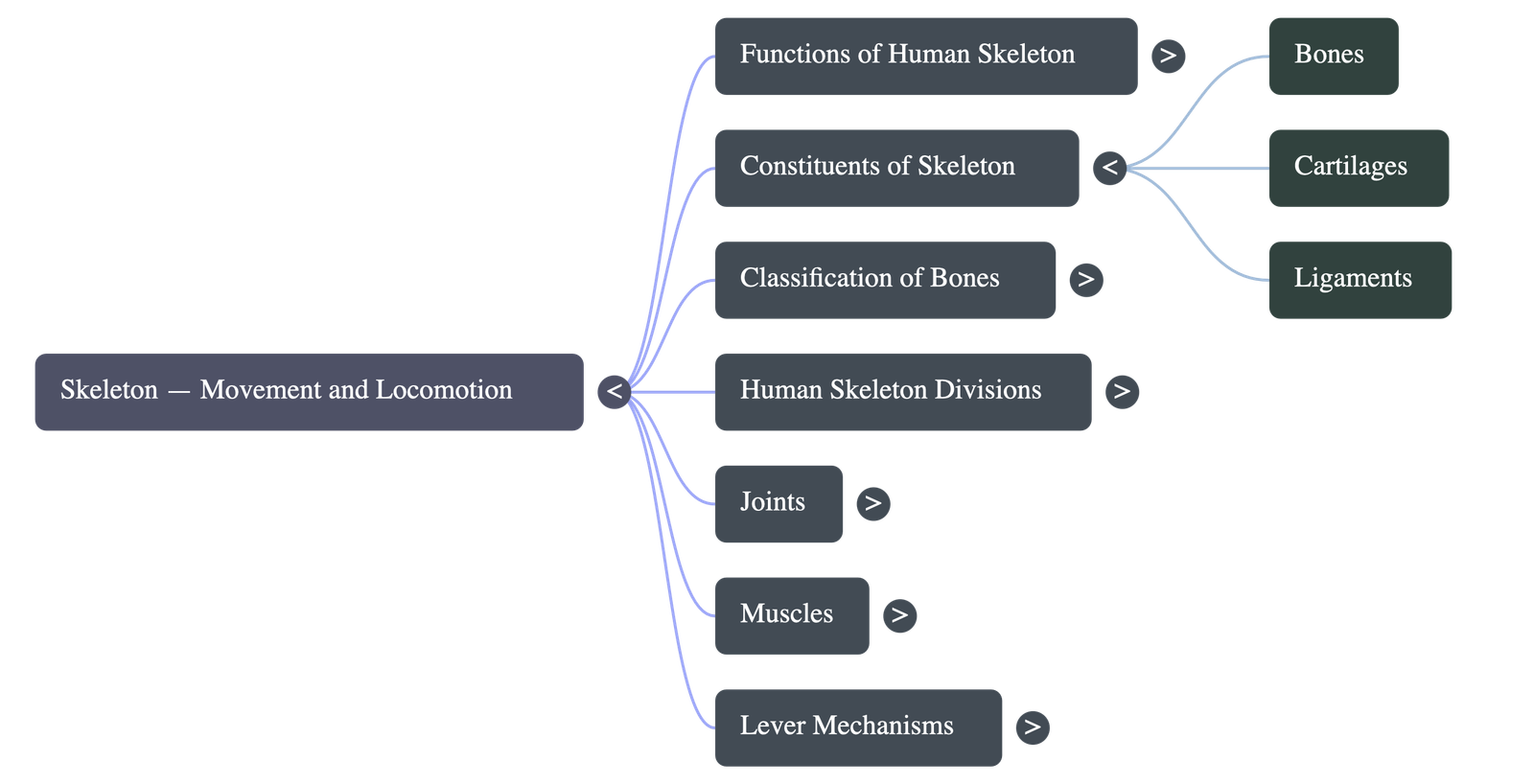
2. Constituents and Bone Structure
- Bones: The hard framework of the body made of organic and inorganic materials. Heating a bone destroys organic matter, making it brittle. Placing it in weak acid dissolves inorganic matter (calcium), making it soft and flexible (decalcified).
- Cartilages: Tough but flexible connective tissues that provide support (e.g., external ears, tip of the nose).
- Ligaments: Fibrous tissues that bind bones tightly together at joints.
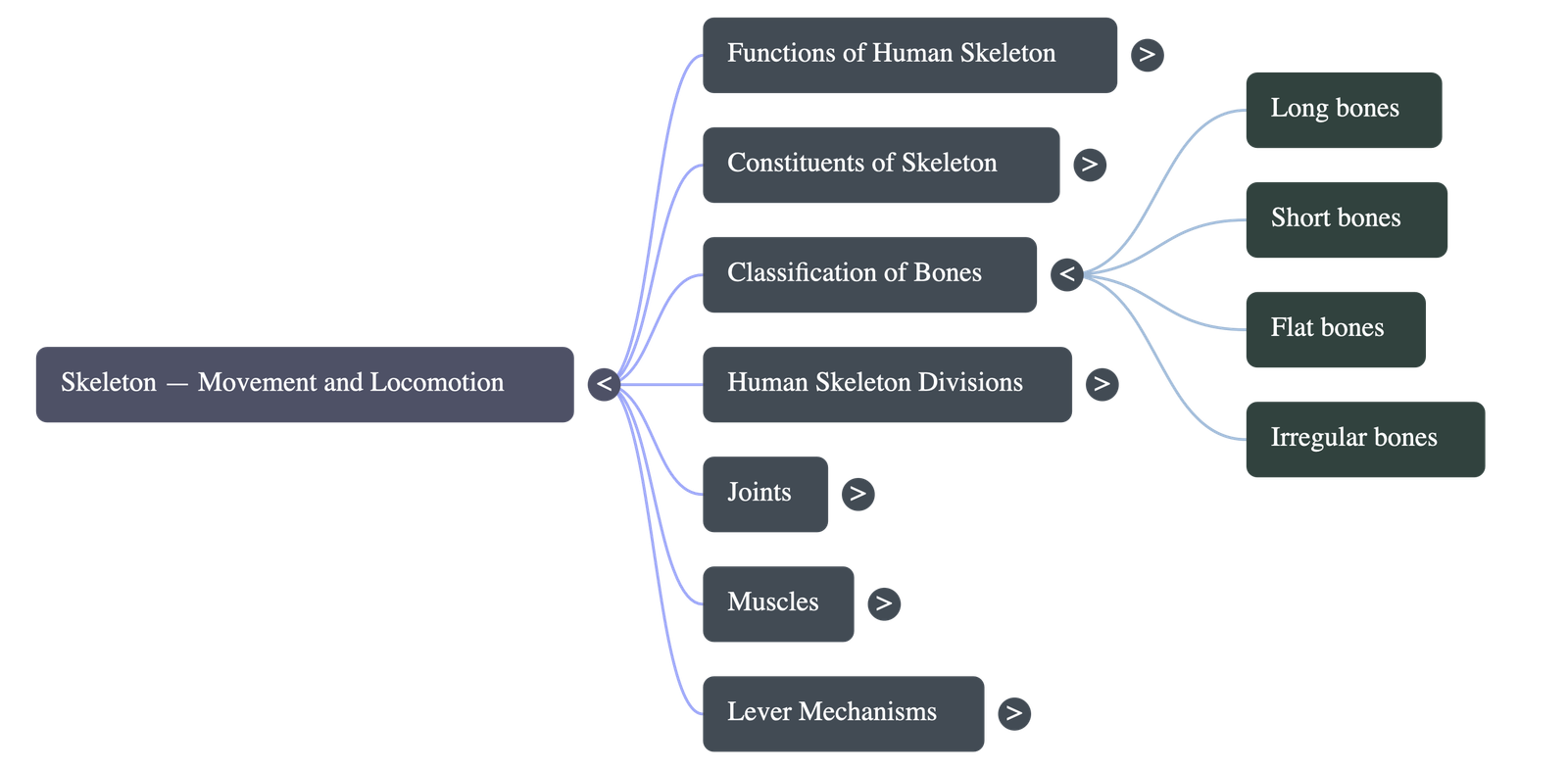
- Shape Classification: Bones are classified into four types: Long (arms/legs), Short (ankles/wrists), Flat (skull/sternum), and Irregular (vertebrae/facial bones).
- Structure of a Long Bone: Covered by a membrane called the periosteum. Contains bone cells (osteocytes) in concentric rings. The hollow central cavity holds yellow marrow (fat storage), while the ends contain spongy bone with red marrow (blood cell production).
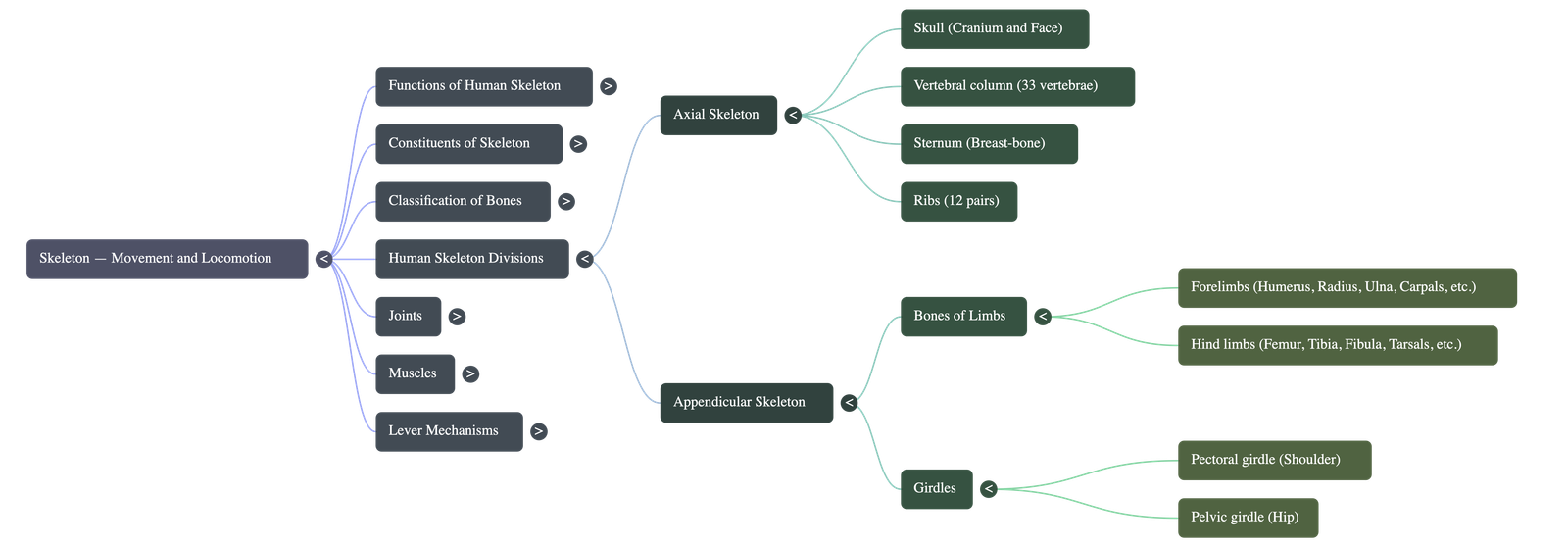
3. Divisions of the Human Skeleton (206 Bones)
A. The Axial Skeleton (80 Bones)
Forms the central framework of the body.
- Skull: Consists of the cranium (brain-box) with 8 bones and the facial region with 14 bones. Includes the foramen magnum (hole for the spinal cord) and the hyoid bone (supports the tongue).
- Vertebral Column: Made of 33 individual ring-like vertebrae (26 when fused). Regions include: Cervical (7, including atlas and axis), Thoracic (12), Lumbar (5), Sacrum (5 fused into 1), and Coccyx (4 fused into 1). Protects the spinal cord and maintains posture.
- Sternum: The flat breast-bone positioned in the middle of the chest.
- Ribs: 12 pairs forming a bony cage. Includes true ribs (attached directly to sternum), false ribs (attached to the seventh rib), and floating ribs (last two pairs, unattached to the sternum).
B. The Appendicular Skeleton (126 Bones)
Includes the bones of the limbs and the girdles that attach them to the axial skeleton.
- Forelimbs (Arms): Includes the humerus (upper arm), radius and ulna (lower arm), carpals (wrist), metacarpals (palm), and phalanges (fingers).
- Hind Limbs (Legs): Includes the femur (thigh bone—the longest and strongest bone), tibia and fibula (shank), tarsals (ankle), metatarsals (foot), phalanges (toes), and patella (knee-cap).
- Shoulder (Pectoral) Girdle: Comprises the shoulder blade (scapula) and collar-bone (clavicle). Features the glenoid cavity for arm articulation.
- Hip (Pelvic) Girdle: Made of two hip bones (ilium, ischium, pubis fused). Features the acetabulum for thigh bone articulation. It is wider and trough-shaped in females to accommodate pregnancy.
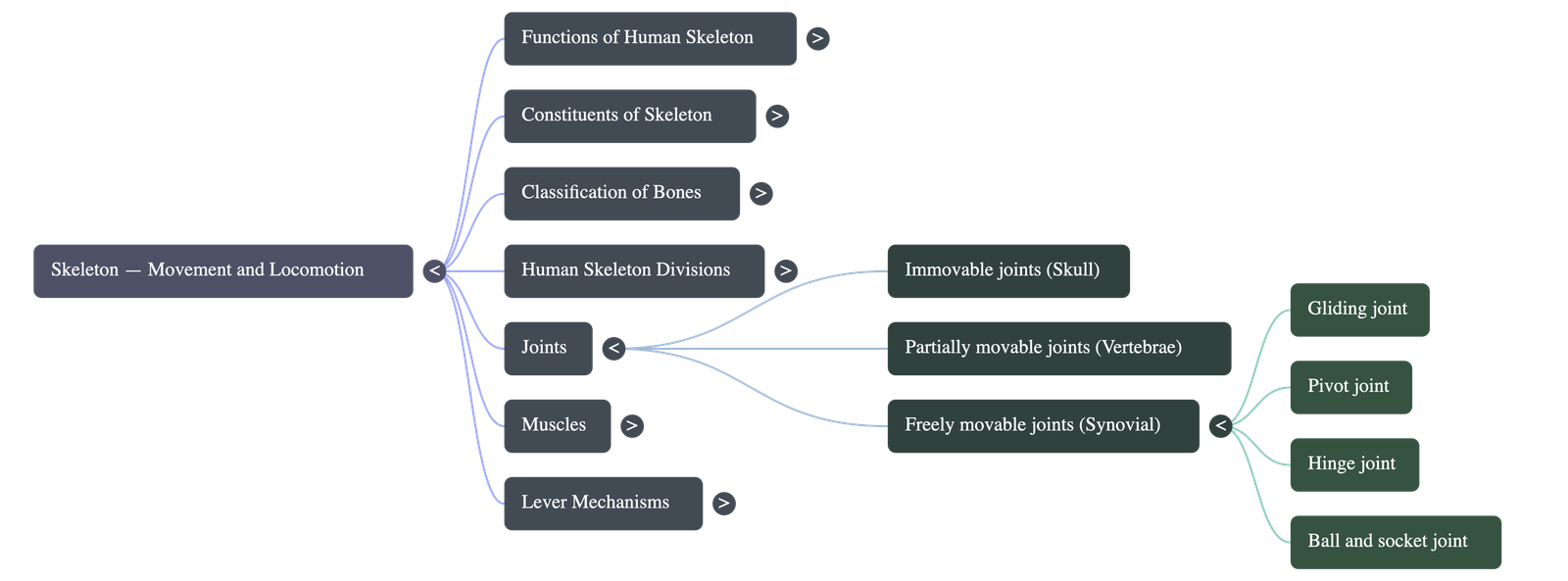
4. Joints
The meeting point of two separate bones, classified by movement capability:
- Immovable Joints: Bones are fixed tightly together allowing zero movement (e.g., bones of the cranium).
- Partially Movable Joints: Allow restricted movement; joined by cartilage (e.g., between adjacent vertebrae, ribs and sternum).
- Freely Movable (Synovial) Joints: Allow considerable movement. They are held by ligaments, enclosed in a capsule, and lubricated by synovial fluid to reduce friction. Four main types:
- Gliding Joint: Bones slide over one another (e.g., wrist and ankle bones).
- Pivot Joint: One bone rotates over a pivot-like end of another (e.g., skull resting on the axis vertebra).
- Hinge Joint: Allows movement in only one plane, like a door hinge (e.g., elbow, knee, fingers).
- Ball and Socket Joint: A rounded bone end fits into a cup-like depression, providing multi-directional movement (e.g., shoulder and hip joints).
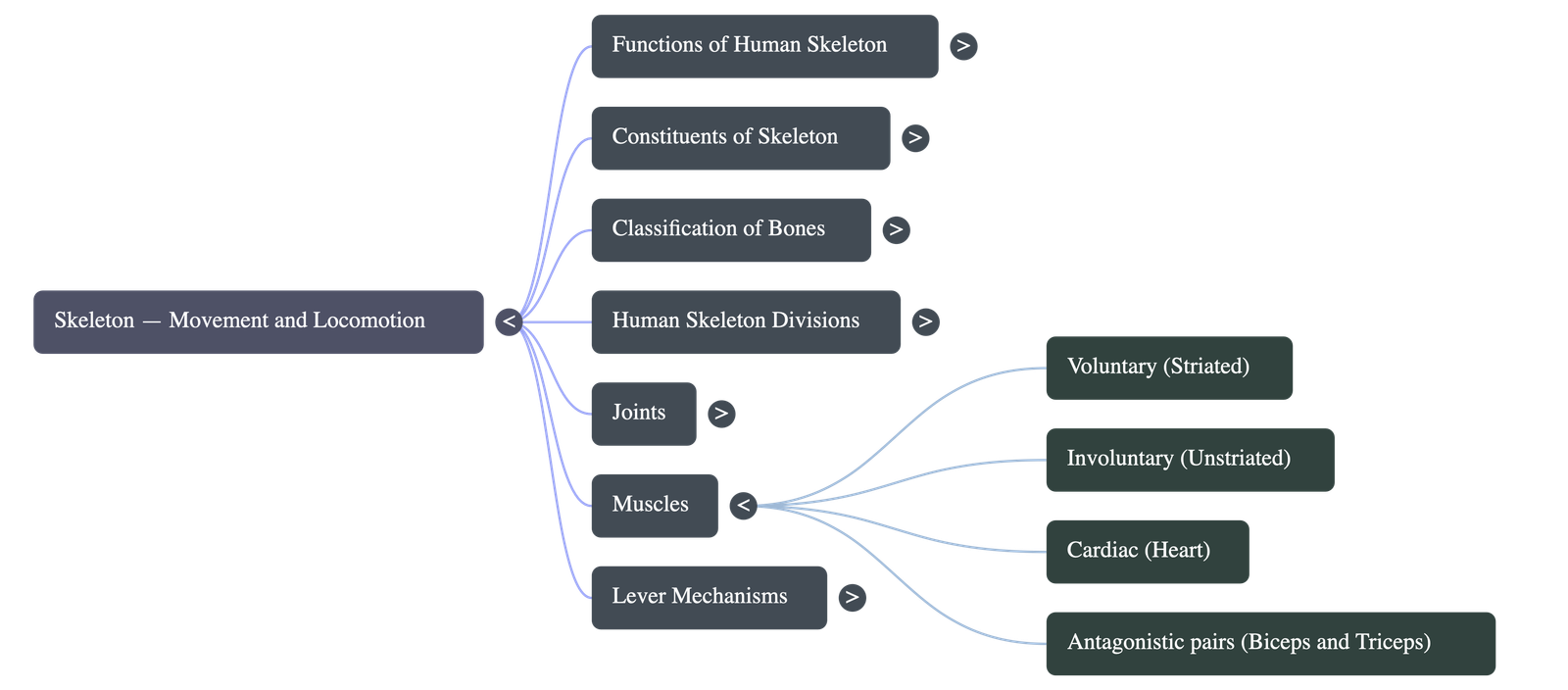
5. Muscles
- Function: Contractile tissues that enable movement, maintain posture, and provide shape. They can only contract (shorten and pull) and relax; they cannot lengthen.
- Attachment: Attached to bones via tough structures called tendons. One end is usually fixed (origin) while the other is movable (insertion).
- Antagonistic Muscles: Pairs of muscles that cause opposing movements. For instance, the biceps (flexor) bends the arm, while the triceps (extensor) straightens it.
- Categories of Muscles:
- Voluntary: Under conscious control (e.g., limbs).
- Involuntary: Not under conscious control (e.g., diaphragm, internal organs).
- Cardiac: Involuntary muscles specifically forming the walls of the heart.
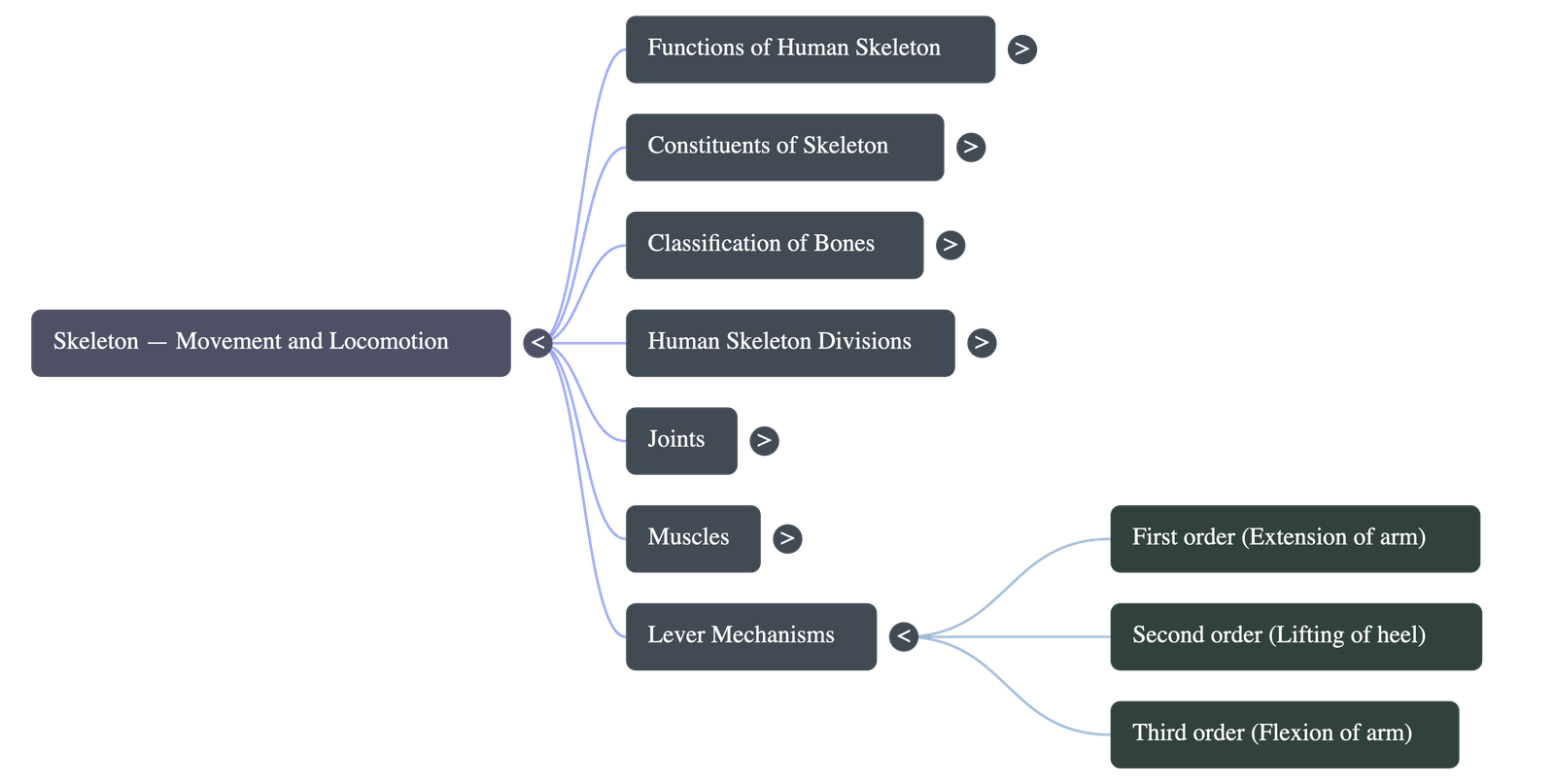
6. Lever Mechanisms in the Human Body
Skeletal movements rely heavily on lever principles utilizing a fulcrum (joint), power (muscle force), and weight (body part).
- First Order Lever: Fulcrum is in the middle. Example: Extension of the elbow by the triceps muscle, or the skull resting on the top vertebrae.
- Second Order Lever: Weight is in the middle. Example: Raising the body's weight onto the toes using the calf (gastrocnemius) muscle.
- Third Order Lever: Power is in the middle. Example: Biceps muscle flexing the forearm at the elbow.
Do checkout all questions & answers of this chapter.
Quick Navigation:
| | | |
1 / 1
Quick Navigation:
| | | |