Quick Navigation:
| | | |
Bacteria and its Economic Importance
1. General Characteristics & Classification
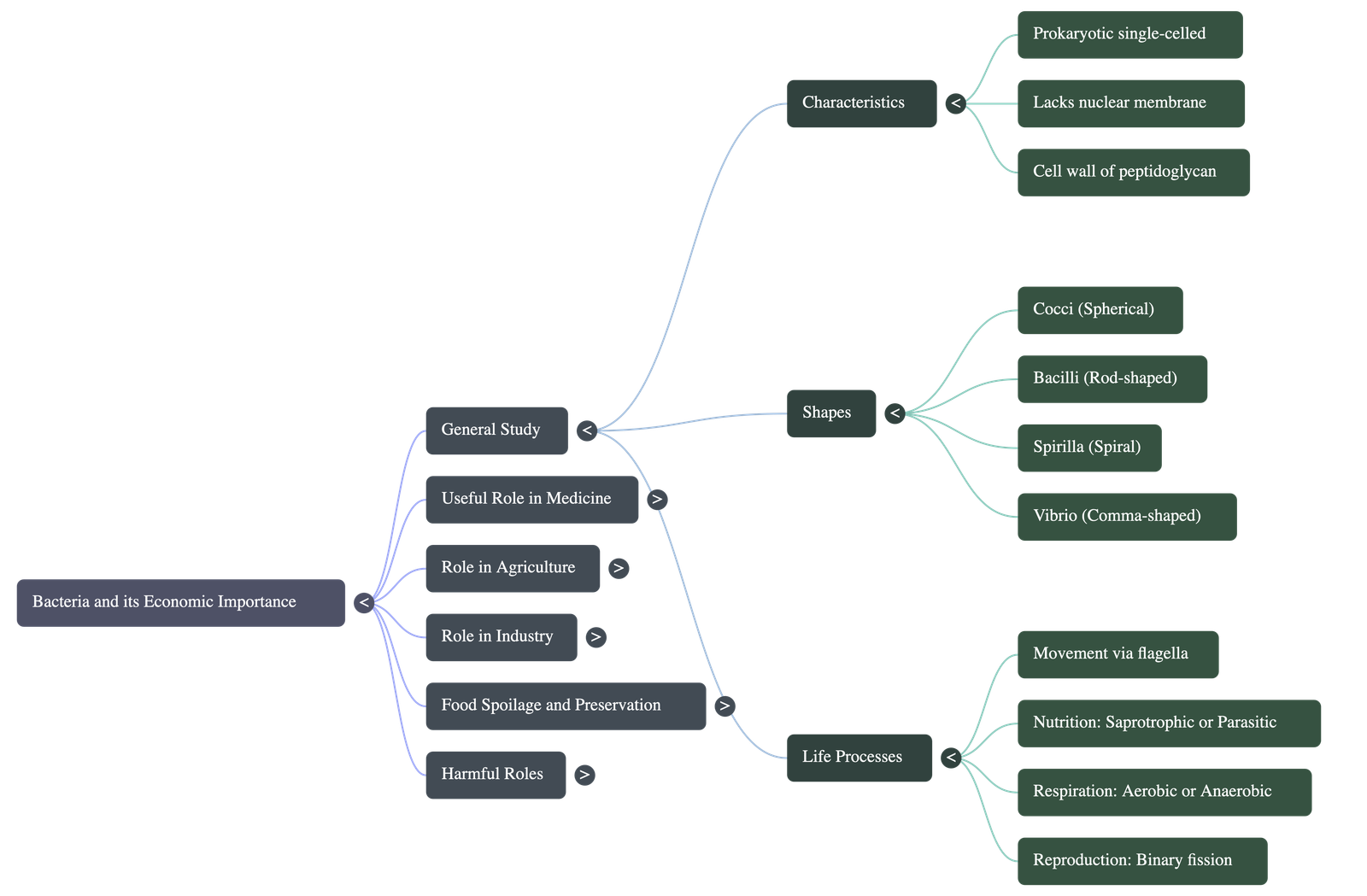
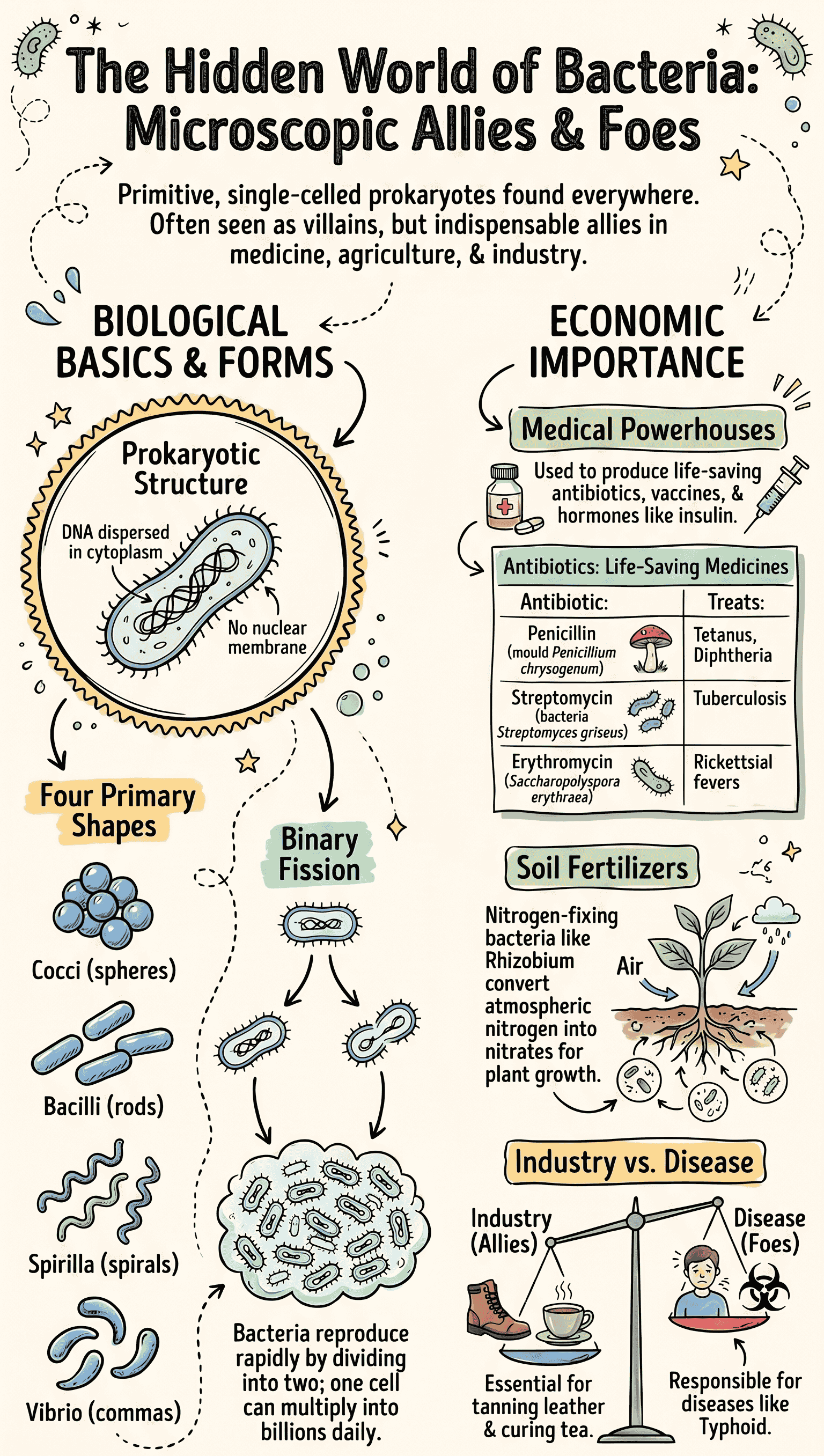
- Primitive Prokaryotes: Bacteria are single-celled, prokaryotic organisms lacking a true nucleus and nuclear membrane. Their genetic material is dispersed in the cytoplasm.
- Ubiquitous Presence: They exist practically everywhere—in air, water, soil, food, and inside/outside living organisms.
- Size: They are the smallest living organisms, averaging 2 micrometres in length.
2. Shape and Structure
- Four Main Shapes: Cocci (spherical), Bacilli (rod-shaped), Spirilla (spiral/twisted), and Vibrio (comma-shaped). They can live singly, in pairs (diplococci), chains (streptococci), or clusters (staphylococci).
- Cell Wall: Possess a stiff, non-living cell wall made of peptidoglycan (not cellulose like plants).
- Internal Components: Contains protoplasm, cell membrane, cytoplasm (with vacuoles and granules), and a single circular chromatin (DNA) attached to the membrane.
- Exterior Appendages: Some have a slimy protective capsule or whip-like flagella for active locomotion in liquids.
3. Life Processes
- Nutrition: Mostly heterotrophic (relying on readymade food) acting as saprotrophs (feeding on dead organisms) or parasites (feeding on living hosts). They secrete enzymes to dissolve food before absorbing it.
- Respiration: Can be aerobic (absorbing atmospheric oxygen) or anaerobic (requiring no free oxygen; killed if exposed to air).
- Reproduction: Primarily asexual via rapid binary fission (cell division). A highly primitive form of sexual reproduction (conjugation) involves transferring plasmid DNA through a tube.
- Spore Formation: Not a reproduction method, but a survival mechanism. They form hard, protective spores to withstand unfavorable conditions like extreme dryness, heat, freezing, or poisonous chemicals.
4. Useful Role in Medicine
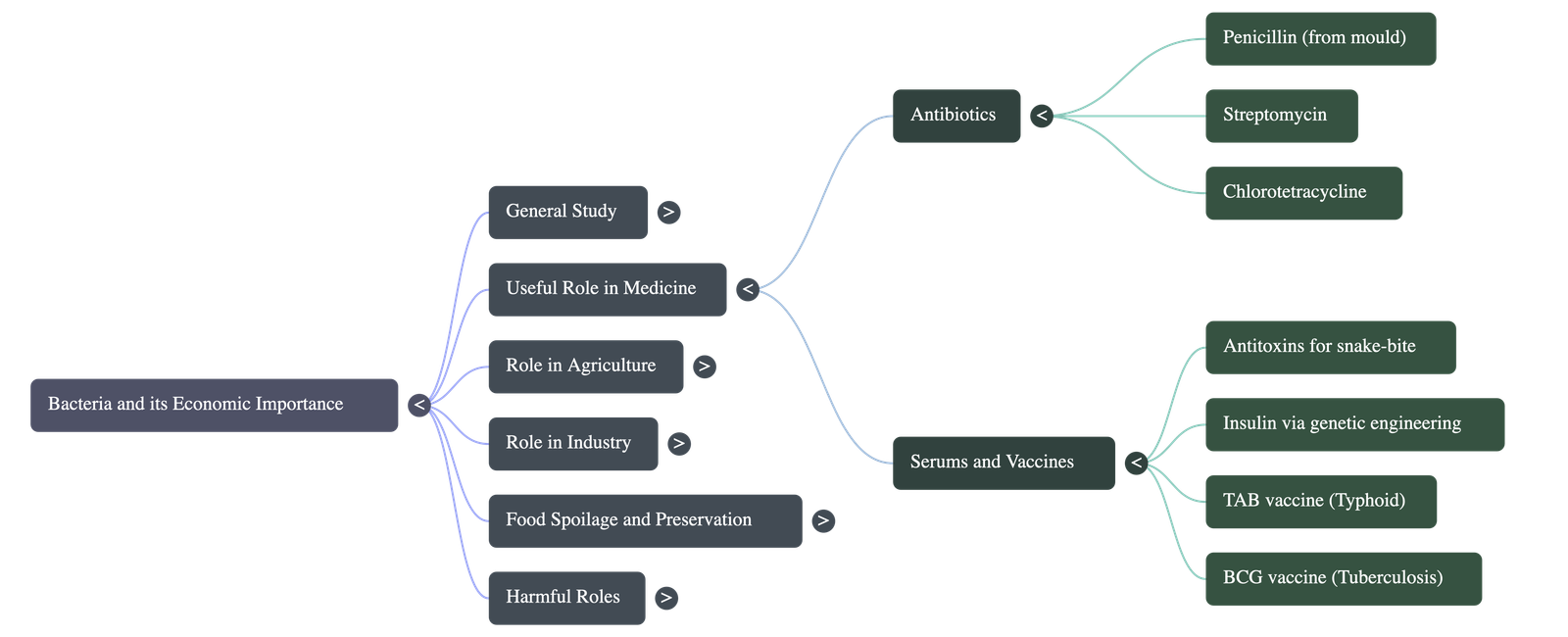
- Antibiotics: Bacteria produce chemical substances that kill or stop the growth of disease-producing microorganisms. Examples include streptomycin, chlorotetracycline, and erythromycin.
- Serums: Blood plasma containing antitoxins used as preventive measures against bacterial invasion or snake bites.
- Vaccines: Preparations of weakened or dead germs (like the TAB vaccine for typhoid or BCG for tuberculosis) injected to stimulate the body to produce immunity.
- Toxoids: Inactivated bacterial toxins used to produce immunity against diseases like diphtheria and tetanus.
- Genetic Engineering: Human genes introduced into rapidly growing bacteria (like E. coli) allow them to produce vital substances such as insulin and blood-clotting factors.
5. Role in Agriculture
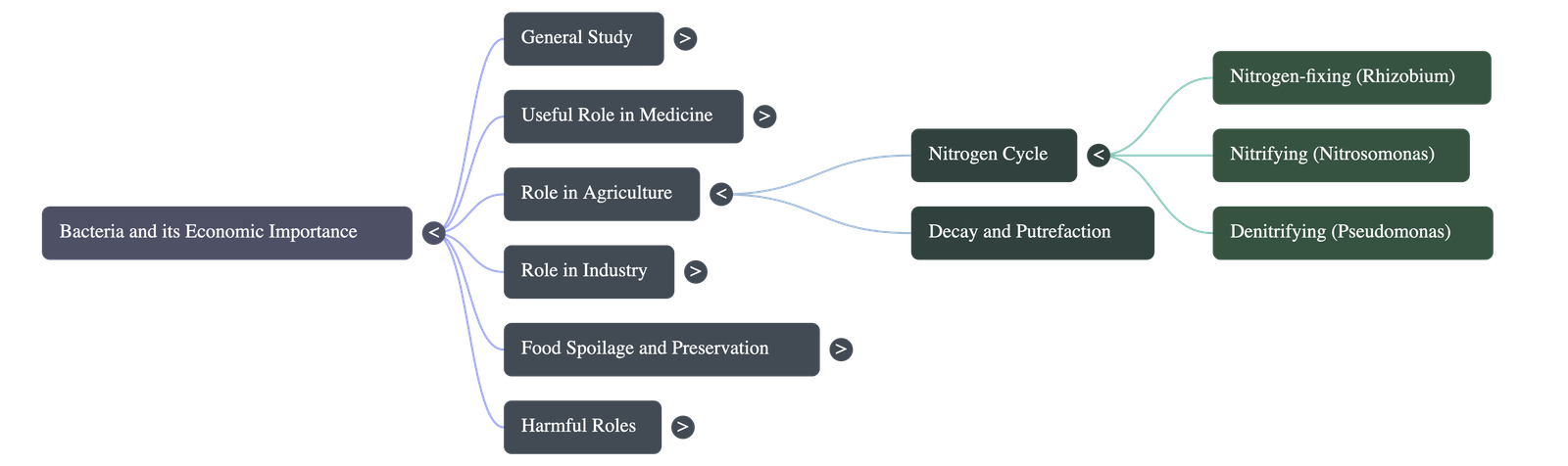
- Nitrogen Fixation: Symbiotic bacteria (Rhizobium) in the root nodules of leguminous plants, and free-living soil bacteria (Azotobacter, Clostridium), convert atmospheric free nitrogen into soluble nitrates for plant use.
- Nitrification: Nitrosomonas converts ammonia from dead matter into nitrites, and Nitrobacter converts nitrites into plant-usable nitrates.
- Denitrification: Pseudomonas bacteria break down soil nitrates to release pure nitrogen gas back into the atmosphere.
- Decay and Putrefaction: Bacteria act as nature's scavengers, breaking down dead bodies, excreta, and organic wastes into simpler chemical compounds, aiding in soil enrichment and sewage treatment.
6. Role in Industry
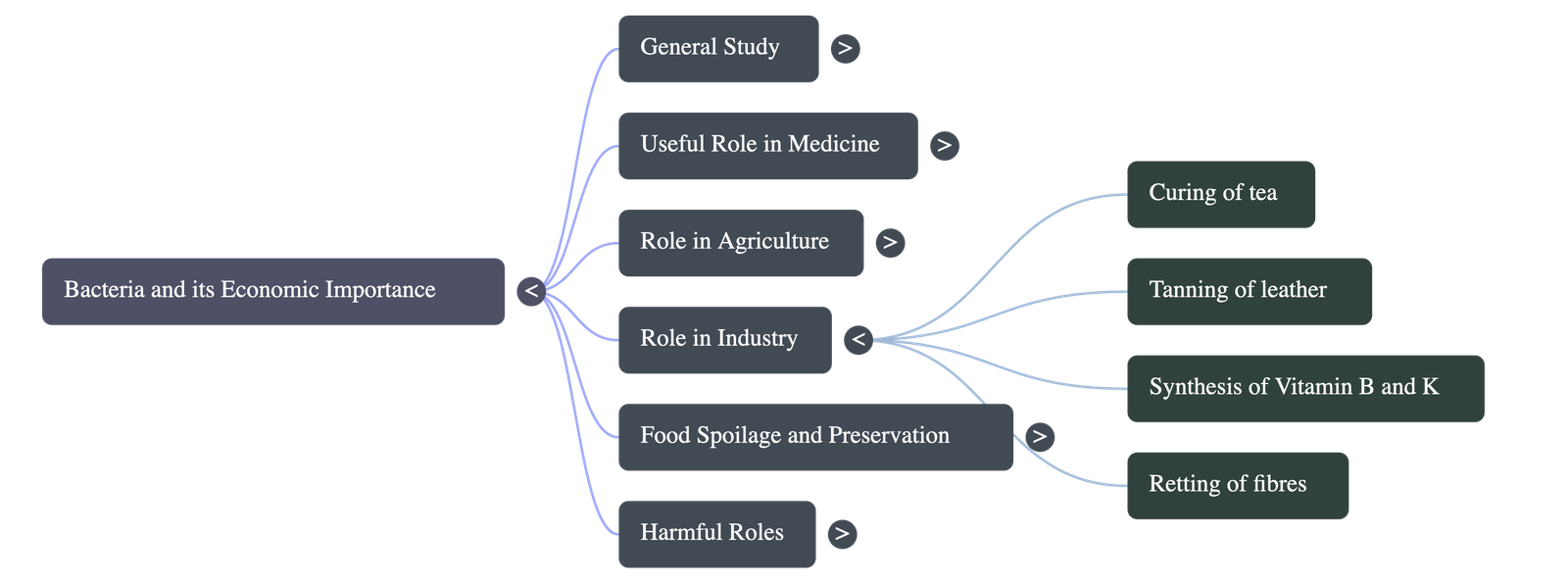
- Flavouring: Specific bacteria are used to produce different flavours of tea (tea curing) and to process coffee and tobacco.
- Leather & Fibres: Used for leather tanning and the retting of fibres (breaking down plant matter to extract hemp, flax, and linen).
- Biogas Production: Fermenting bacteria degrade cow dung cellulose to release methane gas for cooking, simultaneously creating rich manure.
- Vitamin Synthesis & Digestion: Intestinal bacteria synthesize B-complex vitamins and vitamin K in humans, and help digest cellulose in herbivorous animals.
7. Harmful Roles: Food Spoilage & Diseases
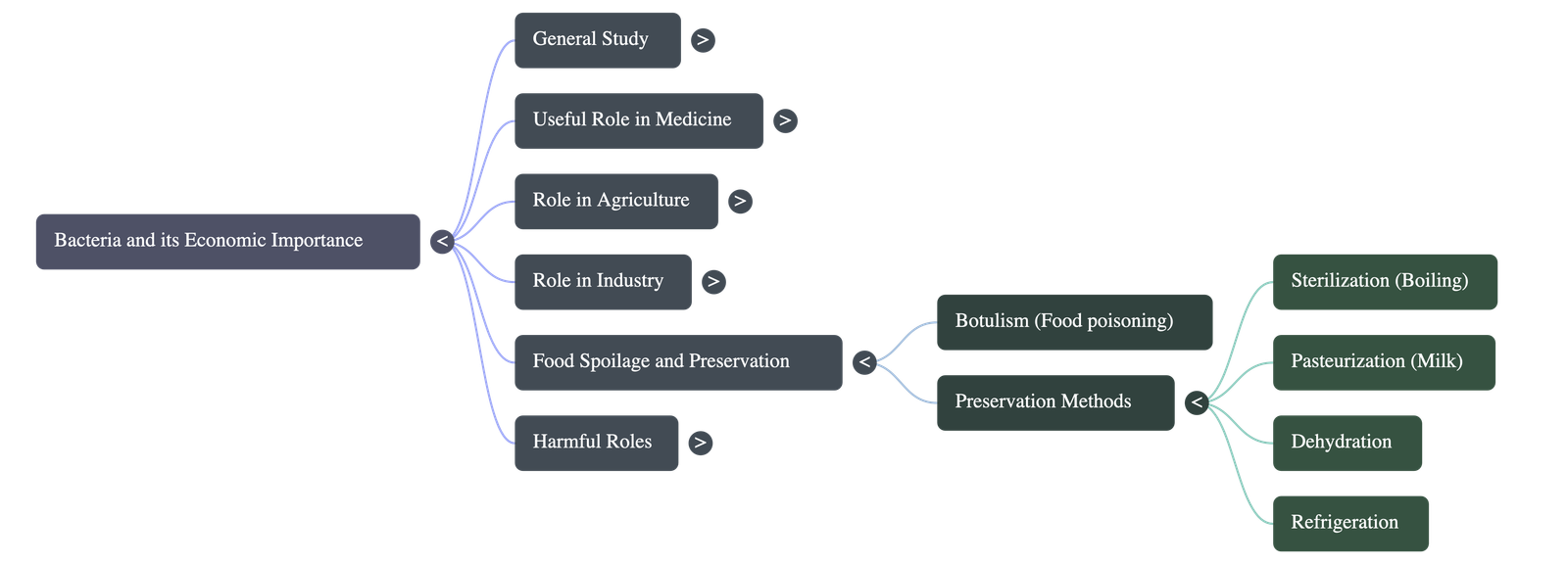
- Food Spoilage: Bacteria spoil milk, fruits, and vegetables through fermentation/decay. Severe food poisoning like Botulism can occur in poorly sealed tinned foods.
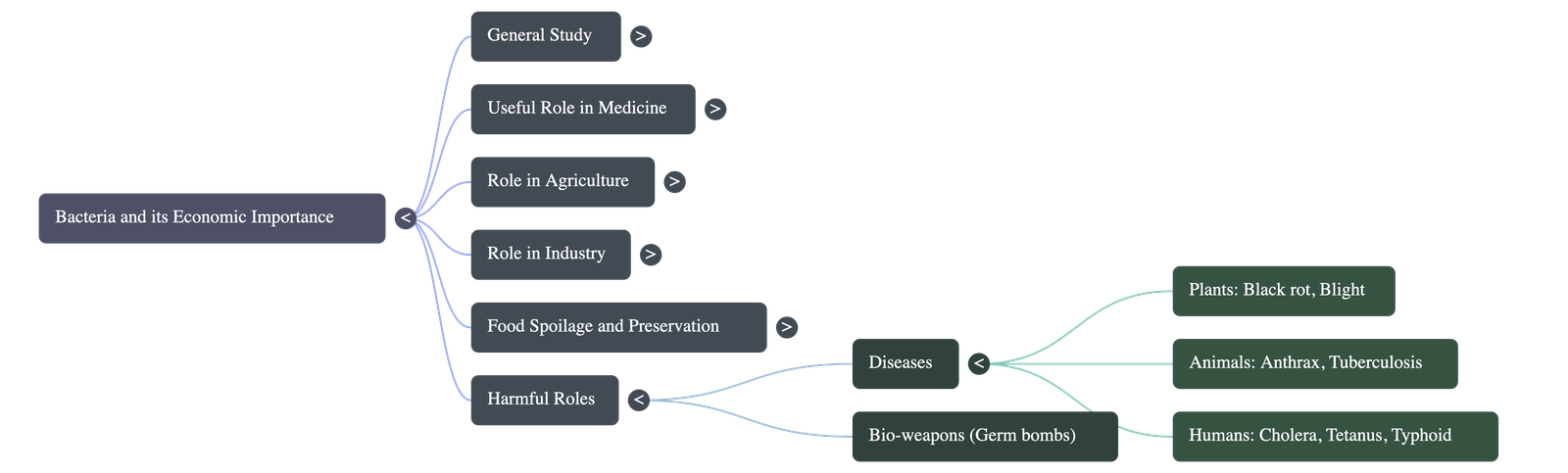
- Plant Diseases: Cause diseases such as black rot of mustard and cauliflower, and bacterial blight of cowpea.
- Animal Diseases: Responsible for anthrax and bovine tuberculosis in cattle.
- Human Diseases: Cause numerous life-threatening diseases including cholera, typhoid, tetanus, pneumonia, tuberculosis, diphtheria, and whooping cough.
- Bioweapons: Harmful bacteria like Anthrax can be weaponized in 'germ bombs' to cause epidemic outbreaks.
8. Food Preservation Methods
- Sterilization (Boiling): Heating to high temperatures (like in an autoclave or pressure cooker) kills all bacteria and their spores.
- Salting & Chemicals: High concentrations of salt, sugar, or chemicals (like sodium benzoate) cause plasmolysis, preventing bacterial growth in pickles, jams, and tinned foods.
- Dehydration: Drying foods removes the water microbes need to grow.
- Irradiation: Using radioactive or ultra-violet light to kill bacteria and mould spores without making the food radioactive.
- Pasteurization: Heating milk to about 60°C for 30 minutes and rapidly chilling it kills disease-causing germs without fully sterilizing the milk.
- Refrigeration: Cold temperatures (0°C to -30°C) prevent microbes from multiplying.
Do checkout all questions & answers of this chapter.
Quick Navigation:
| | | |
1 / 1
Quick Navigation:
| | | |