Quick Navigation:
| | | |
Cell : The Unit of Life
1. Introduction to the Cell
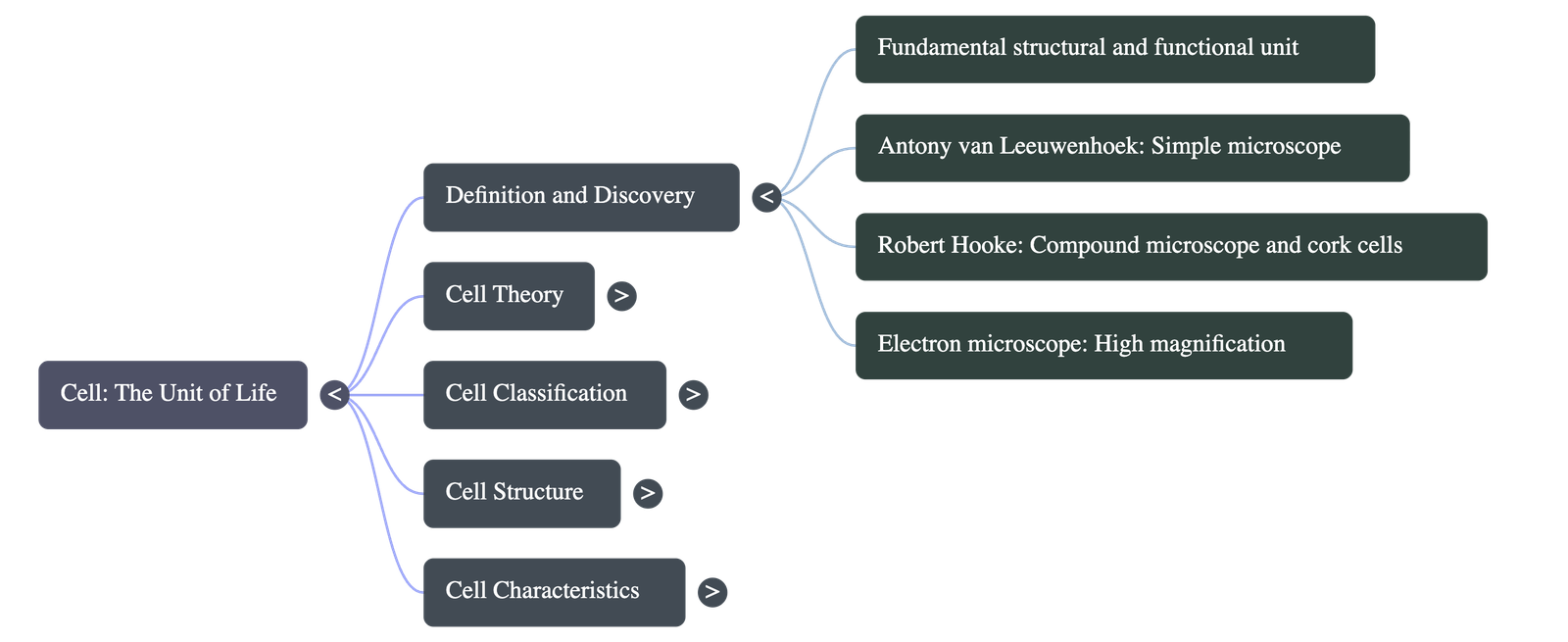
- The cell is the fundamental structural and functional unit of all living beings.
- It is the smallest part of the body of an organism capable of independent existence and essential life functions.
- Every cell has its own lifespan; old cells continually die and are replaced by new ones (e.g., red blood cells live for about 120 days).
2. Invention of the Microscope
- Antony van Leeuwenhoek: Constructed the first simple microscope using a single biconvex lens, magnifying objects up to 200 times.
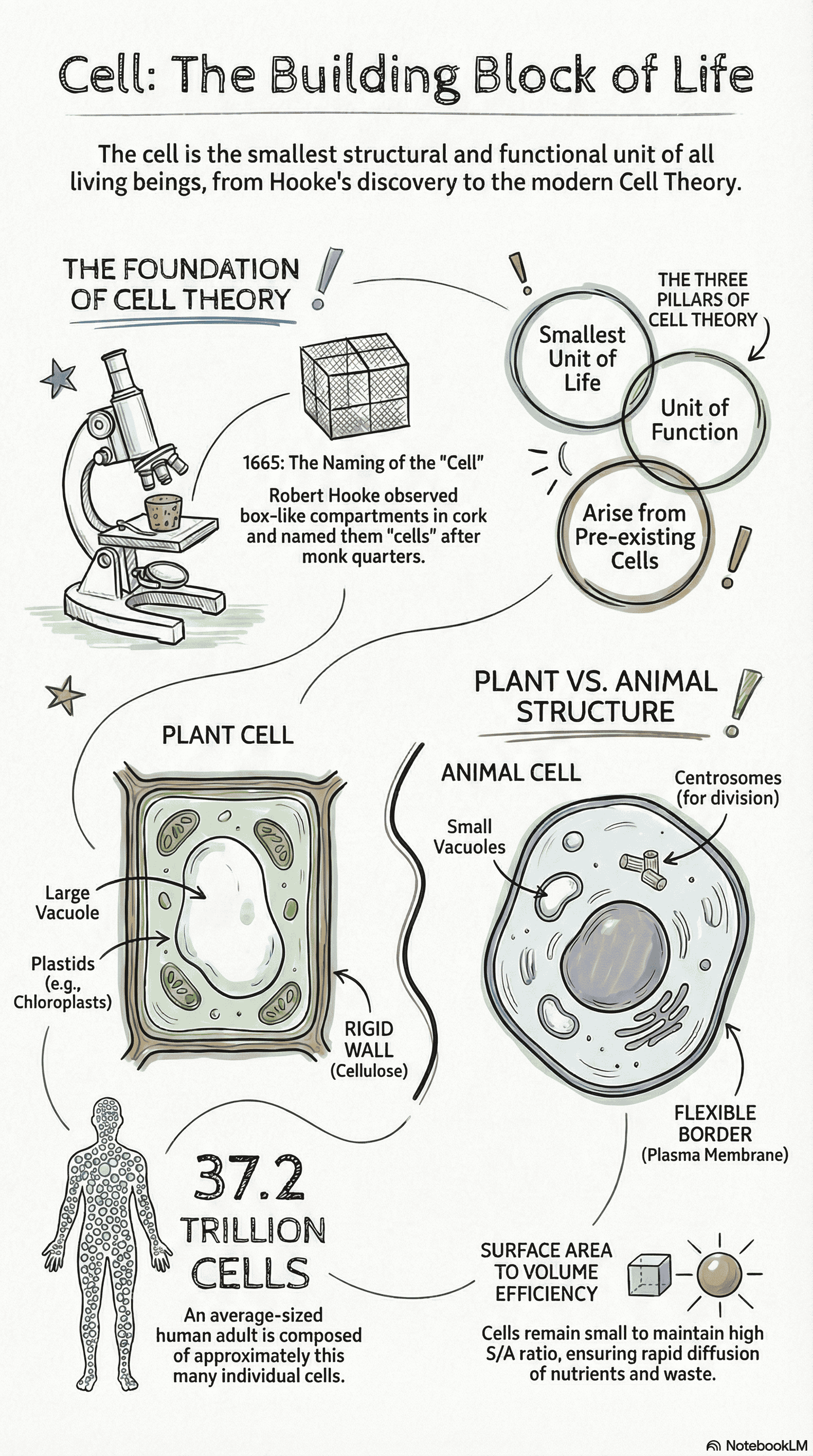
- Robert Hooke: Developed the compound microscope (using two lenses). He examined a thin slice of cork and observed tiny "box-like" compartments, coining the term "cells".
- Electron Microscope: A modern invention using beams of electrons bent by magnets, offering a magnification of over 200,000 times.
3. The Cell Theory
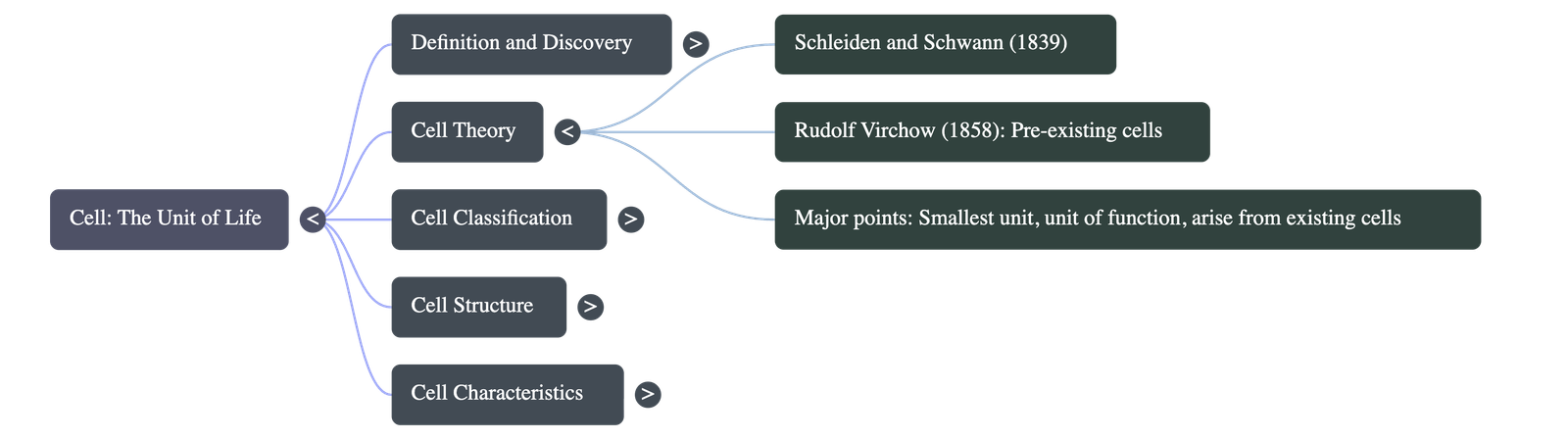
- Proposed by Matthias Schleiden (a botanist, 1838) and Theodor Schwann (a zoologist, 1839).
- Rudolf Virchow added a crucial point in 1858, stating that all cells arise from pre-existing cells.
- Three Major Points of the Cell Theory:
- The cell is the smallest structural unit of all living things.
- The cell is the functional unit of all living things.
- All cells arise from pre-existing cells.
4. Cell Quantity, Size, and Efficiency
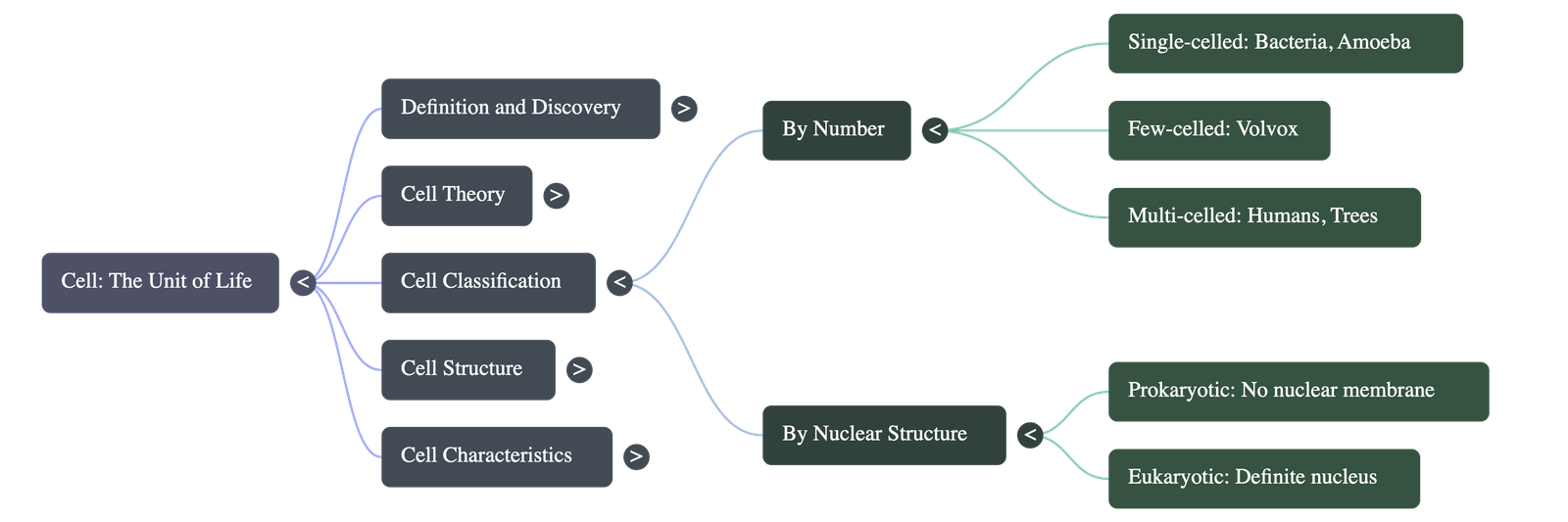
- Quantity: Organisms can be single-celled (e.g., Amoeba, Bacteria), few-celled (e.g., Spirogyra), or multi-celled (e.g., humans, trees).
- Size Extremes:
- Smallest: Bacteria and human red blood cells.
- Longest: Nerve cells.
- Largest: Birds' eggs (an ostrich egg is the largest single cell).
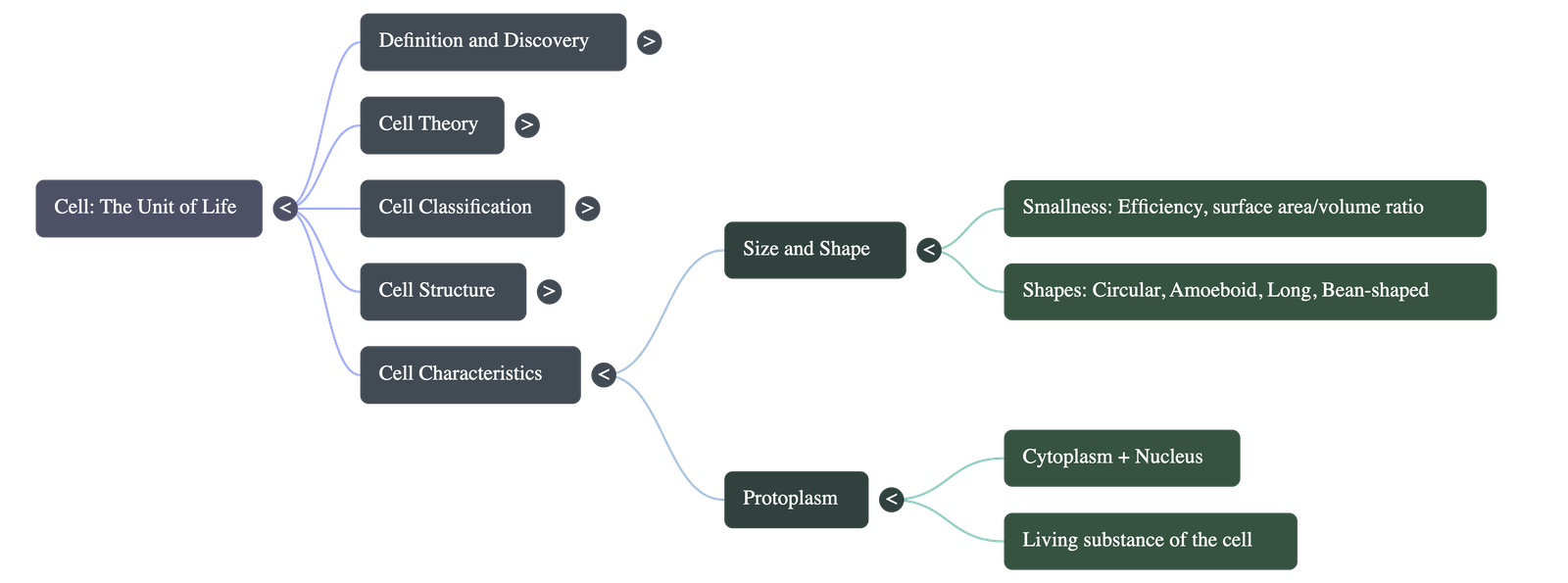
- Efficiency of Small Size: Cells remain small to maintain a high surface area-to-volume ratio (for greater diffusion of nutrients, gases, and wastes) and to allow rapid communication across different regions of the cell.
5. Cell Shapes and Functional Requirements
- Human Red Blood Cells: Circular and biconcave to pass easily through narrow capillaries and transport oxygen.
- White Blood Cells: Amoeboid shape allows them to squeeze out through capillary walls.
- Nerve Cells: Long shape helps conduct impulses from distant body parts to the brain.
- Muscle Cells: Long and contractile to pull or squeeze structural parts.
- Guard Cells: Bean-shaped to properly open and close stomatal pores in plant leaves.
6. Basic Structure of a Cell
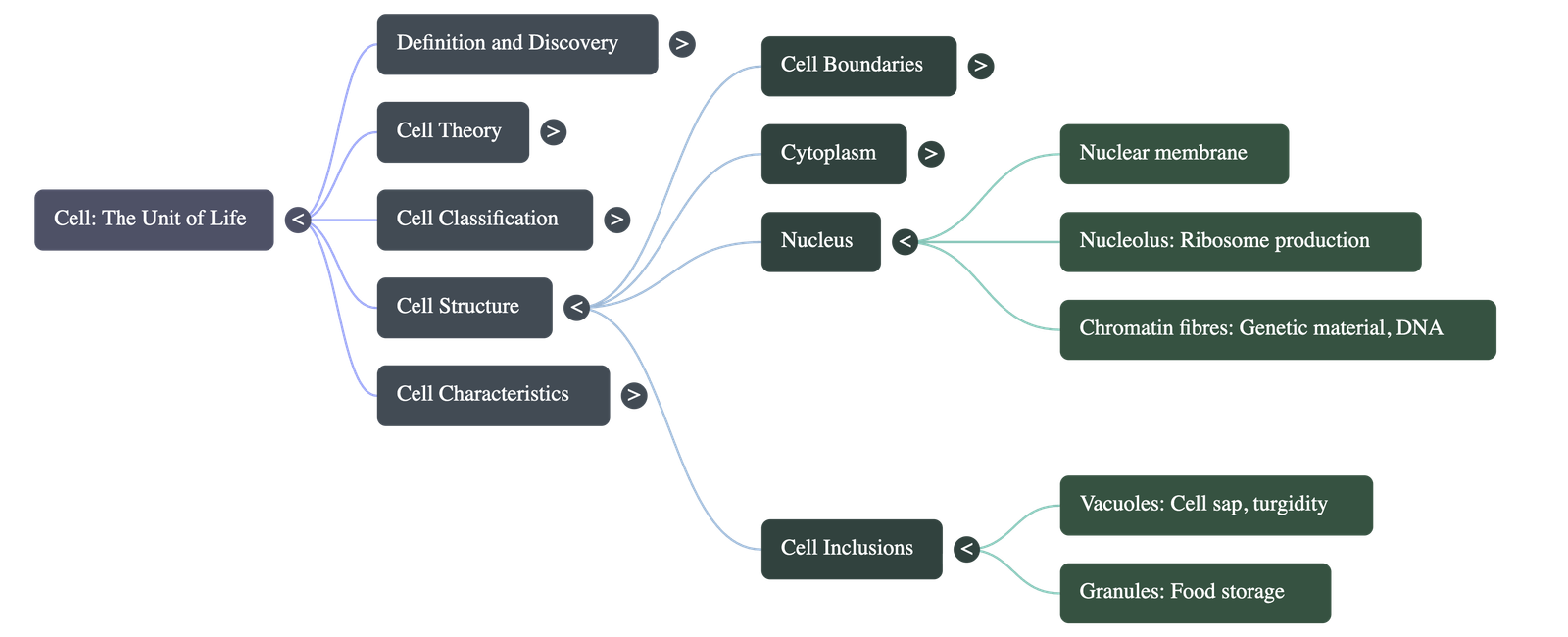
- A generalized cell consists of three essential parts: Cell Membrane, Cytoplasm, and Nucleus.
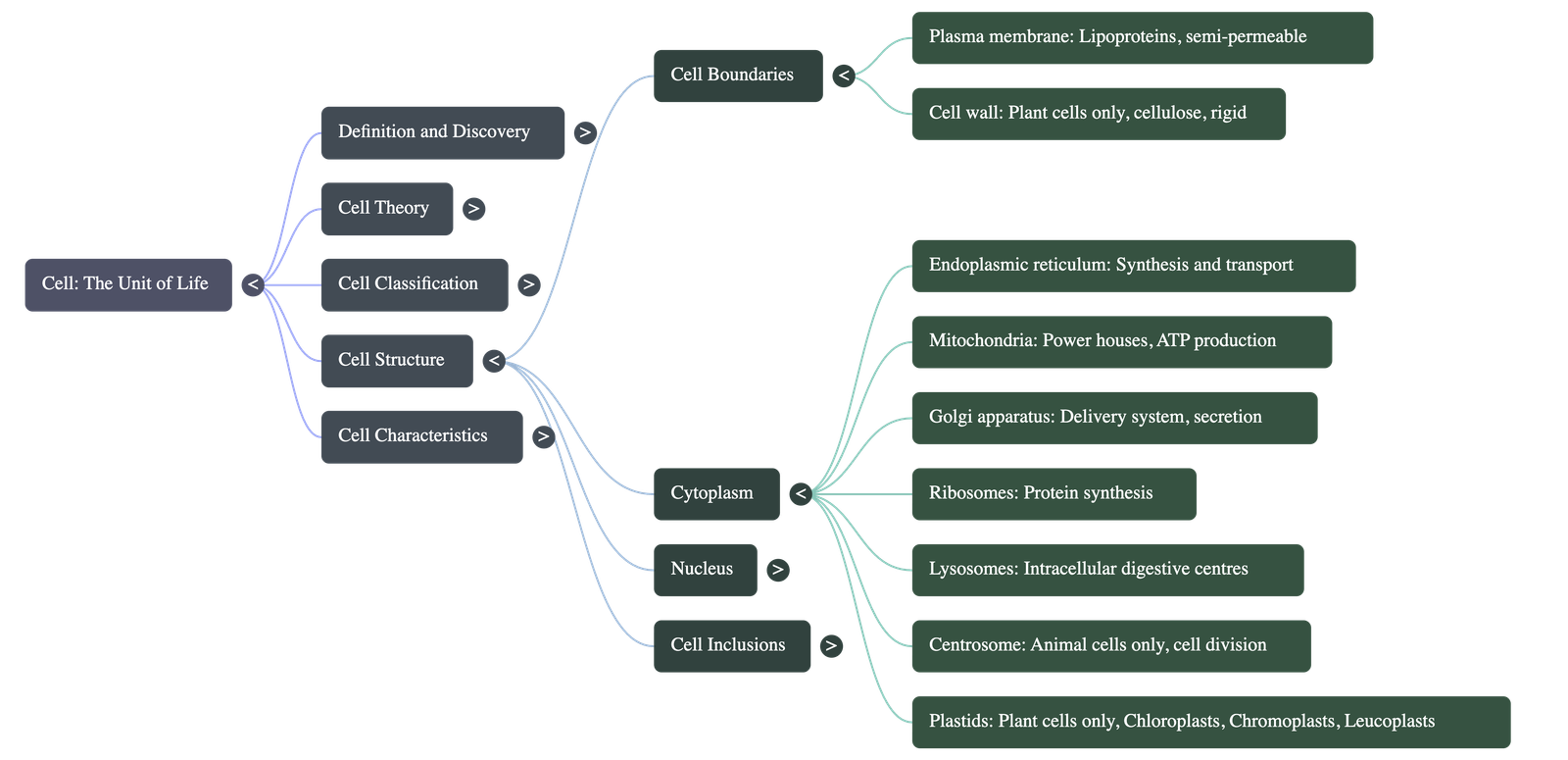
- Cell Membrane (Plasma Membrane): Outer living, semi-permeable boundary made of lipoproteins. Controls entry and exit of specific substances.
- Cell Wall (Plants Only): Non-living layer surrounding the cell membrane. Made of cellulose, gives shape and rigidity, and is freely permeable.
- Cytoplasm: A semi-liquid, partially transparent substance where many chemical reactions occur. Contains both living organelles and non-living inclusions.
7. Cell Organelles (Living Parts)
- Endoplasmic Reticulum (ER): An irregular network of double membranes acting as a supportive framework and pathway for material distribution. Can be rough (with ribosomes) or smooth.
- Ribosomes: Minute granules scattered in cytoplasm or attached to ER; they are the sites of protein synthesis.
- Mitochondria: The "powerhouses" of the cell. Double-walled structures with finger-like inner projections called cristae. They release energy in the form of ATP during cellular respiration. They possess their own DNA.
- Golgi Apparatus: Delivery system of the cell consisting of flattened sacs (cisternae) and vesicles. Involved in packaging and secreting enzymes and hormones. (Called dictyosomes in plants).
- Lysosomes: Intracellular digestive centers containing enzymes. Rapidly destroy damaged cells, thus termed "suicide bags."
- Centrosome and Centrioles (Animals Only): Located near the nucleus, these initiate and regulate cell division, forming spindle fibers.
- Plastids (Plants Only): Have three main types:
- Leucoplasts: Colorless; store starch (e.g., in potatoes).
- Chromoplasts: Variously colored (yellow, orange, red); found in petals and fruits to attract pollinators.
- Chloroplasts: Green, contain chlorophyll; capture solar energy for photosynthesis. Have their own DNA.
8. Non-living Inclusions
- Granules: Small particles containing stored food such as starch, glycogen, and fats.
- Vacuoles: Clear spaces filled with water and substances in solution (cell sap). Prominent and large in plant cells (covered by a tonoplast layer); small or absent in animal cells.
9. The Nucleus and Protoplasm
- Nucleus: The most important and largest cell organelle. It regulates cell life processes and plays a key role in cell division and heredity.
- Contains delicate nuclear membrane, dense nucleoplasm, nucleolus (produces ribosomes), and chromatin fibres.
- Chromosomes: Formed when chromatin network thickens during cell division. Made of DNA and carry hereditary traits via genes. E.g., Human body cells have 46 chromosomes (23 pairs).
- Protoplasm: The total living substance of a cell, composed of both the Cytoplasm and the Nucleus. It consists of various elements formatted into specific compounds (water, proteins, fats, carbohydrates).
10. Prokaryotic vs. Eukaryotic Cells
- Prokaryotic Cells: Primitive cells without a well-defined nuclear membrane (nucleoid), featuring a single strand of DNA, small ribosomes, and lacking other membranous organelles. (e.g., Bacteria, Blue-green algae).
- Eukaryotic Cells: Advanced cells with a well-defined nucleus enclosed in a nuclear membrane, chromosomes with DNA around proteins, larger ribosomes, and multiple organelles. (e.g., Euglena, all higher plants and animals).
11. Plant Cells vs. Animal Cells
- Plant Cells: Have a distinct cellulose cell wall, prominent central vacuoles, and usually contain plastids. The cytoplasm is mostly pushed to the periphery, and they lack a centrosome. Generally larger in size.
- Animal Cells: Have no cell wall or plastids. Contain a centrosome (important for division). Vacuoles are small and temporary. Cytoplasm densely fills the entire cell. Generally smaller in size.
12. Cellular Activity as the Basis of Life
- Every activity of a living organism is the outcome of specialized cellular function.
- Examples include:
- Growth & Repair: Achieved through cell division.
- Movement: Result of contractility of muscle cells.
- Protection: White blood cells devour germs and secrete antibodies.
- Sensory Perception: Sensory cells enable seeing, hearing, tasting, and feeling.
- Thermoregulation: Cells generate heat, and skin cells cool the body via sweat.
- Reproduction: Inherited traits are passed down via specific germ cells (egg and sperm).
Do checkout all questions & answers of this chapter.
Quick Navigation:
| | | |
1 / 1
Quick Navigation:
| | | |