Quick Navigation:
| | | |
Aids to Health
1. Local Defence System
The body uses immediate, localized methods to prevent and fight infections:
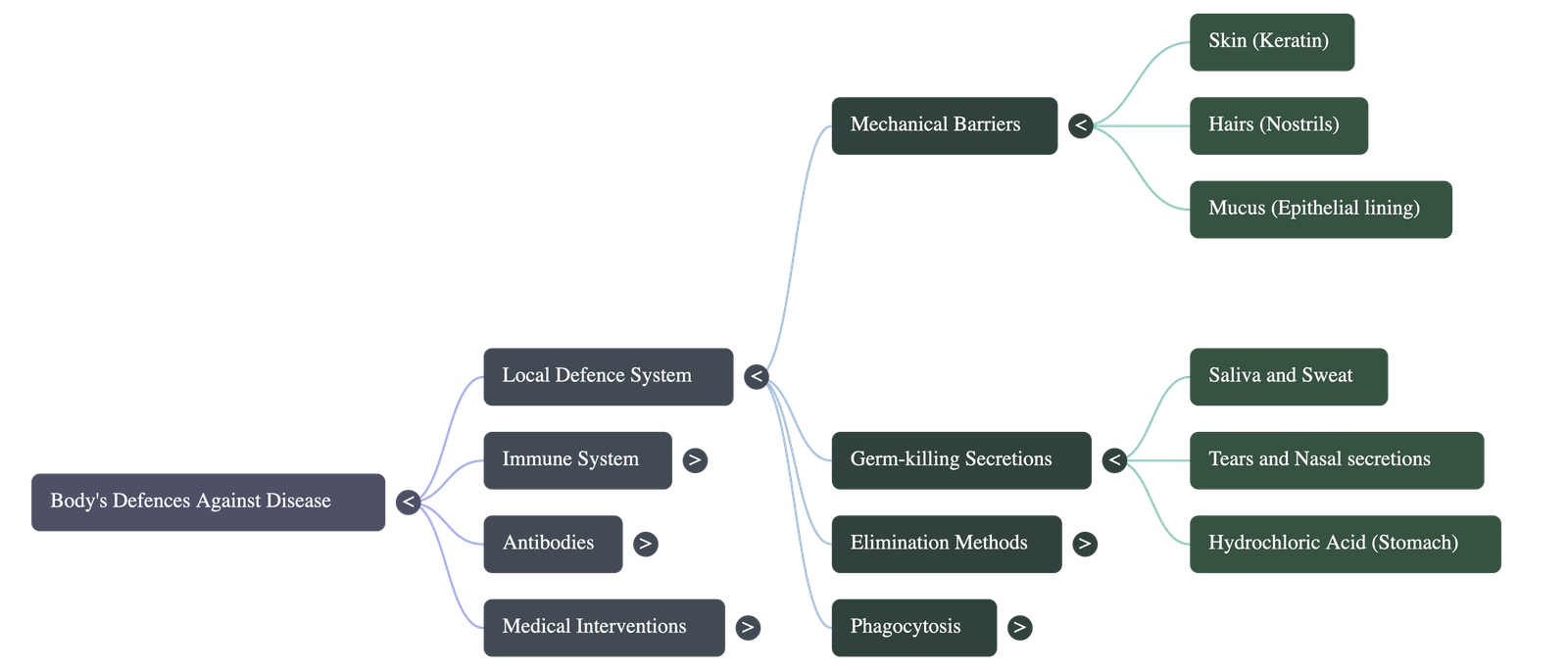
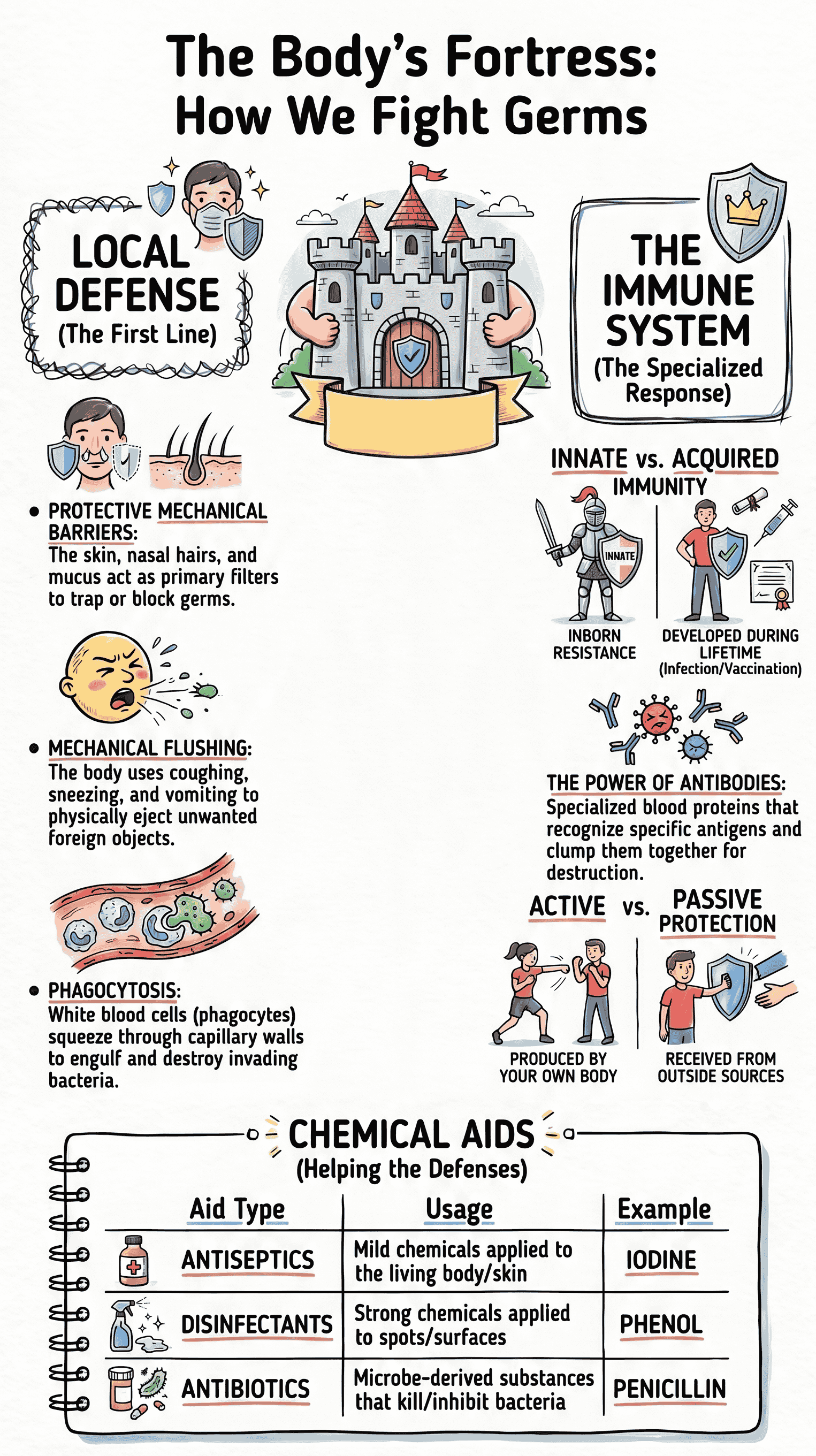
- Protective Mechanical Barriers:
- Skin: Features an outer tough layer made of keratin, impermeable to germs unless cut or scratched. Blood clotting quickly plugs wounds.
- Hairs: Nasal hairs intercept dust and germs.
- Mucus: A slimy secretion lining various organs (like the windpipe) that traps bacteria. Cilia help throw the trapped bacteria out.
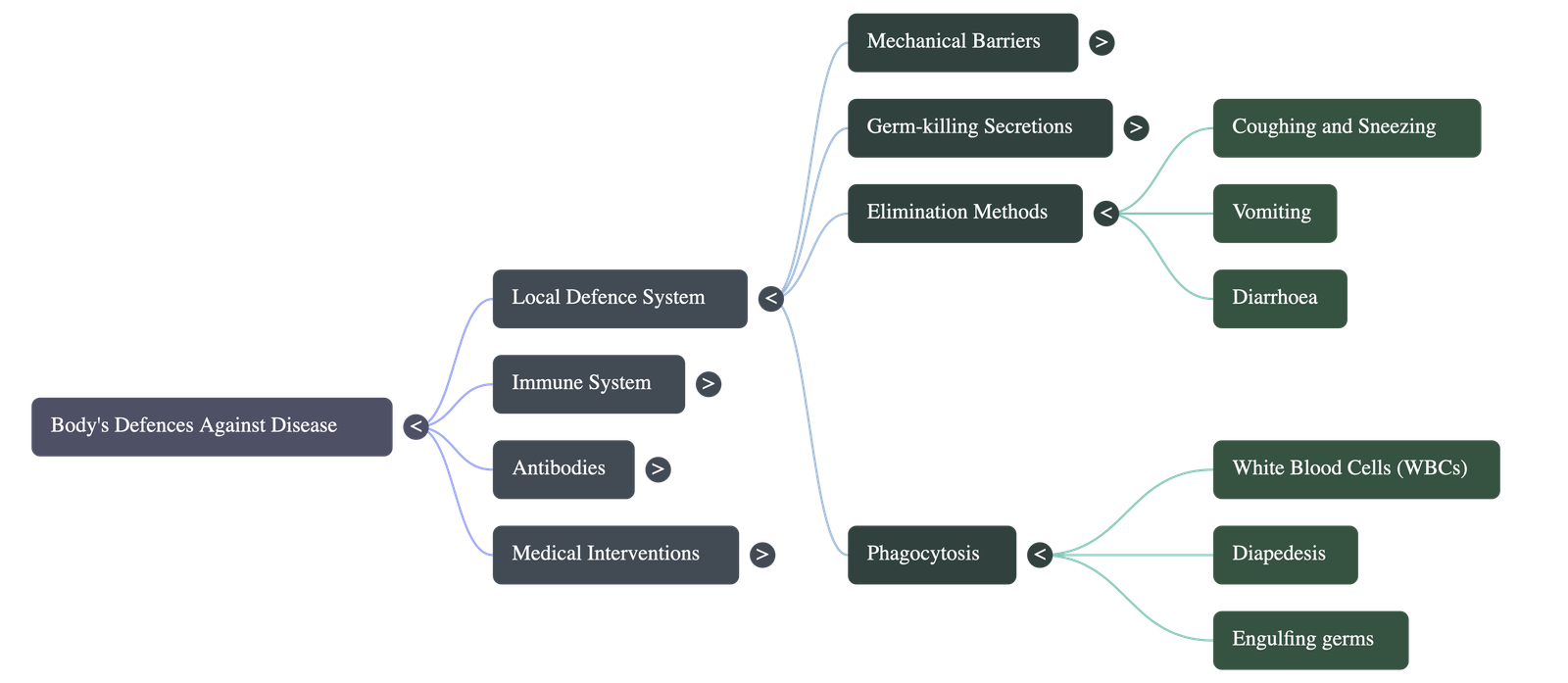
- Expulsion Mechanisms: Coughing, sneezing, vomiting, and diarrhoea forcefully eject unwanted objects and germs from the respiratory and digestive tracts.
- Germ-Killing Secretions: Substances like saliva, sweat, and tears contain germ-killing elements. The stomach secretes strong Hydrochloric acid to kill ingested germs.
- Germ-Fighting White Blood Cells (WBCs): WBCs squeeze out of capillary walls (diapedesis) and engulf/destroy invading bacteria (phagocytosis).
- Merits of Local Defence: Works instantaneously, does not depend on previous exposure, and is effective against a wide range of agents.
2. Immune System and Immunity
Immunity is the body's capacity to deal with foreign substances (bacteria, viruses, toxins) and render them harmless.
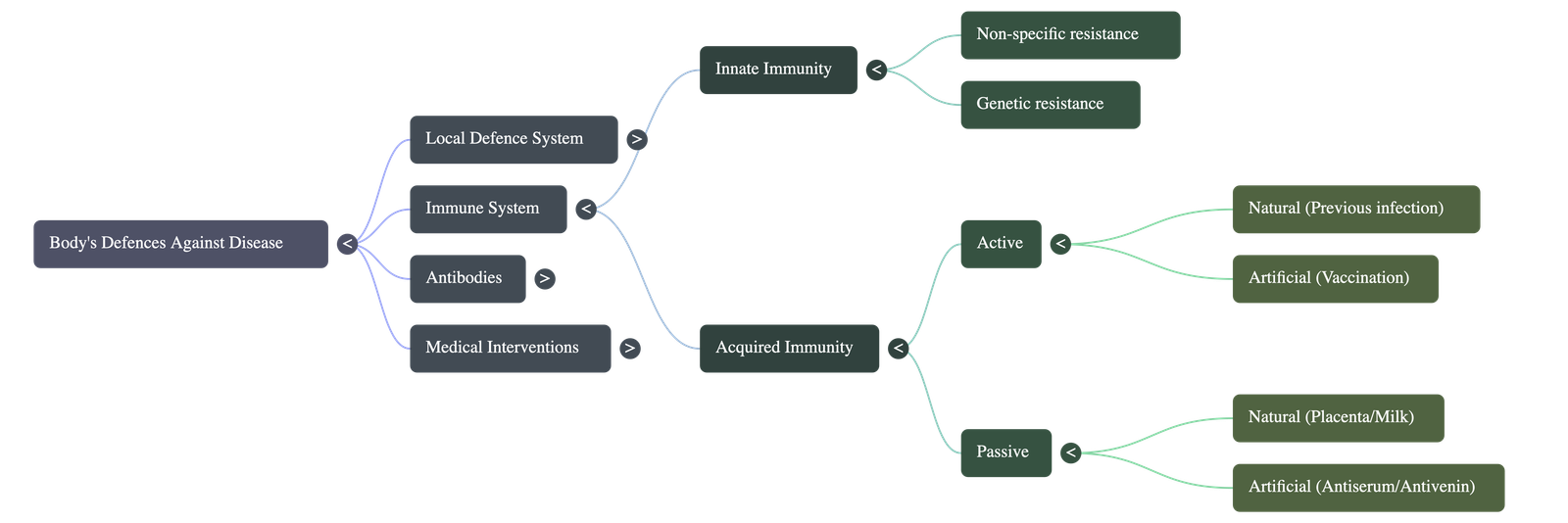
- Innate (Natural) Immunity: Resistance present by virtue of genetic makeup, independent of previous infection.
- Non-specific innate immunity: General resistance to all infections (e.g., skin barrier).
- Genetically determined resistance: Resistance to particular germs specific to certain species or populations (e.g., humans are immune to canine distemper).
- Acquired Immunity: Resistance developed during a person's lifetime.
- Active Immunity: Produced by one's own body. Often long-lasting due to 'memory' lymphocytes. Can be naturally acquired (from a previous infection like measles) or artificially acquired (via vaccinations).
- Passive Immunity: Temporary protection provided by ready-made antibodies from an outside source. Can be naturally acquired (from mother via placenta/milk) or artificially acquired (injections of antiserum/antivenin prepared in animals).
3. Antibodies
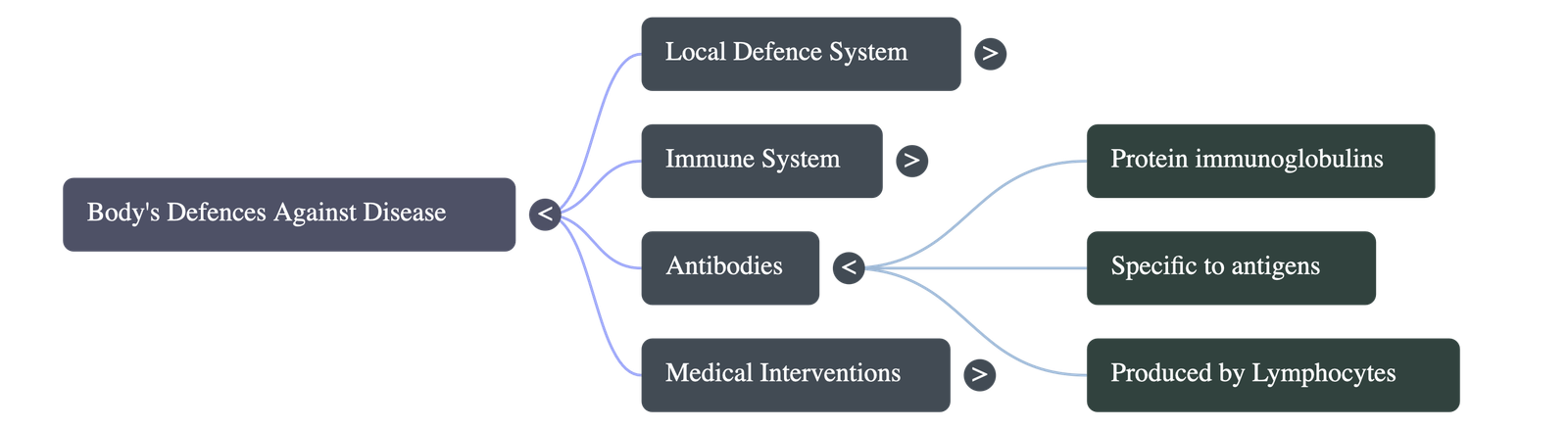
- They are special chemical proteins (immunoglobulins) in the blood.
- Produced by specialized lymphocytes upon exposure to foreign chemicals (antigens) found on germ surfaces.
- The body can generate an unlimited variety of antibodies.
- They are highly specific; one type of antibody acts against only one specific antigen.
- Antibodies make bacteria clump together, which are then destroyed by phagocytic white cells.
4. Vaccination and Immunisation
Vaccination is the practice of artificially introducing germs or germ substances into the body to develop resistance (prophylaxis).
- Four Categories of Vaccines:
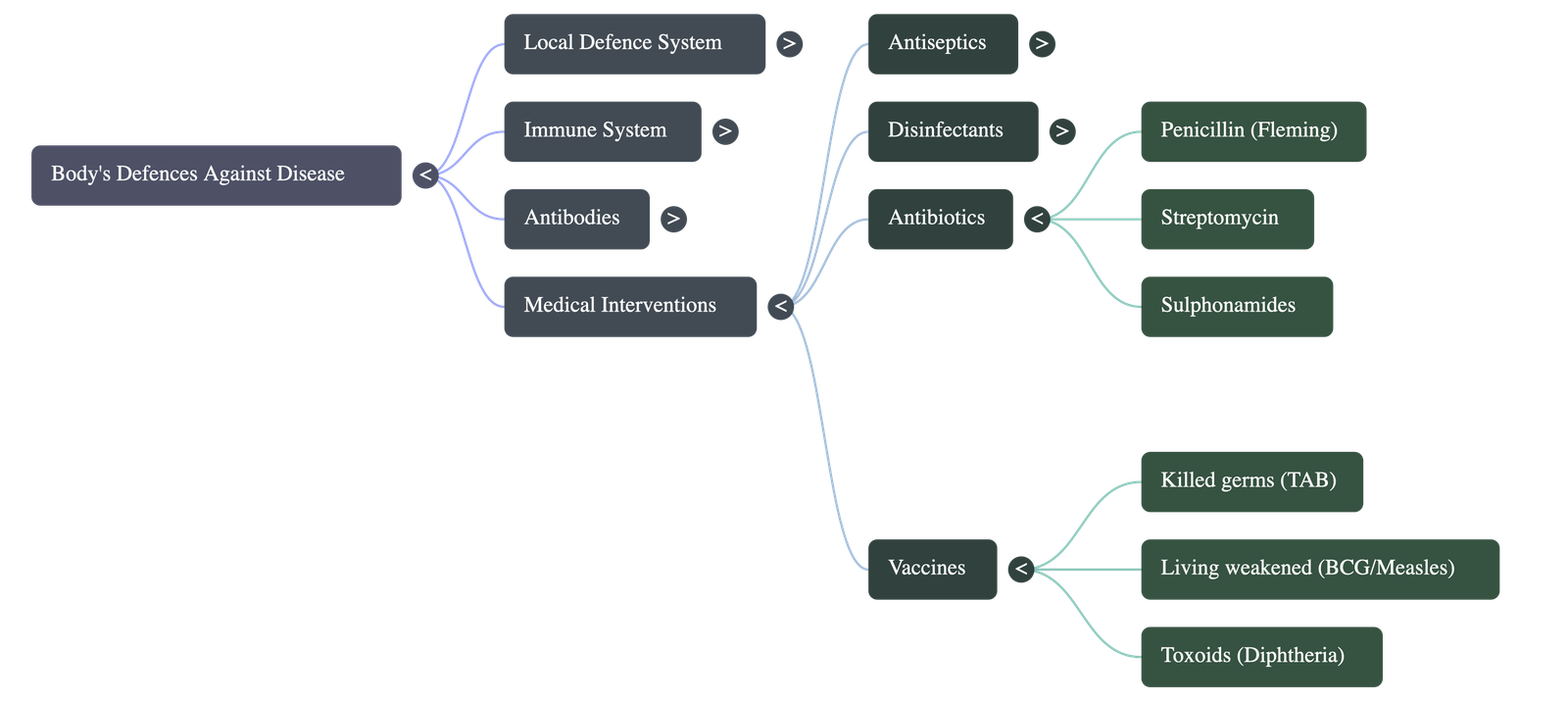
- Killed germs: e.g., TAB vaccine for typhoid, Salk's vaccine for polio, rabies vaccine.
- Living weakened germs: e.g., Measles vaccine, BCG for tuberculosis (Bacillus Calmette-Guérin).
- Living fully poisonous germs: e.g., Smallpox vaccine (uses the milder cowpox virus to protect against smallpox).
- Toxoids: Inactivated toxins secreted by bacteria that retain the capacity to produce antitoxins. e.g., Diphtheria and tetanus.
5. Antiseptics and Disinfectants
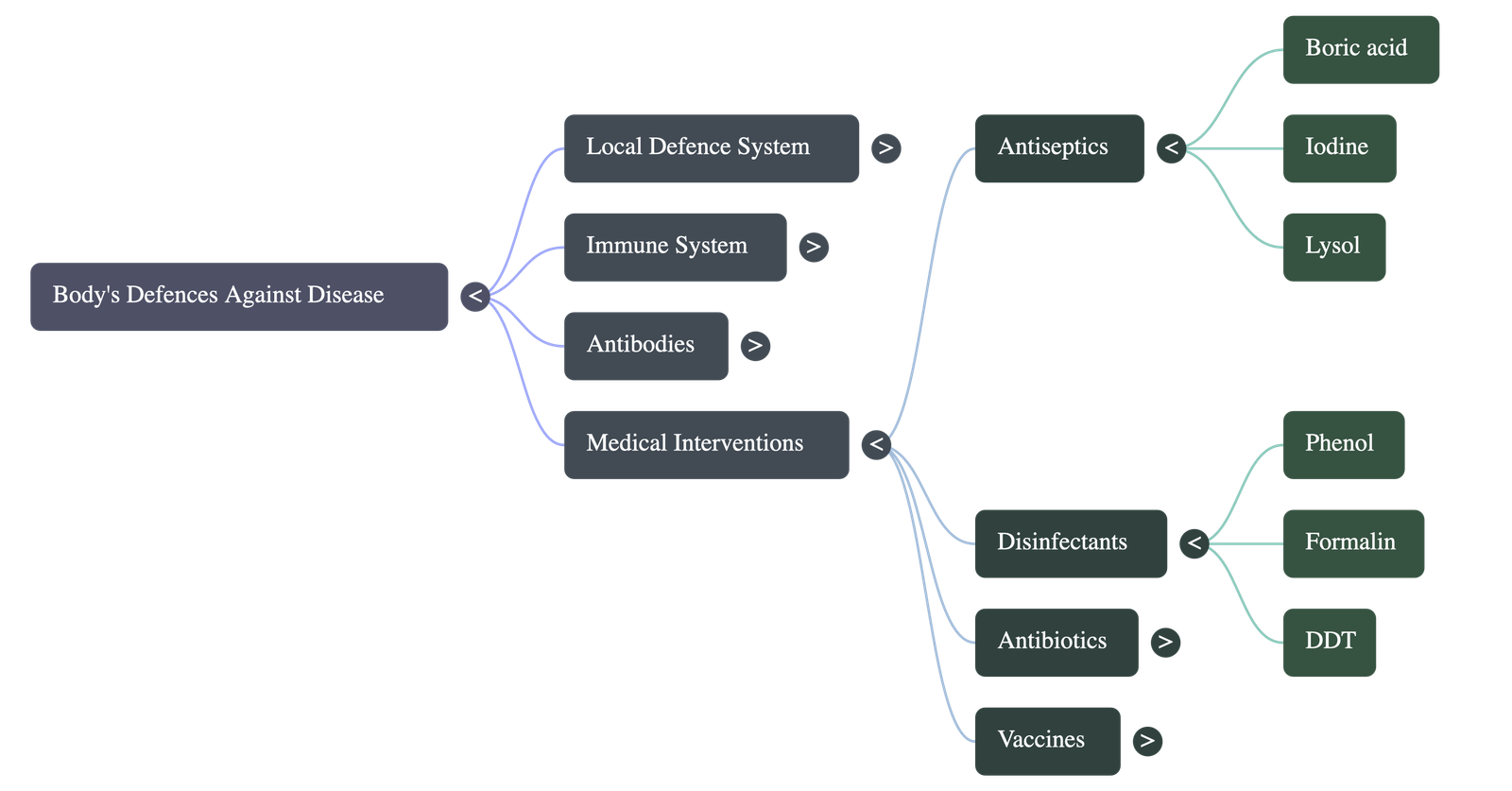
- Antiseptics: Mild chemical substances applied to the living body to kill germs. They do not harm the skin. Examples include Lysol, carbolic acid, iodine, benzoic acid, and mercurochrome in dilute solutions.
- Disinfectants: Strong chemical substances used on spots, places, and objects. They are harmful to living tissue. Examples include cresol, strong phenol, 40% formalin, and DDT. Strong heat and boiling act as physical disinfectants.
- Deodorants: Mask bad smells but do not act as antiseptics or disinfectants.
6. Antibiotics and Sulphonamides
- Antibiotics: Chemical substances produced by microorganisms that kill or inhibit the growth of other microorganisms.
- Discovery: Penicillin was the first, discovered by Alexander Fleming in 1929 from the mould Penicillium notatum.
- Mechanism: They work by interfering with bacterial cell wall formation (e.g., Penicillin) or binding to ribosomes to stop protein synthesis (e.g., Streptomycin).
- Uses: Fighting human infections, acting as food preservatives, treating animal feed, and controlling plant pathogens.
- Sulphonamides (Chemotherapy): Synthetic chemicals discovered in the 1930s (e.g., sulphadiazine, sulphanilamide) that interfere with bacterial metabolism. Salvarsan, an arsenic compound, was an earlier chemical drug used in 1910 against syphilis.
7. AIDS (Immune System Failure)
AIDS (Acquired Immuno Deficiency Syndrome) is caused by the HIV virus. The virus actively attacks the immune system's cells (specifically reducing T-cells of the thymus), which triggers a collapse in immunity, allowing severe infections to develop unchecked.
Do checkout all questions & answers of this chapter.
Quick Navigation:
| | | |
1 / 1
Quick Navigation:
| | | |