Quick Navigation:
| | | |
Tissues: Plant and Animal Tissues
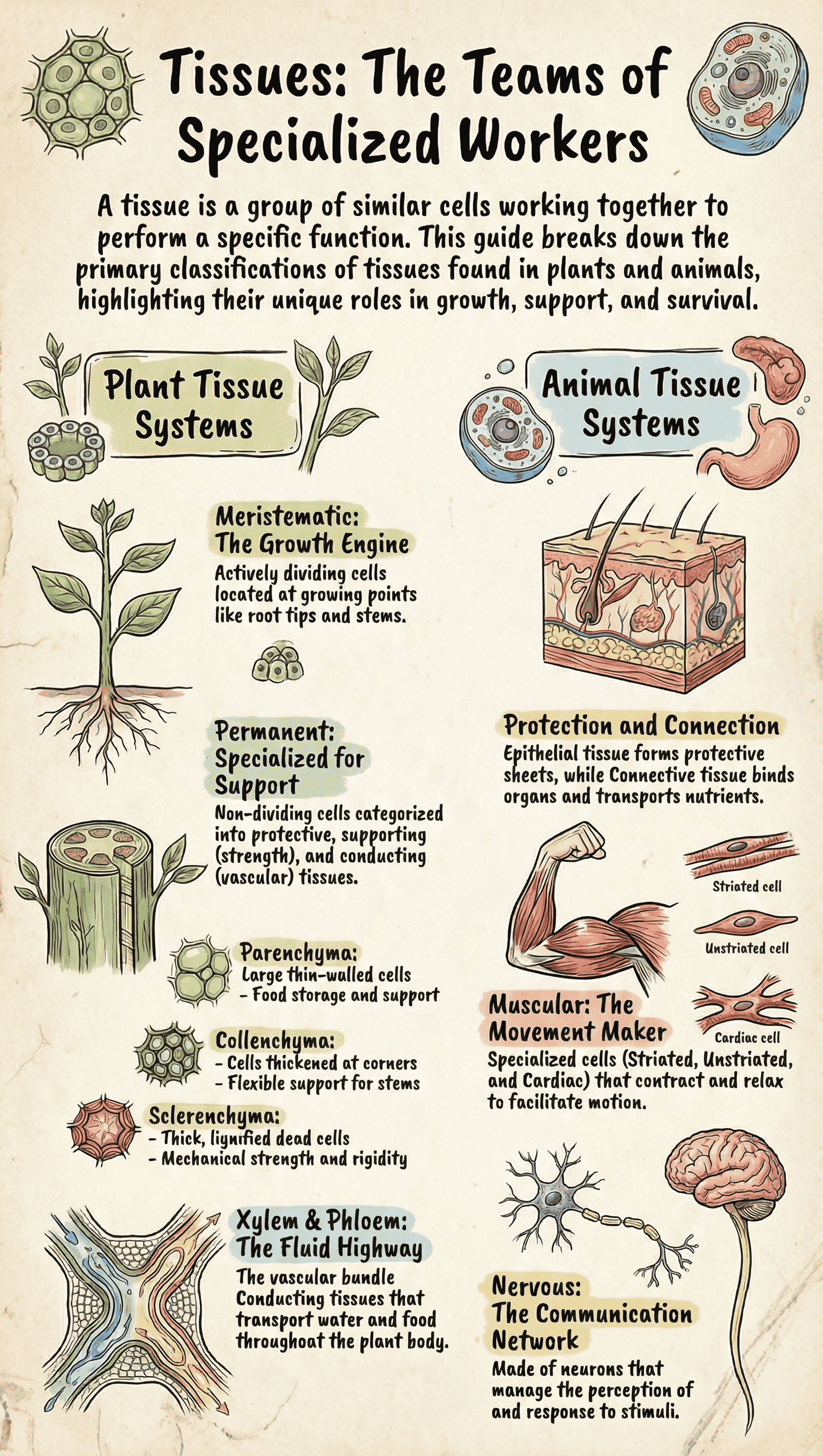
1. Introduction to Tissues
- Definition: A tissue is a group of similar cells performing a specific function.
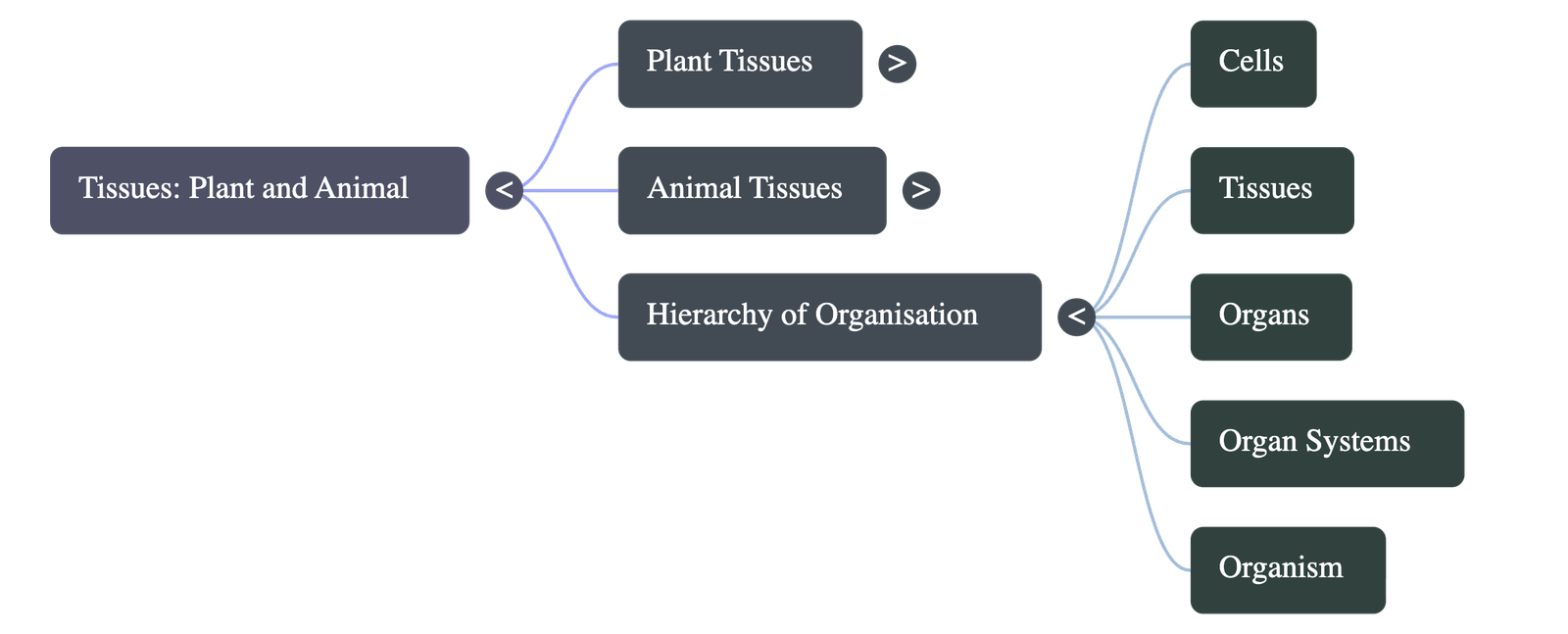
- Biological Hierarchy: Cells group together to form tissues; tissues contributing to a specific function form an organ (e.g., tongue, heart); organs acting together form an organ system (e.g., digestive system); and organ systems together constitute an organism.
2. Plant Tissues
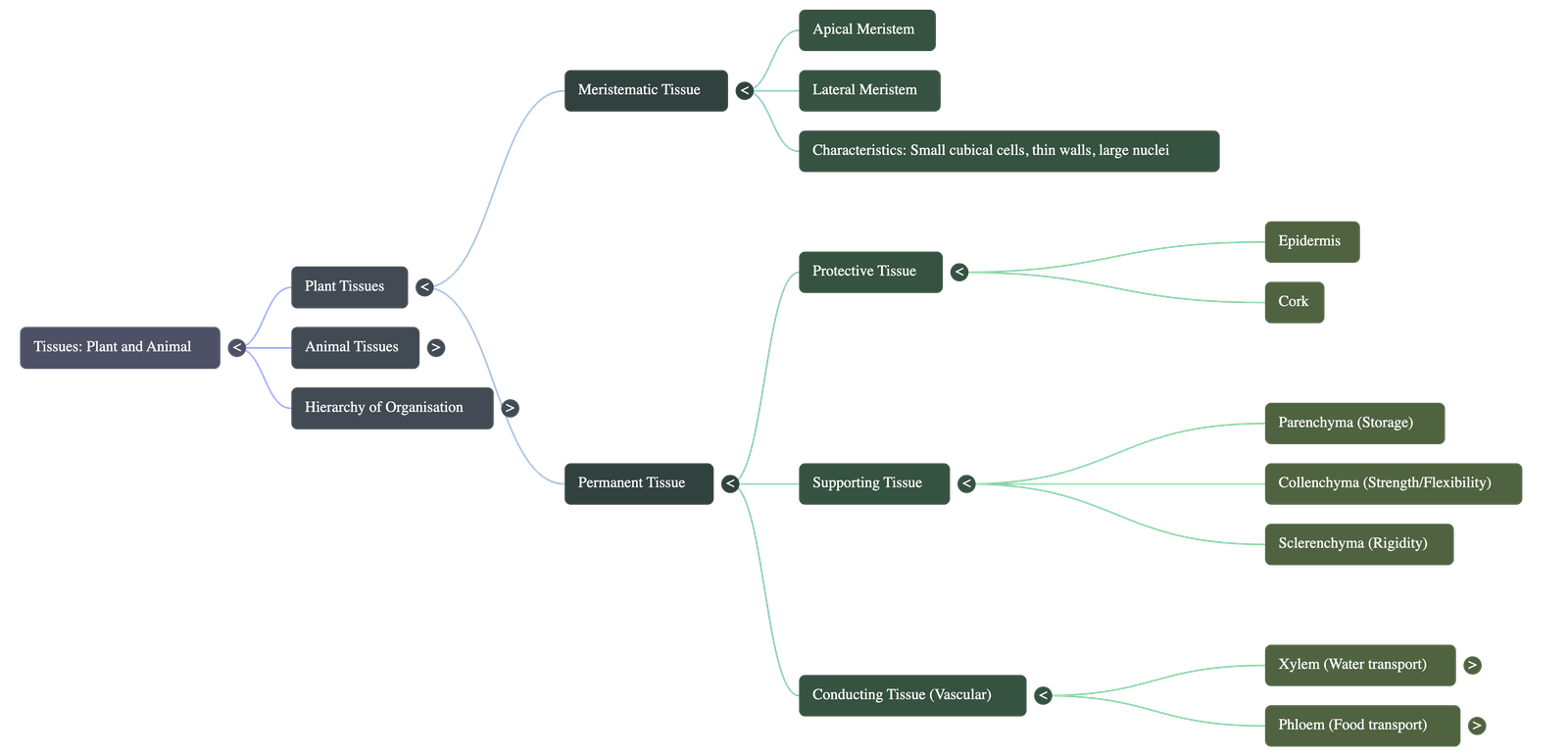
Plant tissues are fundamentally categorized into two types: Meristematic and Permanent.
A. Meristematic Tissue (Actively Dividing Cells)
- Found at all growing points of a plant, such as the tips of roots, stems, and branches.
- Characteristics: Cells are small, usually cubical, have thin cell walls, possess large nuclei, lack vacuoles, are tightly packed with almost no intercellular spaces, and actively divide to add new cells.
- Categories:
- Apical (Terminal) Meristem: Located near root and stem tips, responsible for increasing the plant's length.
- Lateral (Cambium) Meristem: Situated below the bark, responsible for increasing the stem's girth (diameter).
B. Permanent Tissue (Non-dividing Cells)
- Made up of cells that have lost their ability to divide and have taken a permanent shape to perform specific functions. They can be living or dead.
- 1. Protective Tissue: Cells with thick walls found on the surface of roots, stems, and leaves (e.g., Epidermis, cork cells). Protects against water loss and damage.
- 2. Supporting Tissue:
- Parenchyma: Large, thin-walled living cells with a single large vacuole. Found in soft plant parts. They store food and provide temporary support. (When containing chloroplasts, they are called chlorenchyma).
- Collenchyma: Elongated cells thickened at the corners. Found in leaf stalks and below the stem epidermis to provide support.
- Sclerenchyma: Composed of long, narrow dead cells with heavily lignified, very thick walls. Provides immense mechanical strength (e.g., plant fibres, gritty masses in pears/walnuts).
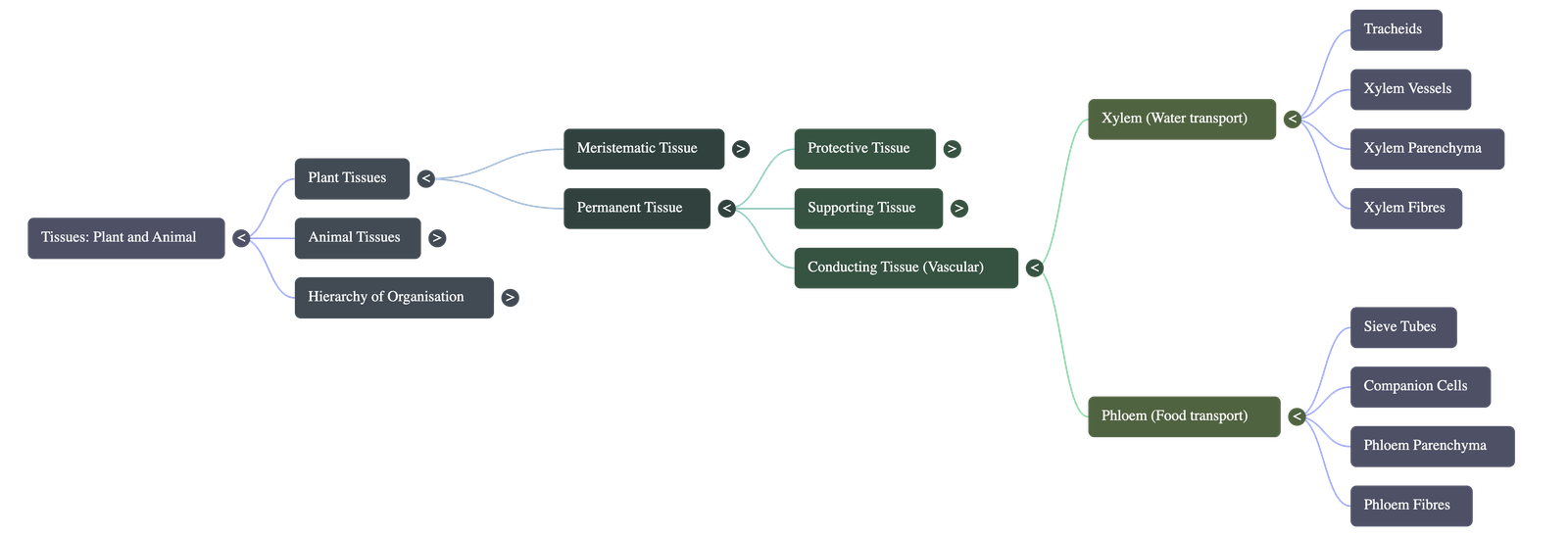
- 3. Conducting Tissue (Vascular Tissue): Provides passages for fluids.
- Xylem: Elongated, thick-walled cells that move water and dissolved minerals upwards from the roots. Consists of tracheids (dead, long tubes), xylem vessels (continuous pipes with dissolved transverse walls), xylem parenchyma (living, stores food), and xylem fibres (dead, provides support).
- Phloem: Provides a passage for the upward and downward movement of manufactured food from leaves. Consists of sieve tubes (elongated cells with perforated end walls), companion cells (living parenchyma aiding sieve tubes), phloem parenchyma (stores organic food), and phloem fibres (support).
3. Animal Tissues
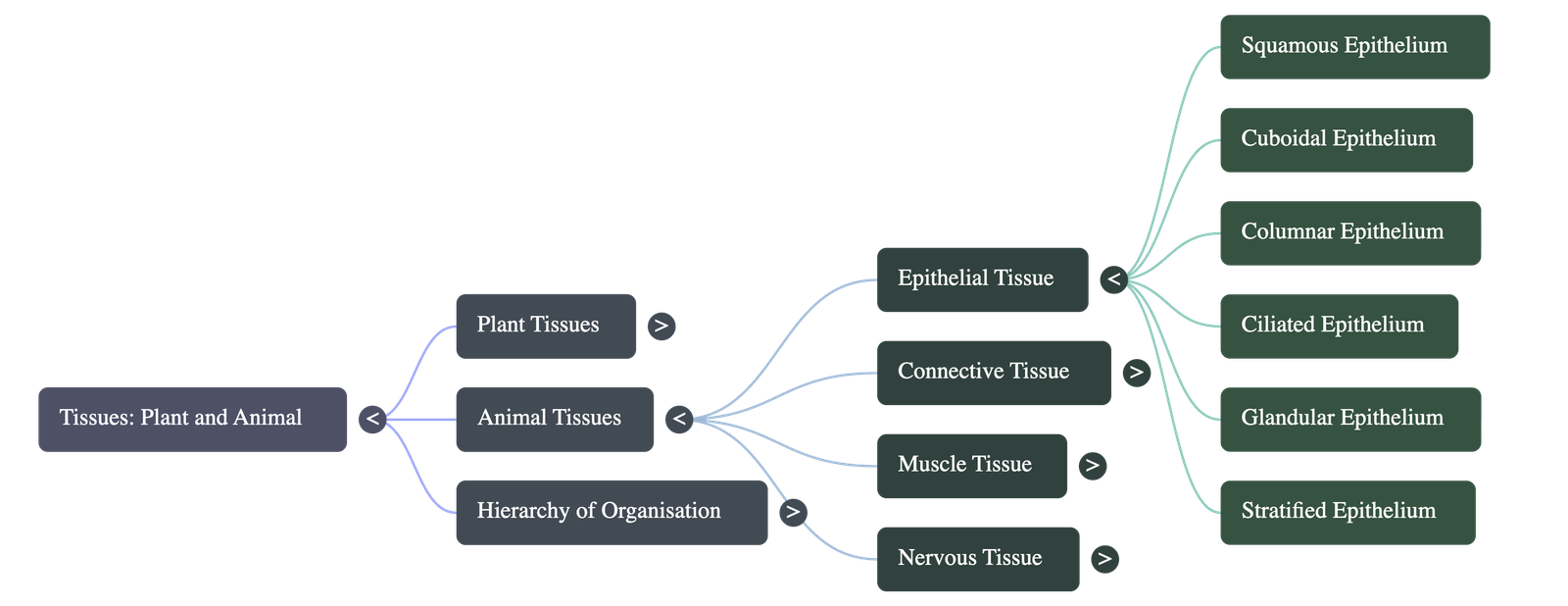
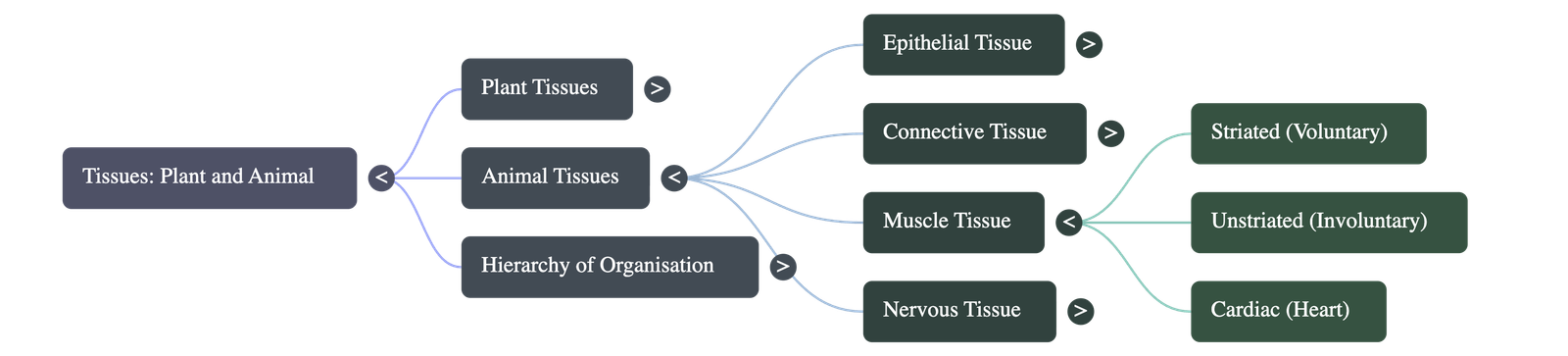
Animal tissues are classified into four primary kinds: Epithelial, Connective, Muscle, and Nervous.
A. Epithelial Tissue
- A thin, protective, continuous sheet of tightly fitted cells covering the body surface and lining internal organs/cavities.
- Functions: Protection, absorption, secretion, and sensory perception.
- Types:
- Squamous: Thin, flat cells (e.g., skin outer layer, lining of mouth/blood vessels).
- Cuboidal: Cube-like cells (e.g., kidney tubules, glandular ducts).
- Columnar: Vertically arranged cylindrical cells (e.g., inner stomach/intestine lining).
- Ciliated Columnar: Columnar cells with thread-like cilia at their ends to move materials (e.g., trachea/windpipe lining).
- Glandular: Inwardly folded cells secreting chemicals (e.g., sweat glands, tear glands).
- Stratified: Composed of several layers of cells (e.g., skin, cornea).
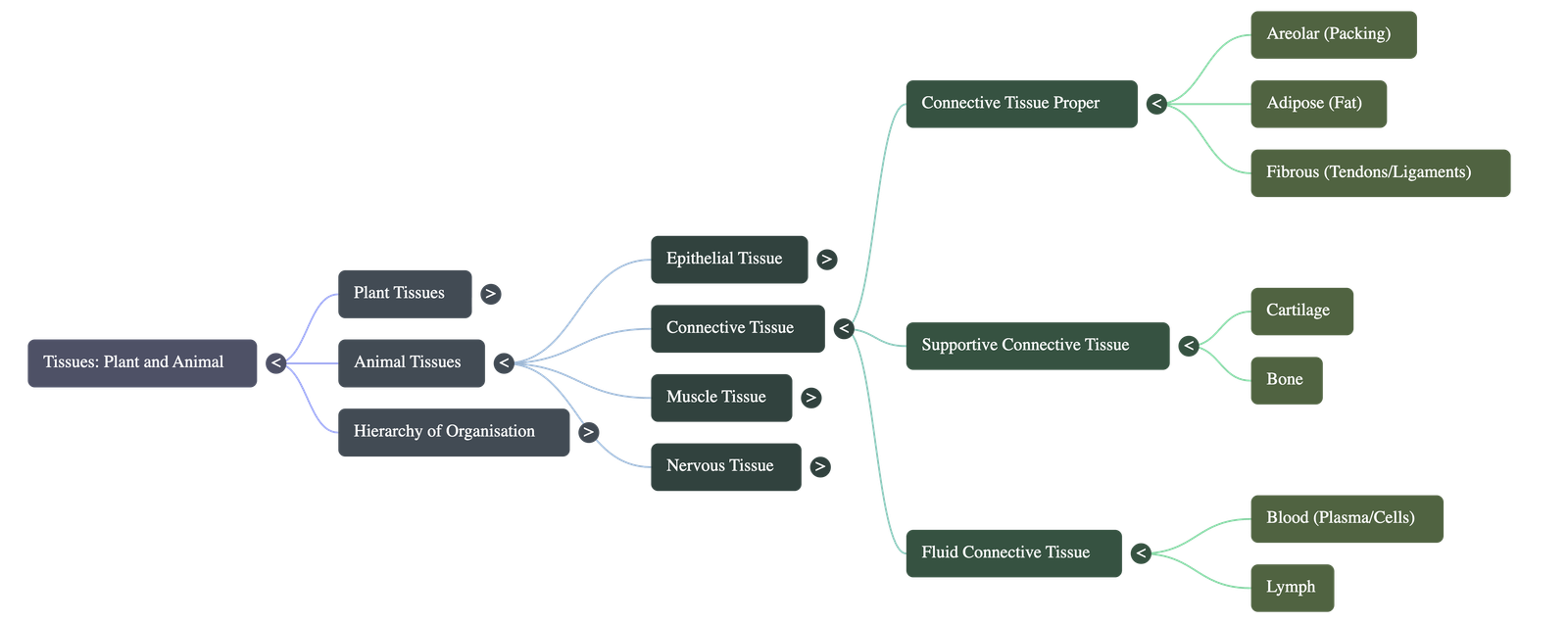
B. Connective Tissue
- Binds tissues and connects organs. Characterized by abundant intercellular substance (matrix) and fewer cellular elements.
- 1. Connective Tissue Proper (Packing/Binding):
- Areolar: Widely spread packing tissue beneath the epidermis, making skin elastic.
- Adipose: Specialized cells for fat storage, acting as padding and insulation.
- Fibrous: Strong elongated fibres. Includes tendons (connect muscle to bone) and ligaments (connect bone to bone).
- 2. Supportive Connective Tissue:
- Cartilage: Non-porous, semi-transparent, elastic tissue without blood vessels (e.g., tip of nose, external ears).
- Bone: Hard, porous tissue with good blood supply, living cells (osteoblasts), and a rigid mass of inorganic salts.
- 3. Fluid Connective Tissue:
- Blood: Composed of a liquid part (plasma) and a cellular part (red blood cells, white blood cells, platelets).
- Lymph: Fluid lacking red blood cells that oozes out of blood vessels, surrounding body cells.
- Both primarily handle transportation and immunity.
C. Muscle Tissue
- Specialized for contraction and relaxation to facilitate bodily movements.
- Types:
- Striated (Skeletal/Voluntary): Long, nucleated fibres with dark and light bands. Controlled by conscious will. Prone to fatigue. Found in arms, legs, face, etc.
- Unstriated (Smooth/Involuntary): Spindle-shaped, uninucleated cells lacking striations. Not under conscious control (e.g., intestine walls, blood vessels).
- Cardiac: Involuntary, striated, branched, uninucleated muscles found exclusively in the heart walls. They contract continuously without tiring.
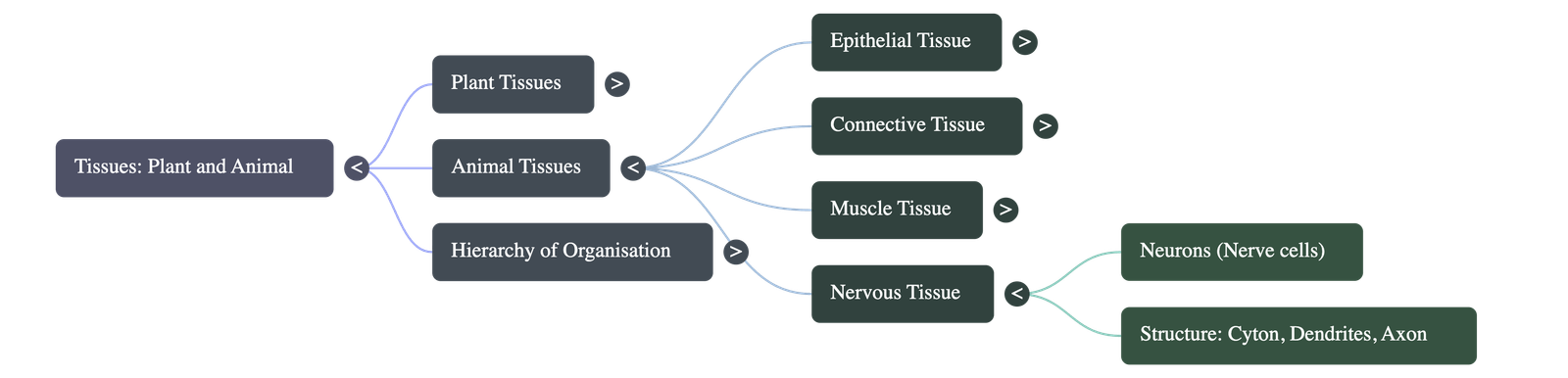
D. Nervous (Neural) Tissue
- Constitutes the nervous system and is concerned with the perception and responses of animals.
- Made of specialized elongated cells called neurons (nerve cells).
- Structure of a Neuron:
- Perikaryon / Cyton: The main cell body containing the nucleus.
- Dendrites / Dendrons: Elongated, hair-like extensions receiving impulses.
- Axon: A single, exceptionally long extension (up to meters long in some animals). Axons bundled together form a nerve.
Do checkout all questions & answers of this chapter.
Quick Navigation:
| | | |
1 / 1
Quick Navigation:
| | | |