Quick Navigation:
| | | |
Modes of Disease Transmission
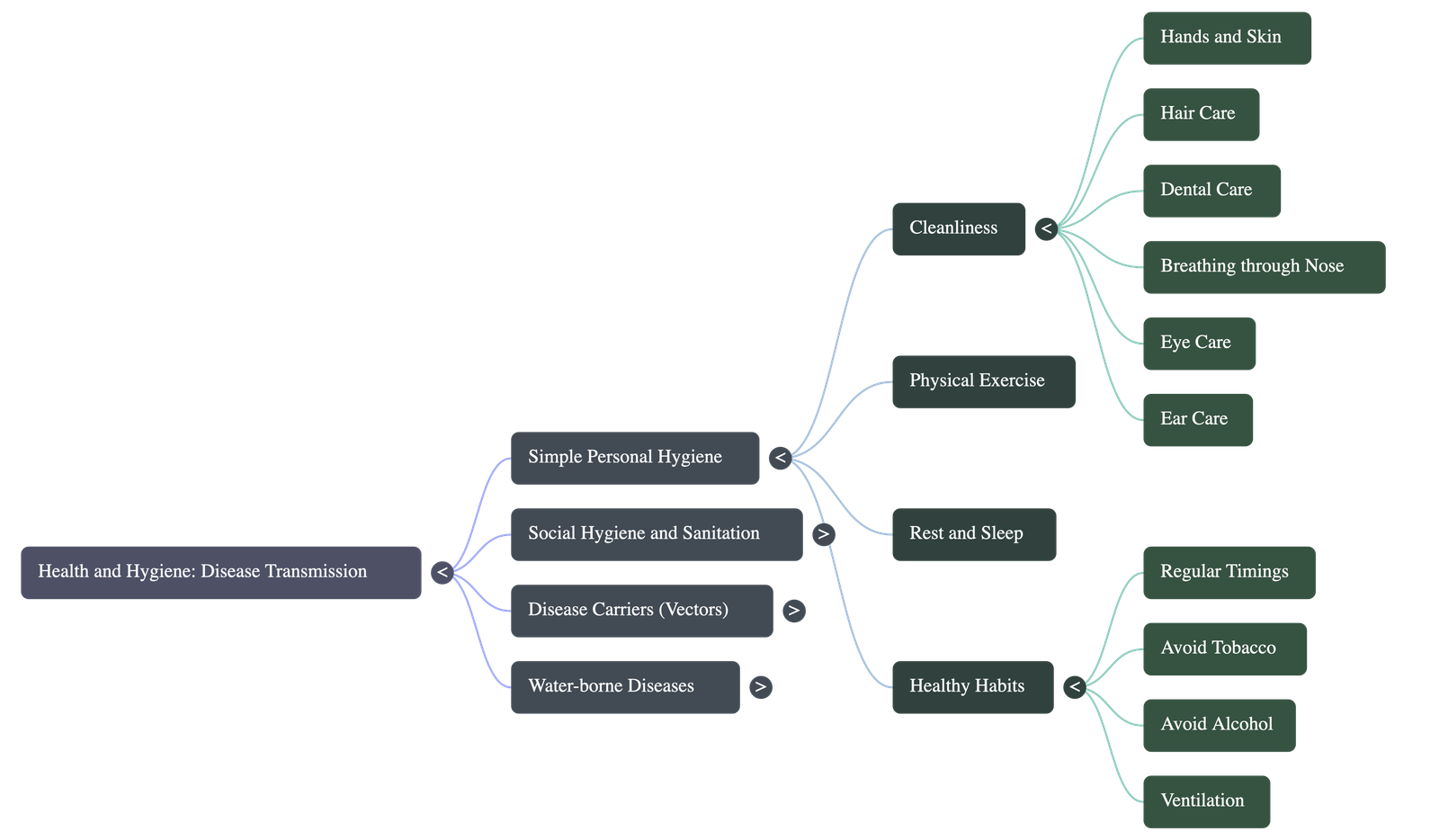
Simple Personal Hygiene
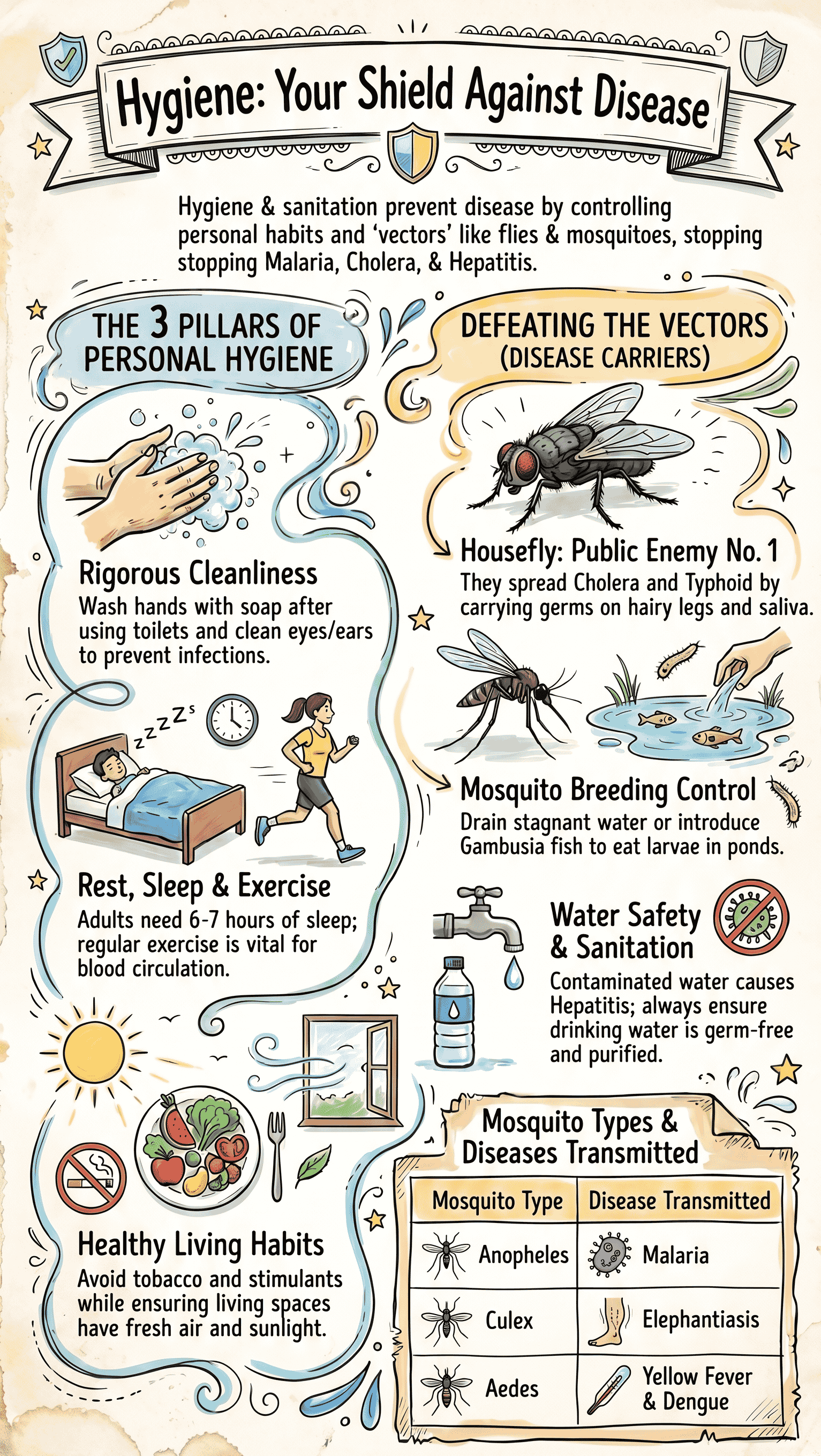
Health is defined as the physical, mental, social, and emotional fitness of a person. Hygiene is the science and practice of maintaining this good health. Personal hygiene involves four major aspects:
1. Cleanliness
- Hands and Skin: Must be washed regularly, especially after using toilets, to prevent picking up germs from public objects. A daily bath keeps skin clean, removes body odour, and clears sweat pores. Undergarments and handkerchiefs must be washed daily.
- Hair: Requires frequent washing and regular combing to stay healthy and free of parasites like head lice.
- Teeth: Should be cleaned at least twice a day (morning and night) to prevent cavities and gum infections. The mouth must be washed after every meal.
- Nose: Always breathe through the nose, never the mouth. Use a handkerchief when sneezing or blowing the nose.
- Eyes: Wash with clear water two or three times daily. To prevent infections like Trachoma and conjunctivitis, never share towels or applying sticks (like those used for kajal).
- Ears: Clean wax with a soft, moist swab. Never insert sharp objects into the ear as it may injure the eardrum.
2. Physical Exercise
- Essential for all age groups to improve blood circulation.
- Long gentle walks are excellent for the elderly, while exercise should be regular and systematic for everyone.
3. Rest and Sleep
- Adequate sleep is vital for organs, including the brain, to rest.
- Adults require 6-7 hours of continuous, undisturbed sleep, while infants sleep most of the day.
4. Healthy Habits
- Maintain regular timings for going to bed and eating.
- Bowels should ideally be cleared every day in the morning.
- Avoid tobacco (cancer-causing), alcohol, and unnecessary stimulants and sedatives.
- Ensure living rooms are well ventilated, as fresh air brings oxygen and sunlight kills germs.
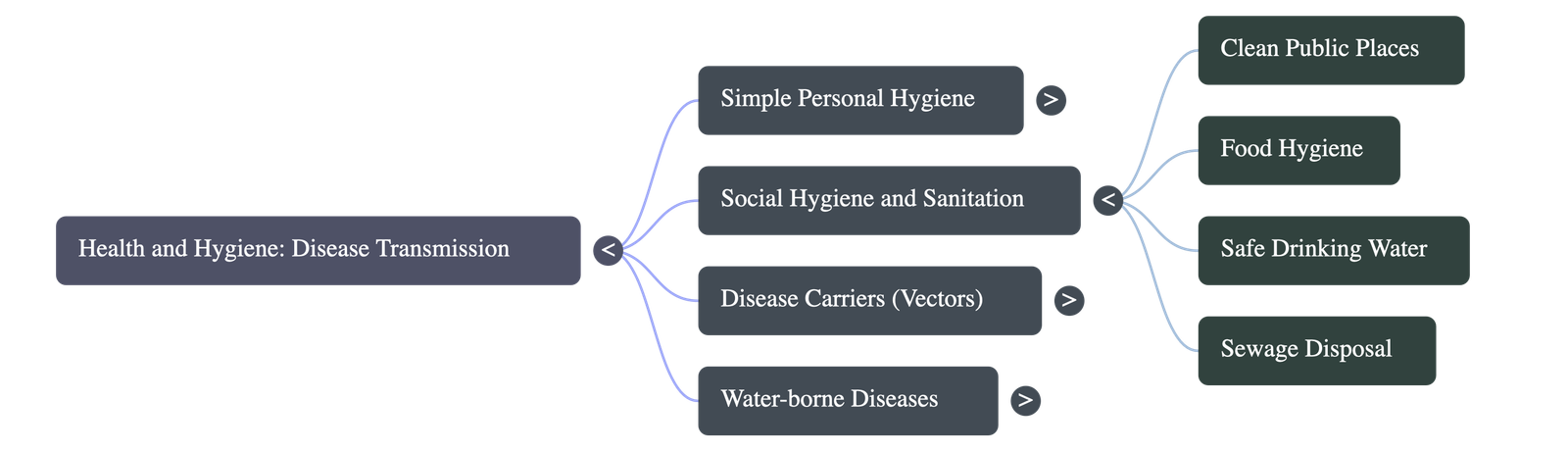
Social Hygiene and Sanitation
- Public places (schools, offices, cinemas) and eating establishments must be kept clean and fly-free.
- Eatables must be covered, and utensils thoroughly washed with soap and hot water.
- Public drains and garbage should be covered and frequently sprinkled with disinfectants like bleaching powder.
- Civic bodies must supply clean drinking water and manage efficient sewage disposal.
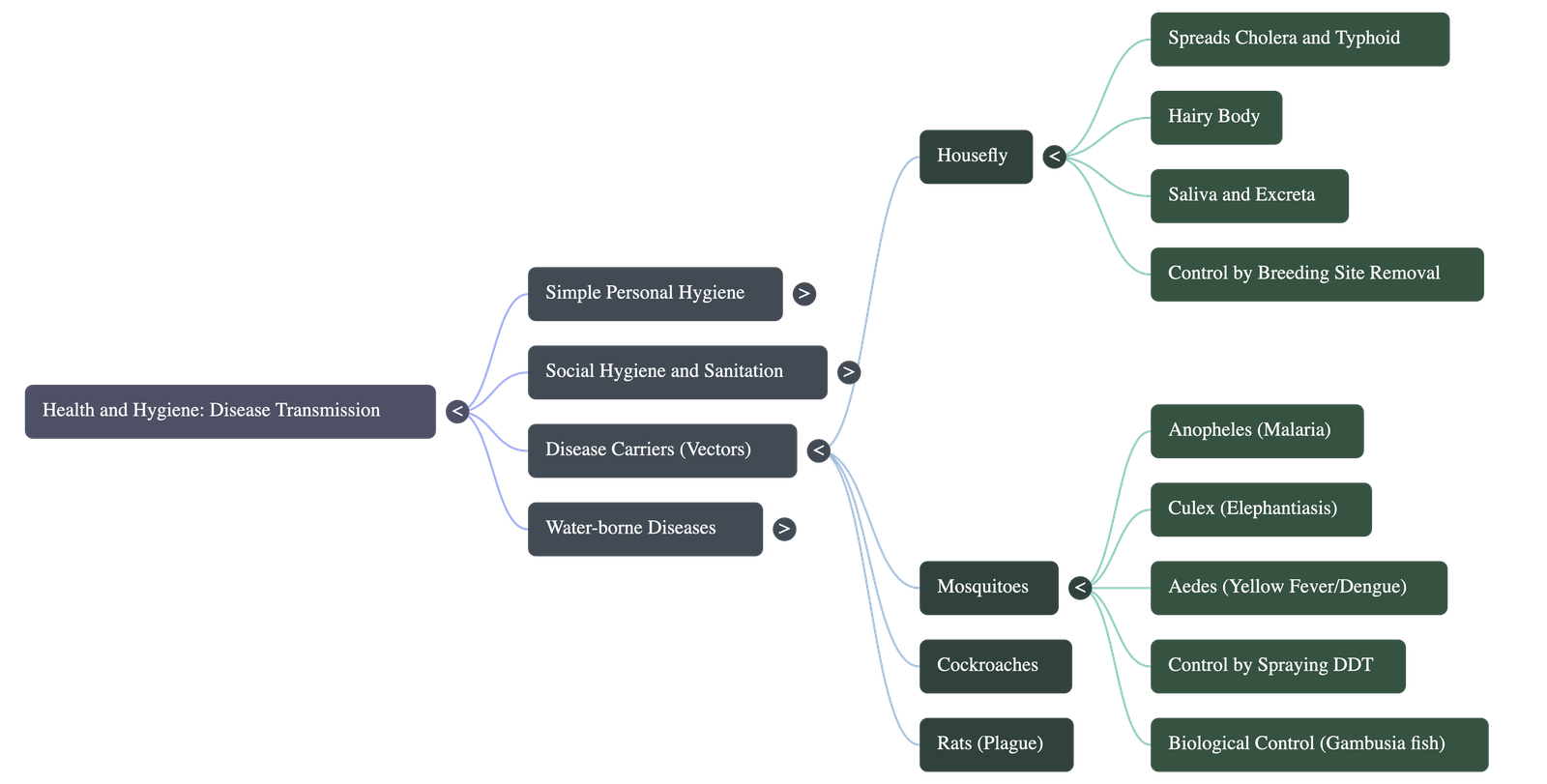
Control of Disease-Carriers (Vectors)
Vectors are intermediate carriers of pathogens. Controlling insects and animals that spread diseases is a major priority for public health.
Houseflies ("Public Enemy No. 1")
- Transmission Methods: They spread dysentery, cholera, and typhoid. They pick up filth on their hairy bodies/legs, pour out saliva or vomit on food, deposit excreta on human food, and can directly transfer germs (like trachoma) by sitting on eyes.
- Control: Eliminate breeding places by covering and decomposing refuse. Spray houses with insecticides and protect food and sleeping babies with covers and nets.
Mosquitoes and Diseases
- Anopheles: Spreads malaria (caused by a protozoan called Plasmodium).
- Culex: Spreads elephantiasis/filariasis (caused by a nematode worm).
- Aedes: Spreads yellow fever and dengue (caused by viruses).
- Transmission: Germs are injected via mosquito saliva when they bite to suck blood.
- Control: Spray insecticides to kill adults, eliminate puddles, spray oil on stagnant water to suffocate larvae, and introduce biological controls like Gambusia fish that devour mosquito larvae.
Cockroaches & Rats
- Cockroaches: Breed in manholes/sewers, spoil food and clothes, and may carry viral diseases, potentially including cancer-causing viruses. Best controlled by spraying insecticides.
- Rats: Serious domestic pests that eat food and carry the rat-flea. The rat-flea acts as a parasite carrying plague germs. Controlled using traps and rat poisons (raticides).
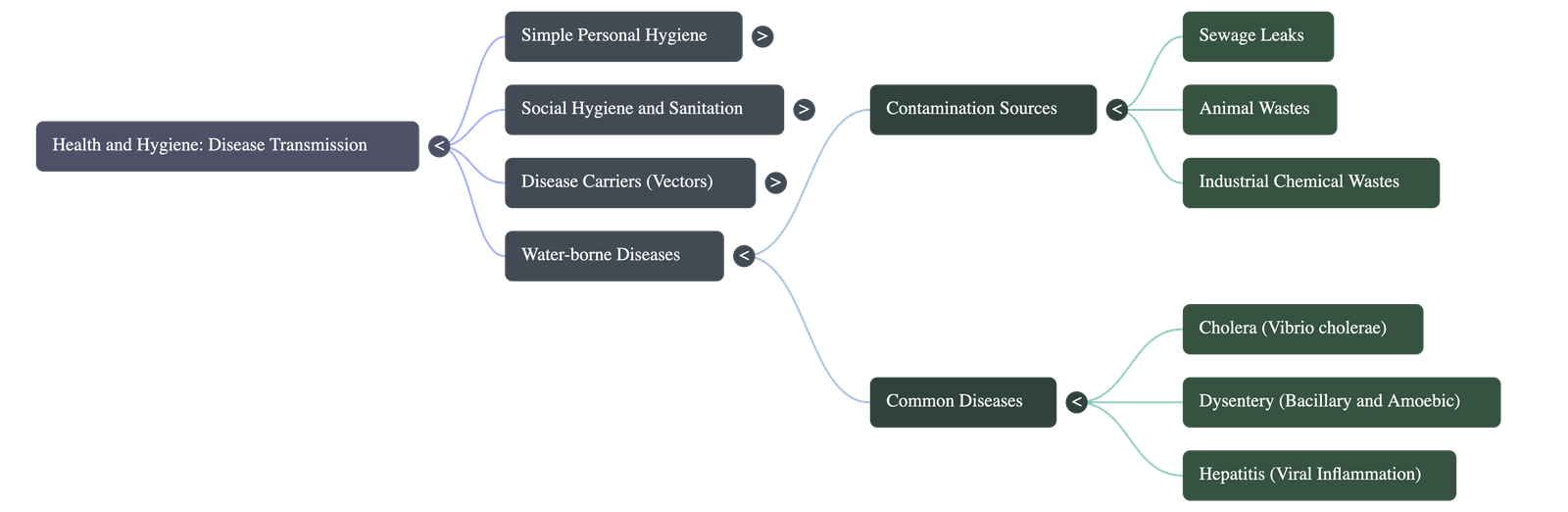
Contamination of Water and Water-Borne Diseases
Contamination occurs when disease-causing germs enter drinking water. Sources of contamination include leaking sewage, open defecation/urination near water bodies, and animal waste runoff.
Industrial & Agricultural Water Pollutants
- Industrial Mercury: Causes abnormalities in the nervous system.
- Tannery Wastes: May contain anthrax-causing bacilli.
- Pesticides (like DDT): The most serious pollutants; cause hormonal imbalances and lead to cancer.
- Fluorides: Cause tooth, bone, and muscular disorders, and can be fatal in high concentrations.
Three Common Water-Borne Diseases
-
1. Cholera:
Infection of the intestinal tract by the bacterium Vibrio cholerae.
Symptoms: Severe diarrhoea, vomiting, dehydration, and lack of urination (leading to fatal accumulation of urea in the blood).
Transmission: Contaminated water, dust, flies, or dirty hands of food handlers. -
2. Dysentery:
Occurs in two forms:- Bacillary dysentery: Caused by the bacterium Shigella. Common in children. Symptoms include loose motions, intestinal pain, and mild fever. Treated with antibiotics.
- Amoebic dysentery: Caused by the protozoan Entamoeba histolytica. Enters via contaminated water/food, feeds on red blood cells in the large intestine, and forms cysts that pass through faeces to infect others.
-
3. Hepatitis:
Viral infection causing inflammation of the liver. Hepatitis A is transmitted via contaminated water (while B and C pass through blood/body fluids).
Symptoms: Body ache, yellowish eyes, deep yellow urine (due to bile pigments), and an enlarged liver.
Prevention: Hepatitis vaccine, maintaining proper hygiene, and avoiding fat-rich foods.
Do checkout all questions & answers of this chapter.
Quick Navigation:
| | | |
1 / 1
Quick Navigation:
| | | |