Quick Navigation:
| | | |
Nutrition
Key Terminology
- • Nutrition: The supply of essential organic and inorganic chemical compounds (nutrients) to the body.
- • Food: Any substance consumed that contains necessary nutrients.
- • Diet: The combination of food items consumed in everyday meals.
- • Meal: Food taken at one time to satisfy the appetite.
- • Appetite & Hunger: Appetite is the desire to eat, whereas hunger is the uneasy sensation caused by a lack of food.
The Need for Nutrition
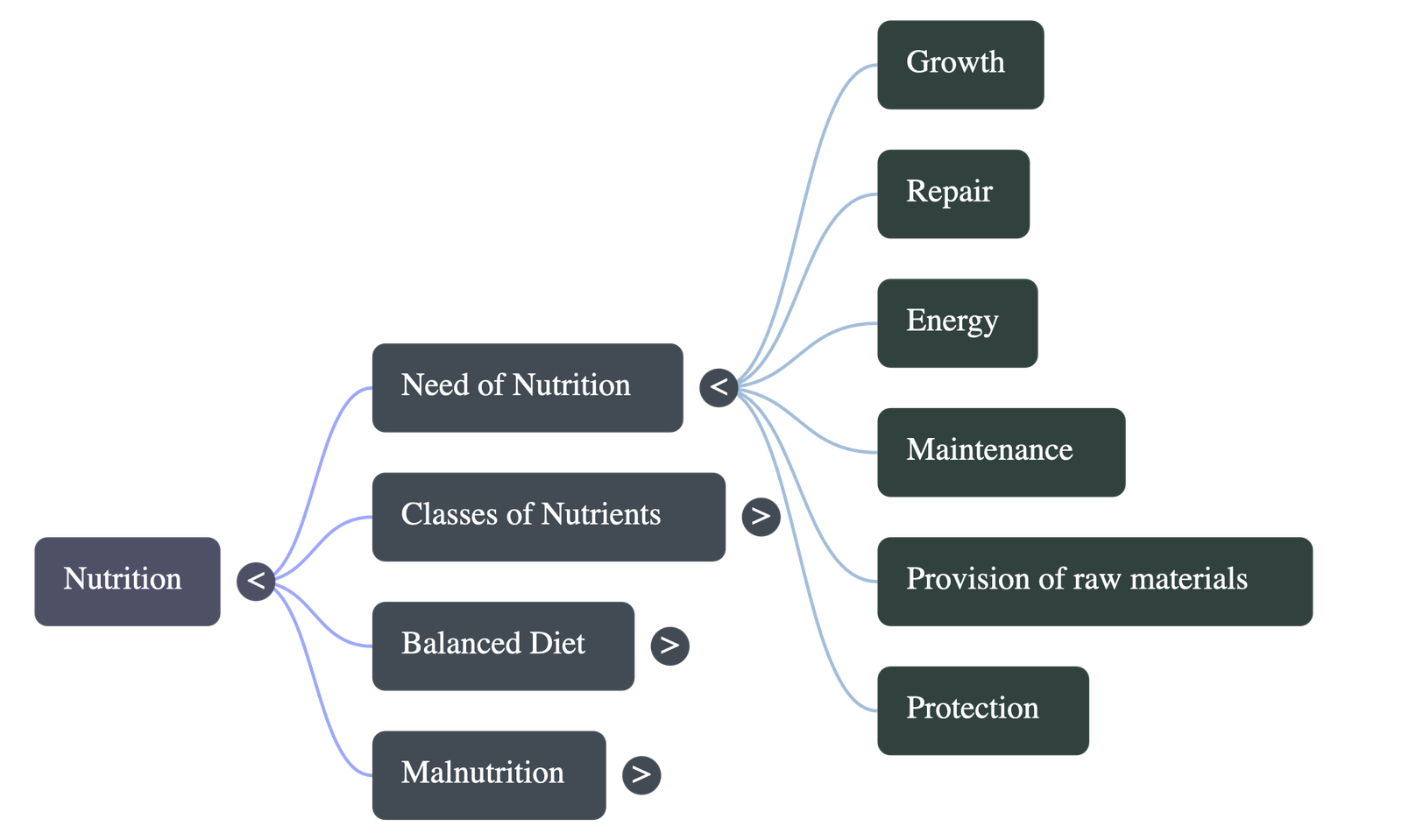
Food is essential for living organisms to fulfill six primary purposes:
- Growth: Building new protoplasm and cells.
- Repair: Providing material for worn-out or injured cells.
- Energy: Fueling various life functions.
- Maintenance: Sustaining the chemical composition of cells.
- Raw Materials: Producing vital secretions like enzymes, hormones, and milk.
- Protection: Defending against diseases and infections.
Six Classes of Nutrients
1. Carbohydrates
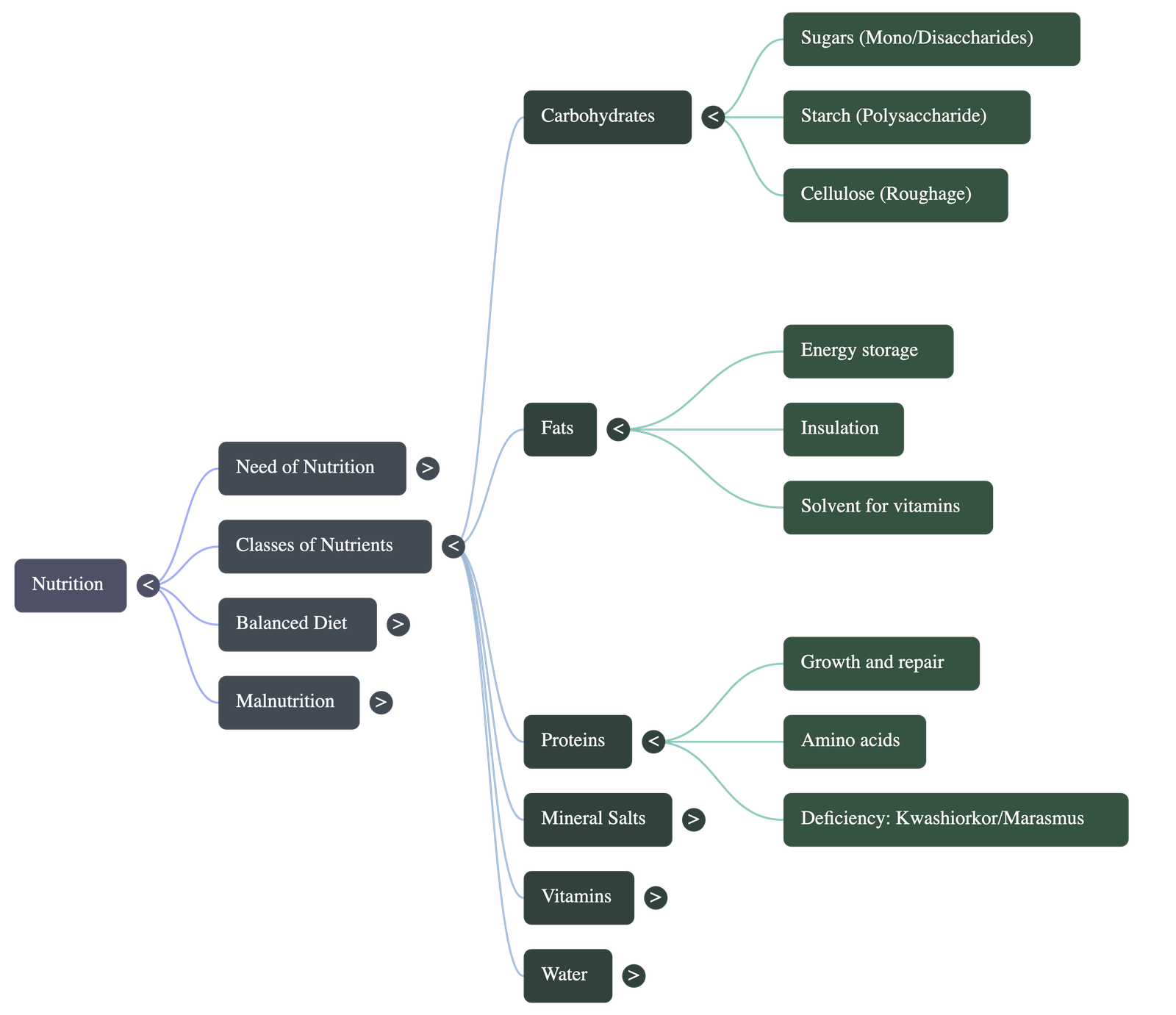
- The principal energy sources in the body, composed of carbon, hydrogen, and oxygen (hydrogen to oxygen ratio is 2:1).
- Sugars (Simple Carbohydrates):
- Monosaccharides: Glucose (grape/blood sugar), Fructose (fruit sugar), Galactose (milk sugar). Require no digestion.
- Disaccharides: Sucrose (commercial/cane sugar), Maltose (malt sugar), Lactose (milk sugar). Require digestion to be absorbed.
- Insoluble Polysaccharides:
- Starch: The form in which plants store carbohydrates (e.g., potatoes, grains).
- Glycogen: The form in which animals store carbohydrates (primarily in the liver and muscles).
- Cellulose: Found in plant cell walls. The human body cannot digest it, so it serves as Roughage, which absorbs water, keeps fecal matter soft, prevents constipation, and stimulates intestinal muscle contraction.
2. Fats
- Produce significantly more energy than carbohydrates.
- Serve as an important storage form of food and provide insulation against rapid heat loss.
- Act as a solvent for fat-soluble vitamins.
3. Proteins
- Large chemical molecules made of carbon, hydrogen, oxygen, and nitrogen (most essential element). Their basic units are amino acids.
- Provide material for growth, repair of body cells, and can be oxidized for energy in emergencies.
- Deficiency Diseases:
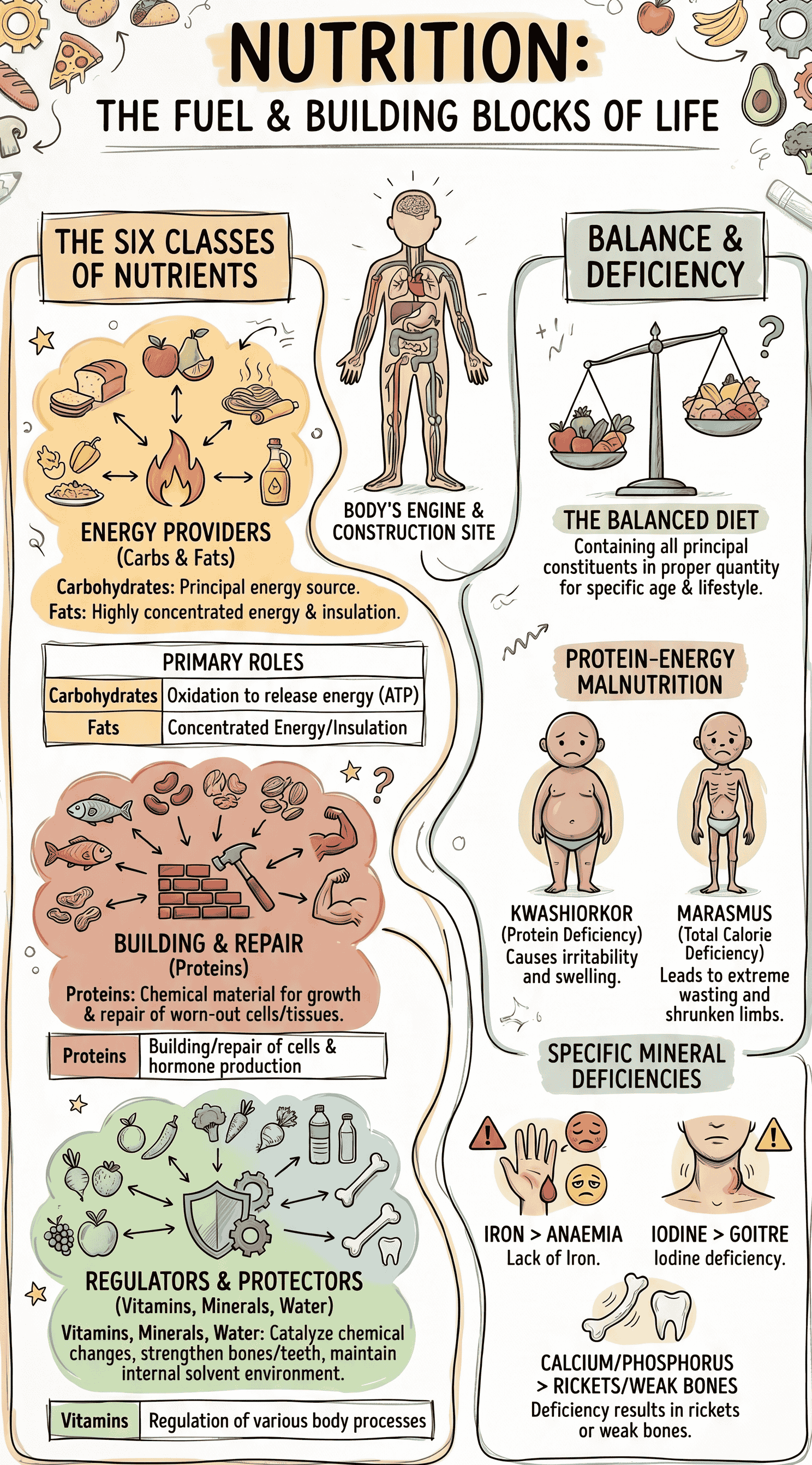
- Kwashiorkor: Affects children (1-5 years) due to protein deficiency when a mother stops breast-feeding early and the child is fed a starch-heavy diet. Symptoms include stunted growth, belly protruding, and oedema (swelling of feet and face).
- Marasmus: Affects infants under 1 year due to deficiency of carbohydrates, fats, and proteins. Symptoms include extreme body weakness, loss of body weight, and visible ribs with no oedema.
4. Mineral Salts
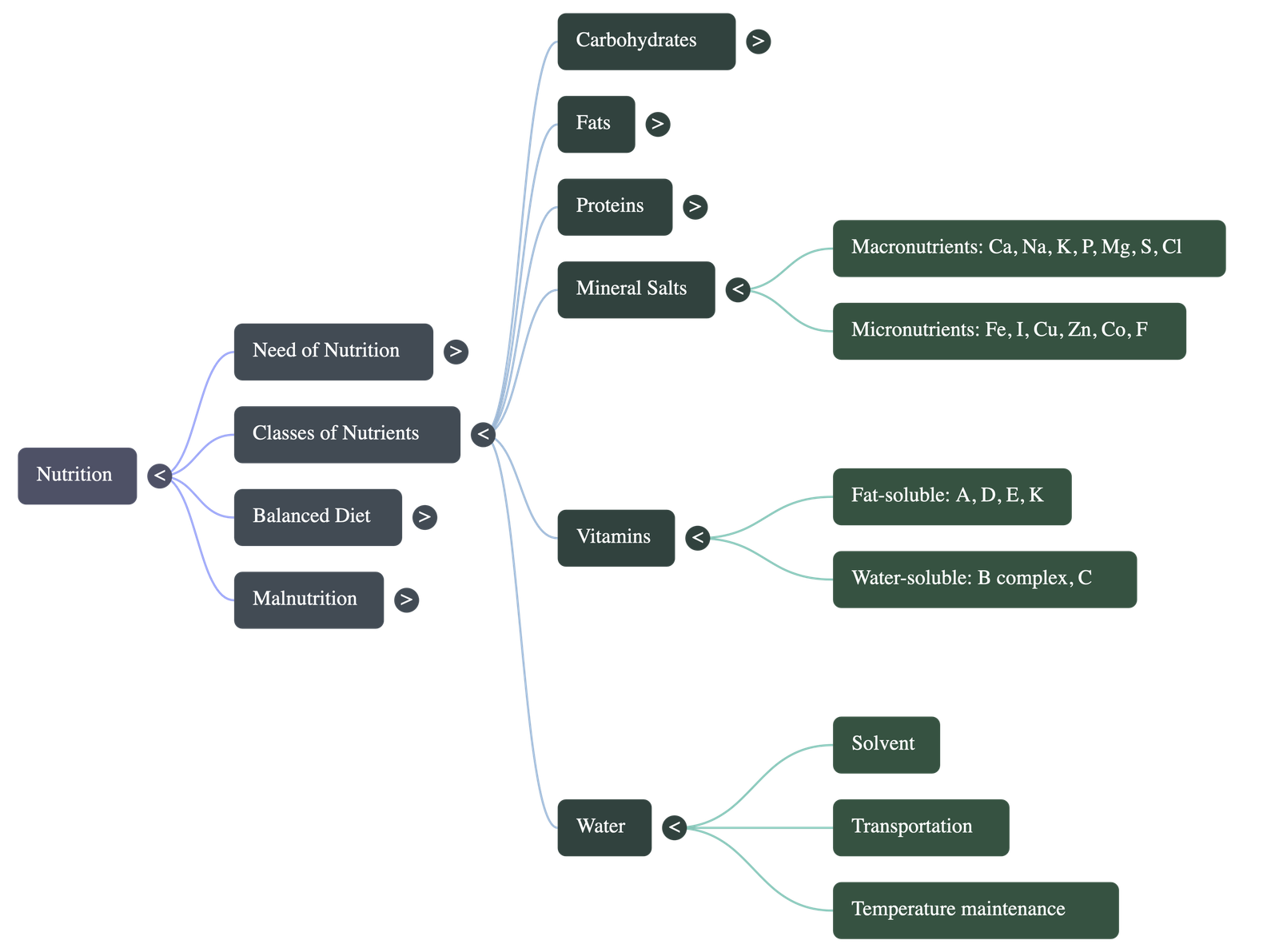
- Needed in small quantities to regulate body processes.
- Calcium & Phosphorus: Strengthen bones and teeth; Calcium is vital for blood clotting, while Phosphorus aids in ATP production.
- Iron: Essential for haemoglobin formation. Deficiency leads to Anaemia.
- Iodine: Required for proper thyroid function. Deficiency leads to Goitre.
- Potassium & Sodium: Needed for cell permeability and nerve cell functions.
5. Vitamins
- Chemical substances needed in minute amounts acting as catalysts or enzymes in cell metabolism.
- Fat-Soluble Vitamins (Can be stored in the body):
- Vitamin A (Retinol): Resists infection, required for vision. Deficiency causes Night-blindness and Xerophthalmia.
- Vitamin D (Calciferol): Helps use calcium/phosphorus. Deficiency causes Rickets in children and Osteomalacia in adults.
- Vitamin E (Tocopherol): Prevents oxidation of vitamin A.
- Vitamin K (Phylloquinone): Essential for blood clotting. Deficiency causes haemorrhage.
- Water-Soluble Vitamins (Cannot be stored, easily excreted):
- Vitamin B1 (Thiamine): Deficiency causes Beriberi.
- Vitamin B3 (Niacin): Deficiency causes Pellagra.
- Vitamin B12 (Cobalamine): Deficiency causes Pernicious anaemia.
- Vitamin C (Ascorbic acid): Promotes capillary walls. Deficiency causes Scurvy (bleeding gums).
6. Water
- Makes up about two-thirds of body weight.
- Acts as a solvent, produces digestive juices, transports digested food/oxygen, excretes soluble wastes, and maintains body temperature.
- Lost constantly through sweat, urine, and breath vapour; must be replaced by drinking 7-8 glasses daily and consuming water-rich foods.
Balanced Diet and Caloric Needs
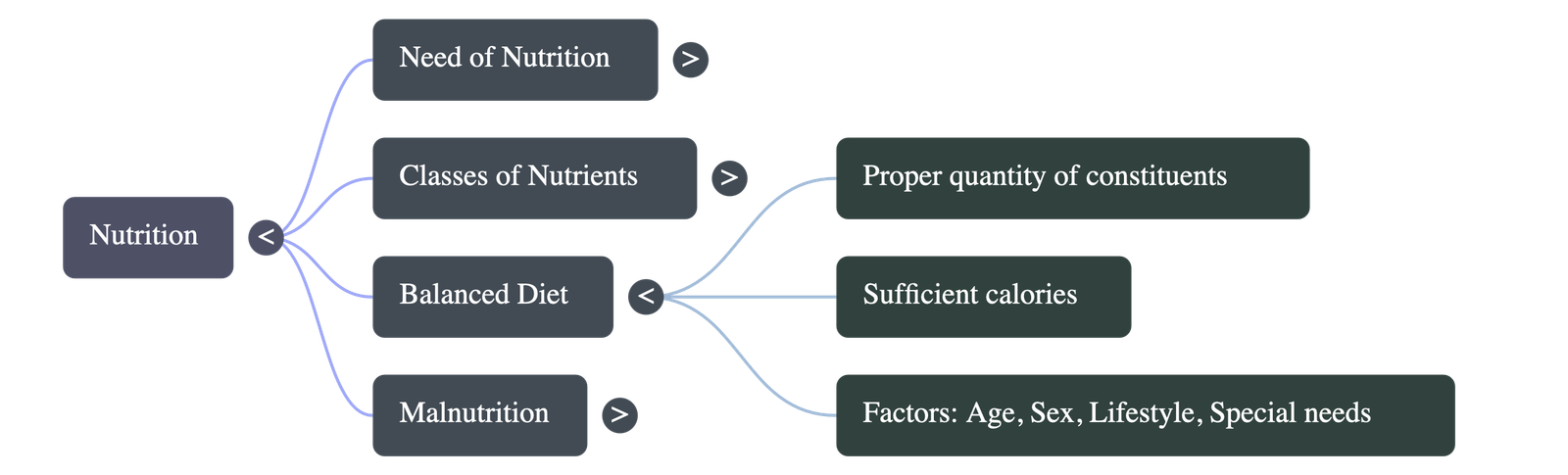
- Balanced Diet: Contains all principal constituents of food in proper quantity for a particular person based on age, sex, lifestyle, and special needs.
- Calories: The amount of heat required to raise the temperature of one gram of water by one degree Celsius. Food energy is typically measured in Kilocalories (kcal). Daily requirements vary heavily based on age and occupation (e.g., an adult labourer needs 2800-3200 kcal/day).
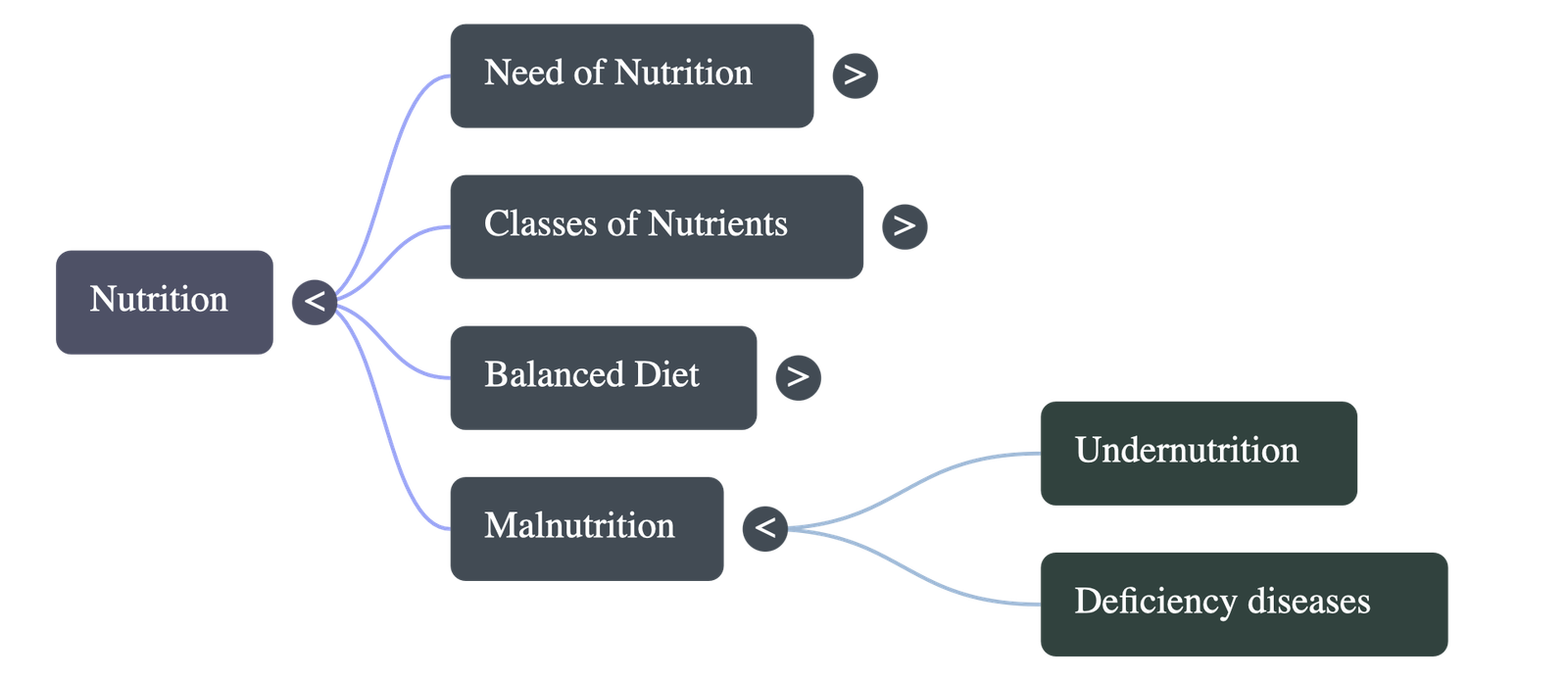
- Malnutrition: A condition suffered due to an unbalanced diet, encompassing both deficiency and excess.
- Undernutrition: Specifically refers to suffering from poor nutrition caused by not having enough food containing essential nutrients for growth and health. If caloric intake is insufficient, existing body food stores are oxidized, causing weight loss.
Do checkout all questions & answers of this chapter.
Quick Navigation:
| | | |
1 / 1
Quick Navigation:
| | | |