Health Organisations
Health is a primary concern for governments worldwide. To safeguard the health interests of people individually and collectively, various organizations operate at local, national, and global levels.
1. Common Health Problems in India
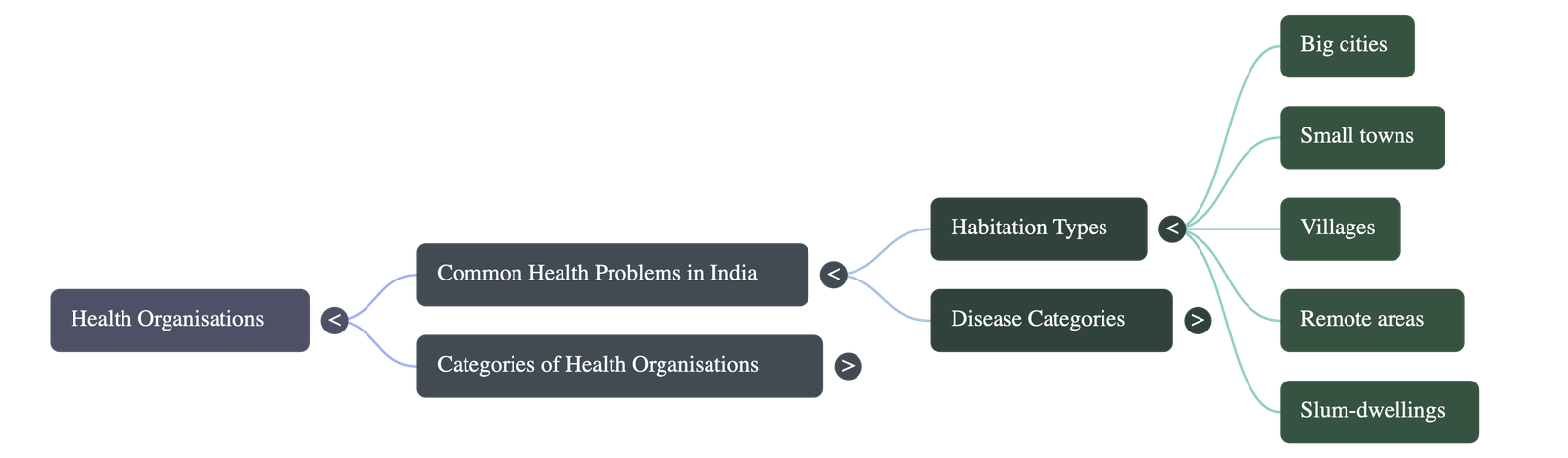
India's highly diverse geographical and climatic conditions lead to varying health challenges across its five main types of habitations:
Types of Habitations
- Big Cities: Face issues related to overcrowding, high vehicle density, heavily burdened water and sewage systems, and industrial pollution.
- Small Towns: Generally less crowded than big cities.
- Villages: Feature smaller populations primarily dependent on agriculture, dairies, and cottage industries.
- Remote Areas: Inhabited mainly by tribal populations thriving on forest products, often lacking proper drinking water and medical facilities.
- Slum-dwellings: Found on the outskirts of big cities, characterized by highly unhygienic and unhealthy living conditions.
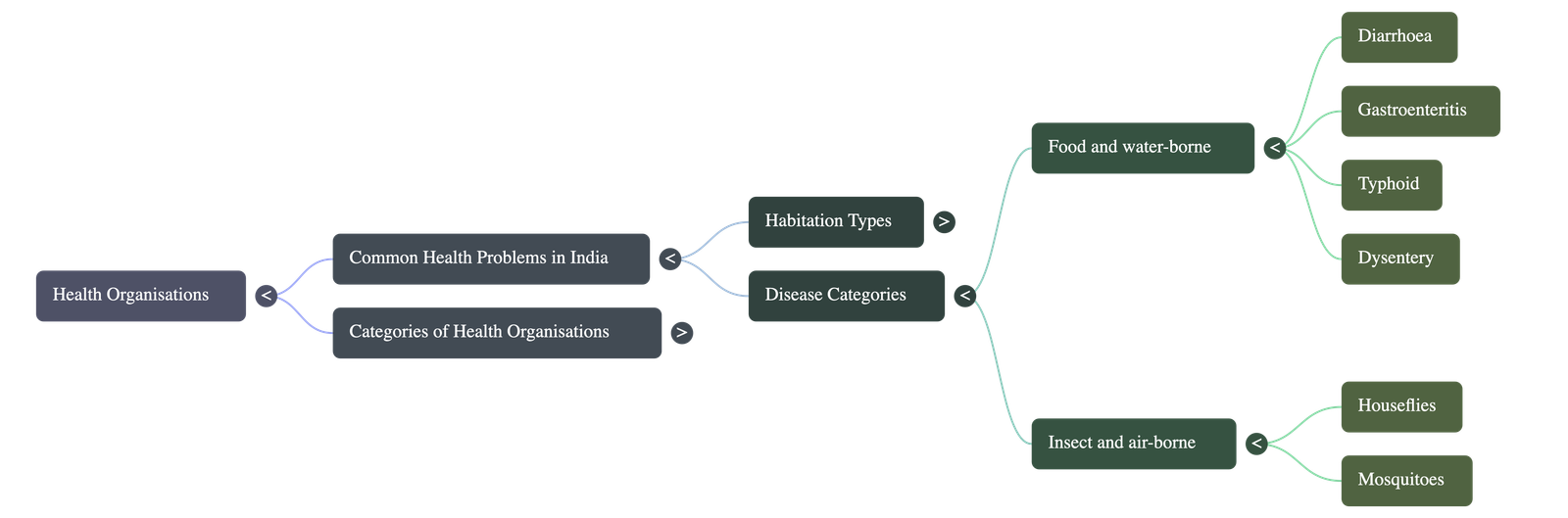
Major Categories of Health Problems
- Food and Water-Borne Diseases: Diseases like diarrhoea, gastroenteritis, typhoid, and dysentery are prevalent due to contaminated water from wells and hand-pumps, harmful mineral contents, and untreated industrial sewage poured into water bodies.
- Insect and Air-Borne Diseases: A lack of general cleanliness and awareness leads to the breeding of houseflies, mosquitoes, and other insects that contaminate food and spread diseases.
2. Categories of Health Organisations
Organizations dedicated to public well-being are classified into three levels:
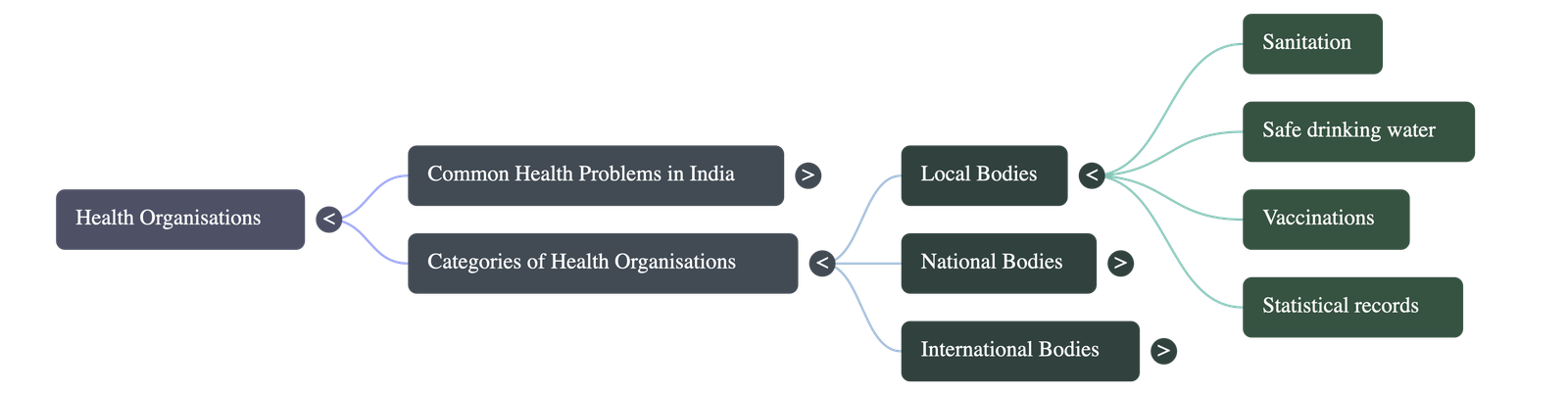
A. Local Bodies
Includes Municipal Corporations, Municipalities, and Town Area Committees operating in cities, towns, and larger villages. Their main functions are:
- Sanitation: Proper disposal of garbage and sewage, and elimination of pest breeding grounds.
- Safe Drinking Water: Ensuring a clean water supply.
- Vaccinations: Immunisation programs for infants and others against diseases like tetanus, pertussis, diphtheria, tuberculosis, poliomyelitis, and measles. Programs intensify during epidemics.
- Statistical Records: Maintaining compulsory registration of births, deaths, and local disease tracking.
B. National Bodies
Agencies and research centres that study specific health problems (like Malaria, Dengue, Tuberculosis, Leprosy, and Cholera). Key activities include:
- Conducting regular surveys and identifying disease-transmitting agents.
- Arranging prophylactic immunisations and other preventative measures.
- Key Institutes & Programs: The National Institute of Communicable Diseases (NICD) in Delhi researches infectious diseases. The "Pulse Polio" programme is a notable national campaign aimed at eradicating poliomyelitis.
3. International Bodies
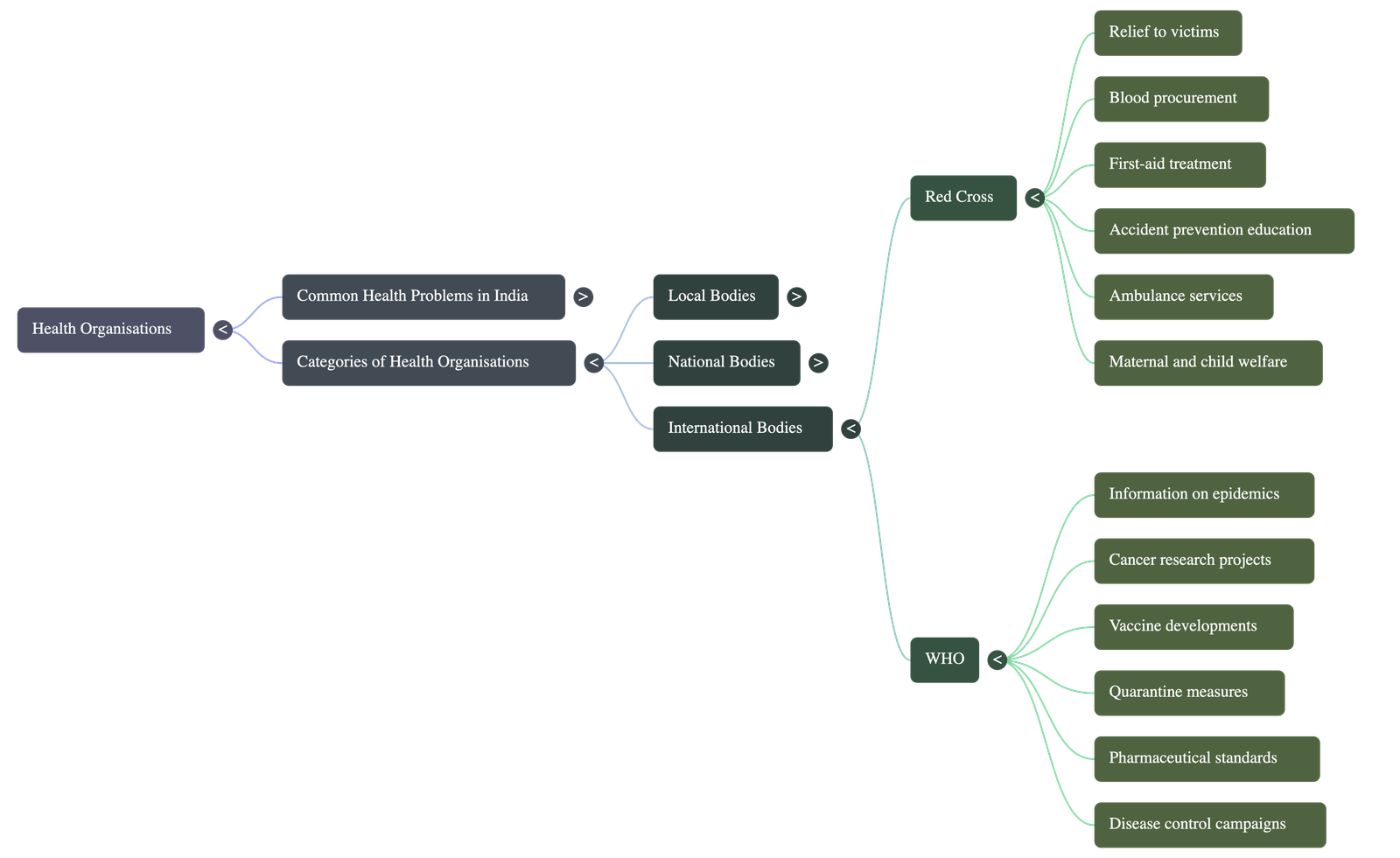
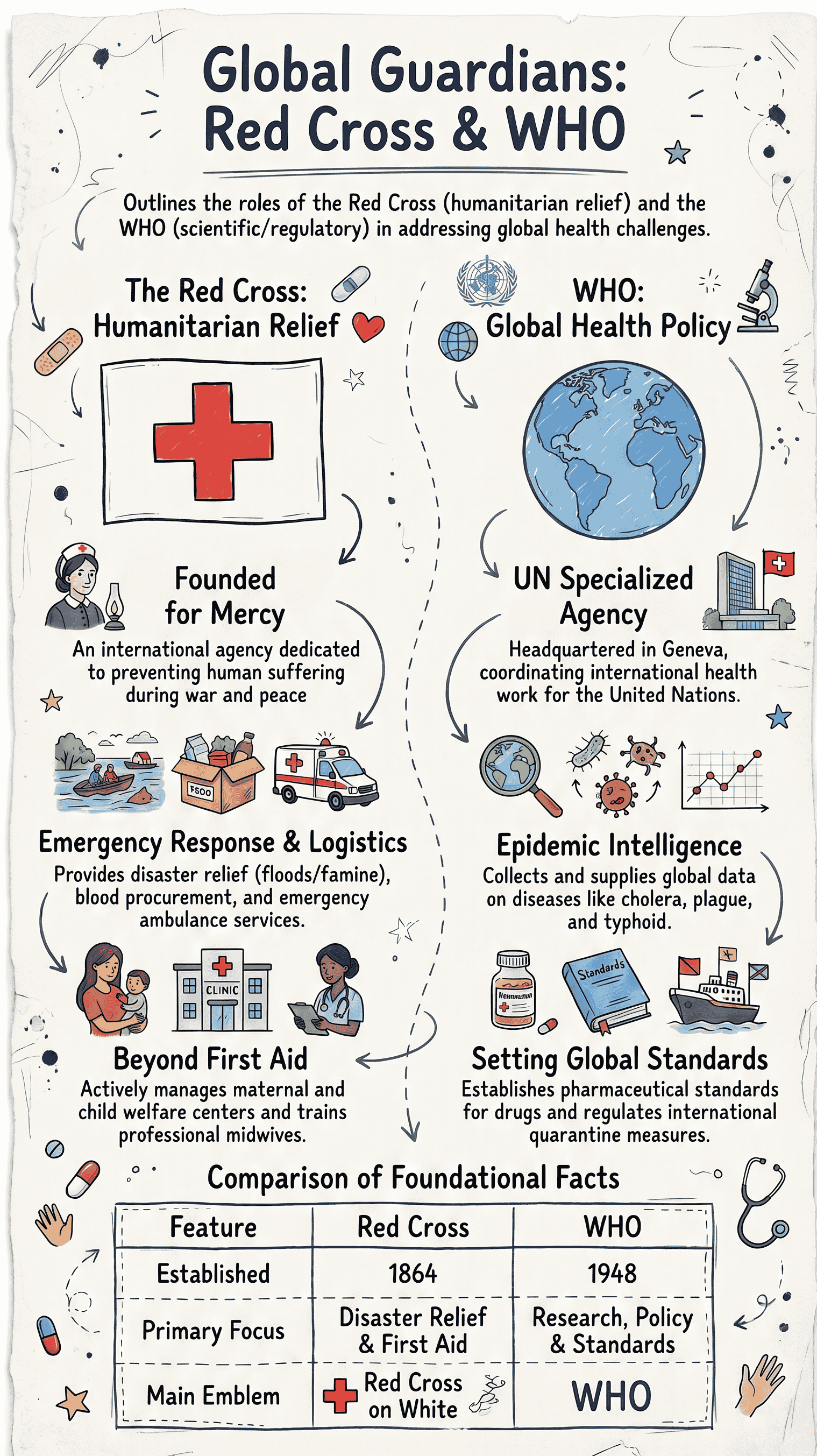
1. The Red Cross
Formally founded in 1864, it serves as both a national and international agency. Its emblem is a red-coloured cross on a white background. Red Cross Day is celebrated on May 8.
Major Activities:
- Extending relief to victims of calamities (floods, fires, famines, earthquakes, and wars).
- Procuring and supplying blood for transfusions to the needy.
- Providing first-aid treatments in accidents and educating people on accident prevention.
- Arranging ambulance services in emergencies.
- Looking after maternal and child welfare, including training midwives in India.
2. World Health Organisation (WHO)
Established in 1948 as a specialized agency of the United Nations Organisation (UNO). Its headquarters are in Geneva, Switzerland, with six regional offices worldwide (including one in Delhi, India).
Reasons for Formation:
- To create an international body focused on global health problems.
- To achieve better and faster results in medical research and cures through combined efforts.
- To ensure poor and developing countries benefit quickly from medical advancements.
Main Activities:
- Collecting and supplying information on occurrences of epidemic diseases (cholera, plague, typhoid, yellow fever, smallpox).
- Promoting and supporting international research projects for diseases like cancer.
- Providing information on the latest developments in vaccines and the health hazards of nuclear radiation.
- Suggesting quarantine measures to isolate patients and prevent the spread of diseases globally.
- Laying out pharmaceutical standards to ensure the purity and proper dosage size of important drugs.
- Organising campaigns to control both epidemic (widespread) and endemic (local) diseases.
Do checkout all questions & answers of this chapter.