Quick Navigation:
| | | |
Introducing Biology [Scope and Branches]
Understanding Science and Biology
- Science is an organized body of knowledge supported by observation and experimentation of natural phenomena.
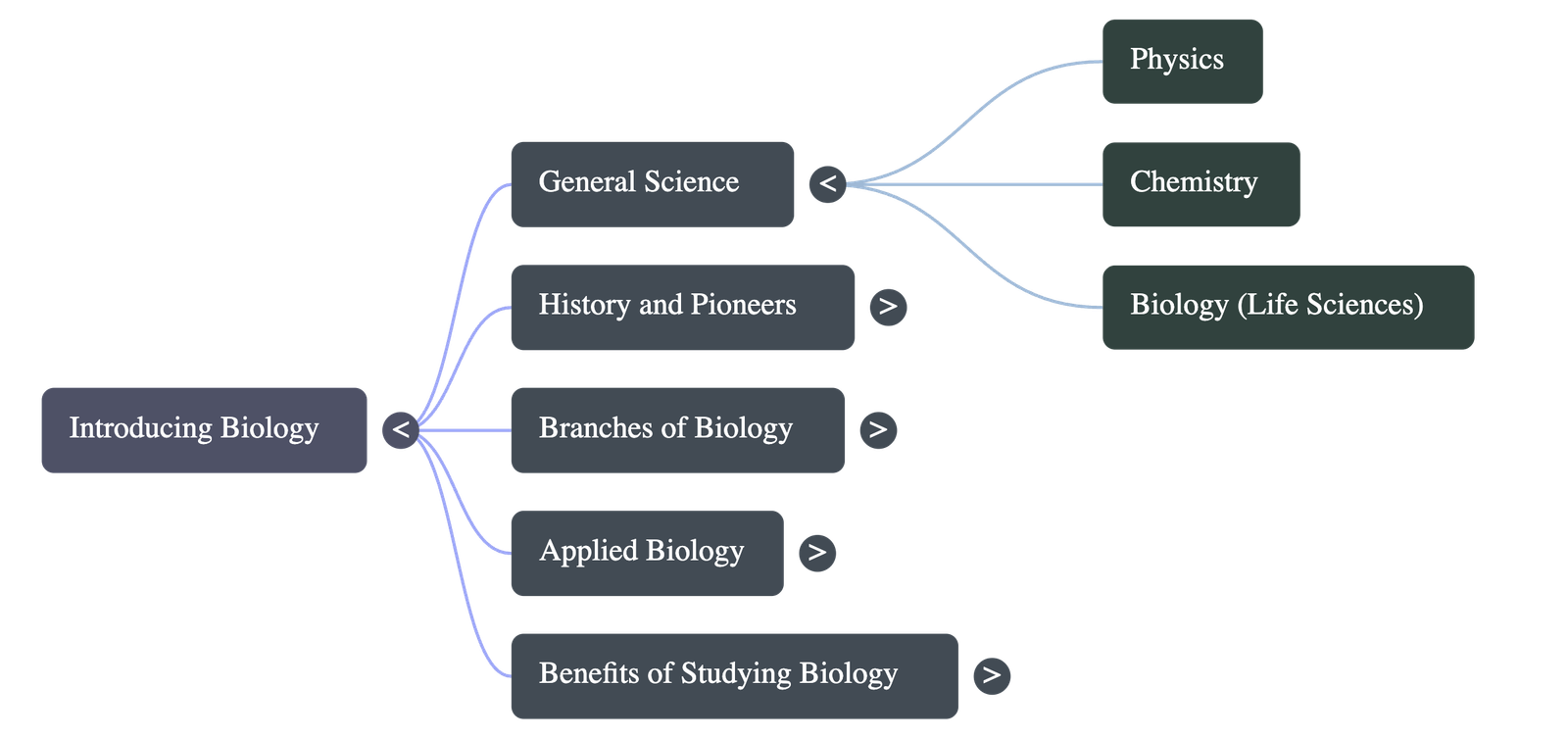
- Science has three major branches: Physics, Chemistry, and Biology.
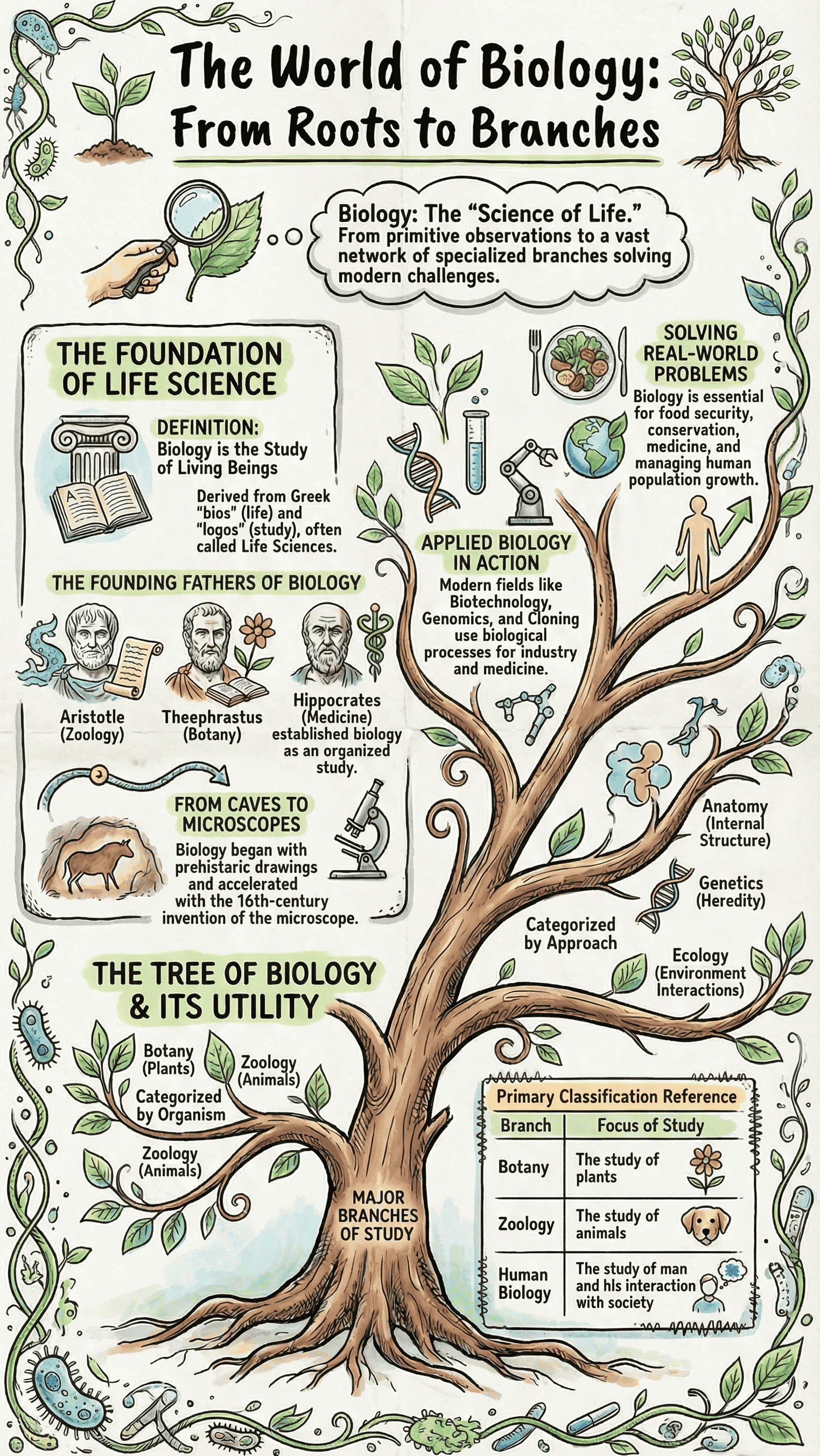
- Biology is the study of living beings (plants and animals, including humans).
- The term comes from Greek words: bios meaning life, and logos meaning study. Modern scientists often use the term "Life Sciences".
Growth and History of Biology
- The study began with primitive humans who observed plants and hunted animals for survival, eventually domesticating animals and farming.
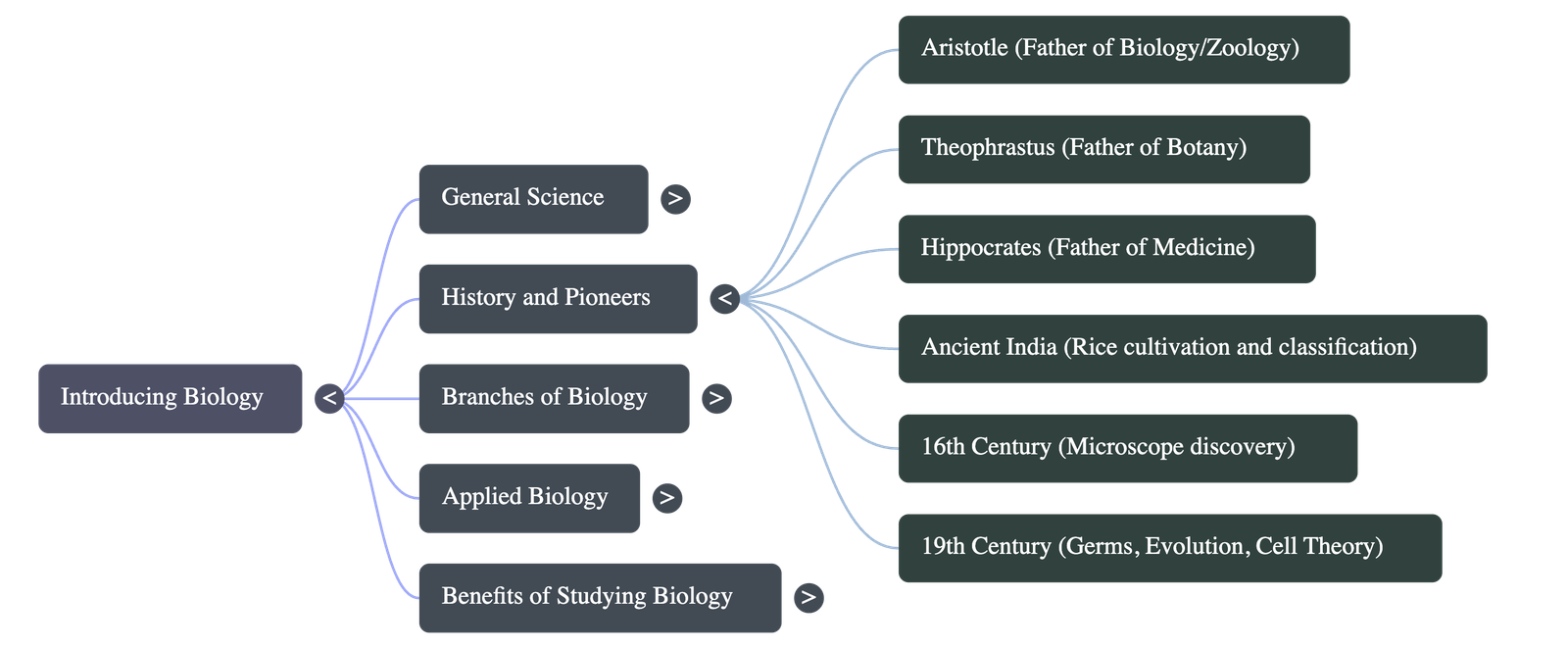
- Aristotle was the pioneer of organized biological study and is known as the Father of Biology and Father of Zoology.
- Theophrastus mainly studied plants and is called the Father of Botany.
- Hippocrates rationalized the science of healing and is known as the Father of Medicine.
- In ancient India, organisms were classified by reproduction methods, such as viviparous (giving birth to young ones) and oviparous (laying eggs).
- Biology advanced rapidly with the 16th-century invention of the microscope, leading to 19th-century breakthroughs like the cell theory and germ theory, and modern 21st-century leaps in genetics and biotechnology.
Major Branches of Biology
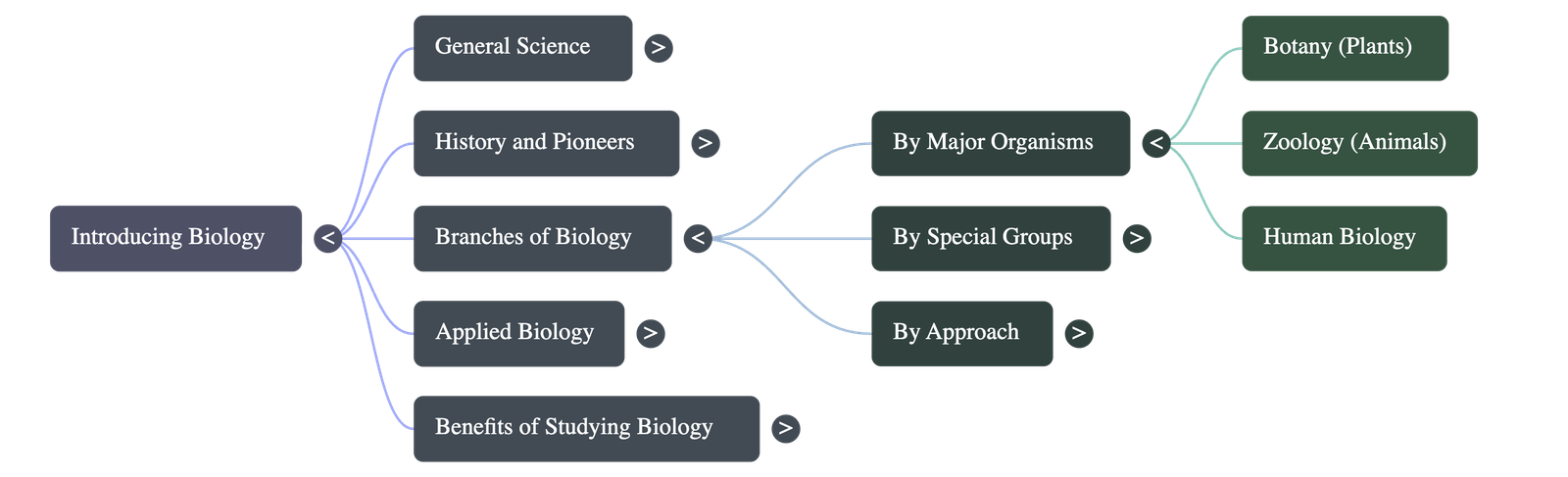
By Major Kinds of Organisms
- Botany: Study of plants.
- Zoology: Study of animals.
- Human Biology: Study of humans, their relationships with other organisms, and societal interactions.
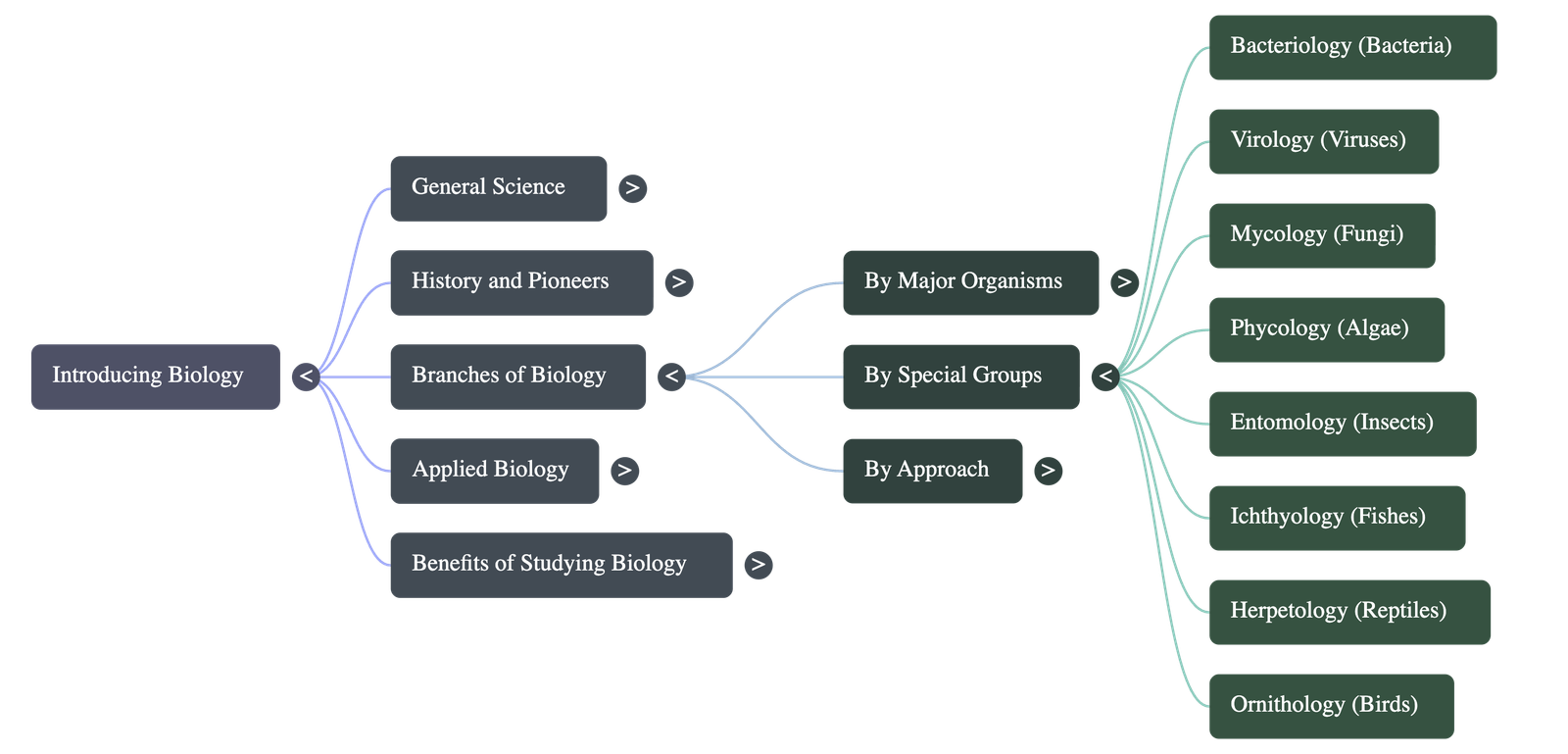
By Special Groups of Organisms
- Bacteriology: Study of bacteria.
- Virology: Study of viruses.
- Mycology: Study of fungi.
- Phycology / Algology: Study of algae.
- Entomology: Study of insects.
- Ichthyology: Study of fishes.
- Herpetology: Study of reptiles (lizards, snakes, etc.).
- Ornithology: Study of birds.
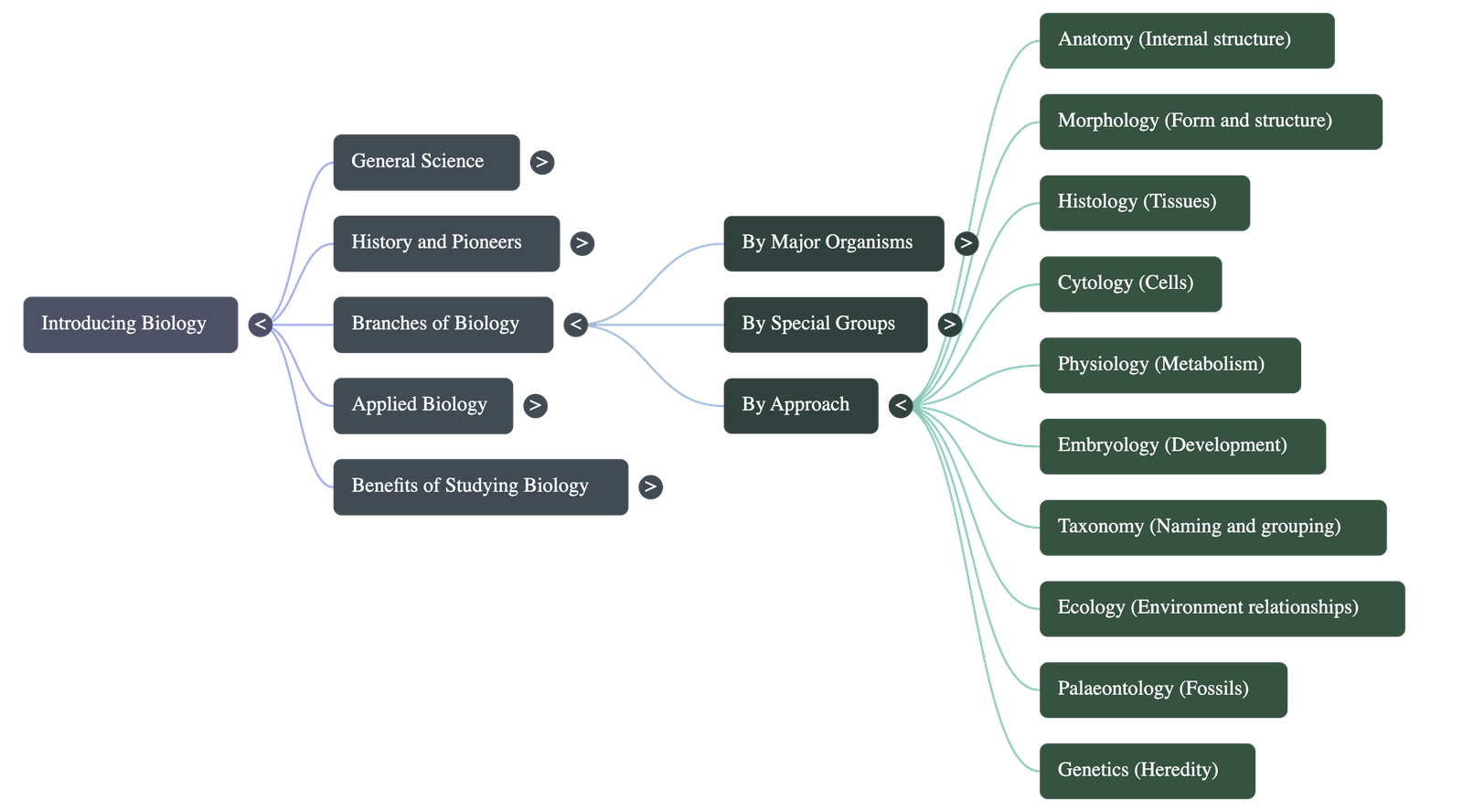
By Approach of Study
- Anatomy & Morphology: Study of internal/gross structure (Anatomy) and external form/structure (Morphology).
- Histology & Cytology: Study of minute tissues (Histology) and cellular structure/function (Cytology).
- Physiology: Study of metabolism and organic functions.
- Embryology: Study of embryo formation and development.
- Taxonomy (Systematics): Science of naming, grouping, and classifying organisms.
- Ecology & Biogeography: Study of organism-environment relationships (Ecology) and geographical distribution (Biogeography).
- Palaeontology & Evolution: Study of prehistoric fossils (Palaeontology) and the origin/descent of organisms (Evolution).
- Genetics: Science of trait transmission from parents to offspring.
Applied Biology
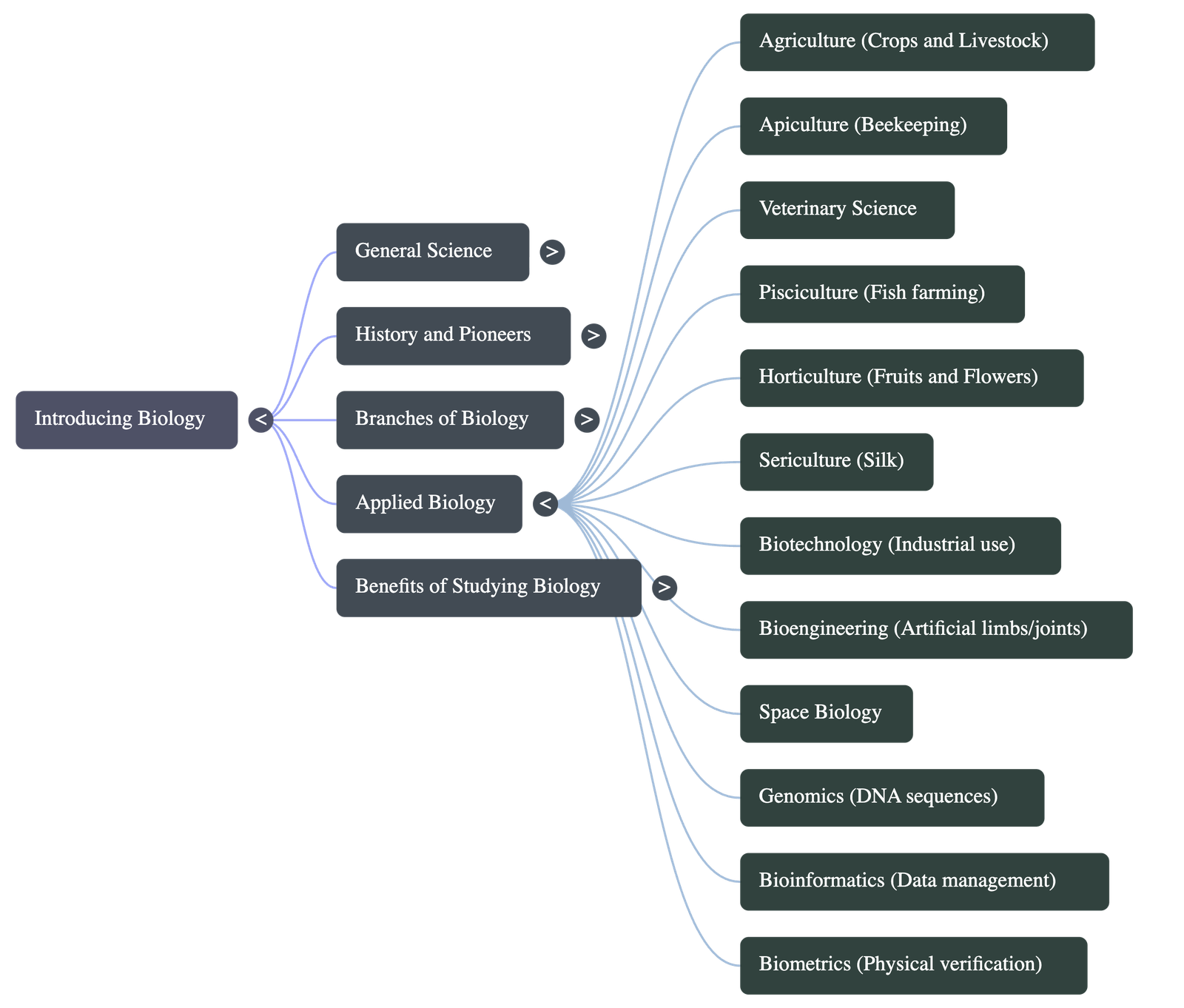
- Agriculture & Horticulture: Raising crops/livestock and growing fruits, vegetables, and ornamental plants.
- Animal Husbandry: Cultivating specific species like bees (Apiculture), silkworms (Sericulture), and fish (Pisciculture).
- Veterinary Science: Treatment and surgery of animals.
- Biotechnology & Bioengineering: Using living cells in industry (e.g., biogas, vaccines) and creating artificial body parts or modified crops.
- Advanced Fields: Molecular Biology, Cloning, Nuclear Biology (radiation effects), Space Biology, Exobiology (life elsewhere in the universe), Genomics, Bioinformatics, and Biometrics.
How Biology Helps Us
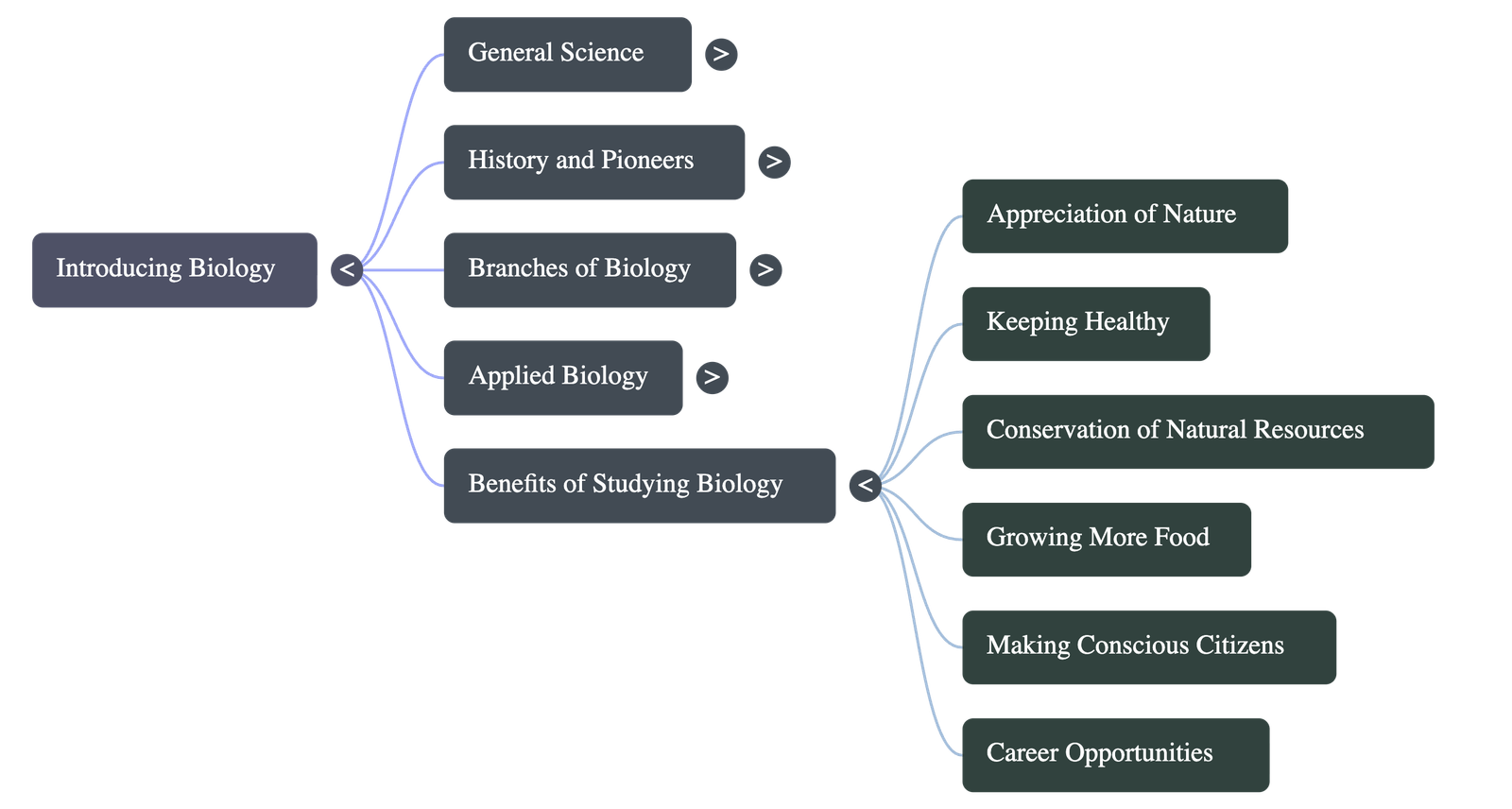
- Appreciation of Nature: Helps us understand the basic unity within the vast variety of living things.
- Keeping Healthy: Educates us on disease causes, germ transmission, and health care.
- Conservation: Promotes understanding of the interdependence of flora and fauna, advocating for the protection of forests, wildlife, and natural resources.
- Growing More Food: Enables the development of new crop varieties, better poultry/cattle breeds, and knowledge of plant/animal diseases.
- Conscious Citizenship: Raises awareness regarding critical global issues like overpopulation, sanitation, public health, and environmental pollution.
- Career Opportunities: Opens paths to become doctors, dentists, pathologists, teachers, foresters, biotechnologists, and more.
Busting Superstitions and Myths
Biology dispels several common myths. A biologist would say "NO" to the following beliefs:
- Head lice are produced from sweat and dirt.
- Peahens are fertilized by drinking the tears of peacocks.
- Eating seedless papaya leads to infertility.
Do checkout all questions & answers of this chapter.
Quick Navigation:
| | | |
1 / 1
Quick Navigation:
| | | |