Quick Navigation:
| | | |
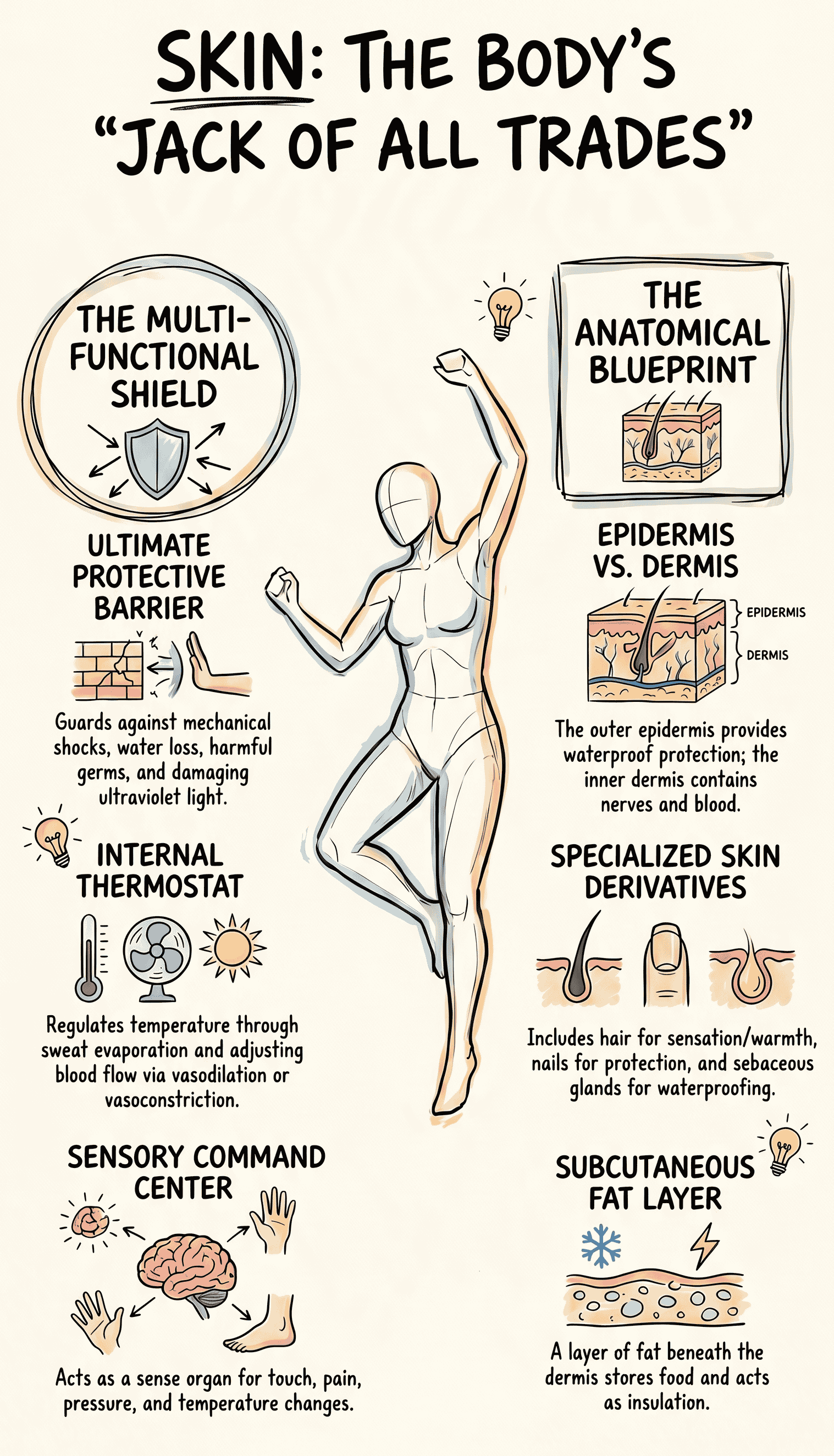
Skin - "The Jack of All Trades"
Introduction
- The skin is the largest organ of the human body, accounting for roughly 15% of an adult's total body weight.
- It acts as a dynamic, highly active organ and primarily serves as an almost impermeable protective barrier.
- Often referred to as the "Jack of all trades" or "master of many tasks," it is the central component of the integumentary system.
Key Functions of the Skin
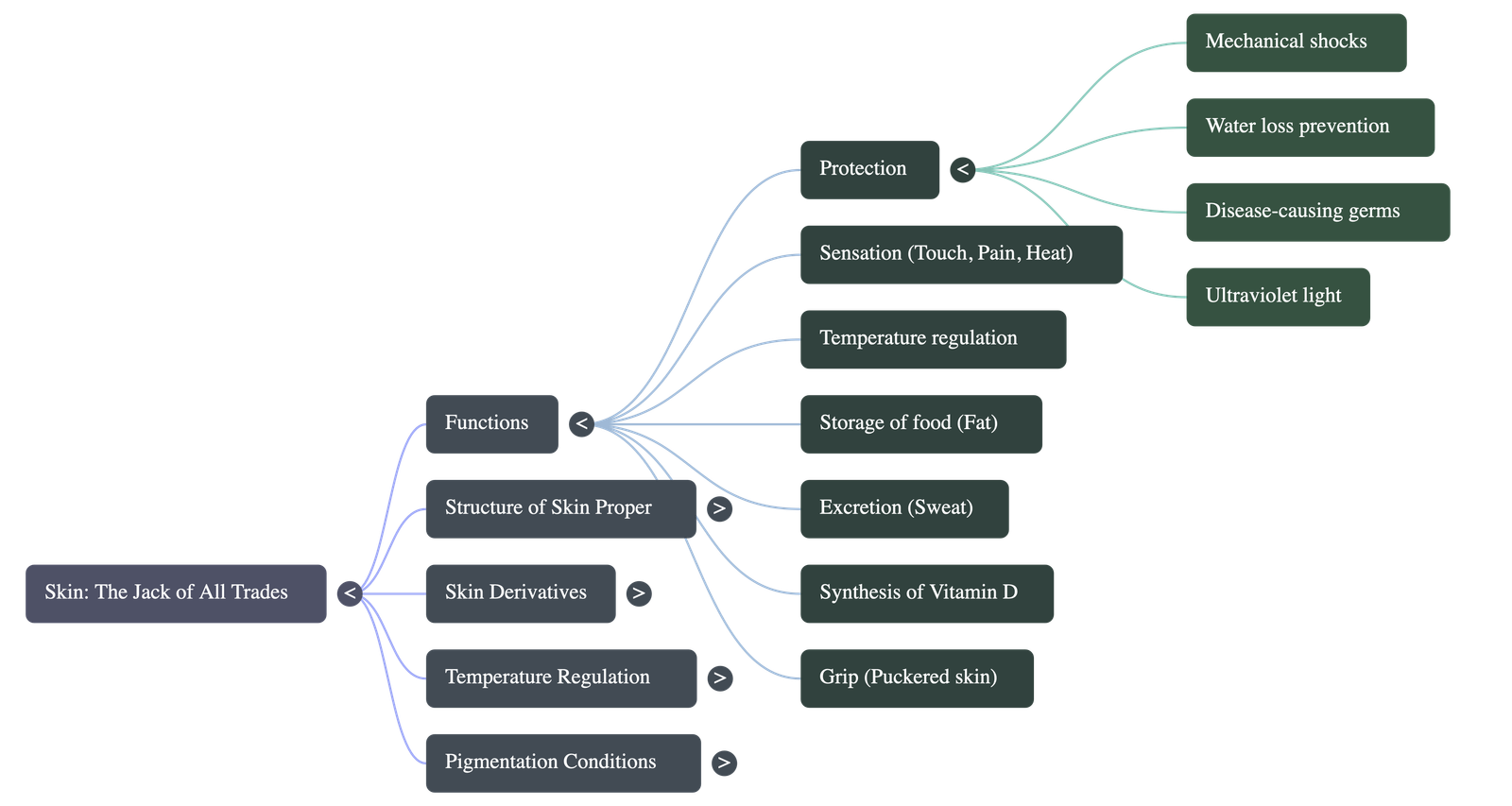
- Protection: Acts as a shield against mechanical shocks, prevents excessive water loss through evaporation, blocks harmful disease-causing germs, and protects against damaging ultraviolet (UV) light.
- Sensation: Functions as a vast sense organ with receptors for touch, pain, pressure, and heat.
- Temperature Regulation: Prevents heat loss in cold weather and facilitates heat loss in hot weather.
- Storage of Food: Stores reserve food in the form of a subcutaneous layer of fat.
- Excretion: Assists in eliminating water, salts, and traces of urea via sweating, though this is primarily for cooling rather than excretion.
- Synthesis of Vitamin D: Synthesizes Vitamin D when exposed to sunlight.
- Grip: Wrinkles or puckers upon prolonged exposure to water, enhancing grip in wet and slippery environments.
Structure of the Skin
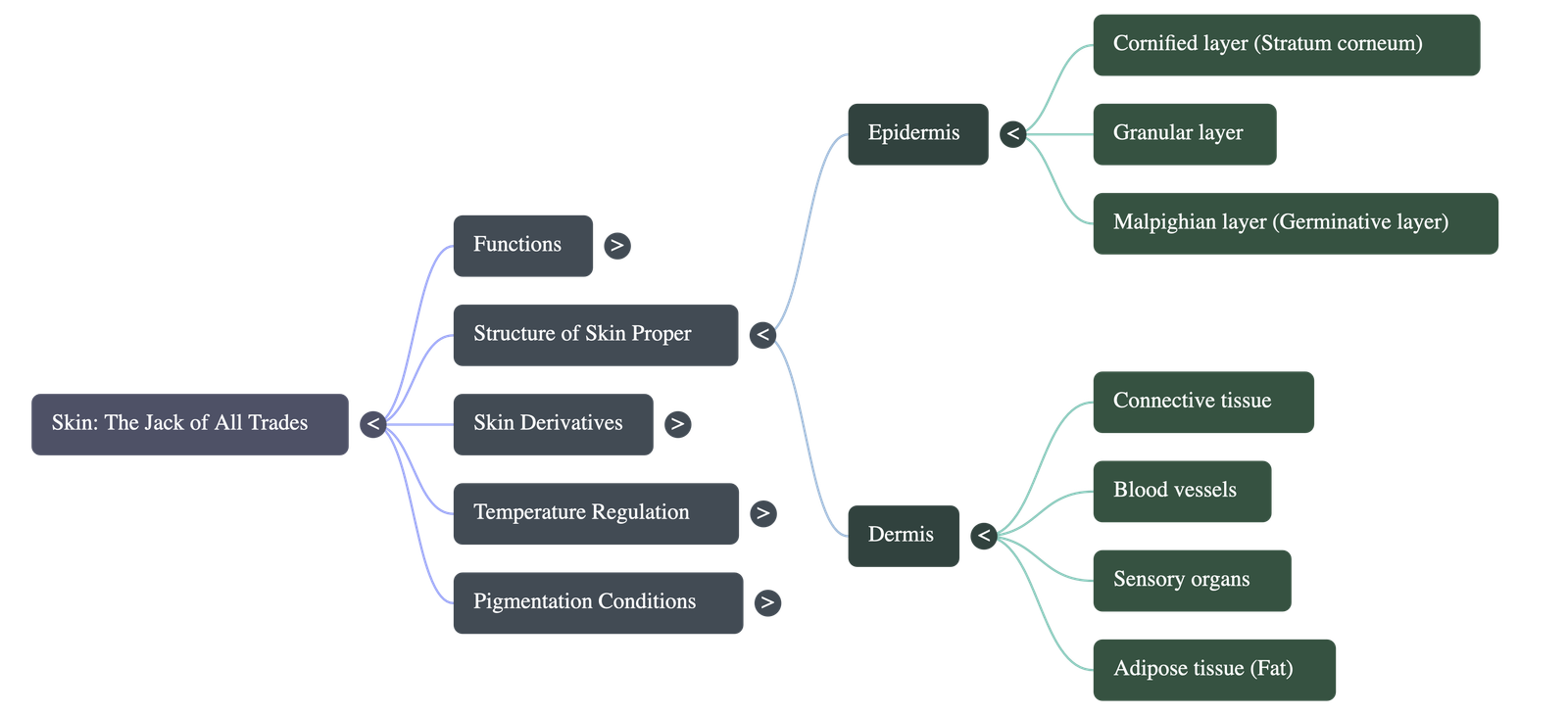
Microscopically, the skin consists of two main layers: the outer Epidermis and the inner Dermis.
1. Epidermis (Outer Layer)
A thinner, stratified epithelium completely devoid of blood vessels. It is thicker on palms and soles and consists of three sub-layers:
- Cornified Layer (Stratum Corneum): The outermost layer made of flattened dead cells containing a tough structural protein called keratin. It offers resistance to mechanical damage, bacterial infection, and water loss.
- Granular Layer: A very thin middle layer of flattened cells.
- Malpighian Layer (Germinative Layer): The innermost region where cells actively divide to replace worn-out outer cells. It contains the pigment melanin, which determines skin coloration and protects against UV rays.
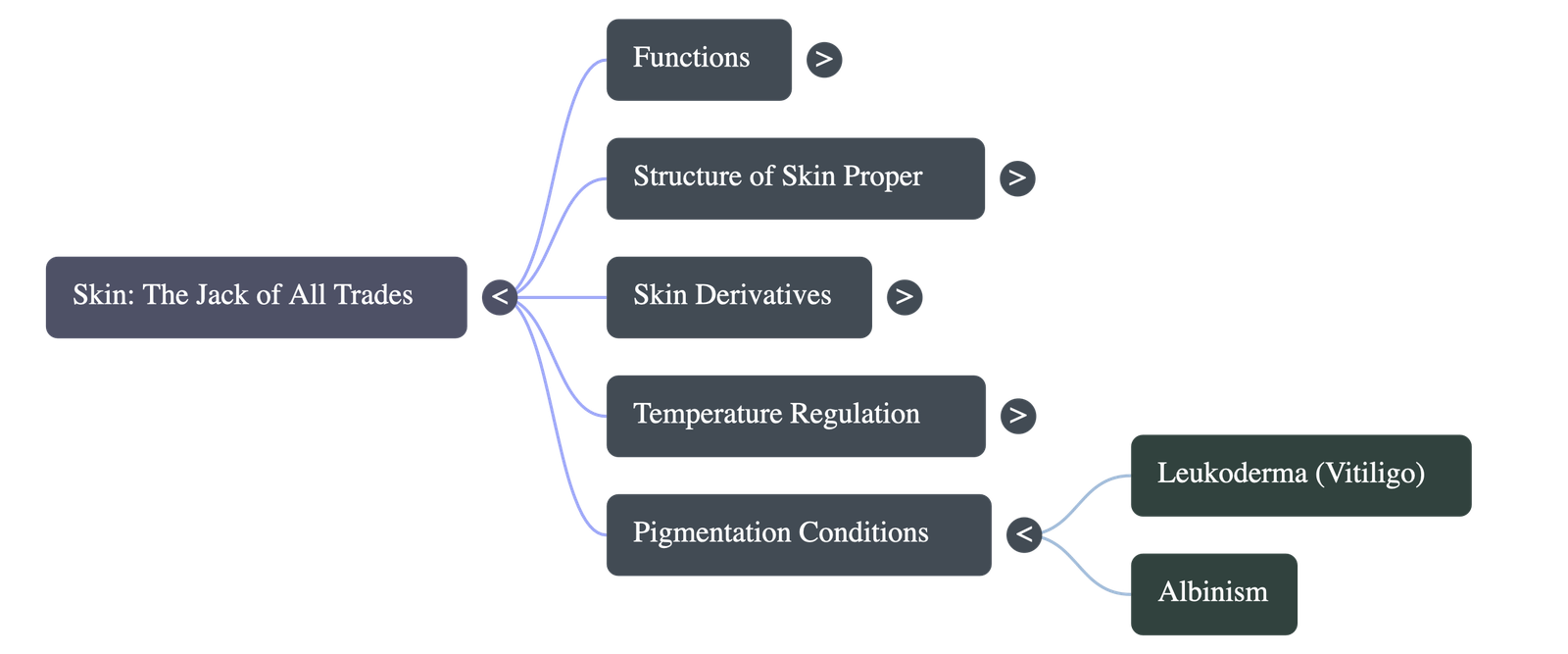
- Leukoderma (Vitiligo): A condition where melanin is lost in larger patches.
- Albinism: A genetic condition causing complete loss of pigmentation, resulting in pinkish skin due to underlying blood capillaries.
2. Dermis (Inner Layer)
- A thick, tough, and flexible layer made of connective tissue and elastic fibers.
- Contains blood vessels, nerve fibers, sensory organs, hair follicles, and sweat glands.
- The upper region forms papillae containing capillaries and nerve endings for touch and pain.
- Deeper regions contain receptors for pressure, heat, and cold.
- Beneath the dermis lies a layer of adipose (fat) tissue acting as a food reserve, heat insulator, and shock absorber.
Derivatives of the Skin
- Hair: Consists of a shaft, root, and bulb. The hair follicle contains melanin. The erector muscle causes piloerection ("goose flesh") during cold or emotional stress. Hairs also prevent dust entry (nose/eyelashes) and provide a sensation of touch.
- Nails: Hard, keratinized structures made of a plate, bed, and matrix. The matrix (whitish half-moon at the base) produces new cells for nail growth.
- Sebaceous Glands: Secrete an oily substance called sebum to keep the skin and hair waterproof and supple. Common issues include:
- Pimples: Bacterial infection of accumulated sebum.
- Acne: Inflammation due to hormonal influences.
- Blackheads: Pores clogged with dead cells and sebum, oxidized by the air.
- Sweat Glands: Consist of a secretory part and an excretory duct opening at a sweat pore. They excrete water, salts, and urea. Their primary role is evaporative cooling to regulate body heat.
- Mammary Glands: Modified sweat glands that enlarge in females at puberty and produce highly nutritious milk for newborns.
- Specialized Glands:
- Meibomian Glands: Modified sebaceous glands on eyelids to prevent tear overflow.
- Ceruminous Glands: Modified sweat glands in the ear canal that secrete earwax to trap dust and protect the eardrum.
Skin and Heat Regulation
Humans are warm-blooded (endothermal/homeothermal) and maintain a constant body temperature of approximately 37°C. The principal heat-regulating center is the hypothalamus in the brain, acting as a biological thermostat.
Mechanisms of Heat Production and Loss
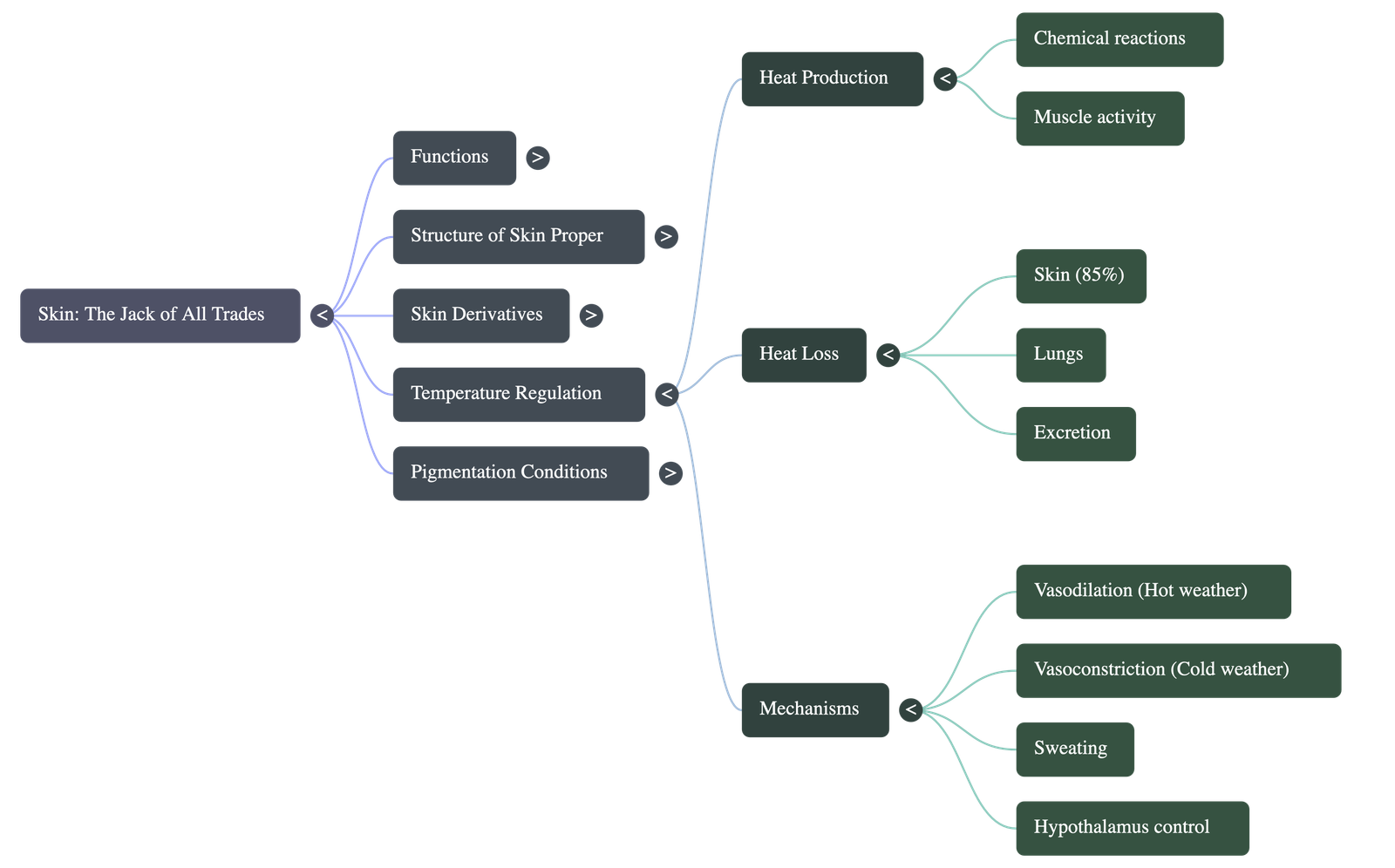
- Heat Production: Chemical reactions (especially in the liver), muscular activity, and consumption of hot foods.
- Heat Loss: About 85% is lost through the skin via convection, conduction, radiation, and sweat evaporation. Heat is also lost through breath (lungs), urine, feces, and cold food consumption.
Temperature Regulation in Different Weather
- In Cold Weather (Vasoconstriction): Blood vessels in the skin narrow, reducing blood supply and cutting down heat loss. Sweating decreases, and heat production increases via muscular activity (shivering). This can make the skin appear pale or bluish.
- In Hot Weather (Vasodilation): Blood vessels dilate, increasing blood supply to the skin to maximize heat radiation and vaporization of sweat. If sweat production cannot keep up with extreme heat, heatstroke (sunstroke) can occur, leading to a dangerous rise in body temperature.
Do checkout all questions & answers of this chapter.
Quick Navigation:
| | | |
1 / 1
Quick Navigation:
| | | |