Quick Navigation:
| | | |
Fungi and its Economic Importance
General Features of Fungi
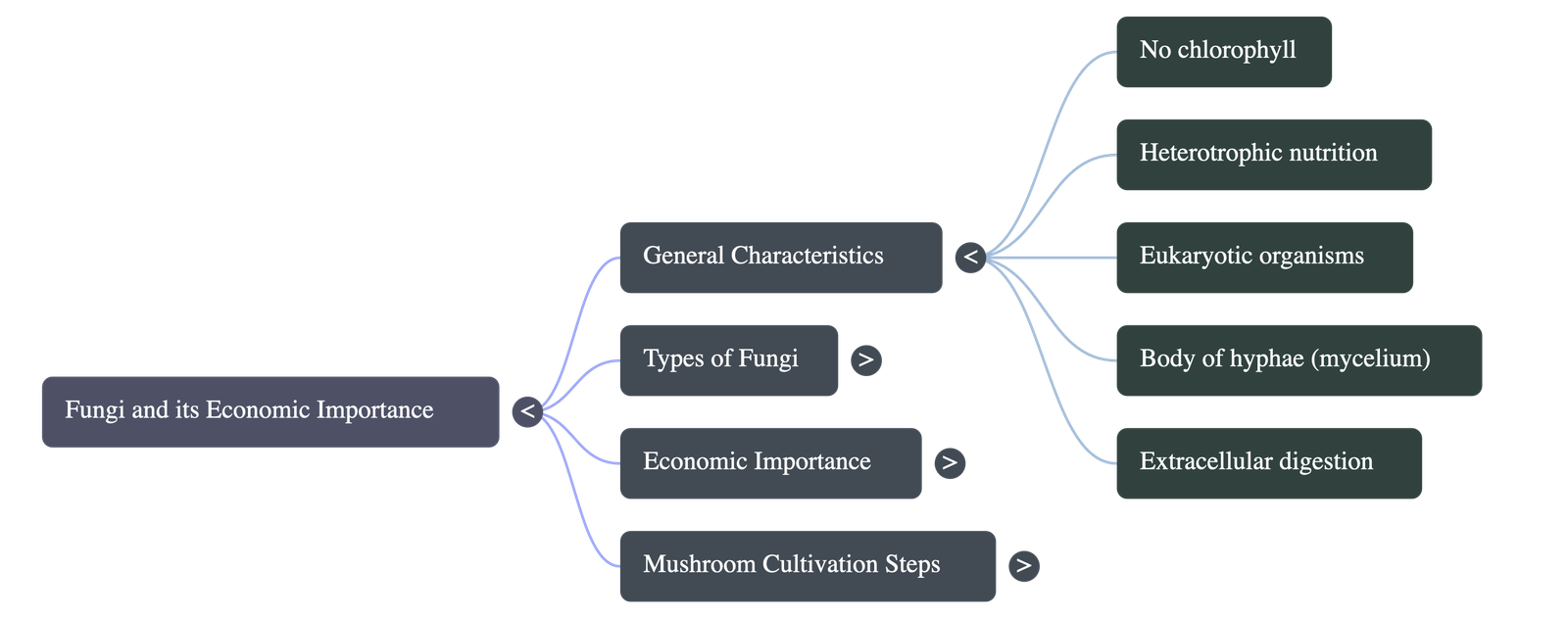
- Fungi lack chlorophyll and are heterotrophic, meaning they cannot produce their own food like plants.
- Their body structure is not differentiated into roots, stems, leaves, or flowers.
- Compared to bacteria, fungi are more highly evolved; they are eukaryotic (possess a true nucleus) and multicellular.
- Under the Five Kingdom classification, they are placed in a separate kingdom from plants because of their heterotrophic nutrition.
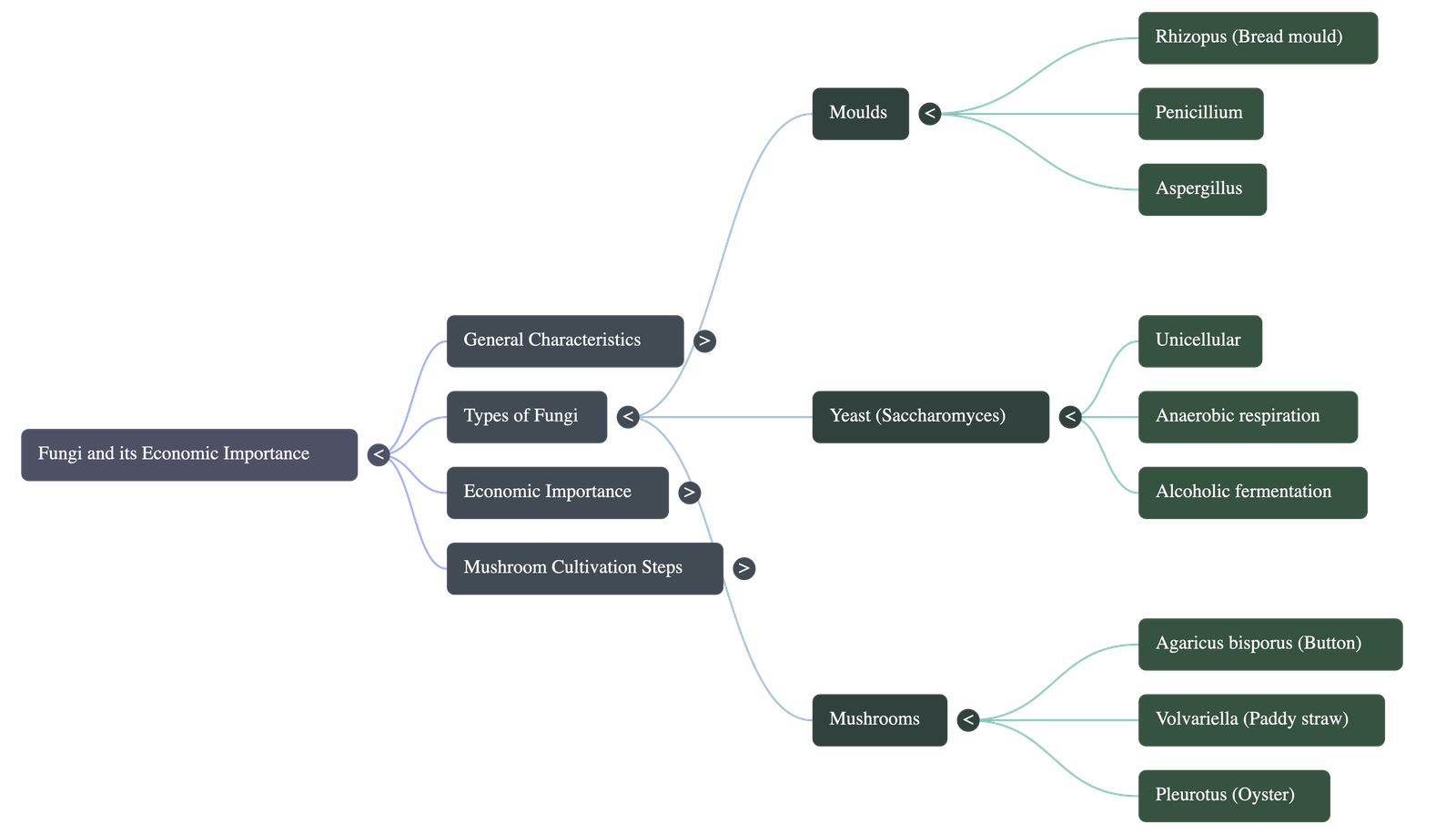
Moulds (Example: Rhizopus)
- Habitat: Rhizopus is the common bread mould. It grows on bread, organic matter (fruits, animal dung, leather goods), especially in warm and humid climates.
- Structure: It consists of a network of transparent, thread-like structures called hyphae. The entire mass of these threads is known as the mycelium.
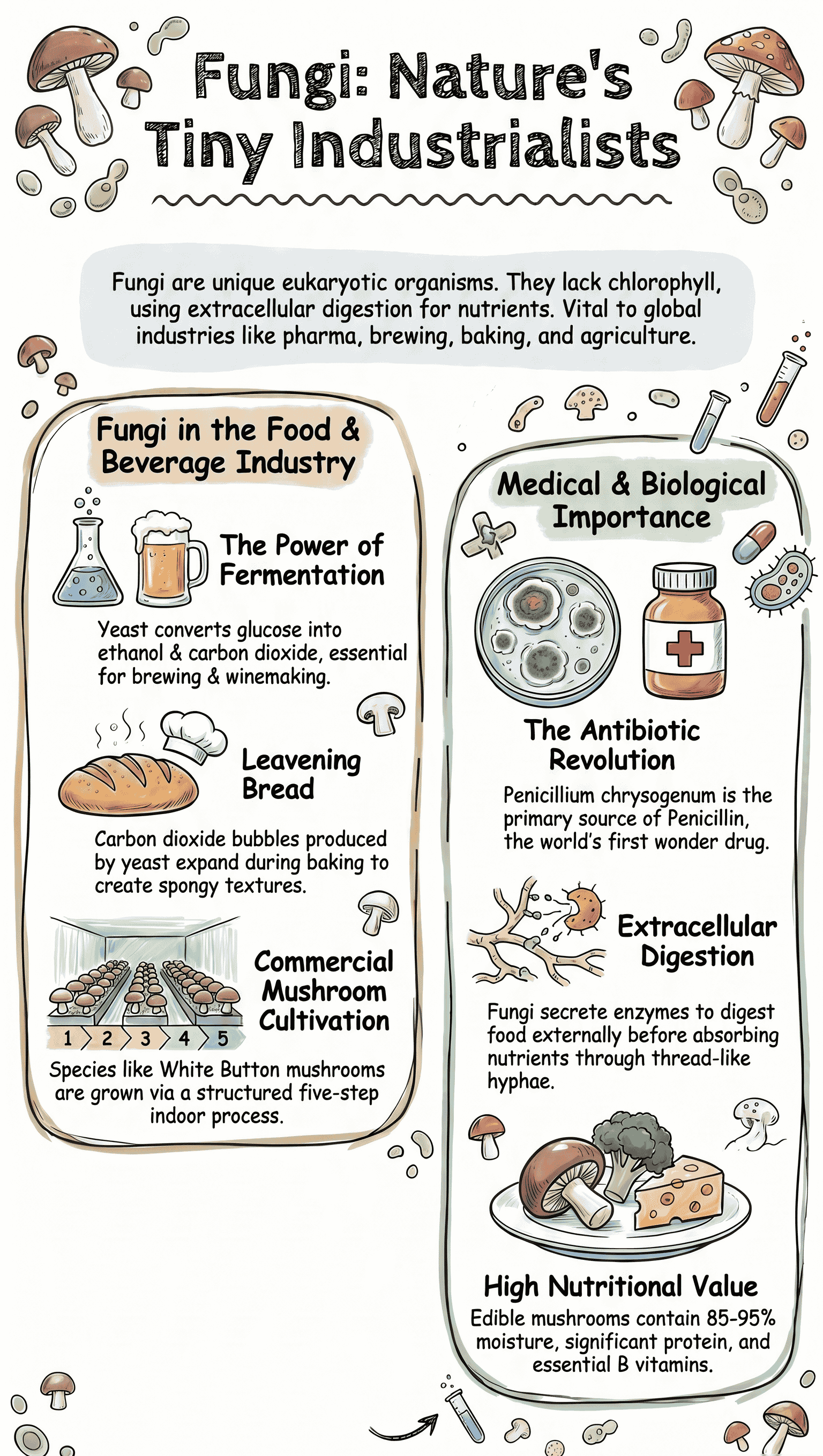
- Nutrition: Fungi undergo extracellular digestion. The penetrating hyphae secrete enzymes into the substratum to digest food before absorbing it (saprophytism).
- Reproduction:
- Asexual: Hyphae become erect (sporangiophores) and swell at the tips to form sporangia. These turn dark as spores mature, eventually bursting to scatter spores via the wind.
- Sexual: Reproduction also occurs sexually through the union of gametes.
Yeast
- Characteristics: Yeasts (genus Saccharomyces) are one-celled (unicellular) fungi that exist freely in the atmosphere. They are ovoid in shape with a distinct cell wall, a nucleus, and vacuoles.
- Occurrence: They grow readily in sugary solutions, such as grapes, nectar of flowers, and sugarcane juice.
- Nutrition: They can absorb simple sugars directly. Complex sugars (like cane sugar) must first be broken down by enzymes outside the cell.
- Respiration: Yeast respires anaerobically (without oxygen). It breaks down glucose to produce ethanol, carbon dioxide, and 2ATP.
Useful and Harmful Fungi
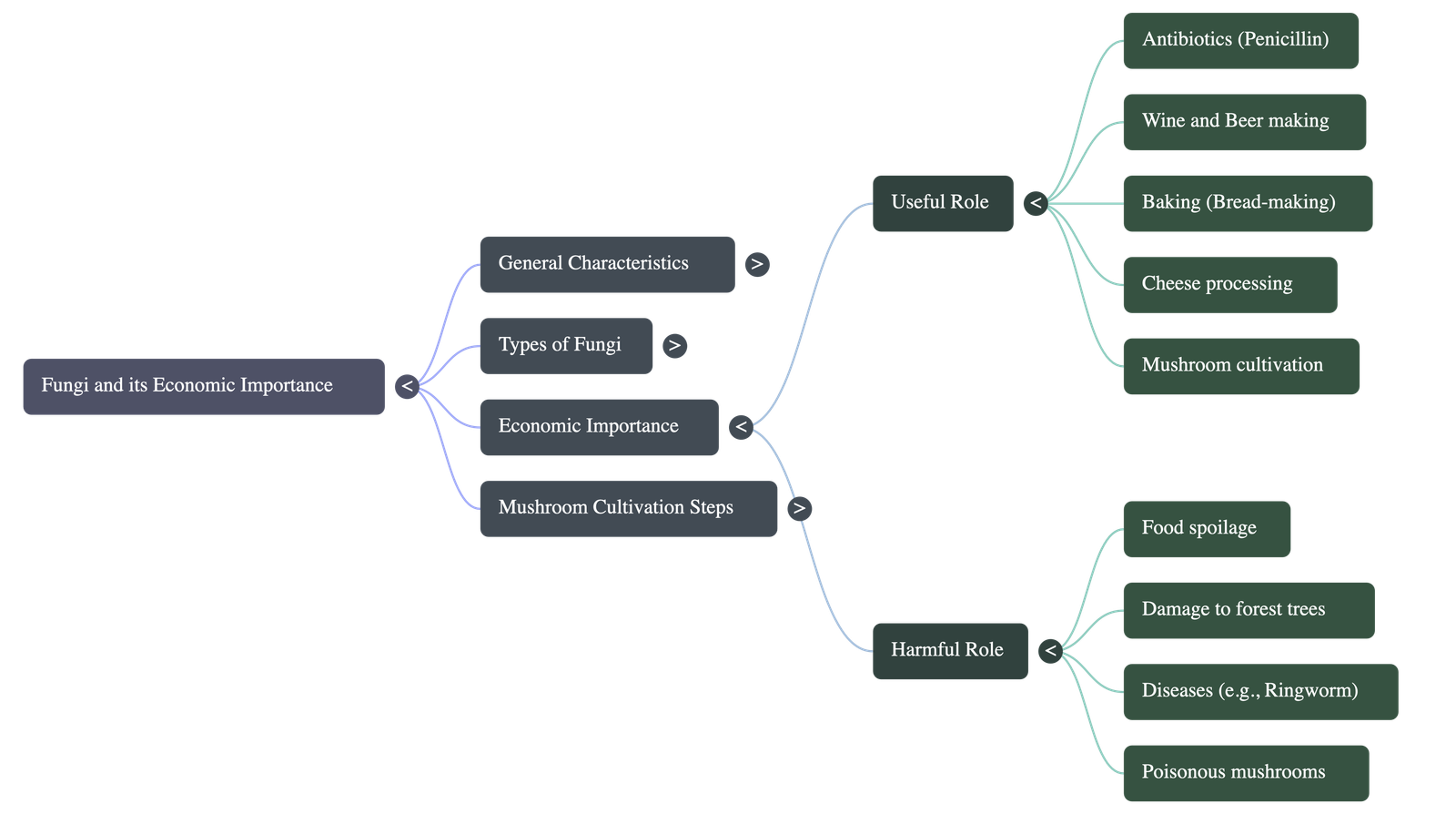
- Useful Fungi: Several species of Penicillium are used in cheese processing. Penicillium chrysogenum is famous for producing the first antibiotic, penicillin, discovered by Alexander Fleming.
- Harmful Fungi: Fungi spoil food and damage forest trees. Moulds like Penicillium and Aspergillus grow on citrus fruits. Other fungi cause human skin diseases, such as ringworm.
Role in Industry
- Wine and Alcoholic Beverages: Produced through fermentation where yeast breaks down carbohydrates into ethanol and carbon dioxide. Grapes are commonly fermented to produce wine, which is quickly absorbed into the body but harmful in large quantities (causing liver cirrhosis).
- Bread-making: Yeast ferments the sugar in dough, producing carbon dioxide. This makes the dough rise (leavening) to about three times its volume. Baking expands these gas bubbles, giving bread a spongy texture.
- Cheese-making: Involves curdling of milk using lactic acid bacteria (Lactobacillus). The curd is separated from whey, processed to remove moisture (cottage cheese), salted, and ripened using specific microorganisms to impart flavor.
Mushroom Cultivation
- Varieties: Mushrooms typically have a cap and a stalk. Not all are edible; some are poisonous. Common edible types include White button mushroom (Agaricus bisporous), Paddy straw mushroom (Volvariella), and Oyster mushroom (Pleurotus).
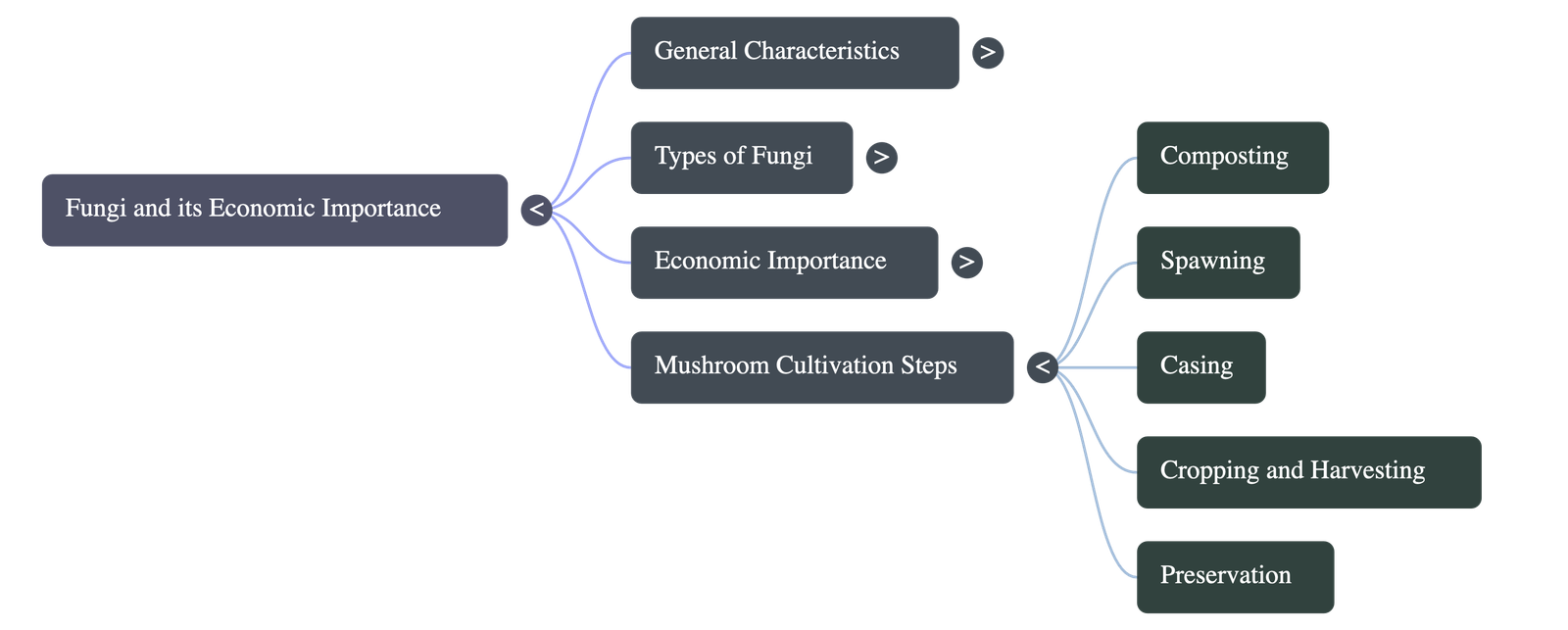
- Cultivation Steps for White Button Mushroom:
- Composting: Mixing wheat/paddy straw, chicken manure, and fertilizer. The compost is kept at ~50°C for around a week.
- Spawning: The "mushroom seed" (mycelium) is introduced to the compost and allowed to spread.
- Casing: A thin layer of soil is spread over the compost to provide support, maintain humidity, prevent quick drying, and regulate temperature.
- Cropping and Harvesting: Mycelium grows within 2 to 6 weeks, forming tiny pin heads, which eventually grow into the marketable button stage.
- Preservation: Because mushrooms are highly perishable, their shelf life is extended via vacuum cooling, gamma radiation storage at 15°C, or freeze-drying.
- Nutritive Value: Mushrooms are an excellent source of vitamins (niacin, pantothenic acid, biotin) and minerals. Fresh mushrooms contain 85-95% moisture, 3% protein, 4% carbohydrates, and very low fat content (0.3-0.4%).
Do checkout all questions & answers of this chapter.
Quick Navigation:
| | | |
1 / 1
Quick Navigation:
| | | |