Quick Navigation:
| | | |
The Modern Age in Europe (C) Industrial Revolution
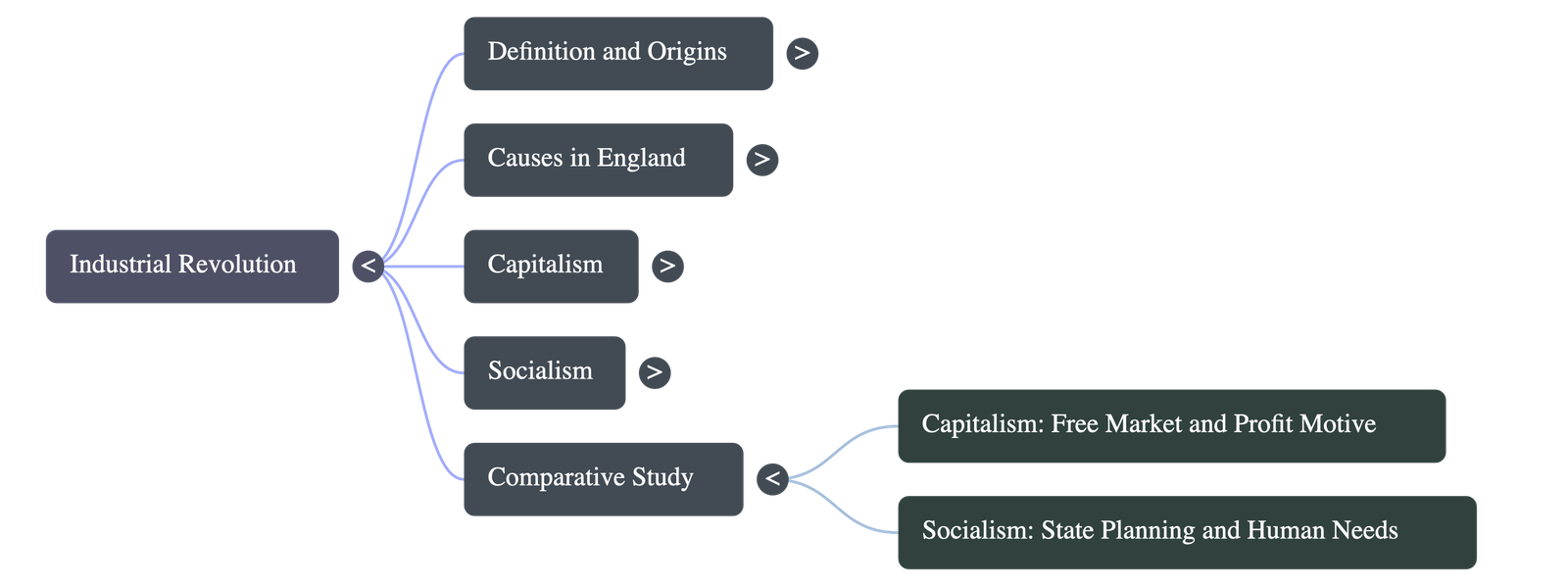
1. Meaning of the Industrial Revolution
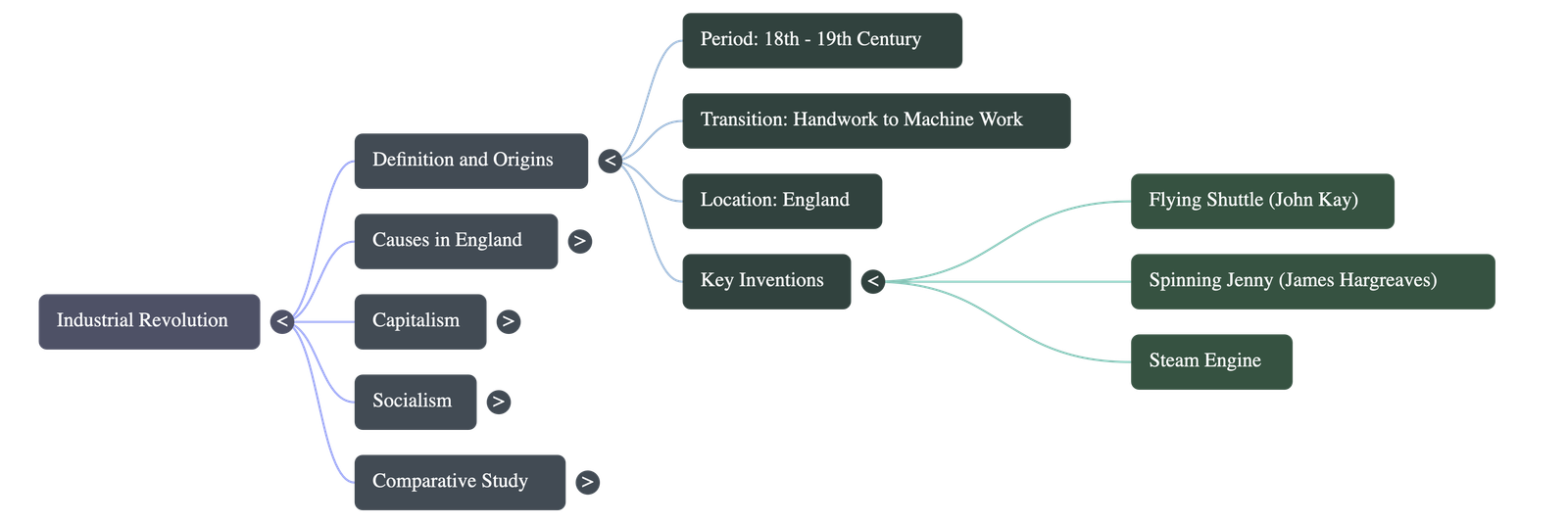
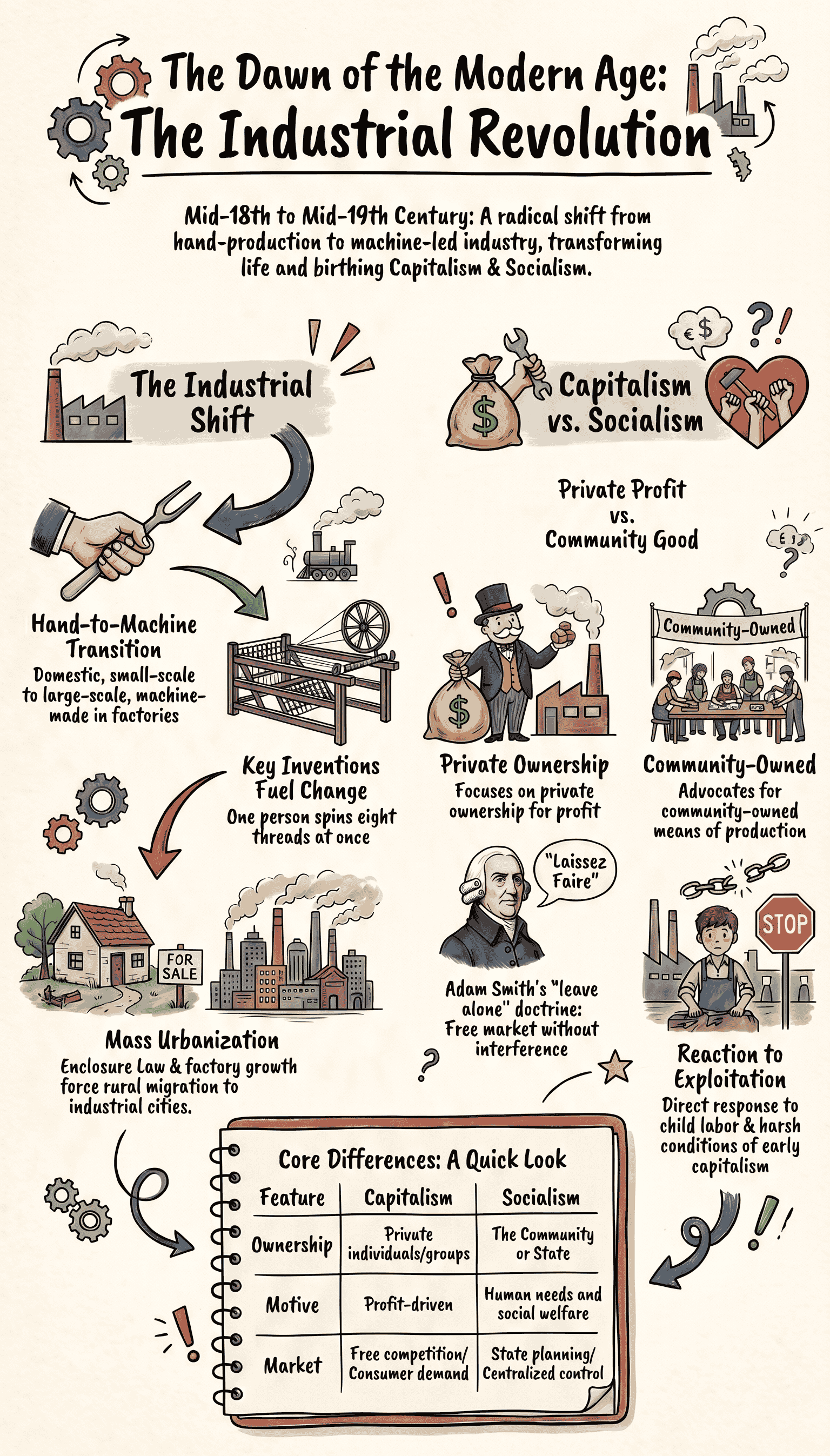
- The term 'Industrial Revolution' refers to the massive changes in the field of industry during the second half of the 18th century and the first half of the 19th century.
- It marked a transition from handwork to machine work, and from the domestic system to the factory system.
- Unlike political revolutions, it was peaceful, sudden-free, and involved no bloodshed. It began in England around the mid-eighteenth century.
2. Causes of the Industrial Revolution
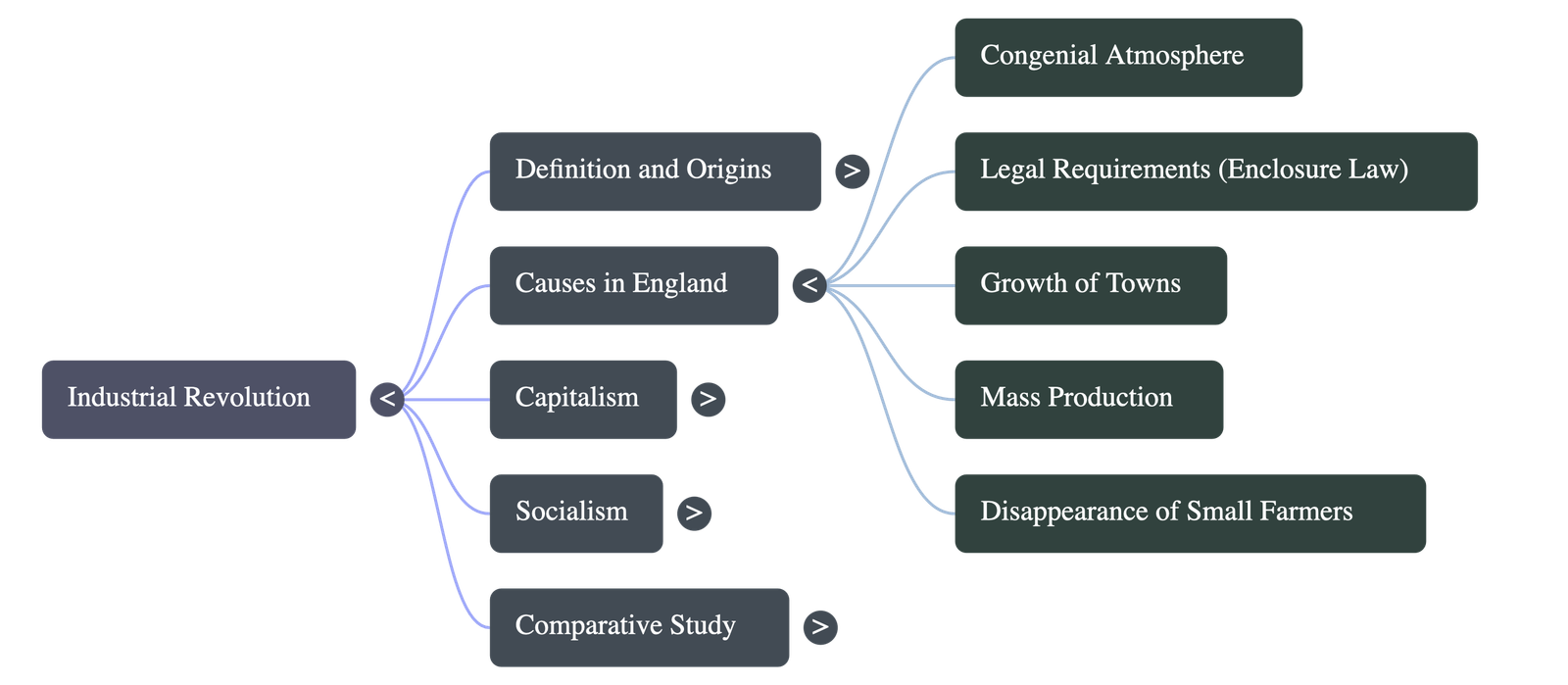
- Congenial Atmosphere: After the Renaissance and Reformation, people in England enjoyed freedom of thought and expression. The government did not interfere, allowing scientists to experiment with new production methods.
- Inventions: The invention of new machinery was the starting point. Notable examples include John Kay's 'Flying Shuttle' (which sped up weaving) and James Hargreaves' 'Spinning Jenny' (which could spin eight threads at once).
3. The Rise of Capitalism
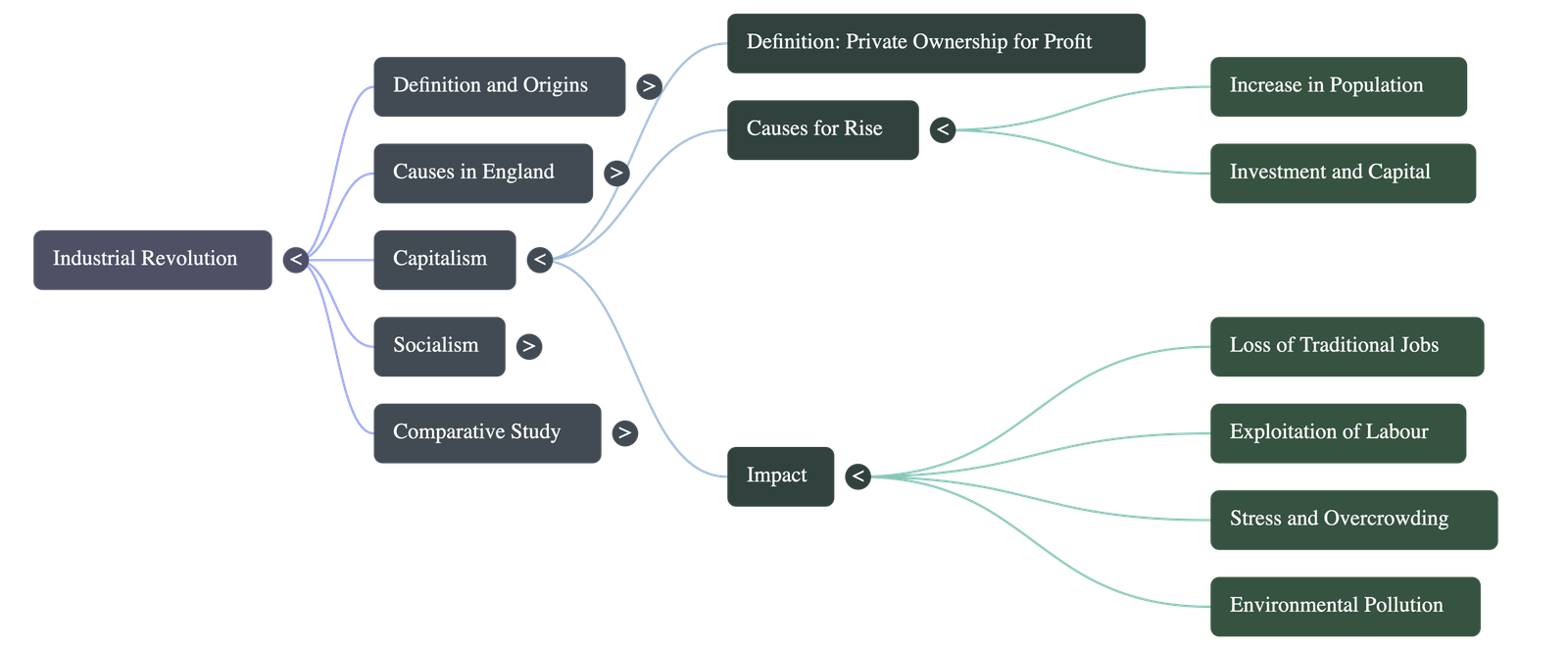
Capitalism is an economic system where the means of production (labour, raw materials, machines) are owned and controlled by private individuals entirely for profit.
Causes for the Rise of Capitalism:
- Increase in Population: Better living standards reduced diseases and increased population, creating both a larger market for goods and a bigger workforce.
- Legal Requirements (Enclosure Law): New laws required farmers to fence their fields. Poor farmers who couldn't afford this sold their land and moved to cities to work in industries.
- Growth of Towns: Factories needed power, so they were built near coalfields. This led to the rapid growth of new industrial factory cities like Manchester, Liverpool, and Birmingham.
- Mass Production: Giant machines destroyed the old domestic system of production. Villagers shifted to towns for employment in these large-scale factories.
4. Impact (Evils) of Capitalism
- Loss of Traditional Jobs: Skilled handloom weavers and traditional labourers lost their livelihoods because they could not compete with fast machines.
- Exploitation: Factory owners wanted maximum profit, so they paid the minimum possible wages. They often hired women and children because they could be paid even less.
- Stress and Strain: The 'division of labour' meant workers did one boring, repetitive task all day. They worked 12 to 14 hours a day under strict rules and highly unsafe conditions.
- Overcrowding & Pollution: Cities became heavily overcrowded with workers living in shoddy, dirty slums. Factories polluted the air with coal smoke and dumped sewage into rivers, ruining the water supply.
5. The Birth of Socialism
Socialism was born as a direct reaction to the harsh conditions and exploitation of the working class under Capitalism. It was the opposite of Adam Smith’s 'Laissez faire' (leave alone/no government interference) doctrine.
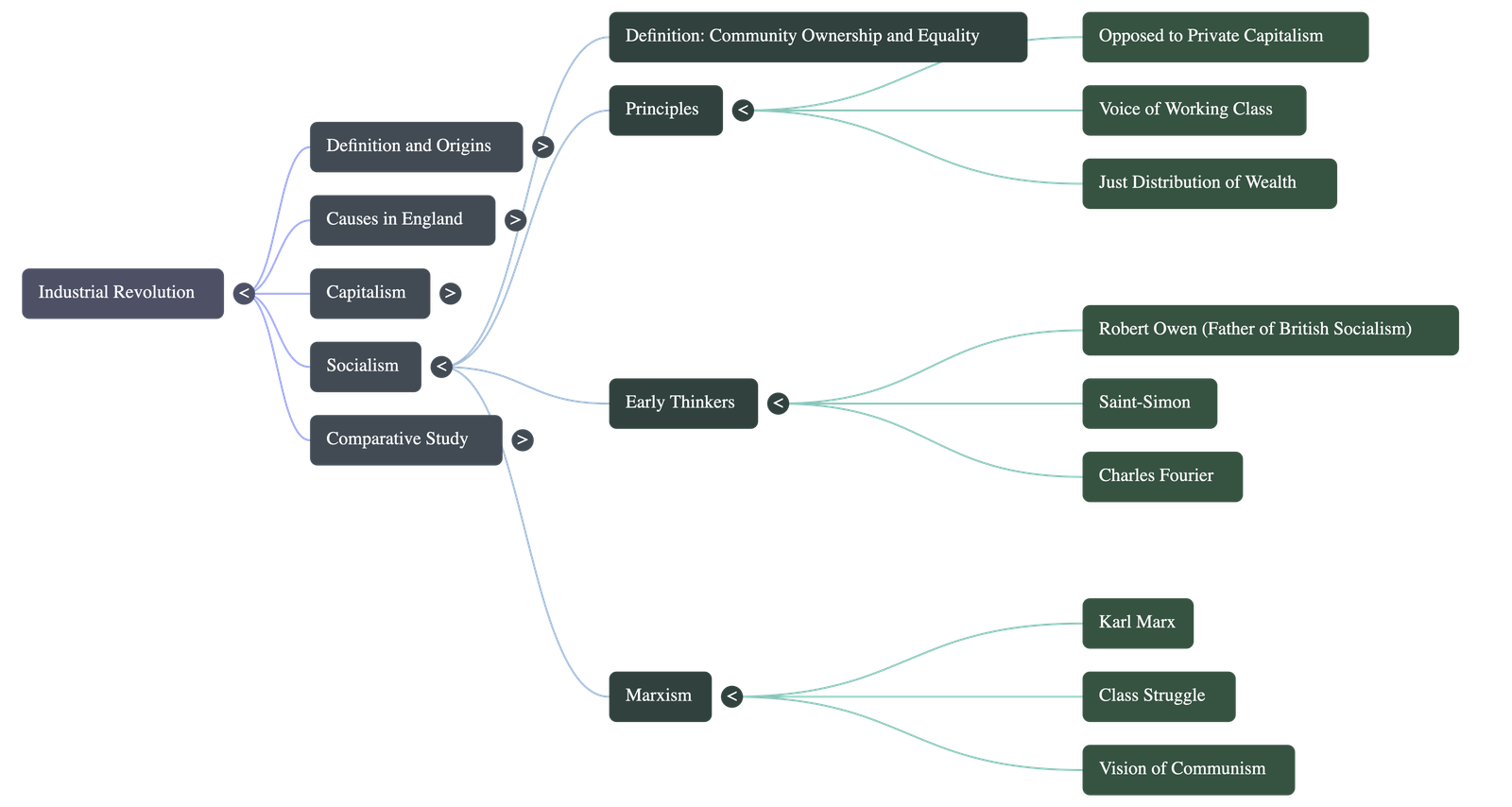
- Meaning: Socialism is an economic system where the means of production are owned not by private individuals, but by the community or the State.
- Main Goal: To ensure that wealth is shared fairly, eliminate class struggles between the rich and the poor, and create a classless society.
- Early Socialists: Thinkers like Babeuf, Saint-Simon, and Fourier. Robert Owen is famously known as the "Father of British Socialism" for reducing working hours and paying good wages in his own cotton mill.
6. Capitalism vs. Socialism: Quick Comparison
| Capitalism | Socialism |
|---|---|
| Means of production owned by private individuals. | Means of production owned by the community/State. |
| Driven by the pursuit of profit. | Driven by usefulness and meeting human needs. |
| Relies on free markets and consumer demand. | Relies on central planning by the State. |
| Proponents: Adam Smith, Milton Friedman. | Proponents: Karl Marx, Robert Owen. |
7. The Spread of Marxism & Modern Socialism
- Marxist Socialism: Conceived by Karl Marx, who believed the working class should take over power to stop exploitation. He envisioned a final stage called Communism—a classless, stateless society based on common ownership.
- Global Impact: Socialist ideas inspired the 1917 Russian Revolution under Vladimir Lenin, and the 1949 Communist Revolution in China under Mao Tse-tung.
- Democratic Socialism: After Marx, leaders aimed to achieve socialist goals through democratic means. Today, many countries balance Capitalism and Socialism to run a Welfare State that protects citizens against unemployment, illness, and poverty.
Do checkout all questions & answers of this chapter.
Quick Navigation:
| | | |
1 / 1
Quick Navigation:
| | | |