Quick Navigation:
| | | |
Medieval India (A) The Cholas
1. Introduction & Rise of the Cholas
- The southern part of the Indian peninsula (south of the Krishna river) was ruled by three powerful kingdoms: the Cheras, the Pandyas, and the Cholas.
- The Cholas emerged as the most powerful empire in the 9th century, eventually controlling a large part of the peninsula.
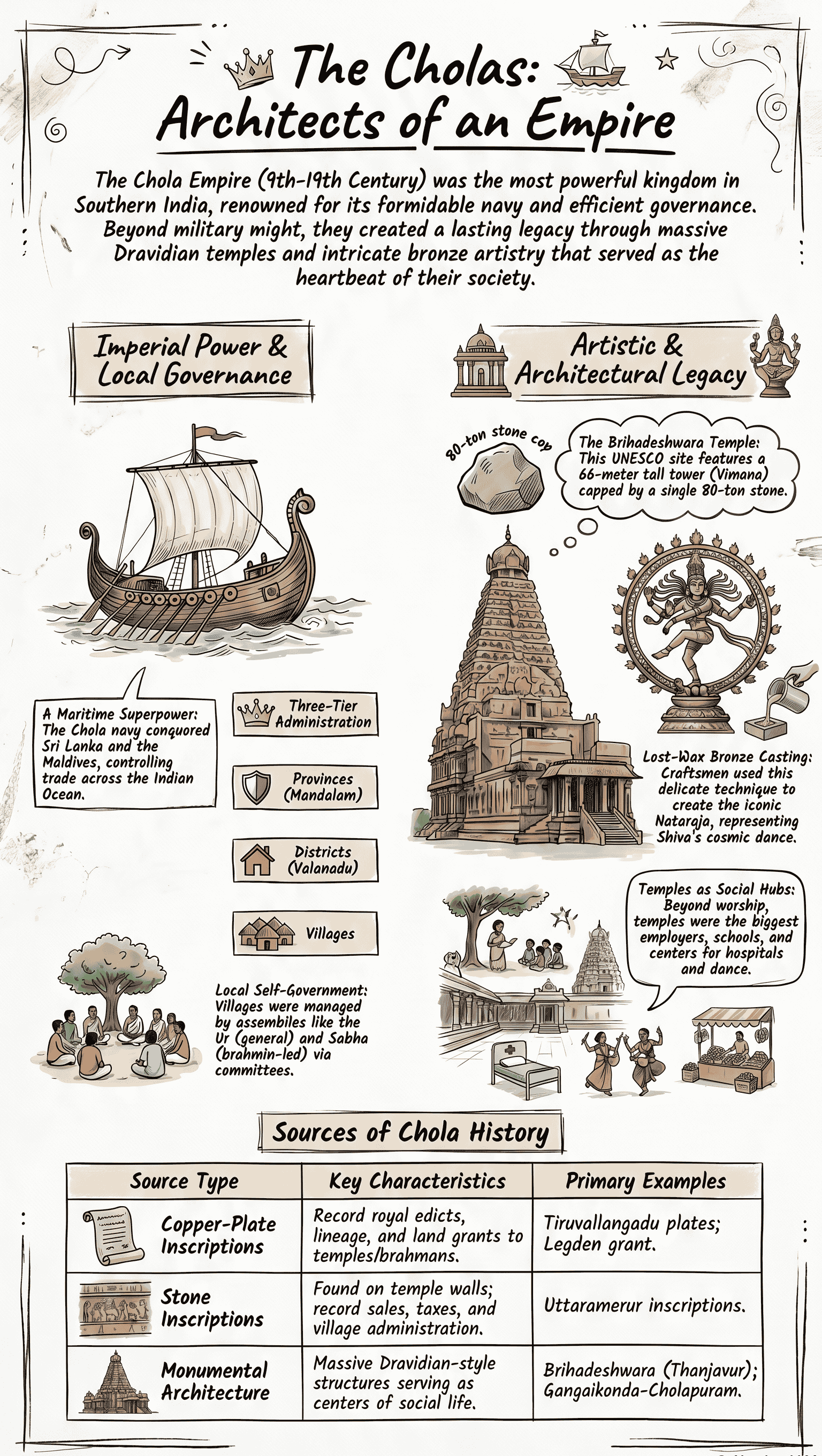
- They developed a powerful navy, enabling them to conquer Sri Lanka, the Maldive Islands, and control sea trade in the Indian Ocean.
2. Important Sources of Chola History
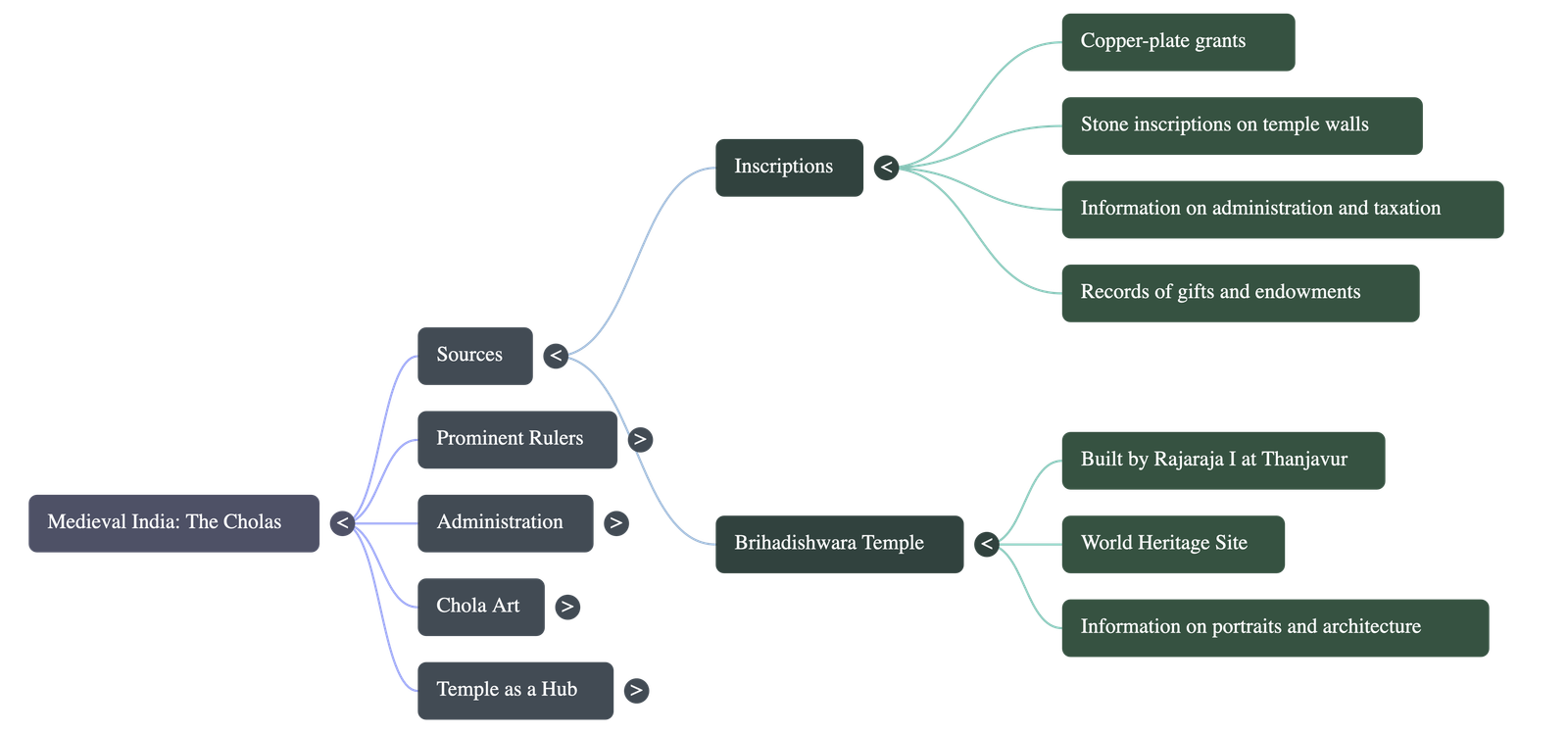
- Inscriptions: The main source of information. Found on copper plates, stone walls, and temple pillars. Ruler Rajaraja I started the tradition of prefixing main achievements to his inscriptions.
- Copper-Plate Grants: Example: The 31 Tiruvalangadu plates of Rajendra Chola feature a royal seal with the Chola emblem (a tiger) alongside defeated kingdoms' emblems.
- They provide vital info on administration (e.g., Uttaramerur inscription on village admin), taxes, land revenue, and gifts to temples or brahmanas.
- Brihadeshwara Temple: Built by Rajaraja I at Thanjavur, it is a UNESCO World Heritage Site. The temple walls contain inscriptions detailing the chief architect, types of jewels used, and feature a royal portrait of Rajaraja paying obeisance to Lord Nataraja.
3. The Great Chola Rulers
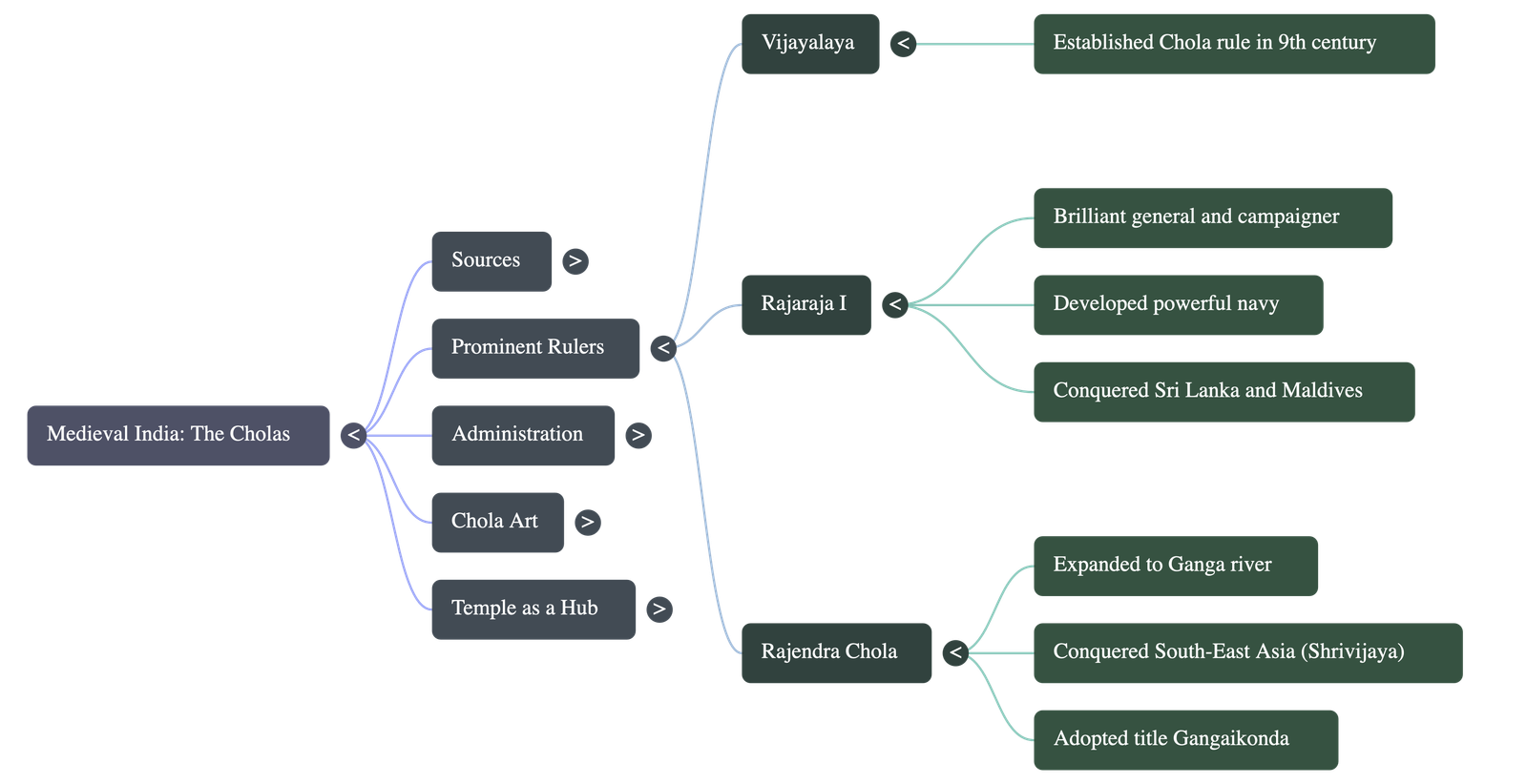
- Vijayalaya: Established Chola rule in the mid-9th century with Thanjavur as his capital.
- Rajaraja I: A brilliant general who defeated the Pandyas, Cheras, and annexed parts of the Deccan. He launched naval expeditions to conquer northern Sri Lanka and the Maldives, bringing immense prosperity through trade to the Coromandel coast.
- Rajendra Chola: Son of Rajaraja I, he conquered the whole of Sri Lanka.
- His armies marched up to the Ganga river, defeating the king of Bengal. To commemorate this, he took the title Gangaikonda and built a new capital, Gangaikonda-Cholapuram.
- He sent a huge navy to Southeast Asia to defeat the Shrivijaya kingdom and protect Indian overseas merchants.
4. Chola Administration and Revenue
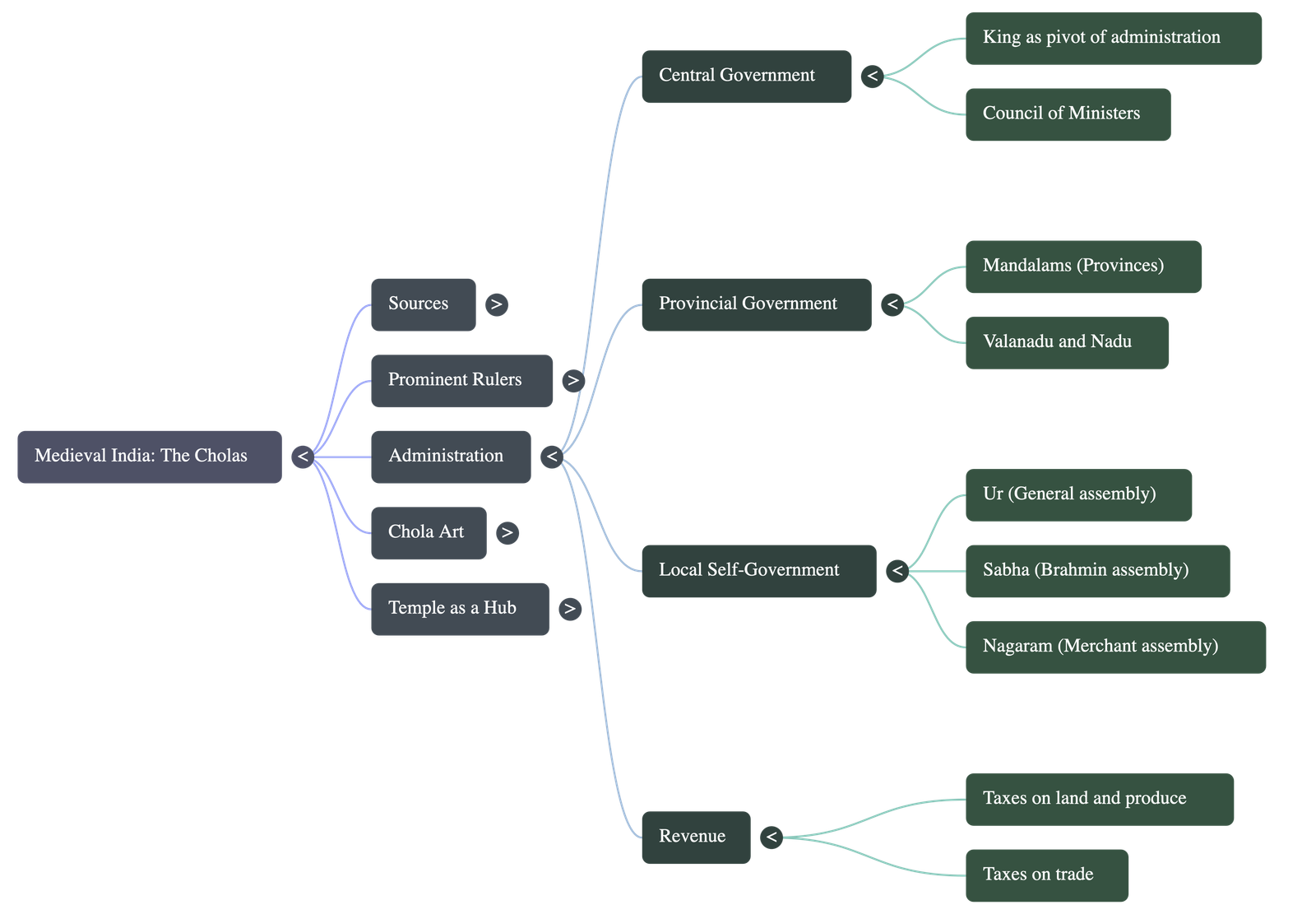
- Central Government: The King was the supreme authority, advised by a Council of Ministers. Officers were paid through revenue-bearing lands.
- Provincial Government: The empire was divided into provinces called Mandalams, further divided into Valanadu and Nadu, often governed by royal princes.
- Local Self-Government: Highly efficient village administration managed by three types of assemblies:
- Ur: General assembly for all classes of land-owning villagers.
- Sabha: Exclusive assembly of brahmins in brahmin-owned villages.
- Nagaram: Assembly of merchants and traders.
- Revenue System: Main income came from taxes on land/produce and trade. This money was spent on the king, army, public works (roads, tanks), and temple construction.
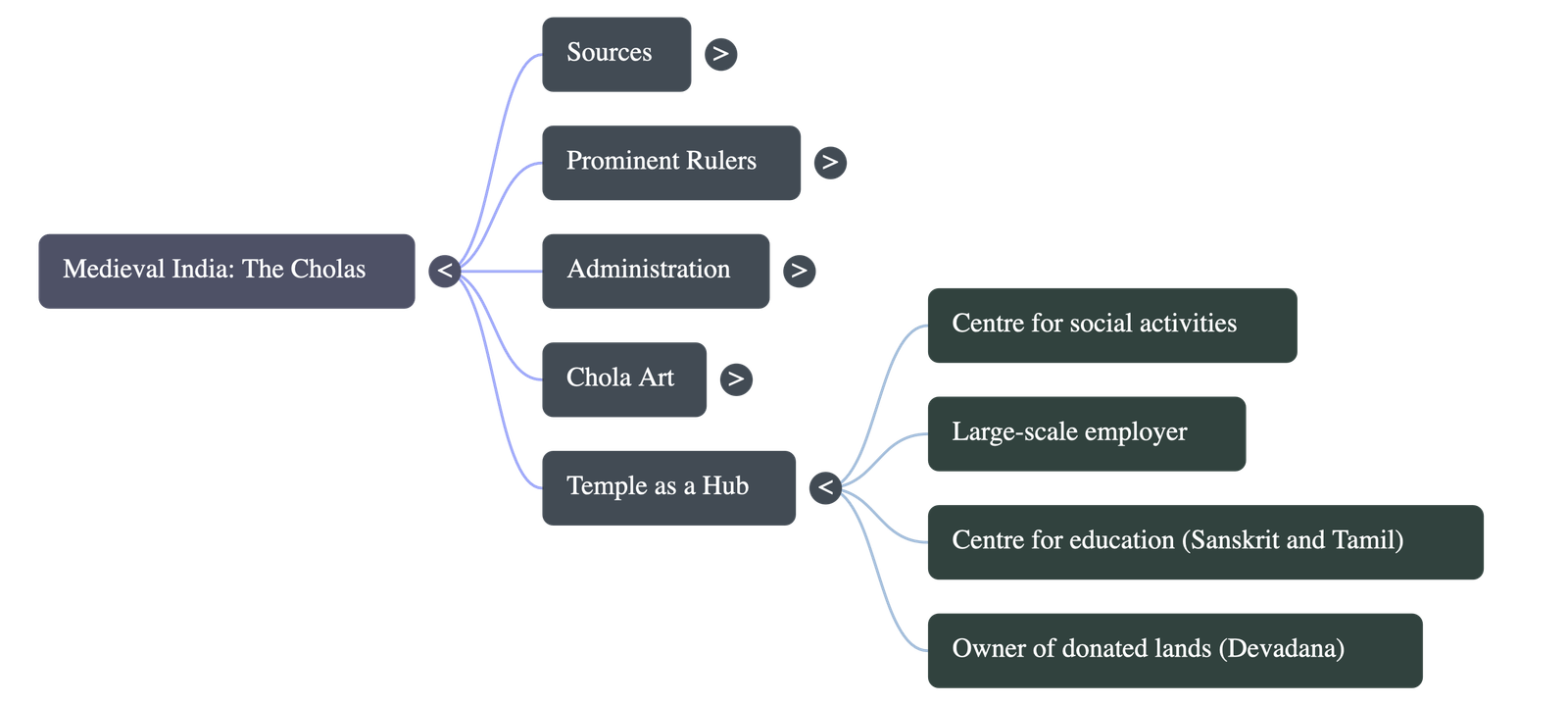
- Temples as Social Centres: Temples were not just for worship. They were the biggest employers, centers of education (teaching Sanskrit and Tamil), and hubs for social activities and inland/overseas trade.
5. Chola Art, Architecture, and Sculpture
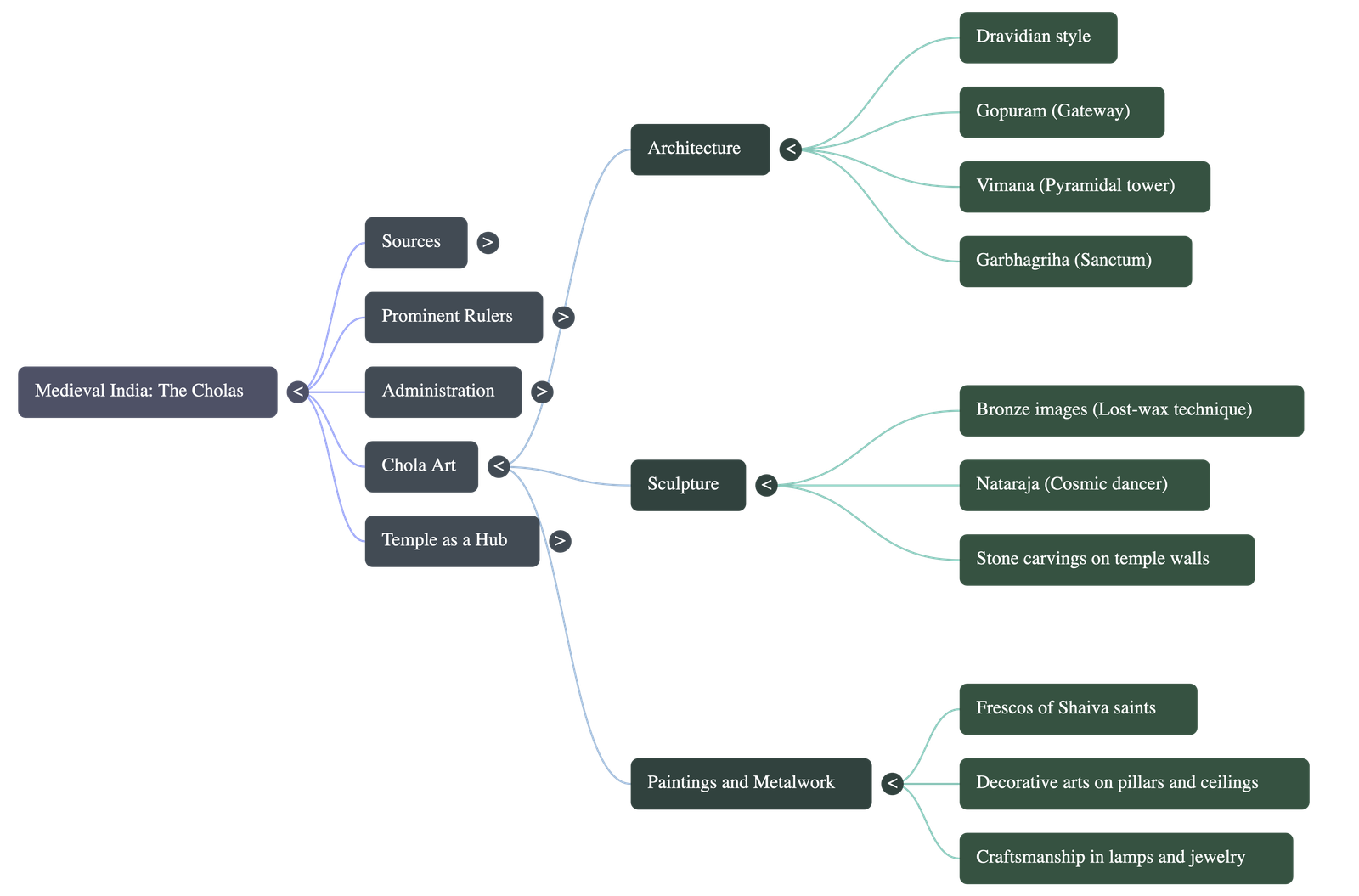
- Temple Architecture: Built in the Dravidian style. Key features include:
- Garbhagriha: The main inner shrine housing the deity.
- Vimana: A massive, tall pyramidal tower above the main shrine (e.g., the 66-metre high Vimana at the Brihadeshwara Temple).
- Mandapa: A pillared audience hall for rituals and gatherings.
- Gopuram: The grand gateway to the temple.
- Sculptures: Chola bronze sculptures are world-famous, created using the complex lost-wax technique.
- The most celebrated masterpiece is the Nataraja (Shiva as the cosmic dancer), symbolizing creation, destruction, protection, and liberation from ignorance.
- Detailed stone sculptures adorned the outer temple walls (devakoshtas), depicting gods, epics, and dancers.
- Paintings & Decorative Arts: Temples featured fresco paintings with religious themes using natural colors (red, green, yellow, black). Walls and pillars were elegantly decorated with floral patterns, mythical animals, and delicate metalwork.
Do checkout all questions & answers of this chapter.
Quick Navigation:
| | | |
1 / 1
Quick Navigation:
| | | |