Quick Navigation:
| | | |
The Modern Age in Europe (B) Reformation
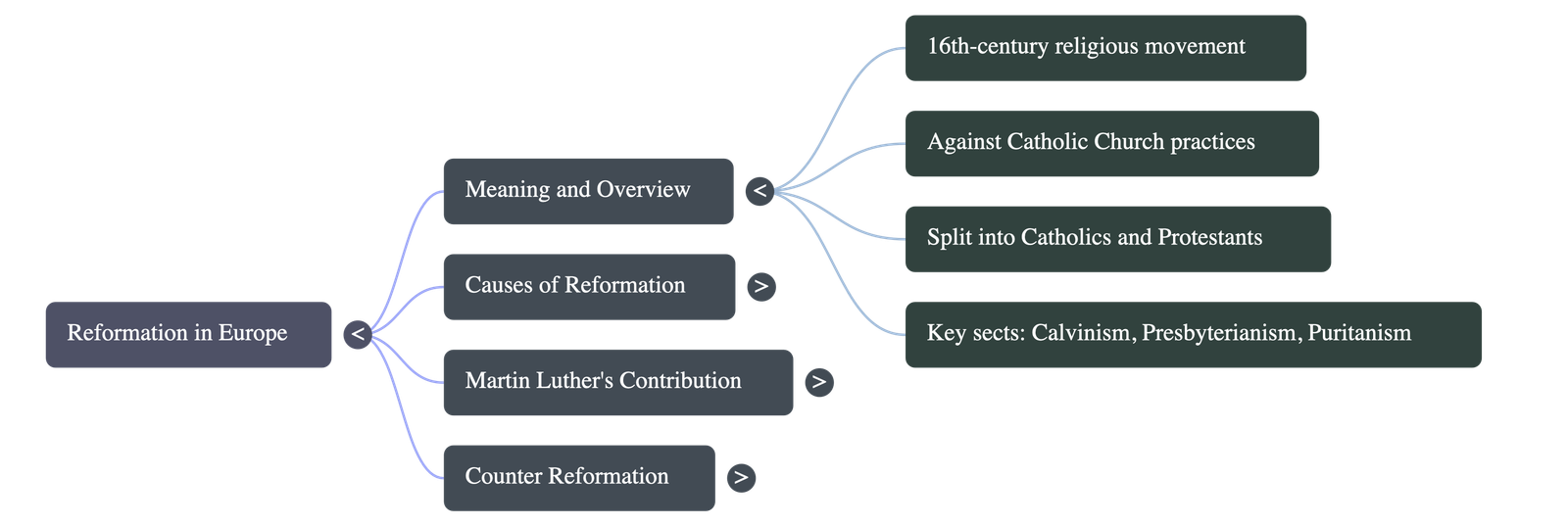
What is the Reformation?
- The Reformation refers to a series of religious movements in the 16th century started by Christians who were dissatisfied with the objectionable practices of the Church and its clergy.
- The primary target of these movements was the Pope, the highest authority in the Church hierarchy.
- These protests resulted in a major split within the Christian Church:
- Roman Catholics: Those who continued to remain loyal to the Pope in Rome.
- Protestants: Those who broke away from the Roman Church.
- Protestant movements varied across different countries, leading to branches like Calvinism (known for strictness and austerity), Presbyterianism in Scotland, and Puritanism in England.
Causes of the Reformation
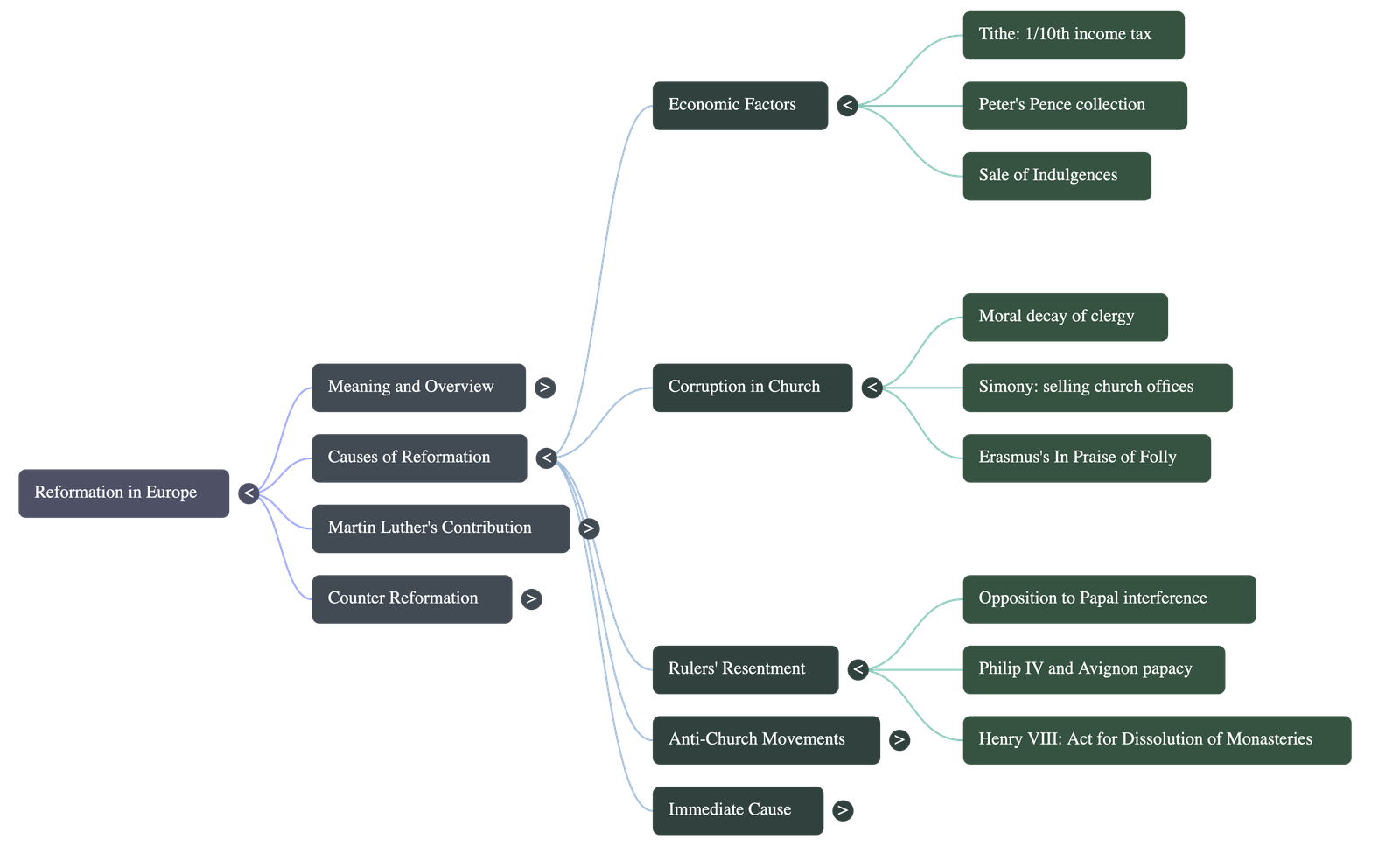
During the medieval period, the Catholic Church became a vast and wealthy organization. Dissatisfaction with its practices grew due to several reasons:
- Economic Factors:
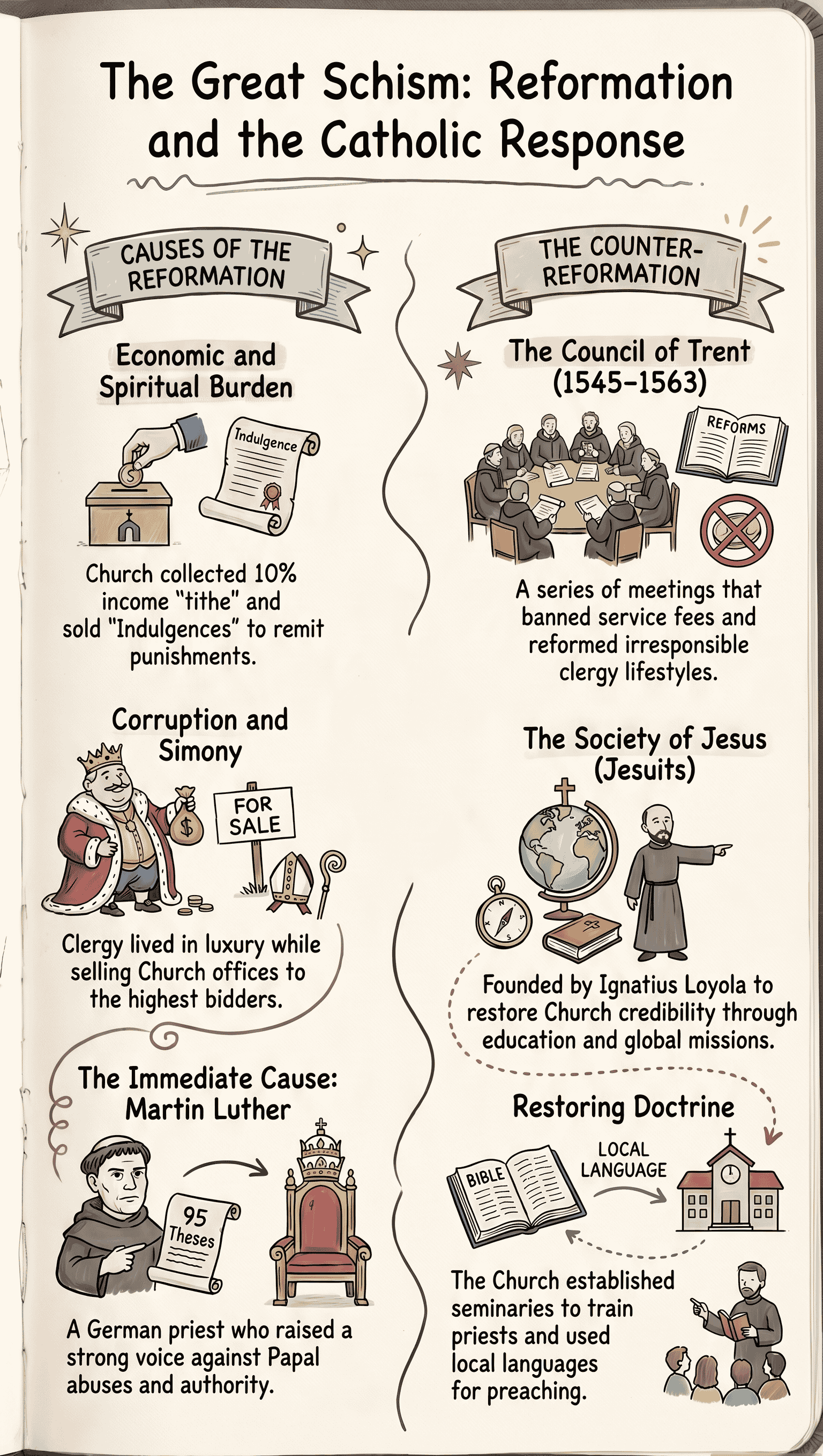
- The Church had vast properties and collected a tax called the tithe (one-tenth of a person's income).
- People also had to pay an additional sum called 'Peter's Pence'.
- Pope Leo X issued 'Indulgences'—pardon certificates sold to sinners to free them from doing penance. The money was collected to build St. Peter's Church, which greatly angered the public.
- Corruption in the Church:
- Church offices were sold to the highest bidder, a corrupt practice known as simony.
- Some clergy members lacked proper education, lived in extreme luxury, and neglected their religious duties.
- Priests charged heavy fees for every life event, from birth to death, promising salvation in exchange for money.
- A Dutch philosopher, Desiderius Erasmus, heavily criticized these practices in his famous book 'In Praise of Folly'.
- Rulers' Resentment:
- Kings resented the Pope's constant interference in their political affairs.
- The French King, Philip IV, forced Pope Clement V to move his headquarters from Rome to Avignon, France.
- In England, King Henry VIII passed Acts in 1536 and 1539 to dissolve monasteries. He seized their enormous wealth and lands to fund his lavish lifestyle and wars, effectively removing the Pope's influence in England.
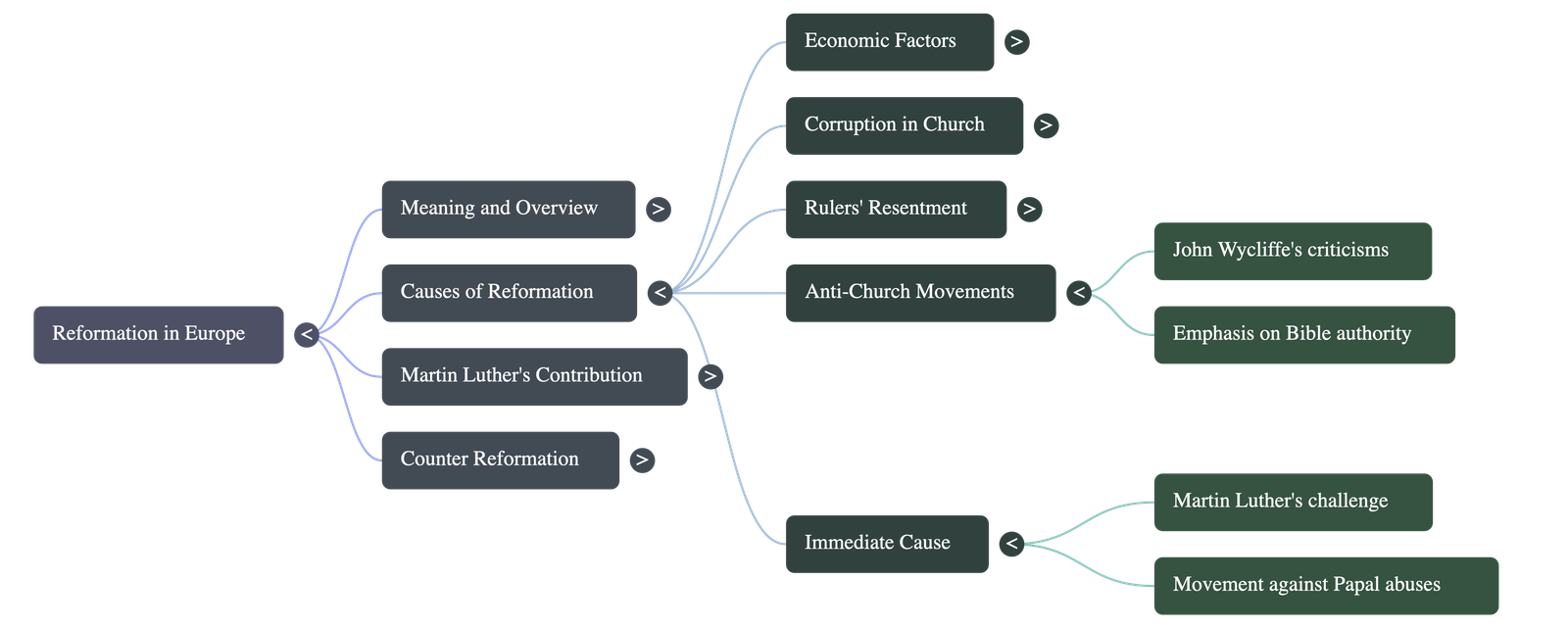
- Early Movements against the Church:
- Scholars like John Wycliffe (an English priest and Oxford professor) criticized the worldliness of the Church and emphasized that the Bible should be the sole guide for salvation.
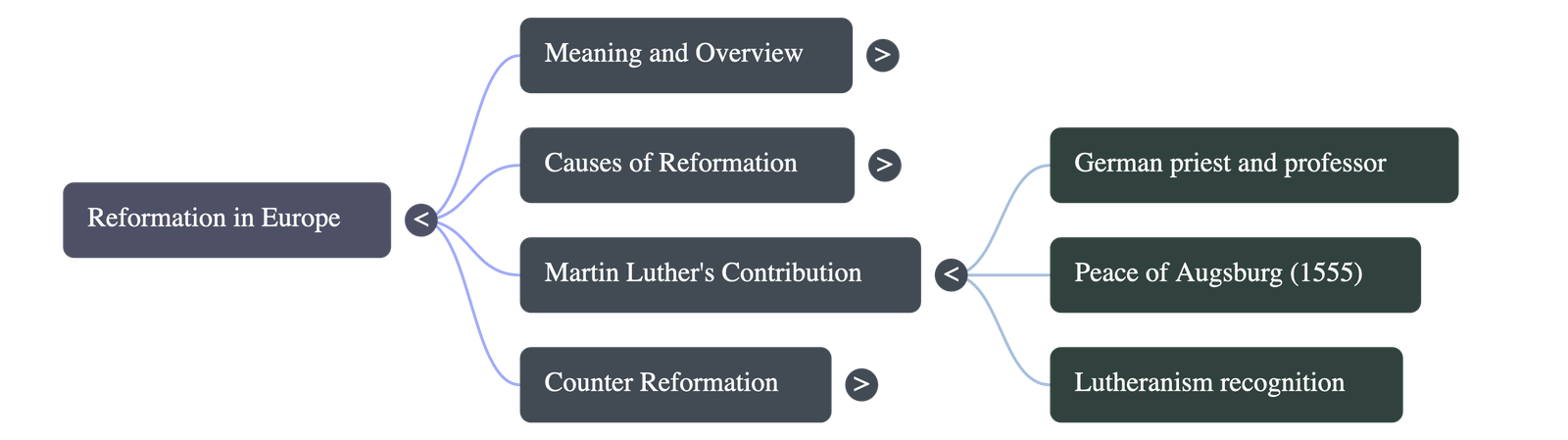
- Immediate Cause: A German priest named Martin Luther directly challenged the Pope's authority and raised a strong voice against the abuses within the Church. His movement proved to be the immediate spark for the Reformation.
The Peace of Augsburg (1555)
- After a long civil war, Lutheranism was finally recognized as a legal form of Christianity.
- In Germany, the Northern states accepted Lutheranism, while the Southern states remained loyal to the Roman Catholic Church.
The Counter Reformation
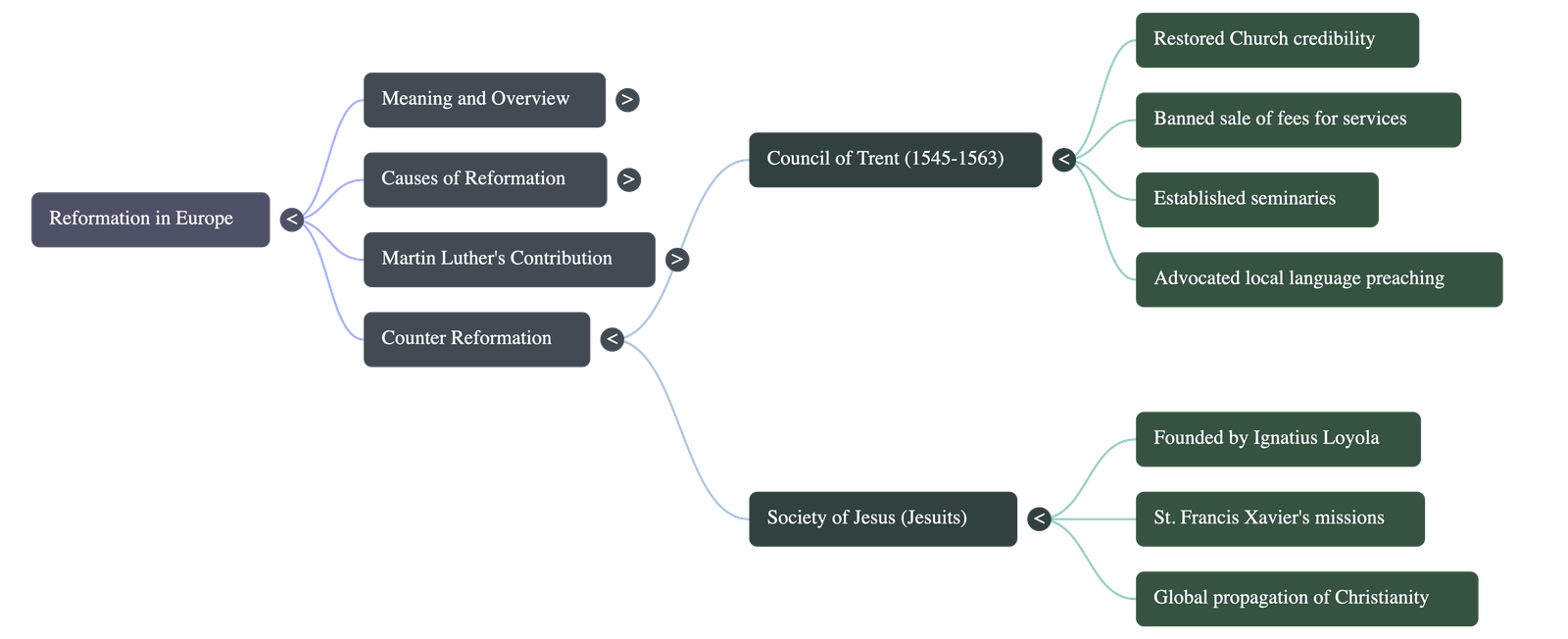
To combat the rise of Protestantism and restore the credibility of the Catholic Church, dedicated Christians and popes introduced significant internal reforms. This internal revival is known as the Counter Reformation.
- The Council of Trent (1545–1563):
- Convened by Pope Paul III in northern Italy to expand and clarify Church doctrines.
- It strongly condemned the irresponsible lives led by some clergy and banned books that opposed Catholic teachings.
- It established training centers called seminaries to properly educate priests.
- The Council forbade the Church from charging fees for conducting religious services and advocated for preaching in local languages.
- Society of Jesus:
- A new religious order founded by Ignatius Loyola, a Spanish noble who studied theology.
- With the Pope's permission, the Jesuits worked selflessly and won back many followers in Europe, India, China, Africa, and the Americas.
- Saint Francis Xavier:
- A devoted follower of Ignatius Loyola who traveled to China, Japan, and India to spread Christianity.
- His dedicated service helped restore the Catholic Church's image. His mortal remains are preserved at the Church of Bom Jesus in Old Goa, India.
Do checkout all questions & answers of this chapter.
Quick Navigation:
| | | |
1 / 1
Quick Navigation:
| | | |