Quick Navigation:
| | | |
The Modern Age in Europe (A) Renaissance
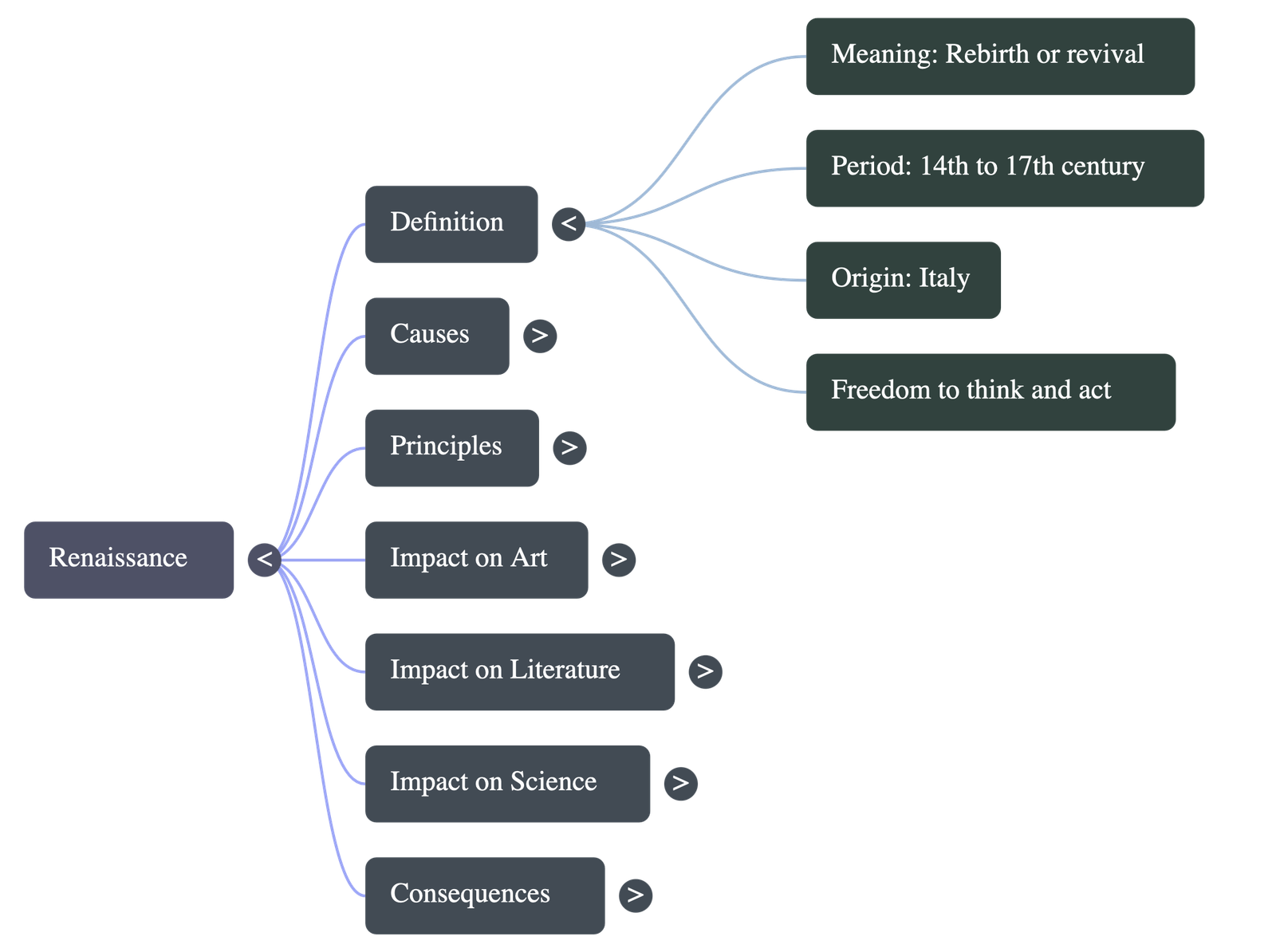
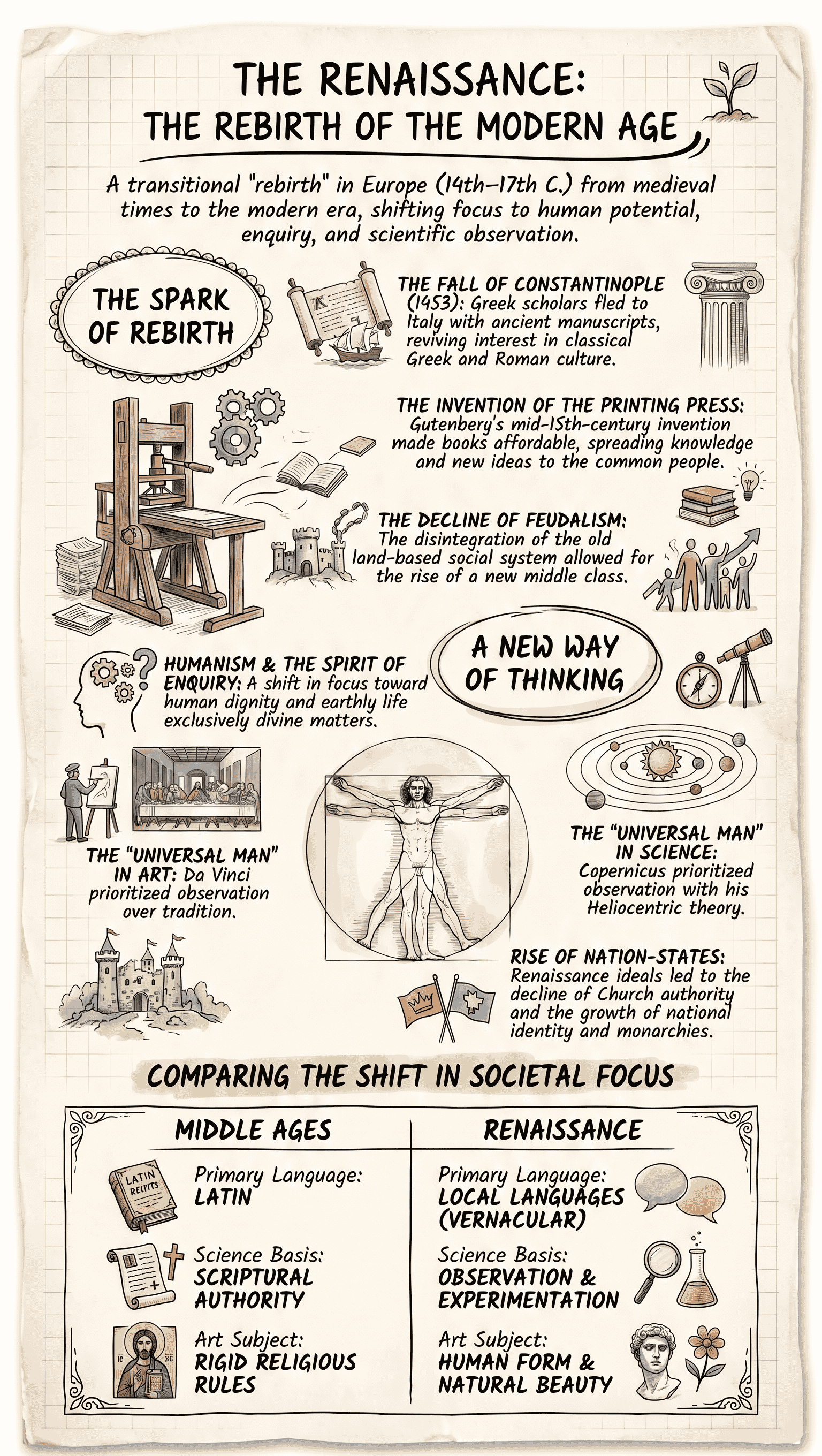
What is the Renaissance? The term Renaissance means rebirth or revival. It was a complex transitional movement in Europe (from the 14th to the 17th century) that marked the shift from medieval times to the modern era. It brought freedom of thought, revival of ancient Greek and Roman learning, and the end of the feudal system.
1. Causes of the Renaissance
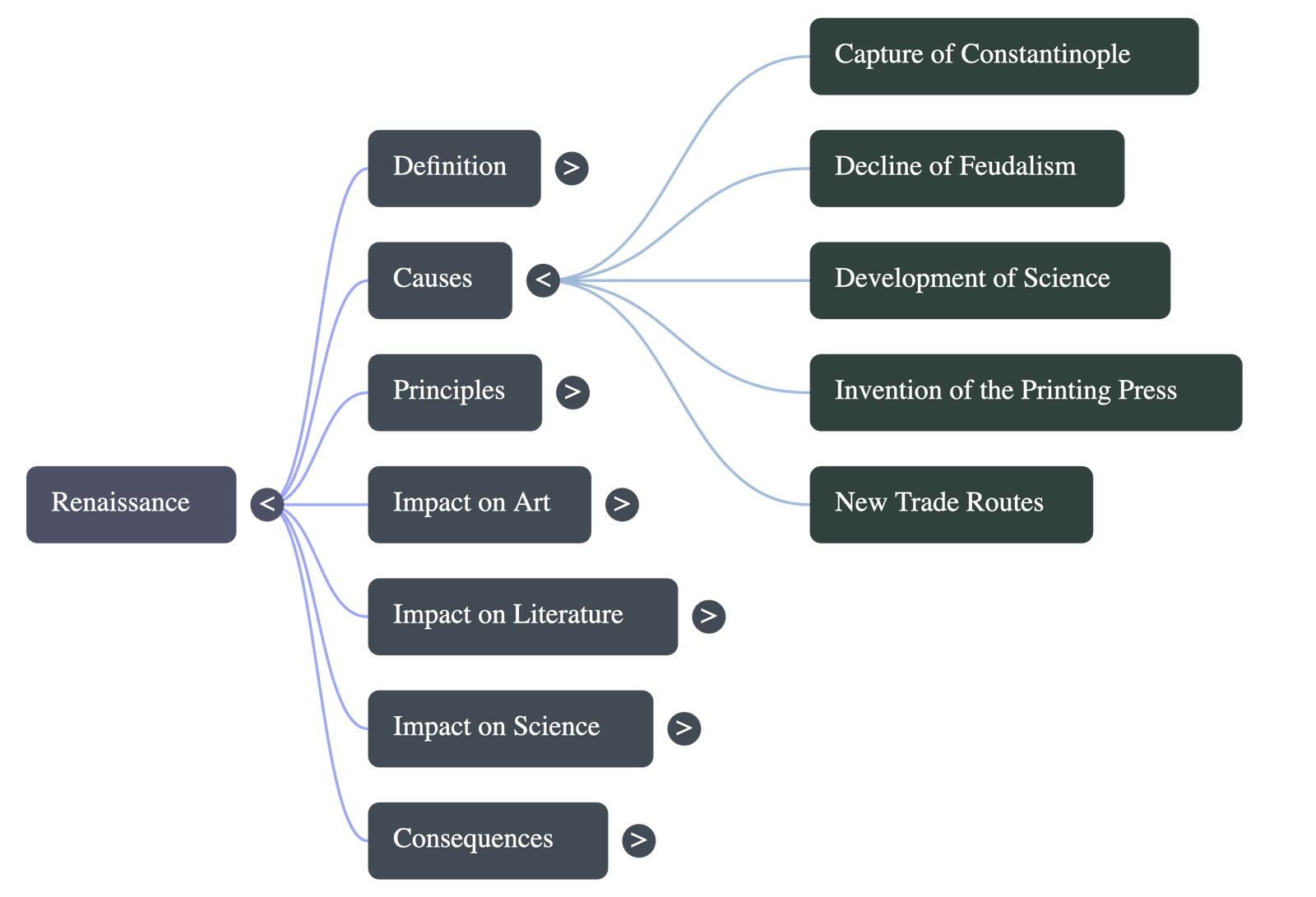
- Capture of Constantinople (1453): When the Turks captured Constantinople, many Greek and Roman scholars fled to Rome with their valuable manuscripts. Rome then became the new center of classical Greek culture, art, and literature.
- Decline of Feudalism: The medieval system of land ownership (Kings to Lords to Knights to Peasants) broke down. This disintegration led to a new social and economic order, paving the way for modern ideas.
- Development of Science: Medieval scholars began questioning old beliefs and asked students to observe nature. Inventions like Galileo's telescope and Copernicus's theories broadened people's mental outlook.
- Invention of the Printing Press: Set up by Gutenberg in Germany (mid-15th century) and later by Caxton in England, the printing press made books cheaper and widely available. This spread knowledge rapidly among ordinary people.
2. Core Principles of the Renaissance
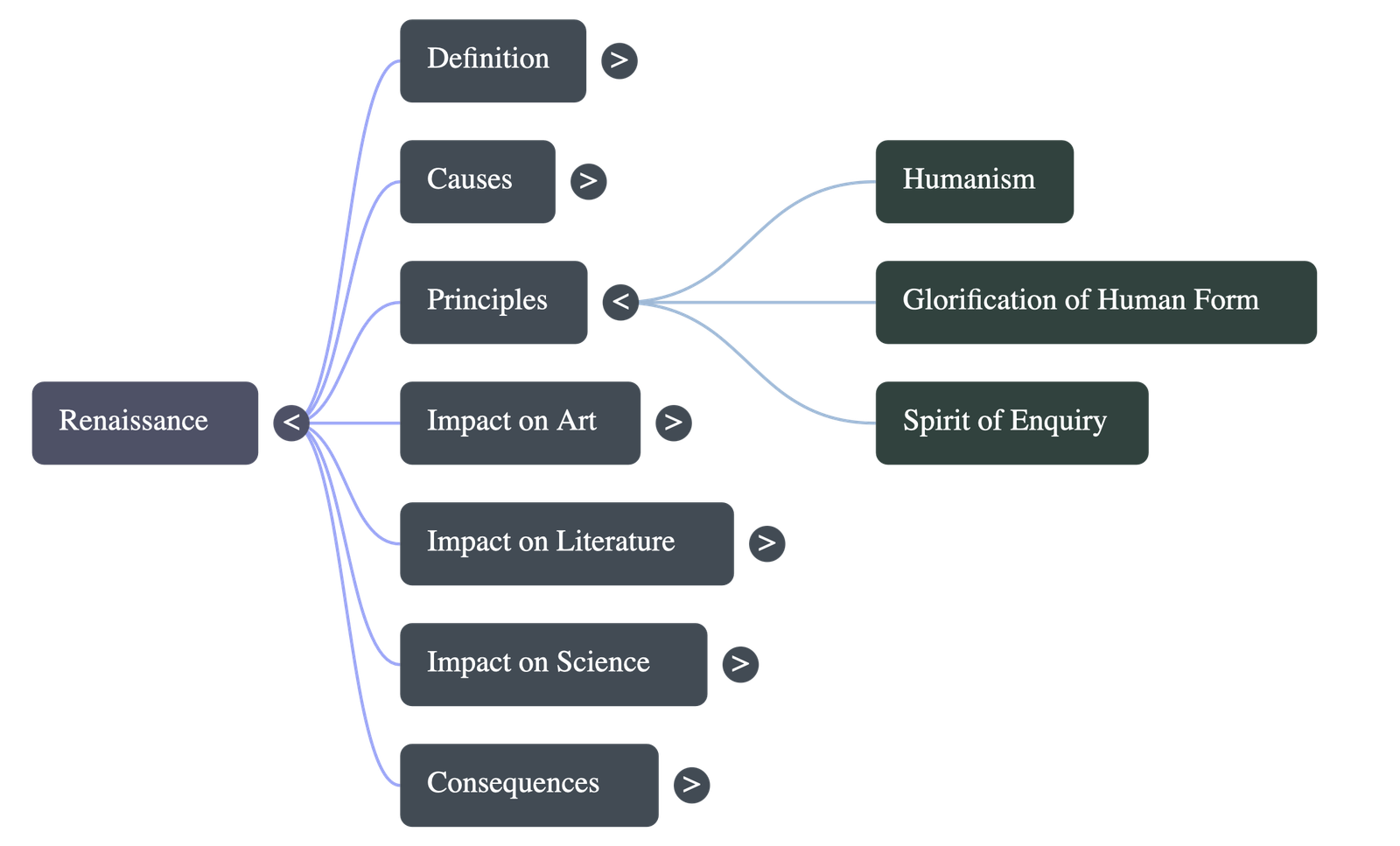
- Humanism: The most remarkable feature of the Renaissance. It shifted focus from divine matters to human beings—their joys, sorrows, and earthly desires. It glorified the human form and dignified mankind.
- Spirit of Enquiry: People started to explore, observe, and question everything rather than blindly accepting traditional beliefs.
3. Why Did It Begin in Italy?
- Italy was the seat of the glorious Roman Empire, filled with historical relics that inspired artists.
- Scholars migrating from Constantinople settled mostly in Italy.
- Wealthy Italian merchants, enriched by trade with the East, sponsored and supported artists and writers.
4. Impact on Art, Literature, and Science
A. Art (Painting & Sculpture)
- Artists rejected strict medieval rules, adopting new techniques like frescoes, oil colours, human anatomy, and geometric perspective for lifelike creations.
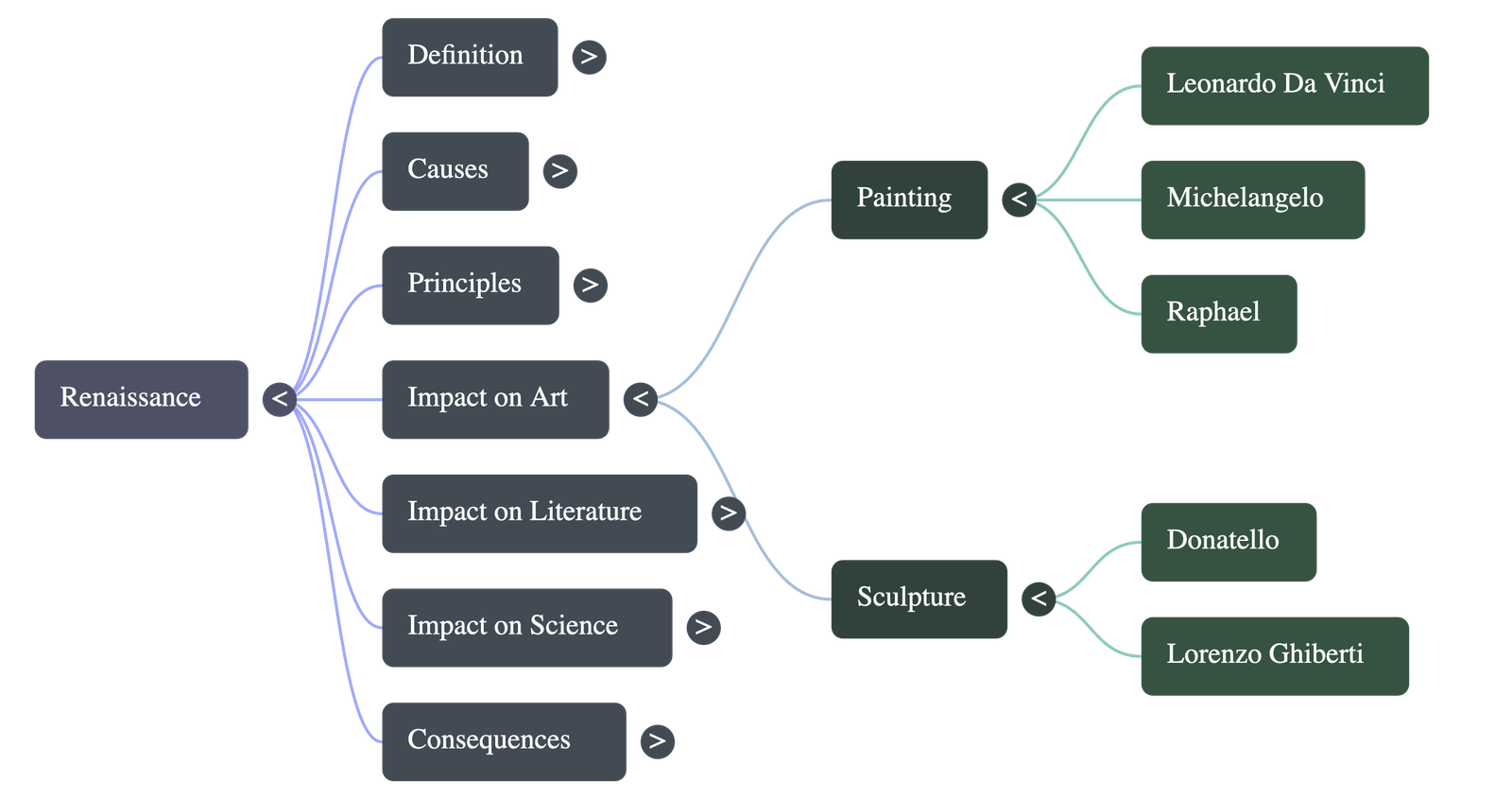
- Leonardo Da Vinci: A genius painter, sculptor, and scientist. Famous works: Mona Lisa, The Last Supper, and Virgin of the Rocks.
- Michelangelo: Famous for painting the ceiling of the Sistine Chapel (The Last Judgement) and creating incredible statues like David, Moses, and Pieta.
- Raphael & Donatello: Raphael painted the Sistine Madonna. Donatello made the first great bronze statue of David.
B. Literature
- Writers started using local languages instead of Latin and focused on human themes rather than purely spiritual ones.
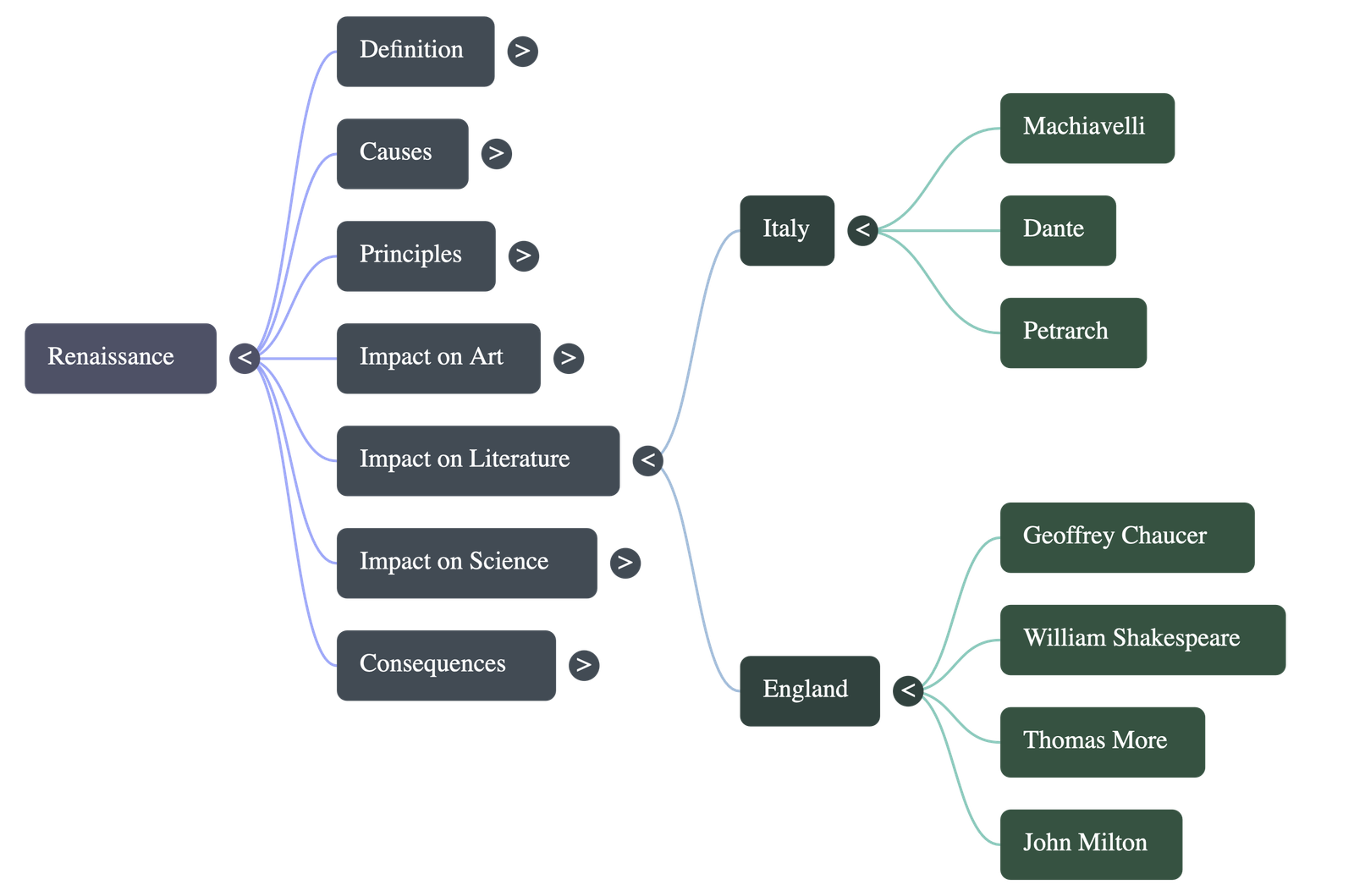
- Italy: Machiavelli wrote The Prince, Dante wrote Divine Comedy, and Petrarch became known as the 'Father of Humanism'.
- England: Geoffrey Chaucer (Father of English Poetry) wrote The Canterbury Tales. Sir Thomas More wrote Utopia.
- William Shakespeare: England's greatest poet and playwright. Wrote 38 plays (like Hamlet, Macbeth, Romeo and Juliet) and 154 sonnets.
C. Science
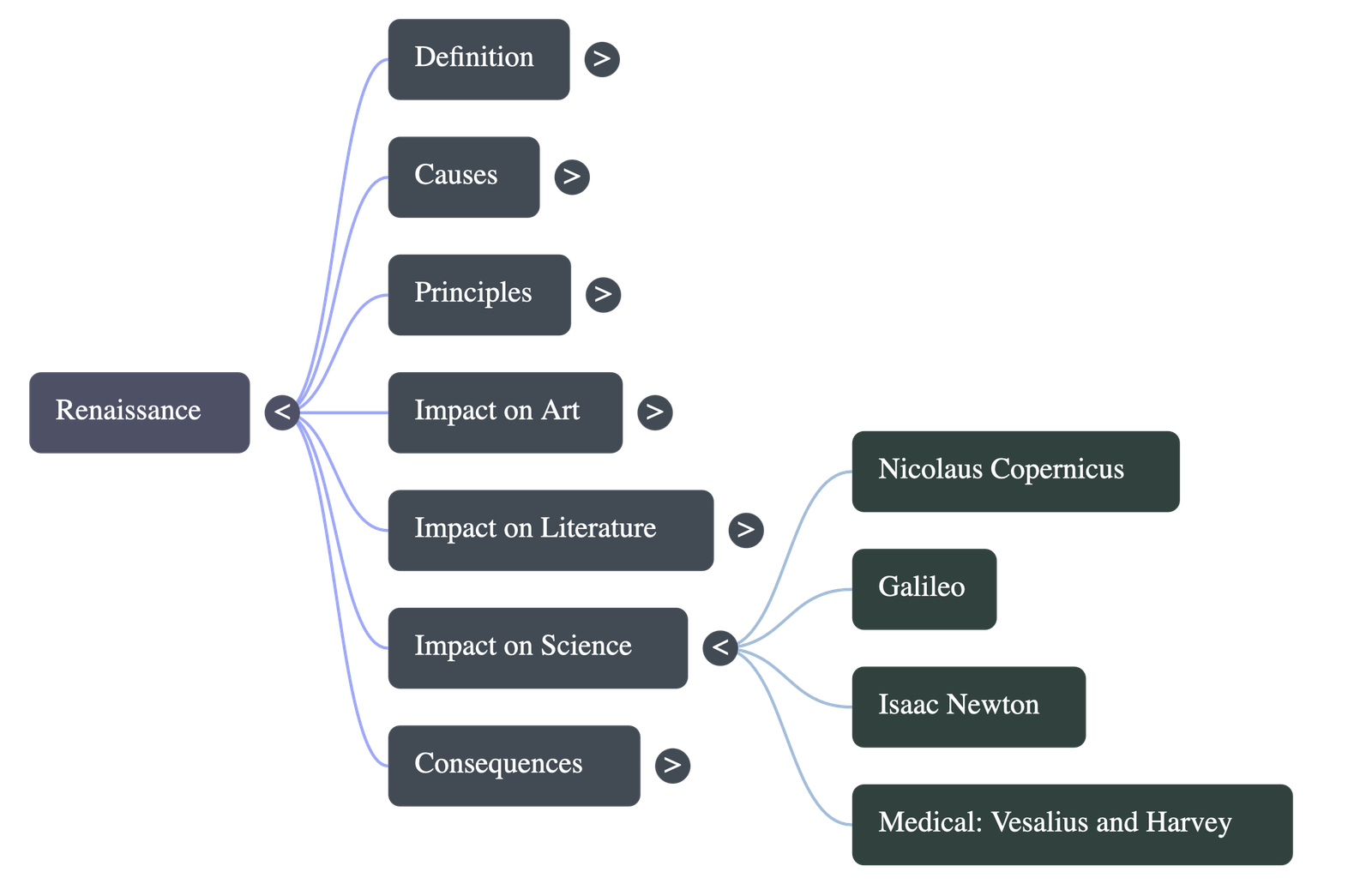
- Nicolaus Copernicus: Formulated the Heliocentric theory, proving that the earth and planets revolve around the sun.
- Other Pioneers: Galileo (invented the telescope), Kepler (proved elliptical orbits), and Sir Isaac Newton (discovered the Law of Gravitation).
- Medicine: William Harvey discovered blood circulation, and Vesalius wrote a key treatise on human anatomy.
5. Consequences of the Renaissance
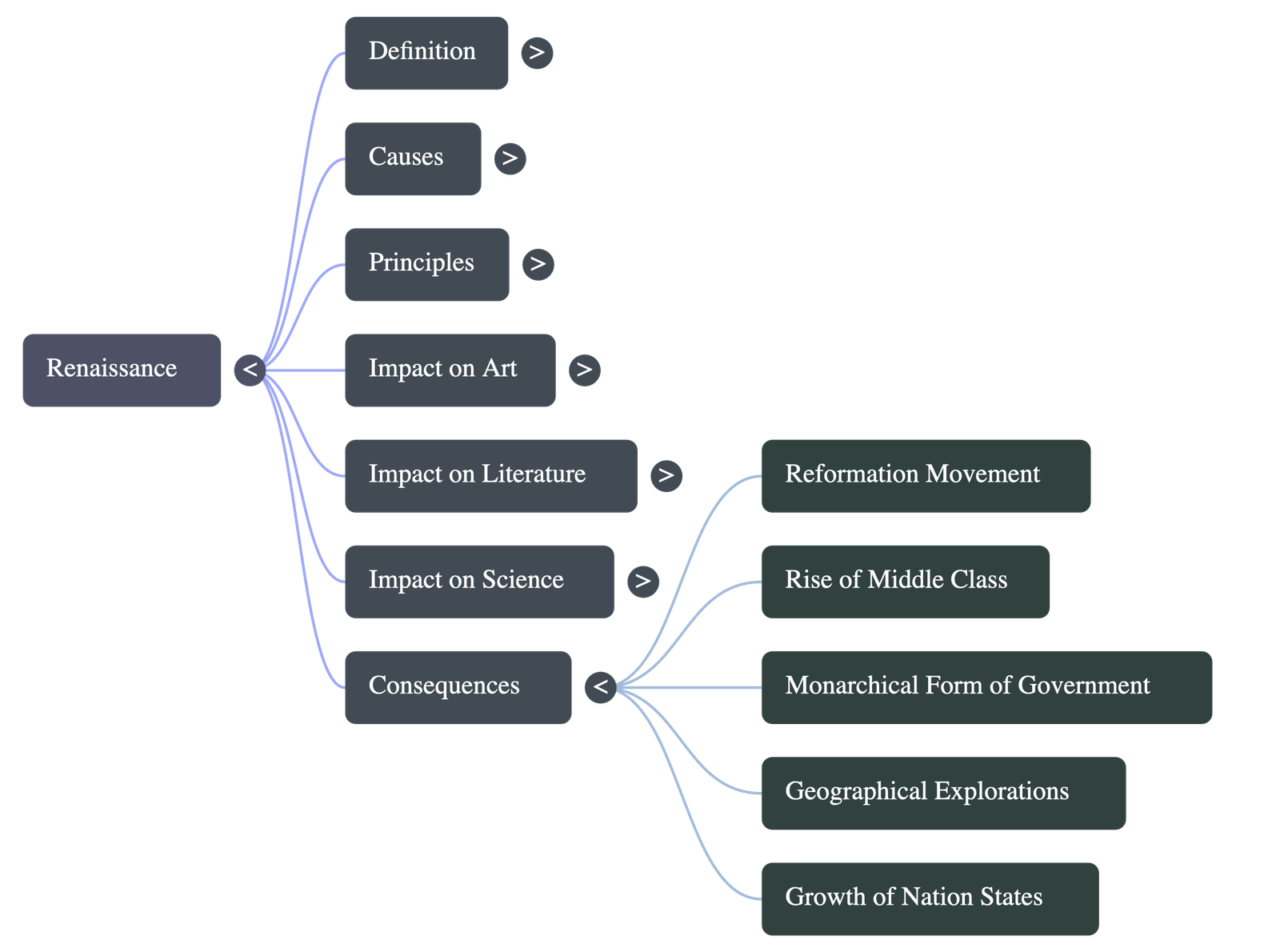
- The Reformation: The spirit of questioning led people to criticize Church rituals, eventually splitting the Church into Catholics and Protestants.
- Rise of Monarchies: The decline of the Church and feudal lords helped kings establish strong, centralized monarchical governments.
- Rise of the Middle Class: Traders, lawyers, and soldiers gained wealth and influence, replacing the old feudal lords.
- Geographical Explorations: Scientific tools enabled sailors to discover new sea routes. This expanded trade between Europe and the East and started the era of colonization in Asia, Africa, and the Americas.
- Rise of Nation States: A growing feeling of nationality and the development of national literature led to the creation of modern nation-states.
Do checkout all questions & answers of this chapter.
Quick Navigation:
| | | |
1 / 1
Quick Navigation:
| | | |