Quick Navigation:
| | | |
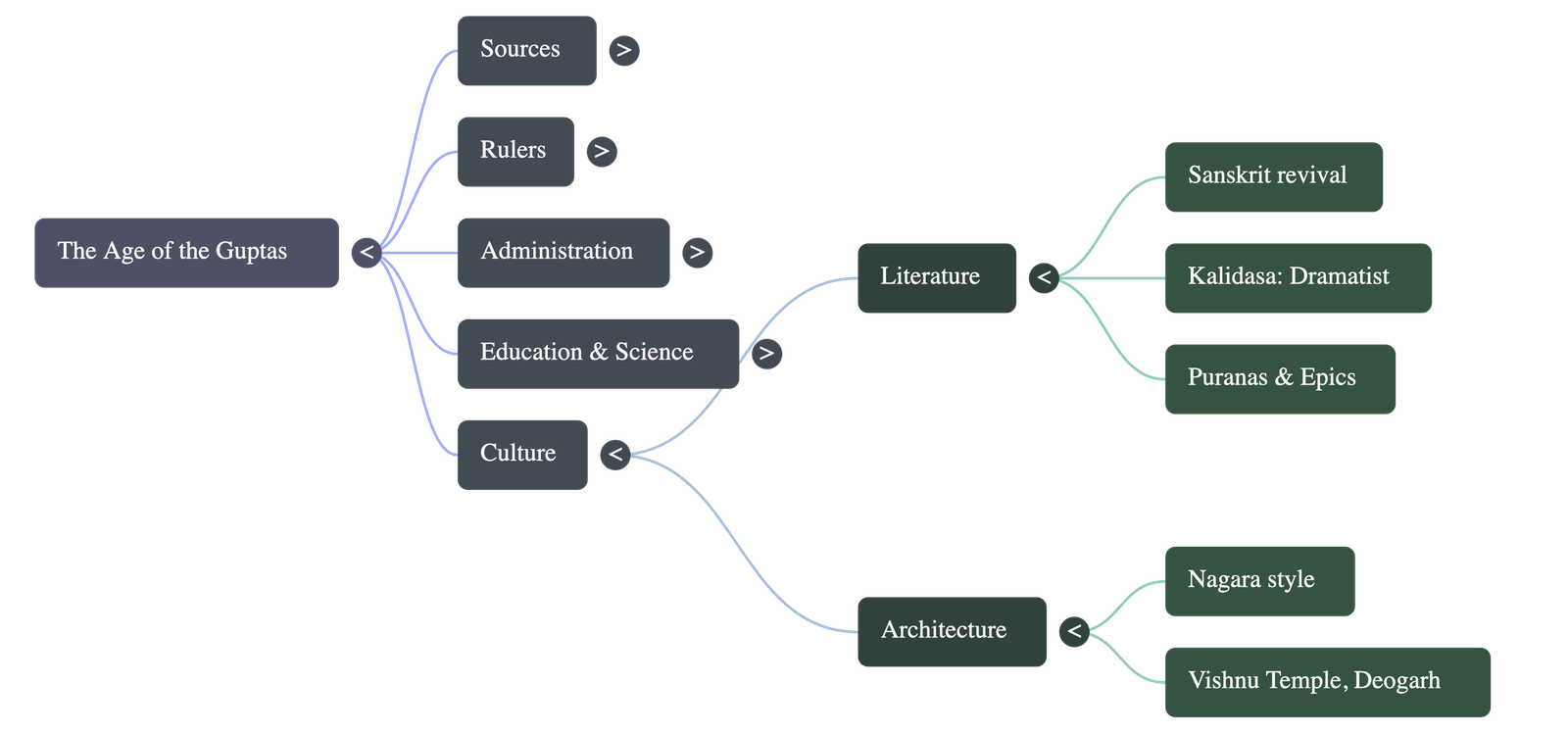
The Age of the Guptas
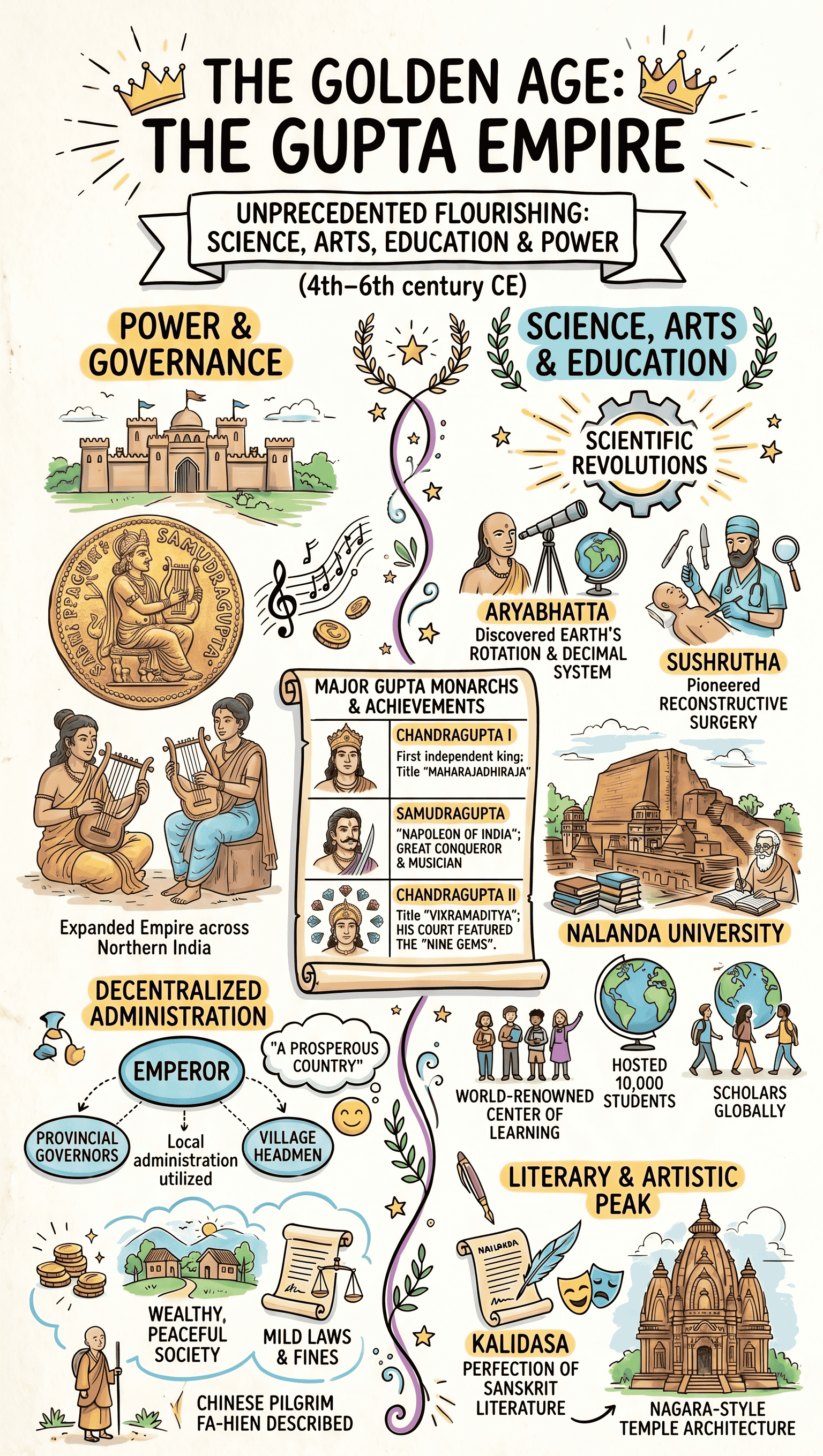
Overview: The period of about two centuries starting from the early 4th century CE is known as the Imperial Age of the Guptas. Because of immense progress in literature, art, architecture, and science, this era is proudly called the "Golden Age" or "Classical Age" of Indian history.
1. Main Sources of Information
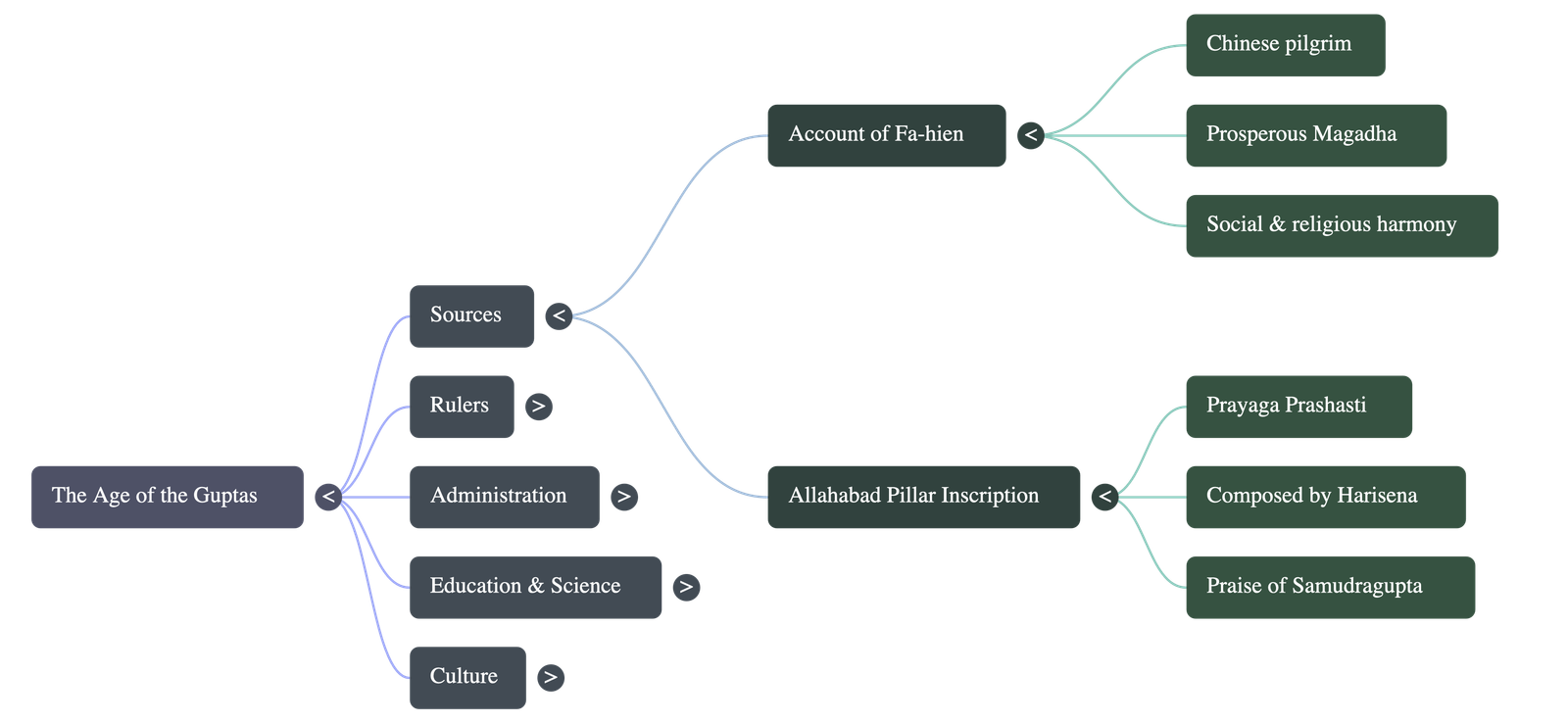
- Accounts of Fa-hien: A Chinese pilgrim who visited India during the reign of Chandragupta II. He observed that Magadha was prosperous, people were wealthy but led simple lives, different religions (Hinduism, Buddhism, Jainism) co-existed peacefully, and the penal code was mild (crimes were mostly punished by fines).
- Allahabad Pillar Inscription (Prayaga Prashasti): Composed by Harisena (Samudragupta's court poet). It is written in praise of King Samudragupta, detailing his impressive conquests, political geography of India, and his policies toward defeated rulers.
2. Important Rulers of the Gupta Empire
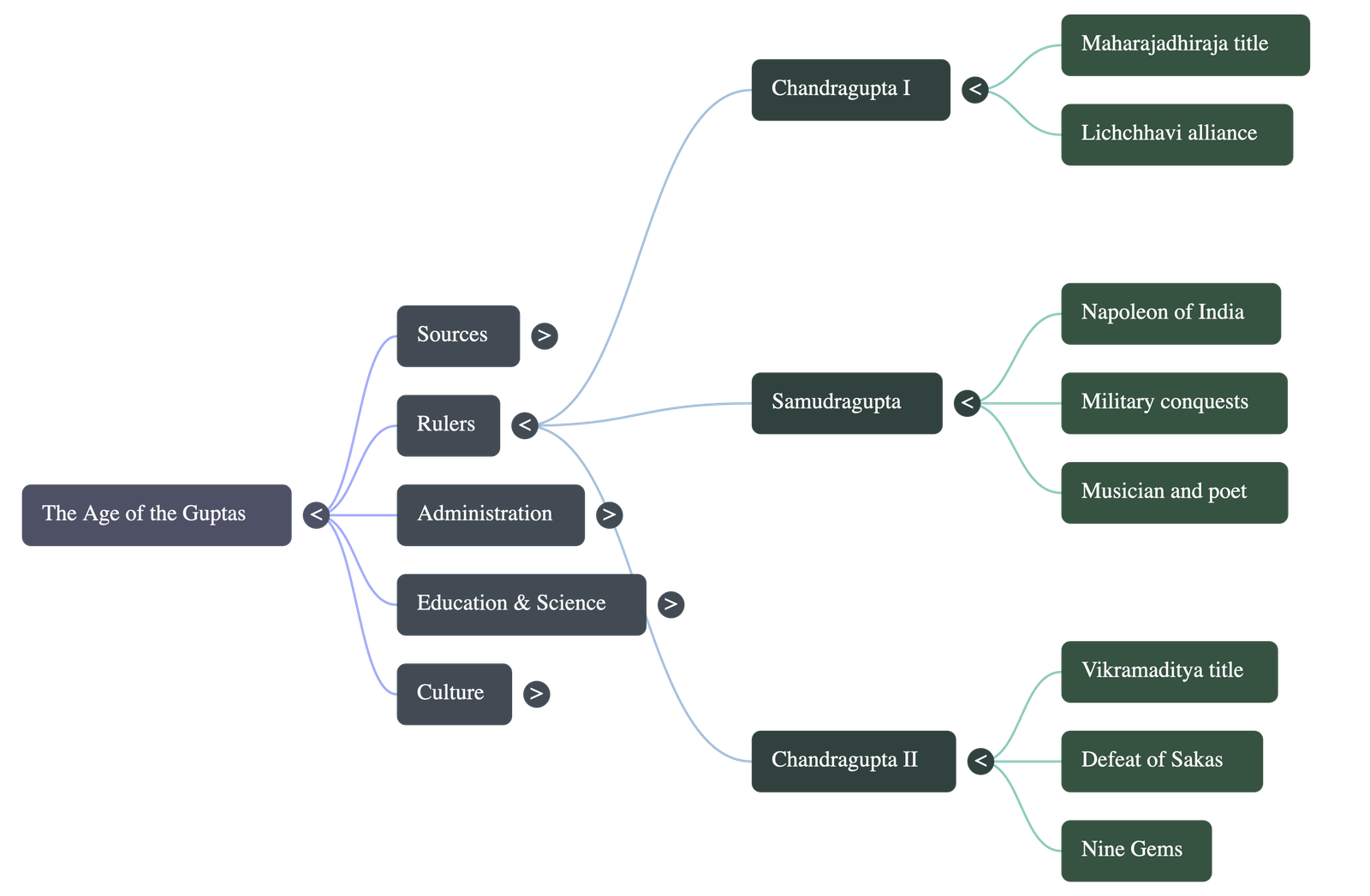
- Chandragupta I: The first independent king of the dynasty. He adopted the grand title of Maharajadhiraja (King of Kings) and expanded his empire through a matrimonial alliance by marrying a Lichchhavi princess, Kumaradevi.
- Samudragupta: Known as the 'Napoleon of India' due to his bravery and generalship. He defeated many rulers in North India (Aryavarta) and South India (Dakshinapatha). He performed the Ashvamedha Yajna (horse sacrifice) and was also a great musician, depicted playing the veena on his gold coins.
- Chandragupta II (Vikramaditya): Extended the empire by conquering the Saka territories (earning the title Sakari). His court was adorned by 'Nine Gems' (Navaratnas), including the famous poet Kalidasa and astronomer Varahamihira.
- Later Rulers: Kumaragupta succeeded him, followed by Skandagupta, who famously gave the invading Huna tribes a crushing defeat, saving India for the next 50 years.
3. Administration System
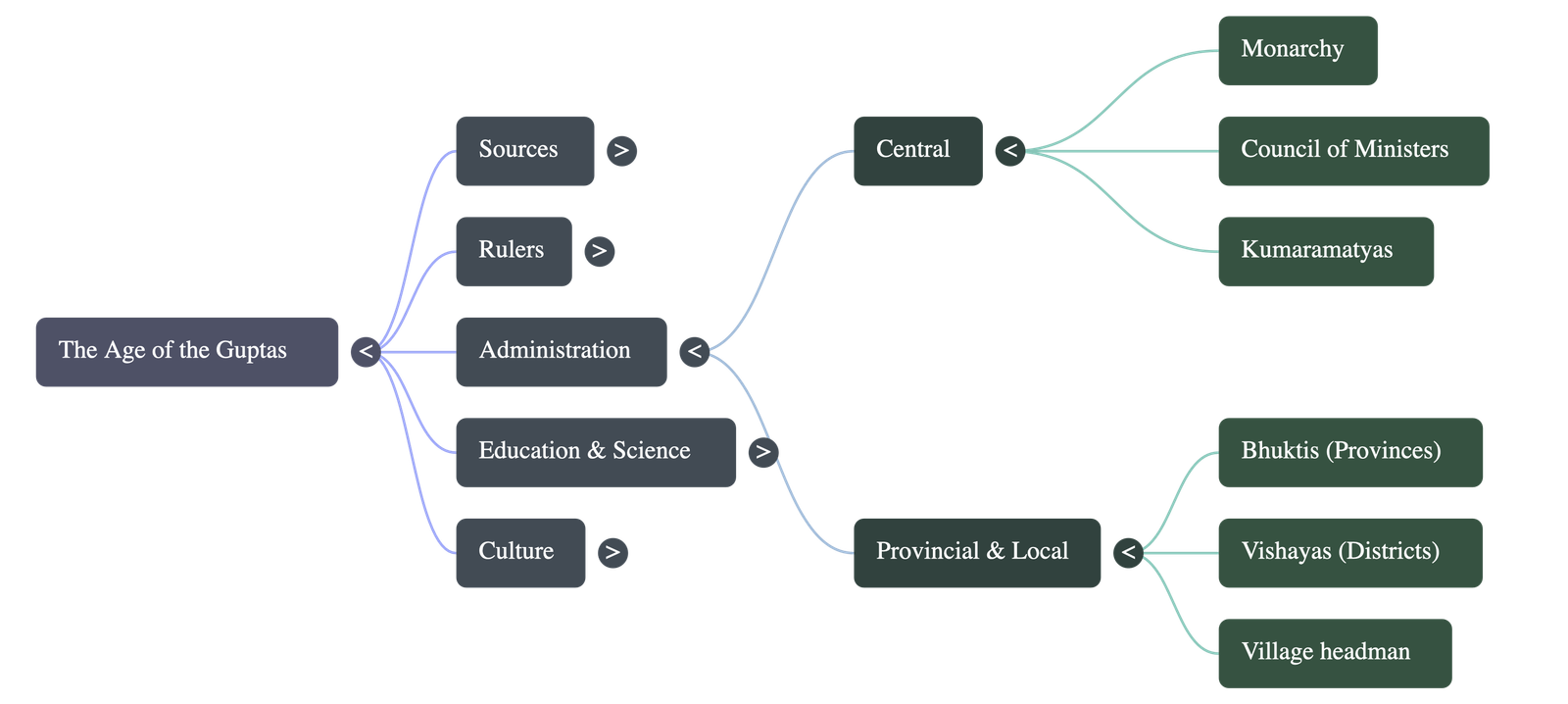
- Monarchy: Kings held absolute power and were compared to Gods (like Yama, Indra, and Vishnu) for their role in protecting the people. They were commanders-in-chief and the ultimate owners of all land.
- Council of Ministers: Assisted by high-ranking officials called Kumaramatyas and the Sandhivigrahika (Minister of Peace and War).
- Provincial & Local Rule: The empire was divided into provinces called Bhuktis (governed by Uparikas). Provinces were divided into districts called Vishayas (governed by Vishayapatis). Villages were managed from the grassroot level by a village headman.
- Town Administration: Towns were run by committees. There were separate trade guilds for artisans (kulika) and merchants (shreshthi).
4. Education and Nalanda University
- Education was highly valued. Teachers (Acharyas) were supported by land grants called agraharas. Students learned Vedas, logic, grammar, and sciences.
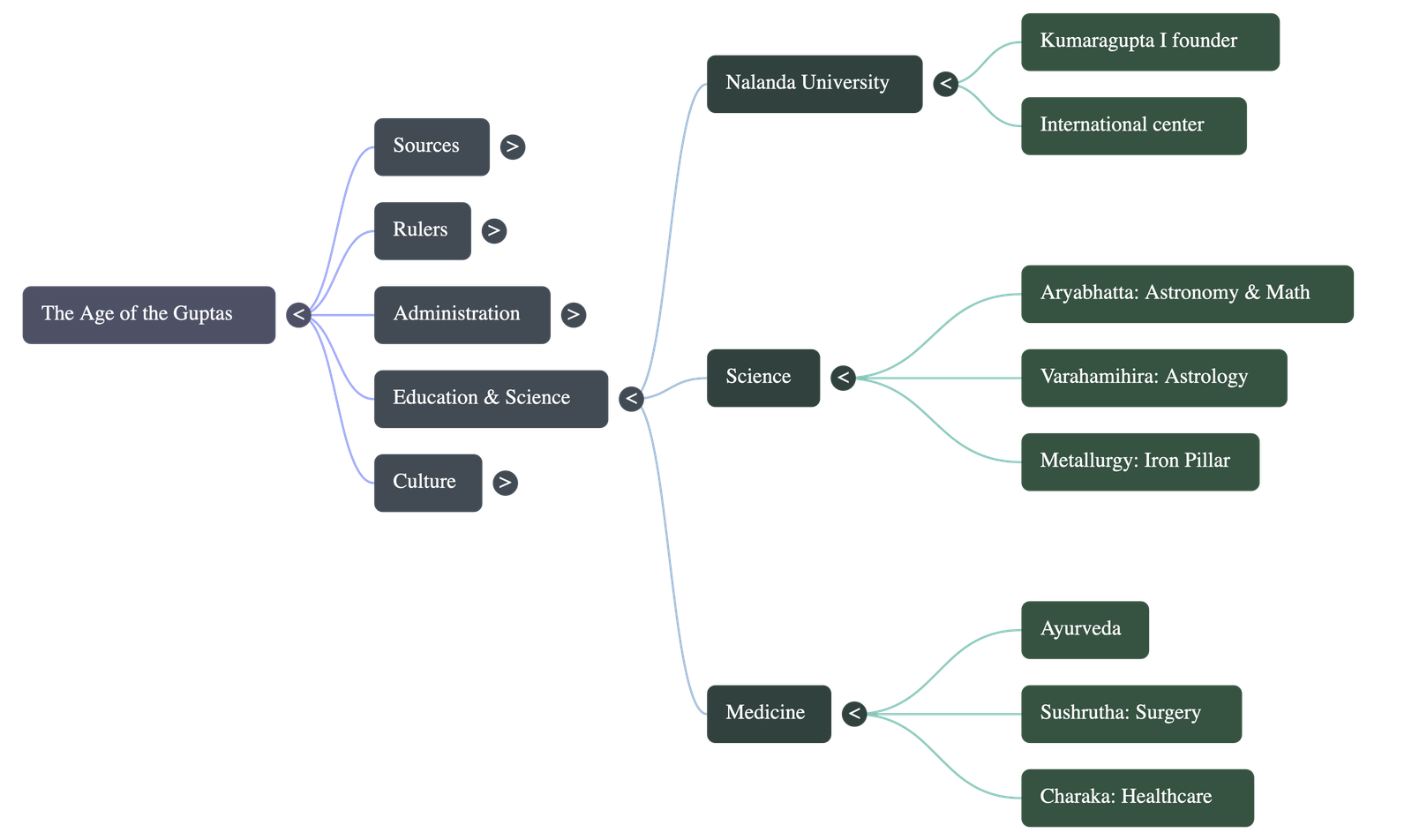
- Nalanda University: Located in Bihar, established by Kumaragupta I. It was an internationally renowned post-graduate university with imposing buildings, three massive libraries, and over 10,000 students and teachers from places like China, Japan, and Korea. Admission was extremely difficult, with only the most brilliant passing the entrance test.
5. Advancements in Science and Medicine
- Aryabhatta: A legendary astronomer and mathematician. He proved the earth rotates on its axis and revolves around the sun long before Europeans did. He discovered the exact value of Pi (3.1416), the rule for the area of a triangle, explained eclipses, and used the decimal system and 'zero'.
- Other Scientists: Varahamihira (author of Brihat Samhita) and Brahmagupta (described gravitation centuries before Newton).
- Medicine: Ayurveda made huge strides. Sushrutha, known as the 'Father of Plastic Surgery', performed complex reconstructive surgeries, described over 1120 diseases, and crafted specialized surgical instruments. Charaka provided holistic healthcare guides.
6. Art, Architecture, and Literature
- Architecture: The Gupta period marked the shift to building temples with solid materials like brick and stone instead of wood. The Dashavatara Temple at Deogarh (Vishnu Temple) is a prime example of the Nagara style, famous for its grand carvings, platform structure, and beautiful sculptures depicting scenes from the Ramayana.
- Advanced Metallurgy: The Iron Pillar at Mehrauli, Delhi, is a shining example—it has not rusted even after centuries.
- Literature: Sanskrit became the official language and language of the learned. Important Hindu texts like the Puranas and Smritis were compiled.
- Kalidasa: The greatest poet and playwright in Indian history. His immortal literary works include epic poems like Meghaduta and Raghuvamsa, and dramatic plays like Abhijnanashakuntalam (the love story of King Dushyanta and Shakuntala).
Summary for Students: The Gupta Age laid the foundational blueprint for classical Indian culture, uniting northern India politically and creating masterpieces in art, mathematics, and literature that are celebrated globally to this day.
Do checkout all questions & answers of this chapter.
Quick Navigation:
| | | |
1 / 1
Quick Navigation:
| | | |