Quick Navigation:
| | | |
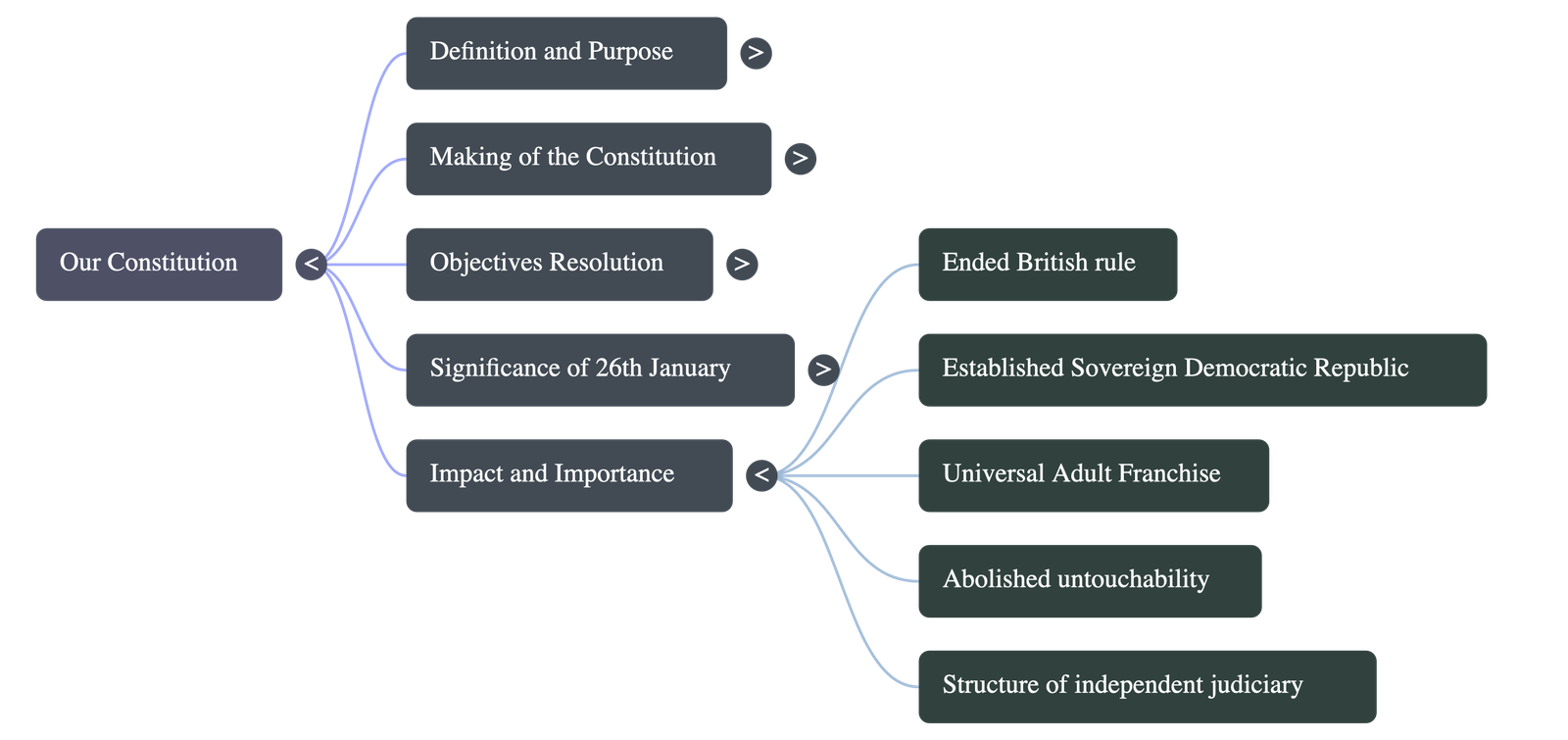
Civics 1: Our Constitution
1. What is the Constitution?
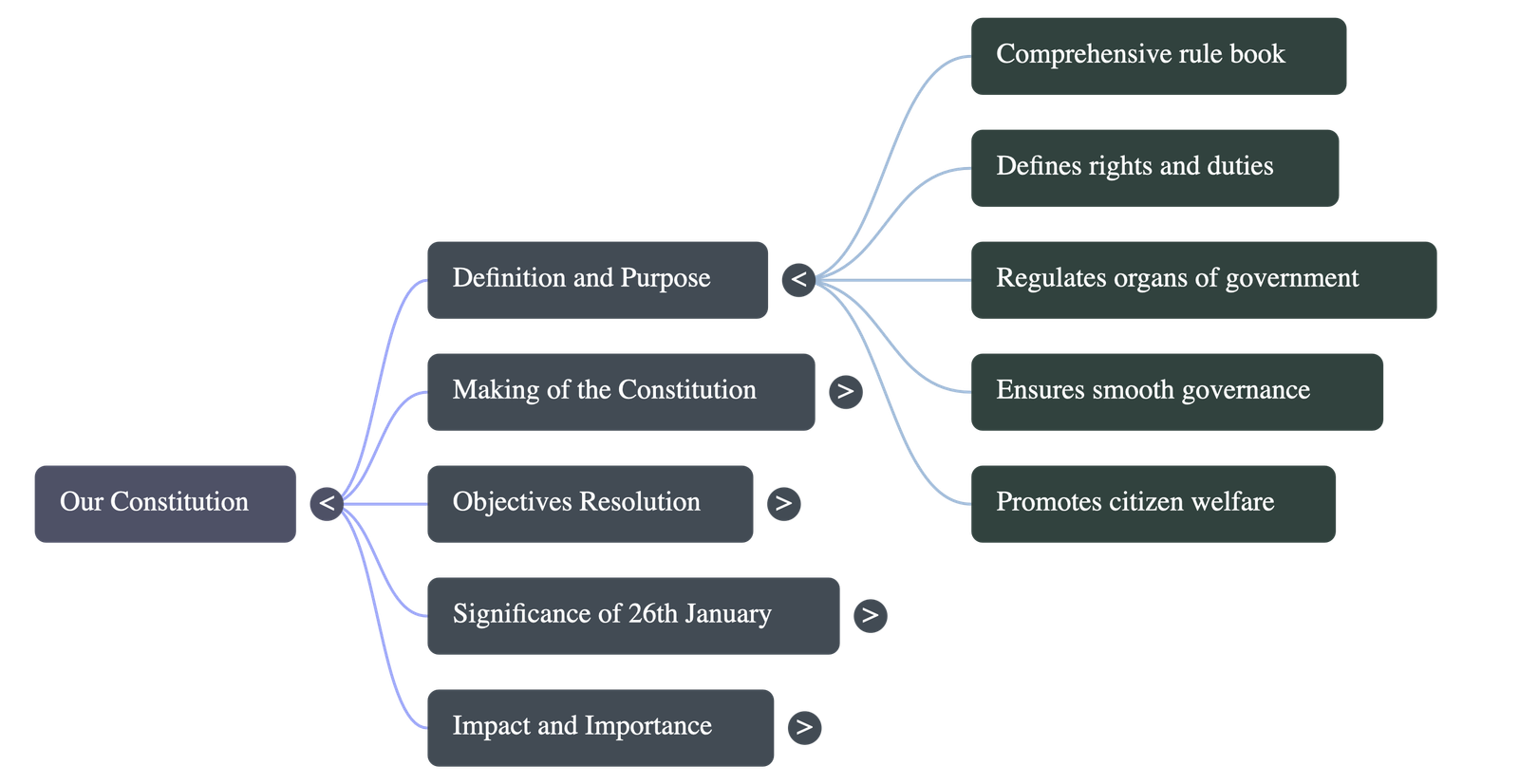
- The Constitution is a comprehensive document containing a set of rules that describe the rights and duties of citizens and how the country's governance should be carried out.
- It regulates the powers of the three organs of the government: the legislative, the executive, and the judiciary.
- It prevents the government from taking arbitrary decisions and ensures smooth governance for the welfare of the people.
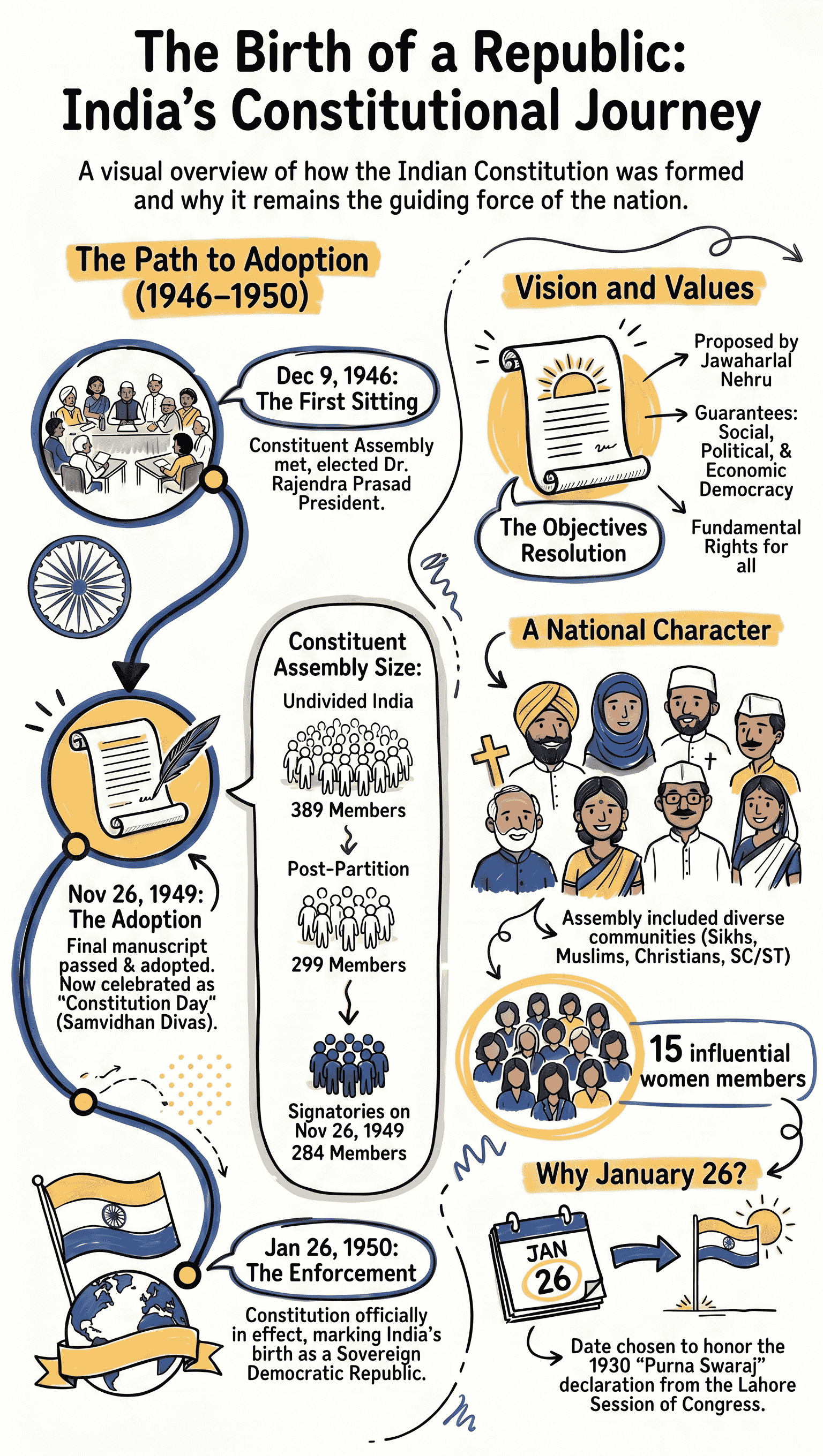
- The Constitution of India came into effect on 26th January 1950, making India a Sovereign Democratic Republic.
2. Enactment and The Constituent Assembly
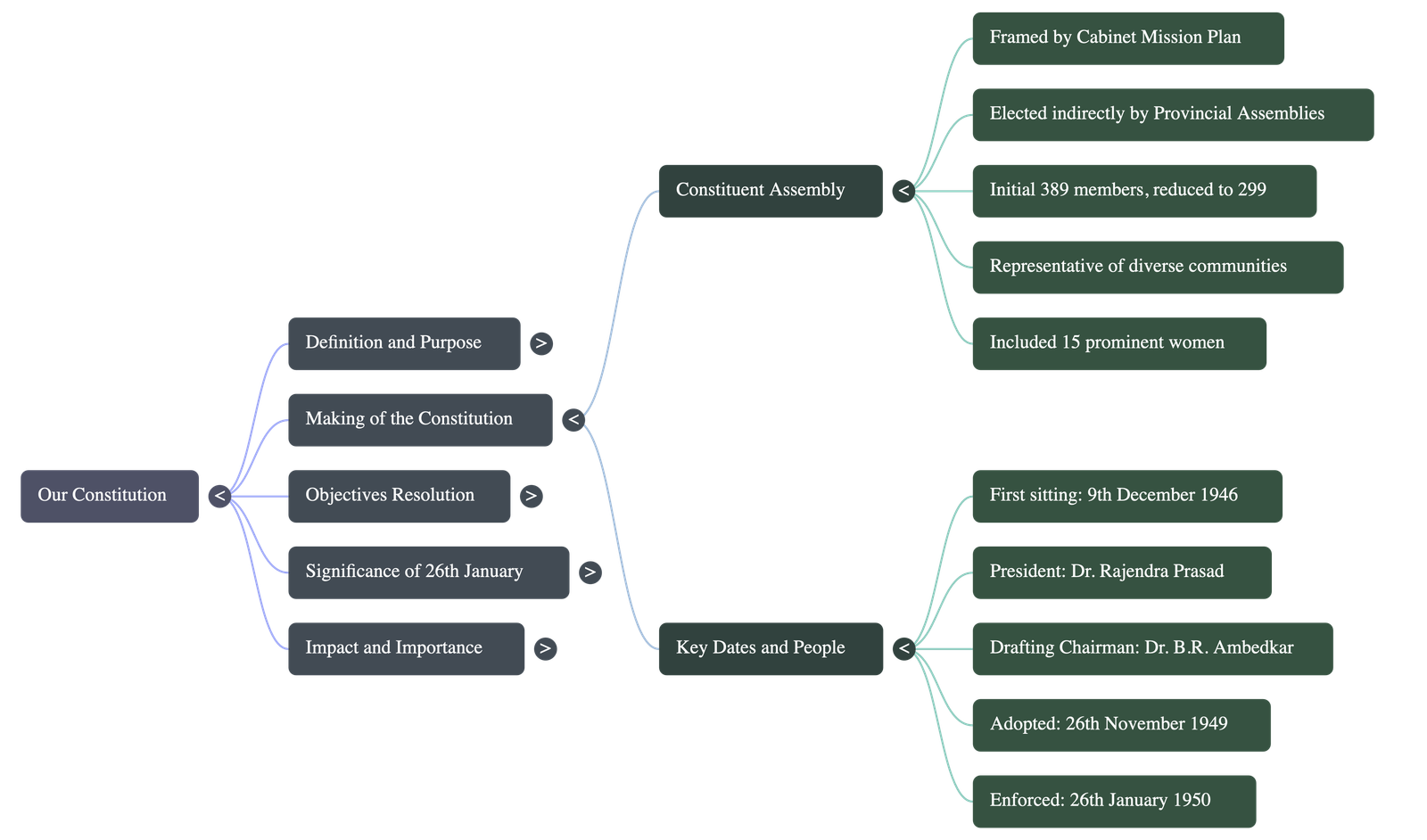
- The Cabinet Mission (1946) put forward proposals to set up a Constituent Assembly to frame the Constitution.
- Members were elected indirectly by the Provincial Legislative Assemblies in July 1946. Originally, there were 389 members for undivided India.
- First Sitting: Held on December 9, 1946, presided over by Dr. Sachidananda Sinha (the oldest member).
- President Elected: On December 11, 1946, Dr. Rajendra Prasad was elected as the President of the Assembly.
- Due to the partition of India and the creation of Pakistan, the membership was reduced to 299 members.
- The Constitution was finally passed and adopted on November 26, 1949, with 284 members appending their signatures.
3. Composition of the Constituent Assembly
- The Assembly was truly national and represented all shades of public opinion, including the General category, Muslims, and Sikhs.
- It ensured representation for minority communities like Anglo-Indians, Indian Christians, Scheduled Castes, and Scheduled Tribes.
- The Assembly included 15 prominent women members (like Sarojini Naidu, Sucheta Kriplani, and Vijaya Lakshmi Pandit) who advocated for economic, social, and political equality.
4. The Objectives Resolution
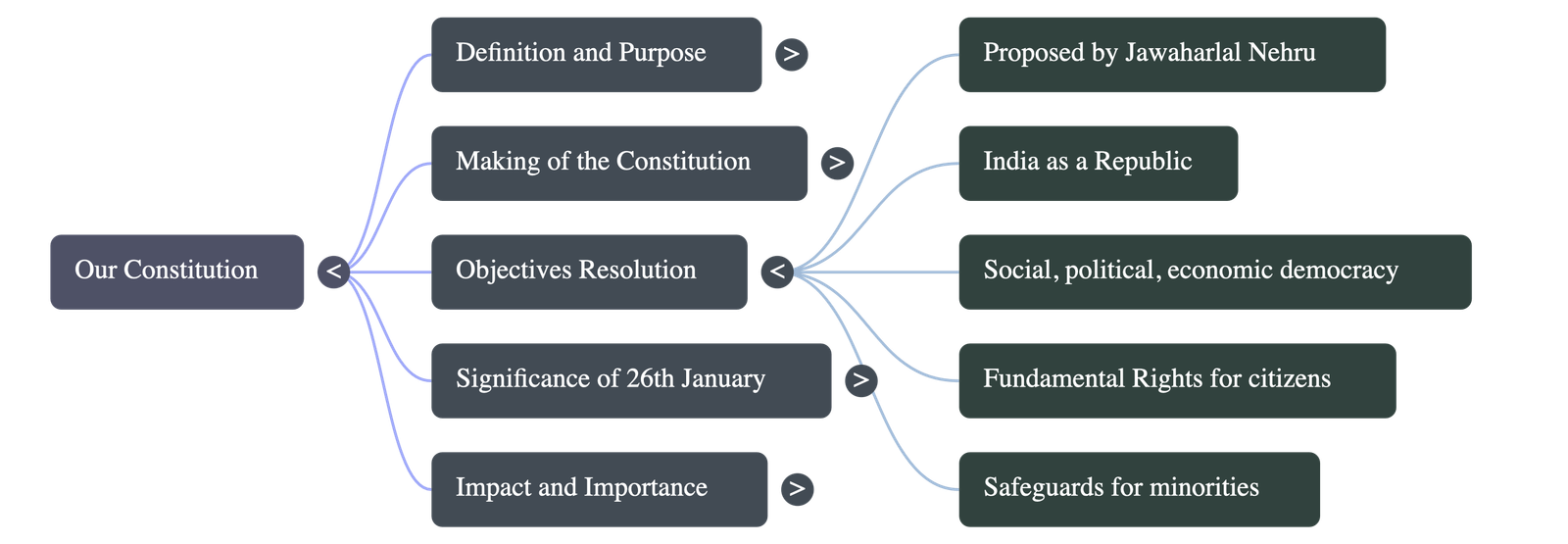
- Proposed by Pt. Jawaharlal Nehru on December 13, 1946, to lay down the national goals.
- It declared that Free India would be a 'republic'.
- It guaranteed ideals of social, political, and economic democracy to all people.
- It promised to grant Fundamental Rights to citizens and safeguard the rights of minorities and backward classes.
5. Significance of January 26
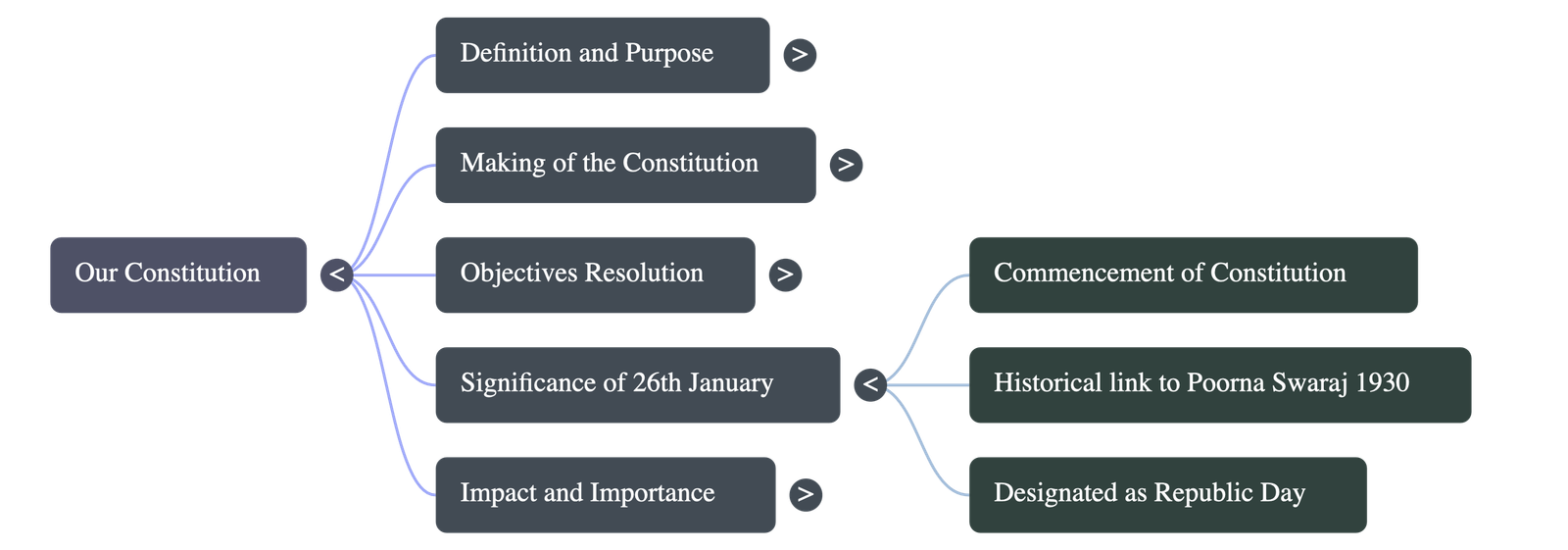
- January 26, 1950, was chosen for the commencement of the Constitution because of its deep historical importance.
- At the Lahore Session of Congress in December 1929, a resolution was passed declaring Poorna Swaraj (Complete Independence) as the ultimate objective.
- January 26, 1930, was fixed as the first Independence Day and was celebrated every year until India officially gained independence in 1947. Therefore, it was designated as Republic Day.
6. Significance of the Constitution
- End of Colonial Rule: It completely replaced British colonial laws with a system framed by Indians, for Indians.
- Sovereign Democratic Republic: India was officially headed by an elected President rather than the British monarch.
- Universal Adult Franchise: It granted the right to vote to all adult citizens regardless of caste, gender, religion, or wealth, ensuring political equality.
- Fundamental Rights: Provided guarantees like Equality before Law, Freedom of Speech, and Freedom of Religion to protect the dignity of citizens.
- Social Justice: Abolished untouchability and prohibited discrimination, creating safeguards for marginalized communities.
- National Unity: Brought unity and stability to a highly diverse country by clearly defining the structure of government and federal relations.
Do checkout all questions & answers of this chapter.
Quick Navigation:
| | | |
1 / 1
Quick Navigation:
| | | |