Quick Navigation:
| | | |
The Sangam Age
Overview & Significance
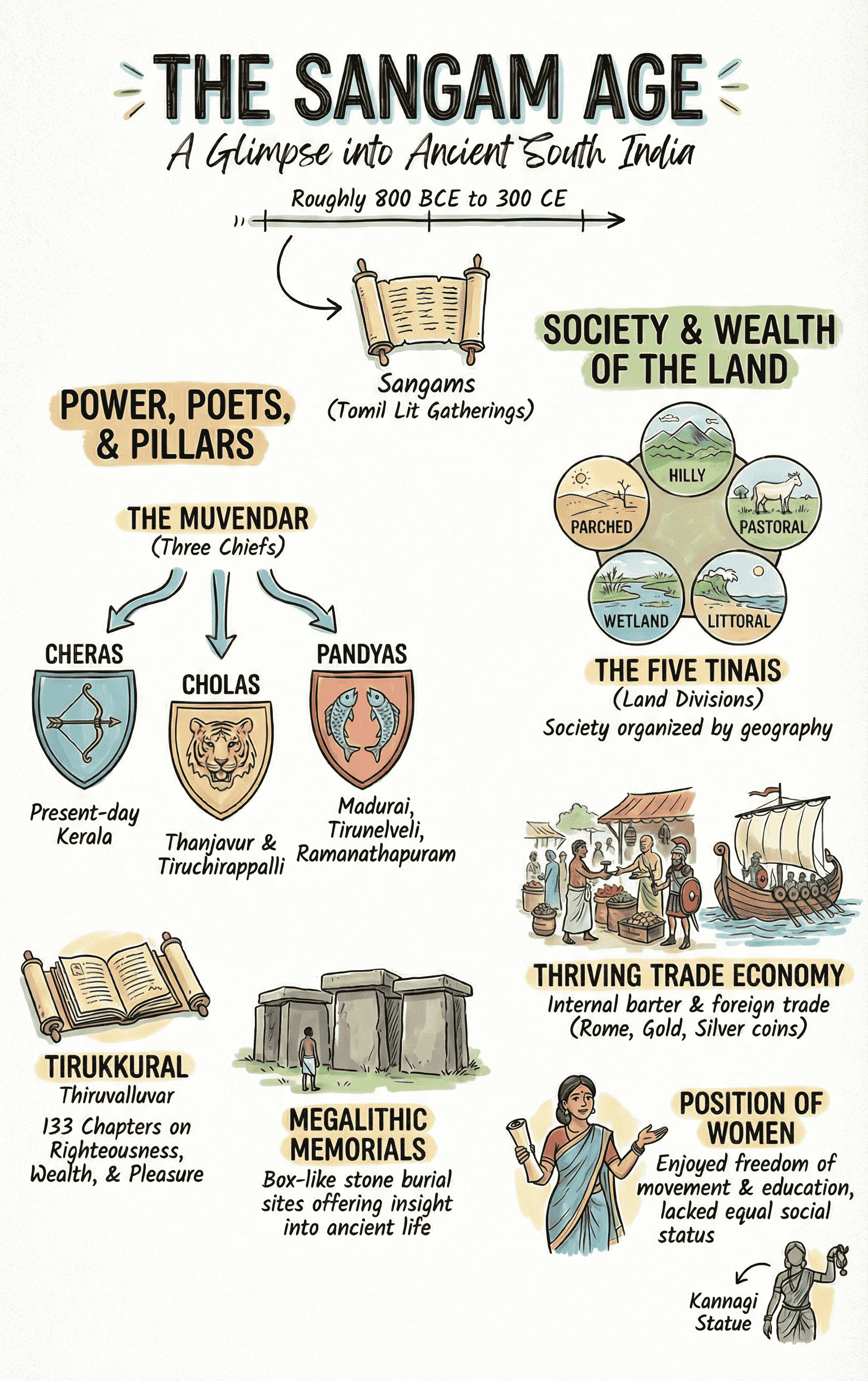
- • The Sangam: Refers to a period characterized by three successive literary gatherings of Tamil scholars, poets, and bards held in the city of Madurai.
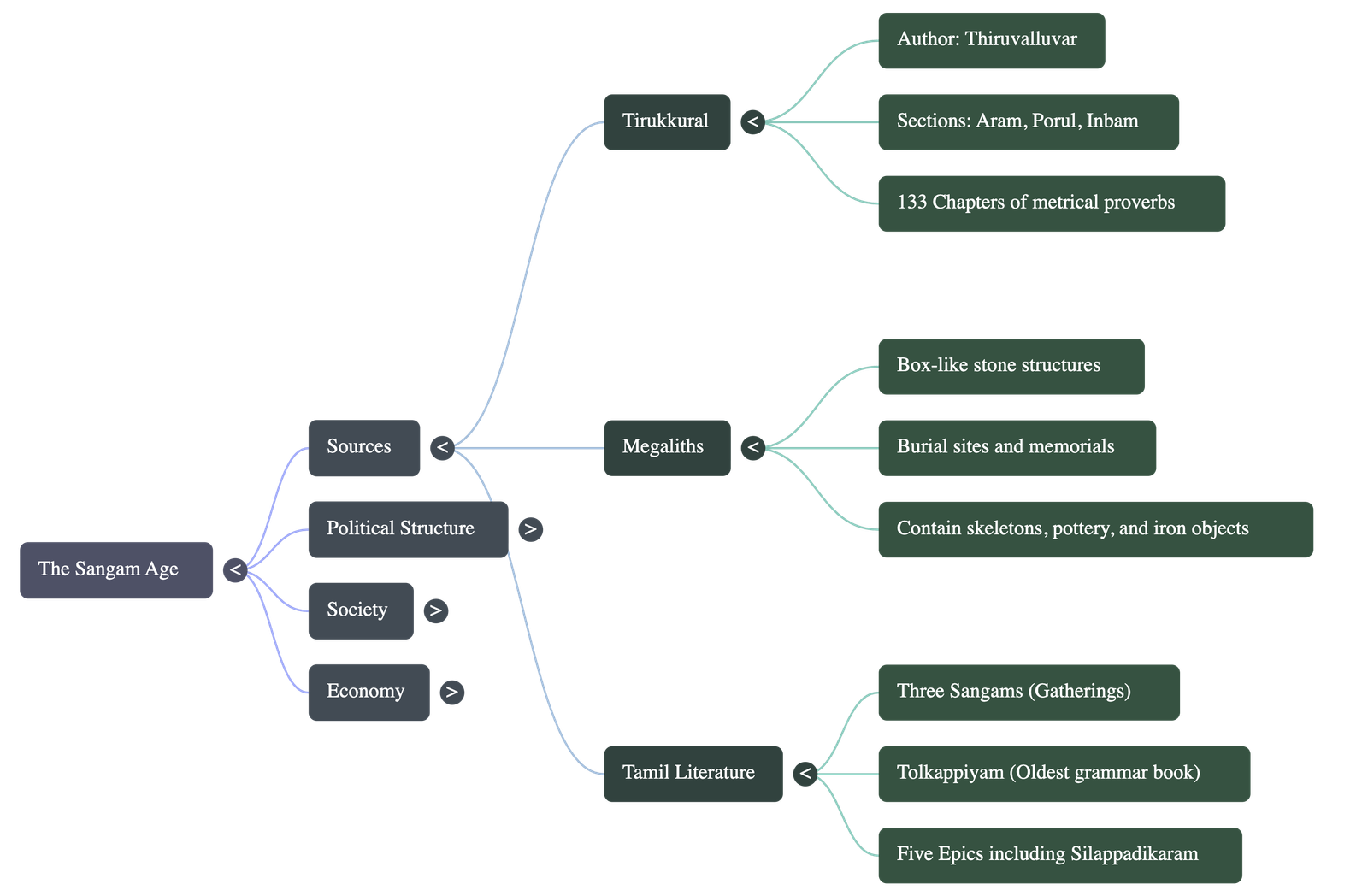
- • The Three Gatherings: The first Sangam works perished; the second yielded the surviving grammar text Tolkappiyam; the third produced a vast body of literature of which only a fraction survives today as the extant Sangam literature.
Sources of Information
- • Tirukkural: Written by Thiruvalluvar, it is a celebrated collection of Tamil couplets divided into 133 chapters covering Aram (righteousness), Porul (wealth), and Inbam/Kamam (pleasure).
- • Epics: Five major epics, including Silappadikaram and Manimekalai, provide vast treasure troves of information on music, dance, administration, and royal grandeur.
- • Megaliths: Box-like stone structures functioning as burial sites or commemorative memorials. They contain skeletons, pottery, and iron objects, shedding light on the religious beliefs and daily life of the people.
The Tamil Kingdoms (Muvendar)
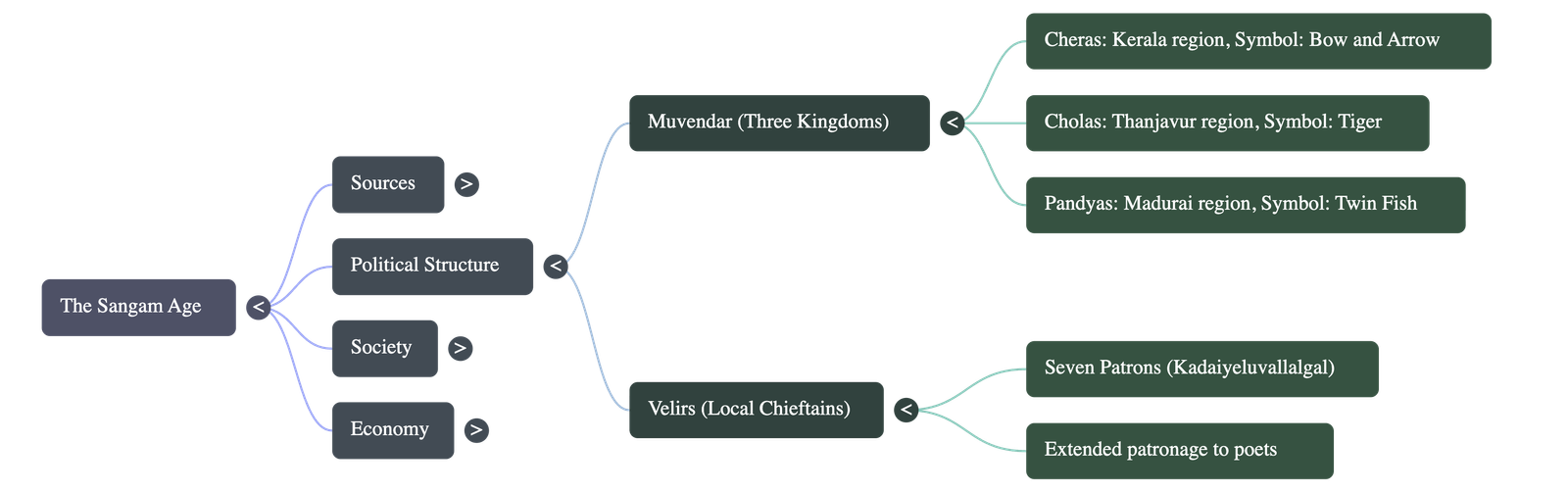
- • Chera Kingdom:
- Covered the present-day state of Kerala.
- Capital: Vanji | Chief Port: Thondi | Symbol: Bow and arrow.
- Notable Ruler: Cheran Senguttuvan, who defeated Himalayan rulers and initiated the Pattini cult (worship of Kannagi as the ideal wife).
- • Chola Kingdom:
- Covered Thanjavur and Tiruchirappalli districts, enriched by the Kaveri river.
- Capital: Uraiyur (later Kaveripoompattinam/Puhar) | Symbol: Tiger.
- Notable Ruler: Karikalan, who developed agriculture, built the Kallanai dam across the Kaveri, and patronized trade and poets.
- • Pandyan Kingdom:
- Covered Madurai, Tirunelveli, and Ramanathapuram.
- Capital: Madurai | Chief Port: Korkai | Symbol: Twin fish.
- Known for patronizing the Tamil Sangam gatherings.
- • Local Chieftains (Velirs): Rulers of smaller territories who patronized poets, donated generously, and helped resolve disputes among the major kings.
Society & Social Classes
- • Social Structure: Division primarily existed between the high born (Brahmanas and patrons) and common men, remaining largely casteless compared to Sanskritic societies.
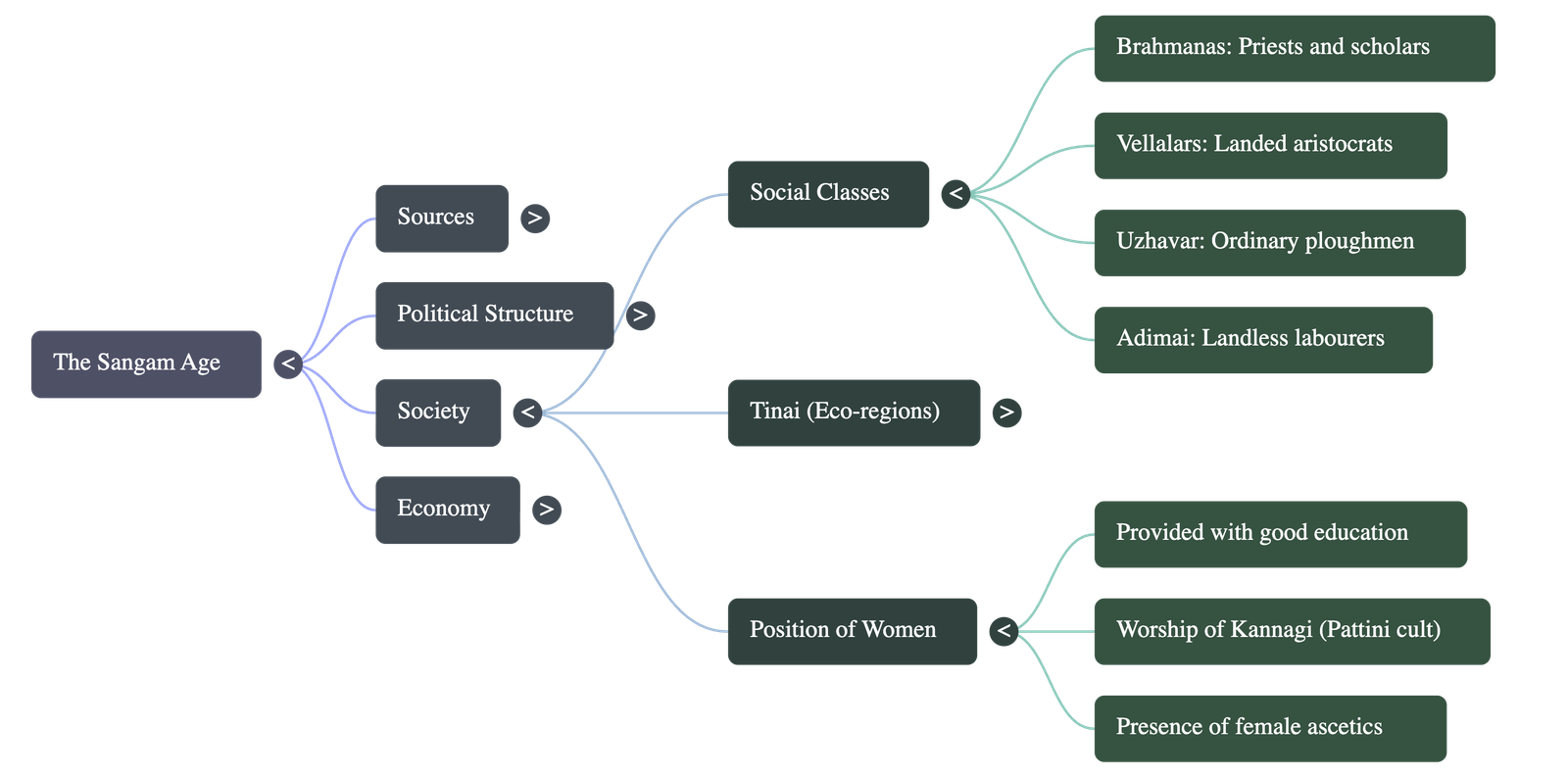
- • Key Classes:
- Brahmanas: Respectable community serving as priests, astrologers, and judicial officers.
- Vellalars: Landed aristocrats holding high office and conducting trade.
- Uzhavar: Ordinary ploughmen.
- Kadasiyar & Adimai: Landless labourers.
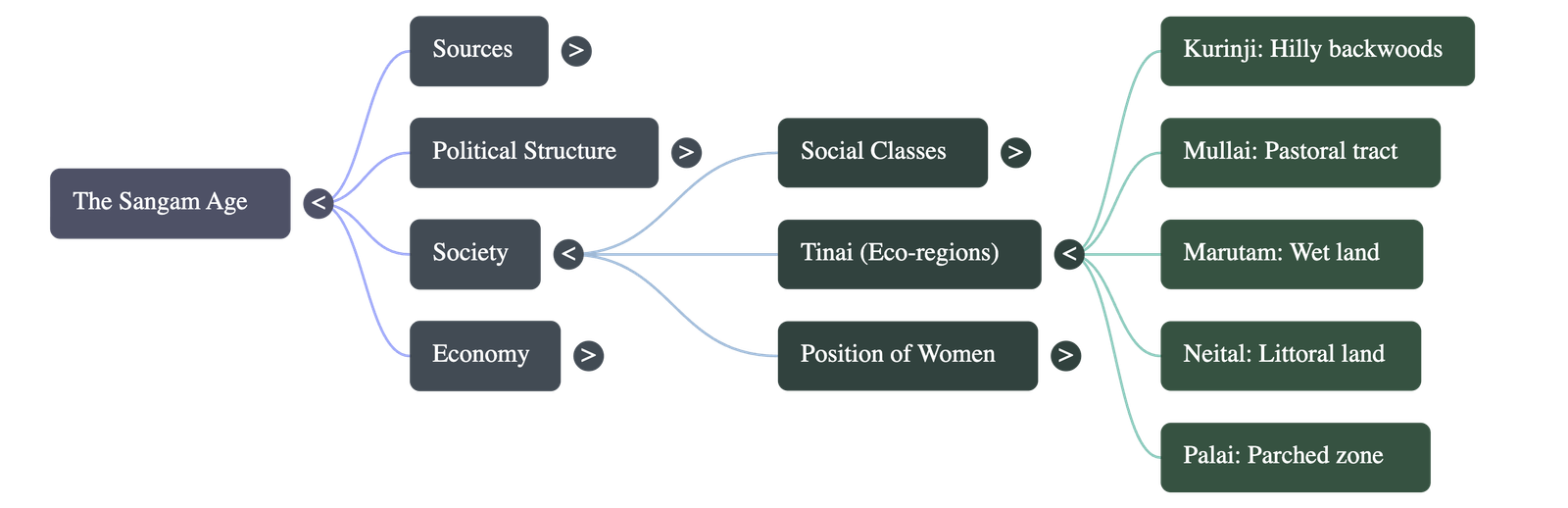
- • Tinai (Land Divisions): Society adapted to five distinct geographical tracts:
- Kurinji: Hilly backwoods (hunters and gatherers).
- Palai: Parched zones (plunder and cattle lifting).
- Mullai: Pastoral tracts (shifting agriculture and animal husbandry).
- Marutam: Wetlands (plough agriculture).
- Neital: Littoral lands (fishing and salt extraction).
Position of Women
- • General Status: Women were not considered equal to men but enjoyed freedom of movement and access to good education.
- • Roles: Most were dutiful housewives, though some became female ascetics in the Buddhist or Jain traditions, and there were also large numbers of courtesans.
- • Religious Elevation: The worship of Kannagi (the Chaste Lady) became a prominent institution across the region.
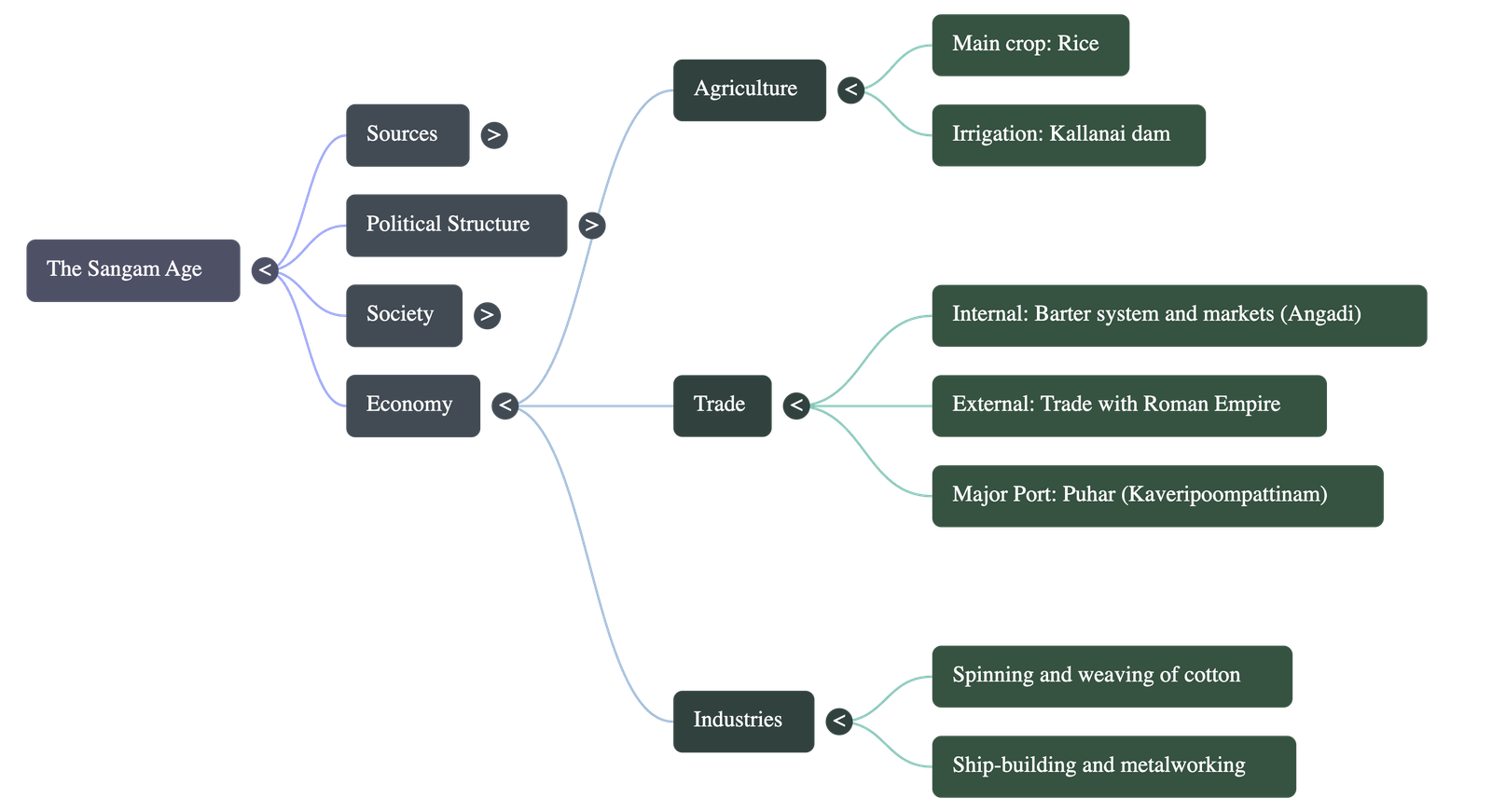
Economy & Occupations
- • Agriculture: The backbone of the simple, self-sufficient economy. Rice was the main crop, along with cotton, sugarcane, pepper, ginger, and spices. The state undertook irrigation projects (canals and embankments).
- • Textiles: Spinning and weaving of cotton and silk attained high perfection. Uraiyur was a major center for the cotton trade.
- • Crafts: Other specialized occupations included ship-building, metalworking, carpentry, tanning, and ivory carving.
Trade & Commerce
- • Internal Trade: Carried out predominantly through barter (e.g., trading salt for paddy). Paddy functioned as the most common medium of exchange. Caravans and hawkers distributed goods locally.
- • Foreign Trade: Thriving export business with foreign countries, especially the Roman Empire. Major ports included Puhar, Saliyur, and Bandar.
- • Exports & Imports: Highly demanded exports included pepper, spices, pearls, ivory, and fine muslin. Primary imports were horses, gold, and glass.
- • Roman Connection: The discovery of Roman gold and silver coins, and mentions in texts like The Periplus of the Red Sea, confirm the massive scale of these international maritime networks.
Do checkout all questions & answers of this chapter.
Quick Navigation:
| | | |
1 / 1
Quick Navigation:
| | | |