Quick Navigation:
| | | |
Civics 4: Elections
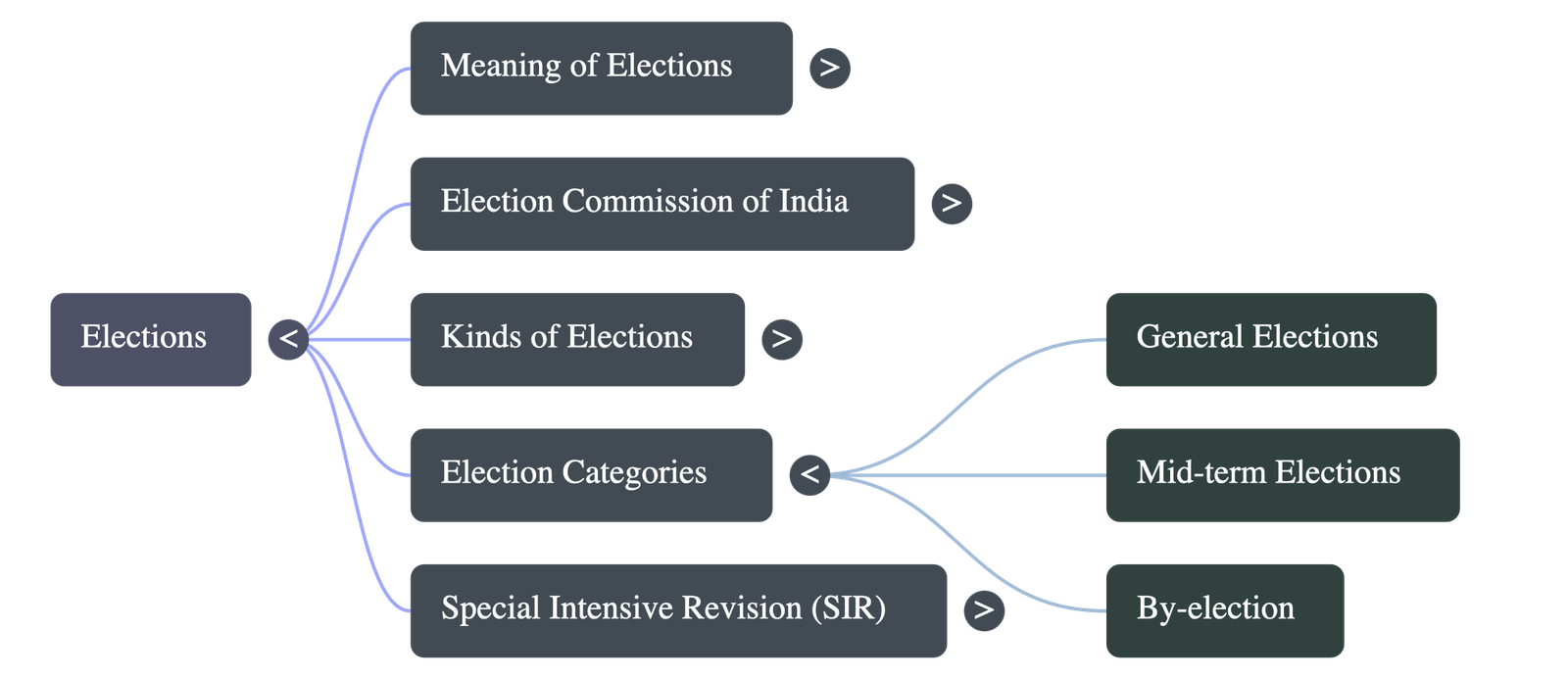
1. Meaning of Elections
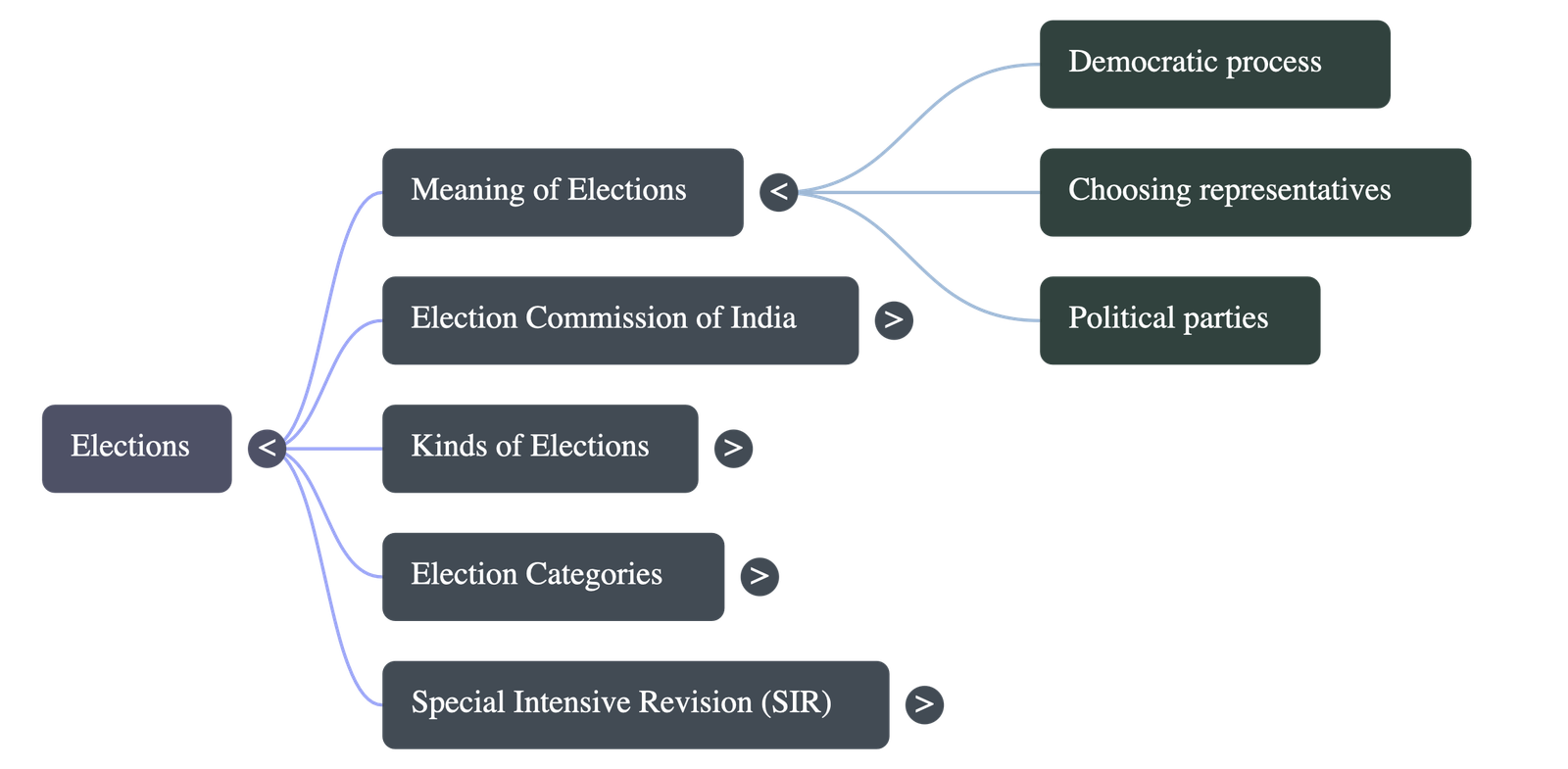
- Role in Democracy: Democracy allows people to have a say in who holds power. Citizens elect representatives, directly or indirectly, to run the country.
- Definition: An election is a procedure where persons are chosen by voting to represent voters in government. It involves a contest between candidates where there are winners and losers.
- Political Parties: Elections are contested on party lines. A political party is a group holding similar views. The party (or combination of parties) that wins the largest number of votes forms the government.
2. The Election Commission of India
To ensure free and fair elections, the Indian Constitution provides for an independent Election Commission under Part XV, Articles 324 to 329.
Composition
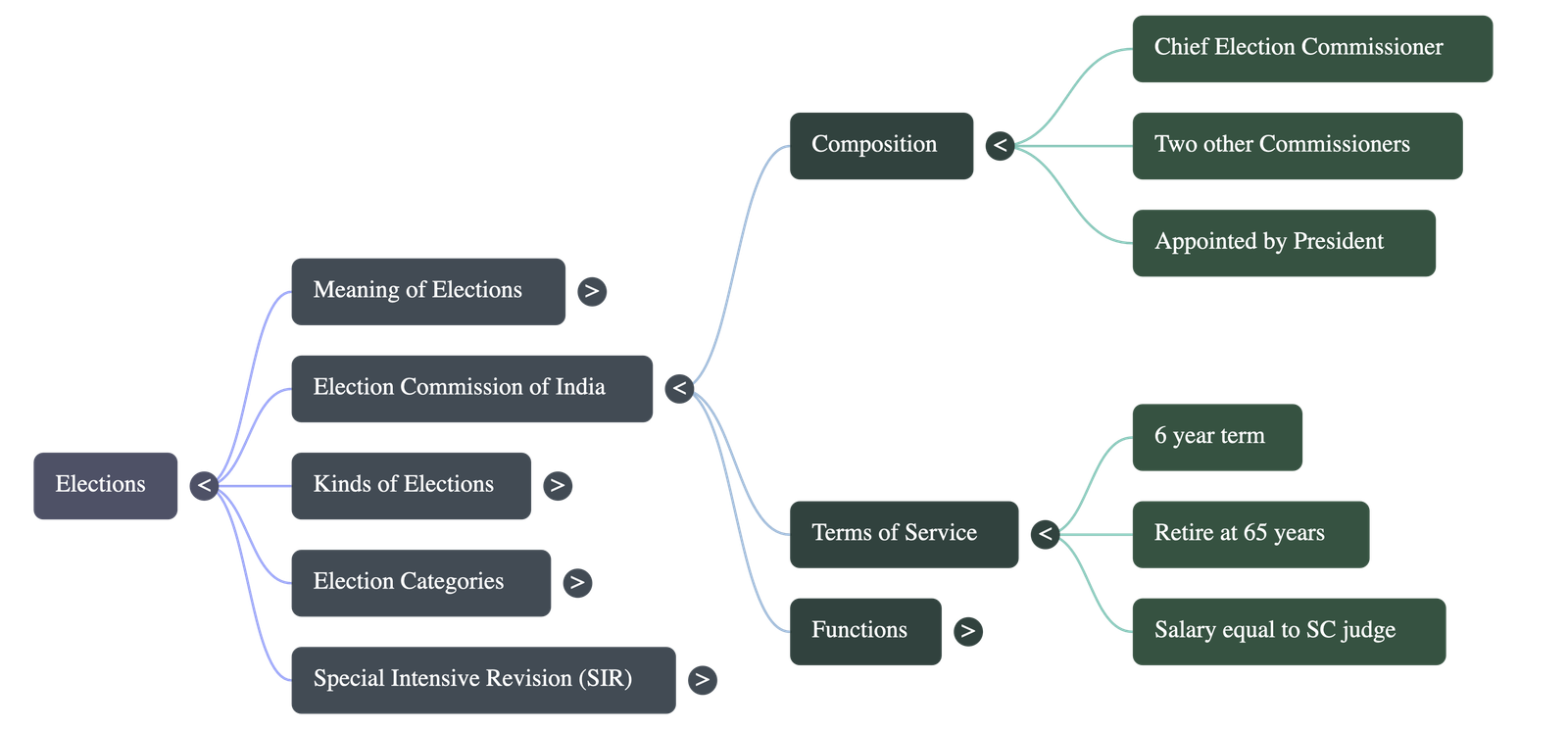
- Initially a single-member body, it was made a multi-member body in 1989.
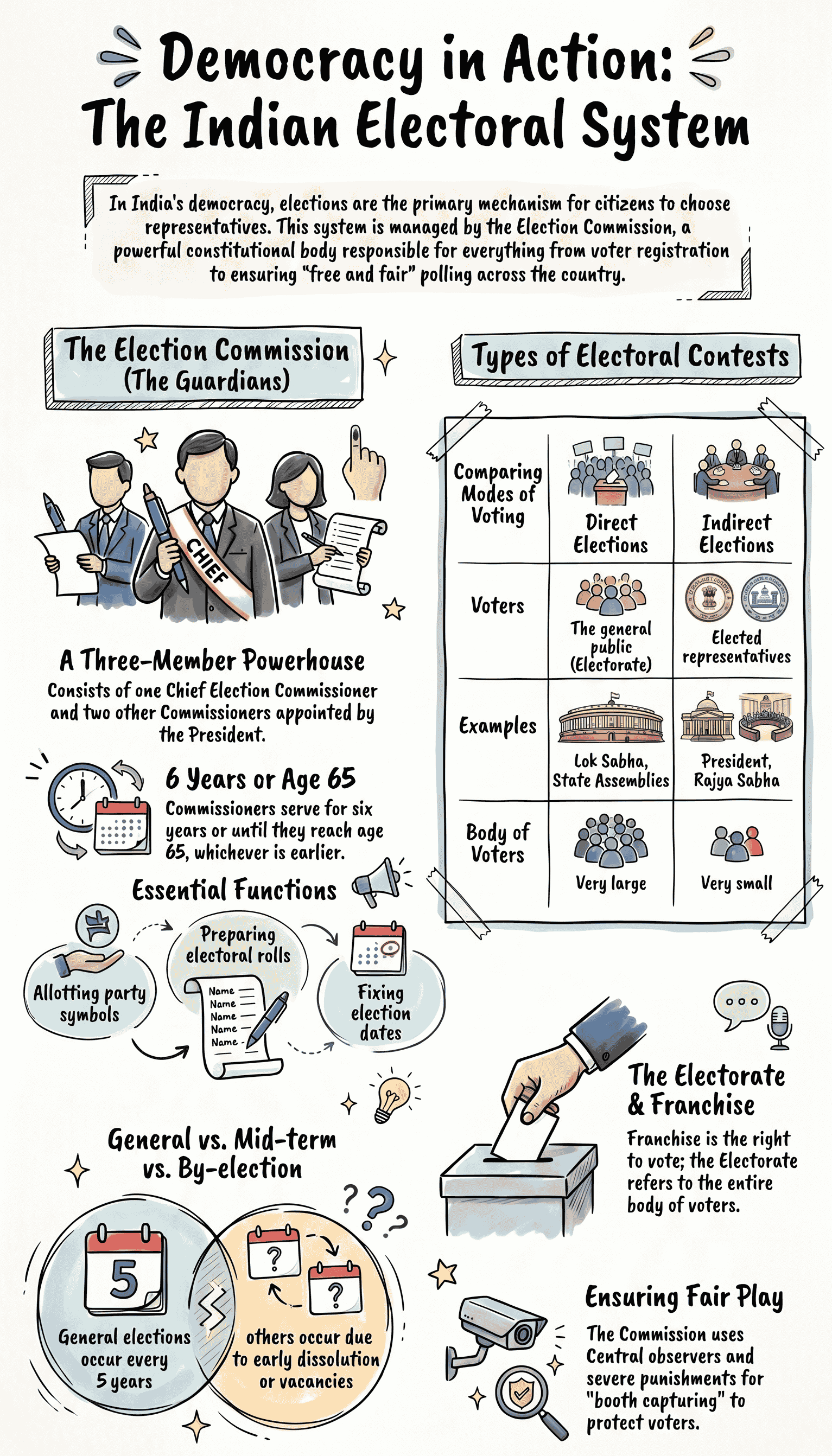
- Currently, it consists of three members: One Chief Election Commissioner (CEC) and two other Election Commissioners.
- They are appointed by the President of India on the recommendation of a Selection Committee (comprising the Prime Minister, Cabinet Ministers, and Leader of the Opposition in the Lok Sabha).
Term of Office and Service Conditions
- Term: Appointed for 6 years. If they attain the age of 65 years before completing their term, they must vacate office.
- Salary: Equal to that of a Supreme Court Judge. They are also entitled to a pension.
- Decision Making: Any difference of opinion between the CEC and other Commissioners is decided by a majority vote.
3. Powers and Functions of the Election Commission
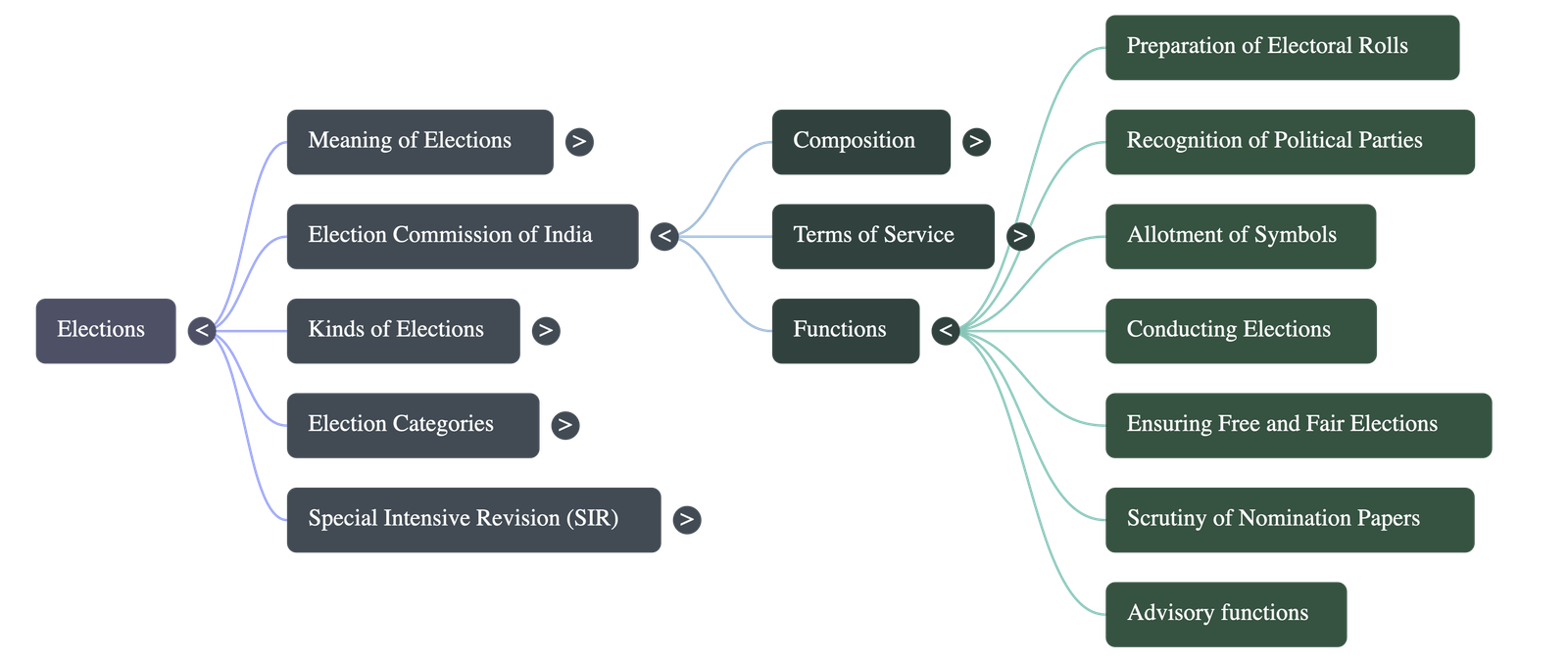
- Preparation of Electoral Rolls: The Commission updates the Voters' List (Electoral Roll), which contains the name, father's name, age, and gender of the voter. It also issues Photo Identity Cards to prevent fraudulent voting.
- Registration of Political Parties: It grants official recognition to political parties.
- Allotment of Symbols: Recognized parties get "reserved symbols." Independent candidates choose from a list of "free symbols."
- Fixing Dates: The Commission sets the exact timetable for elections, even though the Government decides when elections should generally be held.
- Ensuring Free and Fair Elections: It enforces a code of conduct, sends Central Observers to sensitive areas, countermands polling if malpractices occur, and severely punishes booth capturing.
- Appointment of Polling Officers:
- Returning Officer: An officer (like a Deputy Commissioner/Magistrate) in charge of a constituency.
- Presiding Officers: In charge of polling booths and counting centers.
- Scrutiny of Nomination Papers: The Returning Officer checks if candidates have fulfilled requirements like deposits and election agents.
- Scrutiny of Election Expenses: Winning candidates can be disqualified if they violate election spending rules.
- Advisory Functions: Advises the President or Governors on electoral matters and disqualification of members.
4. Kinds of Elections (Based on Voting Method)
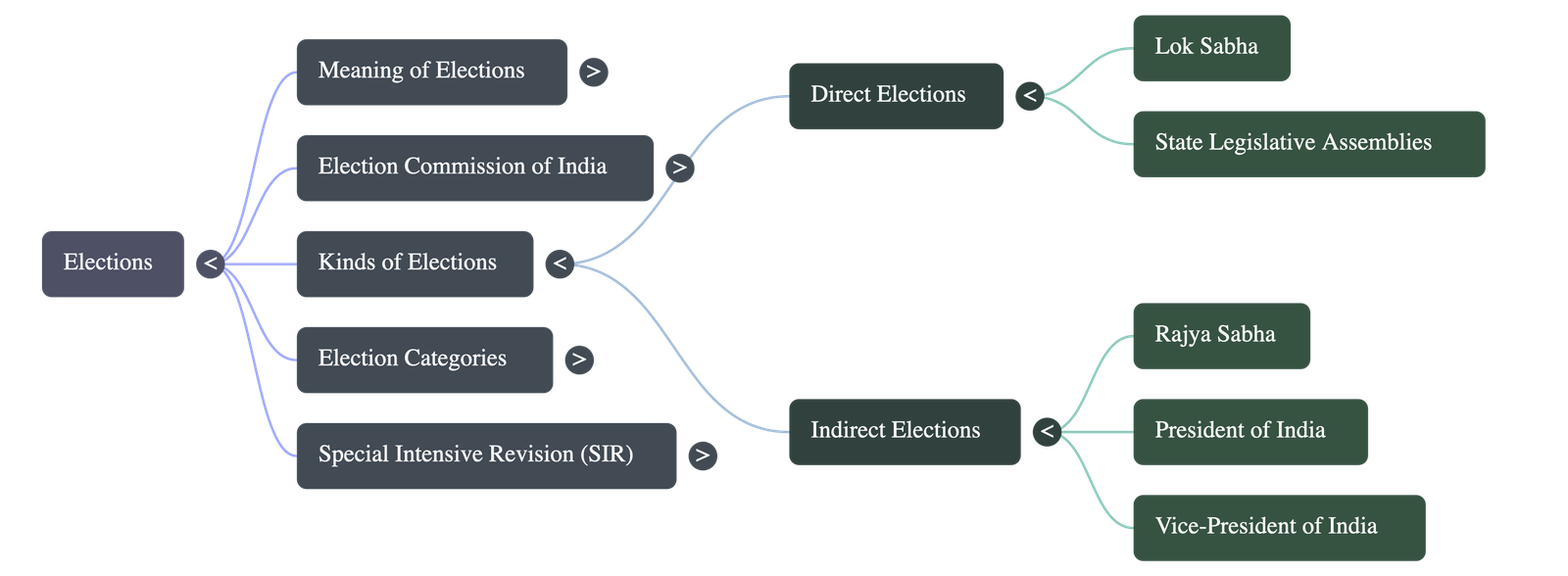
Direct Elections
- People vote directly to elect their representatives.
- Examples: Members of the Lok Sabha (MPs) and State Legislative Assemblies (MLAs).
- Involves a very large body of voters (the electorate). Every adult person holds the right to vote.
Indirect Elections
- People elect representatives indirectly through their already elected representatives.
- Examples: Members of the Rajya Sabha, Members of the State Legislative Councils (Vidhan Parishad), the President of India, and the Vice-President of India.
- Involves a very small body of voters (elected representatives).
5. Types of Elections (Based on Timing)
- General Elections: Elections held to elect members of the Lok Sabha after the expiry of the normal term of five years.
- Mid-term Election: Held when a State Legislative Assembly or the Lok Sabha is dissolved before the completion of its full 5-year term. The newly elected house usually serves a full five-year term.
- By-Election: Held to fill a single vacancy in the legislature caused by the death or resignation of a member. The newly elected member serves only for the unexpired remaining term of the House.
6. Important Concepts to Remember
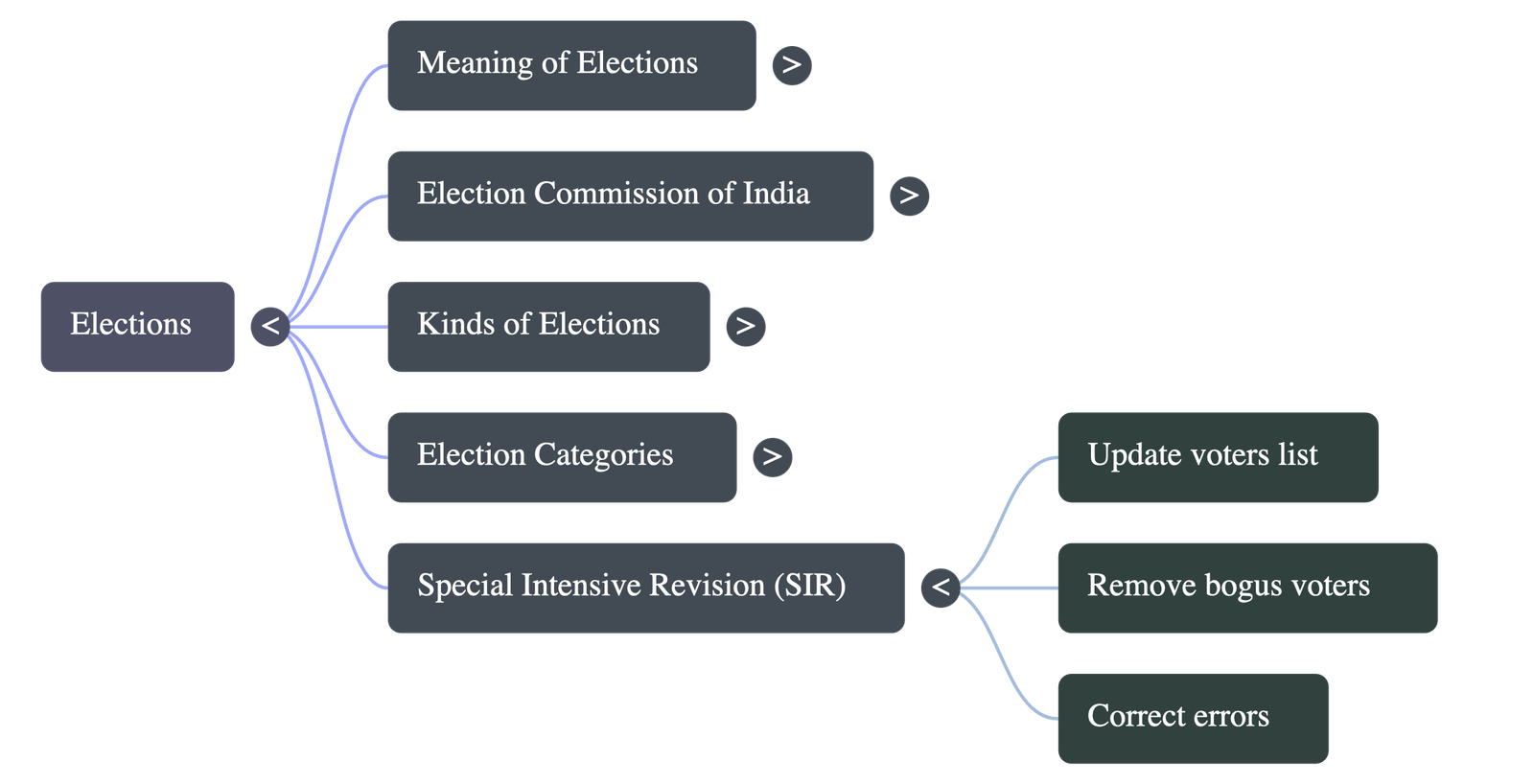
- Special Intensive Revision (SIR): A rigorous, focused, time-bound exercise by the Election Commission to thoroughly verify and update voter lists. It involves door-to-door verification by Booth Level Officers (BLOs) to remove bogus voters, delete deceased persons, correct errors, and add left-out eligible voters to restore public confidence.
- Franchise: The right to vote.
- Proportionate Representation: A system where parties gain seats in proportion to the number of votes cast for them. (Used in the election of the President of India).
Do checkout all questions & answers of this chapter.
Quick Navigation:
| | | |
1 / 1
Quick Navigation:
| | | |