Quick Navigation:
| | | |
Jainism and Buddhism
1. Background: The 6th Century BCE
- Socio-Economic Changes: The expansion of Aryan settlements and the widespread use of iron tools led to forest clearing and a surplus in agricultural production.
- Emergence of Janapadas: Agricultural surplus allowed people to lead settled lives, creating towns, specialized crafts, and large kingdoms known as mahajanapadas.
- Religious Reform: This era witnessed the emergence of notable thinkers globally (like Zoroaster in Persia and Confucius in China). In India, it was a time when orthodox religious beliefs and practices were heavily challenged, paving the way for Jainism and Buddhism.
2. Important Literary Sources
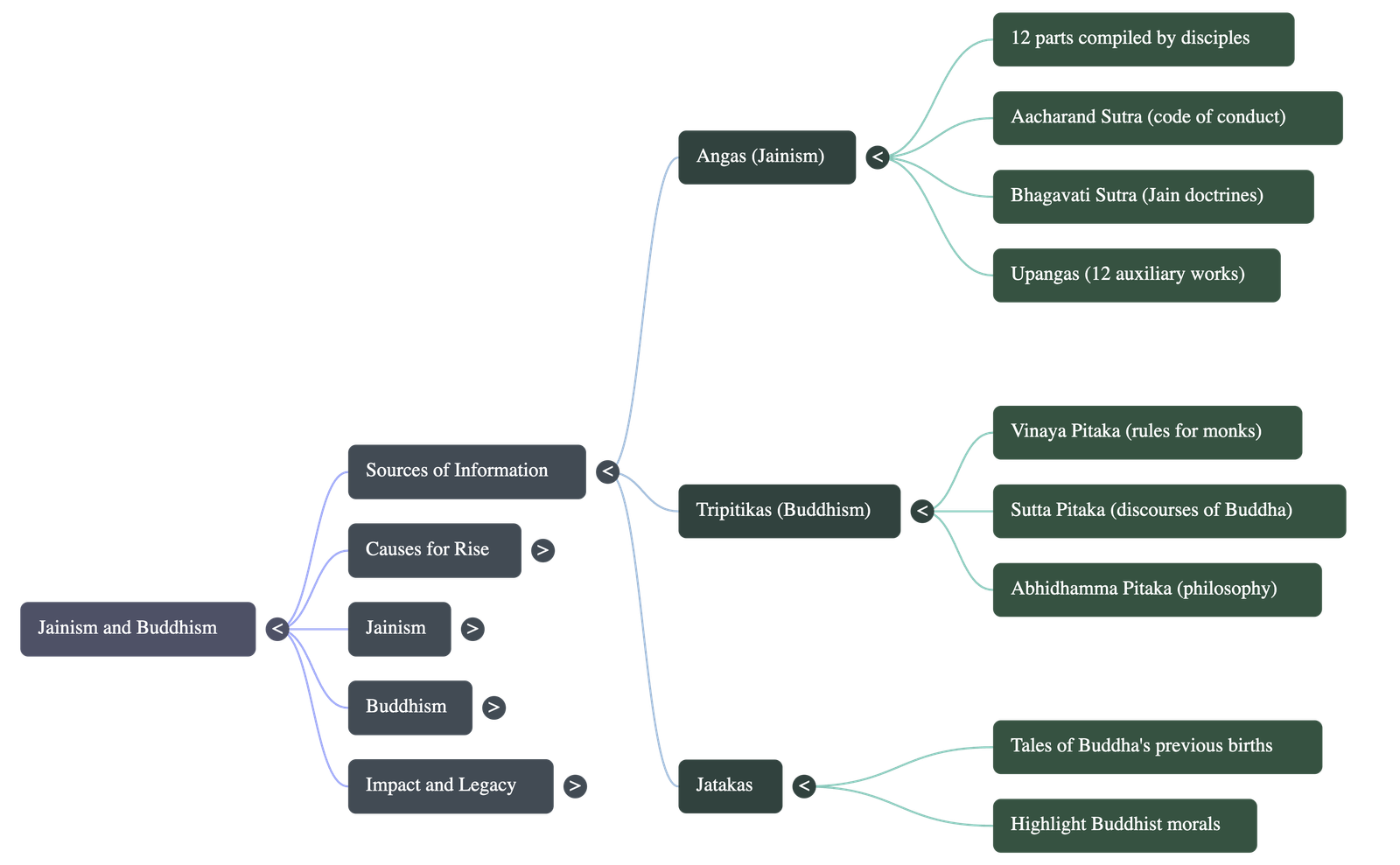
- Angas (Jainism): The foundational teachings of Lord Mahavira compiled by his disciples into 12 parts collectively called Dwadashangi. They include the Acharang Sutra (code of conduct for monks) and the Bhagavati Sutra (Jain doctrines). They were orally transmitted for a long time before being compiled in the Ardhmagadhi Prakrit language.
- Tripitakas (Buddhism): Known as the "Three Baskets", these are the most important Buddhist literary works, written in Pali:
- Vinaya Pitaka: Contains rules and regulations for monks and nuns (bhikkhus and bhikkhunis).
- Sutta Pitaka: Consists of discourses by Buddha and his disciples; includes the Dhammapada.
- Abhidhamma Pitaka: Deals with deep Buddhist philosophy and the workings of the mind.
- Jatakas (Buddhism): A collection of tales describing the previous births of the Buddha in both human and animal forms. They provide significant insight into the socio-economic and political conditions of the time.
3. Causes for the Rise of Jainism and Buddhism
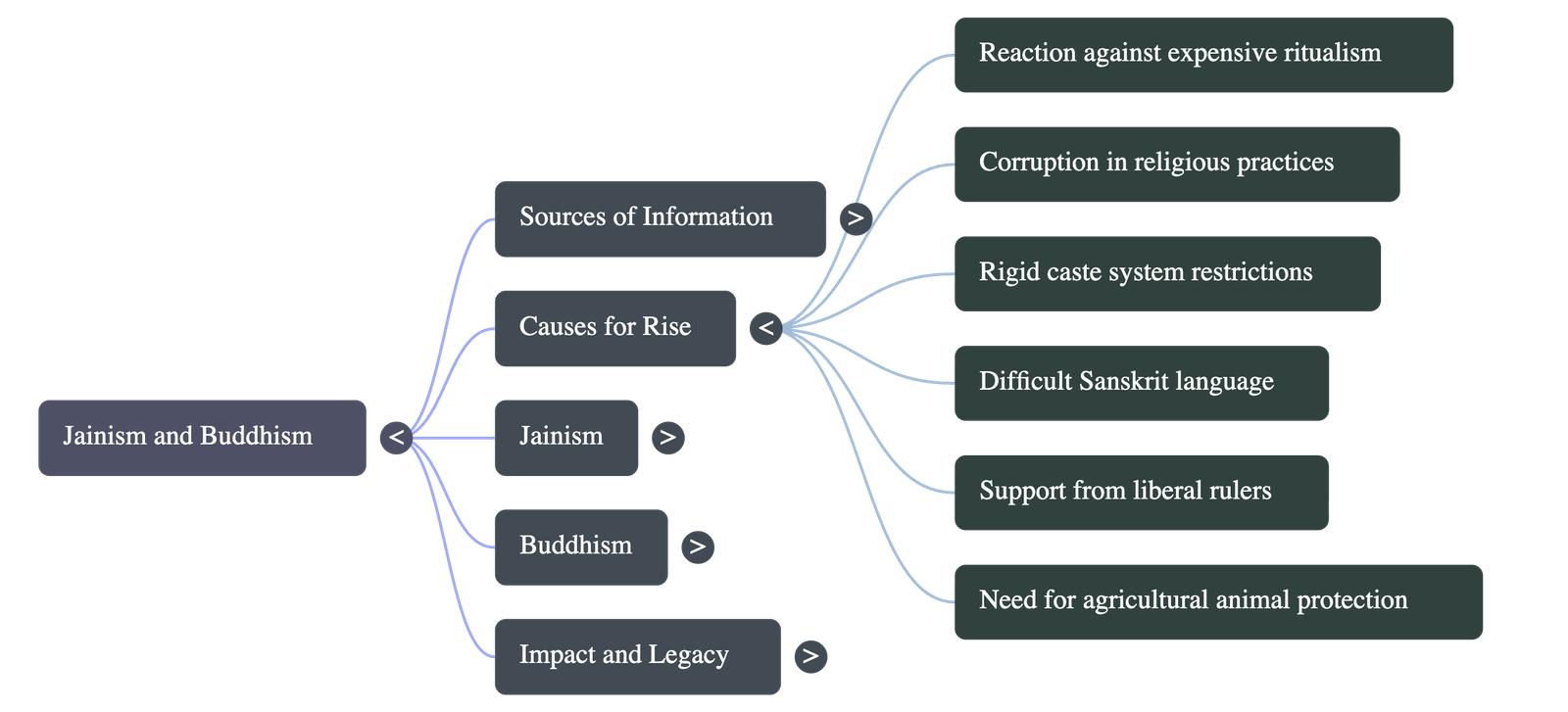
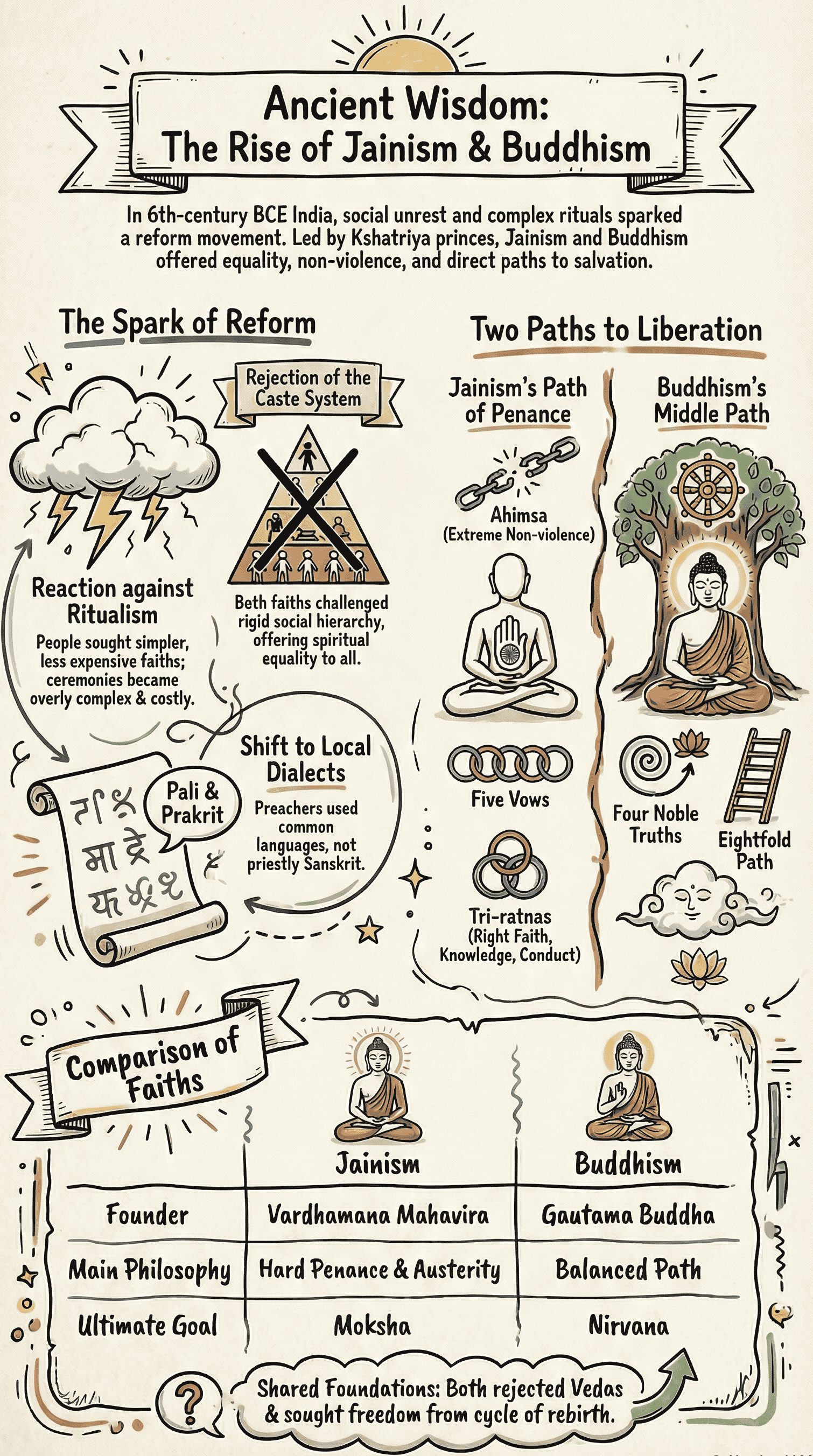
- Reaction against Ritualism: Expensive and elaborate religious ceremonies became unaffordable for ordinary people, leading to a demand for simpler faiths.
- Corruption in Religion: Priests encouraged costly rituals to increase their wealth. Kshatriya rulers and common people protested against priestly dominance.
- Rigid Caste System: The division of society into Brahmans, Kshatriyas, Vaishyas, and Shudras became overly rigid, restricting social mobility, intermingling, and dining.
- Difficult Language: Vedic literature and mantras were composed in Sanskrit, a sacred language largely incomprehensible to the common masses.
- Political Patronage: Liberal rulers of Magadha, such as Bimbisara and Ajatashatru, condemned certain social evils and offered patronage to both new religions.
- Agricultural Economy: The use of animal-drawn ploughs made cattle essential. Both religions preached non-violence, aligning with the farmers' need to protect animals from ritual sacrifice.
4. Jainism
Vardhamana Mahavira
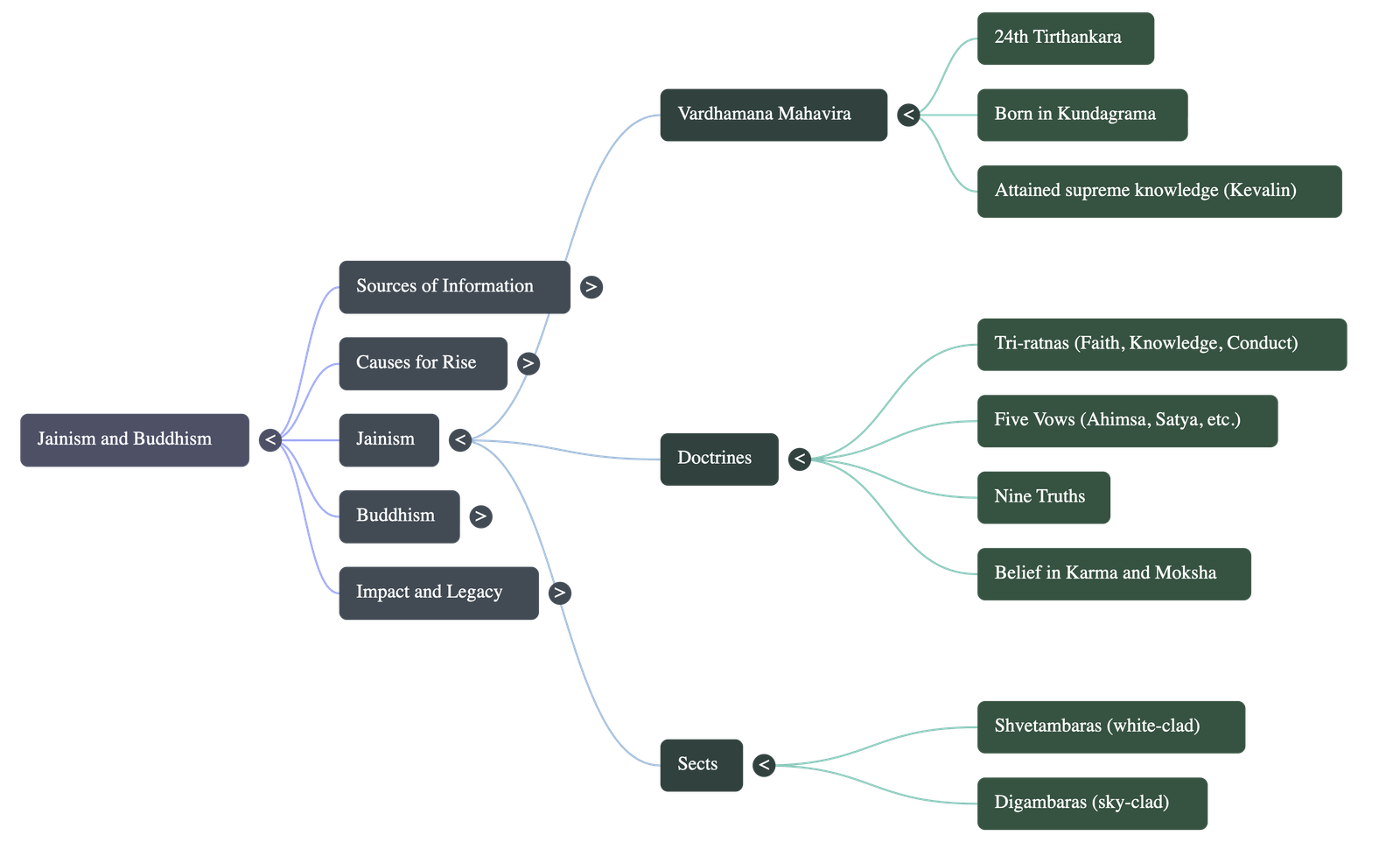
- He was the 24th and final Tirthankara, credited as the founder of popular Jainism.
- Born in Kundagrama (Bihar) into a Kshatriya clan. At age 30, he renounced the world and practiced severe penance for 12 years.
- He obtained supreme knowledge, conquering his desires to become a Jina. He preached for the rest of his life, passing away at age 72 at Pavapuri.
Main Teachings and Doctrines
- The Five Vows: Ahimsa (non-violence), Achaurya/Asteya (not stealing), Satya (not telling a lie), Aparigraha (not possessing property), and Brahmacharya (practising chastity - added by Mahavira).
- Nine Truths: Essential knowledge required for salvation, dealing with living and non-living things, good deeds, sin, karma, and bondage.
- Tri-ratnas (Three Jewels): Right faith, Right knowledge, and Right conduct. Following these leads to Moksha (salvation).
- Beliefs: Accepted the Karma theory, stressed ultimate equality among all beings, believed in an eternal soul, and emphasized severe penance (including death by starvation, called santhara). Rejected the authority of the Vedas.
Sects and Spread
- Sects: Divided into Shvetambaras (white-clad, followed Sthulabhadra, rejected extreme austerity) and Digambaras (sky-clad, followed Bhadrabahu, orthodox followers of Mahavira).
- Spread: Spread easily due to the use of common languages (Prakrit) and royal patronage (e.g., Chandragupta Maurya). It had a significant impact on local literature, eradicated caste barriers in its circles, and contributed grand architecture (e.g., Dilwara Temples).
- Decline: Shrank due to its rigid austerity, lack of missionary expansion abroad, waning royal patronage, and the later revival of Hinduism.
5. Buddhism
Gautama Buddha
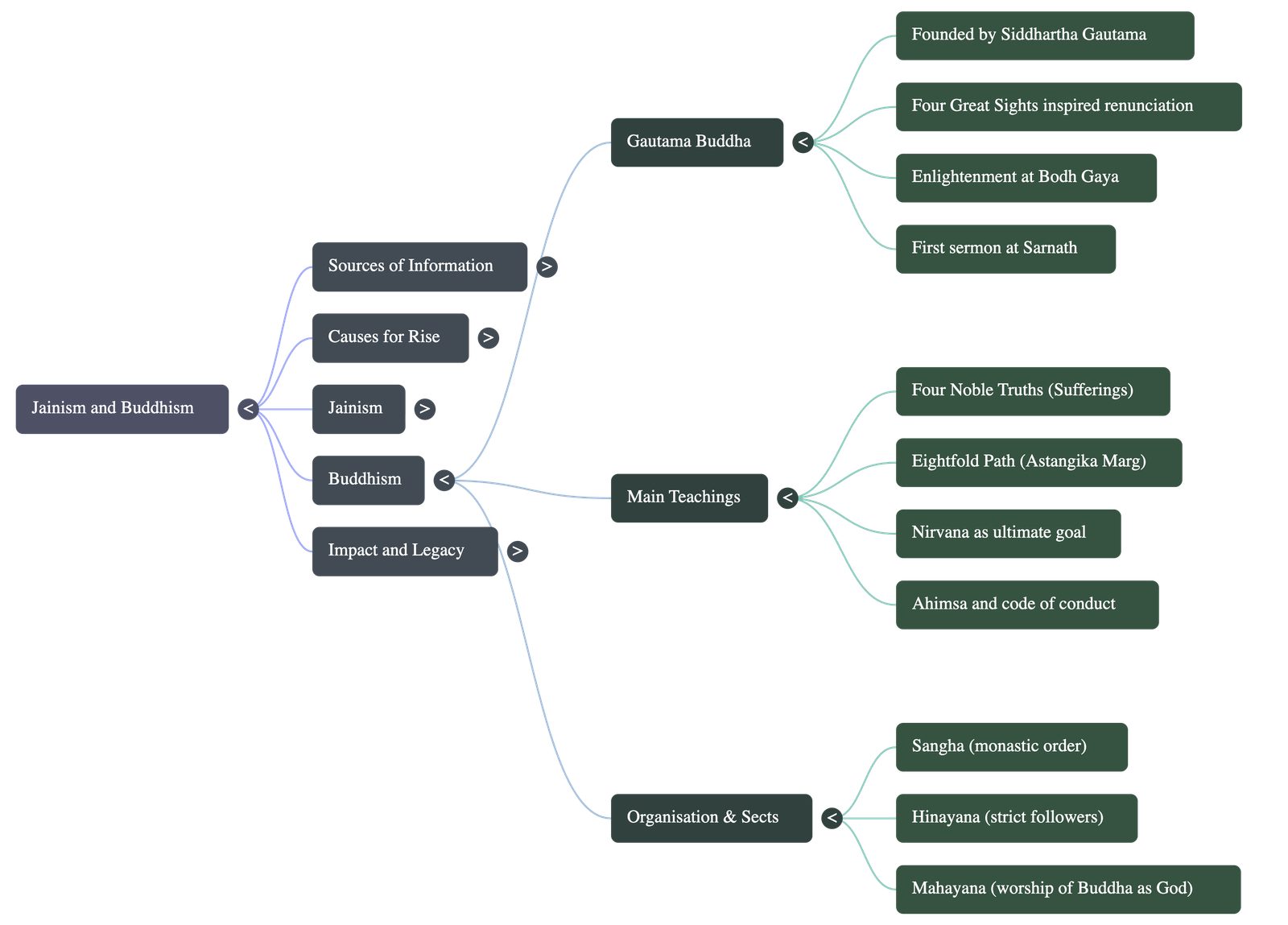
- Born as Siddharth in 563 BCE at Lumbini in Nepal to a Kshatriya royal family.
- The Four Great Sights: Encountering an old man, a sick man, a dead body, and a peaceful ascetic prompted him to seek the truth about human suffering.
- The Great Renunciation (Mahabhiskramana): Left his family to find salvation. He attained enlightenment at Bodh Gaya under a peepal tree at age 35, becoming the Buddha.
- Dharmachakrapravartana: Delivered his first sermon at Deer Park in Sarnath, initiating the "turning of the wheel of sacred law". He attained mahaparinirvana at Kushinagar at age 80.
Doctrines and Teachings
- Four Noble Truths: (1) The world is full of suffering, (2) Suffering has a cause (Desire), (3) Suffering can be stopped if desire is stopped, (4) The path to stopping it is the Eightfold Path.
- The Eightfold Path (Middle Path): Right action, Right thought, Right belief, Right living, Right speech, Right effort, Right recollection, and Right meditation.
- Core Tenets: Emphasized Nirvana (liberation from the cycle of birth and death), the law of Karma, high morality, universal brotherhood, and Ahimsa. Strongly opposed empty rituals and sacrifices.
Organisation, Sects, and Impact
- The Sangha: A powerful monastic order of monks (Bhikshus) and nuns (Bhikshunis) governed by strict discipline and ten commandments.
- Sects: Split during the 4th Buddhist Council into Hinayana (original teachings, no idol worship, Pali language) and Mahayana (worshiped Buddha as an incarnation of God, introduced Bodhisattvas, Sanskrit language).
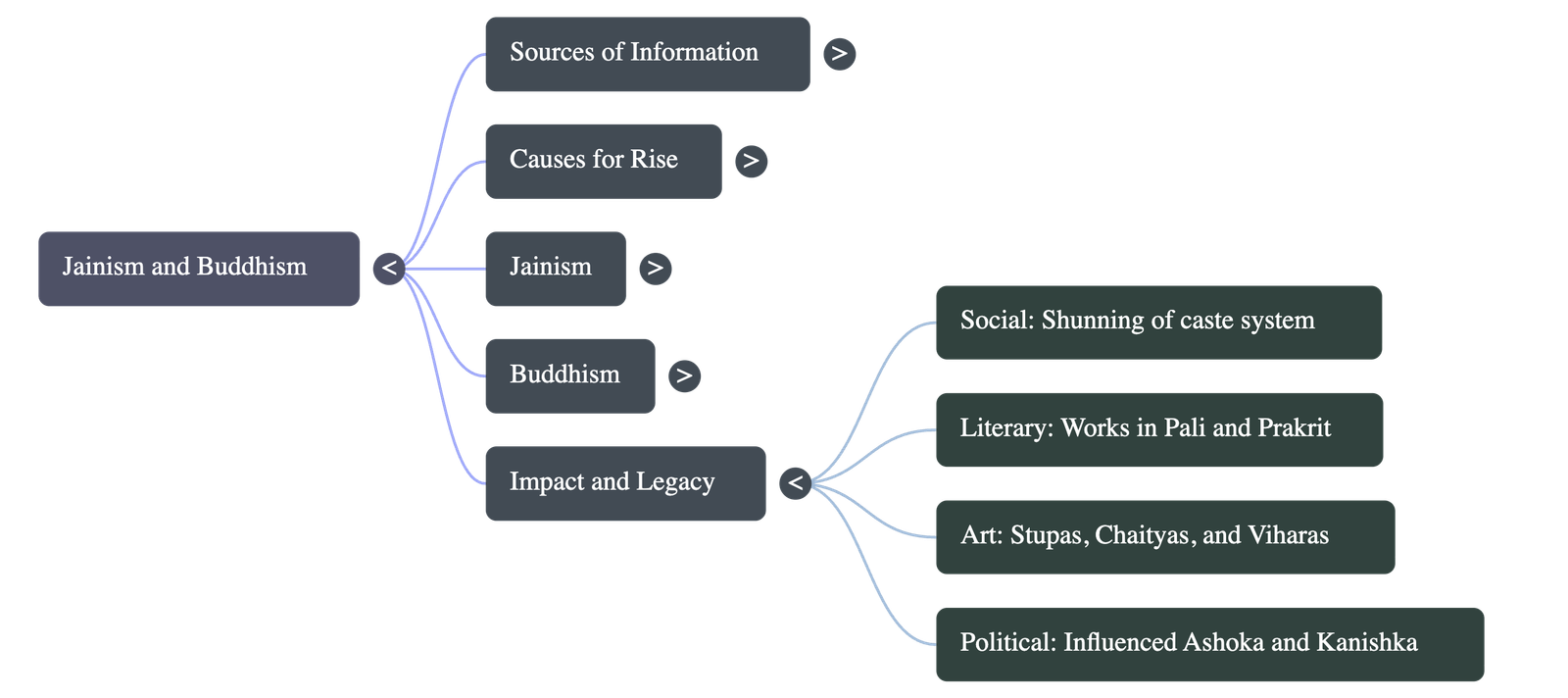
- Impact: Institutionalized Ahimsa, fostered immense cultural and educational exchanges globally (especially in Asia), revolutionized art and architecture (Stupas, Chaityas, Viharas), and produced vast literature in Pali.
- Decline: Waned in India due to internal sectarian splits, shift to Sanskrit, corruption within the wealthy Sanghas, a revitalized Hinduism, foreign invasions (which destroyed monasteries), and the end of royal patronage.
6. Jainism and Buddhism Compared
- Similarities: Both founders were Kshatriyas, rejected the authority of the Vedas, believed in the attainment of salvation (moksha/nirvana) from the cycle of rebirth, made non-violence their central creed, and required monks/nuns to lead a life of chastity and renunciation.
- Dissimilarities:
- Buddhism was a completely new religion in the 6th century BCE, whereas Jainism had been founded much earlier (Mahavira was the last of 24 Tirthankaras).
- Buddhism advocated a "middle path", whereas Jainism believed in extreme, hard penance.
- Buddhism spread far and wide beyond India, while Jainism remained largely confined within Indian borders.
Do checkout all questions & answers of this chapter.
Quick Navigation:
| | | |
1 / 1
Quick Navigation:
| | | |