Quick Navigation:
| | | |
The Mauryan Empire
Overview
- Founded in the 4th century BCE by Chandragupta Maurya, who laid the foundation for a vast and powerful empire.
- The empire unified a large part of the Indian subcontinent under a centralized government after overthrowing the Nanda dynasty and Greek Satraps.
- Notable successors include Bindusara and his son, Ashoka, whose reign is considered one of the brightest periods in Indian history.
Historical Sources
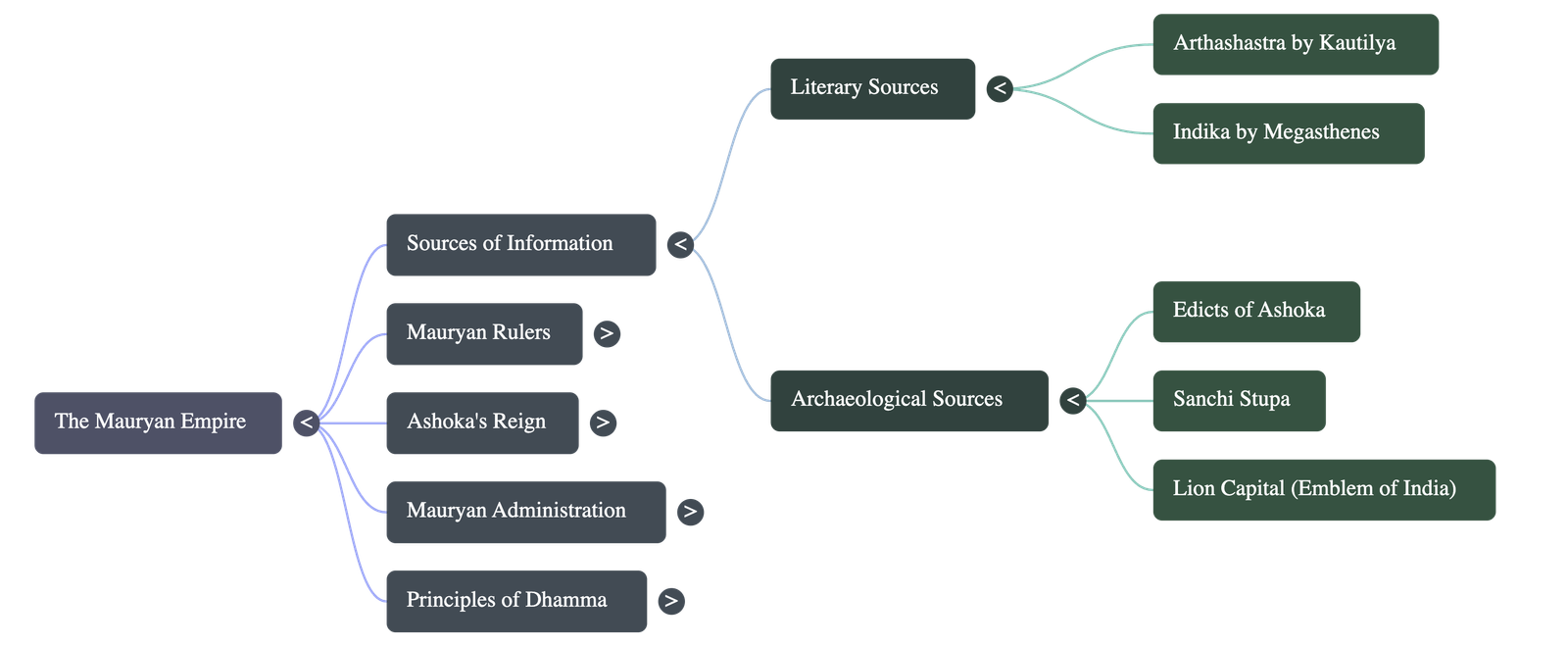
Literary Sources
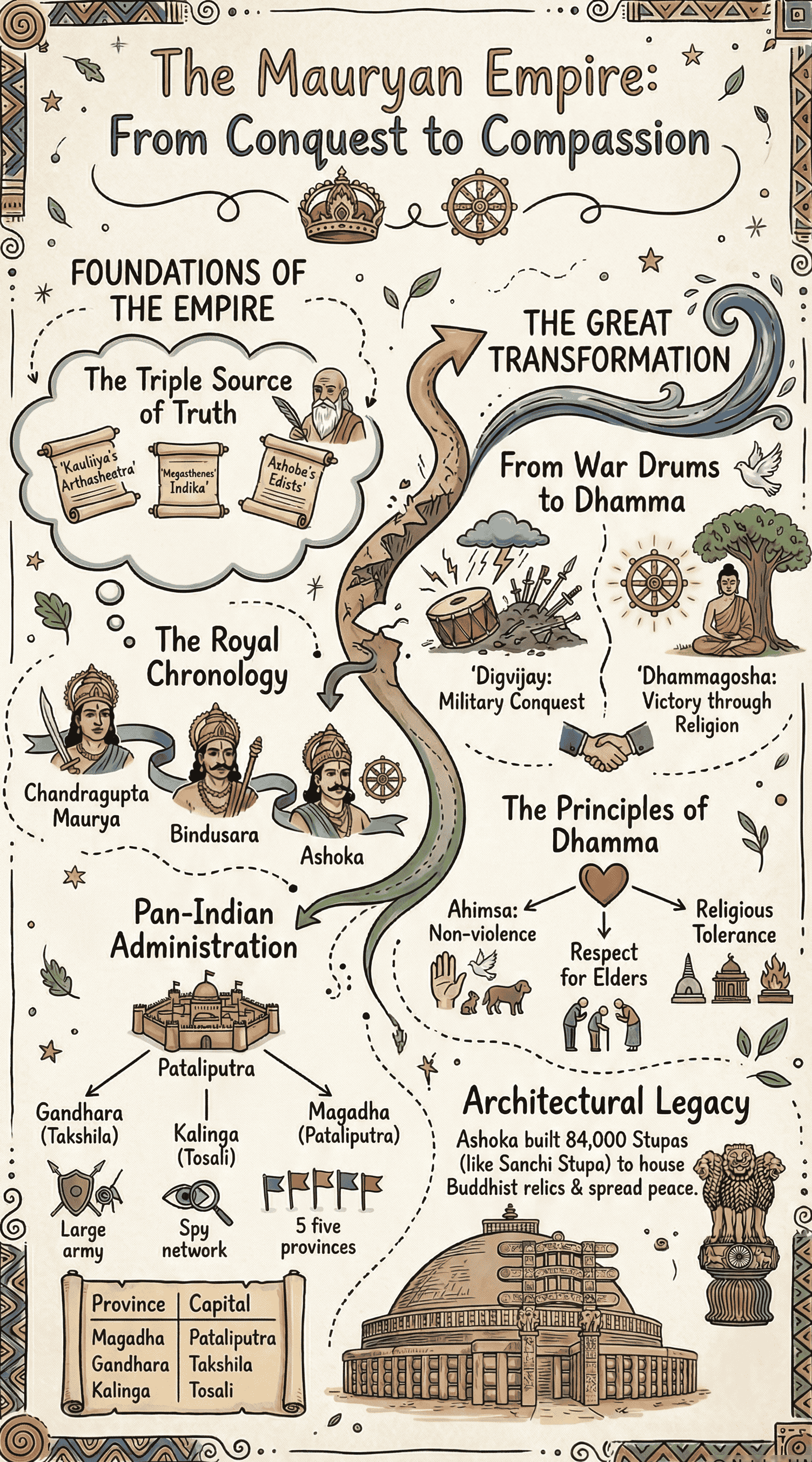
- Arthashastra: Written in Sanskrit by Chanakya (also known as Kautilya or Vishnugupta), the Prime Minister of Chandragupta. It is a comprehensive manual on politics, diplomacy, and administration.
- Indika: Written by Megasthenes, the Greek ambassador sent by Seleucus Nicator. Though the original is lost, fragments surviving in other Greek writings provide rich impressions of Mauryan court life and administration.
Archaeological Sources
- Ashokan Edicts: Decrees inscribed on rocks and pillars across the country. They are the oldest, best-preserved records of India. Primarily written in the Brahmi script (with a few in Kharosthi), they provide deep insights into Ashoka's ideals, particularly his policies of non-violence and animal protection.
- Sanchi Stupa: A semi-spherical unburnt brick and stone structure near Bhopal, built by Ashoka to preserve Buddha's relics. It features four heavily carved gateways depicting Buddhist tales. The famous Lion Capital atop Ashokan pillars was officially adopted as India's National Emblem in 1950.
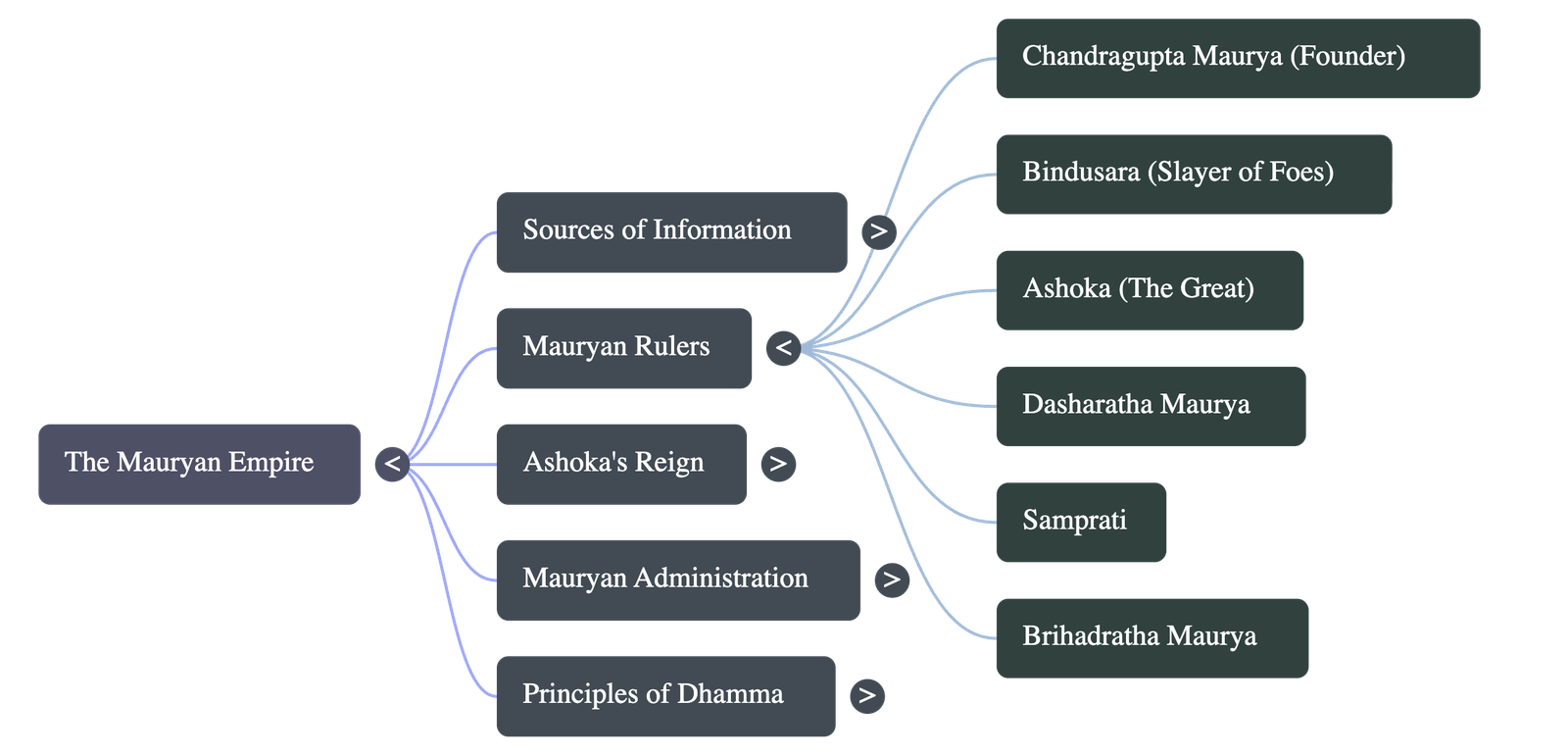
The Mauryan Rulers
- Chandragupta Maurya: Founded the empire with the help of Chanakya. Defeated the Nandas and later the Greek commander Seleucus (305 BCE), gaining territories like Kabul, Kandahar, Herat, and Baluchistan. His empire extended from the North-West to Mysore, and from Bengal to Saurashtra. He renounced the world after ruling for 24 years.
- Bindusara: Known as the 'slayer of foes' by Greeks. Expanded the empire into South India and successfully suppressed a revolt in Takshila with the help of his son, Ashoka.
- Ashoka: Ascended the throne with titles like 'Devanamapriya' (Beloved of the Gods) and 'Priyadarshi'. His reign was entirely transformed by the Kalinga War.
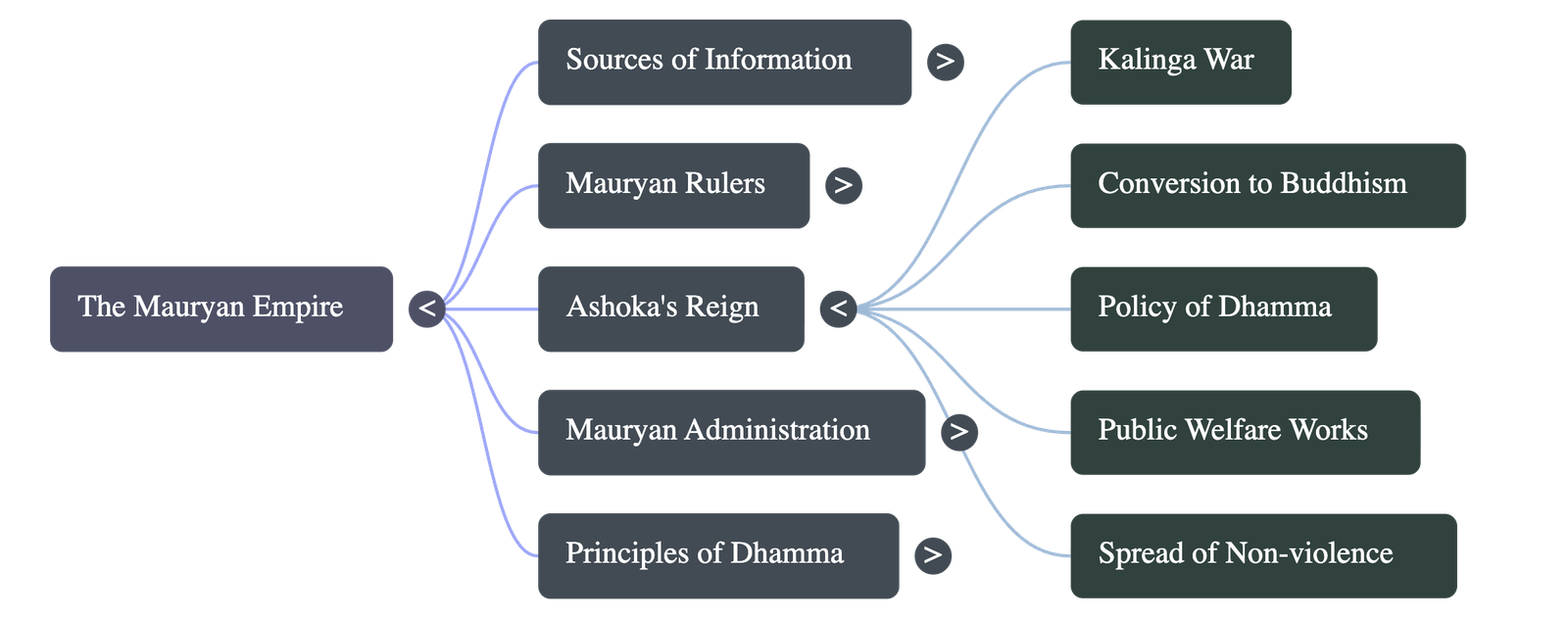
Ashoka After the Kalinga War
- Transformation: The immense death and destruction of Kalinga deeply moved Ashoka. He completely abandoned 'conquest by force' (bherigosha) in favor of the 'policy of religion/morality' (Dhammagosha).
- Lifestyle Changes: He gave up hunting, eating meat, and a life of luxury.
- Economic & Welfare Actions: Prisoners of war were employed in agriculture, boosting economic prosperity. He ordered the construction of 84,000 Stupas and donated generously to Buddhist viharas.
- Spread of Buddhism: Sent missionaries globally, including his son Mahindra and daughter Sanghamitra to Sri Lanka. Built pillars and edicts to spread Buddhist teachings.
- Military Impact: The absolute abandonment of war ultimately led to a decline in military preparedness and efficiency.
Mauryan Administration
The administration had a true Pan-Indian character, uniting vast territories, ending the era of small states, establishing foreign trade links, and bringing robust economic prosperity.
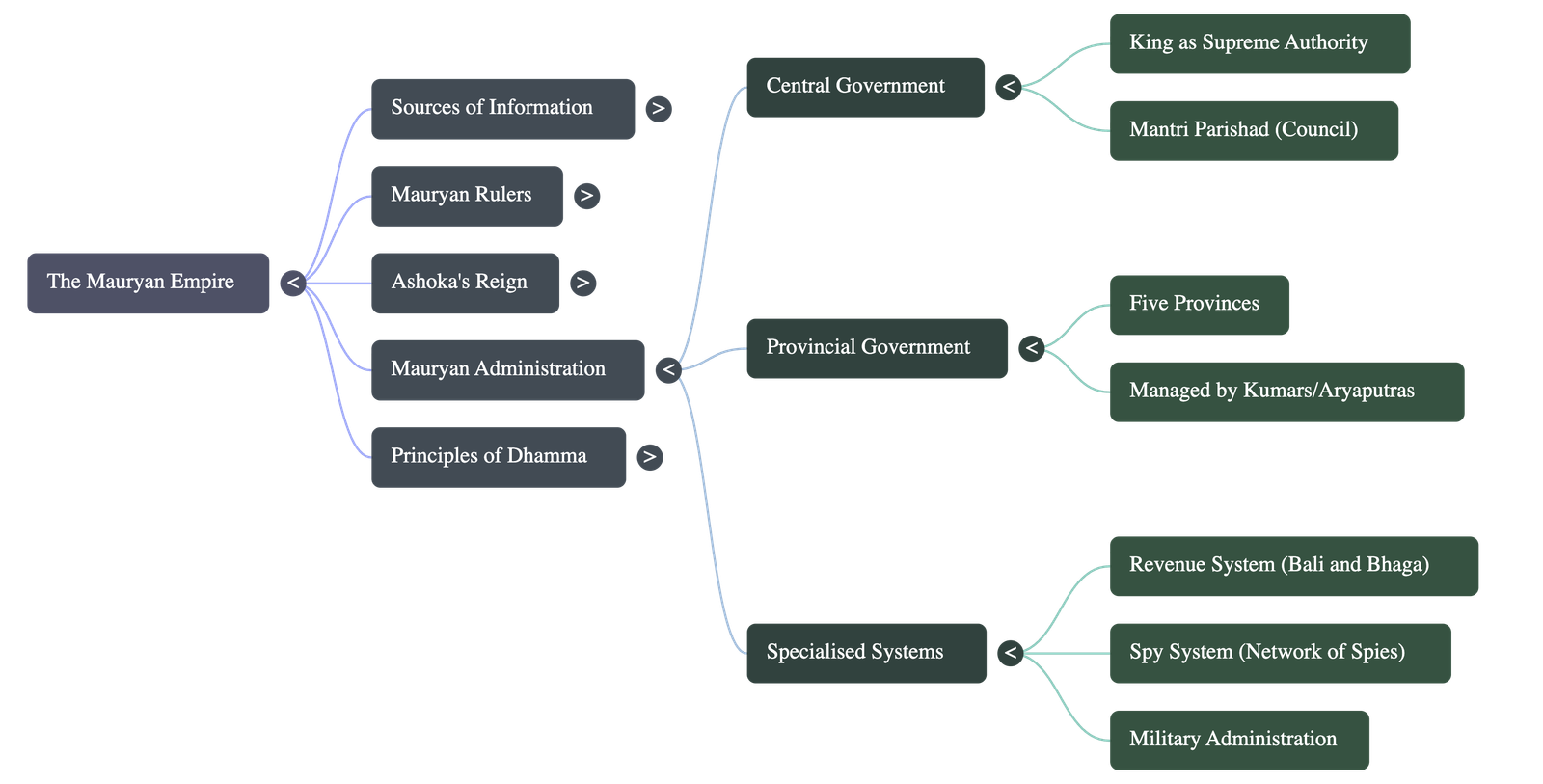
Civil Administration
- Central Government: The King was the supreme authority and supreme judge, ruling via a paternal despotism (Ashoka declared "all men are my children"). He was assisted by a Council of Ministers (Mantri Parishad), which included the Prime Minister, Purohit (chief priest), Senapati (war/peace advisor), Sannidhata (head treasurer), and Samaharta (taxation expert).
- Provincial Government: Divided into five provinces with their respective capitals: Magadha (Pataliputra), Gandhara (Takshila), Avanti (Ujjain), Southern Province (Swarnagiri), and Kalinga (Tosali). Provinces were headed by royal princes (Kumar or Aryaputra) assisted by Governors (Mahamatras).
- District & City Administration: Provinces were divided into districts (Janapadas) administered by Pradeshika, Rajuka, and Yukta. Important cities had their own administration; for example, Pataliputra was managed by a committee of 30 members headed by the Nagaradhyaksha.
Revenue, Spies, and Military
- Revenue System: Land revenue was the chief income source (one-sixth to one-fourth of produce). Key taxes included Bhaga (agricultural/cattle tax) and Bali (religious tribute). Toll taxes, liquor, and gambling taxes were also levied to fund state facilities like roads, hospitals, and irrigation.
- Spy System: A wide network of spies ensured the King was constantly informed about the bureaucracy and important matters.
- Military Administration: The King was the commander-in-chief of a vast standing army paid in cash. The army was governed by a 30-member commission and included massive divisions of infantry (6,00,000), cavalry (30,000), elephants (9,000), and chariots (8,000).
Ashoka's Dhamma
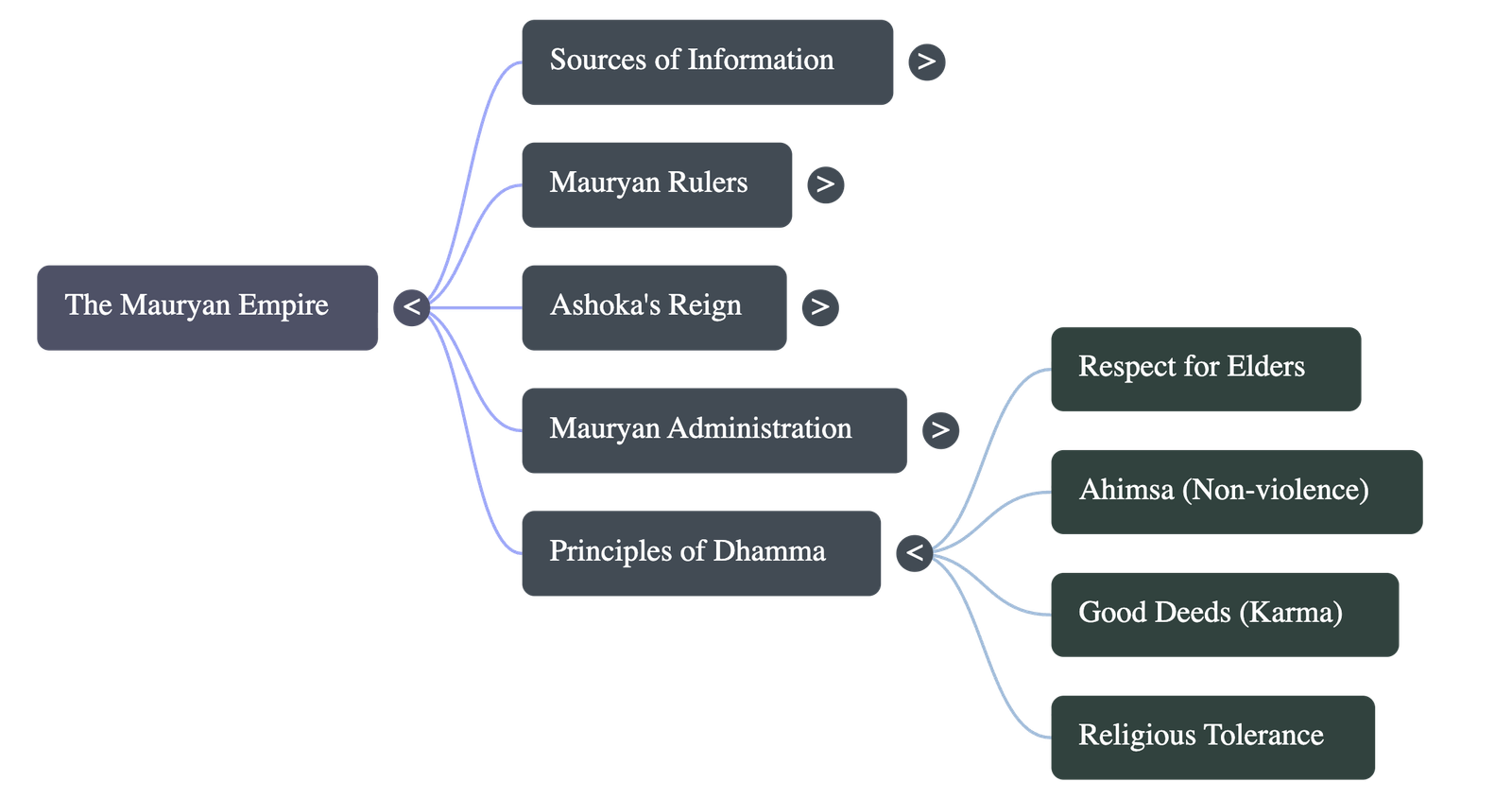
Ashoka’s Dhamma was not a new religion, but rather a "Moral Law" or a "Common Code of Conduct" designed to be the meeting ground of all religions.
Principles of Dhamma
- Respect for elders and love for children.
- Ahimsa or absolute non-violence.
- Belief in good deeds or good karma to ensure happiness in the next birth.
- Respect and tolerance for all religions.
- Disapproval of empty, meaningless rituals.
Impact of Dhamma
- Religious Unity: Fostered a climate of religious tolerance among diverse groups.
- Moral Values: Encouraged the populace to live a highly moral and ethical life.
- End of Crimes: The strict adherence to Ahimsa led to a significant drop in thefts, crimes, and other illicit activities.
- Public Welfare: Shifted state focus from wars to public works, resulting in widespread prosperity and a peaceful existence for the subjects.
Do checkout all questions & answers of this chapter.
Quick Navigation:
| | | |
1 / 1
Quick Navigation:
| | | |