Quick Navigation:
| | | |
Civics 3: Salient Features of the Constitution - II
A Complete Study Guide on Directive Principles of State Policy & Welfare State
1. Meaning of Directive Principles
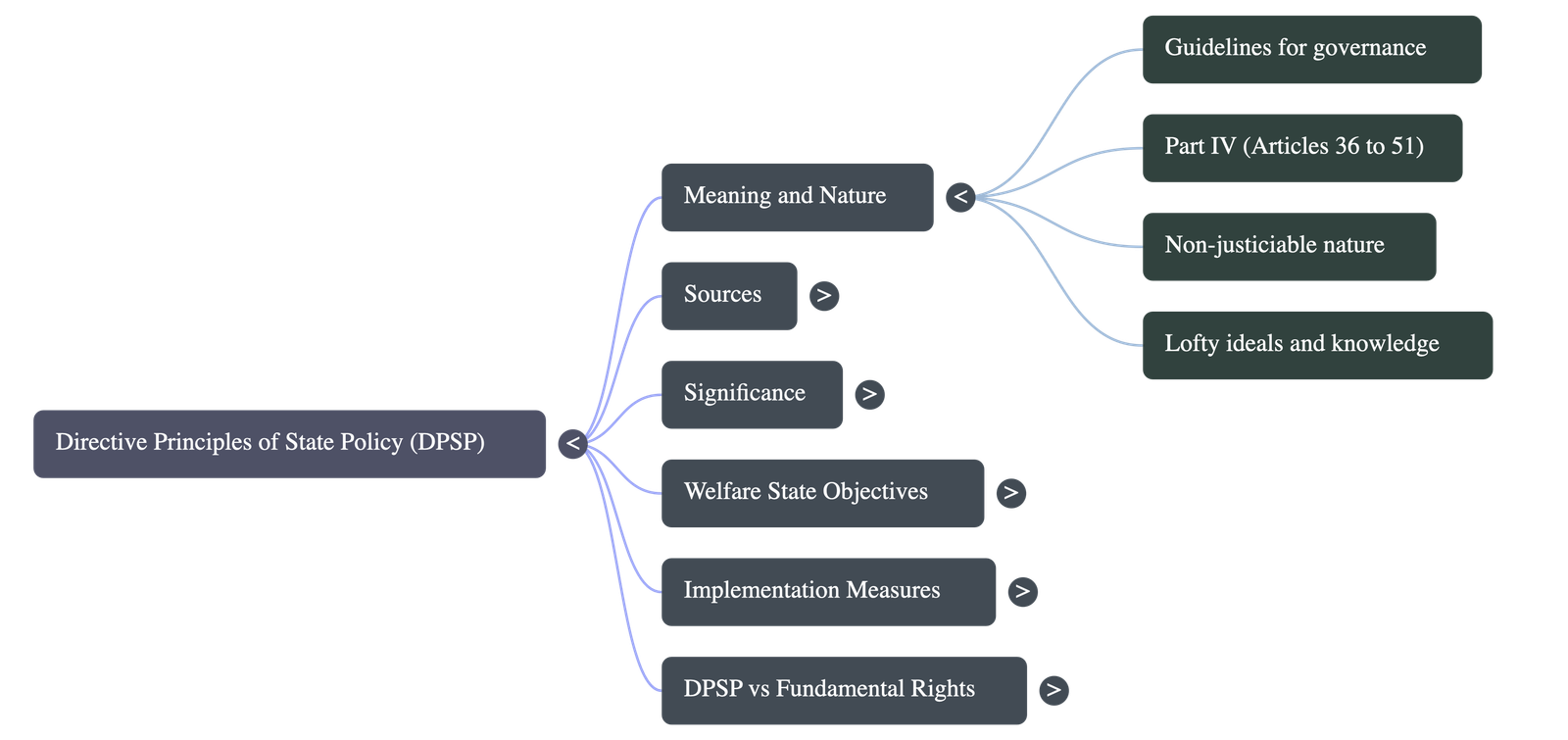
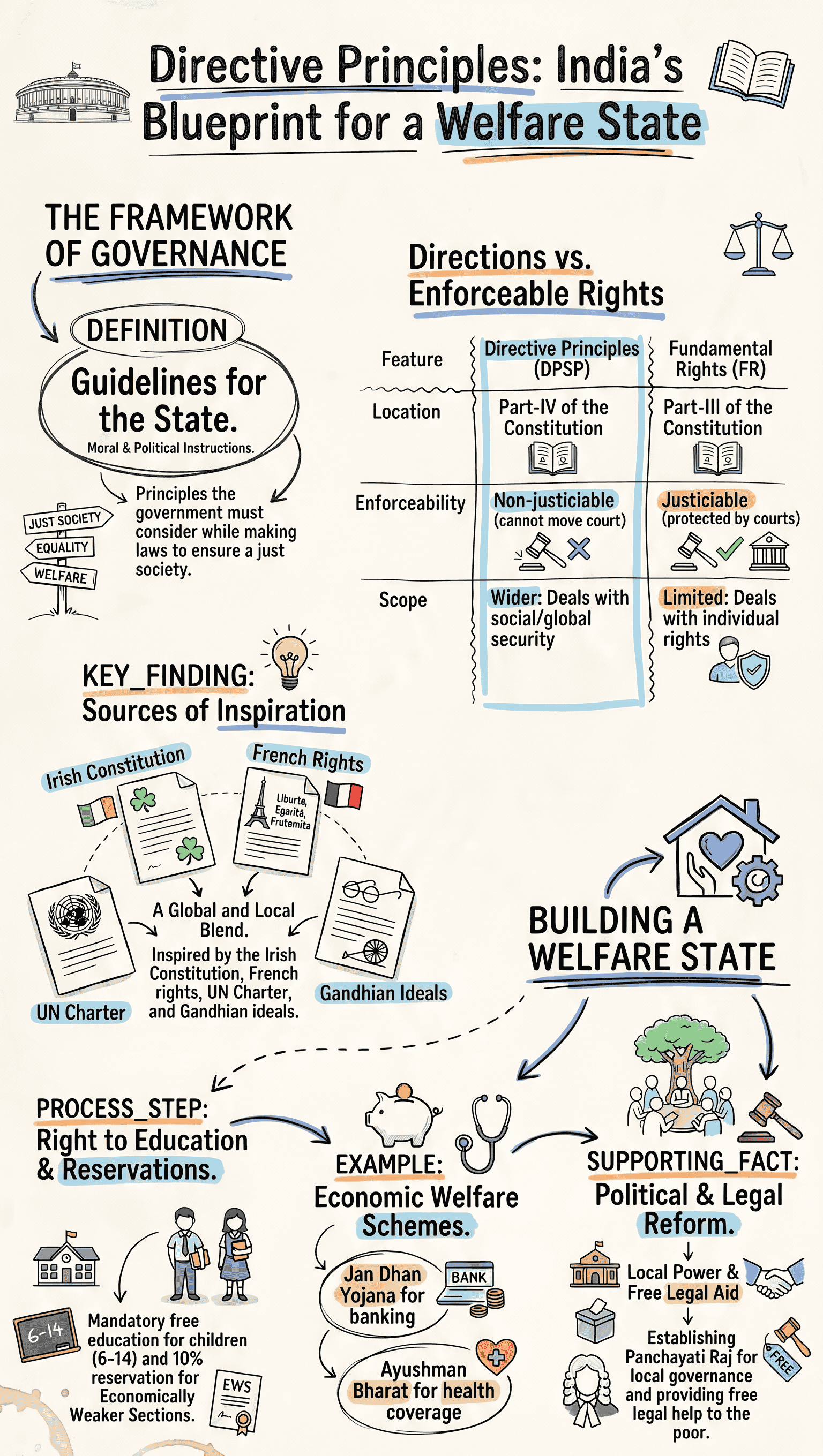
- What are they? Directive Principles are guidelines or instructions for the government to follow while governing the country and making laws.
- Where are they found? They are located in Part IV of the Indian Constitution, covering Articles 36 to 51.
- Uniqueness: These lofty ideals of human thought and knowledge are unique and are not found in any other Constitution in the world, except those of India and Ireland.
2. Sources of Directive Principles
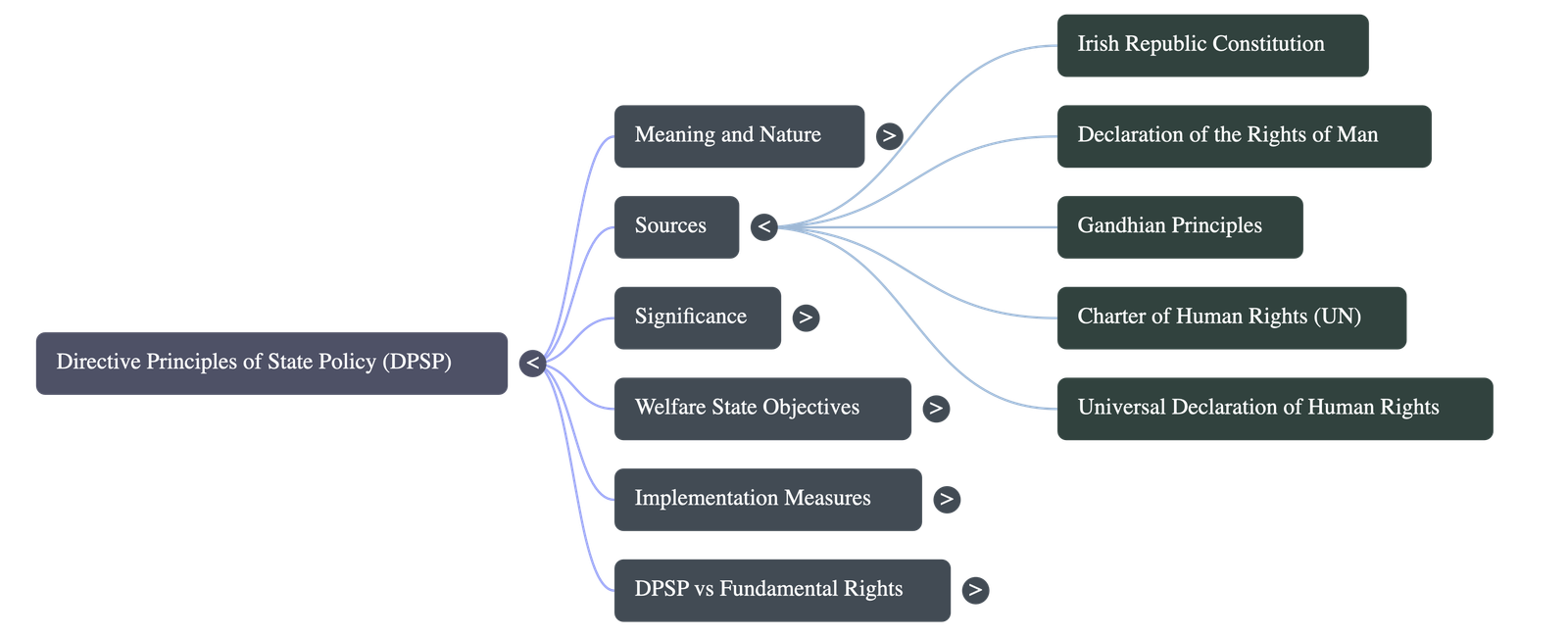
The framers of our Constitution were inspired by five major sources:
- The Constitution of the Irish Republic.
- The Declaration of the Rights of Man and Citizens from revolutionary France.
- The ideas and principles of Mahatma Gandhi (e.g., promoting village panchayats and cottage industries).
- The Charter of Human Rights by the United Nations.
- The Universal Declaration of Human Rights.
3. Significance and Importance
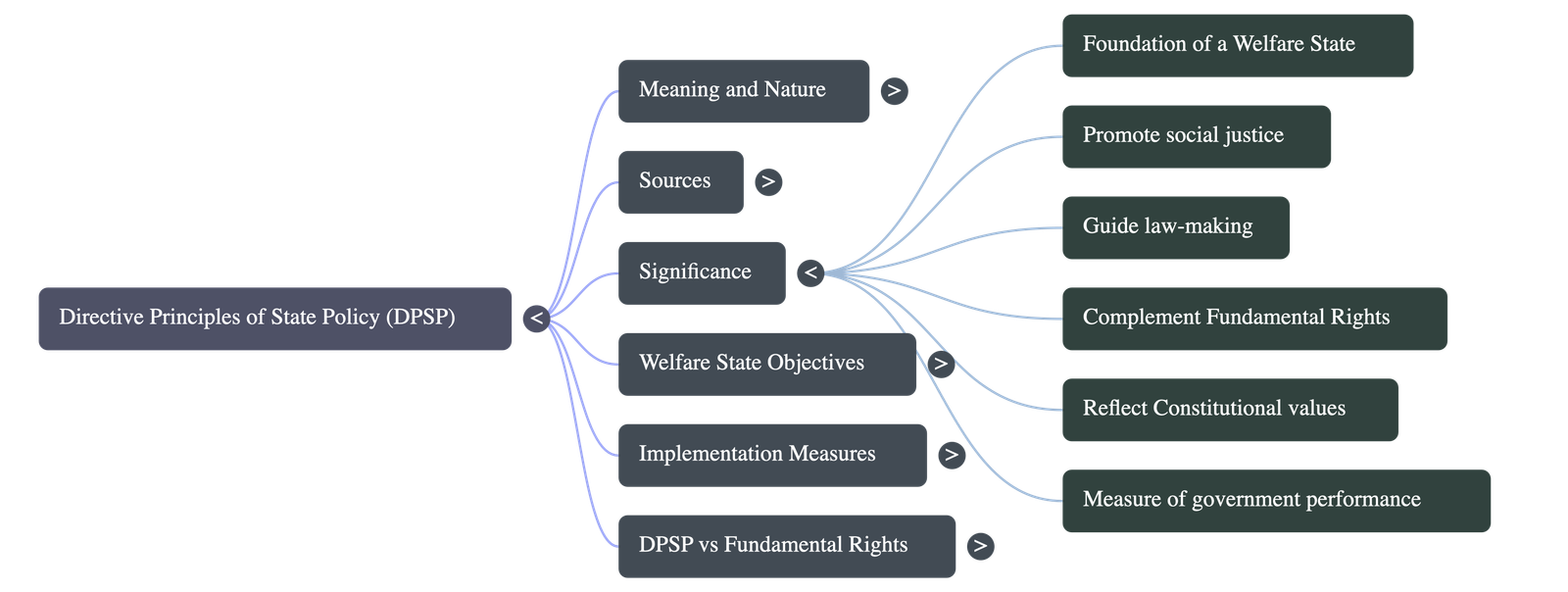
- Non-Justiciable Nature: Unlike Fundamental Rights, you cannot go to a court of law to force the government to implement these principles. However, the government has a moral duty to follow them.
- A Pledge to the People: They act as a promise made by the Constitution makers to ensure political, social, and economic justice for all citizens.
- Judging the Government: They provide a measuring tape for citizens to judge how well a government is performing.
- Goal of a Welfare State: They direct the government to move towards establishing a Welfare State by ensuring justice, liberty, equality, and fraternity.
- Supremacy over Fundamental Rights: According to the 42nd Amendment Act (1976), if a law is made to implement Directive Principles, it cannot be declared unconstitutional even if it conflicts with certain Fundamental Rights. The welfare of the public is considered more important than individual rights.
4. Directive Principles vs. Fundamental Rights
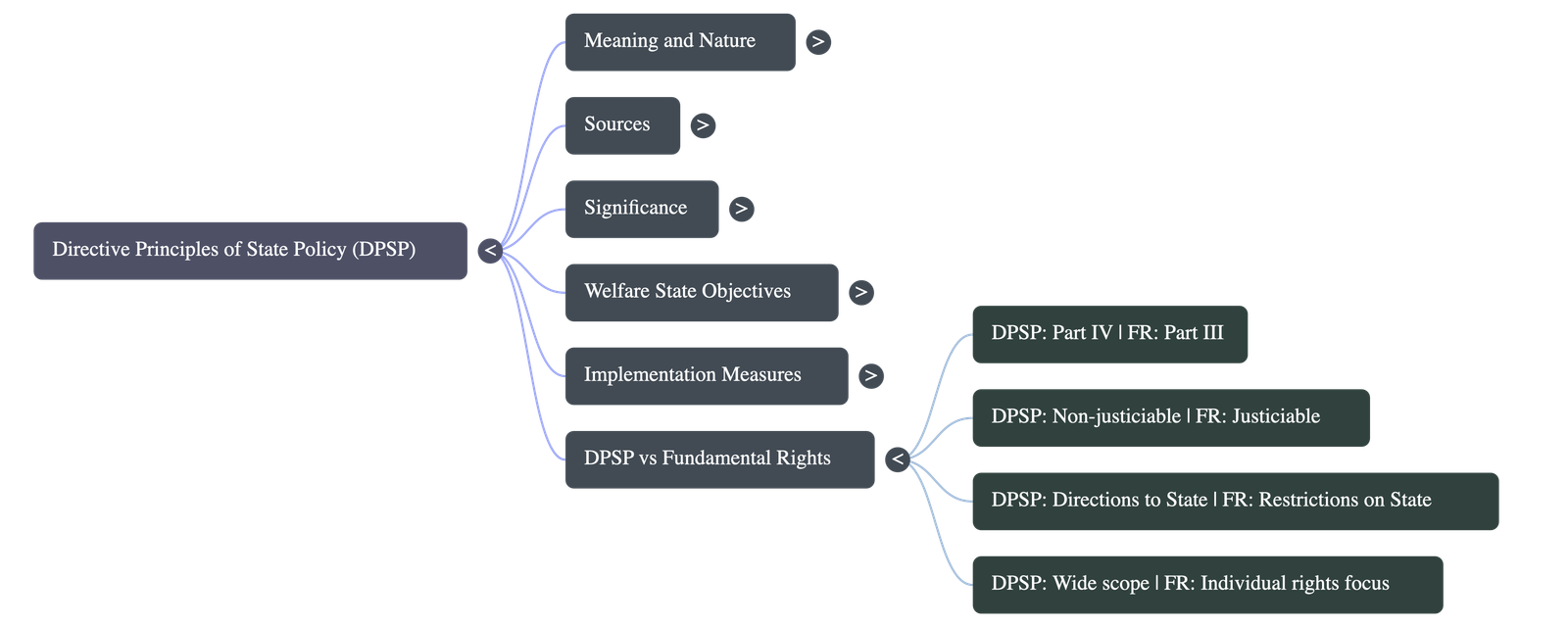
| Directive Principles | Fundamental Rights |
|---|---|
| Provided in Part-IV of the Constitution. | Provided in Part-III of the Constitution. |
| Non-justiciable (cannot be enforced by courts). | Justiciable (citizens can go to the High Court or Supreme Court if violated). |
| Directions for the government to attain certain objectives. | Act as restrictions on the power of the State. |
| Wider scope (deals with broad subjects including international peace). | Limited scope (deals mainly with individual rights). |
5. The Concept of a Welfare State
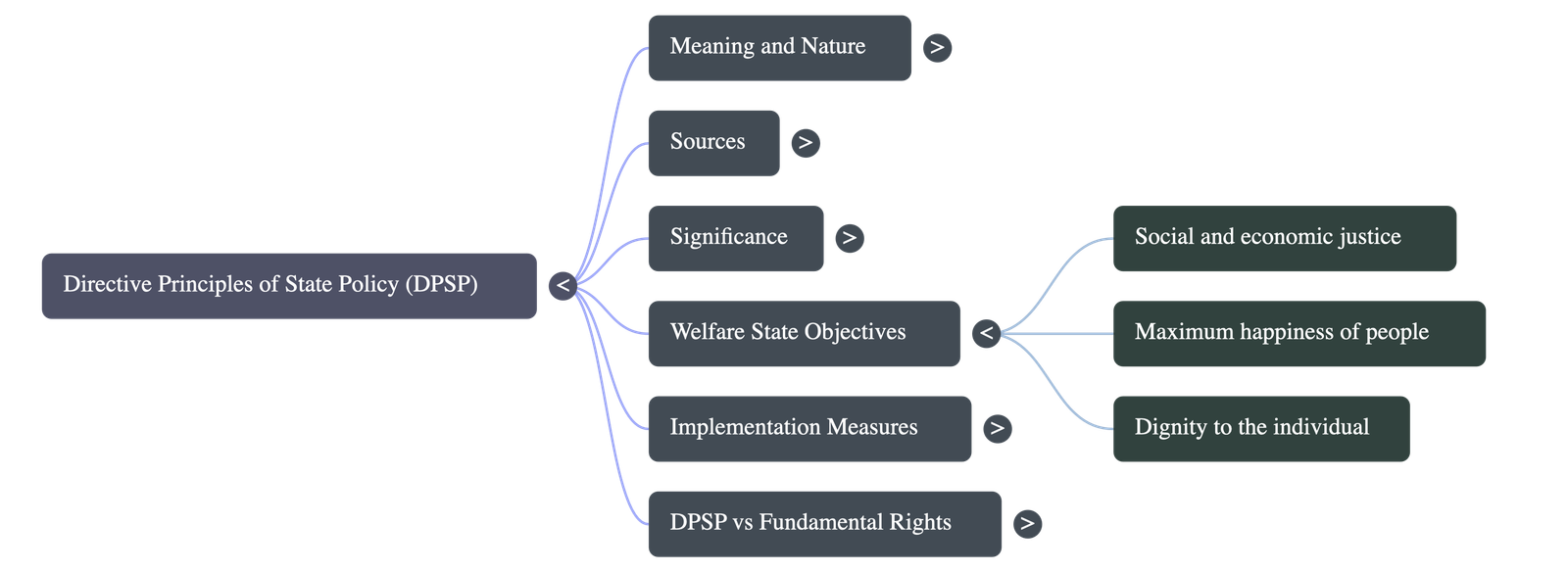
A Welfare State is a country that seeks to ensure the maximum happiness of the maximum number of people living within its territory.
- Even though the exact words "Welfare State" are not in the Constitution, the aims of the Directive Principles clearly point toward building one.
- It focuses on ensuring social and economic justice, as well as dignity for every individual citizen.
6. Implementation of Directive Principles (Government Steps)
A. Social Equality and Justice
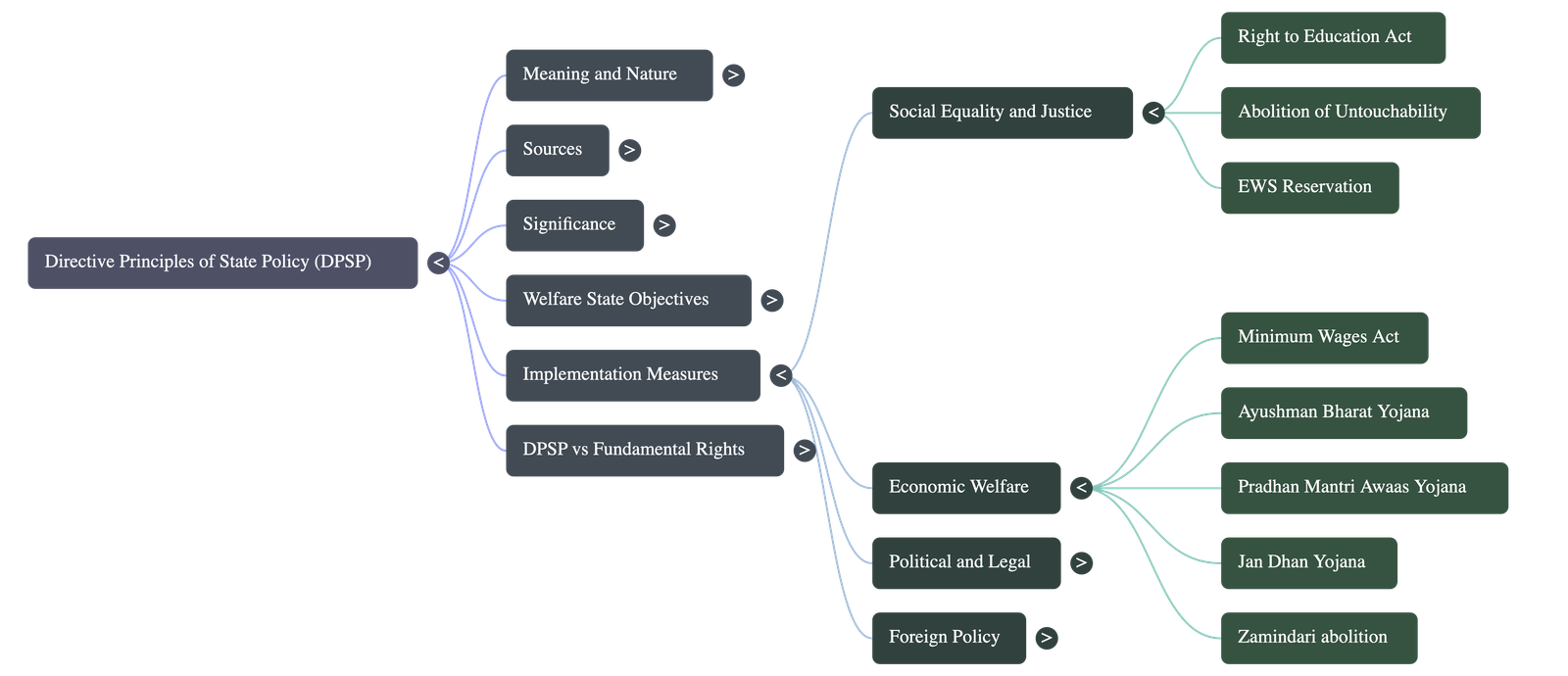
- Right to Education Act: Free education for children aged 6-14 in government schools, plus 25% reserved seats in private schools for economically weaker sections.
- Reservations: Special scholarships and job/education reservations for Scheduled Castes (SC) and Scheduled Tribes (ST).
- EWS Quota: 10% reservation provided for Economically Weaker Sections from upper castes (added in January 2019).
- Untouchability has been made a punishable offence by law.
B. Economic Welfare
- Land Reforms: Zamindari system was abolished. The 2013 Land Acquisition Act ensures fair compensation and rehabilitation for people whose land is taken for projects.
- Labor Rights: Minimum Wages Act ensures fair payment, and laws enforce equal pay for equal work.
- Key Government Schemes:
- Ayushman Bharat Yojana: Health scheme providing 5 lakh rupees coverage per family for the vulnerable.
- Pradhan Mantri Samaan Nidhi Yojana: Direct transfer of ₹6000/year to small and marginalized farmers.
- Pradhan Mantri Ujjwala Yojana: Free LPG cooking gas connections to BPL families to empower women and protect health.
- Pradhan Mantri Gramin Awaas Yojana: Financial assistance to build permanent (pucca) houses for the homeless.
- Jan Dhan Yojana: Opening bank accounts for the poor, freeing them from moneylenders, and providing insurance cover.
- VB-GRAM G Act: Guarantees rural employment up to 125 days per household (replacing the older MNREGA).
C. Political, Administrative, and Legal Matters
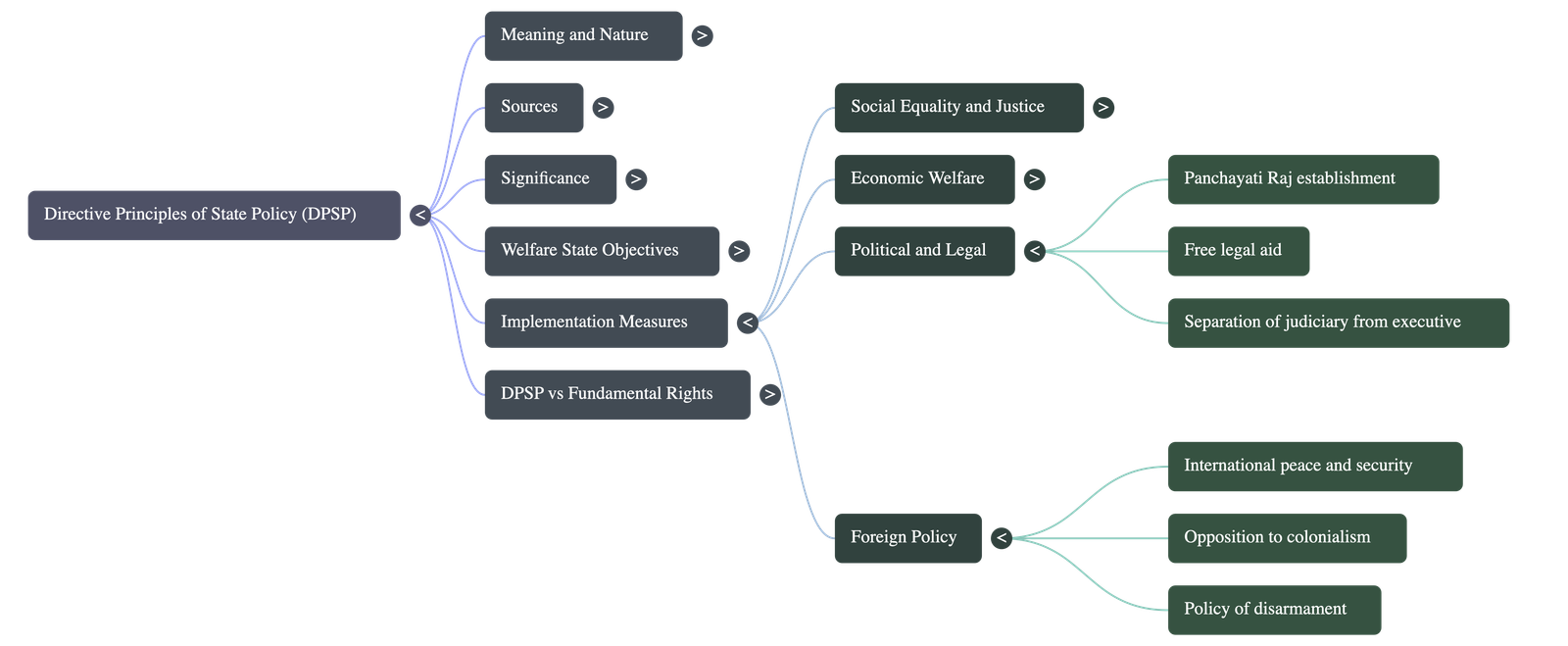
- Panchayati Raj: Established in remote villages to promote local self-government.
- Free Legal Aid: Provided to poor citizens to ensure equal justice for all.
- Separation of Powers: The judiciary is kept completely separate from the executive branch to check the misuse of power.
D. Foreign Policy
- Anti-Colonialism: India strongly opposes colonialism and racism (e.g., supporting South Africa against Apartheid).
- International Law: India respects international laws and settles disputes through mutual understanding.
- Disarmament: India supports a policy of complete global disarmament to maintain international peace.
Do checkout all questions & answers of this chapter.
Quick Navigation:
| | | |
1 / 1
Quick Navigation:
| | | |