Quick Navigation:
| | |
Medieval India: Composite Culture
1. Emergence of Composite Culture
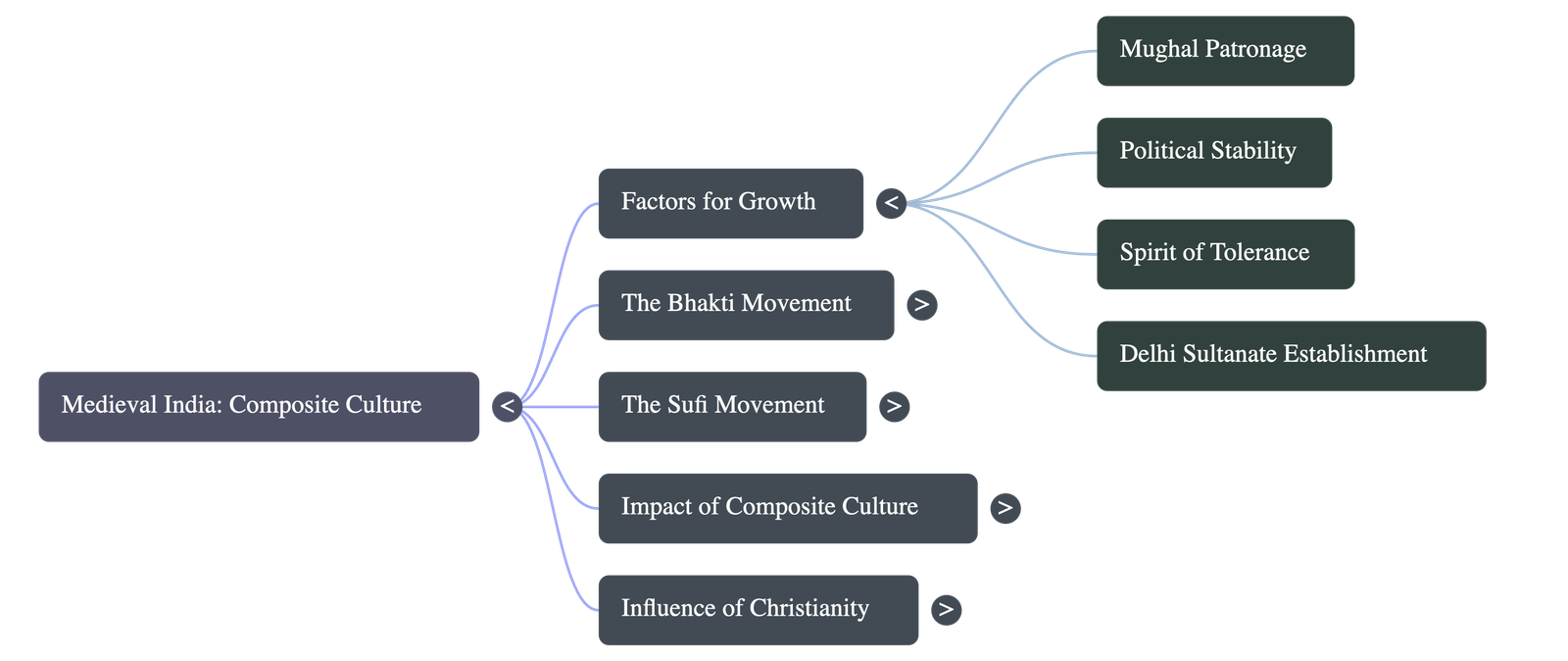
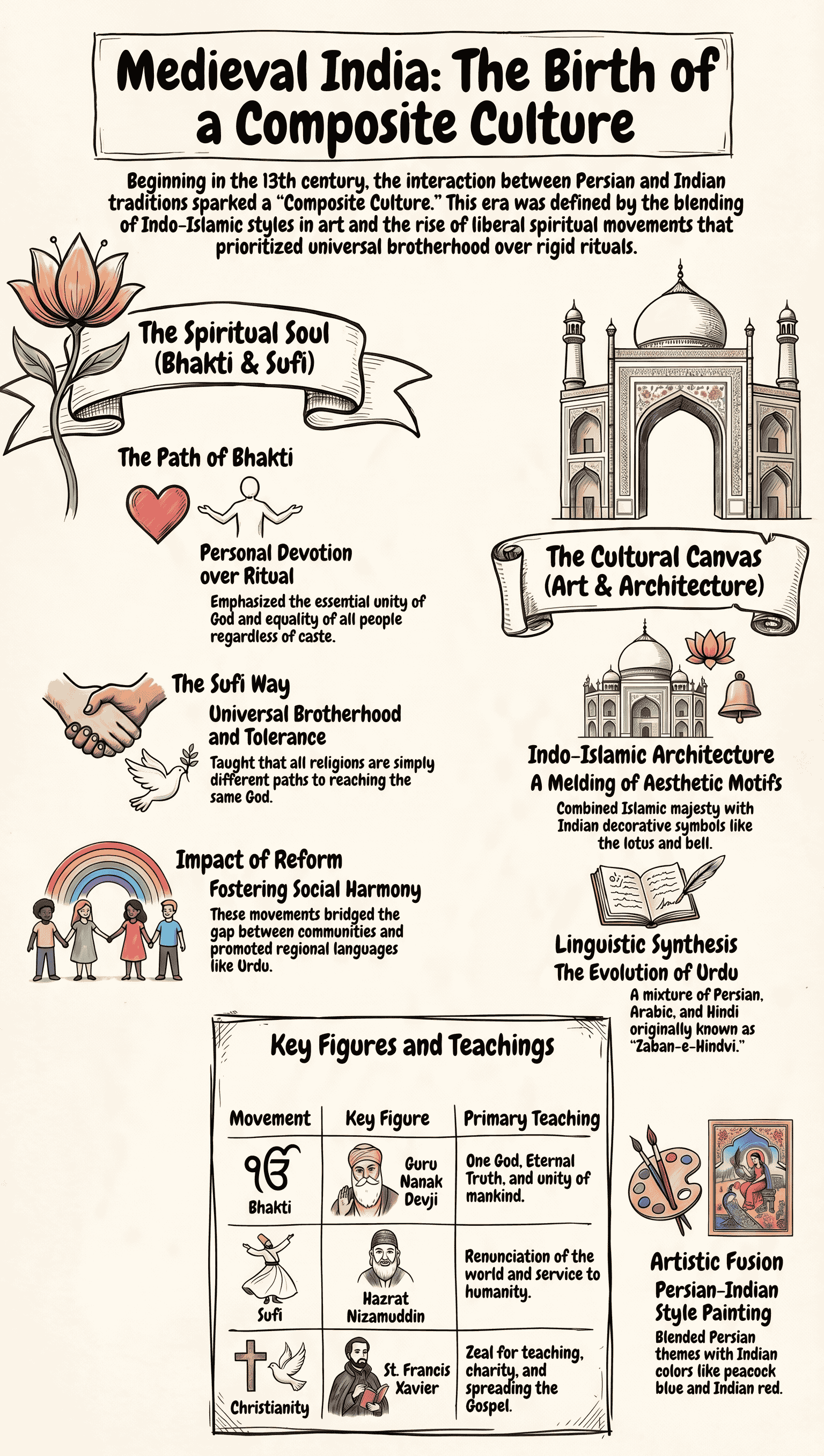
- The establishment of the Delhi Sultanate in the 13th century led to the interaction between Turkish and Indian traditions.
- This fusion created a new cultural phase known as Indo-Islamic culture, which was neither purely Persian nor entirely Indian.
- Key Factors for Growth: Immense wealth and power of the Mughal emperors used to patronise fine arts and architecture, along with a long period of peace in northern India.
2. The Bhakti Movement
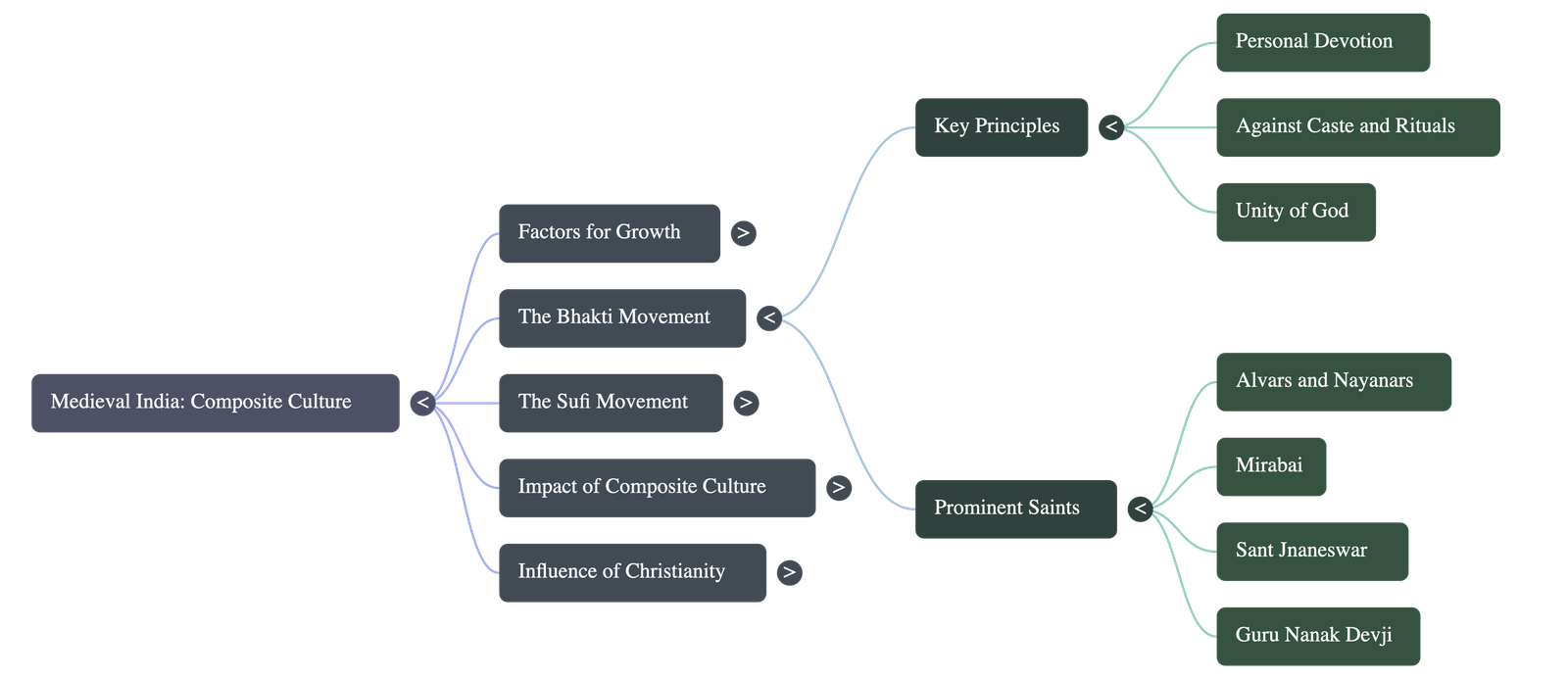
- Originated in the South as a reaction against strict caste divisions and complex ritualism.
- Started by Vaishnava saints (Alvars) and Shaiva saints (Nayanars) who preached personal devotion to God to achieve salvation.
Key Bhakti Saints & Teachings:
- Mirabai: A Rajput princess who renounced the world to become a devotee of Lord Krishna. She composed famous devotional songs called bhajans or Padavali.
- Guru Nanak Devji: Preached the unity of mankind and a single formless God. He advocated a "middle path" balancing spiritual life with household duties, condemned idolatry, and stressed devotion over empty rituals.
- Sant Jnaneswar (Dnyaneshwar): A 13th-century saint from Maharashtra who wrote a famous commentary on the Bhagavad Gita called Bhavartha Dipika (Jnaneswari). He led the Varkari movement, promoting a simple virtuous life and helping others.
3. The Sufi Movement
- Sufism originated in Persia and Central Asia. The word 'Sufi' comes from 'safa' (purity) or woollen garments worn by mystics.
- Organised into 12 orders or silsilas, which functioned as a continuous link between the master (pir) and disciple (murid).
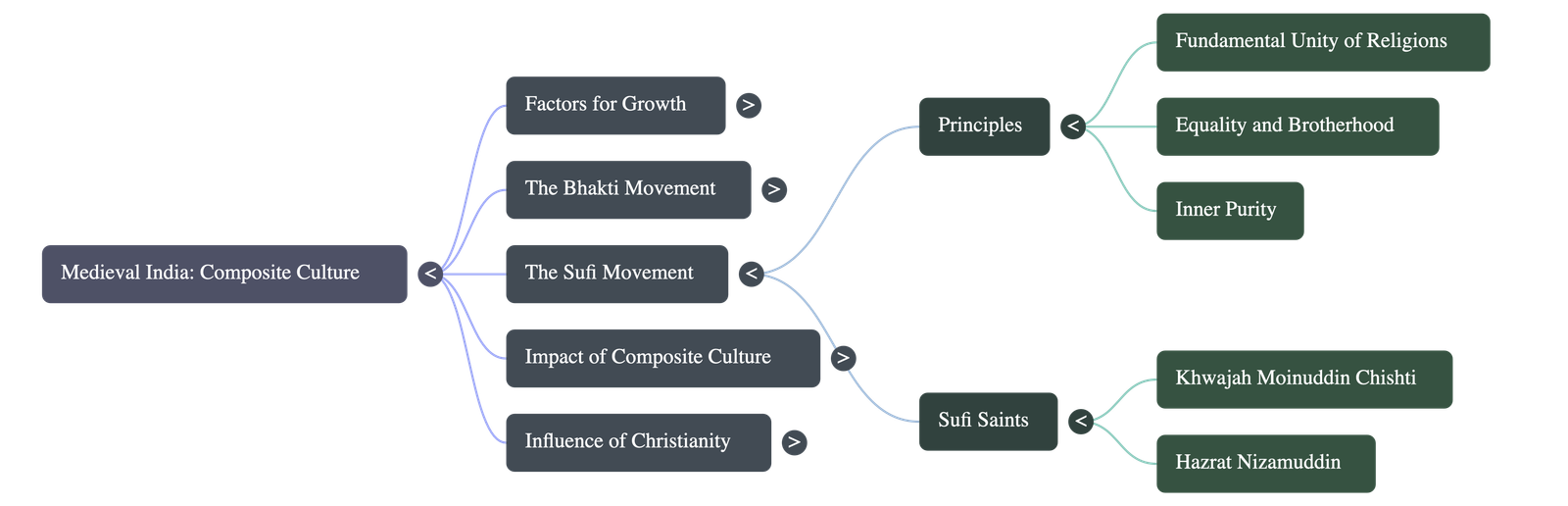
- Core Principles: Fundamental unity of all religions, devotion to God over rituals, brotherhood of all humans, and inner purity.
Key Sufi Saints:
- Khwajah Moinuddin Chishti: Established his headquarters in Ajmer. His Dargah is highly revered by people of all faiths, where an annual carnival called Urs is held.
- Hazrat Nizamuddin: A prominent saint of the Chishti order in Delhi. He preached renunciation of the world, serving humanity, feeding the hungry, and strongly opposed mixing with political royalty.
4. Impact of Composite Culture
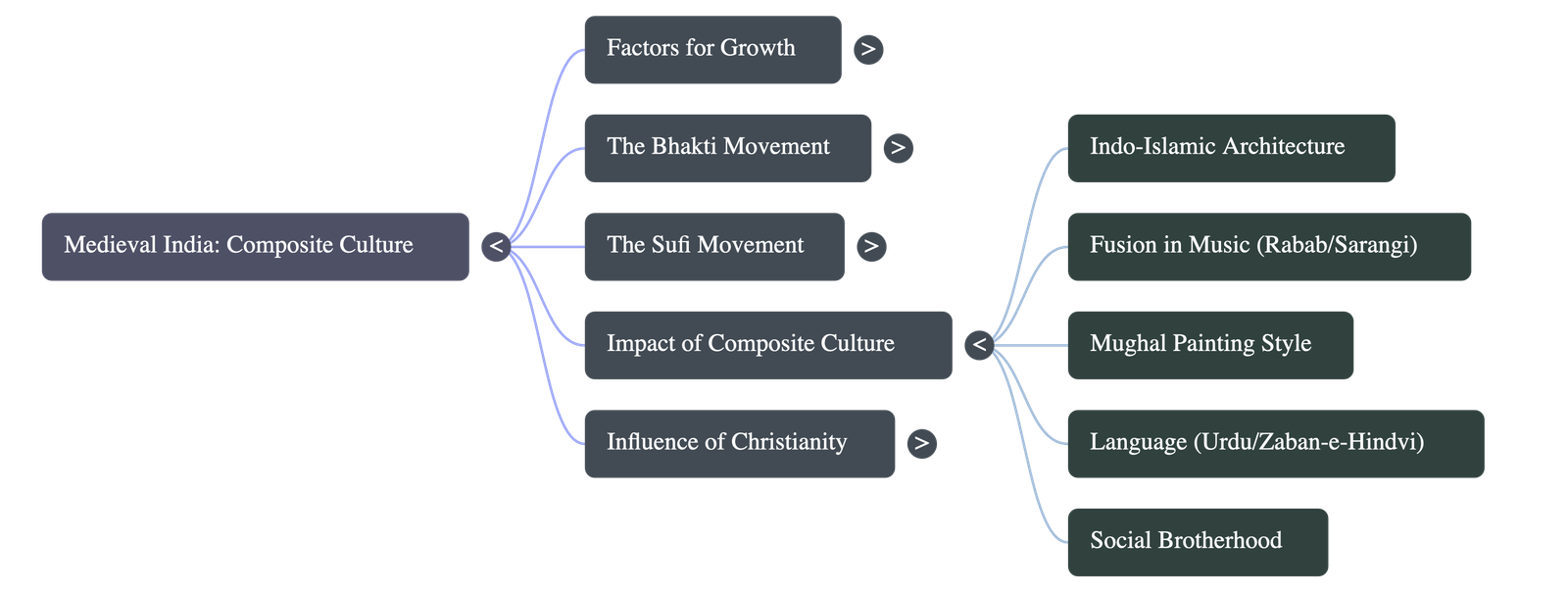
- Music: Introduction of new instruments like the rabab and sarangi. Amir Khusrau introduced Perso-Arabic ragas.
- Painting: A fusion of Persian and Indian styles emerged, particularly under Akbar. Prominent works include the Hamzanama, using Indian themes with Persian techniques.
- Architecture: Created the Indo-Islamic style marked by spaciousness and majesty. Replaced human/animal figures with geometrical/floral designs and Quranic verses. Mughal traditions even influenced regional structures like the temples in Vrindavan and the Golden Temple in Amritsar.
- Language & Literature: Led to the development of Urdu (originally known as 'Zaban-e-Hindvi'), which combined Persian, Arabic, Hindi, and regional languages.
5. Social Impact of Bhakti & Sufi Movements
- Social Equality: Both movements denounced caste distinctions and empty rituals, helping evolve a new social order based on equality.
- Language Development: Preachings were done in local languages (Hindi, Bhojpuri, Oriya, etc.), which greatly enriched regional literature (e.g., Tulsidas's Ramcharit Manas).
- Hindu-Muslim Unity: The movements fostered tolerance, mutual respect, and unity between different religious communities.
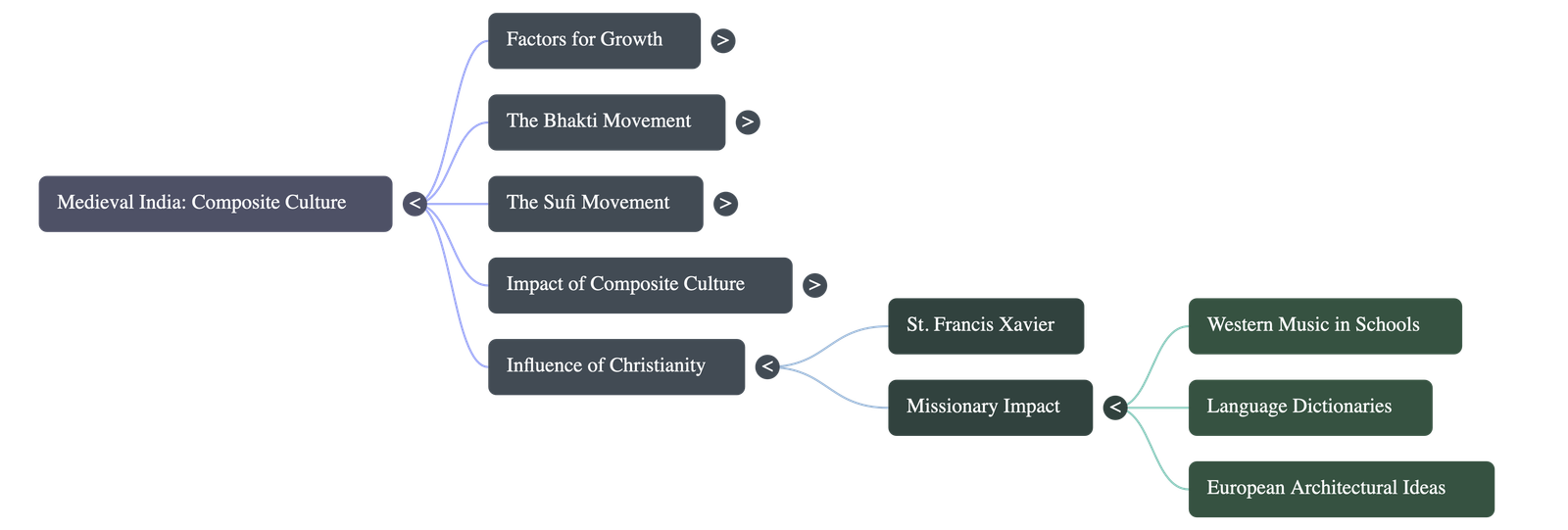
6. Influence of Christianity
- Began with the arrival of Vasco da Gama in 1498 and the subsequent establishment of Catholic missions by the Portuguese.
- St. Francis Xavier: The first Jesuit missionary to arrive in 1542. He worked relentlessly to treat the sick, preach Christianity, and established missions across principal centers in India.
- Impact on Language & Art: Missionaries brought out grammars and dictionaries of Indian languages to help spread their message. They introduced Western music, choirs, and organs to schools.
- Impact on Painting & Architecture: Introduced Christian themes in paintings (which even influenced emperors like Akbar and Jahangir) and brought European architectural elements to India (high-pitched roofs, large windows, and elaborate balconies).
Quick Navigation:
| | |